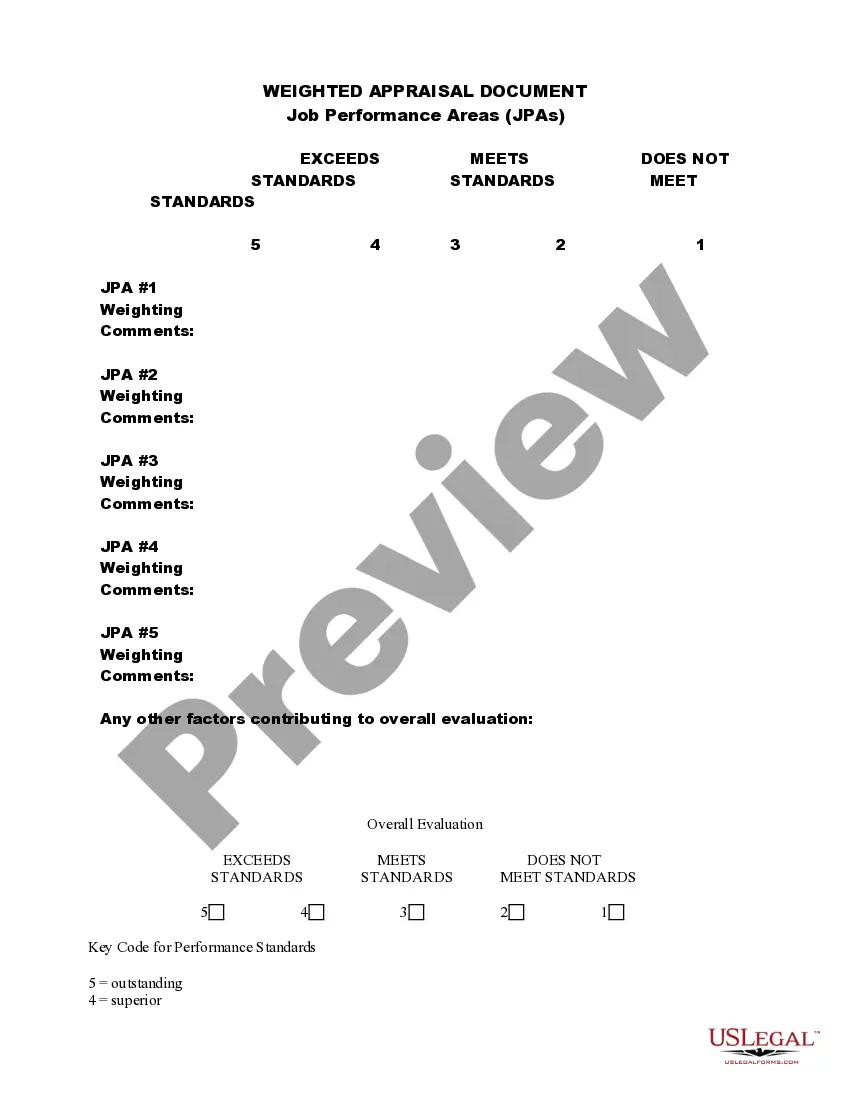
Weighted Appraisal Document
What this document covers
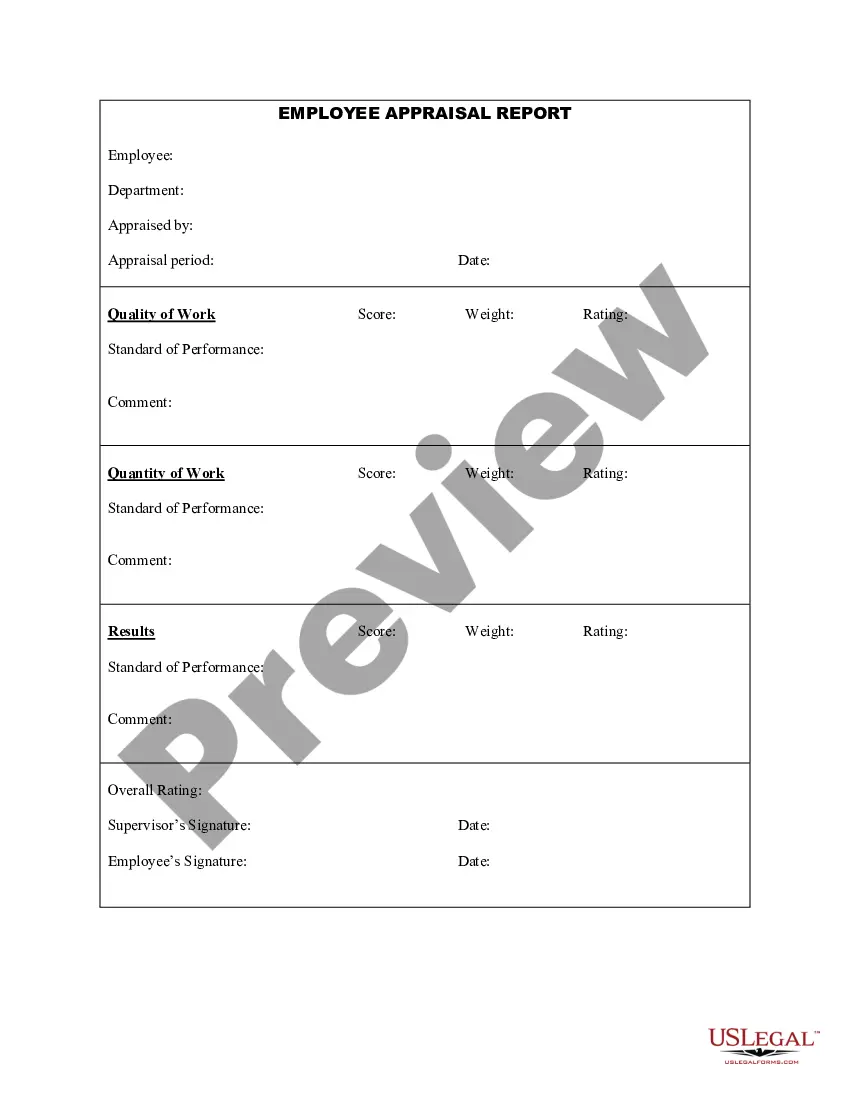
The Weighted Appraisal Document is a structured tool designed to help employers evaluate and appraise employee performance systematically. This form requires employers to identify important job performance areas (JPAs) associated with a specific position, allowing for a comprehensive evaluation of employee contributions and areas for improvement. Unlike standard performance reviews, this document incorporates a weighting system to prioritize key areas, enhancing the effectiveness of the appraisal process.
Form components explained
- Job Performance Areas (JPAs): Sections for detailing specific performance criteria.
- Weighting System: A field for assigning importance to each JPA, reflecting their significance in the role.
- Performance Rating: Options for evaluating employee performance against established standards (e.g., exceeds, meets, below standards).
- Comments Section: Space for elaborating on performance observations and suggestions for improvement.
- Overall Evaluation: Summary assessment based on weighted performance metrics.
When this form is needed
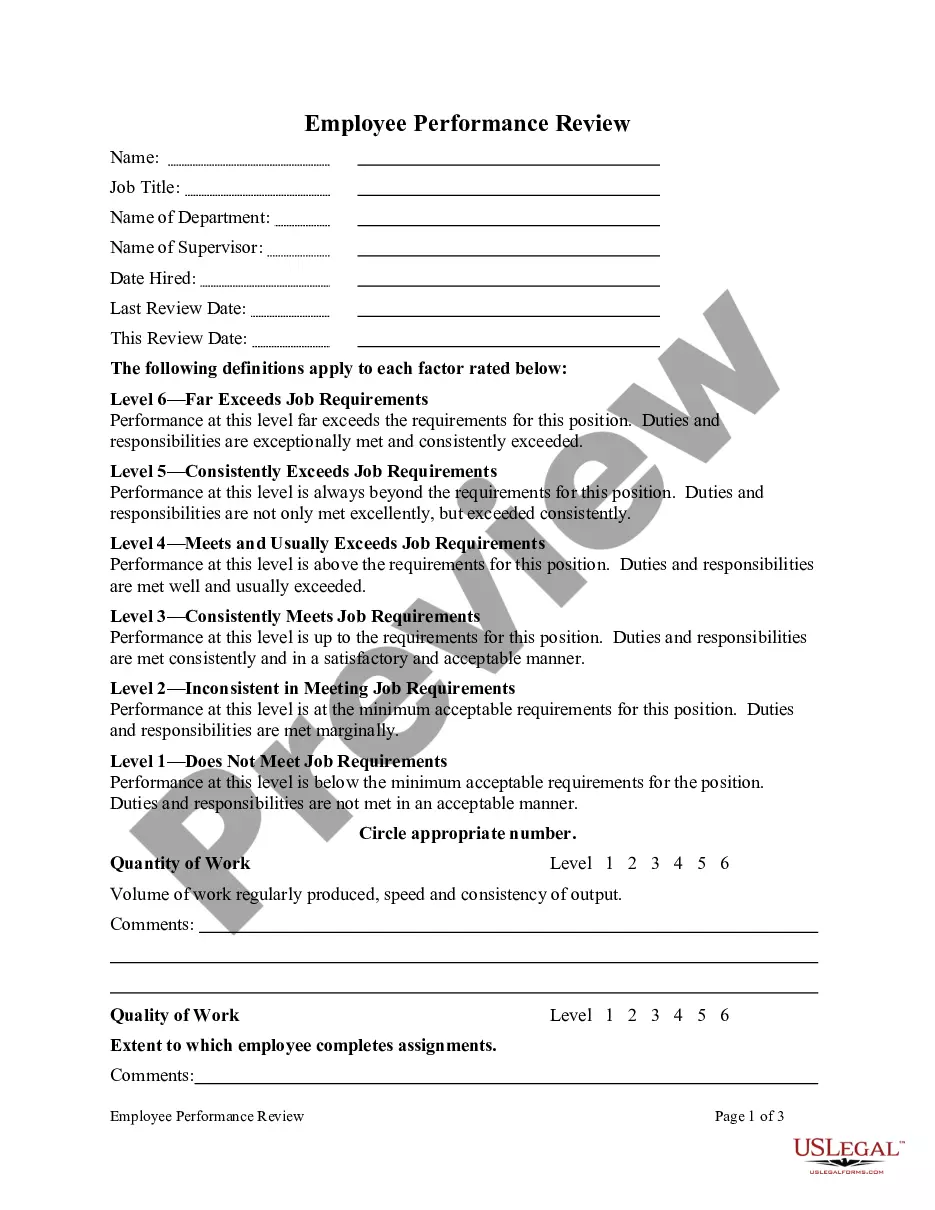
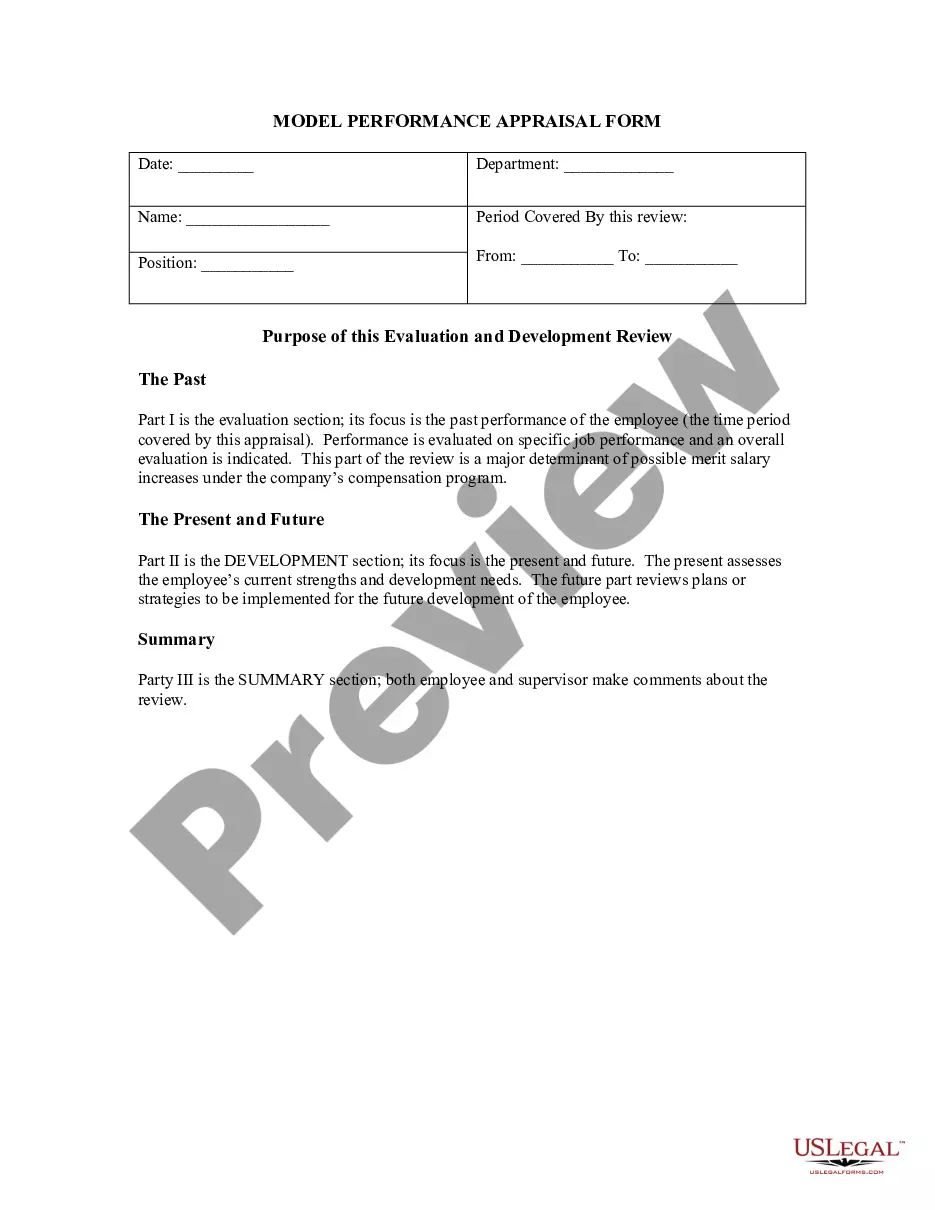
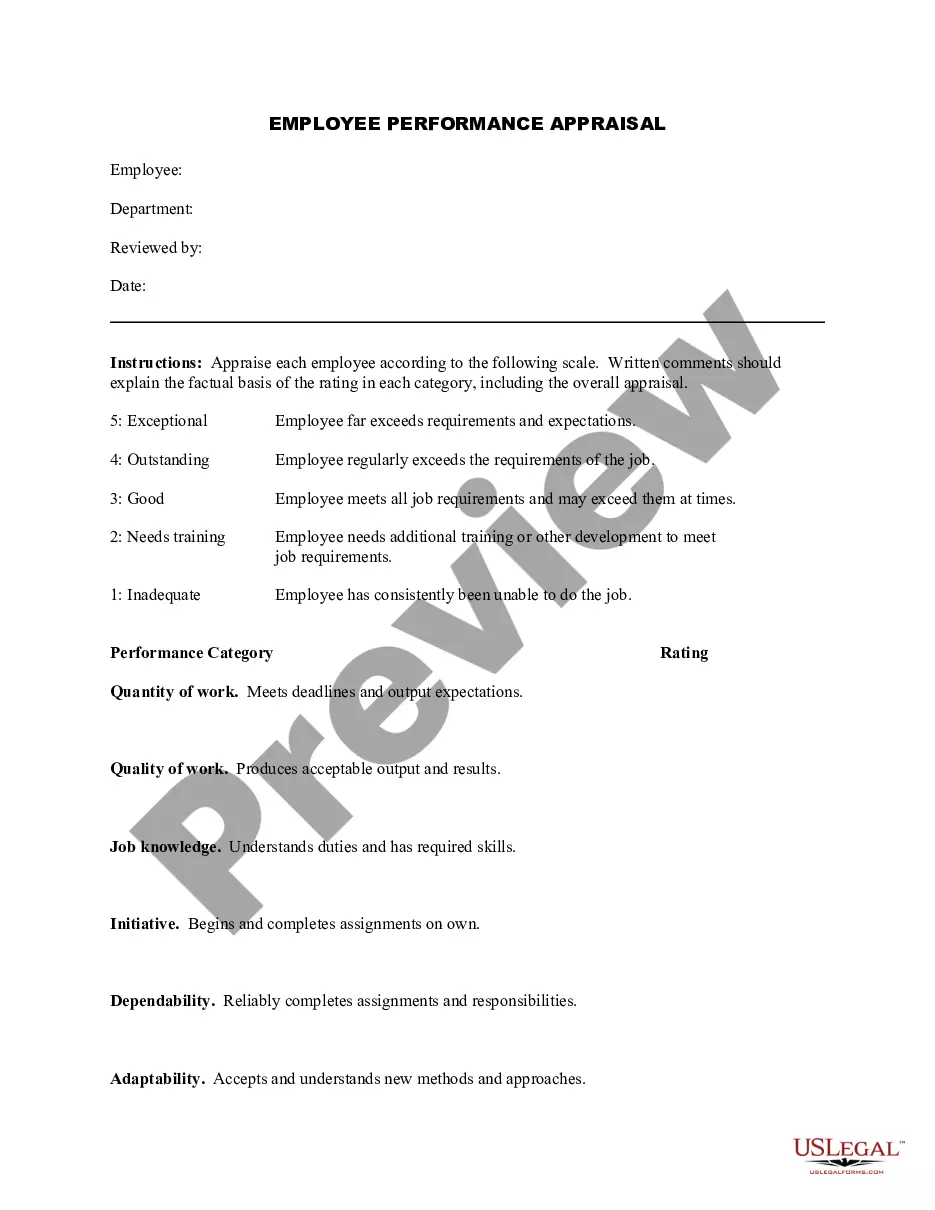
This form is essential for employers who wish to conduct structured performance reviews. It is particularly useful during annual review periods, for onboarding evaluations of new employees, or when addressing specific performance issues. By utilizing the weighted appraisal system, employers can ensure more objective assessments and foster employee development through targeted feedback.
Who needs this form
- Human Resources Professionals: For conducting employee evaluations across various departments.
- Managers and Supervisors: To provide structured feedback and performance insights to their team members.
- Small Business Owners: Who are overseeing performance evaluations to improve team productivity and morale.
Instructions for completing this form
- Identify the position: Begin by specifying the job title and the employee's name.
- Define the job performance areas: List relevant JPAs that pertain to the employee's role.
- Assign weights to each JPA: Determine the importance of each area relative to the overall performance.
- Evaluate performance: Rate the employee's performance in each area using the provided rating scale.
- Provide comments: Enter detailed observations that support the performance rating and suggest improvements.
- Summarize overall evaluation: Complete the final assessment based on the cumulative weighted score of the JPAs.
Notarization requirements for this form
This form usually doesn’t need to be notarized. However, local laws or specific transactions may require it. Our online notarization service, powered by Notarize, lets you complete it remotely through a secure video session, available 24/7.
Get your form ready online
Our built-in tools help you complete, sign, share, and store your documents in one place.
Make edits, fill in missing information, and update formatting in US Legal Forms—just like you would in MS Word.
Download a copy, print it, send it by email, or mail it via USPS—whatever works best for your next step.
Sign and collect signatures with our SignNow integration. Send to multiple recipients, set reminders, and more. Go Premium to unlock E-Sign.
If this form requires notarization, complete it online through a secure video call—no need to meet a notary in person or wait for an appointment.
We protect your documents and personal data by following strict security and privacy standards.

Make edits, fill in missing information, and update formatting in US Legal Forms—just like you would in MS Word.

Download a copy, print it, send it by email, or mail it via USPS—whatever works best for your next step.

Sign and collect signatures with our SignNow integration. Send to multiple recipients, set reminders, and more. Go Premium to unlock E-Sign.

If this form requires notarization, complete it online through a secure video call—no need to meet a notary in person or wait for an appointment.

We protect your documents and personal data by following strict security and privacy standards.
Typical mistakes to avoid
- Failing to weigh job performance areas: Skipping the weighting can lead to biased evaluations.
- Using vague comments: Specificity in comments is crucial for effective feedback.
- Not involving employees in the process: Failing to communicate performance expectations can cause misunderstandings.
- Neglecting follow-up: Not addressing identified areas for improvement can hinder employee growth.
Why complete this form online
- Convenience: Easily accessible for downloading and completing at any time.
- Editability: Users can modify the form to fit specific needs directly before use.
- Reliability: Form templates are drafted by licensed attorneys, ensuring legal compliance.
Looking for another form?
Form popularity
FAQ
Multiply each number by its weighting factor (w). You'll be multiplying each set of numbers and weights together, then adding them all up to find the average. XResearchsource. For example, if your total quiz score is 82 and quizzes are worth 20% of your grade, multiply 82 x 0.2. In this case, x=82 and w=0.2.
Now that you have decimal scores, you'll need to determine the weight for every goal in the section. The sum of these weights has to be 100. Then, the calculator will automatically show you the weighted score, by multiplying the decimal score by its weight: 0.6 x 25 = 15.0, and so on.
50(. 15) = 7.5. 76(. 20) = 15.2. 80(. 20) = 16. 98(. 45) = 44.1.
Determine the weight of each number. Find the sum of all weights. Calculate the sum of each number multiplied by its weight. Divide the results of step three by the sum of all weights.
Multiply each number by its weighting factor (w). You'll be multiplying each set of numbers and weights together, then adding them all up to find the average. For example, if your total quiz score is 82 and quizzes are worth 20% of your grade, multiply 82 x 0.2. In this case, x=82 and w=0.2.
Now that you have decimal scores, you'll need to determine the weight for every goal in the section. The sum of these weights has to be 100. Then, the calculator will automatically show you the weighted score, by multiplying the decimal score by its weight: 0.6 x 25 = 15.0, and so on.
Divide the number of points that a student earned on an assignment by the total possible points for that assignment. For instance, if the student earned 22 out of 25 points on a test, divide 22 by 25 to get 0.88. Multiply the answer by the weight of the assignment. The weight should be in decimal form.
Strength. 1) Always on time (or even early) for meetings and conferences. 2) Prompt and on time for the start of each workday. 3) Respects others by arriving at work and at meetings on time.
Pull out your annual goals. Include additional achievements. Pore over the next level's JD. Stay objective and honest. Mindfully highlight the mistakes. Don't be a know-it-all.