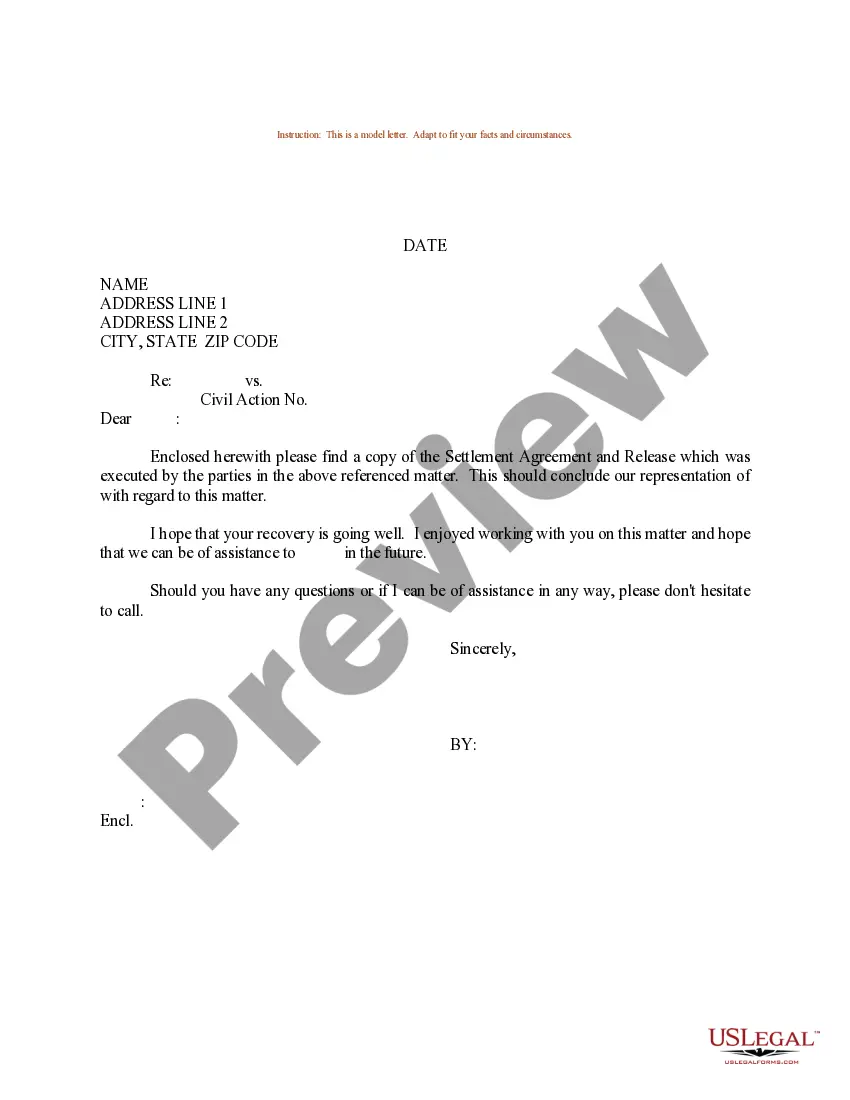
Settlement Agreement With Release
Description
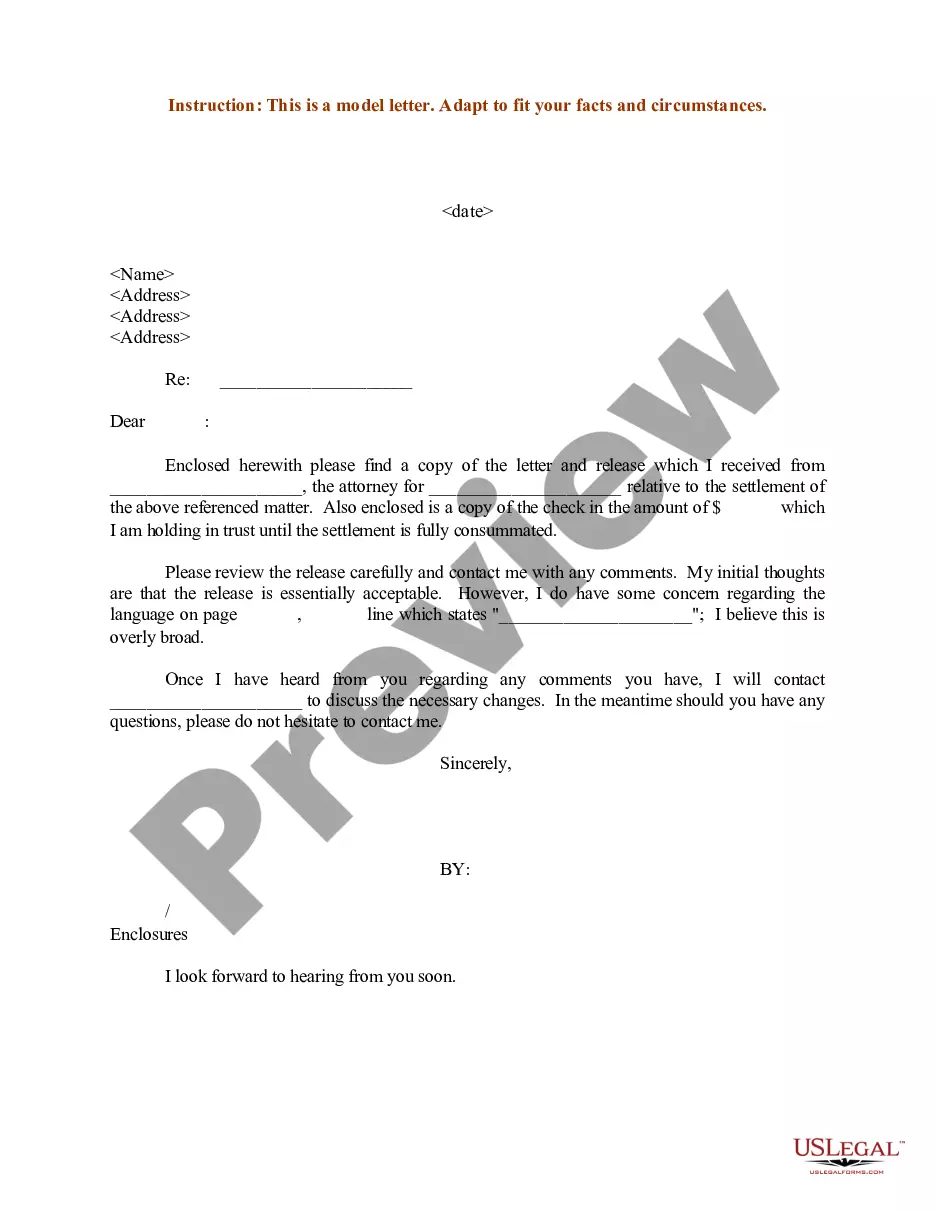
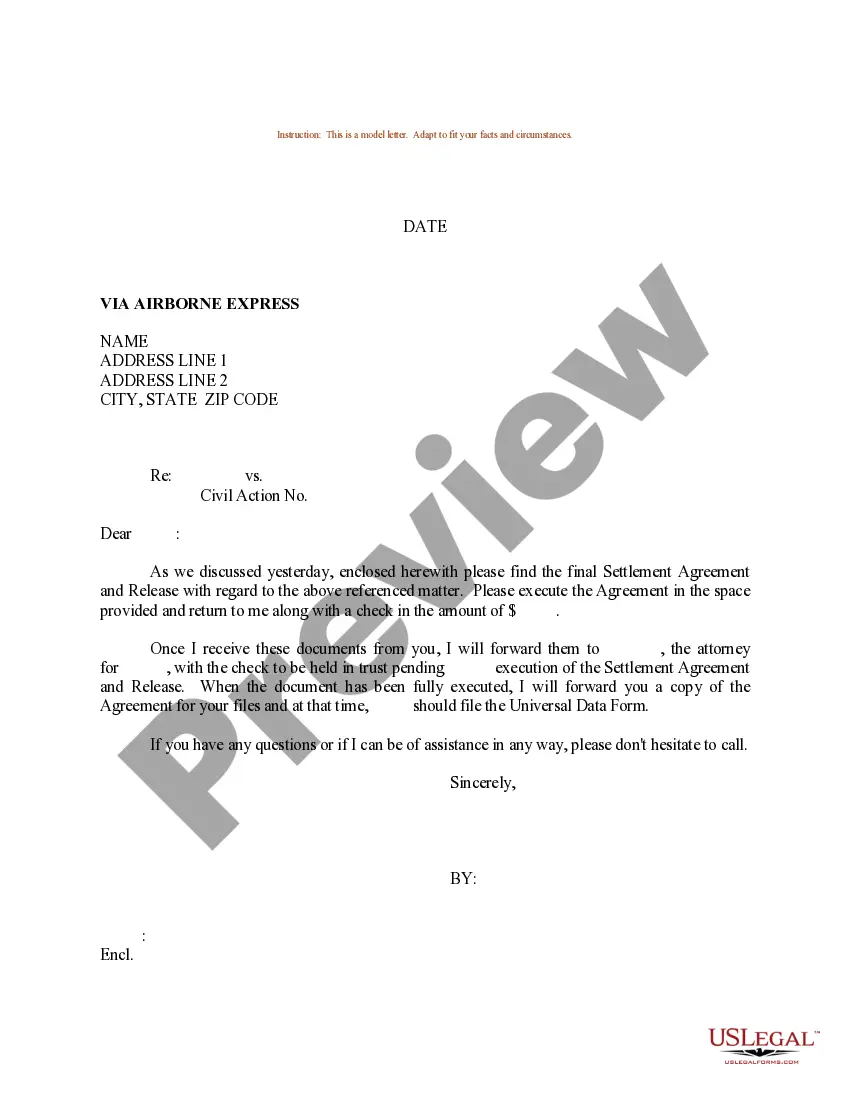
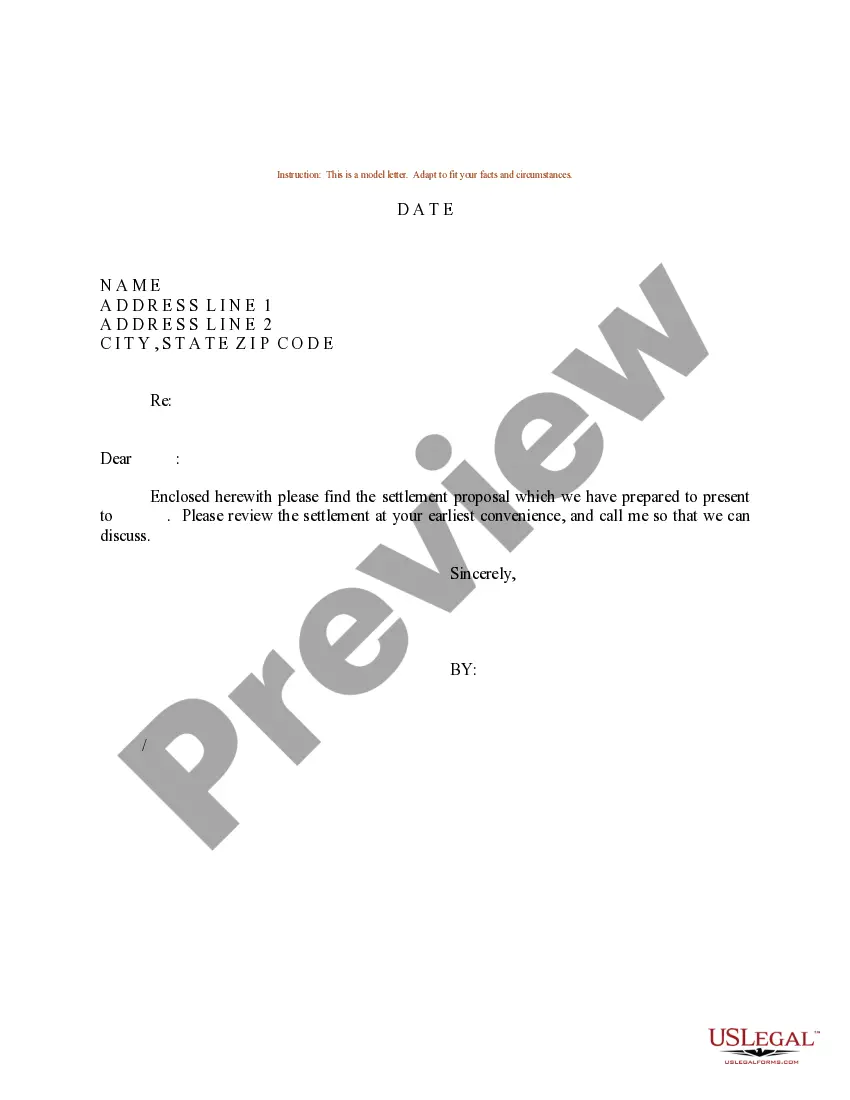
Get your form ready online
Our built-in tools help you complete, sign, share, and store your documents in one place.
Make edits, fill in missing information, and update formatting in US Legal Forms—just like you would in MS Word.
Download a copy, print it, send it by email, or mail it via USPS—whatever works best for your next step.
Sign and collect signatures with our SignNow integration. Send to multiple recipients, set reminders, and more. Go Premium to unlock E-Sign.
If this form requires notarization, complete it online through a secure video call—no need to meet a notary in person or wait for an appointment.
We protect your documents and personal data by following strict security and privacy standards.

Make edits, fill in missing information, and update formatting in US Legal Forms—just like you would in MS Word.

Download a copy, print it, send it by email, or mail it via USPS—whatever works best for your next step.

Sign and collect signatures with our SignNow integration. Send to multiple recipients, set reminders, and more. Go Premium to unlock E-Sign.

If this form requires notarization, complete it online through a secure video call—no need to meet a notary in person or wait for an appointment.

We protect your documents and personal data by following strict security and privacy standards.
Looking for another form?




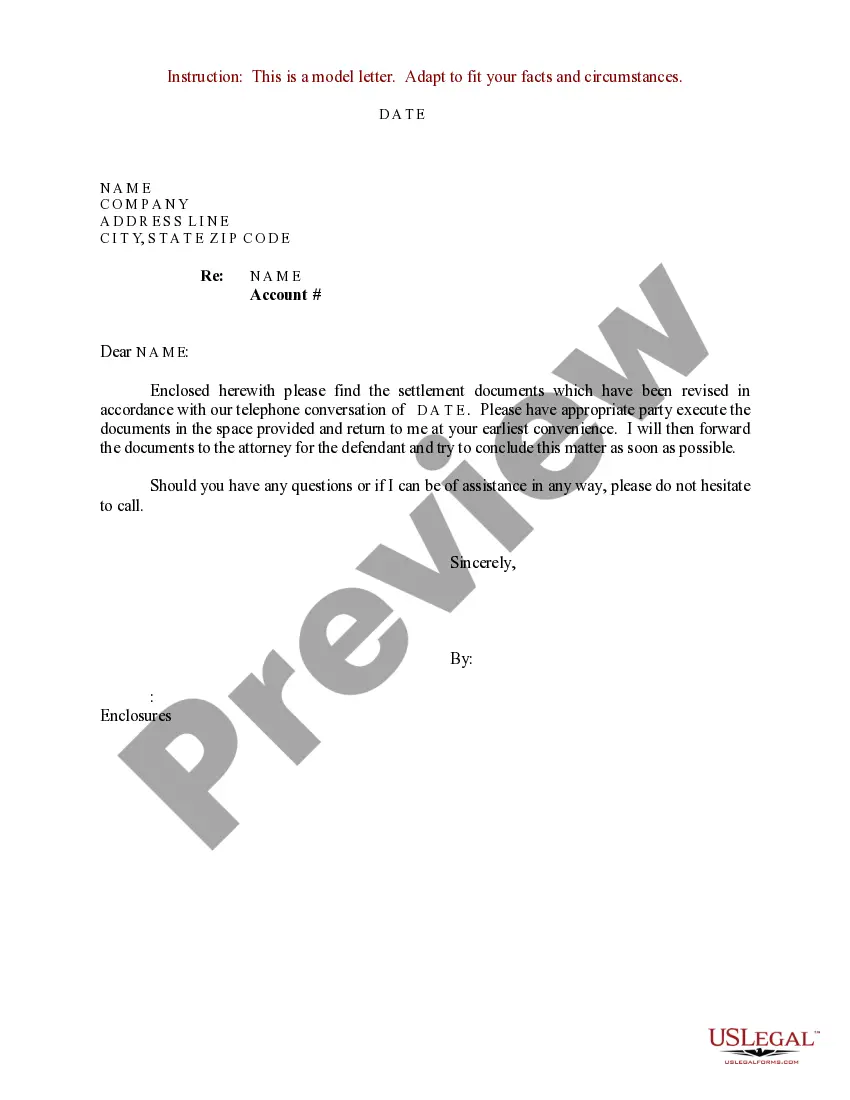

How to fill out Sample Letter For Settlement Agreement And Release?
- Start by visiting the US Legal Forms website and log into your account if you're a returning user. Ensure that your subscription is active to access the forms.
- If this is your first time, browse through the extensive online library. Use the preview mode to carefully review the form you require for your specific jurisdiction.
- If the initial selection doesn’t meet your criteria, utilize the search feature to find alternative templates that better suit your needs.
- Once you’ve found the correct document, click the Buy Now button. This will require you to set up an account if you haven’t already.
- Proceed to checkout by entering your payment details, either via credit card or PayPal to complete your order.
- Finally, download your form directly to your device for completion. You can always access it later via the My Forms section of your account.
By leveraging US Legal Forms, you are empowered to effectively handle legal documents with confidence. The platform's extensive library ensures you have access to more forms than other competitors at a similar cost, backed by expert support.
Don't hesitate! Start your legal documentation journey today by visiting US Legal Forms and take advantage of their robust resources!
Form popularity
FAQ
An example of a release of claims can often be seen in personal injury cases. For instance, after receiving a settlement for a car accident, a claimant might sign a document that releases the driver from any further claims regarding the accident, effectively ending any legal liability. This release is a key element of a settlement agreement with release, ensuring all matters are resolved and preventing future disputes. Knowing how these releases work helps you navigate legal agreements with confidence.
An example of a release contract could involve a worker who experiences an injury at work. In this case, the worker might agree to release the employer from further claims in exchange for a settlement payment. This contract typically spells out the details of the injury and any compensation provided, making it an essential part of a settlement agreement with release. Such examples illustrate how release contracts function to protect both parties from future liabilities.
To write a simple settlement agreement, start by identifying all parties involved and state the dispute succinctly. Next, define the terms of the settlement, including any financial compensation and the timeframe for fulfillment. Don't forget to include a release clause that protects both parties from future claims regarding the same dispute. Utilizing platforms like US Legal Forms can provide user-friendly templates for drafting a clear and effective settlement agreement with release.
When a claim has been released, it means that the injured party has agreed to relinquish any legal rights to pursue that claim in the future. Essentially, the release protects the party from further legal action related to that specific issue. This process is crucial in finalizing disputes, especially in the context of a settlement agreement with release. Understanding this concept fully helps ensure that both parties agree to the resolution.
To write a release agreement, begin by defining the parties involved and stating the purpose of the agreement. Clearly outline the terms, including what claims are being released and any compensation exchanged. Use straightforward language to ensure that both parties understand their rights and obligations. Consulting resources like US Legal Forms can simplify the process and provide you with templates tailored for creating a settlement agreement with release.
To obtain a settlement agreement with release, start by identifying the parties involved in the dispute. It is important to outline the terms of the agreement clearly to ensure mutual understanding. Next, draft the agreement, making sure to include all necessary legal clauses and conditions. You can utilize platforms like US Legal Forms, which offer templates for settlement agreements, simplifying the process while ensuring legal compliance.
The terms of settlement and release typically outline the conditions under which one party agrees to resolve their claims against another. These terms often include the amount of compensation, the timeline for payment, and the specific claims being released. Using a reliable platform like uslegalforms can help you craft a fair and effective settlement agreement with release, ensuring both parties understand their rights and obligations.
When an insurance claim is released, the insured party agrees to accept a settlement and relinquishes any further claims concerning that specific incident. This action provides closure for both the insurer and the insured, allowing them to avoid prolonged disputes. Knowing the implications of a release can protect your interests in any settlement agreement with release.
In insurance, a release often signifies that a policyholder agrees to a settlement that resolves a claim. This means that the policyholder is giving up their right to pursue any further claims related to that incident. Understanding this context is vital, especially when negotiating a settlement agreement with release, as it affects future claims and liabilities.
While a release and a settlement often occur together, they are not identical. A settlement agreement with release typically includes both the resolution of the dispute and the formal release of claims. Therefore, the release serves as a crucial component within the broader process of settling a legal matter.