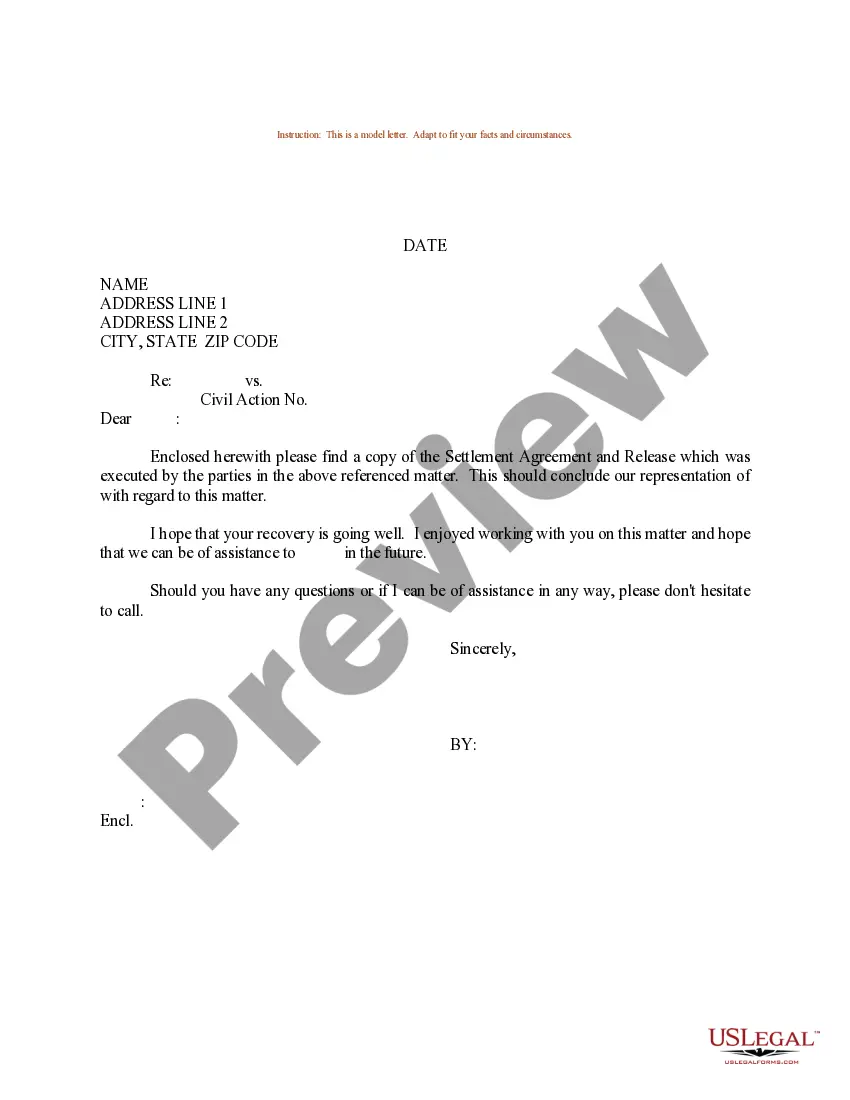
Settle 3
Description
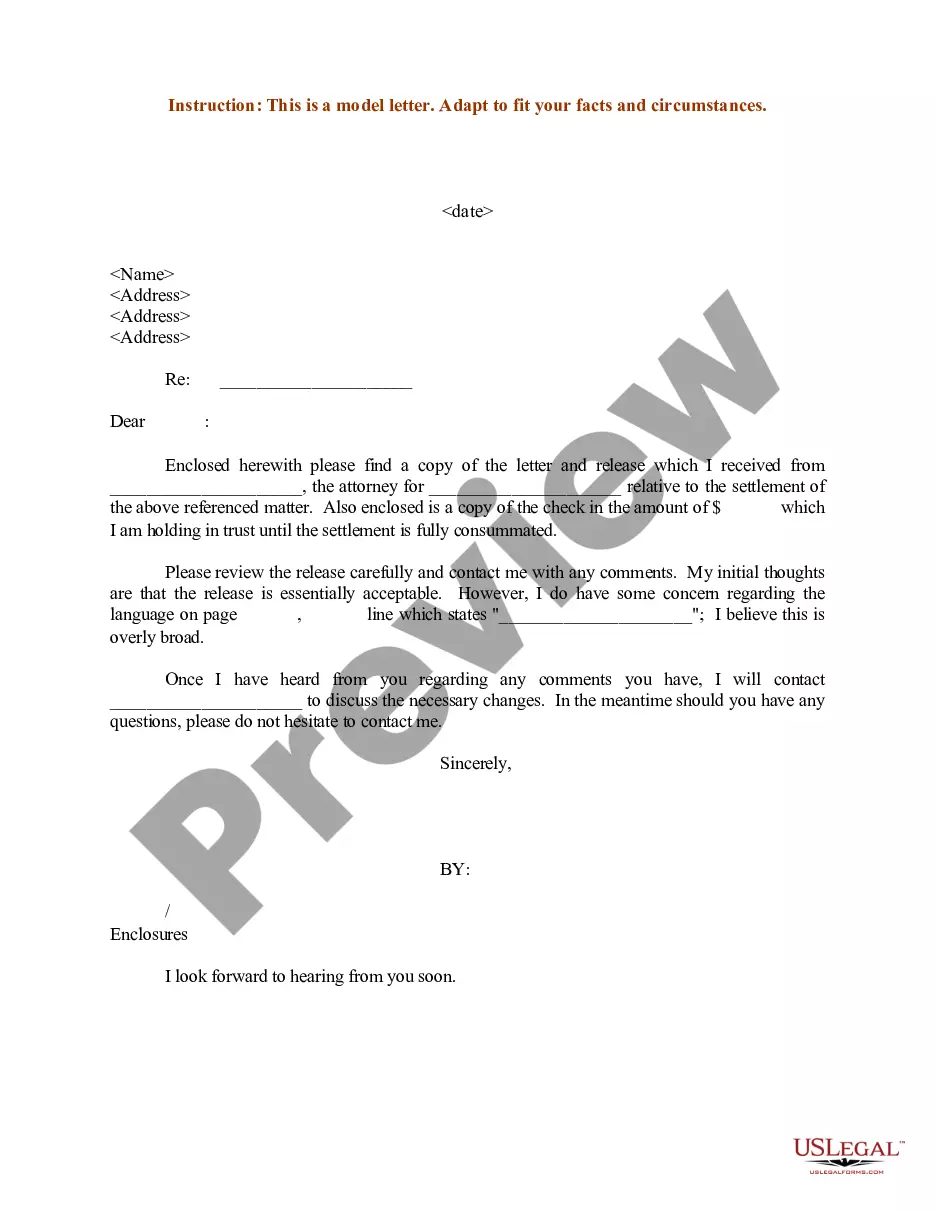
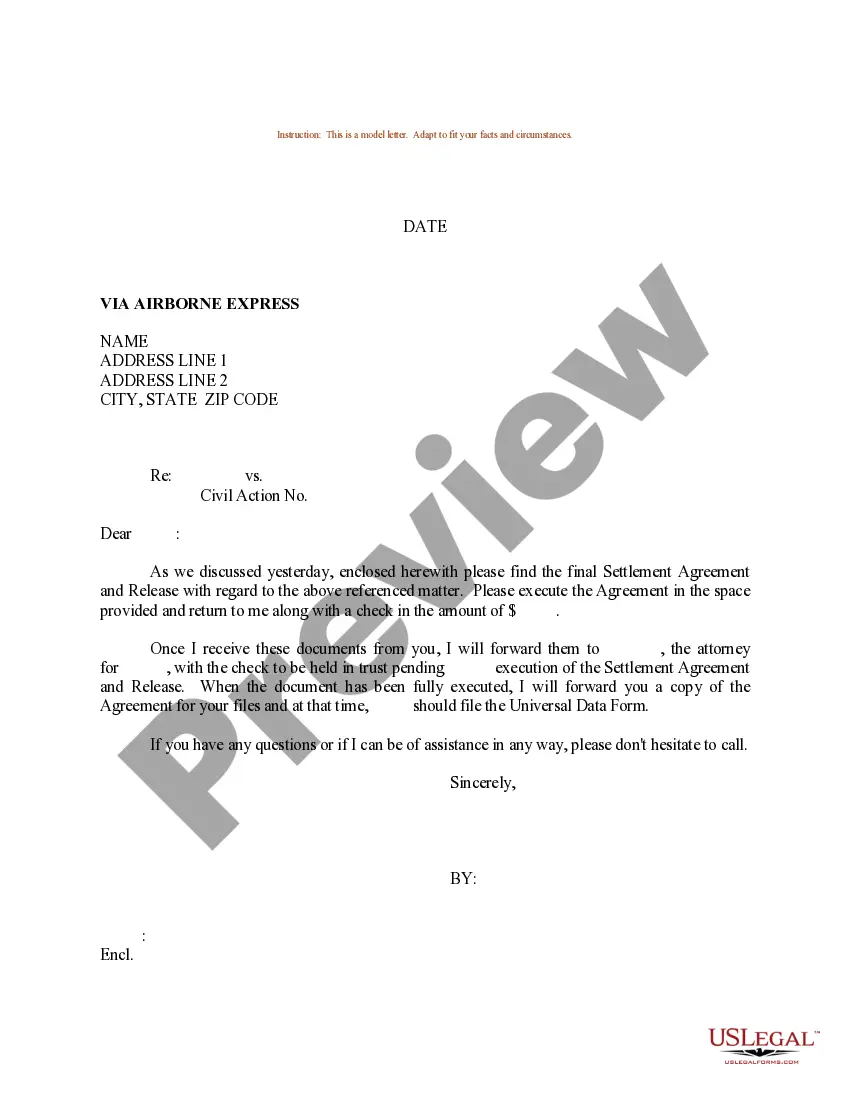
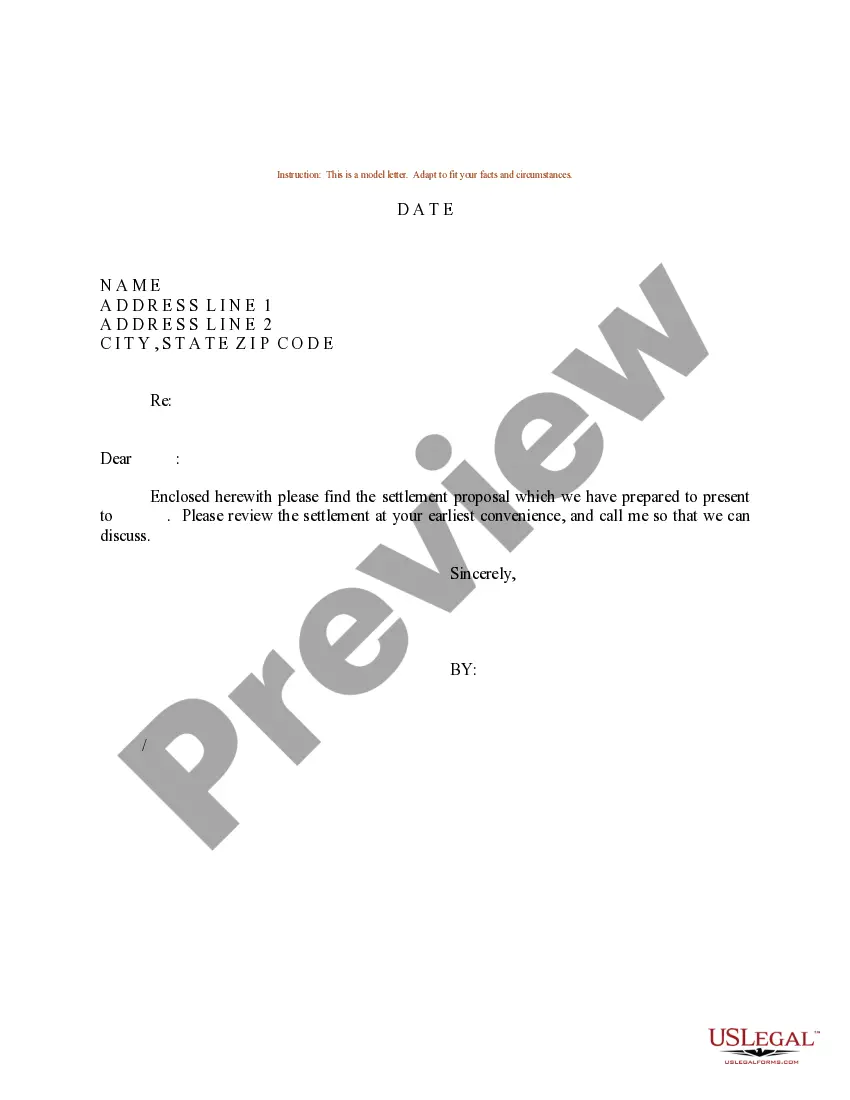
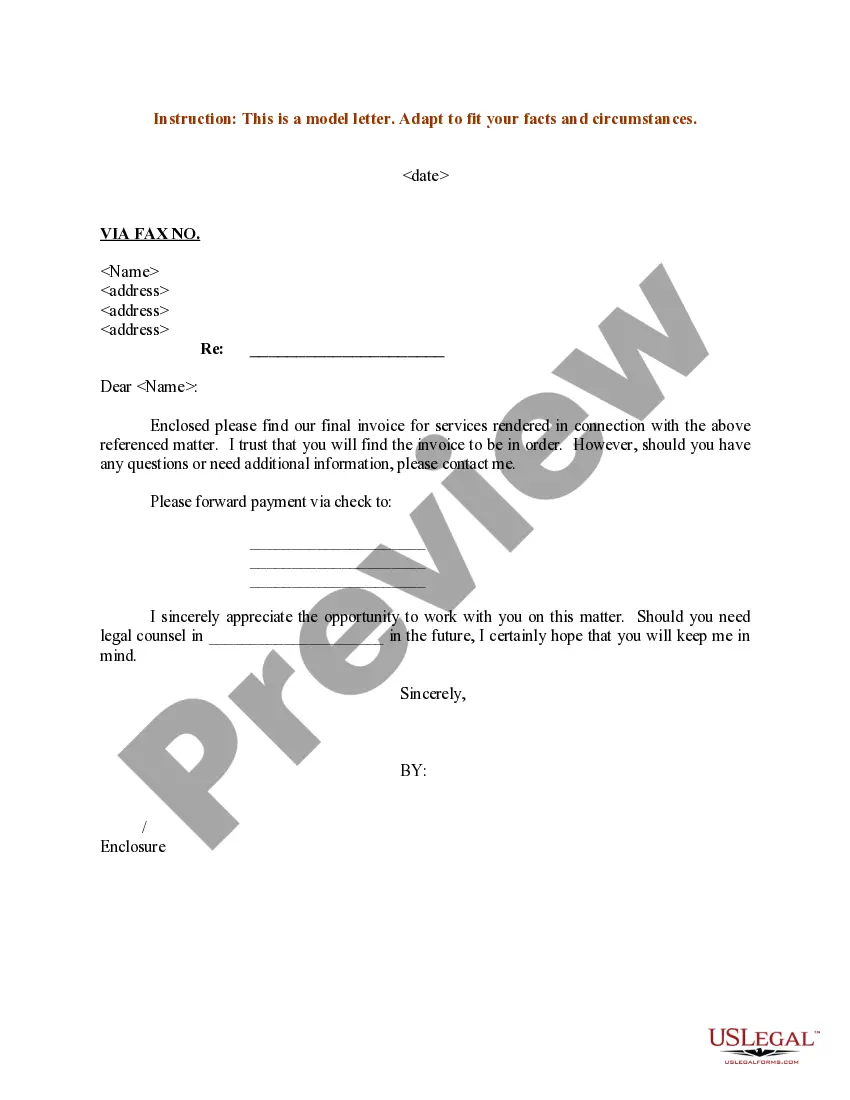
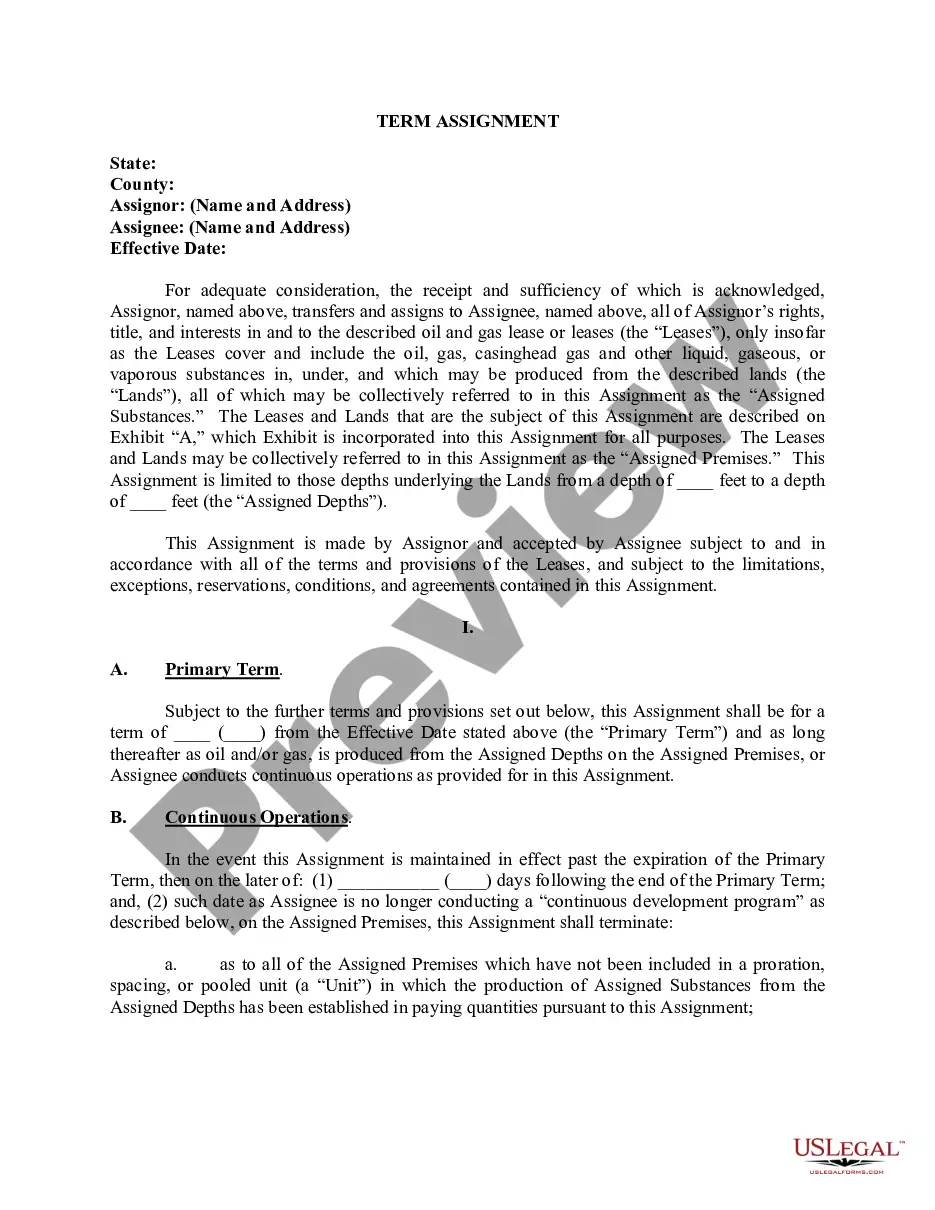
How to fill out Sample Letter For Settlement Agreement And Release?
- Log in to your pre-existing account on US Legal Forms. Ensure your subscription is active; renew it if necessary.
- If this is your first use, browse the document library and inspect the preview mode and descriptions to find a form that suits your needs.
- Use the search feature to find alternative templates if the initial selection doesn’t match your requirements.
- Select your preferred subscription plan by clicking the Buy Now button.
- Complete your purchase by inputting your payment details, either via credit card or PayPal.
- Download the form to your device and access it anytime through the My Forms section in your profile.
Using US Legal Forms not only saves time but also ensures access to a vast collection of over 85,000 easily editable legal documents. Additionally, premium experts can provide assistance, ensuring your forms are correctly completed and legally sound.
Start your legal documentation journey today with US Legal Forms and experience the ease of managing your forms. Visit their website now!
Form popularity
FAQ
The modulus of subgrade reaction settlement refers to the measure of how much a soil layer beneath a structure can compress when subjected to a load. In practical terms, it helps engineers understand the interaction between the ground and the structure above. When using Settle 3, this modulus helps determine the appropriate design for foundations, ensuring stability and durability. This information is crucial for effective construction planning.
A subgrade modulus is a numerical value that represents the supporting capacity and stiffness of the soil located beneath a structure. This measurement is essential for understanding how a structure will interact with its foundation. With the tools provided by Settle 3, you can easily assess this modulus and ensure your design meets industry standards.
The K762 modulus of subgrade reaction is a specific value used in geotechnical engineering to describe soil stiffness. This modulus is particularly useful for evaluating the behavior of slabs on grade. By utilizing Settle 3, you can implement the K762 value into your design effectively, enhancing its reliability.
To find the modulus of subgrade reaction, you can perform tests such as the plate load test or use empirical correlations based on soil type and conditions. In Settle 3, users can input known soil properties to calculate this modulus accurately. This calculation ensures that your structure remains stable and reliable under expected loads.
In Settle 3, the modulus of subgrade reaction is a critical parameter that influences the analysis of soil-structure interaction. It reflects the stiffness of the supporting soil and helps in predicting how the slab will react under load. With Settle 3, users can easily input different values to optimize the design based on varying soil conditions.
The modulus of subgrade reaction for a slab on grade is a measure of the support provided by the soil beneath the slab. This value helps engineers determine how much load the soil can support and how it will behave under different conditions. Settle 3 takes into account these factors, ensuring that your design is both safe and efficient.
A consolidation settlement refers to the process of merging multiple debts into a single payment arrangement. This method allows individuals to manage their finances more easily and systematically. With the right strategy, you can effectively settle 3 different obligations, simplifying your repayment process and potentially lowering your overall financial burden. Platforms like US Legal Forms provide valuable resources to guide you through the consolidation settlement journey.
Calculating total settlement is a crucial step in geotechnical engineering, involving factors like load magnitude, soil properties, and time. Settle 3 simplifies this calculation by aggregating all relevant factors into a cohesive analysis. By employing this software, you can achieve precise settlement predictions, leading to safer and more efficient construction outcomes.
Settle 3 software is a powerful tool used for analyzing consolidation and settlement in soil mechanics. It provides users with advanced modeling options and user-friendly interfaces to simplify complex calculations. By utilizing Settle 3, you can enhance the accuracy of your project assessments and ensure informed decision-making.
The average degree of consolidation can vary based on soil type and moisture conditions, but it generally reflects how effectively your soil is responding to loads. Settle 3 assists in calculating this average over time, allowing you to adapt your strategies based on real-time data. This ensures your project remains on track and successful.