Trust Vs Will For House
Description
Get your form ready online
Our built-in tools help you complete, sign, share, and store your documents in one place.
Make edits, fill in missing information, and update formatting in US Legal Forms—just like you would in MS Word.
Download a copy, print it, send it by email, or mail it via USPS—whatever works best for your next step.
Sign and collect signatures with our SignNow integration. Send to multiple recipients, set reminders, and more. Go Premium to unlock E-Sign.
If this form requires notarization, complete it online through a secure video call—no need to meet a notary in person or wait for an appointment.
We protect your documents and personal data by following strict security and privacy standards.

Make edits, fill in missing information, and update formatting in US Legal Forms—just like you would in MS Word.

Download a copy, print it, send it by email, or mail it via USPS—whatever works best for your next step.

Sign and collect signatures with our SignNow integration. Send to multiple recipients, set reminders, and more. Go Premium to unlock E-Sign.

If this form requires notarization, complete it online through a secure video call—no need to meet a notary in person or wait for an appointment.

We protect your documents and personal data by following strict security and privacy standards.
Looking for another form?


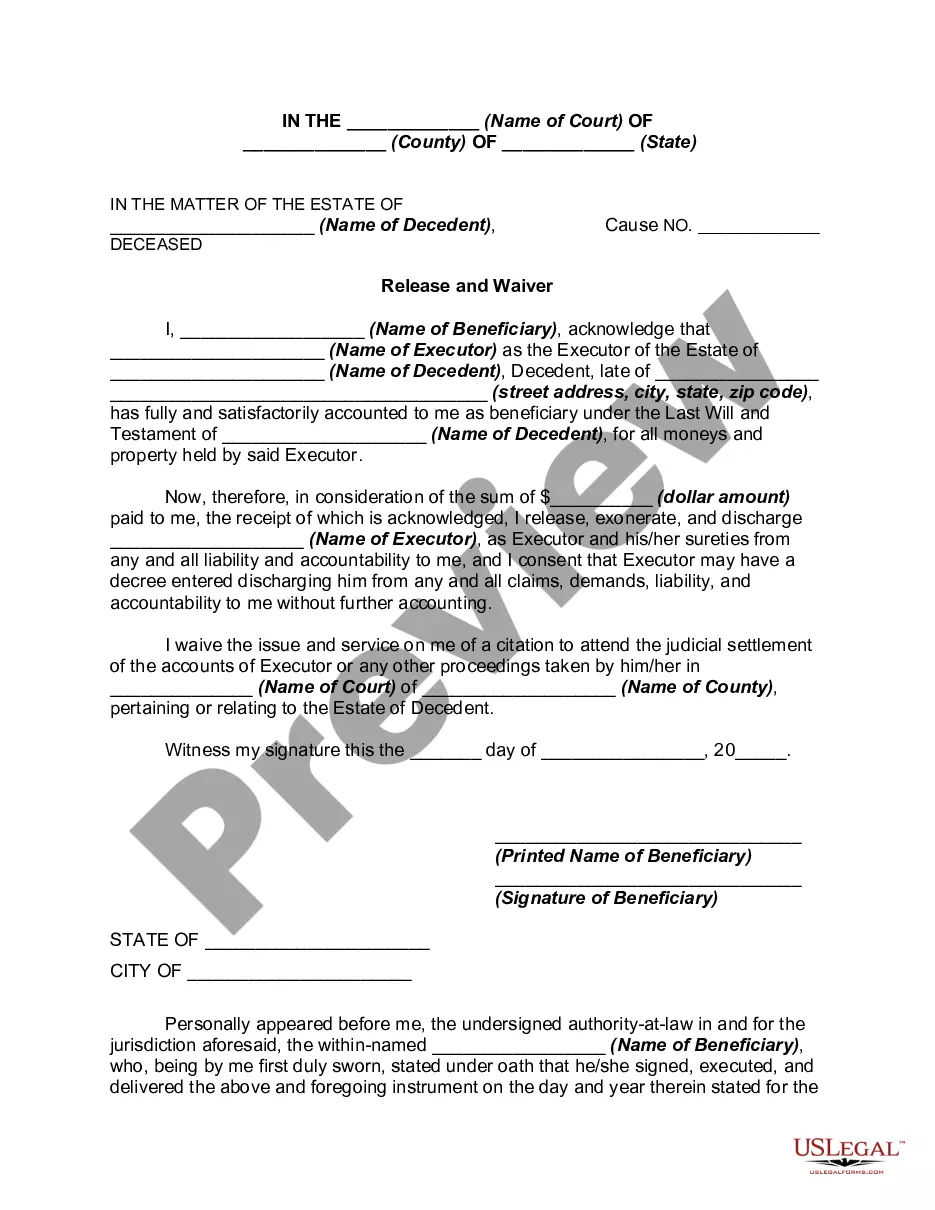



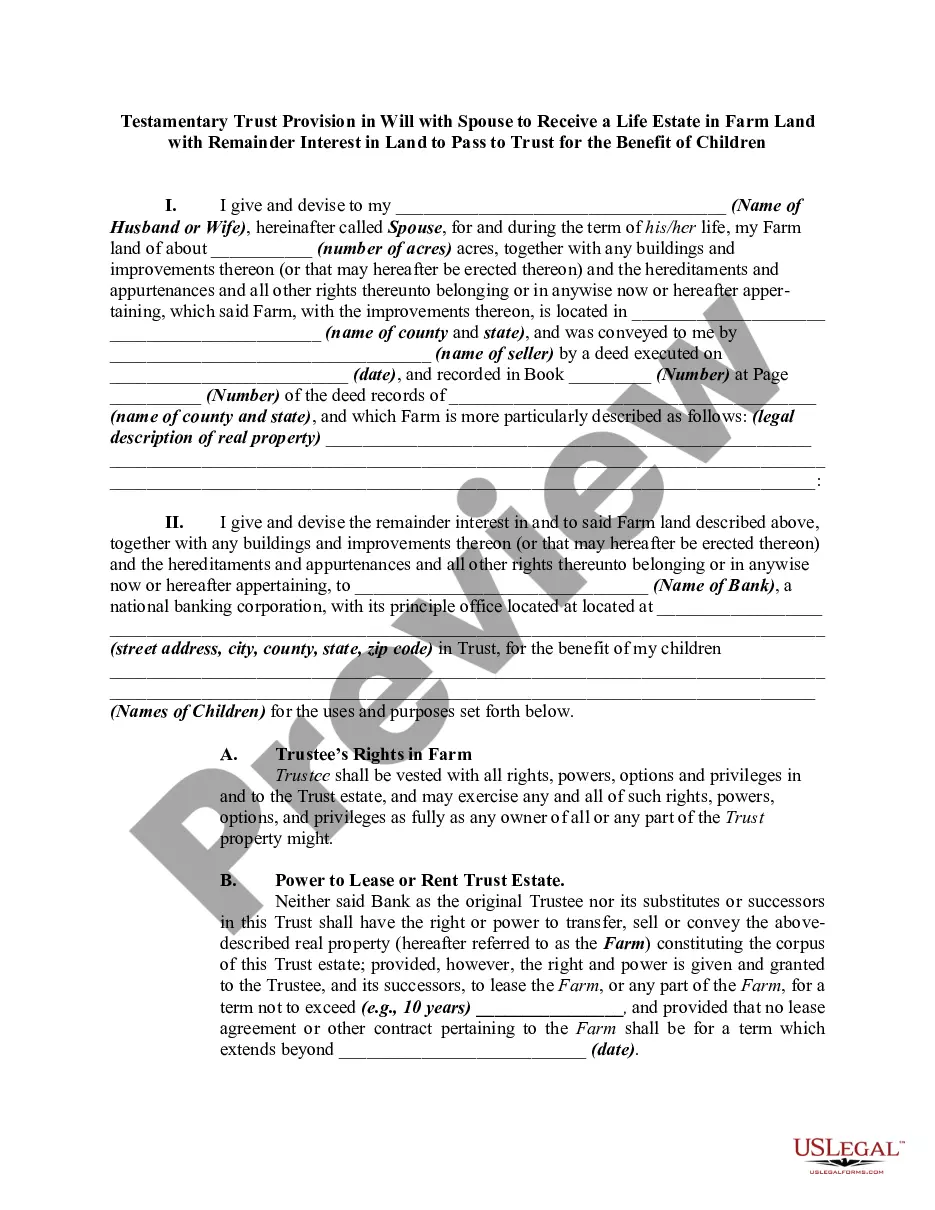
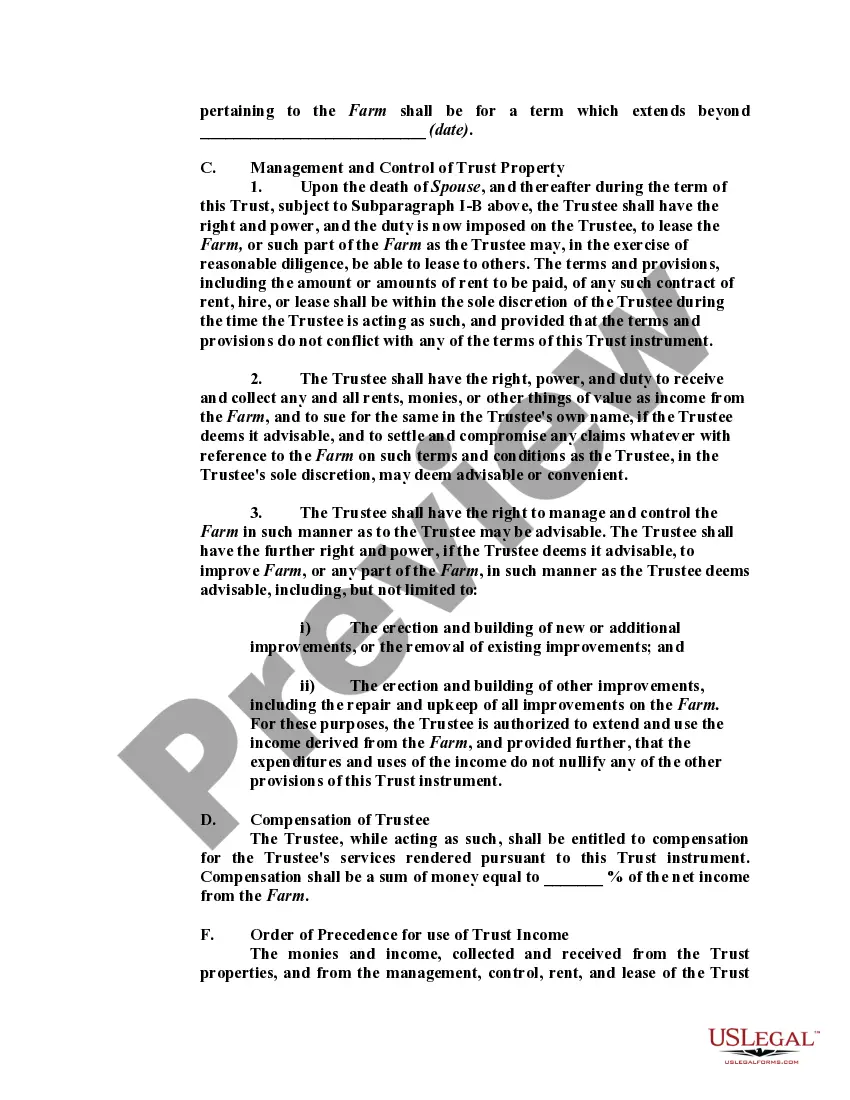
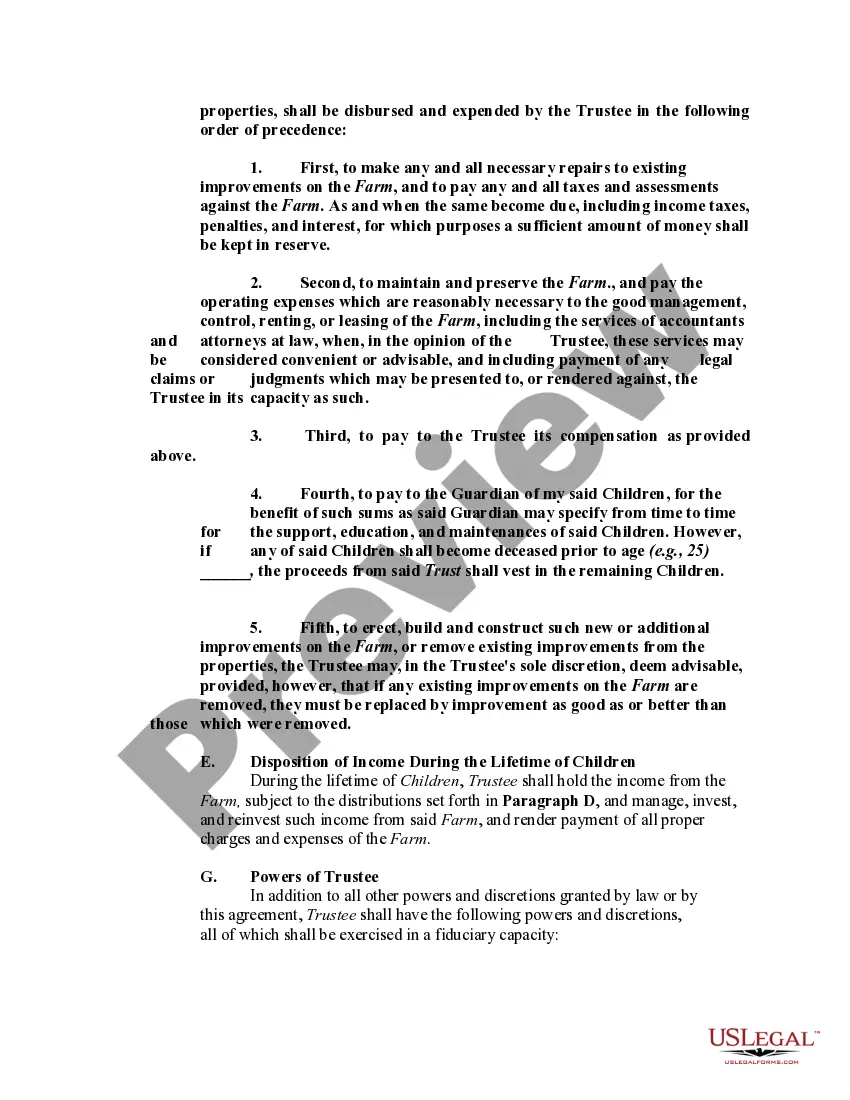
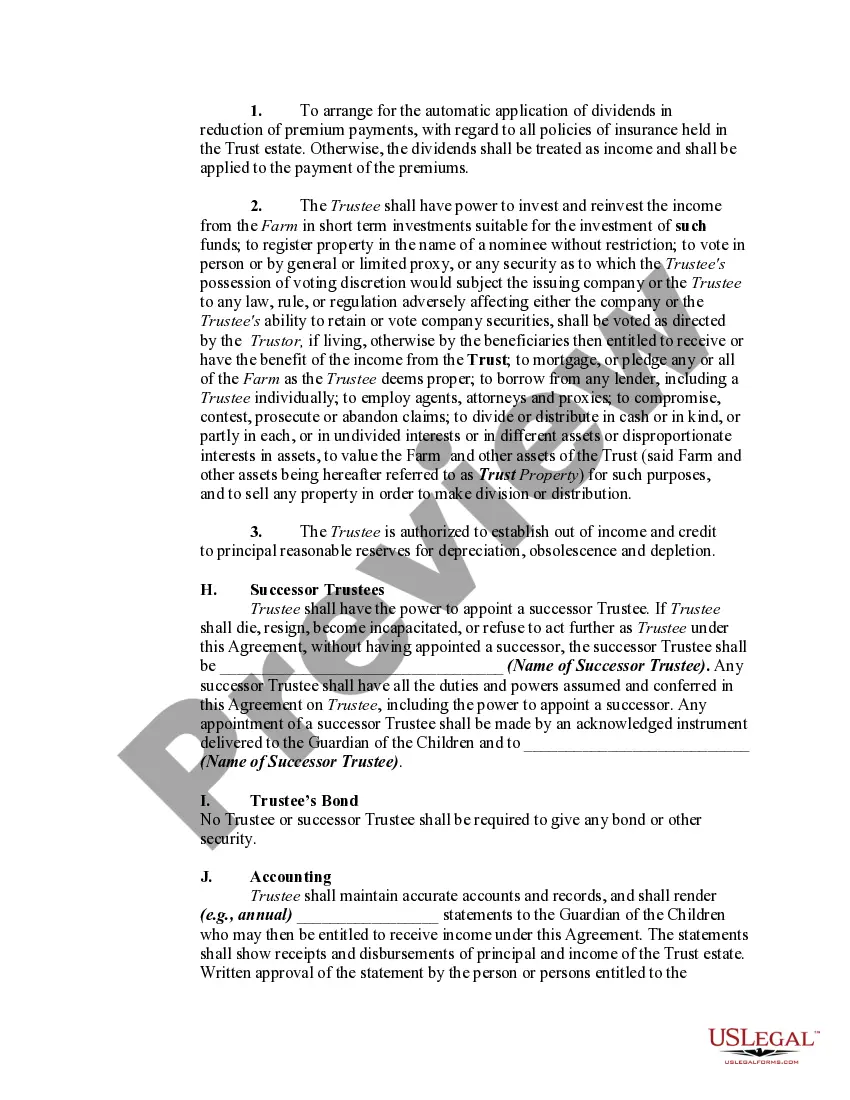
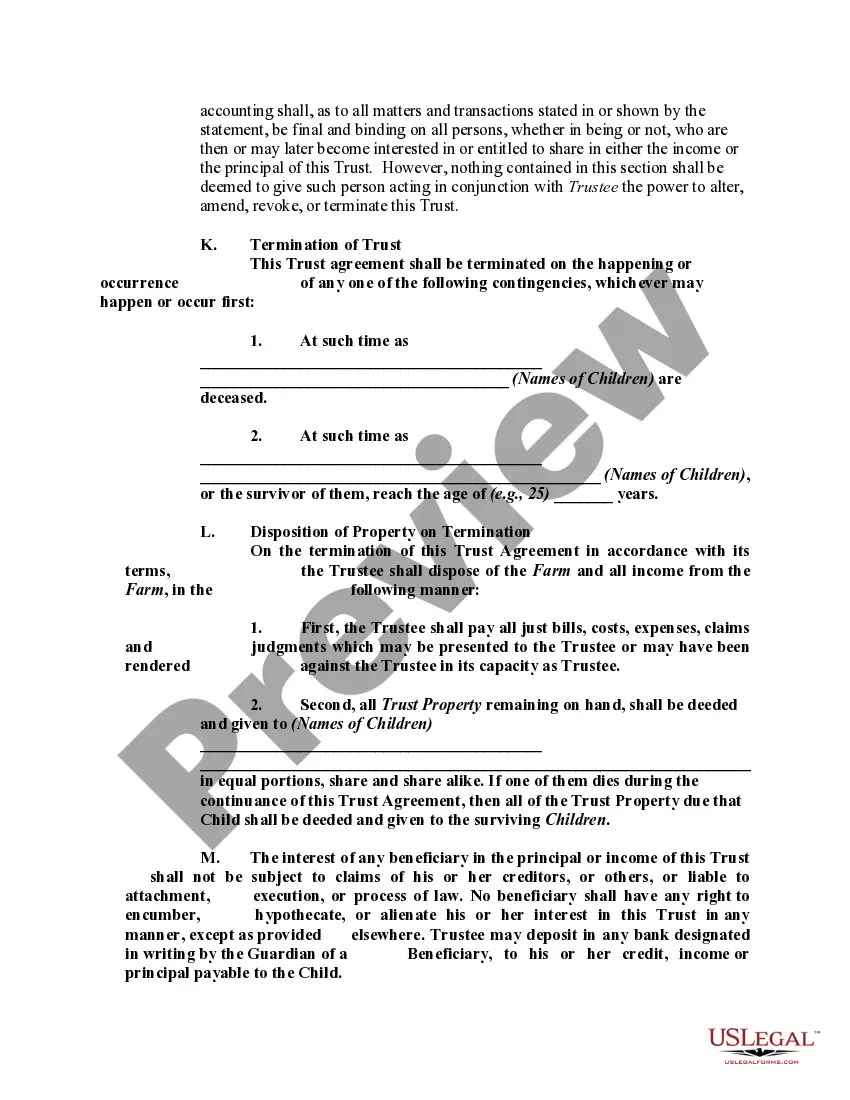
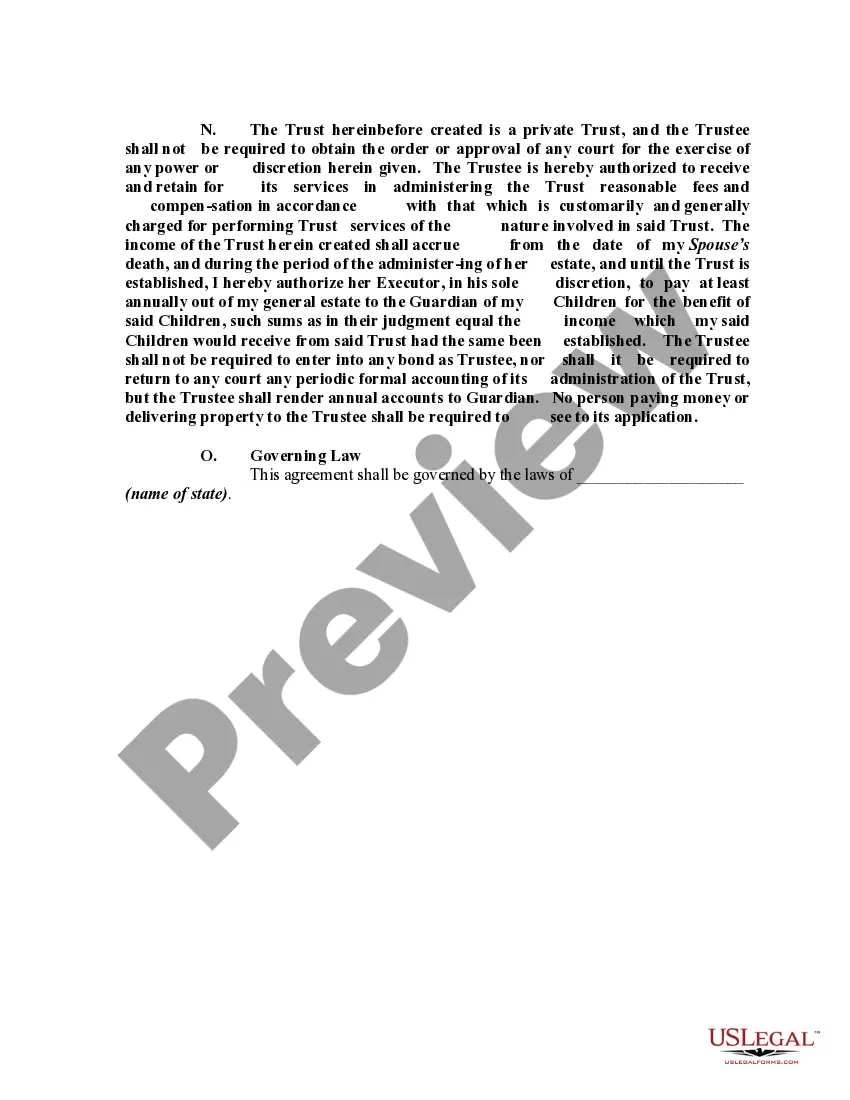
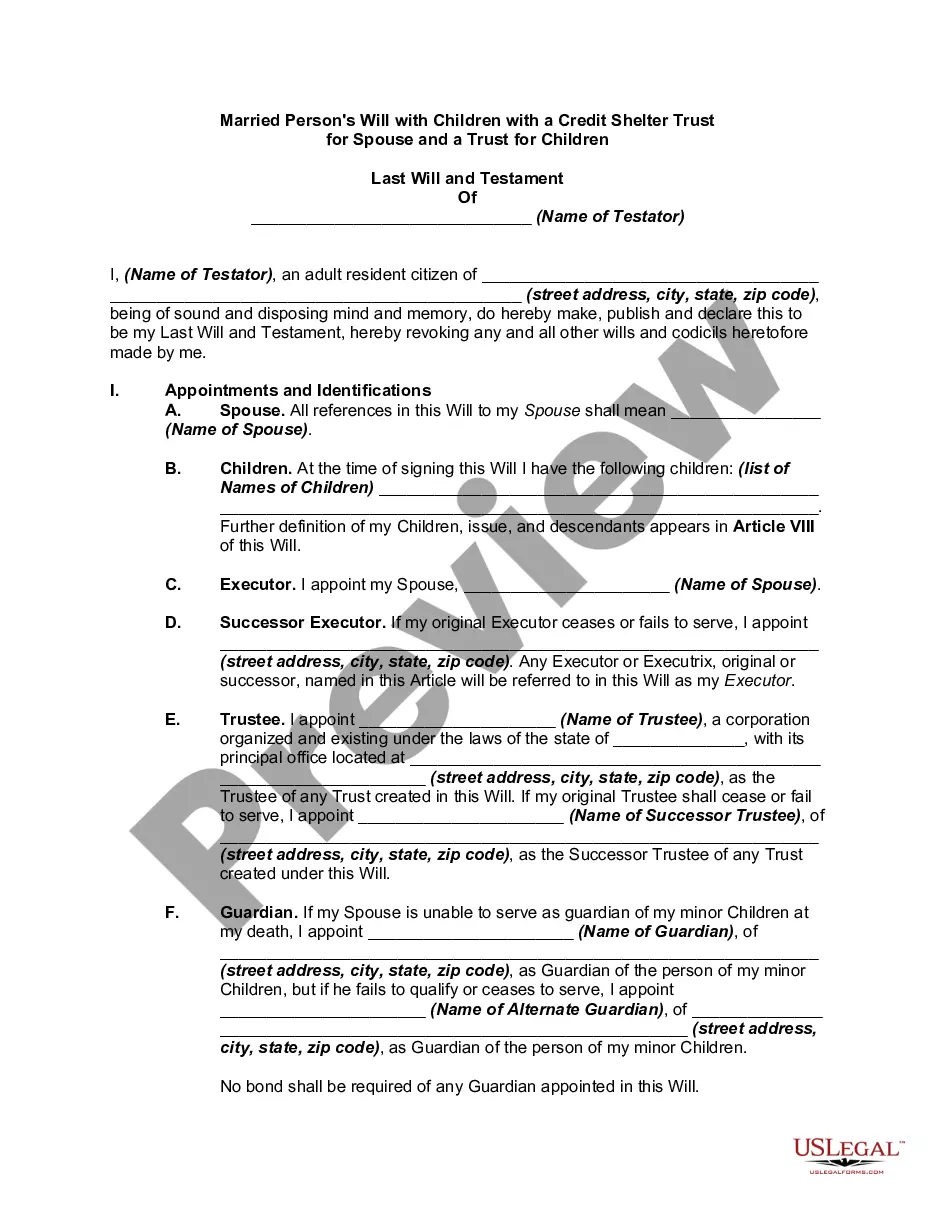
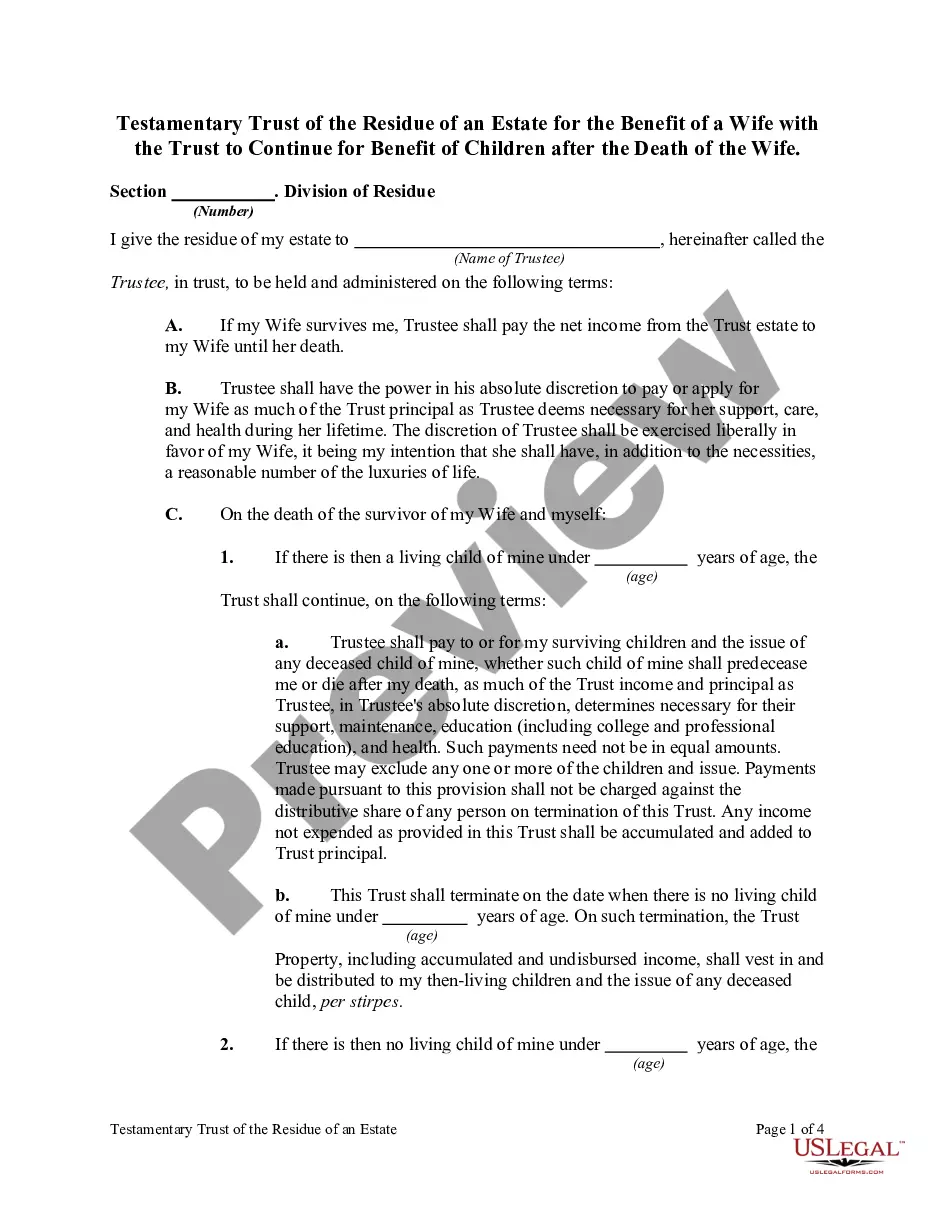
How to fill out Testamentary Trust Provision In Will With Spouse To Receive A Life Estate In Farm Land With Remainder Interest In Land To Pass To Trust For The Benefit Of Children?
- Log in to your account at US Legal Forms if you're a returning user, ensuring your subscription is active.
- For first-time users, start by reviewing the preview mode and description of the necessary form to ensure it meets your needs and local regulations.
- If the current template doesn't fit, utilize the search function to locate more suitable options.
- Once you find the right document, click on 'Buy Now' and select your preferred subscription plan. Register for an account to unlock full access.
- Complete your purchase by entering your payment information through credit card or PayPal.
- Download the form and save it to your device. You can also access previously downloaded documents in the 'My Forms' section anytime.
By using US Legal Forms, you gain access to a broad collection of over 85,000 editable legal forms, providing you assurance that your documents are comprehensive and legally valid.
Don't leave your estate planning to chance. Start exploring your options today with US Legal Forms and secure your house properly.
Form popularity
FAQ
Choosing a trust instead of a will is often advisable when you have specific goals for asset management after your passing. Trusts can help avoid probate, which speeds up the distribution of assets and maintains privacy. It's particularly beneficial if you own property in multiple states or have complex family dynamics. Understanding the nuances of trust vs will for house is crucial for making an informed decision.
The best way to leave a house to your child often depends on your family's unique situation. One effective approach includes placing the house in a trust, allowing for smooth transfer without probate delays. Alternatively, you may consider a will, which could be simpler for some families. Weighing the pros and cons of trust vs will for house will help you decide what aligns best with your goals.
Deciding between gifting a house and placing it in a trust involves several considerations. Gifting can lead to immediate transfer of ownership, but it may trigger gift taxes and impact your tax exemption limits. On the other hand, a trust provides control over how your property is managed, but it may also require more paperwork. Carefully evaluate both options in the context of trust vs will for house to find the best fit for your needs.
Putting your house in trust can come with several drawbacks. First, transferring ownership may incur tax implications or costs, which can be a financial burden. Additionally, trusts require ongoing maintenance and management, adding complexity to your estate plan. It's essential to weigh these factors against the benefits when considering trust vs will for house.
One of the most common mistakes parents make when setting up a trust fund is not clearly defining the terms and conditions for distributions. This lack of clarity can lead to misunderstandings or misuse of funds. When considering trust vs will for house, ensure your trust outlines specific intentions for your property, so your wishes are honored. You can use platforms like US Legal Forms to help create a comprehensive and effective trust.
Whether a trust is better than a will depends on your individual circumstances. Trusts typically offer more privacy and flexibility than wills, which can be beneficial in protecting your assets. In the debate of trust vs will for house, a trust can avoid probate and allow for quicker distribution to beneficiaries. Ultimately, consider your goals and consult with a legal expert to determine the best option for you.
Holding property in a trust offers several advantages, such as avoiding probate and providing privacy in your estate plan. However, it can also involve higher initial setup costs and ongoing management responsibilities. In the context of trust vs will for house, trusts can provide more control over how your property is distributed after your death. It's essential to weigh these benefits and drawbacks carefully.
Choosing a trust instead of a will can offer significant benefits, especially regarding a Trust vs will for house. A trust provides privacy since it does not go through probate, unlike a will, which becomes public record. Additionally, trusts can safeguard your assets from creditors and provide greater flexibility in distributing your property. Finally, using a platform like US Legal Forms can simplify the process of creating a trust to ensure your wishes are carried out efficiently.
When considering Trust vs will for house, trusts often provide more comprehensive control over your assets. A trust allows you to manage your property during your lifetime and specifies how your assets should be distributed after your passing. Unlike a will, a trust can help you avoid probate, allowing for a quicker transfer of your assets to your beneficiaries. Thus, many find trusts to be the more powerful option for estate planning.
When considering Trust vs will for house ownership, it's important to note that using a trust can provide certain tax advantages. Trusts often avoid probate, which can help reduce estate taxes and expedite the distribution of assets. On the other hand, wills typically go through probate, potentially leading to higher taxes and fees. Therefore, assessing your specific financial situation and goals is crucial, and platforms like US Legal Forms can guide you in making informed decisions about your estate planning.