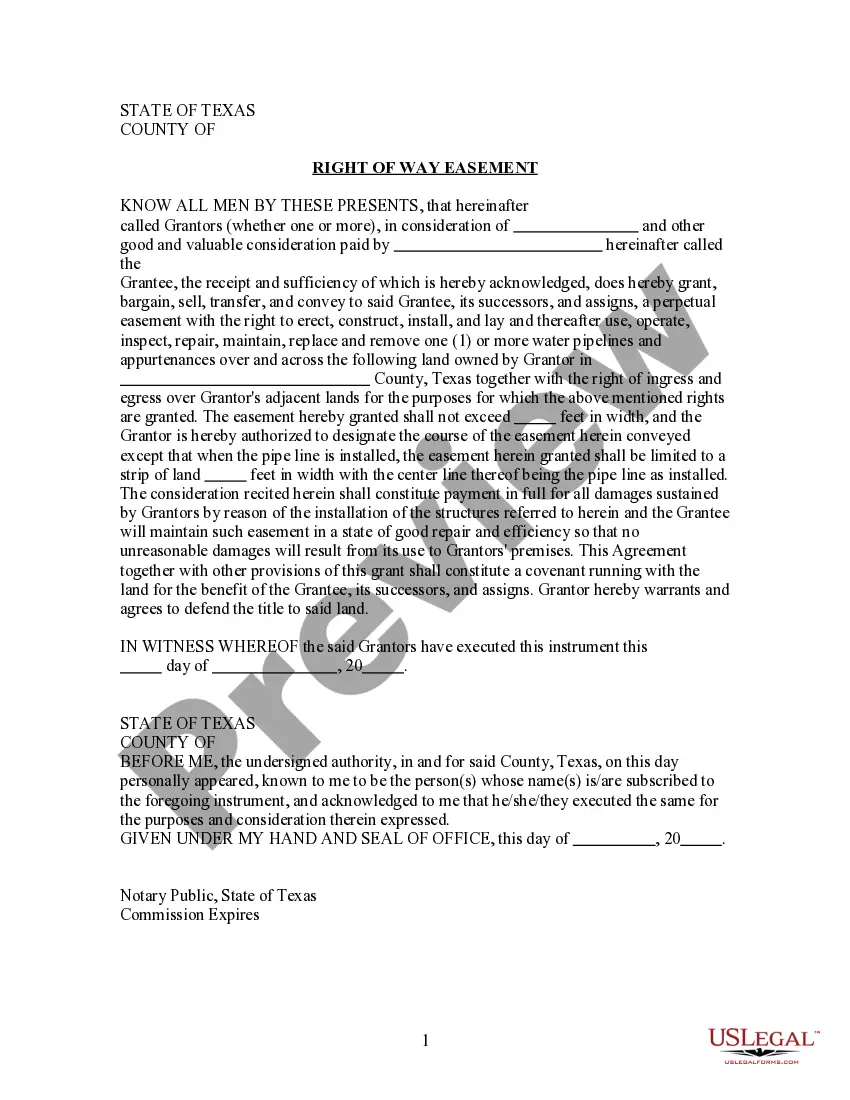
Texas Right of Way Easement for Water Pipeline or Pipelines
Understanding this form
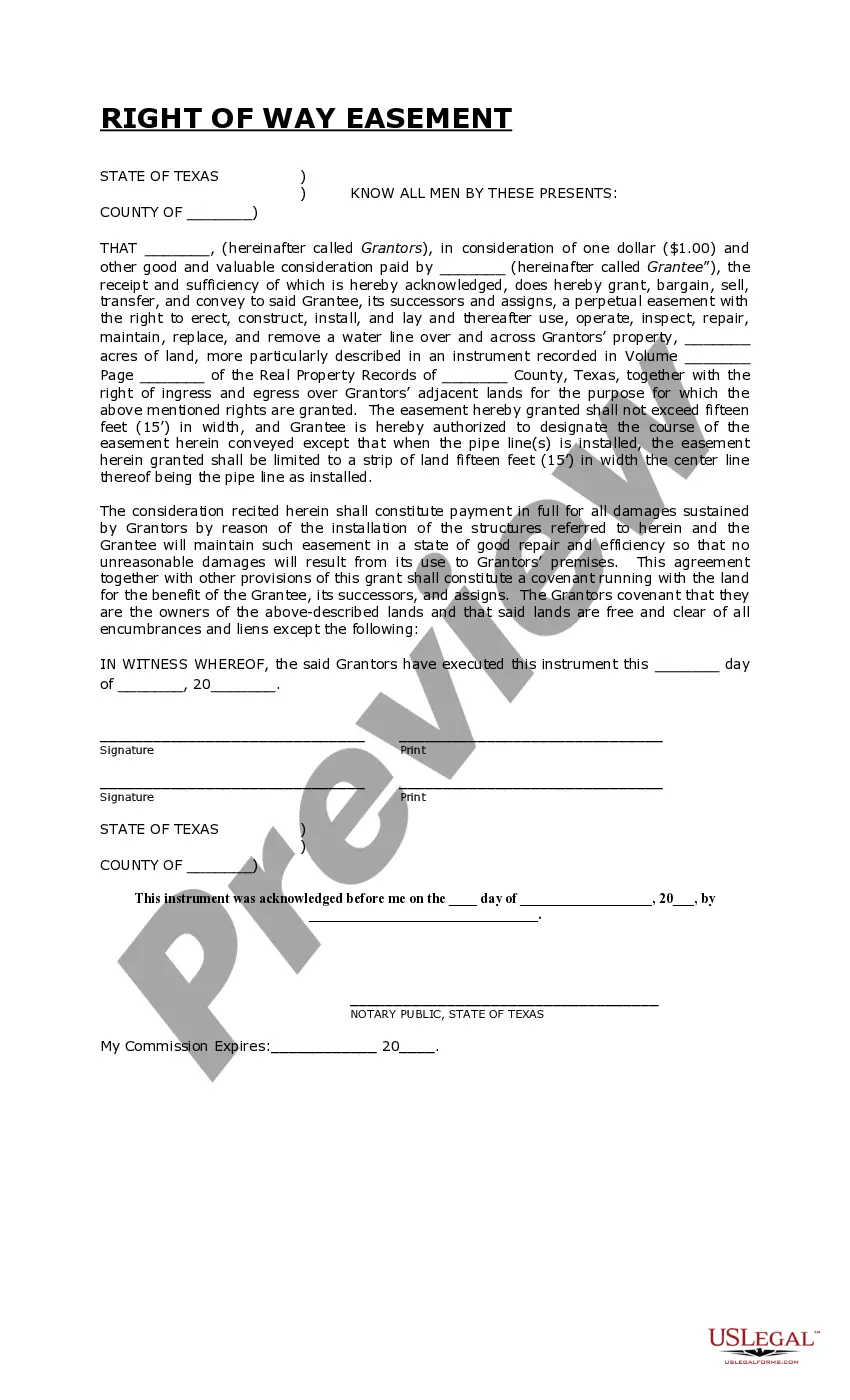
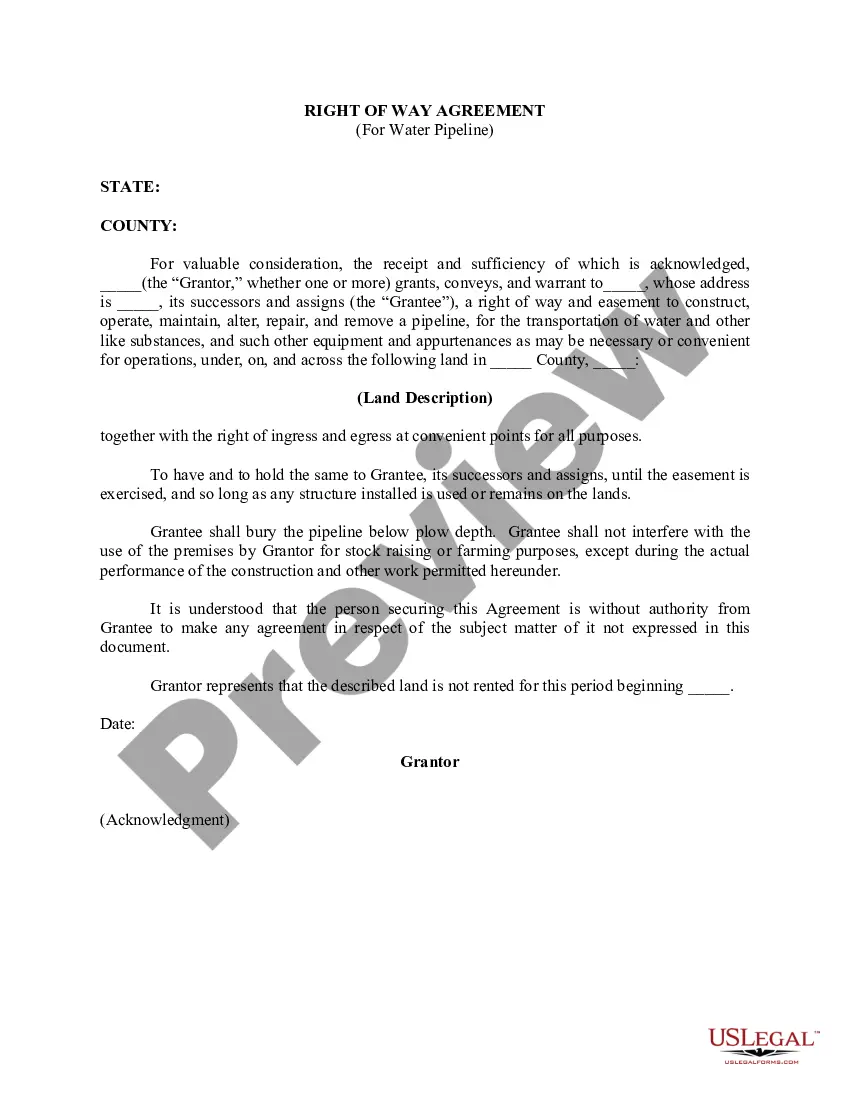
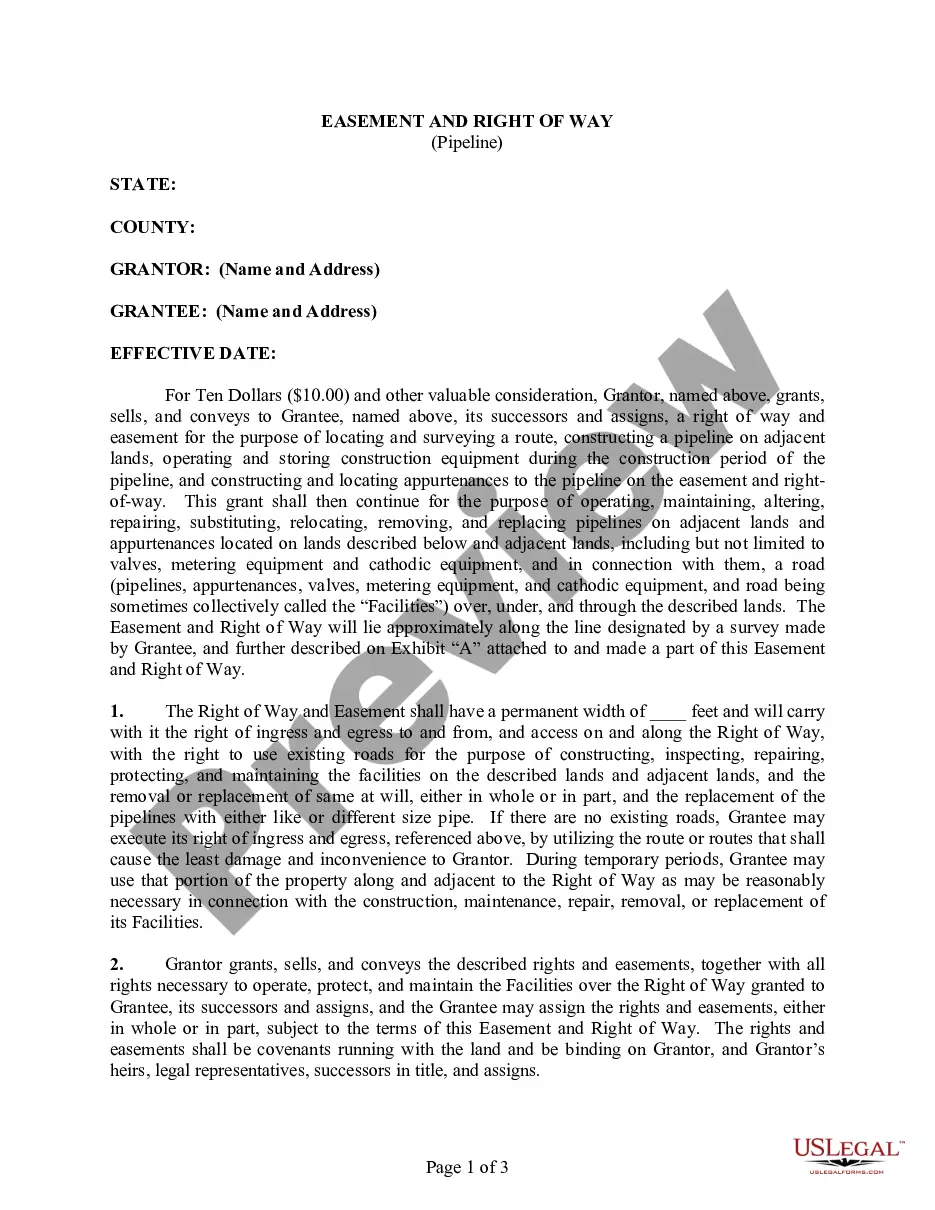
The Right of Way Easement for Water Pipeline is a legal document that grants permission for one party to cross over another party's land to install and maintain water pipelines. This form is essential for establishing a perpetual easement, which is a long-term agreement that allows utilities or individuals to manage water supply infrastructure without transferring property ownership. By using this easement form, the involved parties can clearly outline their rights and responsibilities, ensuring compliance with legal standards and avoiding disputes.
Key parts of this document
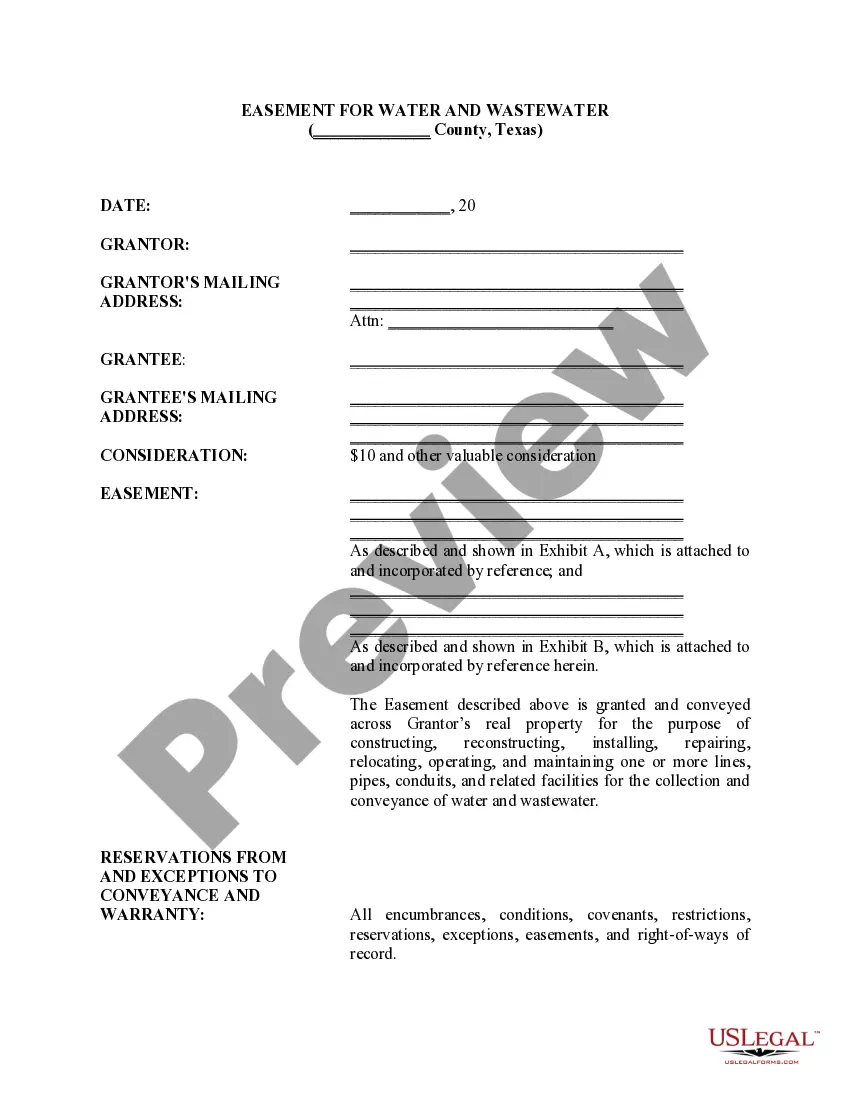
- Names and addresses of the Grantor (property owner) and Grantee (individual or organization receiving the easement).
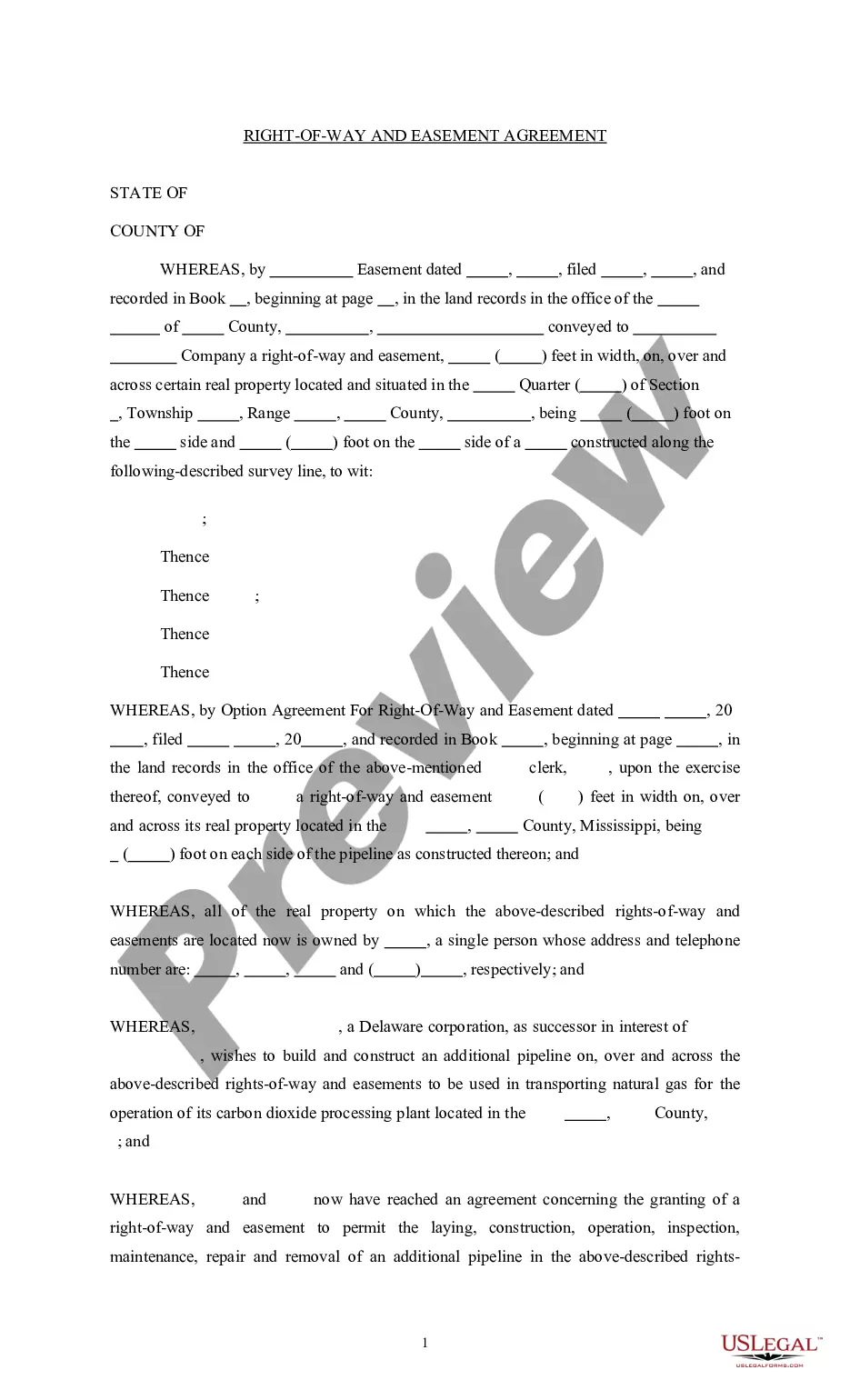
- Description of the land where the easement will be granted.
- Permitted uses of the easement, such as the construction, installation, operation, and maintenance of water pipelines.
- Terms regarding the maintenance and repair responsibilities of the Grantee.
- Duration of the easement, confirming it is perpetual.
- Signatures of the parties involved, along with execution details.
Common use cases
This form should be used when you need to establish the right for an entity, like a utility company, to install and operate water pipelines on private property. It is particularly relevant in scenarios involving property development, agricultural needs for irrigation, or municipal projects where access to water is crucial. If you are developing land and require water pipelines to service your project, this easement form will legally secure those rights.
Intended users of this form
- Property owners who are granting easements for water pipelines.
- Utility companies needing access to install and maintain water pipelines.
- Developers working on projects requiring water resources.
- Agricultural businesses that need to ensure access to irrigation.
- Individuals or entities engaging in property transactions involving existing water pipeline easements.
How to complete this form
- Identify and provide the names and addresses of both the Grantor and Grantee.
- Clearly describe the property where the easement will be located including any relevant landmarks or boundaries.
- Outline the specific uses permitted under the easement, including installation and maintenance activities.
- Include the duration of the easement, ensuring it is stated as perpetual.
- Ensure both parties sign the document in the presence of a witness if required.
Does this form need to be notarized?
To make this form legally binding, it must be notarized. Our online notarization service, powered by Notarize, lets you verify and sign documents remotely through an encrypted video session.
Common mistakes
- Failing to clearly define the boundaries of the easement area.
- Not detailing the specific rights granted to the Grantee.
- Omitting signatures or execution dates, which can invalidate the document.
- Forgetting to inform adjacent property owners, which may lead to disputes.
Why complete this form online
- Convenience of downloading and printing the form at your own pace.
- Editability allows you to fill out the form accurately based on specific needs.
- Access to legal templates drafted by licensed attorneys ensures reliability.
Legal requirements by state
This form is designed specifically for use in Texas, aligning with the state's legal requirements concerning easements and property rights. The language and stipulations are tailored to meet Texas law, ensuring proper documentation and enforceability.


Form popularity
FAQ
The easiest way to gain access to a landlocked property is to obtain an express easement from the neighboring landowner. This easement should be in writing, signed by the grantor, specifically identify the property and details of the allowed easement use, and filed in the county deed records.
Absent an express agreement to the contrary, the owner of the dominant estate has a duty to maintain the easement, and the owner of the servient estate has no right to interfere with the dominant estate. Roberts v. Freindswood Dev. Co., 886 S.W.
A property easement is a legal situation in which the title to a specific piece land remains with the landowner, but another person or organization is given the right to use that land for a distinct purpose.
Easements are nonpossessory interests in land. The holder of an easement has the right to use a tract of land for a special use only, and does not own or have full use and enjoyment of the land. Often, easements are created in Texas to give a person or corporation a right of access across a piece of land.