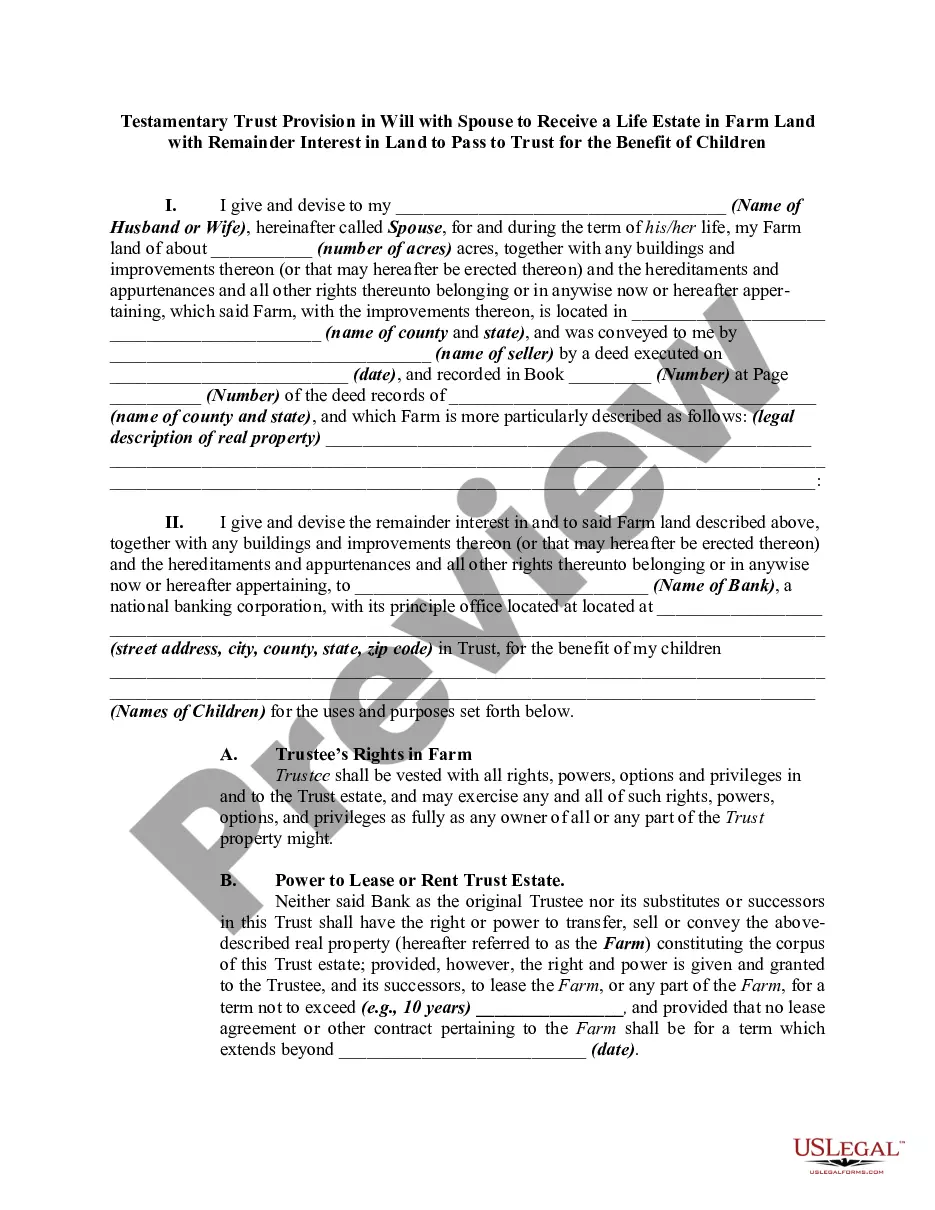
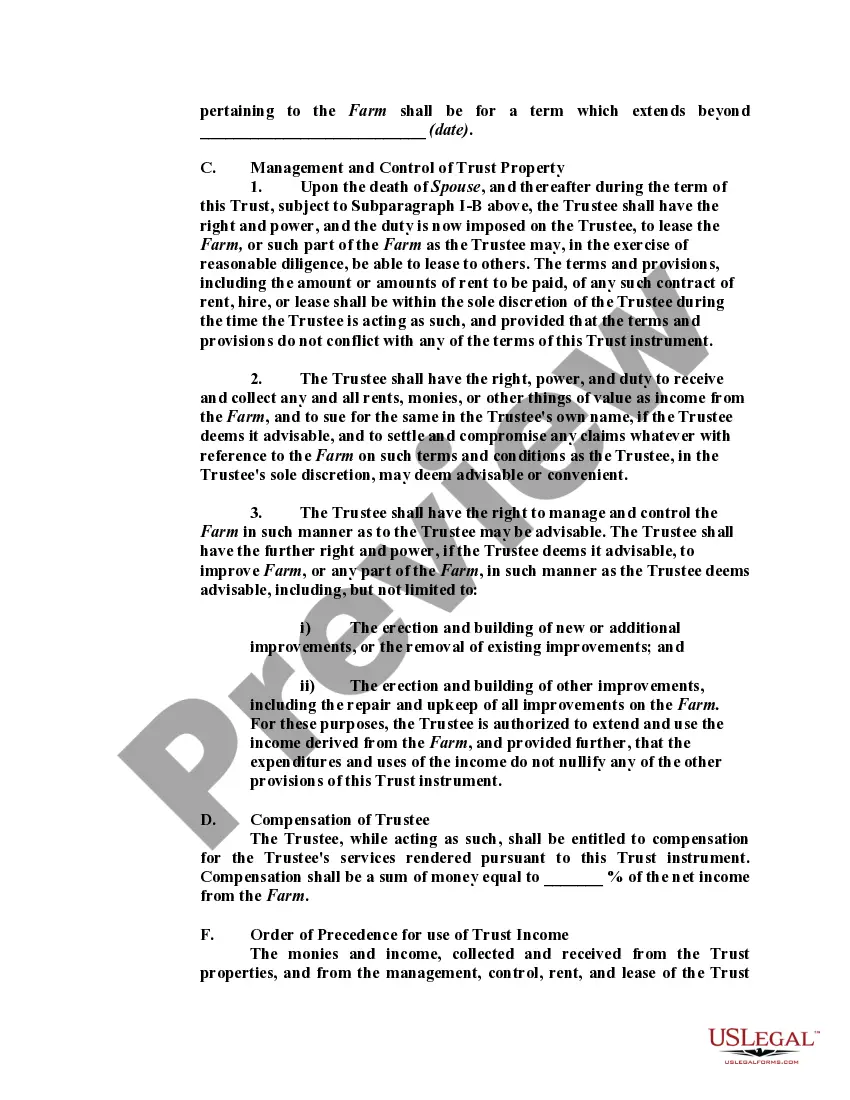
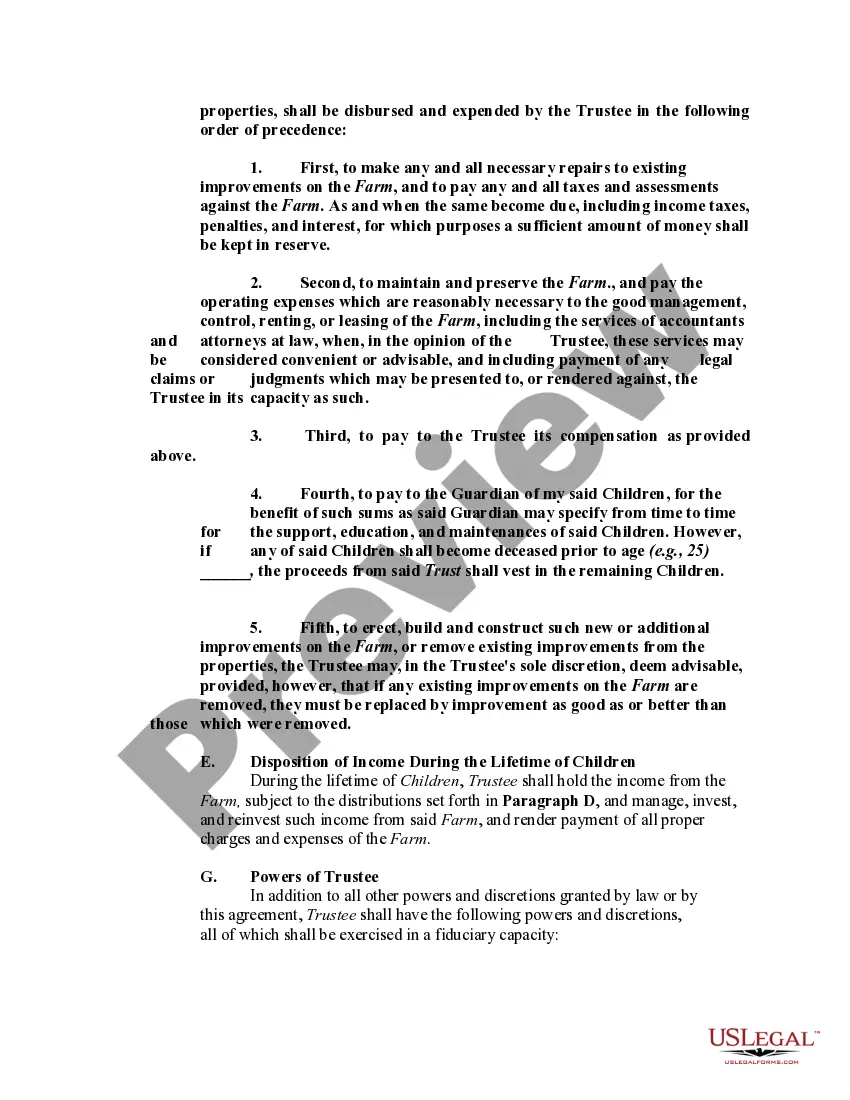
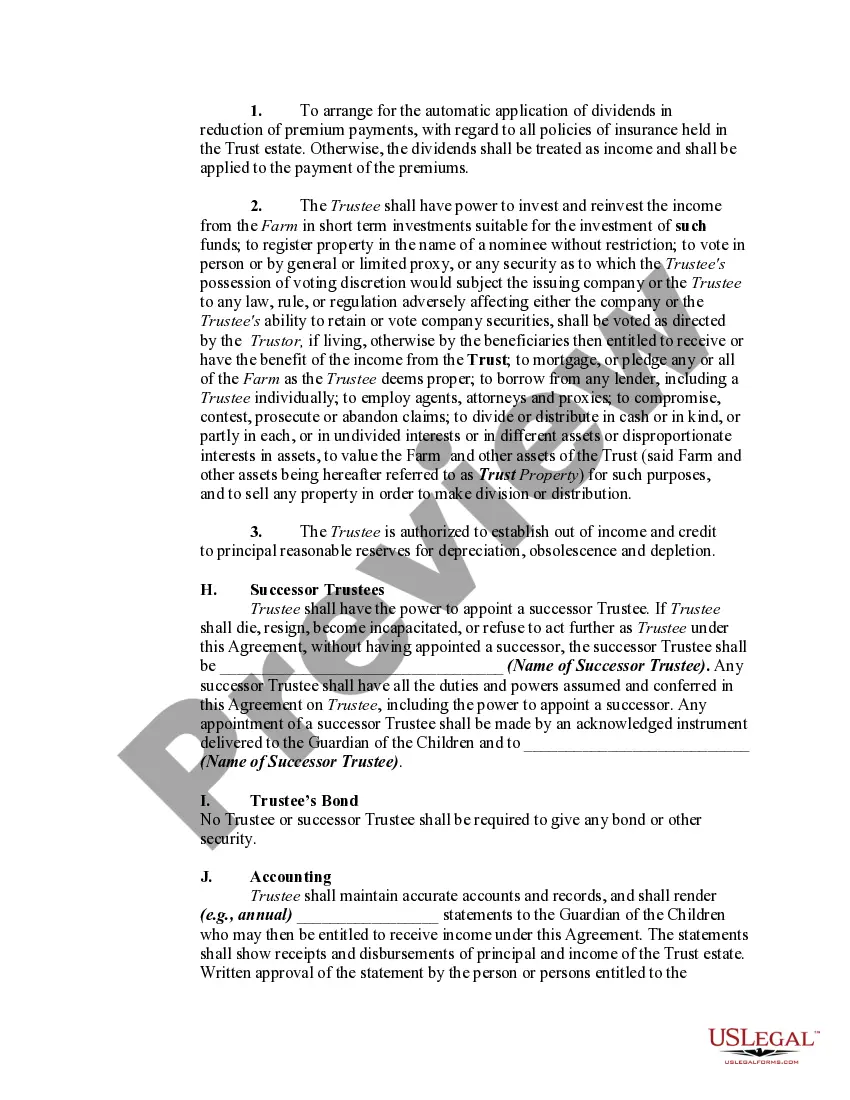
Testamentary Trust In Florida
Description

Get your form ready online
Our built-in tools help you complete, sign, share, and store your documents in one place.
Make edits, fill in missing information, and update formatting in US Legal Forms—just like you would in MS Word.
Download a copy, print it, send it by email, or mail it via USPS—whatever works best for your next step.
Sign and collect signatures with our SignNow integration. Send to multiple recipients, set reminders, and more. Go Premium to unlock E-Sign.
If this form requires notarization, complete it online through a secure video call—no need to meet a notary in person or wait for an appointment.
We protect your documents and personal data by following strict security and privacy standards.

Make edits, fill in missing information, and update formatting in US Legal Forms—just like you would in MS Word.

Download a copy, print it, send it by email, or mail it via USPS—whatever works best for your next step.

Sign and collect signatures with our SignNow integration. Send to multiple recipients, set reminders, and more. Go Premium to unlock E-Sign.

If this form requires notarization, complete it online through a secure video call—no need to meet a notary in person or wait for an appointment.

We protect your documents and personal data by following strict security and privacy standards.
Looking for another form?







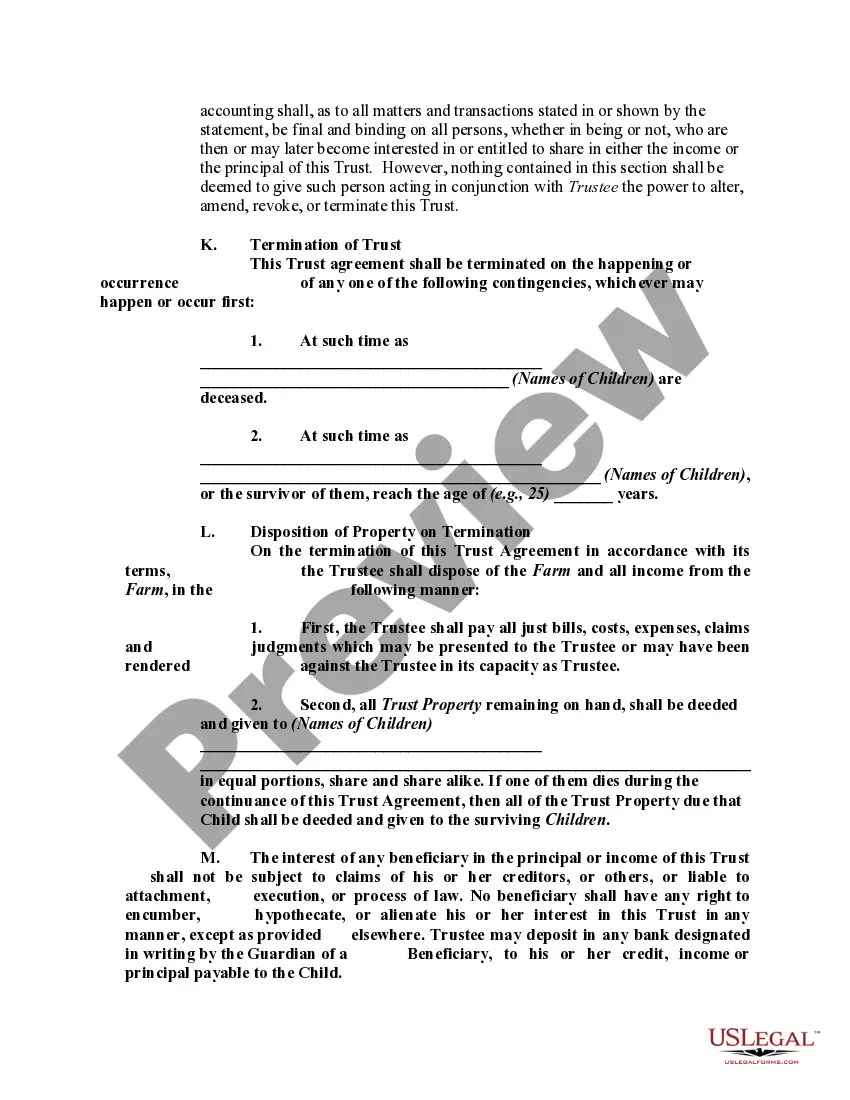
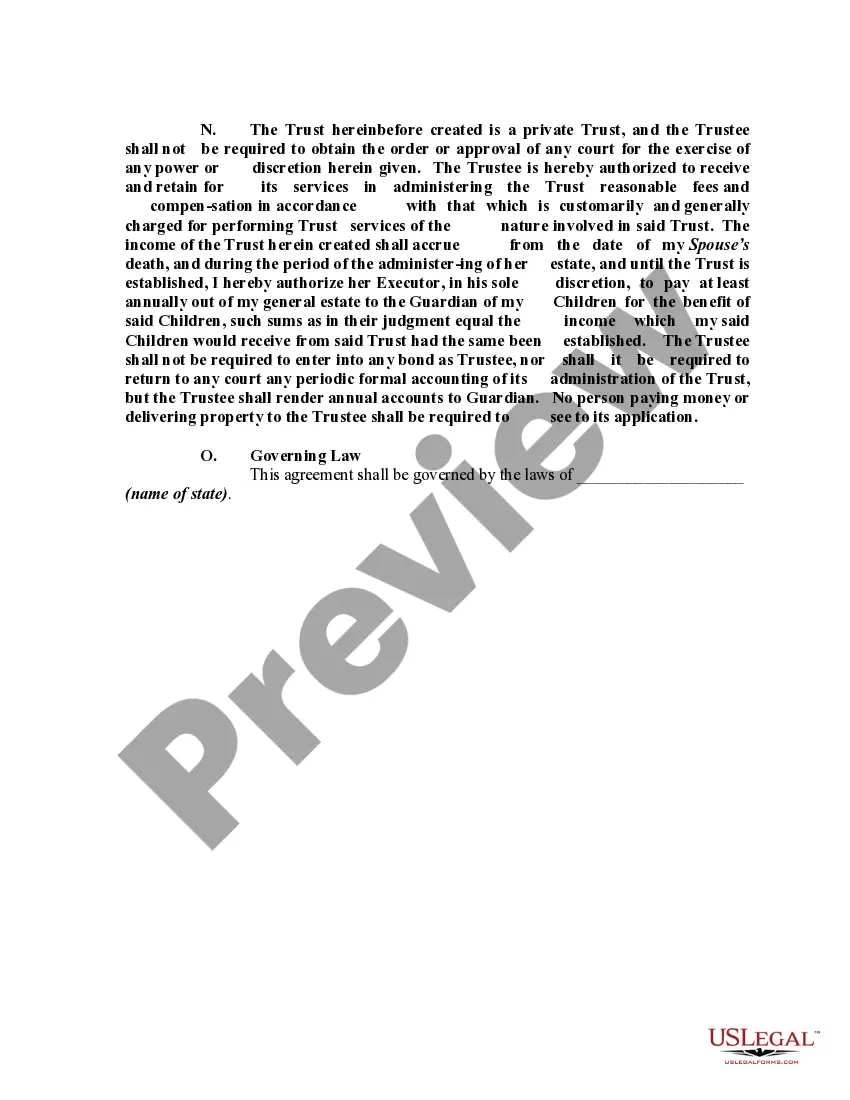
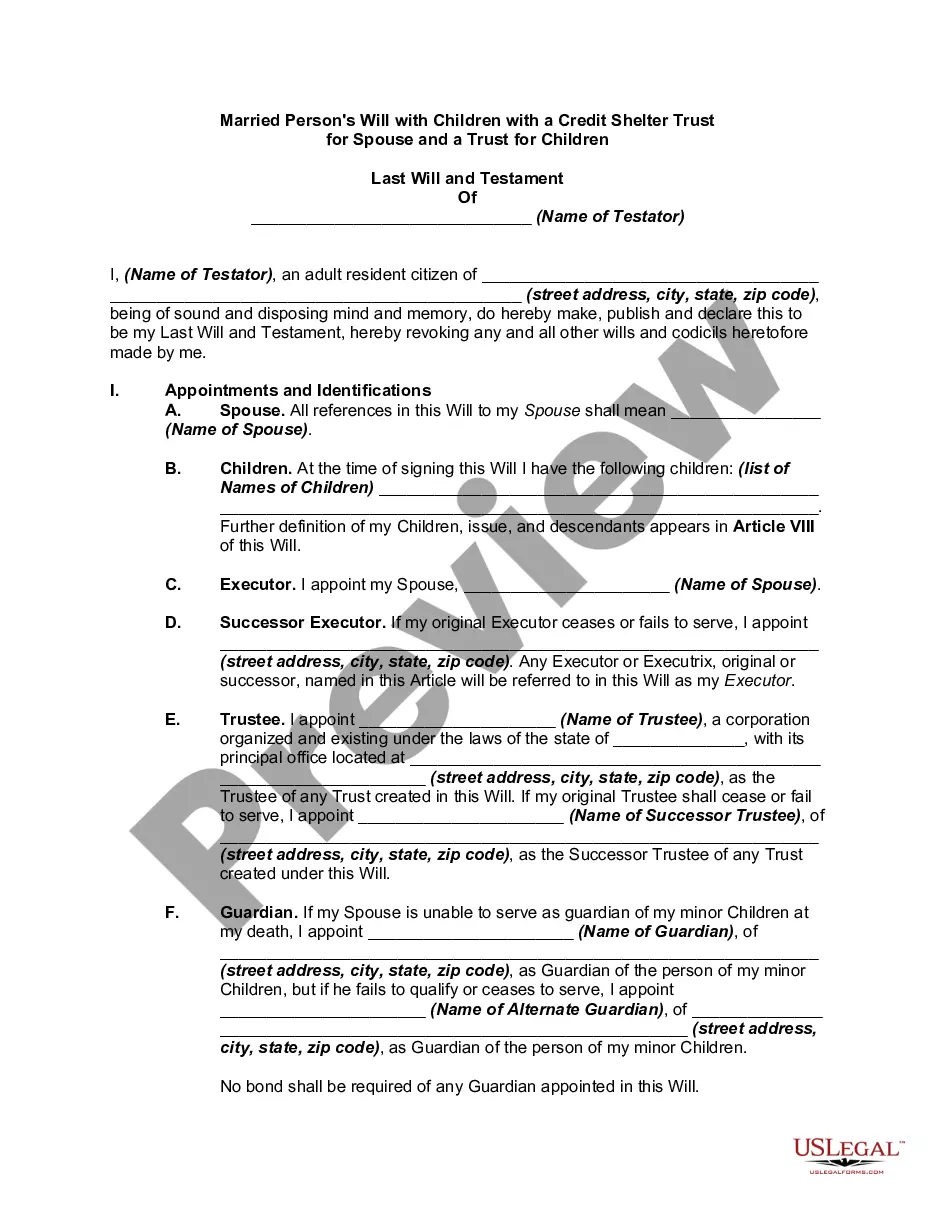
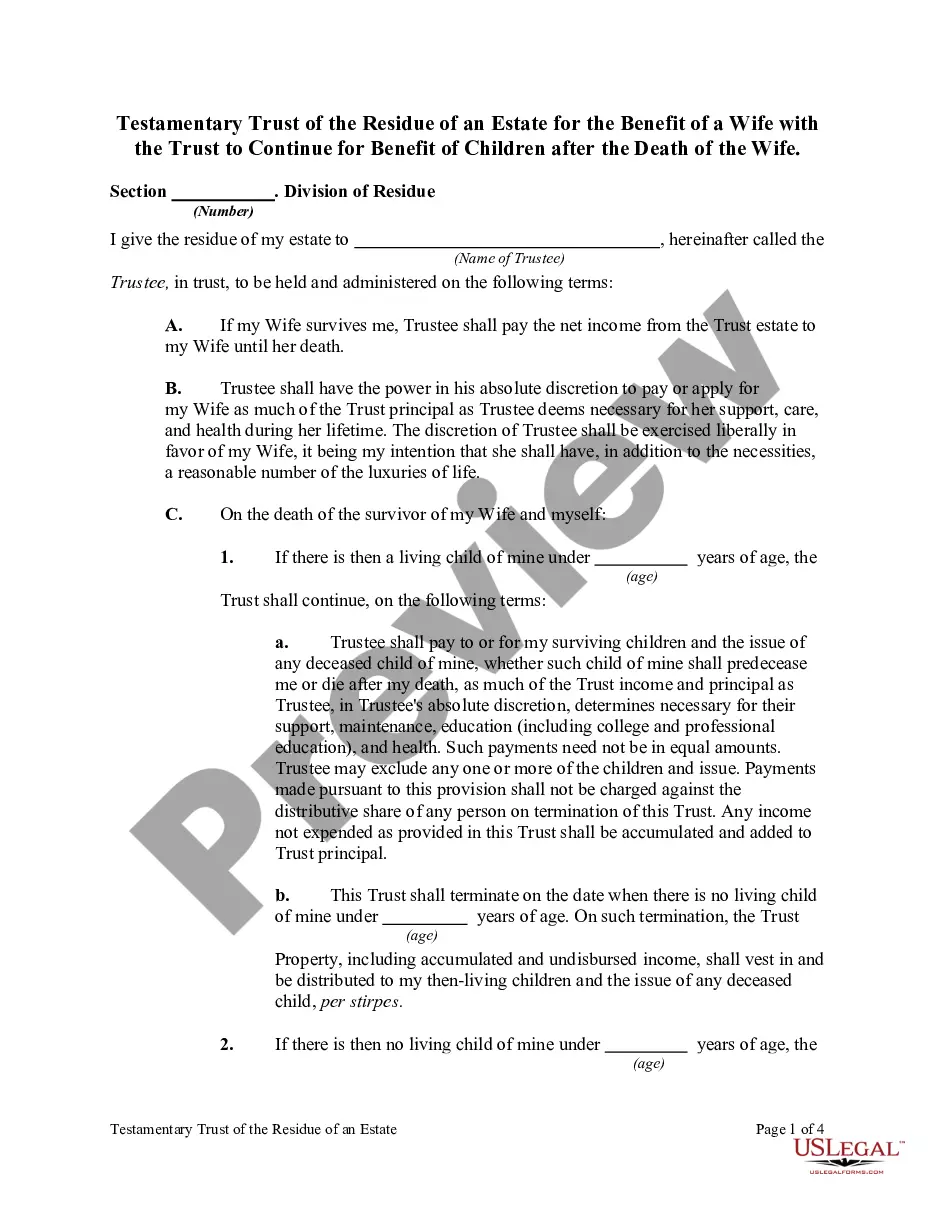
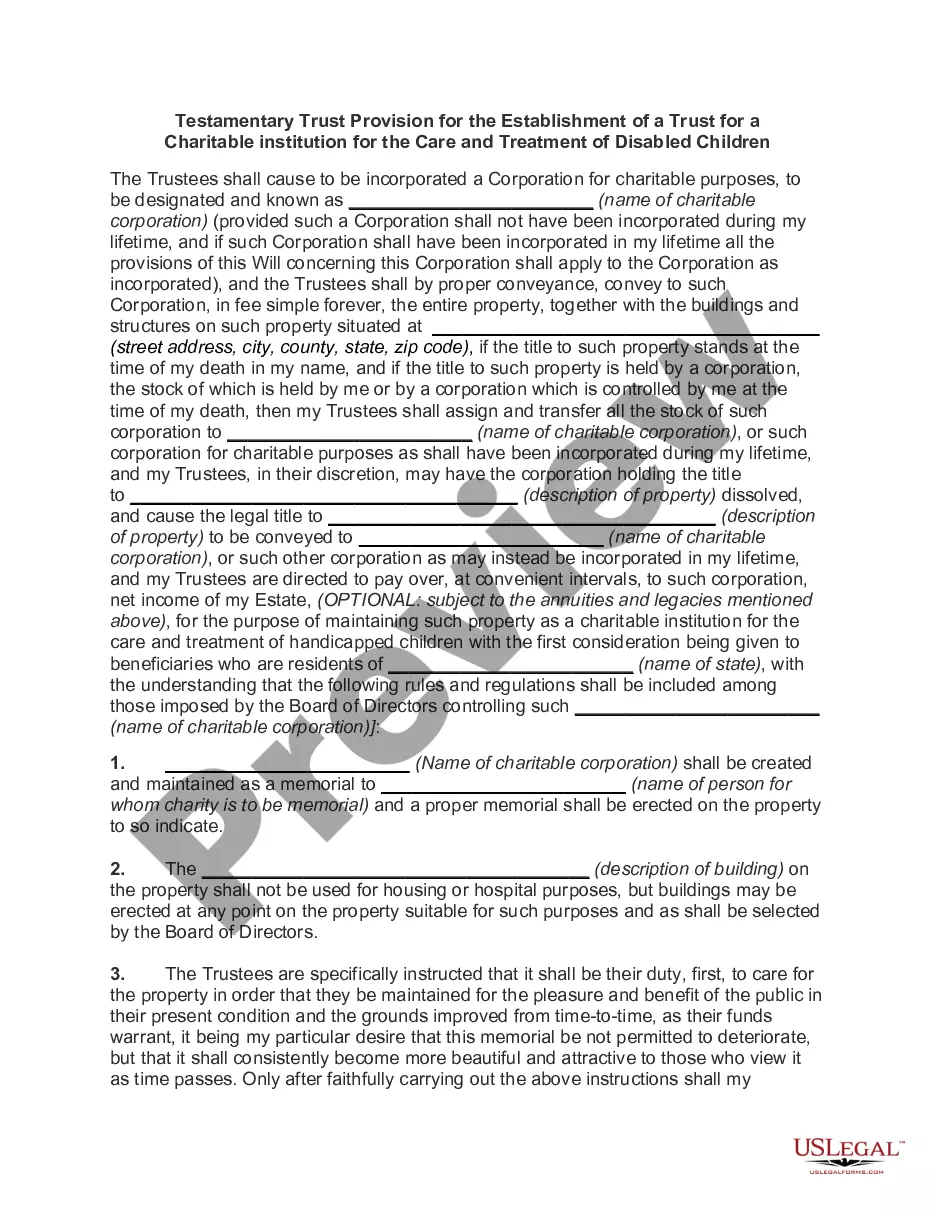
How to fill out Testamentary Trust Provision In Will With Spouse To Receive A Life Estate In Farm Land With Remainder Interest In Land To Pass To Trust For The Benefit Of Children?
It’s clear that you cannot transform into a legal expert instantly, nor can you learn how to swiftly prepare a Testamentary Trust in Florida without an essential collection of skills.
Assembling legal documents is a lengthy activity that demands specific education and expertise. Therefore, why not entrust the formation of the Testamentary Trust in Florida to the experts.
With US Legal Forms, one of the most extensive libraries of legal templates, you can locate everything from court papers to templates for in-office correspondence. We recognize the significance of compliance and adherence to federal and state regulations. That’s why, on our site, all templates are region-specific and current.
You can re-access your documents from the My documents tab at any moment. If you’re a current client, you can simply Log In, and find and download the template from the same section.
No matter the purpose of your documents—whether it’s fiscal and legal or personal—our platform has you covered. Experience US Legal Forms today!
- Identify the document you need using the search bar located at the top of the page.
- View it (if this option is available) and review the accompanying description to decide if the Testamentary Trust in Florida is what you need.
- Start a new search if you require a different document.
- Create a complimentary account and select a subscription plan to acquire the form.
- Click Buy now. Once the transaction is finalized, you can download the Testamentary Trust in Florida, fill it out, print it, and send or mail it to the required individuals or organizations.
Form popularity
FAQ
One of the biggest mistakes parents make when establishing a trust fund is failing to communicate their intentions clearly with their beneficiaries. This can lead to misunderstandings, confusion, and conflicts among family members. Additionally, overlooking the details of the trust, such as specific asset distributions and trustee roles, can create complications down the road. Parents should consult legal professionals, like those at US Legal Forms, to ensure everything is in order.
Yes, a testamentary trust in Florida may be required to file a tax return if it earns income above a certain threshold. This requirement is important because it ensures that all income generated by the trust is reported to tax authorities. Failure to comply with these regulations can result in penalties. Engaging a tax professional can provide clarity on these obligations.
The downfall of having a trust, such as a testamentary trust in Florida, can include ongoing administrative duties and associated costs. Trustees often confront the need for record-keeping, tax filings, and compliance with legal requirements. Additionally, disputes may arise among beneficiaries regarding the trust's management. Thus, family dynamics and trust management can significantly influence the overall success of a trust.
A family trust, including a testamentary trust in Florida, can have disadvantages such as potential tax implications and limited flexibility. Once assets are placed in the trust, they are often difficult to access without consent from all beneficiaries. Also, if not structured properly, these trusts can lead to increased scrutiny from tax authorities. It’s vital to approach family trusts thoughtfully and understand these aspects.
Encouraging your parents to consider a trust, especially a testamentary trust in Florida, can be beneficial. It allows for controlled asset distribution after their passing, which can help minimize probate delays. However, each family's situation is unique, so it's crucial to evaluate their specific needs and long-term goals. Consulting with a legal professional can clarify if this option is suitable.
One major disadvantage of a trust, including a testamentary trust in Florida, is the complexity of setup and ongoing management. Trusts may require regular maintenance, including financial management and tax reporting. Additionally, they often incur legal fees during creation and modification. This complexity can deter some families from fully utilizing their benefits.
The advantages of a testamentary trust in Florida include control over asset distribution and the ability to provide for beneficiaries who may not be ready to manage their inheritance. On the flip side, it is subject to probate, which can be a lengthy and costly process. Weighing these pros and cons is crucial in deciding whether a testamentary trust aligns with your estate planning goals. Consider reaching out to uslegalforms to guide you in setting up this trust effectively.
Establishing a testamentary trust in Florida can be beneficial for many individuals. If you want to control how your assets are distributed after your passing and ensure they are managed responsibly for minor children or beneficiaries, this type of trust may suit your needs. It provides a layer of protection and guidance; however, it's wise to explore all estate planning options to determine what best fits your unique situation.
In a testamentary trust in Florida, the trustee is responsible for managing the trust assets on behalf of the beneficiaries. Although the trust holds the assets, the beneficiaries are the individuals who ultimately benefit from them, as per the terms set forth in the will. The estate, under the supervision of the probate court, will oversee the distribution of these assets according to the trust's guidelines and the testator's intentions.
A testamentary trust in Florida is a legal arrangement established through a person's will, which only comes into effect upon their death. This type of trust enables the testator to specify how and when their assets will be managed and distributed to beneficiaries. Unlike living trusts, testamentary trusts are part of the probate process, ensuring that assets are handled according to the deceased’s wishes.