I Will Trust For You
Description

Get your form ready online
Our built-in tools help you complete, sign, share, and store your documents in one place.
Make edits, fill in missing information, and update formatting in US Legal Forms—just like you would in MS Word.
Download a copy, print it, send it by email, or mail it via USPS—whatever works best for your next step.
Sign and collect signatures with our SignNow integration. Send to multiple recipients, set reminders, and more. Go Premium to unlock E-Sign.
If this form requires notarization, complete it online through a secure video call—no need to meet a notary in person or wait for an appointment.
We protect your documents and personal data by following strict security and privacy standards.

Make edits, fill in missing information, and update formatting in US Legal Forms—just like you would in MS Word.

Download a copy, print it, send it by email, or mail it via USPS—whatever works best for your next step.

Sign and collect signatures with our SignNow integration. Send to multiple recipients, set reminders, and more. Go Premium to unlock E-Sign.

If this form requires notarization, complete it online through a secure video call—no need to meet a notary in person or wait for an appointment.

We protect your documents and personal data by following strict security and privacy standards.
Looking for another form?




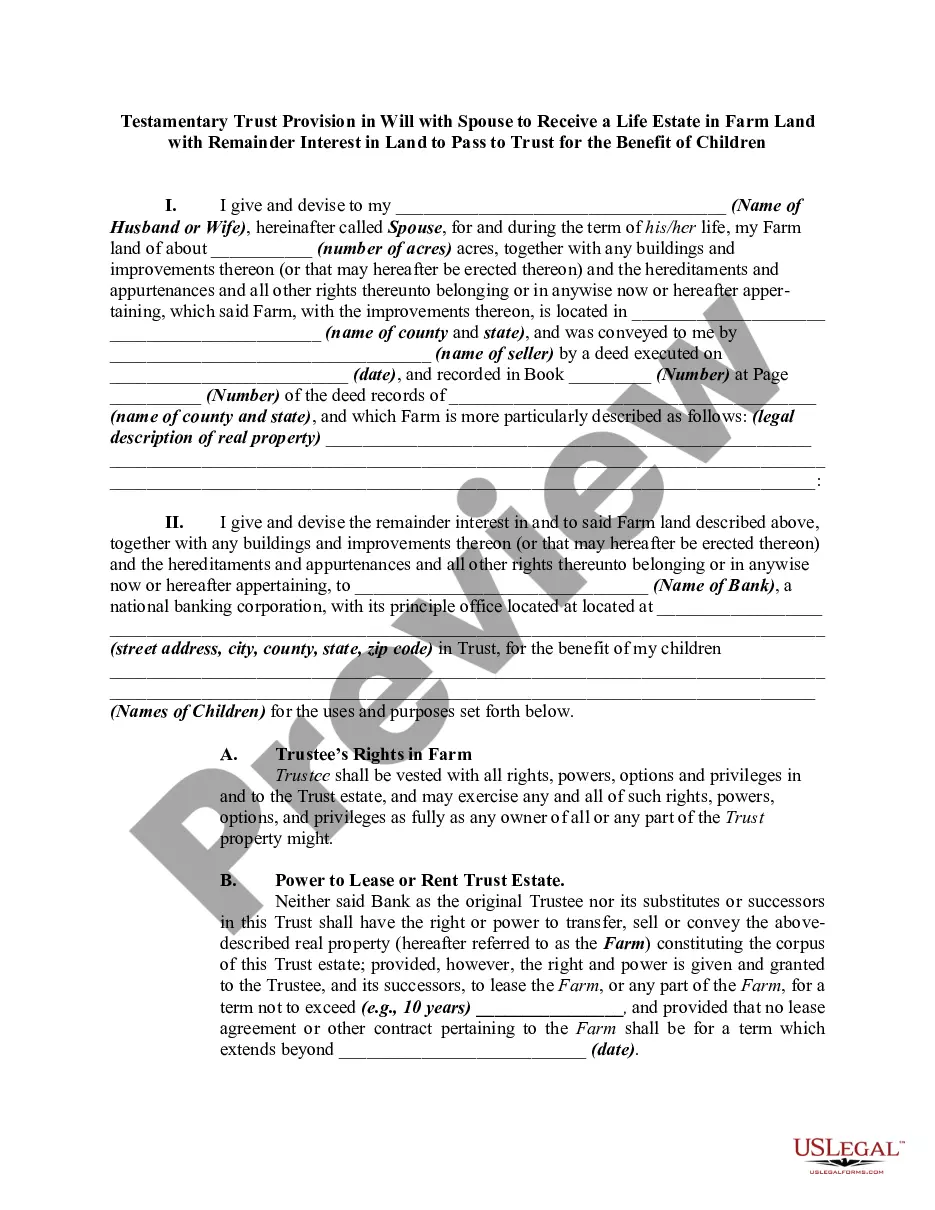
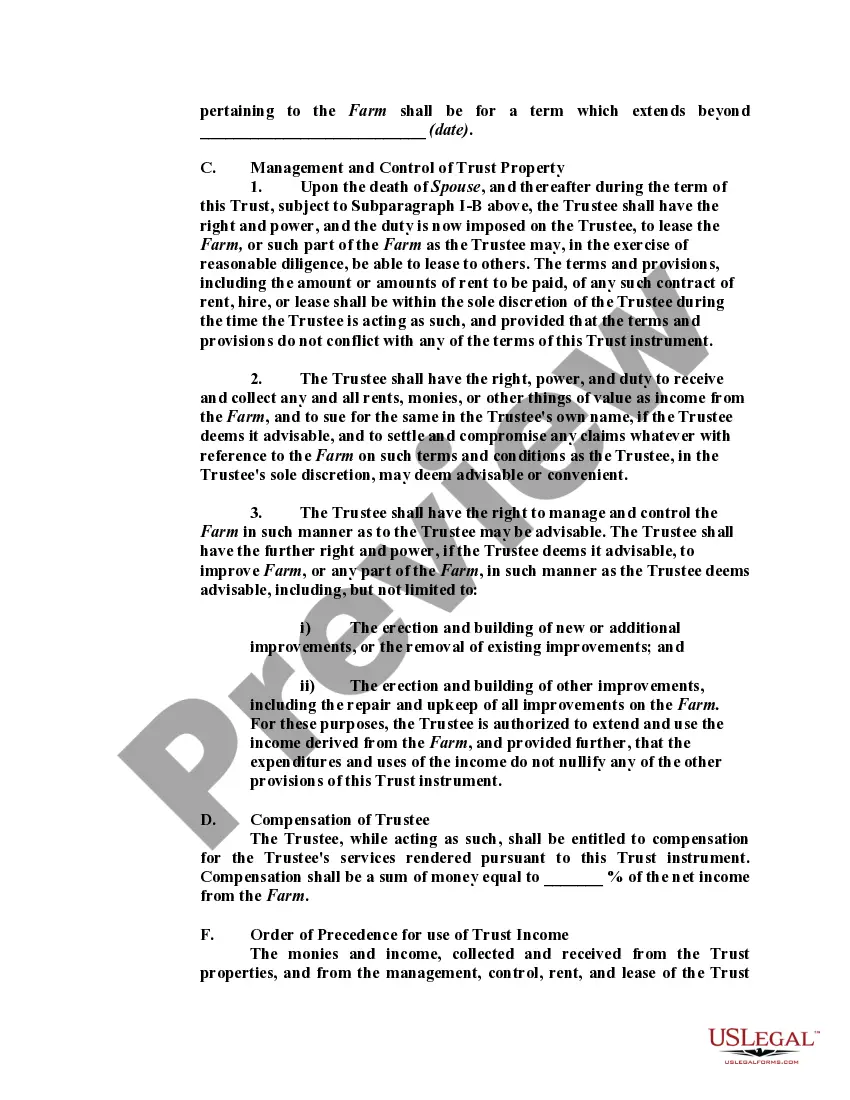
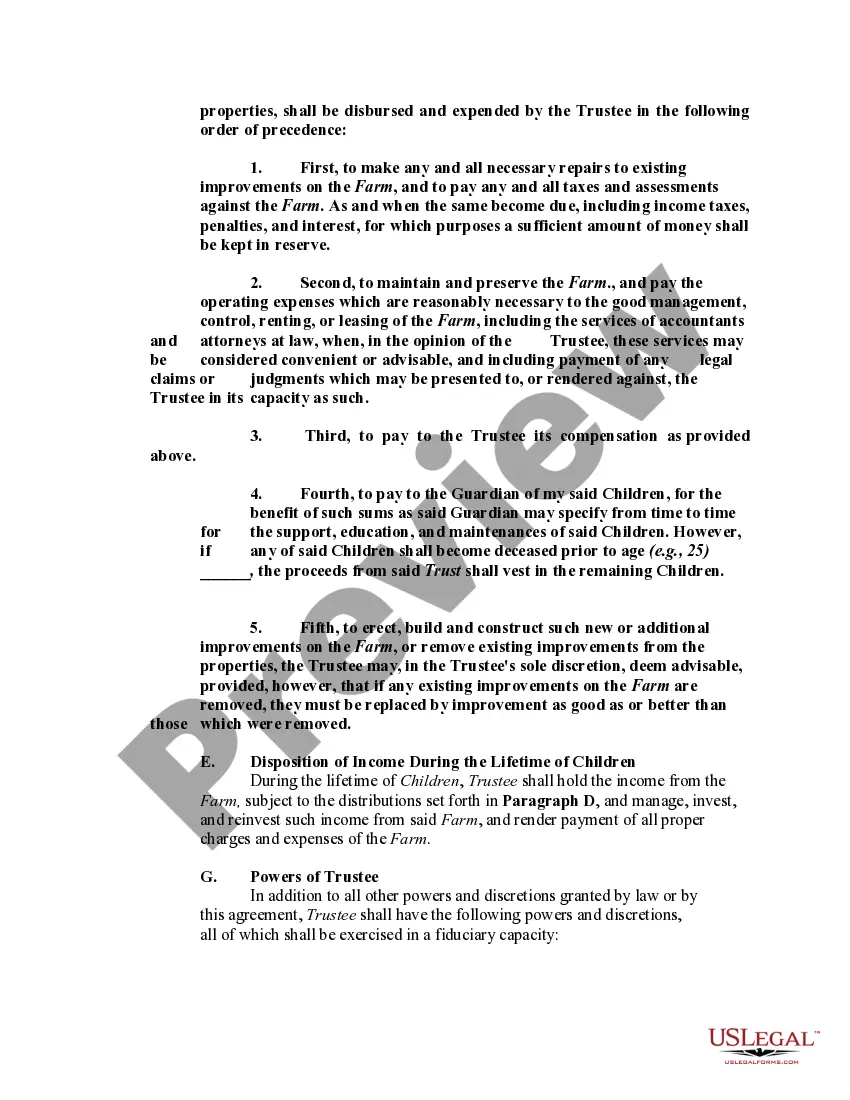
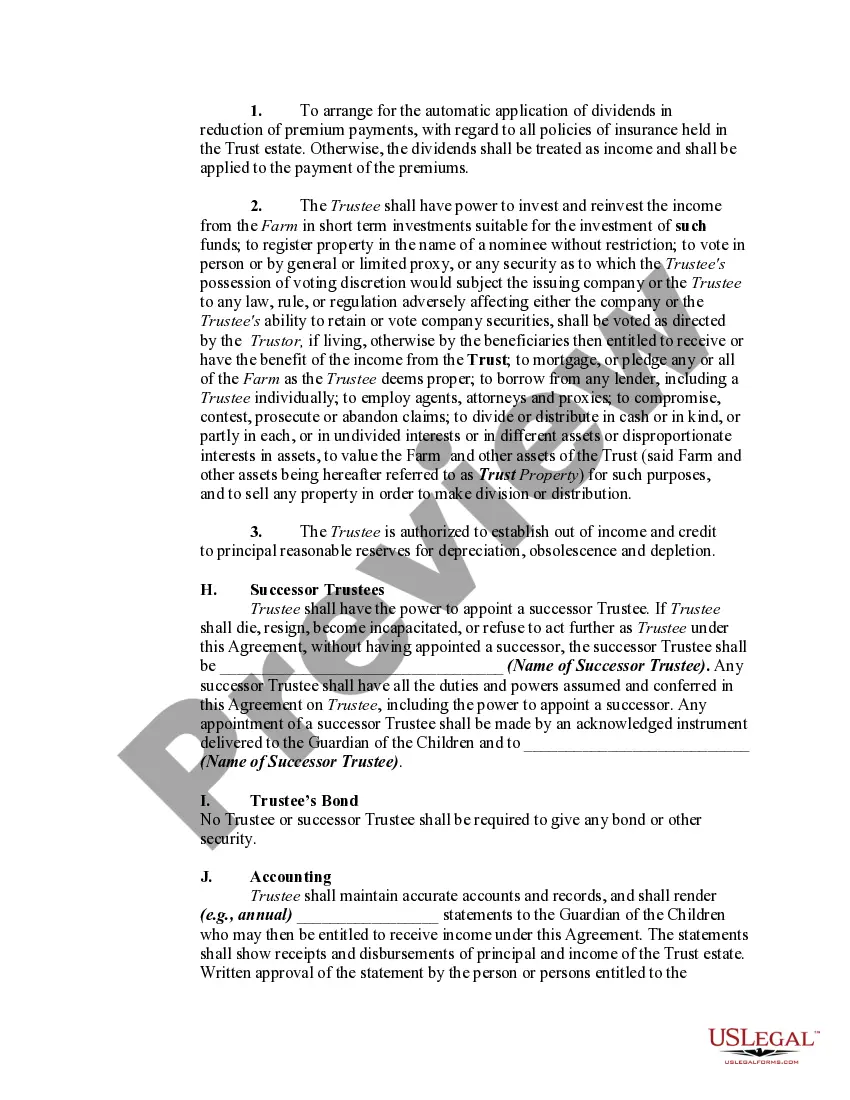
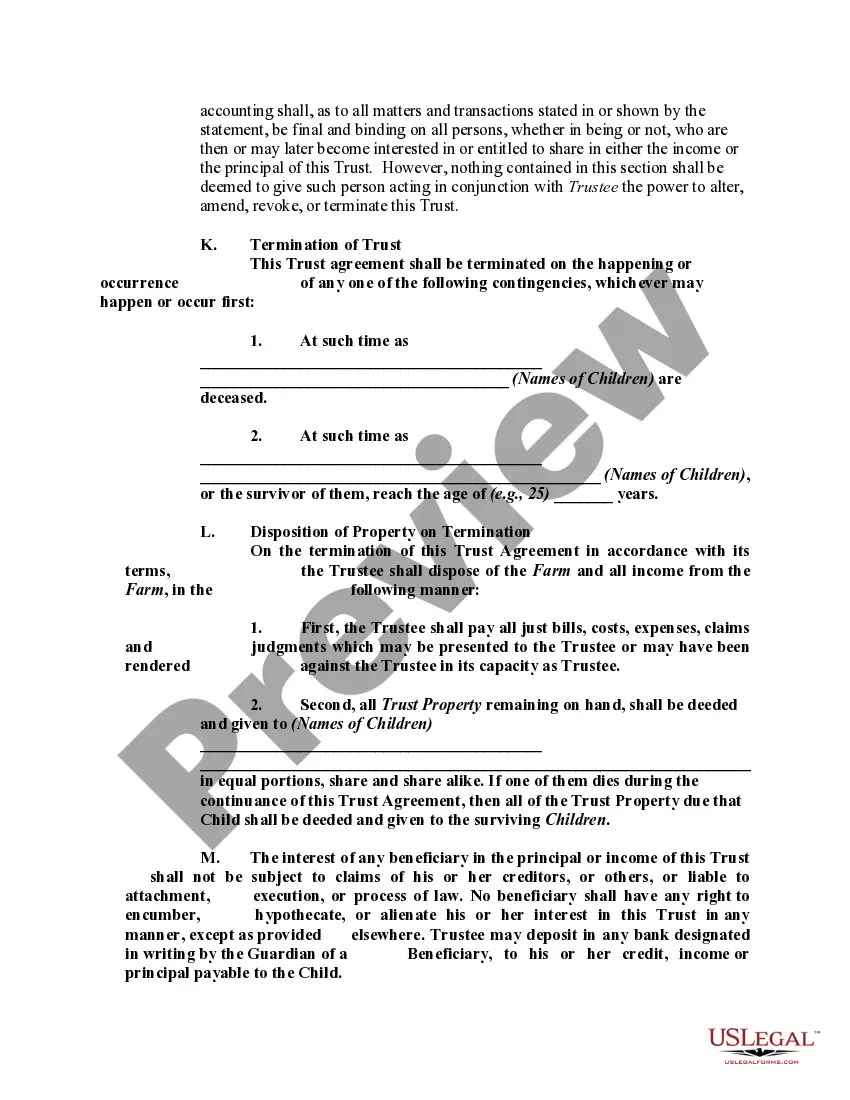
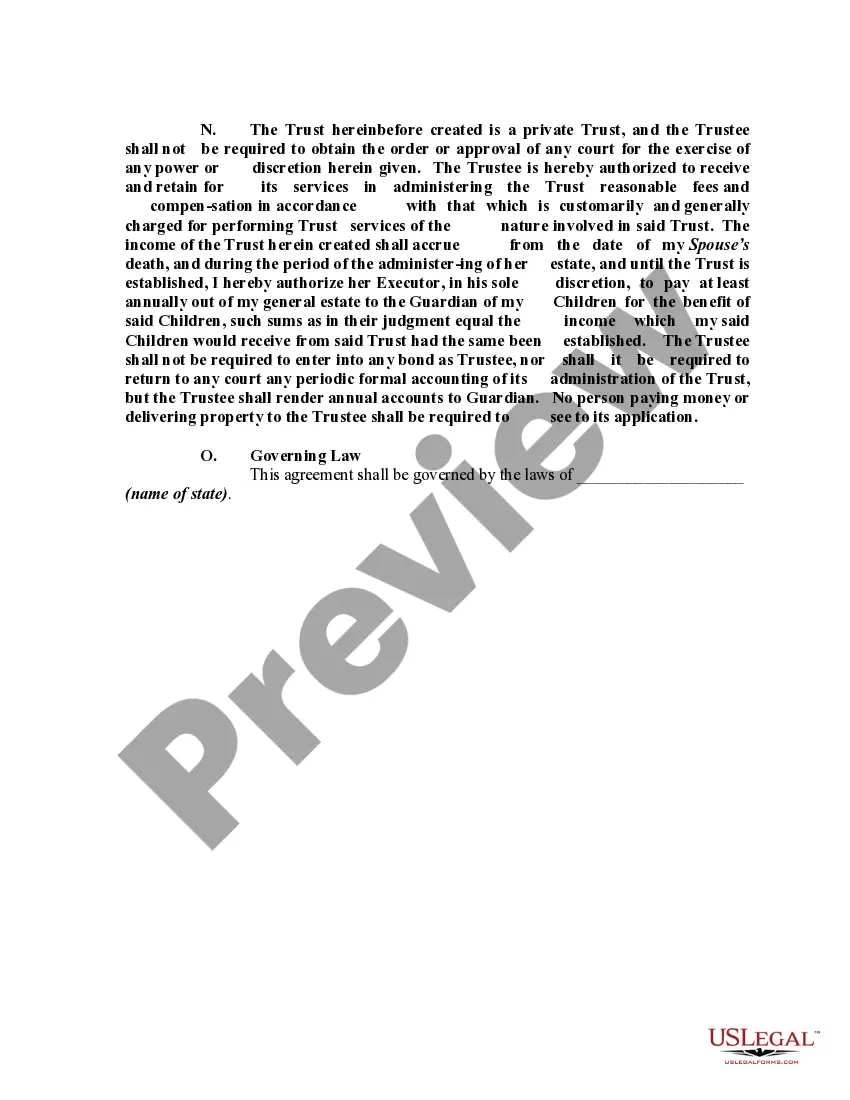
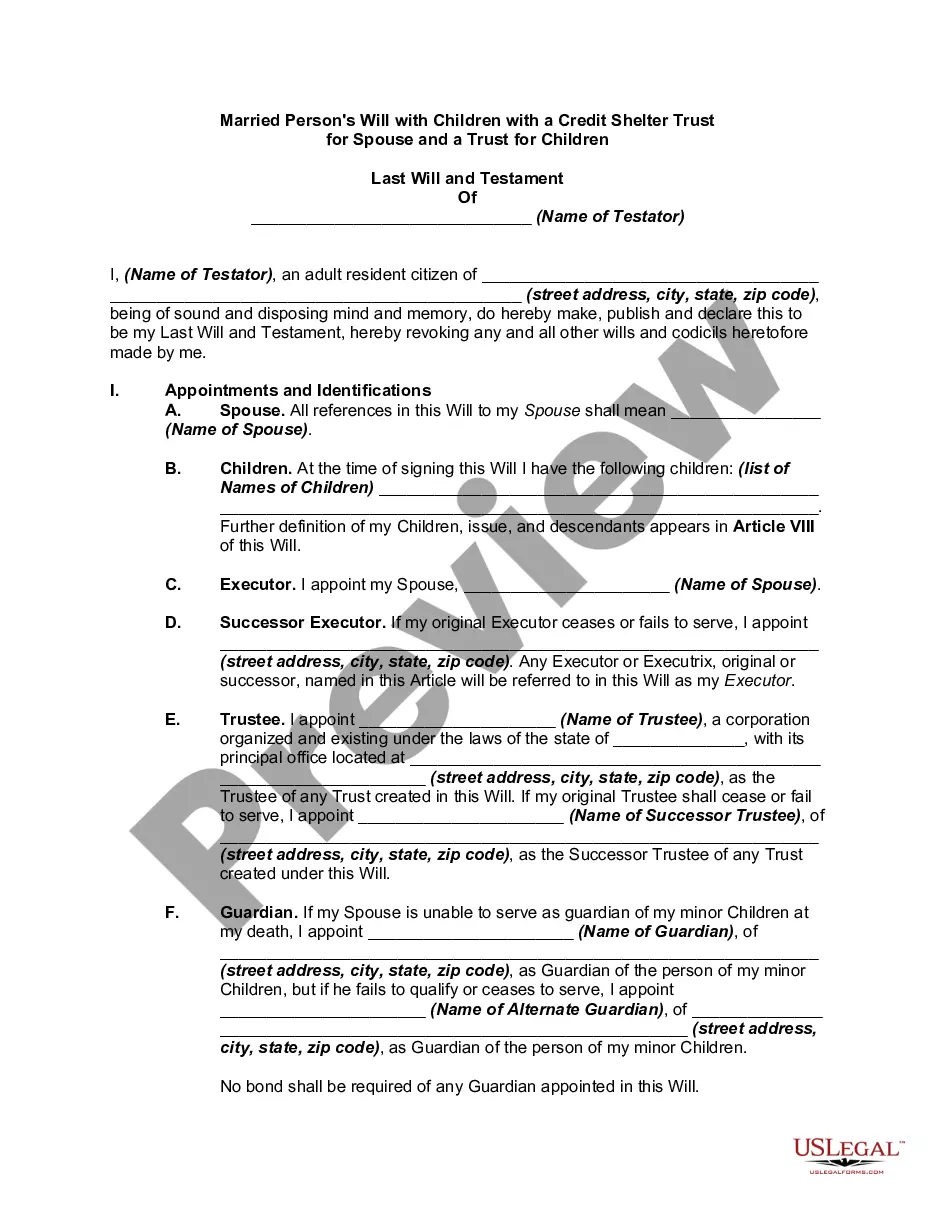
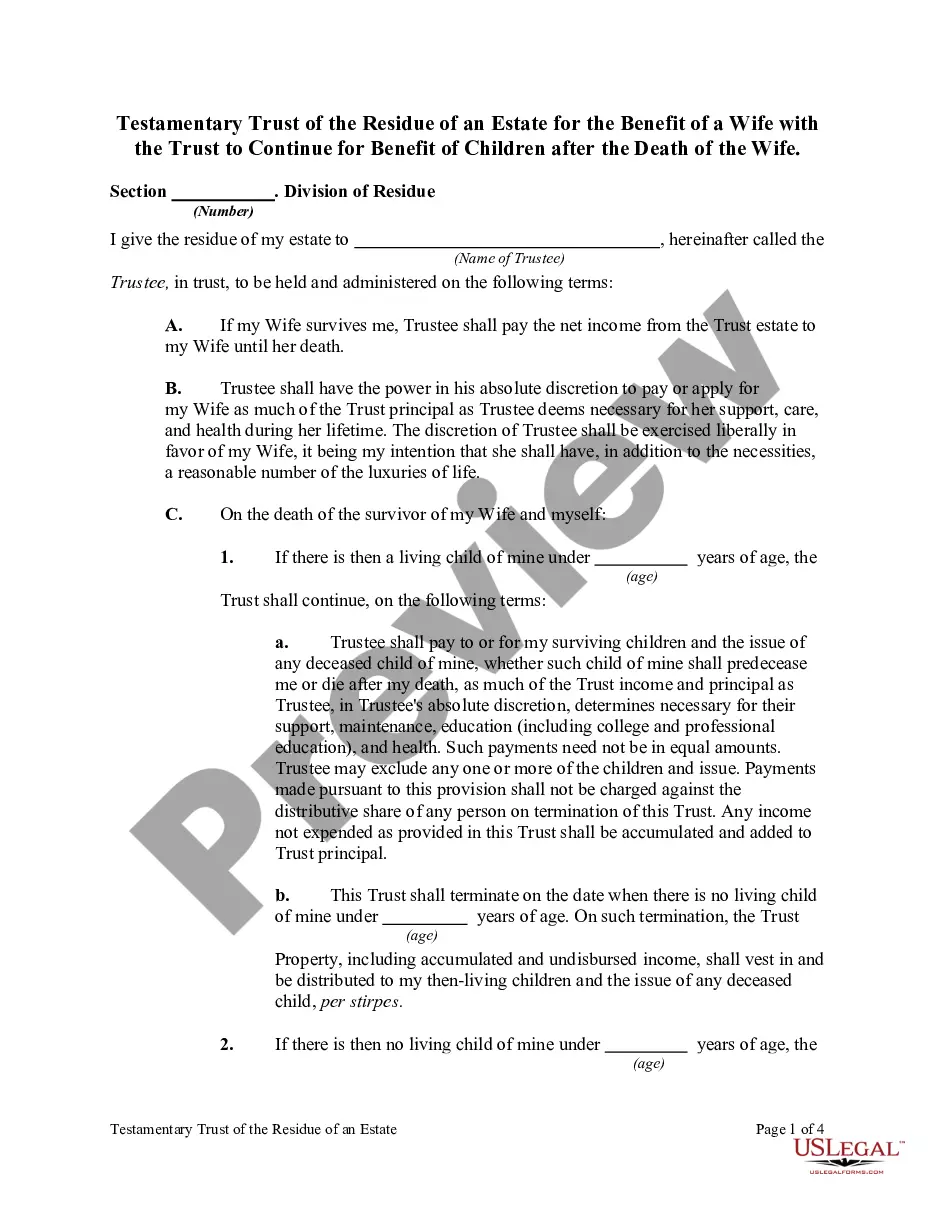
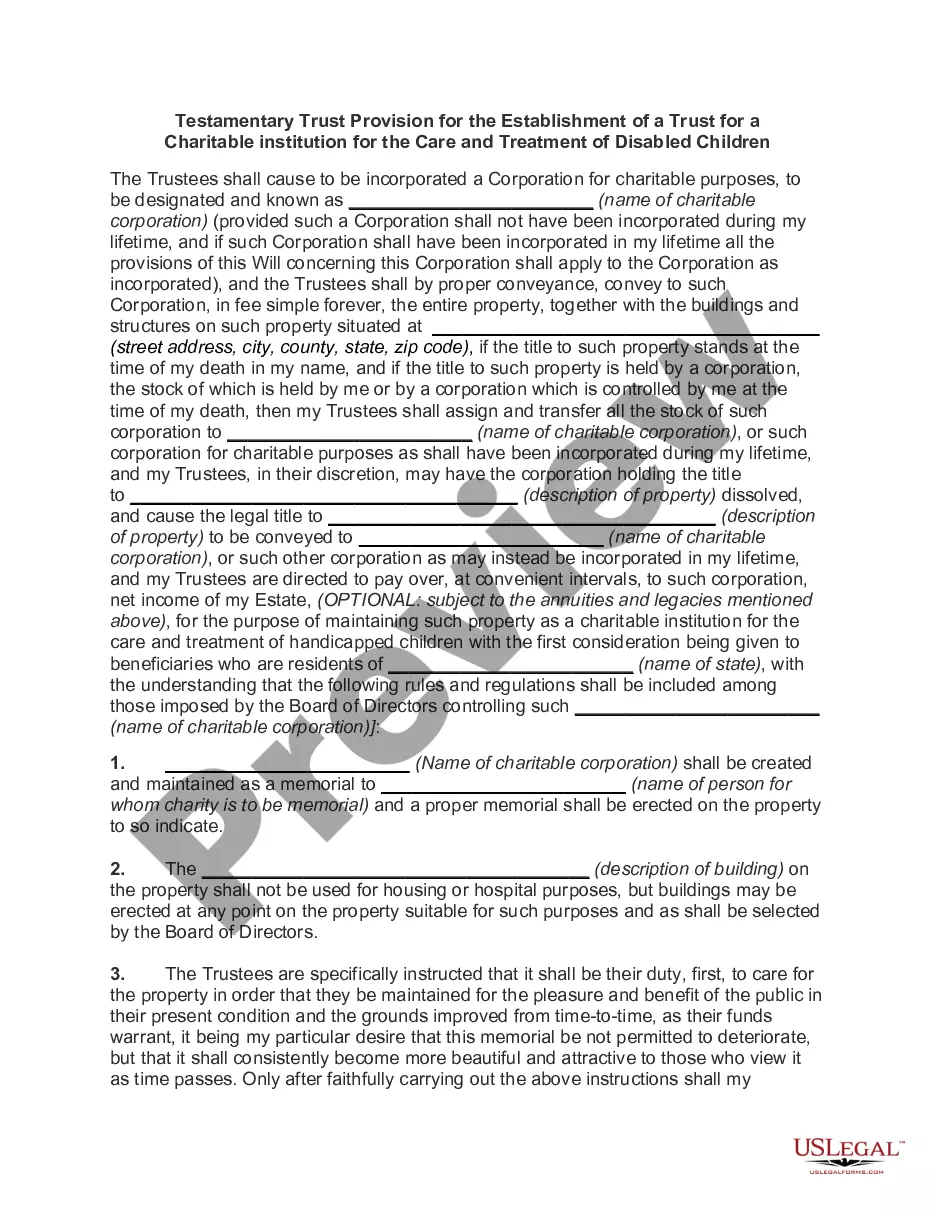
How to fill out Testamentary Trust Provision In Will With Spouse To Receive A Life Estate In Farm Land With Remainder Interest In Land To Pass To Trust For The Benefit Of Children?
- If you’ve previously used US Legal Forms, log into your account to retrieve your documents. Verify your subscription before proceeding.
- For first-time users, begin by reviewing the form descriptions available in Preview mode to select the template that aligns perfectly with your requirements and jurisdiction.
- If you can't find the right template, utilize the Search tab to find alternatives that suit your needs.
- Once you've chosen your document, click on the 'Buy Now' button and select your preferred subscription plan. You'll need to create an account to access the full library.
- Proceed with your purchase by entering your credit card information or using your PayPal account for payment.
- After the transaction is completed, download your document and save it to your device. You can access it later from the My Forms section of your profile.
By following these steps, you can ensure that you’re accessing premium legal resources that not only save time but also enhance the accuracy of your documents.
Take control of your legal needs today with US Legal Forms and experience the ease of professional document preparation.
Form popularity
FAQ
The trustee or executor of the trust or estate is responsible for completing Form 1041. They must gather all relevant financial information and ensure accuracy when reporting income and expenses. If this responsibility feels overwhelming, keep in mind, I will trust for you, and USLegalForms offers tools that can simplify this process and help you stay organized.
Yes, you can file IRS Form 1041 electronically using approved e-filing software or platforms. This option can save you time and simplify the process, ensuring that you meet deadlines without hassle. When you think about filing, just remember, I will trust for you, and using USLegalForms can streamline your e-filing experience.
To determine if you need to file a 1041, assess whether the trust or estate generated income above the filing threshold during the tax year. If you find distributions were made or the trust earned income, filing is necessary. Understanding your obligations is key, so keep in mind, I will trust for you, and platforms like USLegal can provide valuable insights into your specific situation.
To file taxes on behalf of a trust, you need to complete Form 1041, detailing the trust's income and deductions. Gathering necessary documents, such as interest and dividend statements, is vital to provide accurate figures. If you are uncertain about the process, remember, I will trust for you, and resources from USLegalForms can guide you through each step to ensure compliance.
Form 1041 must be filed by estates and certain trusts that have taxable income or gross income that exceeds a specified threshold. If a decedent's estate is still operational, it needs this form, as it ensures compliance with tax obligations. If this sounds complicated, don’t worry; just remember, I will trust for you, and platforms like USLegalForms can assist in ensuring everything is filed correctly.
The exemption for Form 1041 refers to specific requirements that trusts can meet to avoid filing taxes. Generally, if a trust does not generate income above a certain threshold during the tax year, it may not need to file. This can simplify things for you if you think, 'I will trust for you' with guidance. Utilizing platforms like USLegal can help clarify these exemptions and make the filing process seamless.
A trust account is a financial account held by a trustee for the benefit of another party. For example, a parent might set up a trust account for their child’s education, specifying how funds will be used. If you need help creating one, I will trust for you, and US Legal Forms provides the necessary templates to make this process seamless.
One of the biggest mistakes parents make is failing to communicate their intentions clearly to their beneficiaries. This can lead to confusion and disputes later on. Once you decide on your goals, I will trust for you to establish a clear plan, and utilizing US Legal Forms can help ensure your intentions are properly documented.
Filling out a trust fund requires you to provide specific information about your assets and beneficiaries. You will need to identify the trustee and any conditions you wish to impose. To make this process easier, I will trust for you, and US Legal Forms offers templates that guide you through every step.
Yes, you can set up a trust fund by yourself, but it often involves complex legal steps. It is essential to understand the rules governing trust funds to ensure they fulfill your wishes. If you feel uncertain, I will trust for you, and using resources like US Legal Forms can simplify the process.