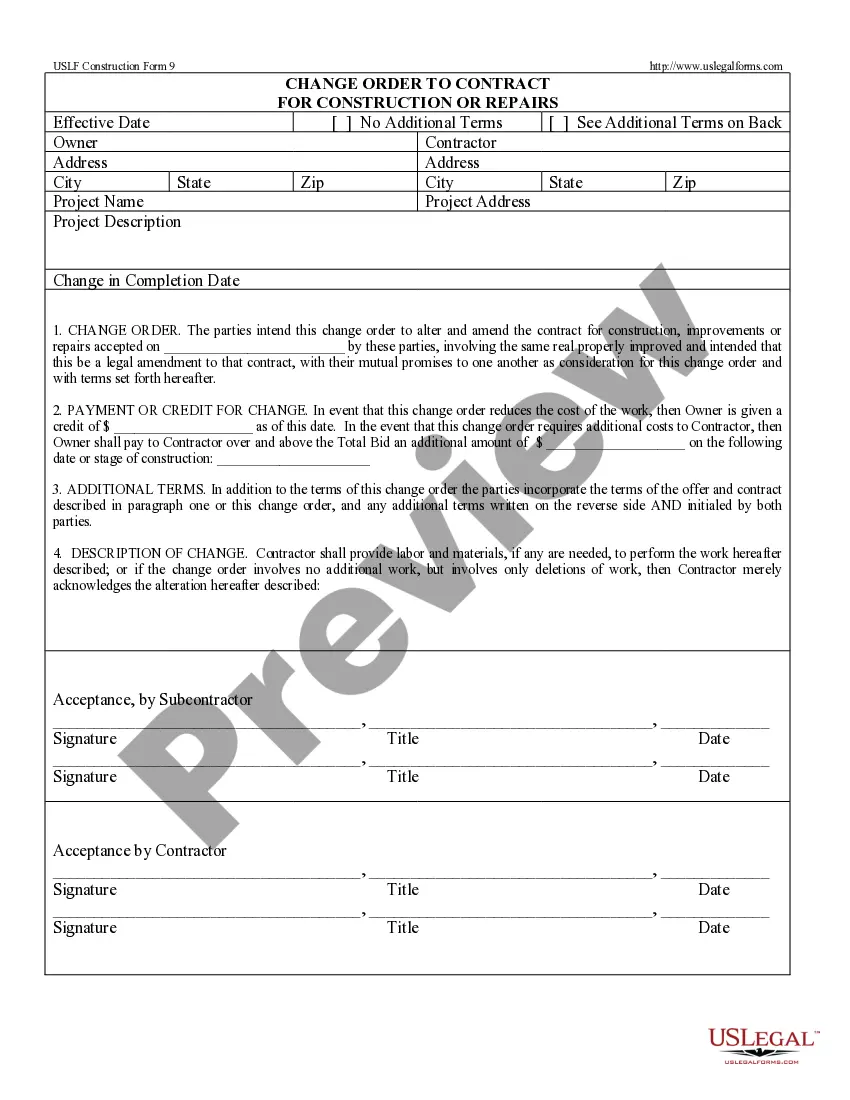
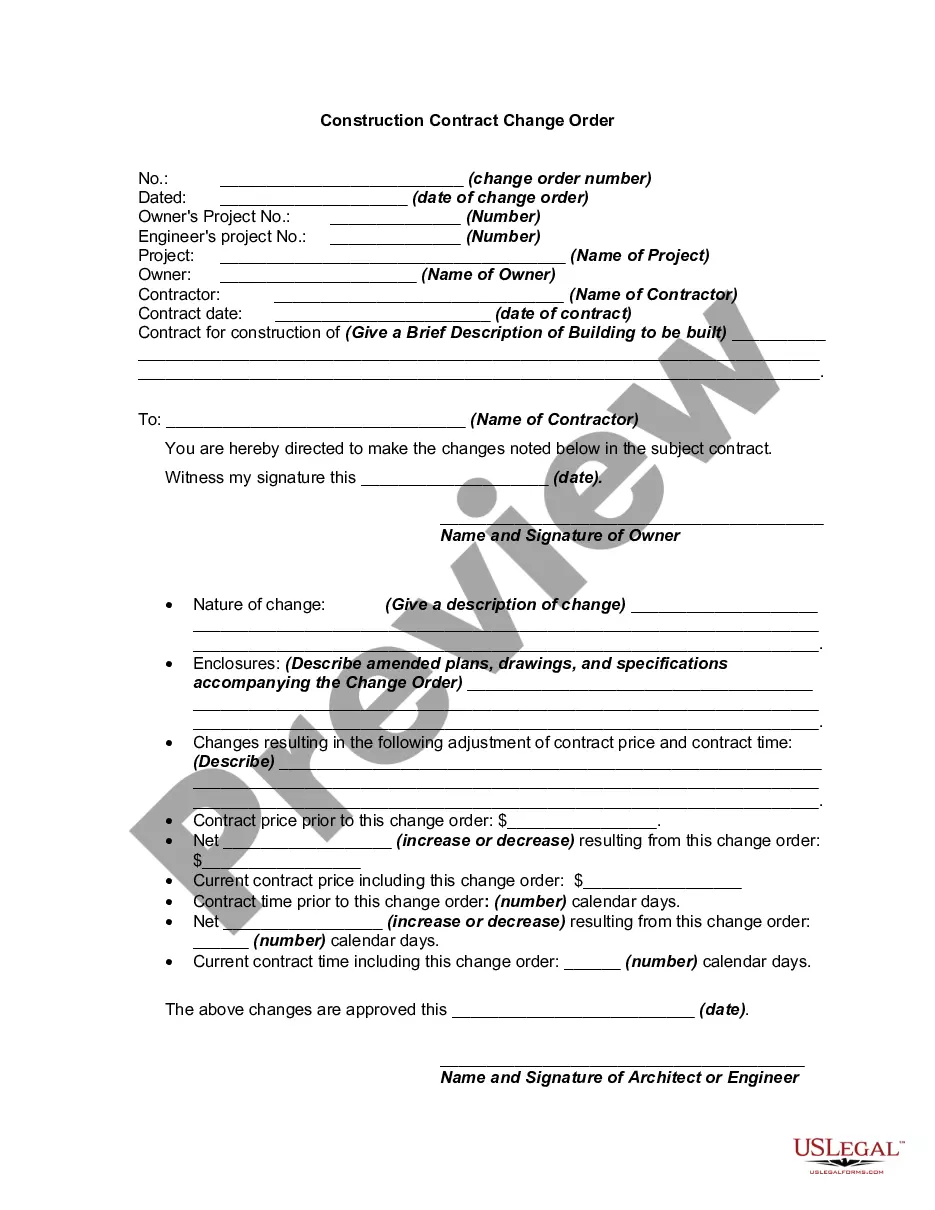
Change Terms Construction For Dummies
Description
Get your form ready online
Our built-in tools help you complete, sign, share, and store your documents in one place.
Make edits, fill in missing information, and update formatting in US Legal Forms—just like you would in MS Word.
Download a copy, print it, send it by email, or mail it via USPS—whatever works best for your next step.
Sign and collect signatures with our SignNow integration. Send to multiple recipients, set reminders, and more. Go Premium to unlock E-Sign.
If this form requires notarization, complete it online through a secure video call—no need to meet a notary in person or wait for an appointment.
We protect your documents and personal data by following strict security and privacy standards.

Make edits, fill in missing information, and update formatting in US Legal Forms—just like you would in MS Word.

Download a copy, print it, send it by email, or mail it via USPS—whatever works best for your next step.

Sign and collect signatures with our SignNow integration. Send to multiple recipients, set reminders, and more. Go Premium to unlock E-Sign.

If this form requires notarization, complete it online through a secure video call—no need to meet a notary in person or wait for an appointment.

We protect your documents and personal data by following strict security and privacy standards.
Looking for another form?

How to fill out Change Order For Construction Or Repairs By Contractor?
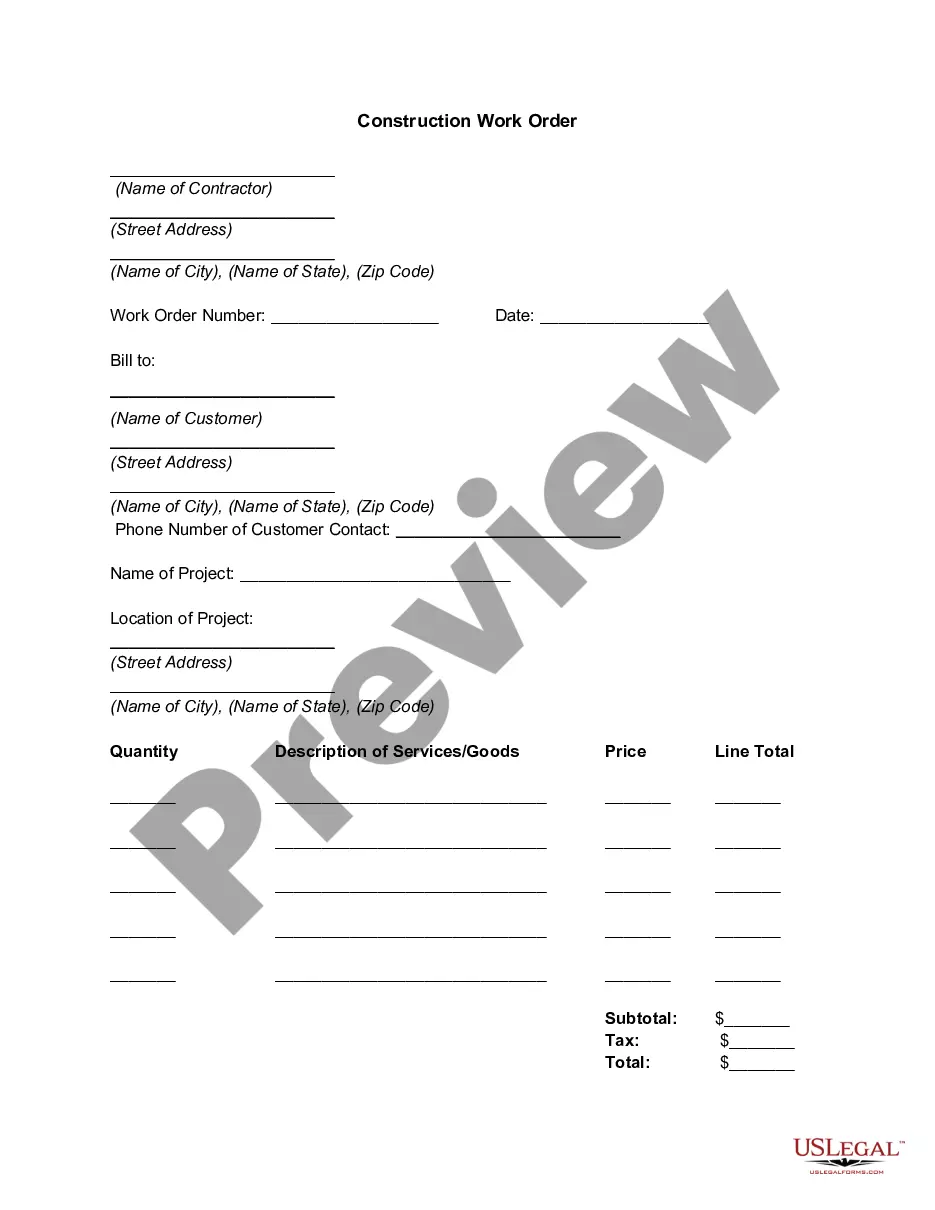
Dealing with legal papers and procedures could be a time-consuming addition to your day. Change Terms Construction For Dummies and forms like it often require that you search for them and understand how you can complete them appropriately. As a result, if you are taking care of economic, legal, or individual matters, using a extensive and practical online catalogue of forms on hand will significantly help.
US Legal Forms is the top online platform of legal templates, offering over 85,000 state-specific forms and numerous tools to help you complete your papers effortlessly. Discover the catalogue of pertinent documents open to you with just one click.
US Legal Forms gives you state- and county-specific forms offered at any moment for downloading. Shield your document managing operations by using a high quality service that lets you make any form within minutes without any additional or hidden fees. Simply log in in your account, locate Change Terms Construction For Dummies and acquire it immediately within the My Forms tab. You can also gain access to previously saved forms.
Would it be the first time using US Legal Forms? Sign up and set up a free account in a few minutes and you’ll have access to the form catalogue and Change Terms Construction For Dummies. Then, adhere to the steps listed below to complete your form:
- Be sure you have found the right form using the Preview feature and reading the form description.
- Pick Buy Now as soon as ready, and select the monthly subscription plan that suits you.
- Select Download then complete, eSign, and print out the form.
US Legal Forms has twenty five years of expertise assisting consumers deal with their legal papers. Discover the form you need right now and enhance any process without having to break a sweat.
Form popularity
FAQ
Here are five of the most important terms that should be a part of every construction contract. Scope of Work. Clients need to be clear about what a company is going to do for them. ... Payment Obligations. ... Insurance Information. ... Parties to the Agreement and Notice. ... Authority to Make Decisions.
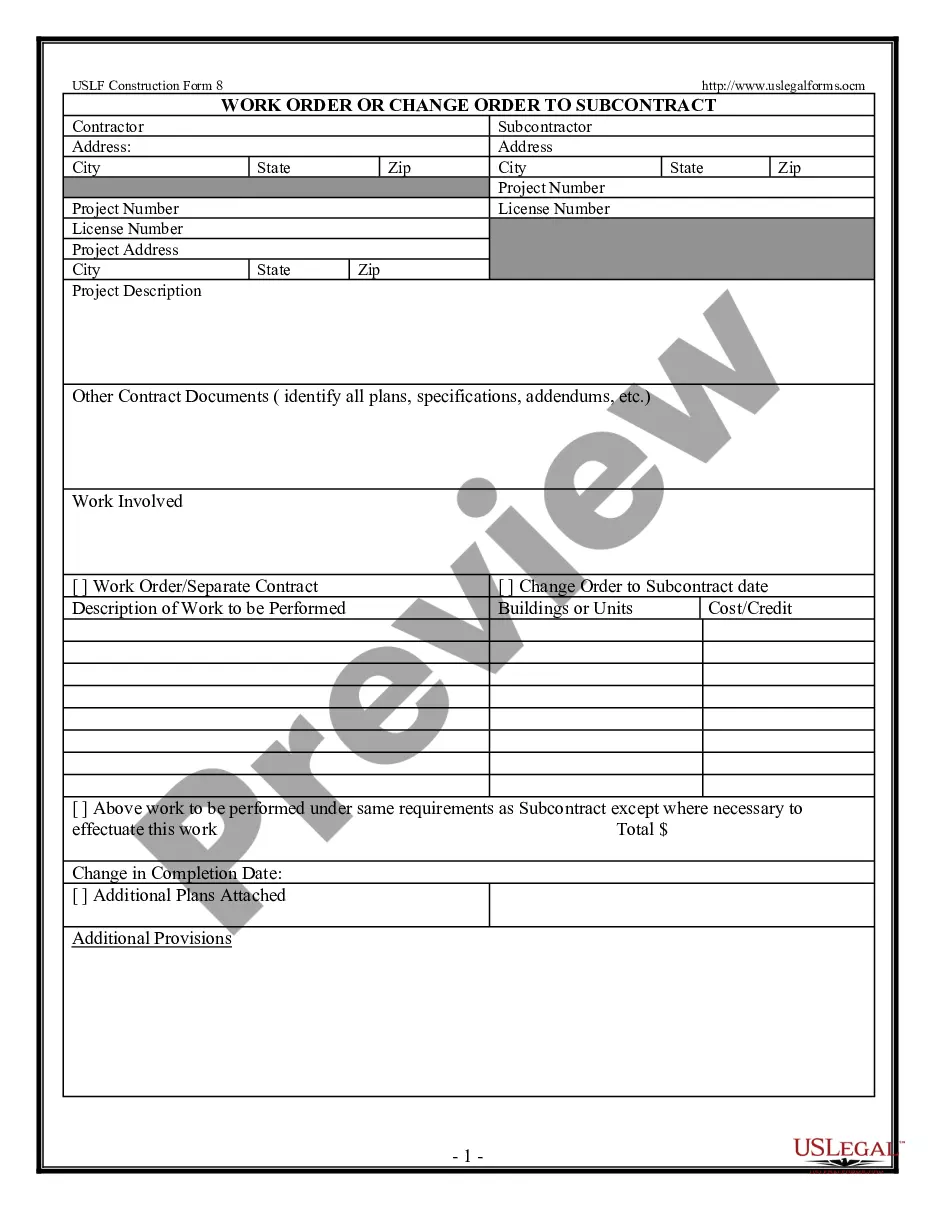
All documents should include the names of the parties, the contract reference, and the date of the change. Furthermore, they should state that they are subject to the contract and do not waive any rights or obligations. Signatures from all parties or their authorized representatives may be required for some documents.
Elements of a construction contract Name of contractor and contact information. ... Name of homeowner and contact information. ... Describe property in legal terms. ... List attachments to the contract. ... The cost. ... Failure of homeowner to obtain financing. ... Description of the work and the completion date. ... Right to stop the project.
Classic examples of change orders include the owner's desire to move the location of a wall to accommodate some other design element, adding a window where there was none in the original plans, or changing the finish of the floors from tile to terrazzo.
Classic examples of change orders include the owner's desire to move the location of a wall to accommodate some other design element, adding a window where there was none in the original plans, or changing the finish of the floors from tile to terrazzo.