Provider Workers Insurance For Self-employed
Description
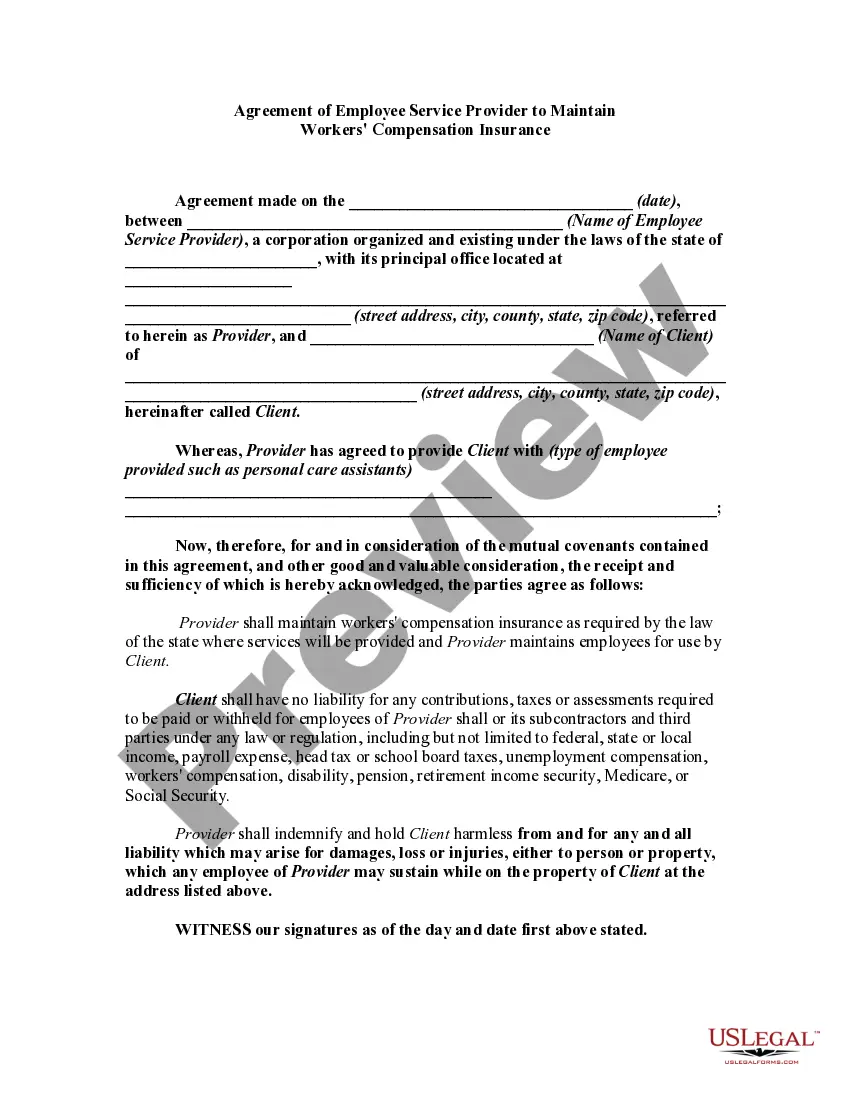

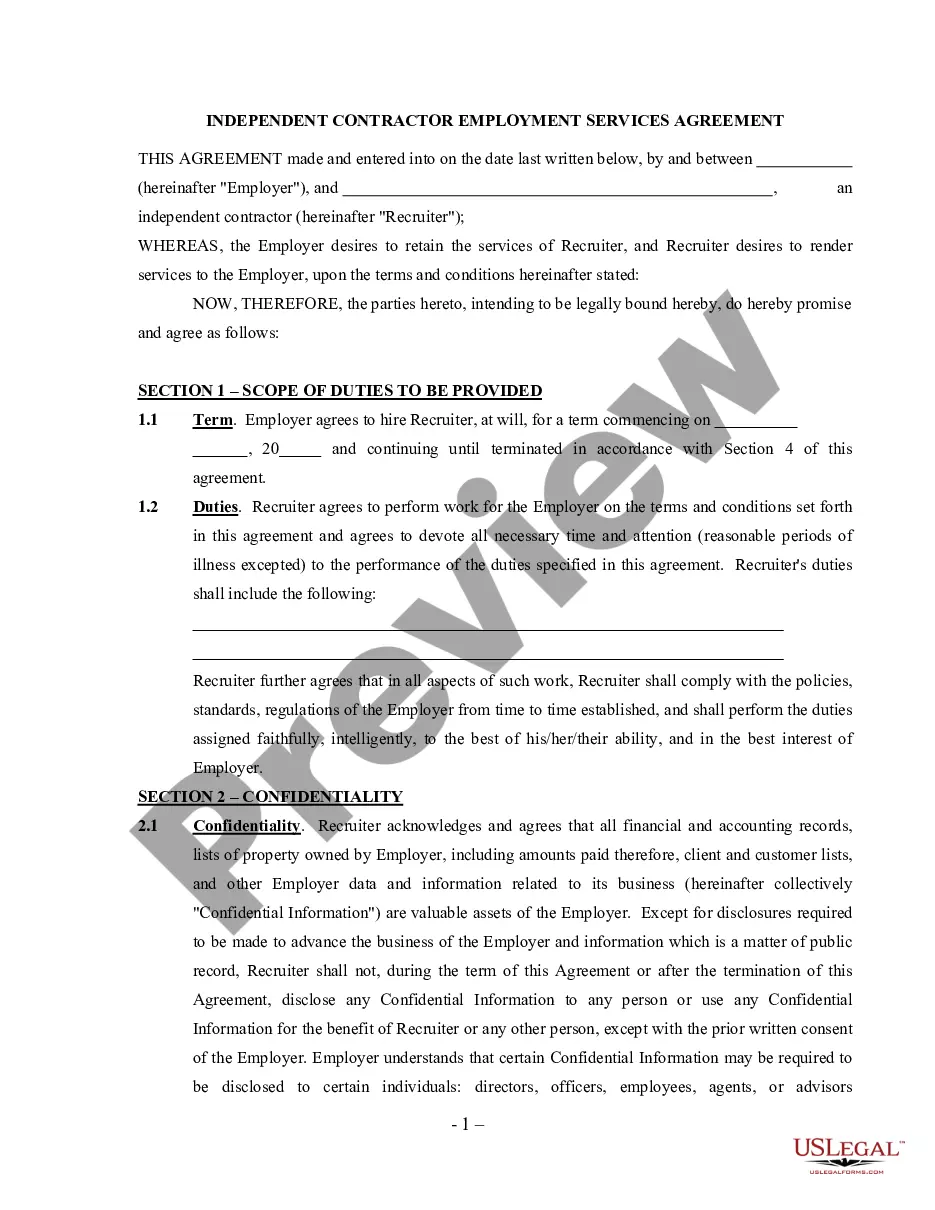


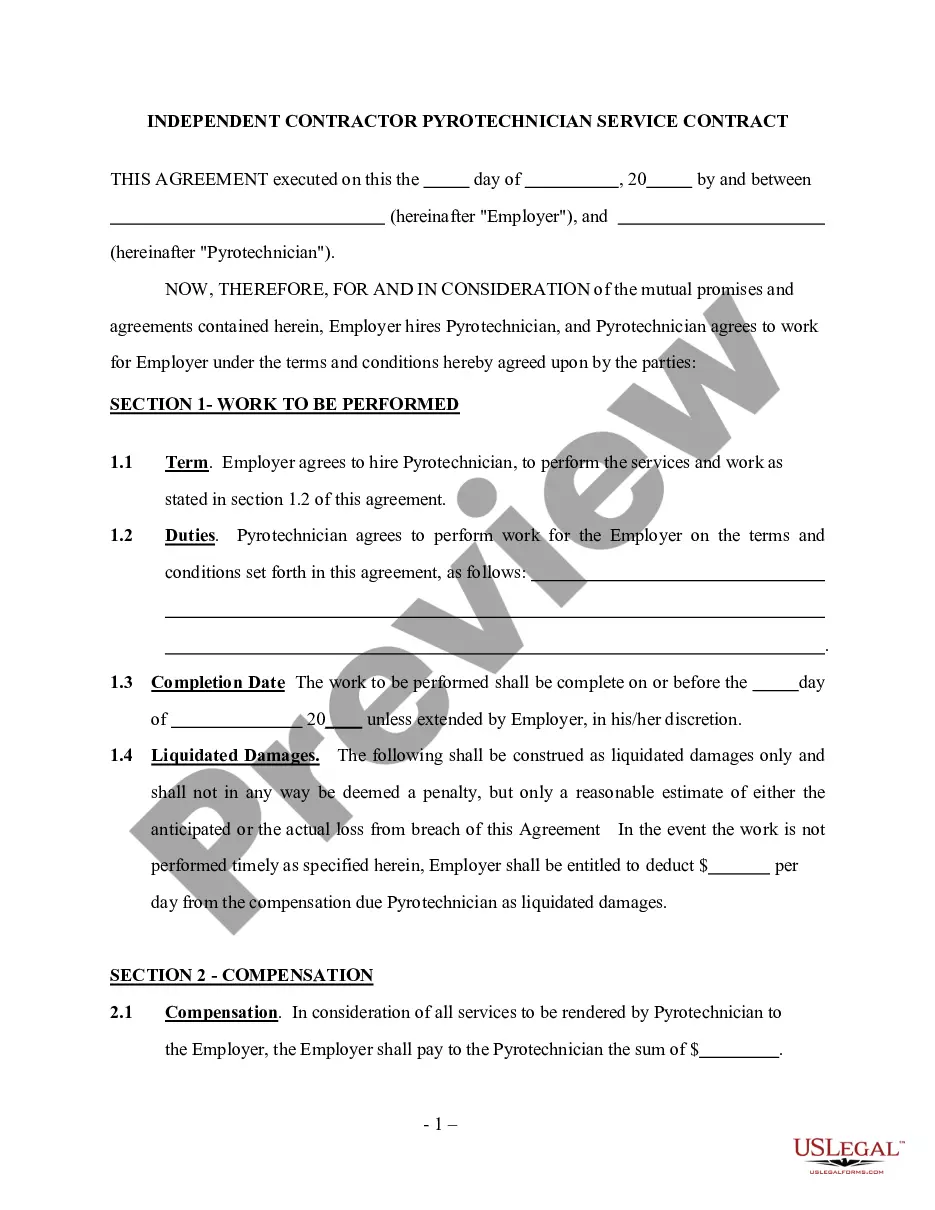


How to fill out Agreement Of Employee Service Provider To Maintain Workers Compensation Insurance?
Regardless of whether it’s for professional reasons or personal matters, individuals must confront legal scenarios eventually in their lifetime.
Completing legal documents necessitates meticulous attention, beginning with the choice of the appropriate form template.
With an extensive catalog from US Legal Forms at your disposal, you won’t need to waste time looking for the appropriate template online. Utilize the library's user-friendly navigation to find the right form for any situation.
- Locate the template you require by utilizing the search field or the catalog navigation.
- Review the description of the form to confirm it aligns with your case, state, and county.
- Access the preview of the form to examine it.
- If it is not the appropriate document, return to the search feature to find the Provider Workers Insurance For Self-employed template you seek.
- Download the file if it satisfies your requirements.
- If you already possess a US Legal Forms account, simply click Log in to retrieve previously saved templates in My documents.
- If you do not have an account yet, you can acquire the form by clicking Buy now.
- Select the correct pricing option.
- Fill out the account registration form.
- Choose your payment method: either a credit card or PayPal account.
- Select the document format you desire and download the Provider Workers Insurance For Self-employed.
- Once downloaded, you can complete the form using editing software or print it and fill it out by hand.
Form popularity
FAQ
To be a successful consultant, you should consider a few types of insurance, including provider workers insurance for self-employed. This insurance protects you in case of workplace injuries, ensuring financial security. Additionally, general liability insurance helps cover legal fees and claims against you. Using platforms like US Legal Forms can simplify the process of finding the right coverage tailored to your consulting needs.
Independent contractors should secure provider workers insurance for self-employed to address work-related incidents effectively. This coverage is essential for protecting against liabilities and ensuring compliance with business regulations. Additional health insurance plans can help cover medical expenses related to work stress or injuries. Understanding their insurance needs ensures independent contractors can focus on their projects without financial worry.
When hiring a contractor, always verify that they have provider workers insurance for self-employed to cover their professional risks. This insurance is vital for safeguarding both the contractor and your project from potential liabilities. Moreover, ensure they have liability insurance to protect against claims. Being thorough in checking these coverages can prevent future complications.
As someone who is self-employed, you generally need provider workers insurance for self-employed to cover accidents or liabilities that occur during work. It's also crucial to think about health insurance, which safeguards against unexpected medical costs. Additionally, consider liability insurance that protects your business from claims arising from your daily operations. Understanding these aspects ensures you run your business with confidence.
If you receive a 1099 form, you should look into provider workers insurance for self-employed to cover any work-related risks. This insurance helps in mitigating liability and provides peace of mind while completing projects. You may also want to consider health insurance to cover potential health expenses, ensuring you're protected. Being informed about your insurance needs is essential for your 1099-related work.
Self-employed contractors should prioritize provider workers insurance for self-employed since it covers work-related incidents. You may also need liability insurance to protect against claims due to negligence. Furthermore, health insurance is crucial for safeguarding your well-being in case of unexpected medical needs. Assessing your business risks will guide your insurance choices.
As a self-employed individual, you typically need provider workers insurance for self-employed. This insurance offers coverage for various risks, including liability and accidents related to your work. Additionally, consider health insurance to protect yourself from medical expenses. Evaluating your specific needs can help you choose the right policy.
When you are self-employed, you are responsible for purchasing your insurance coverage, unlike traditional employees who may receive it through their employer. This includes seeking out options like health, liability, and provider workers insurance for self-employed. Understanding your insurance needs and comparing various policies can help ensure you have the necessary protection to support your business.
Self-employed individuals can obtain insurance through private insurance markets, state exchanges, or specialized brokers who cater to freelancers and entrepreneurs. Additionally, platforms like USLegalForms can help you navigate your options and find the right provider workers insurance for self-employed. It's essential to compare plans to choose coverage that fits your specific needs.
Indeed, self-employed individuals can declare health insurance premiums as a business expense on their tax forms. This deduction can significantly lower your taxable income, allowing for potential savings. It's advisable to keep detailed records of all expenses related to provider workers insurance for self-employed to ensure a smooth deduction process.