Response Request For Admissions California
Description
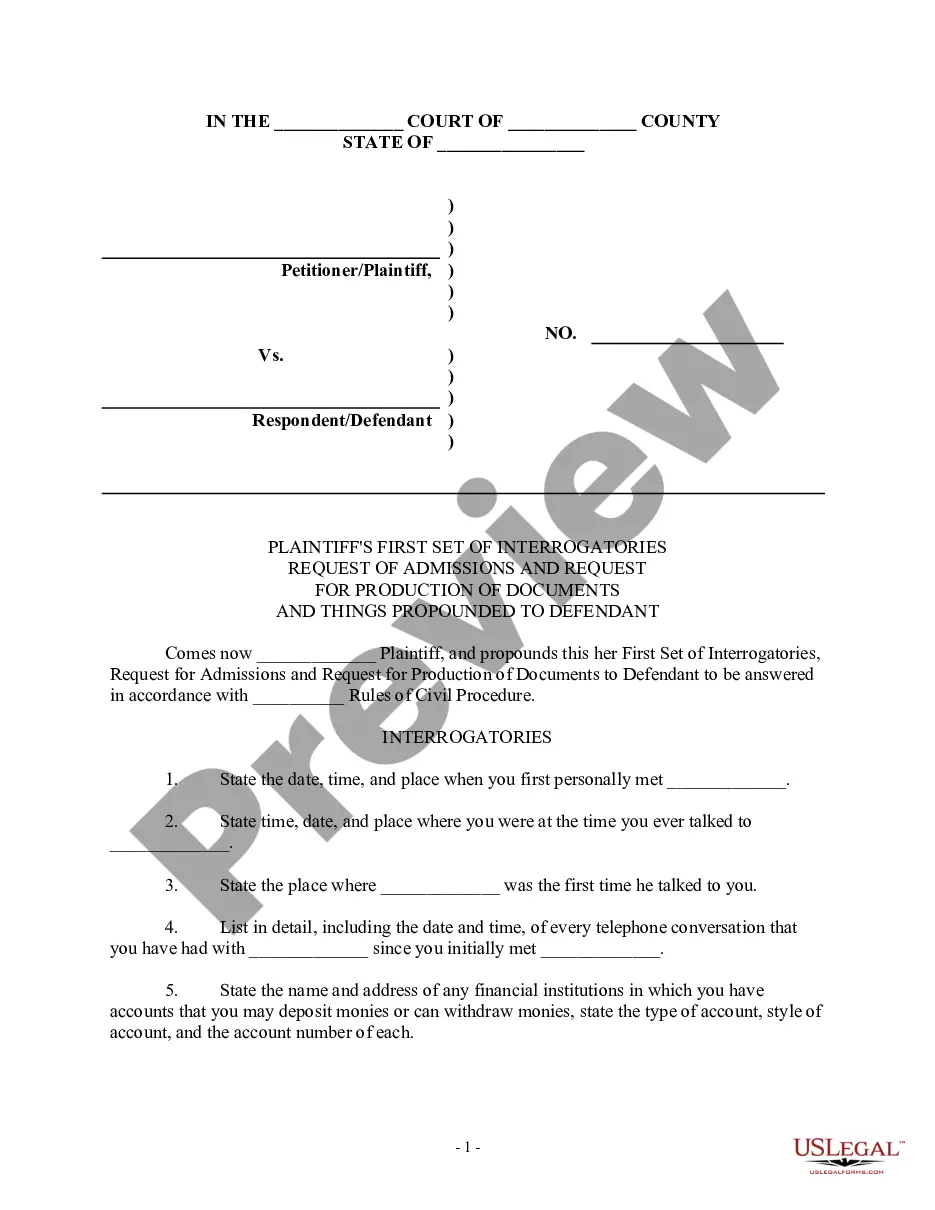
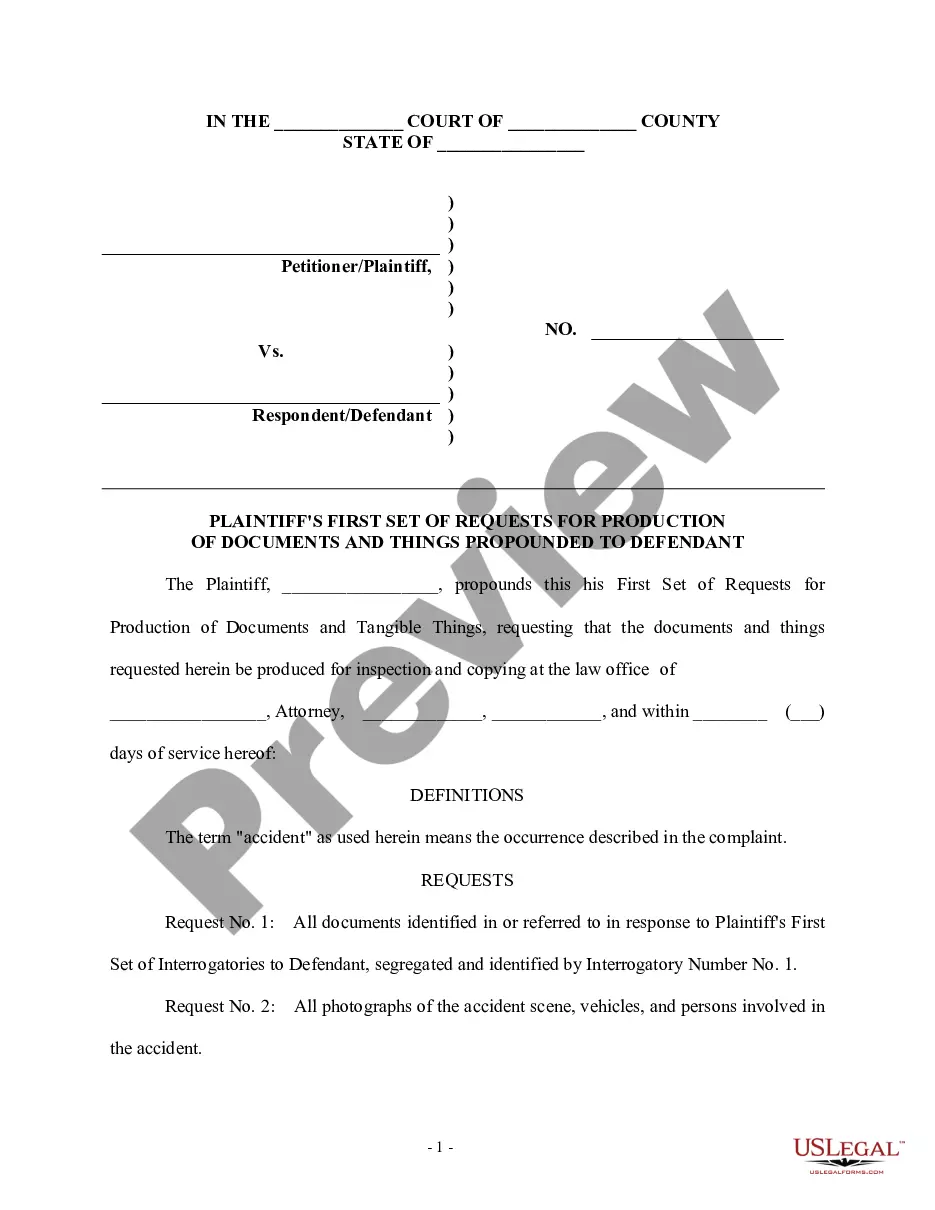
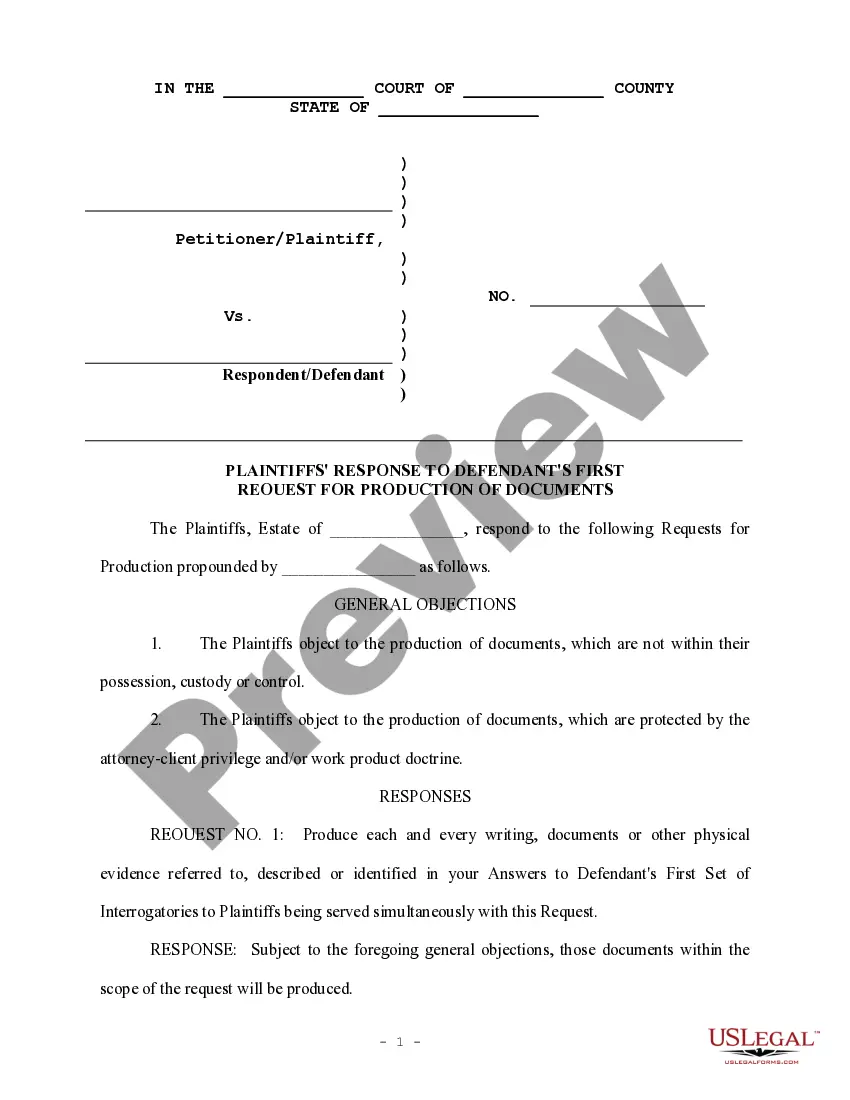
Get your form ready online
Our built-in tools help you complete, sign, share, and store your documents in one place.
Make edits, fill in missing information, and update formatting in US Legal Forms—just like you would in MS Word.
Download a copy, print it, send it by email, or mail it via USPS—whatever works best for your next step.
Sign and collect signatures with our SignNow integration. Send to multiple recipients, set reminders, and more. Go Premium to unlock E-Sign.
If this form requires notarization, complete it online through a secure video call—no need to meet a notary in person or wait for an appointment.
We protect your documents and personal data by following strict security and privacy standards.

Make edits, fill in missing information, and update formatting in US Legal Forms—just like you would in MS Word.

Download a copy, print it, send it by email, or mail it via USPS—whatever works best for your next step.

Sign and collect signatures with our SignNow integration. Send to multiple recipients, set reminders, and more. Go Premium to unlock E-Sign.

If this form requires notarization, complete it online through a secure video call—no need to meet a notary in person or wait for an appointment.

We protect your documents and personal data by following strict security and privacy standards.
Looking for another form?
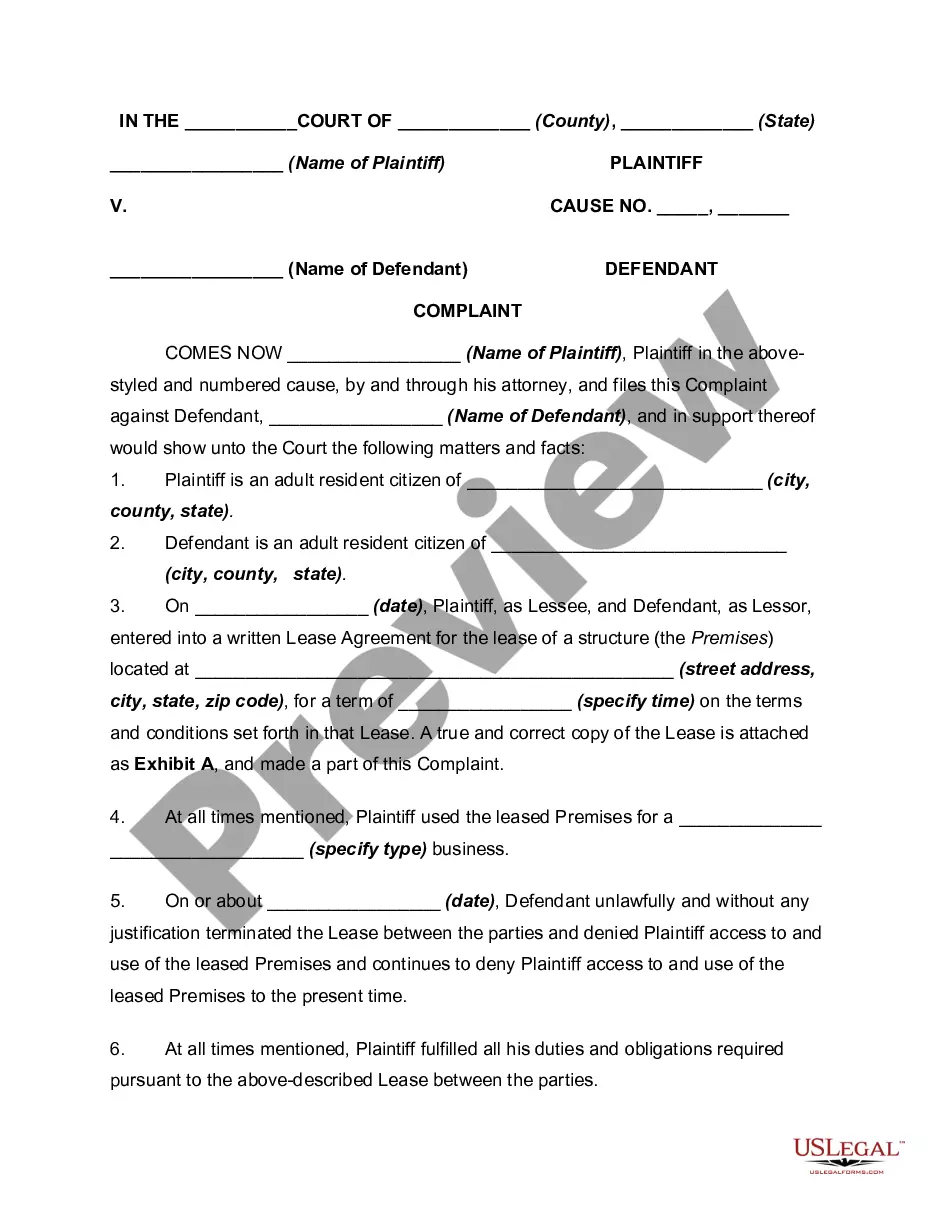

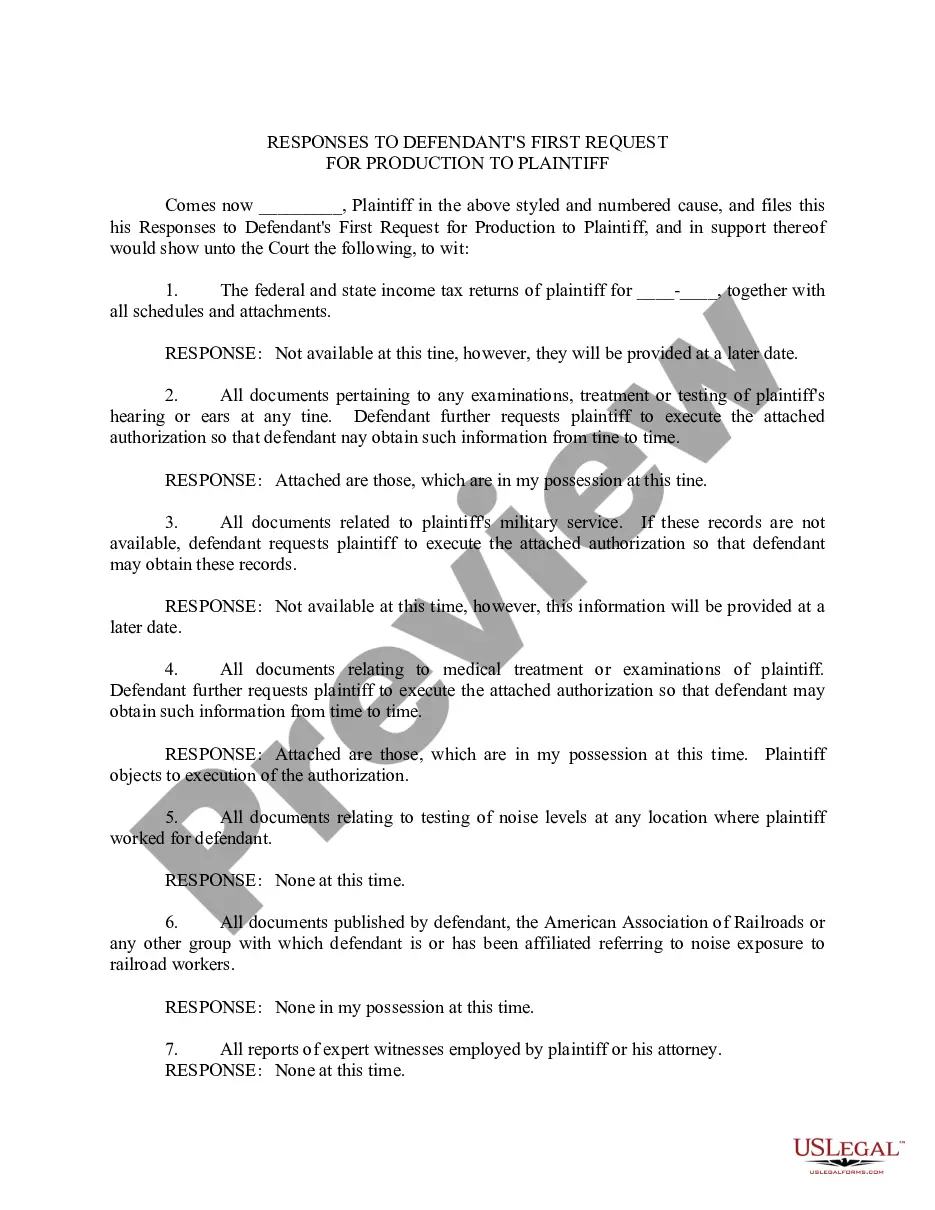
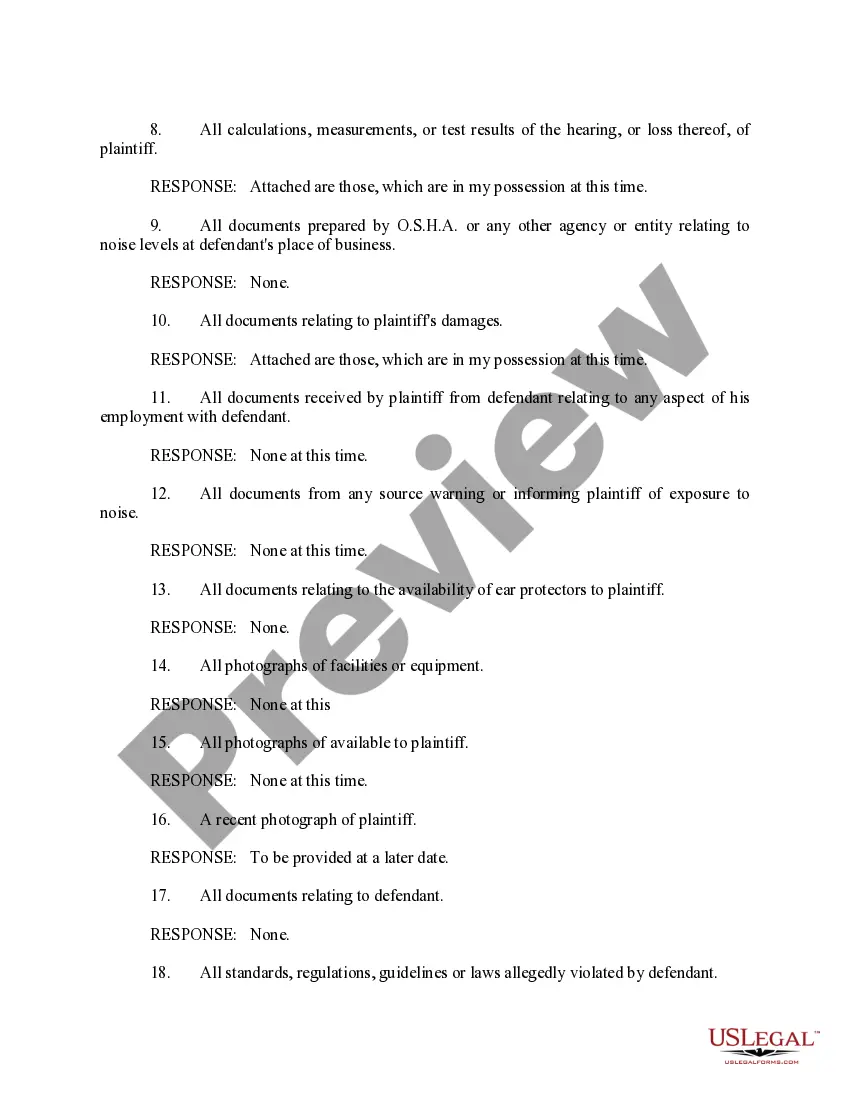
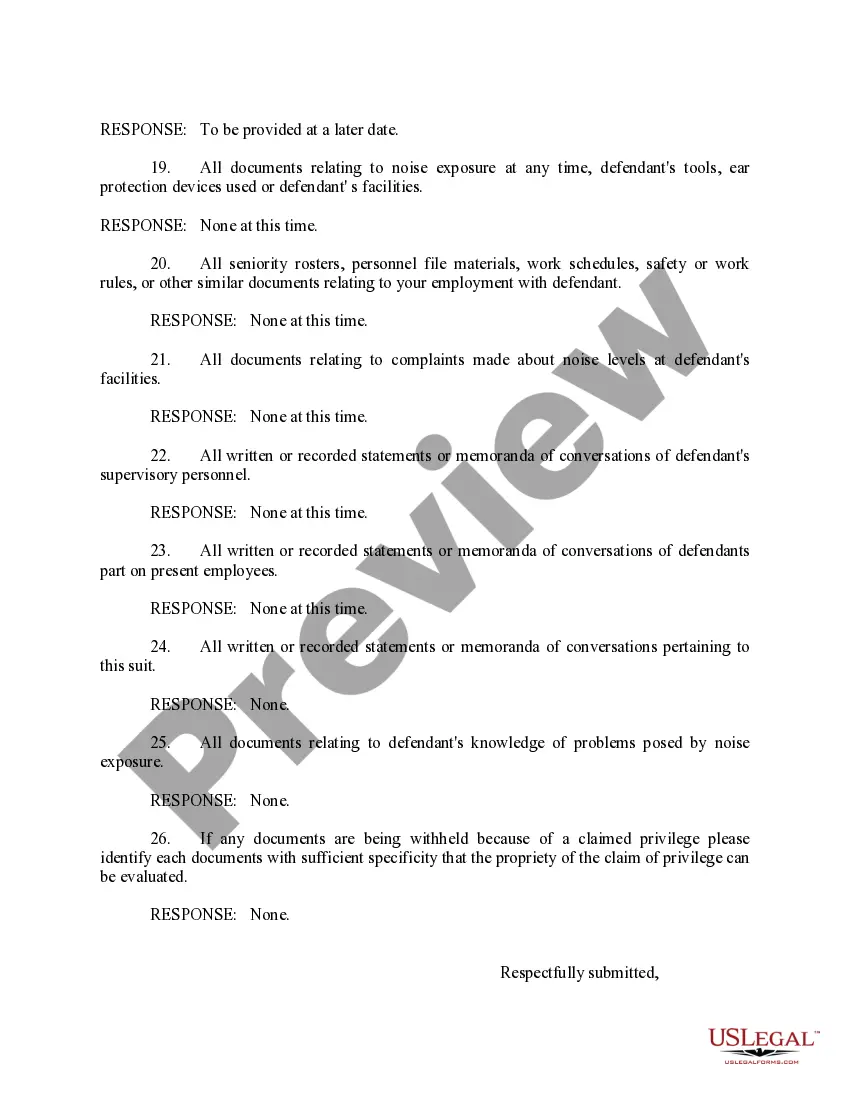
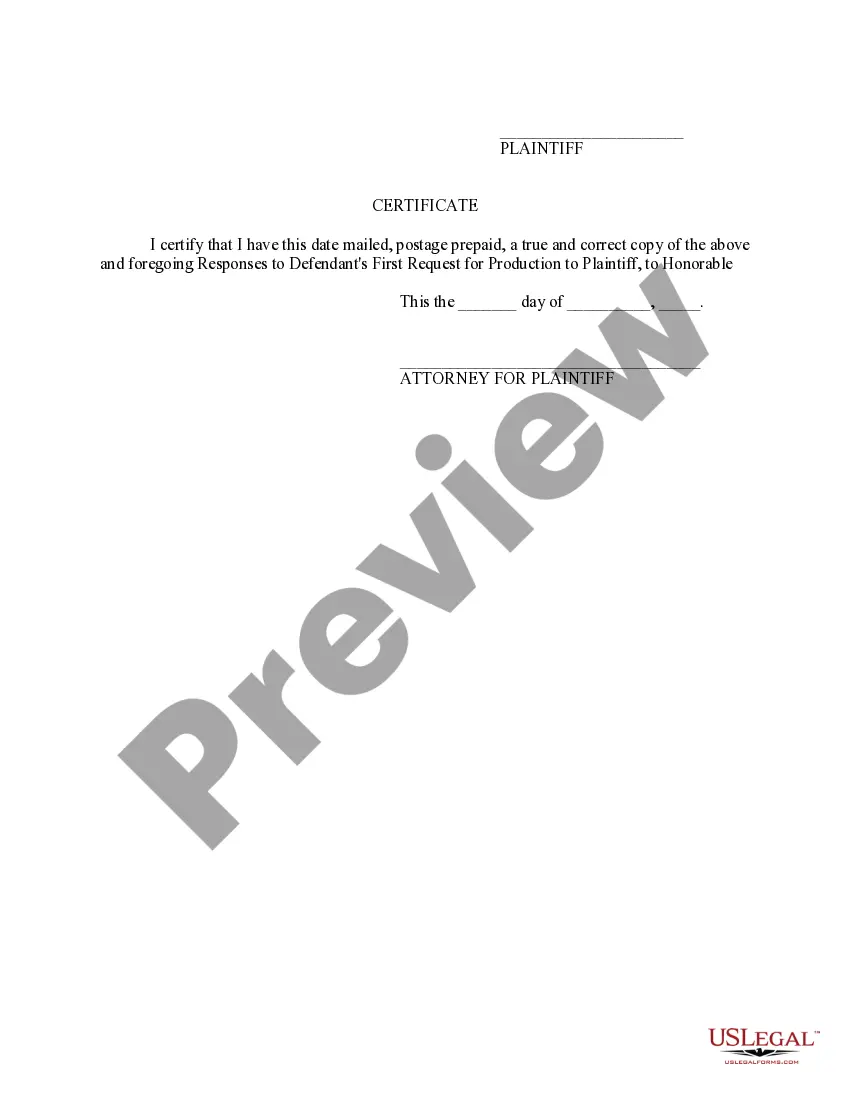
How to fill out Responses To Defendant's First Request For Production To Plaintiff?
Identifying a reliable source for obtaining the latest and pertinent legal templates is a significant part of navigating bureaucracy. Securing the appropriate legal documents requires accuracy and meticulousness, which highlights the necessity of sourcing Response Request For Admissions California solely from trustworthy providers, such as US Legal Forms. An incorrect template can squander your time and delay your situation. With US Legal Forms, you have minimal concerns. You can access and verify all the details regarding the document’s applicability and significance for your situation and in your jurisdiction.
Consider the following steps to complete your Response Request For Admissions California.
Once you have the form on your device, you can edit it using the editor or print it out and fill it in manually. Eliminate the stress associated with your legal documents. Explore the extensive US Legal Forms catalog where you can locate legal templates, verify their applicability to your situation, and download them instantly.
- Use the catalog navigation or search bar to find your template.
- Review the form’s description to determine if it aligns with your state and region's requirements.
- Open the form preview, if available, to ensure the template is the one you need.
- Continue searching and find the correct template if the Response Request For Admissions California does not meet your specifications.
- Once you are confident about the form’s applicability, download it.
- If you are a registered user, click Log in to verify and access your chosen forms in My documents.
- If you do not have an account yet, click Buy now to acquire the form.
- Select the pricing plan that fits your needs.
- Proceed to registration to finalize your purchase.
- Complete your transaction by selecting a payment option (credit card or PayPal).
- Choose the document format for downloading Response Request For Admissions California.
Form popularity
FAQ
To respond effectively to requests for admissions in California, you should draft a written response for each request. Clearly indicate whether you admit, deny, or lack sufficient information to respond. Be mindful of the legal implications of your admissions, as they can impact your case significantly. Utilizing services like USLegalForms can help streamline this process, ensuring you have the right tools and templates to respond correctly.
When responding to an admission letter, you should carefully read each admission request and decide whether to admit, deny, or state that you lack sufficient knowledge. Your response must be clear and concise, reflecting your position on each point. If you're uncertain about how to proceed, consider using resources like USLegalForms, which can provide structured guidance and templates for your response.
To file a response to a request for order in California, you must complete the necessary court forms and submit them to the court where your case is filed. Ensure that your response includes all relevant information and is filed within the specified time limits. Proper formatting and adherence to court rules are crucial for a successful filing. Platforms such as USLegalForms can guide you through this process, offering essential templates and instructions.
Yes, you must answer a request for admission in California unless you have a valid objection. Failing to respond can result in admissions being deemed true by the court. This can have significant implications for your case, so it's advisable to take this request seriously. Consider consulting resources like USLegalForms to assist in crafting your response.
To respond to a response request for admissions in California, you must prepare a written response that addresses each admission request specifically. You can either admit, deny, or state that you lack sufficient information to respond. Make sure to format your response according to the court's requirements. Utilizing platforms like USLegalForms can simplify this process, providing templates and guidance tailored to your needs.
In California, you typically have 30 days to respond to a response request for admissions. This timeframe starts from the date you receive the request. If you miss this deadline, you may lose the opportunity to contest the admissions. It's crucial to manage your time effectively to ensure a proper and timely response.
Responding to Requests for Admission Within 30 days after being served with the RFAs, you must admit or deny the facts requested and/or object to them. The time to respond can be increased or decreased by agreement of the parties or if your judge orders a different deadline for responding.
Requests for Production or Demands for Inspection require you to produce documents for copying or in some cases actual items for inspection. Responding to the request has 2 parts: State if you can comply with the request (all of it or some of it) or give the reason why you can't comply.
Proper Objections A responding party has four options: (1) admit; (2) deny; (3) admit in part and deny in part; or (4) explain why the party is unable to answer. It is possible to object to all or part of a request as well, but courts do not like parties who play ?word games? to avoid responding. Further, Civ.
(a) The party to whom requests for admission have been directed shall respond in writing under oath separately to each request. (b) Each response shall answer the substance of the requested admission, or set forth an objection to the particular request.