Dispute Letters For Credit Reports
Description
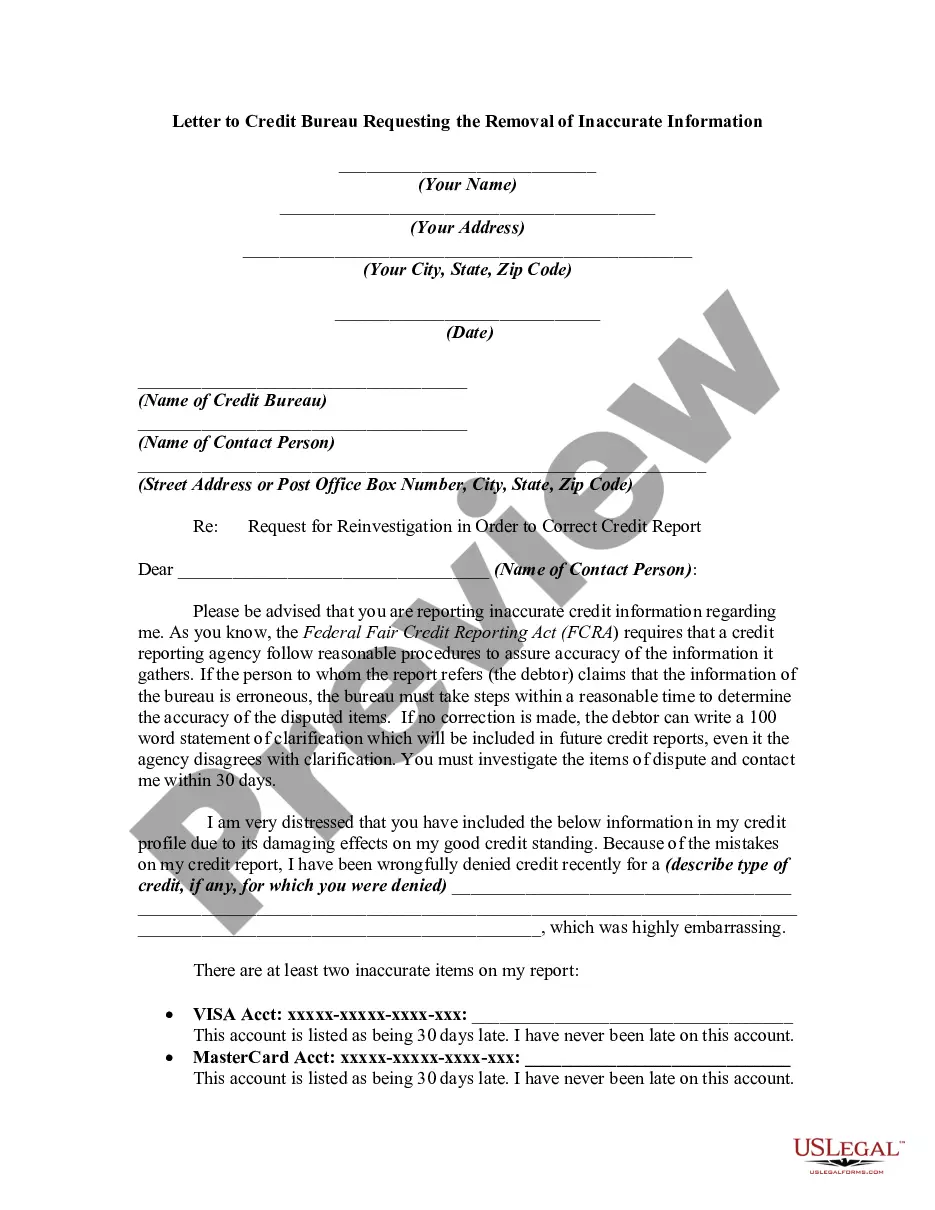
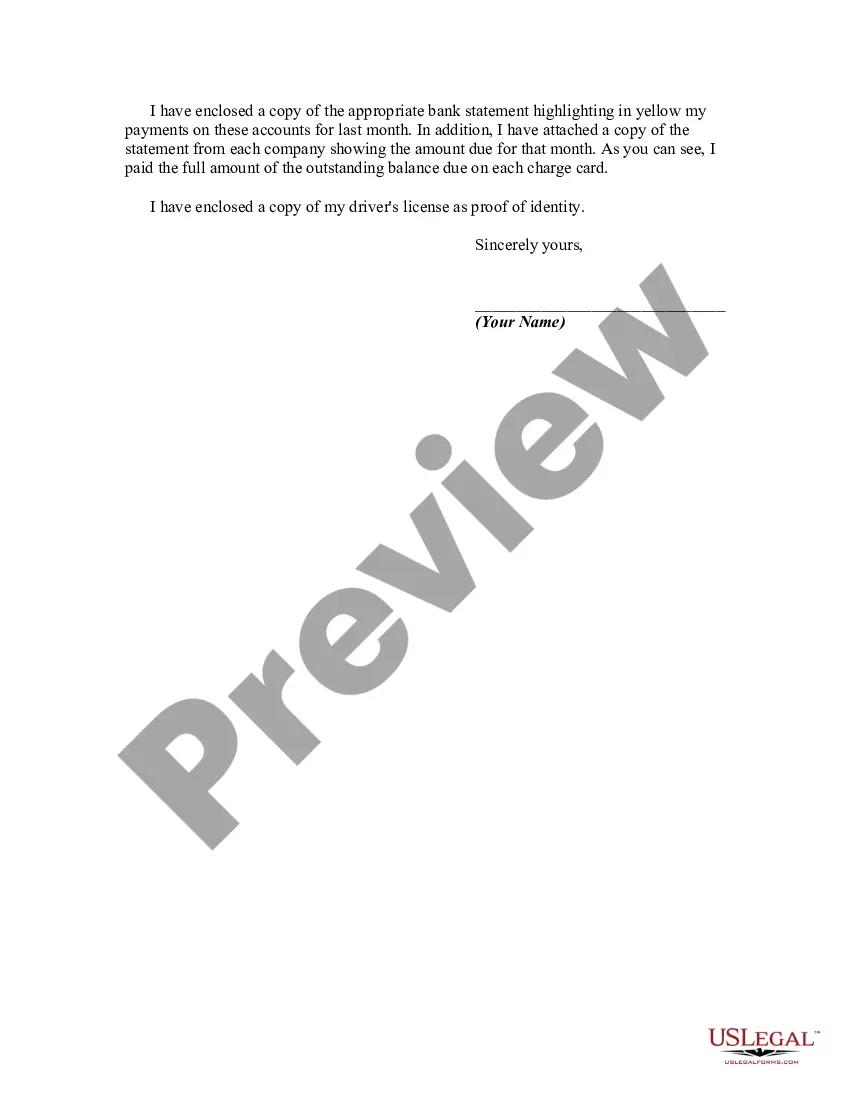
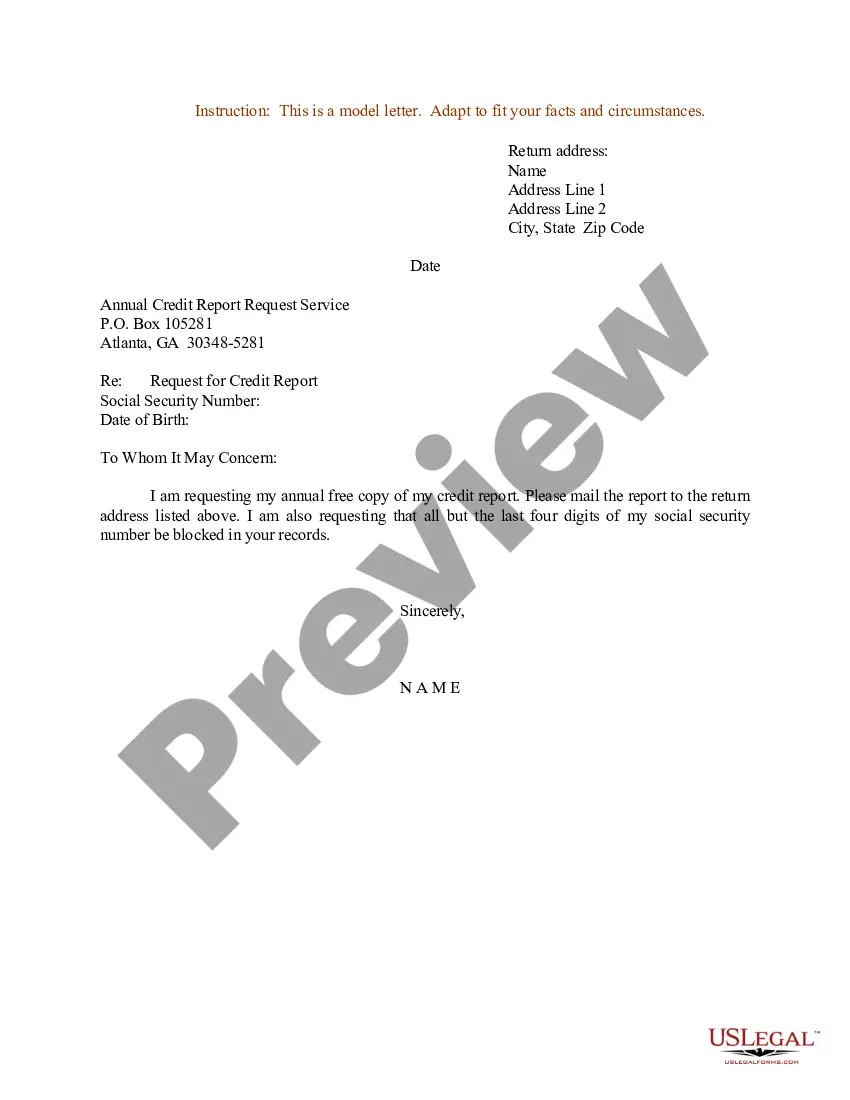
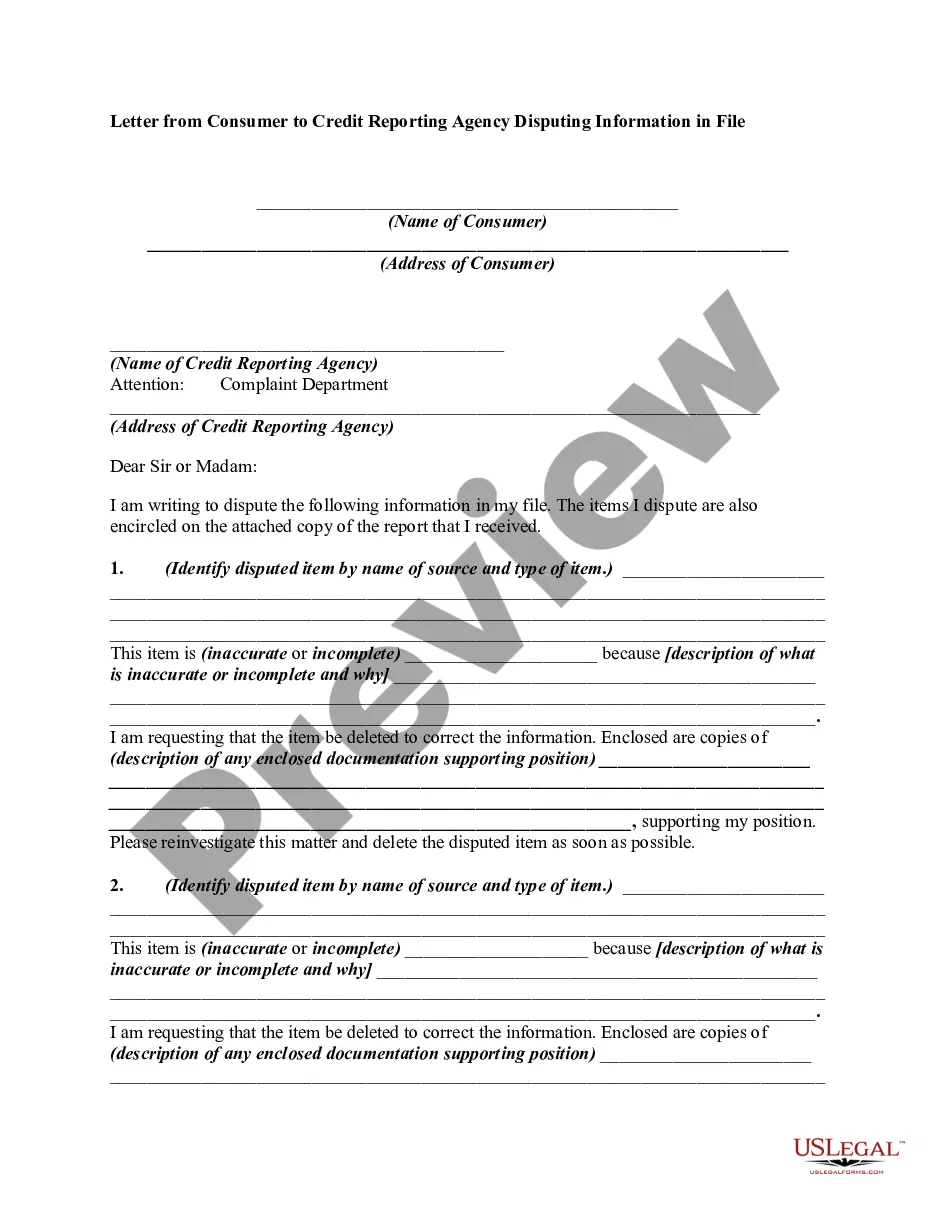
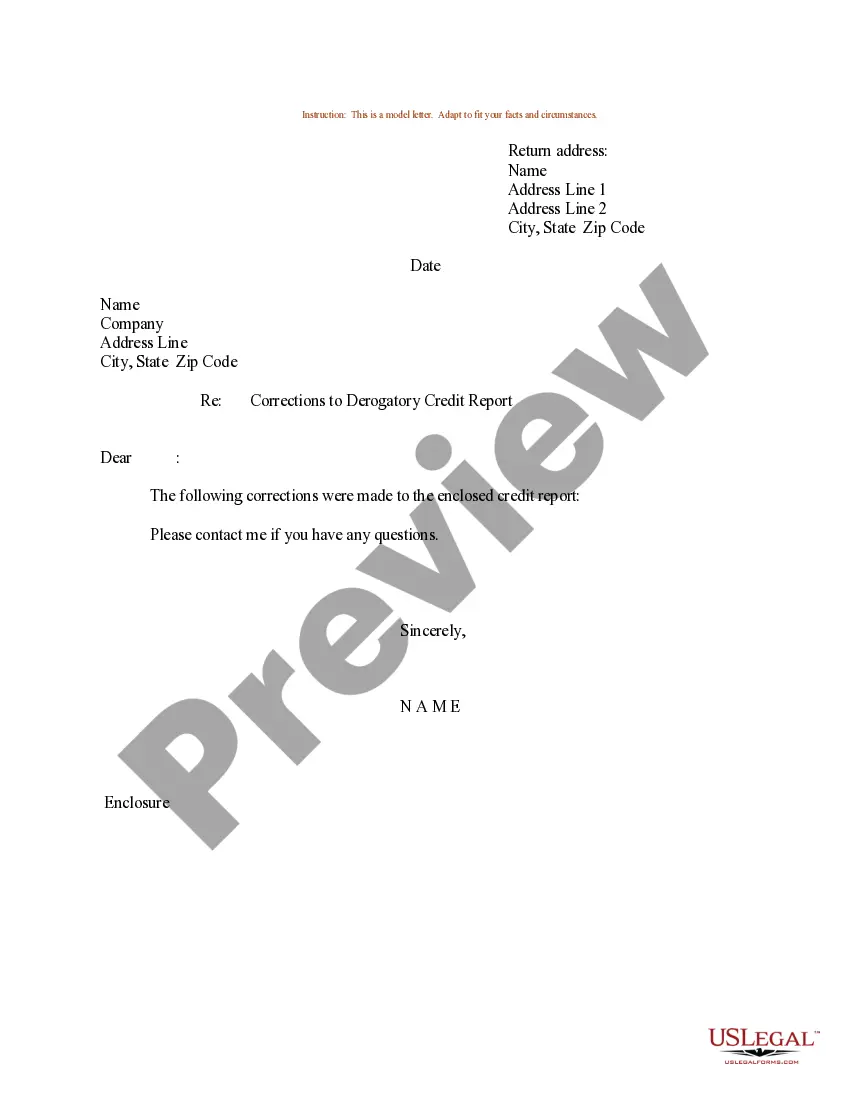
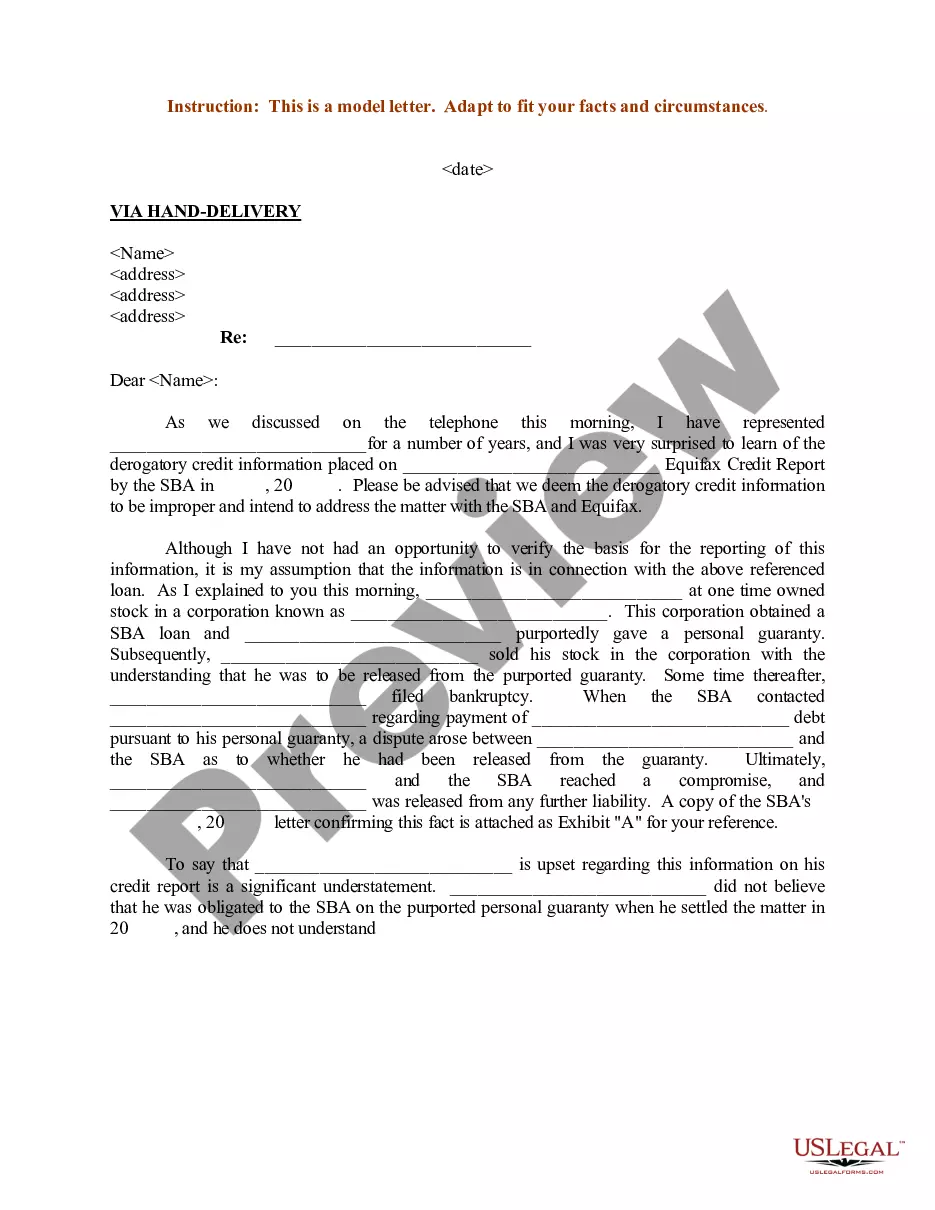

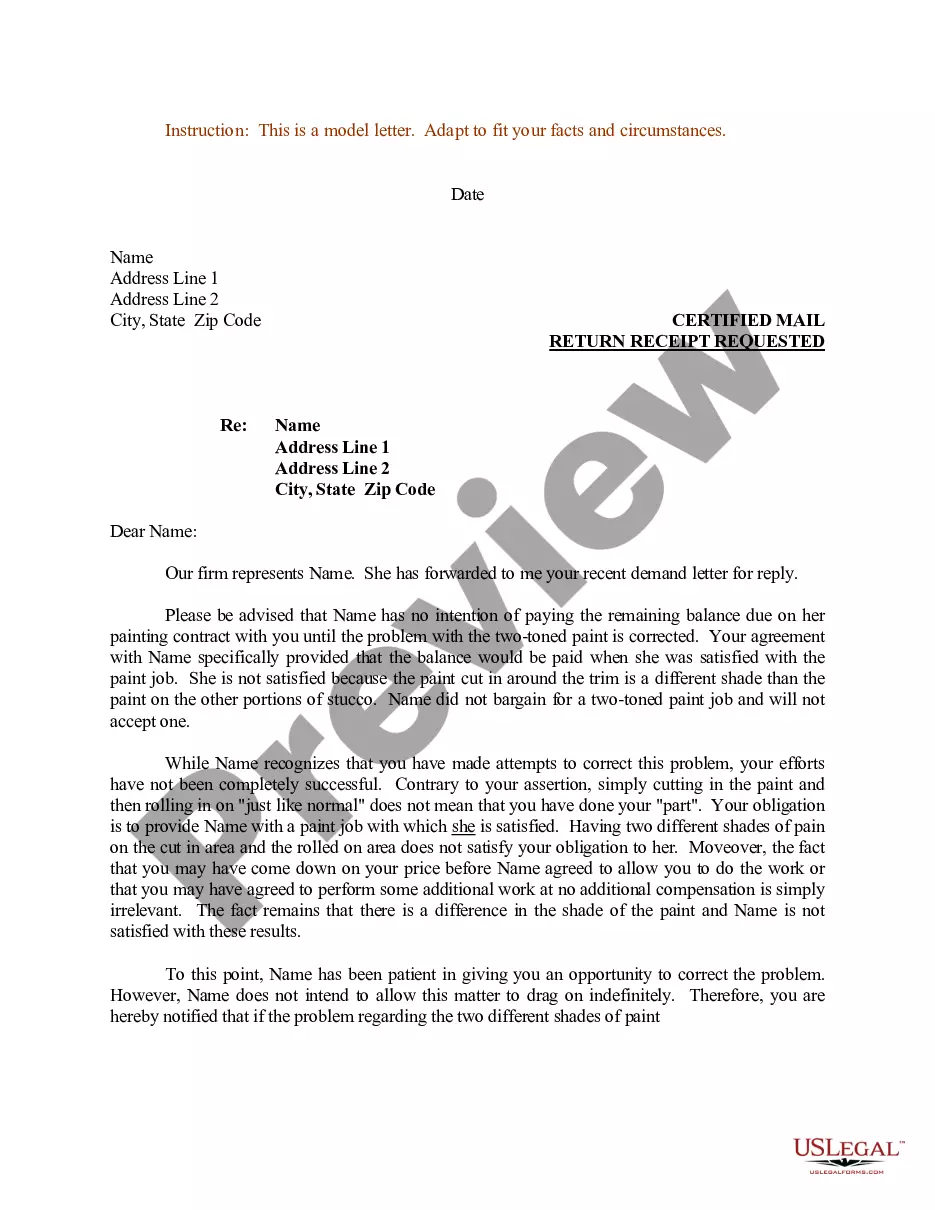

How to fill out Letter To Credit Bureau Requesting The Removal Of Inaccurate Information?
- Start by logging into your US Legal Forms account if you are a returning user. If you don’t have an account, create one to get started.
- Search for the dispute letter template in the extensive library. Use the Preview mode to review the details ensuring it meets your needs and adheres to your local requirements.
- If the initial template doesn’t suit you, use the Search feature to find another applicable form.
- Once you find the right form, click on the 'Buy Now' button and select a subscription plan that works for you.
- Complete your purchase by providing your credit card information or using PayPal to secure your subscription.
- Download the dispute letter template to your device and access it anytime via the 'My Forms' section in your profile.
By following these steps, you can efficiently obtain your dispute letters and enhance your credit report accuracy.
Start today with US Legal Forms and empower yourself to handle your credit disputes confidently.
Form popularity
FAQ
To win a dispute on your credit report, ensure that your claim is backed by strong evidence and clearly articulated in your dispute letters for credit reports. Promptly respond to any requests for additional information and follow up regularly to monitor your dispute status. Utilizing platforms like uslegalforms may also simplify drafting and submitting your letters effectively.
When filing a dispute, communicate your specific concerns while referencing the disputed item on your credit report. Use dispute letters for credit reports to clearly articulate what you believe is incorrect and why. Provide any relevant documentation so the agency can accurately assess your claim.
To write a good credit dispute letter, include your personal information, a clear explanation of the inaccuracies, and any supporting documents. Use dispute letters for credit reports to maintain a professional tone, focusing on facts and evidence that substantiate your claim. Remember to keep it concise and to the point for the best chance of success.
In a credit dispute, clearly outline your concerns regarding specific entries on your report. Most importantly, use dispute letters for credit reports to provide evidence supporting your claim. Detail your relationship to the disputed account and request a review to facilitate prompt resolution.
The best reason to dispute a credit report is when you find outdated or inaccurate information that affects your credit score. Dispute letters for credit reports should focus on verifiable errors such as incorrect balances, wrong account statuses, or fraudulent accounts. Addressing these issues helps ensure your credit report accurately reflects your financial history.
A 623 dispute letter references Section 623 of the Fair Credit Reporting Act, allowing you to notify creditors to investigate inaccuracies in your credit report. When you use dispute letters for credit reports, you can specify the error and demand correction. This can be an essential tool in maintaining credit health.
When you write dispute letters for credit reports, address any inaccuracies you notice. Clearly state the item you wish to challenge, providing your reasons along with supporting documentation. Be factual and straightforward, as this will help expedite the investigation process.
609 dispute letters refer to a specific section of the Fair Credit Reporting Act that allows consumers to request verification of information in their credit reports. While they can be an effective tool for disputing inaccuracies, their success depends on the documentation you provide and the credit bureau's response. Many find that using well-crafted dispute letters for credit reports increases their chances for resolution, especially when supported by US Legal Forms resources.
The best way to send a dispute letter is through certified mail with a return receipt request. This way, you have proof of delivery and the date it was sent. Also, ensure that you keep copies of your letter and any documents you send. This method creates a clear record for both you and the credit bureau regarding your dispute letters for credit reports.
To get items removed from your credit report quickly, focus on accurately preparing and submitting dispute letters for credit reports. Make sure to highlight the specific inaccuracies and back them with documented evidence. If the credit bureau cannot verify the accuracy of the disputed items, they must remove them, often within 30 days. Quick action, such as using reliable templates from US Legal Forms, can expedite this process.