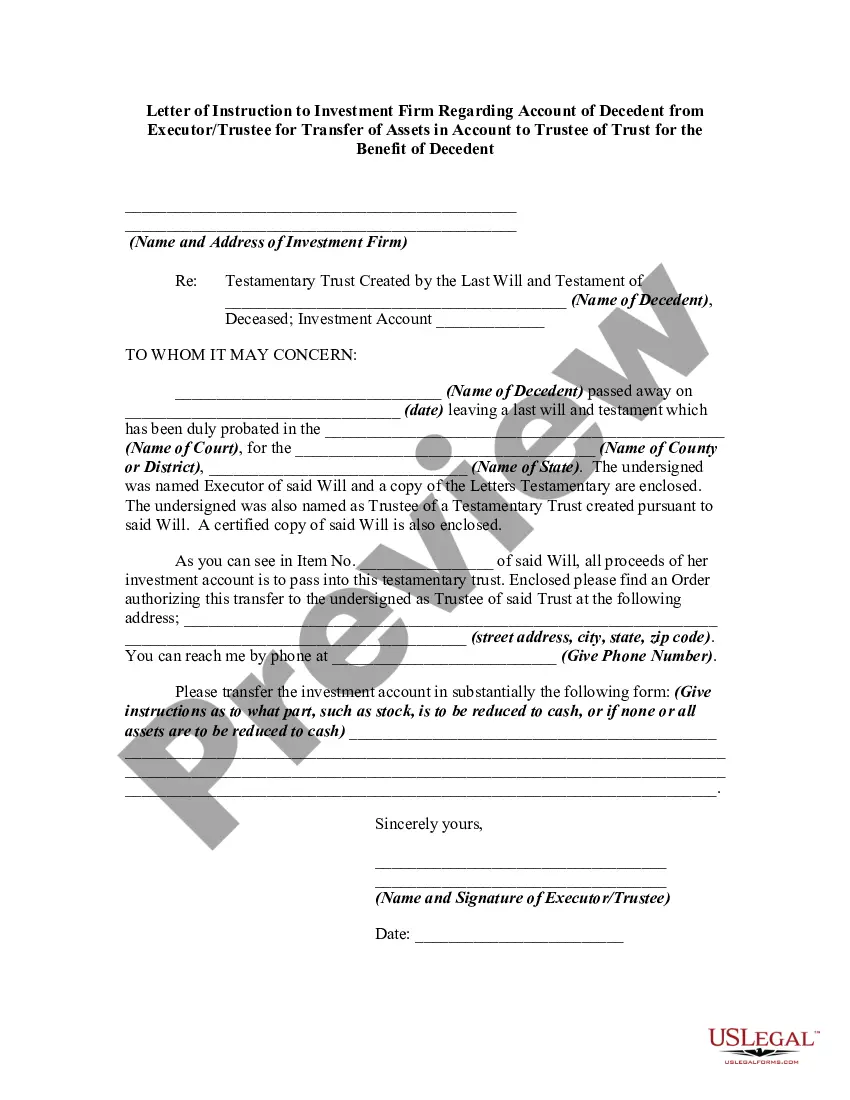
Account For Decedent
Description

Get your form ready online
Our built-in tools help you complete, sign, share, and store your documents in one place.
Make edits, fill in missing information, and update formatting in US Legal Forms—just like you would in MS Word.
Download a copy, print it, send it by email, or mail it via USPS—whatever works best for your next step.
Sign and collect signatures with our SignNow integration. Send to multiple recipients, set reminders, and more. Go Premium to unlock E-Sign.
If this form requires notarization, complete it online through a secure video call—no need to meet a notary in person or wait for an appointment.
We protect your documents and personal data by following strict security and privacy standards.

Make edits, fill in missing information, and update formatting in US Legal Forms—just like you would in MS Word.

Download a copy, print it, send it by email, or mail it via USPS—whatever works best for your next step.

Sign and collect signatures with our SignNow integration. Send to multiple recipients, set reminders, and more. Go Premium to unlock E-Sign.

If this form requires notarization, complete it online through a secure video call—no need to meet a notary in person or wait for an appointment.

We protect your documents and personal data by following strict security and privacy standards.
Looking for another form?








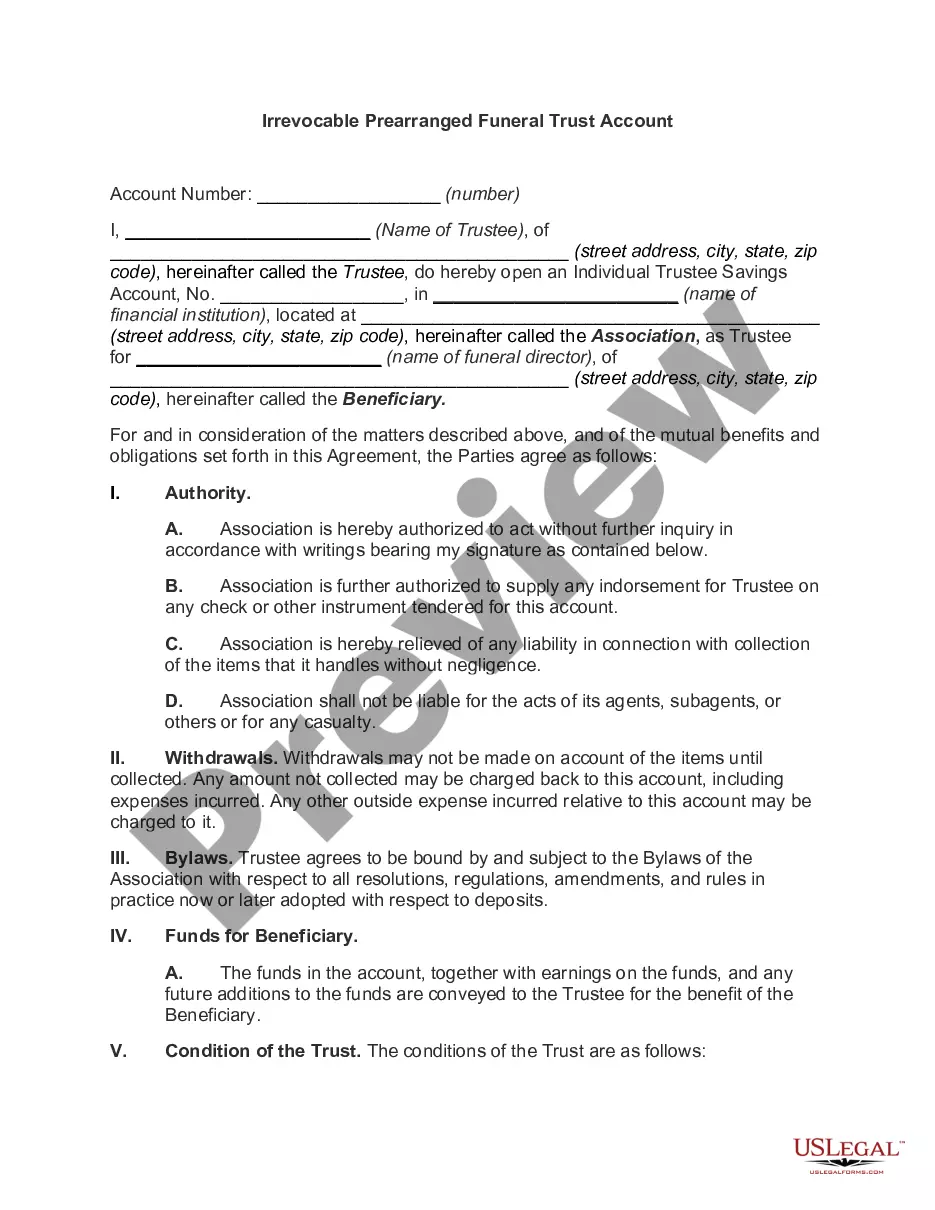
How to fill out Letter Of Instruction To Investment Firm Regarding Account Of Decedent From Executor / Trustee For Transfer Of Assets In Account To Trustee Of Trust For The Benefit Of Decedent?
Handling legal documents can be exasperating, even for seasoned experts.
When you seek an Account For Decedent and lack the time to dedicate to finding the appropriate and current version, the procedures can be overwhelming.
US Legal Forms meets any requirements you may have, ranging from personal to corporate documents, all in a singular location.
Utilize cutting-edge tools to prepare and oversee your Account For Decedent.
Here are the steps to follow after obtaining the form you desire: Verify that it is the correct document by reviewing it and examining its details.
- Gain access to a repository of articles, guides, and resources pertinent to your situation and requirements.
- Save time and effort hunting for the documents you require, and take advantage of US Legal Forms' sophisticated search and Preview feature to find Account For Decedent and acquire it.
- If you possess a monthly membership, Log In to your US Legal Forms account, search for the document, and obtain it.
- Visit the My documents section to review documents you've previously saved and to organize your folders as you wish.
- If this is your initial experience with US Legal Forms, create an account and gain unlimited access to all the benefits of the collection.
- A robust online form directory can be transformative for anyone wishing to address these matters effectively.
- US Legal Forms is a leading provider in online legal documents, offering over 85,000 state-specific legal forms accessible to you at any time.
- With US Legal Forms, you can access legal and organizational forms tailored to state or county specifications.
Form popularity
FAQ
To open a bank account for the estate of a deceased person, you first need to obtain the necessary legal documents, such as a death certificate and the will, if available. You must then provide this documentation to the bank and complete any required forms. This account will facilitate the management and distribution of the estate's assets. Consider using the legal forms available through USLegalForms to ensure you have all the paperwork completed correctly.
A decedent account refers to a bank account that belonged to a deceased person. This type of account typically holds funds that are part of the deceased's estate. Understanding how to manage a decedent account is crucial for settling any financial obligations and distributing assets. Using resources like USLegalForms can help you navigate the legal requirements involved.
Setting up a bank account for a deceased estate involves a few steps. First, you must obtain a death certificate and proof of your authority as the executor. Choose a bank and complete the necessary paperwork designated for estate accounts. Using US Legal Forms, you can find resources that clarify this process, helping you ensure that you complete all legal requirements.
Creating an estate account starts with collecting essential documents such as the will, death certificate, and your identification. After gathering these, visit a local bank to open the account, specifying that it is for the decedent's estate. The bank may have specific requirements, so be prepared to provide any necessary forms. US Legal Forms can assist you with the legal documents needed for this process.
To open an account for the decedent, you need to gather vital documents, including the death certificate and legal paperwork proving your authority to manage the estate. Visit your chosen bank and inquire about their specific requirements for estate accounts. Typically, you will provide identification and complete relevant forms. Platforms like US Legal Forms can offer templates that simplify the paperwork needed to set up the account.
Filing returns for a decedent involves preparing a final income tax return for the year of their passing. You should report all income earned up to the date of death, along with any applicable deductions. Depending on the situation, you may also need to file an estate tax return. Using resources from US Legal Forms can streamline this process and ensure compliance with regulations.
When managing an estate, you should open a dedicated estate account for the decedent. This type of account helps you separate the estate's finances from personal funds, ensuring clarity and organization. Utilizing an estate account allows you to manage payments for debts and expenses effectively. Platforms like US Legal Forms can guide you through the necessary documents and procedures.
While not strictly mandatory, setting up an estate account is highly advisable. This specialized account for decedent simplifies the management of the deceased’s finances, allowing you to settle debts and distribute assets effectively. By doing so, you protect the estate's funds and avoid potential disputes among heirs.
Setting up an estate account is essential for managing a deceased person's financial affairs. Begin by collecting necessary documents such as the will, death certificate, and letters of administration. Once you have these documents, approach your bank to open the account for decedent, which will help streamline the settlement of the estate and manage any outstanding bills.
Filing taxes for a deceased person can seem daunting, but it's important to ensure compliance. You will need to file a final tax return using Form 1040 for the year of death, including any income the account for decedent may have generated. Be sure to gather all necessary financial documents and consider working with a tax professional to navigate any complexities.