Discretionary Trust For Child
Description


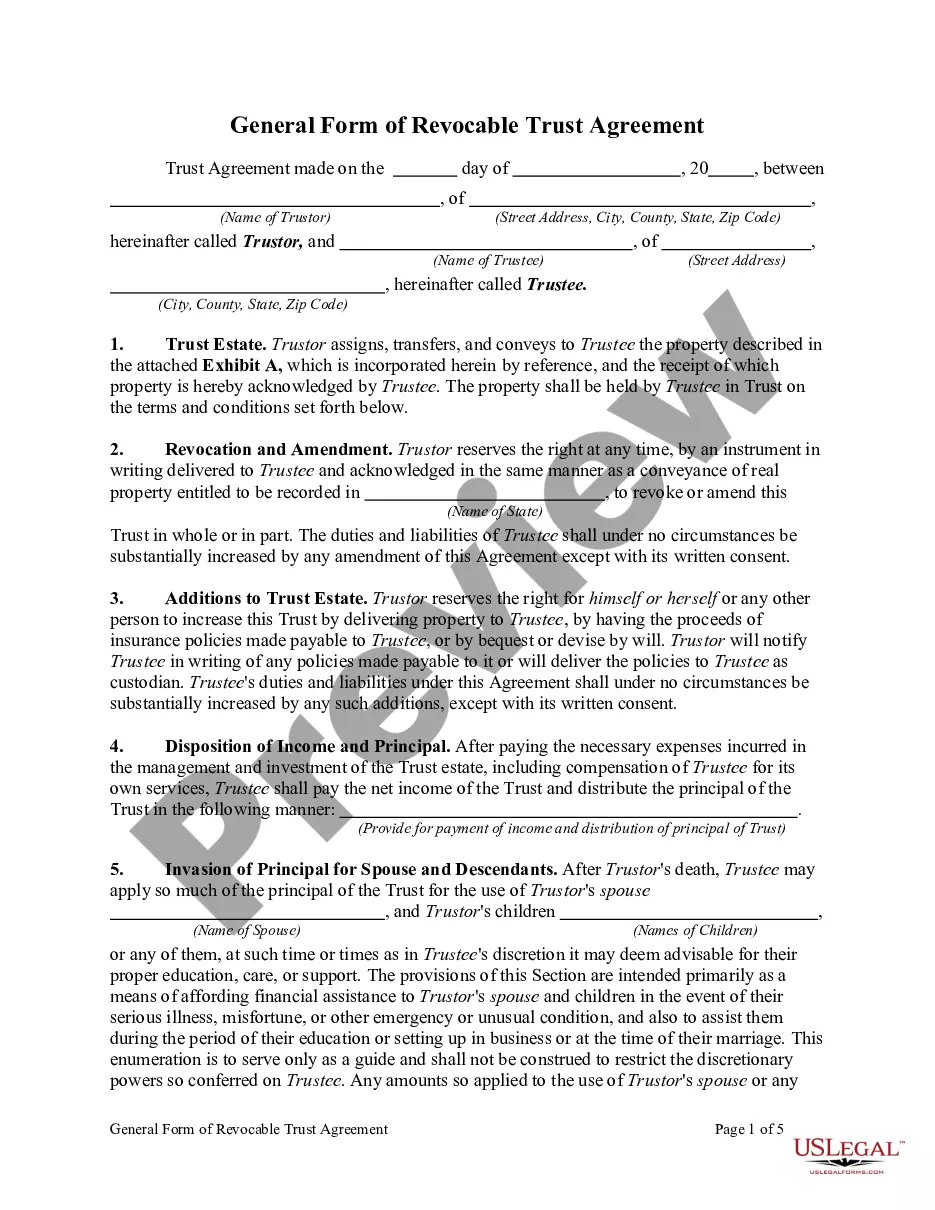
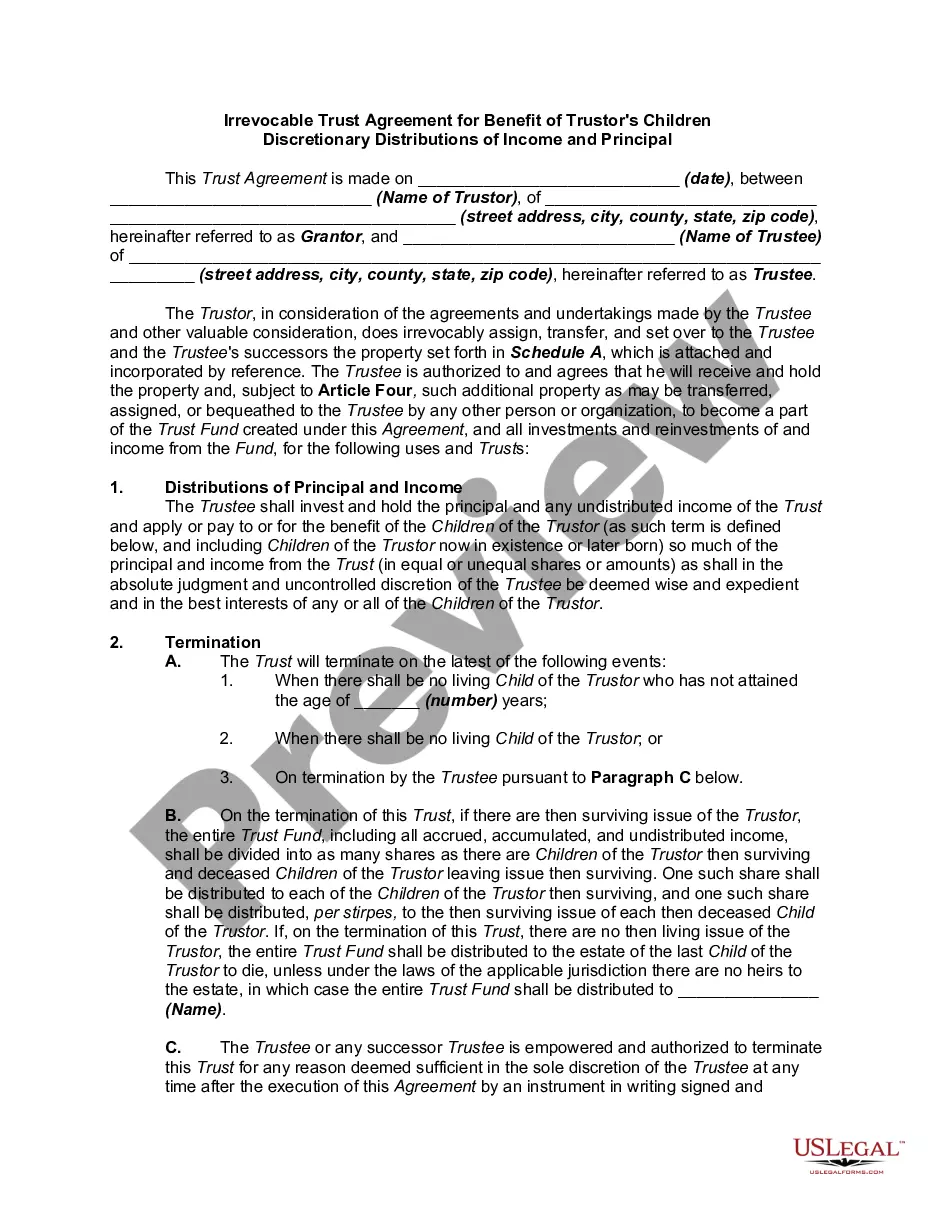
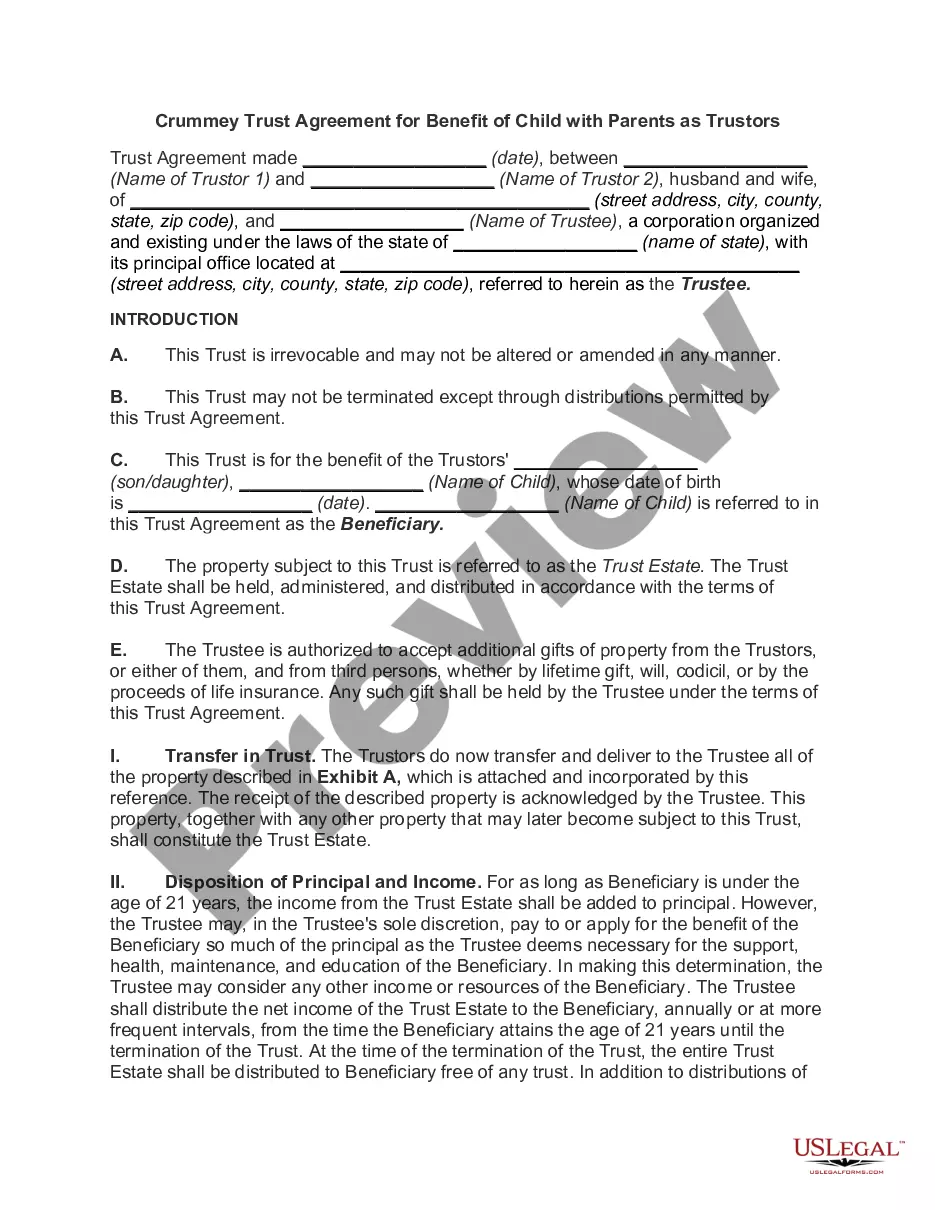

Get your form ready online
Our built-in tools help you complete, sign, share, and store your documents in one place.
Make edits, fill in missing information, and update formatting in US Legal Forms—just like you would in MS Word.
Download a copy, print it, send it by email, or mail it via USPS—whatever works best for your next step.
Sign and collect signatures with our SignNow integration. Send to multiple recipients, set reminders, and more. Go Premium to unlock E-Sign.
If this form requires notarization, complete it online through a secure video call—no need to meet a notary in person or wait for an appointment.
We protect your documents and personal data by following strict security and privacy standards.

Make edits, fill in missing information, and update formatting in US Legal Forms—just like you would in MS Word.

Download a copy, print it, send it by email, or mail it via USPS—whatever works best for your next step.

Sign and collect signatures with our SignNow integration. Send to multiple recipients, set reminders, and more. Go Premium to unlock E-Sign.

If this form requires notarization, complete it online through a secure video call—no need to meet a notary in person or wait for an appointment.

We protect your documents and personal data by following strict security and privacy standards.
Looking for another form?








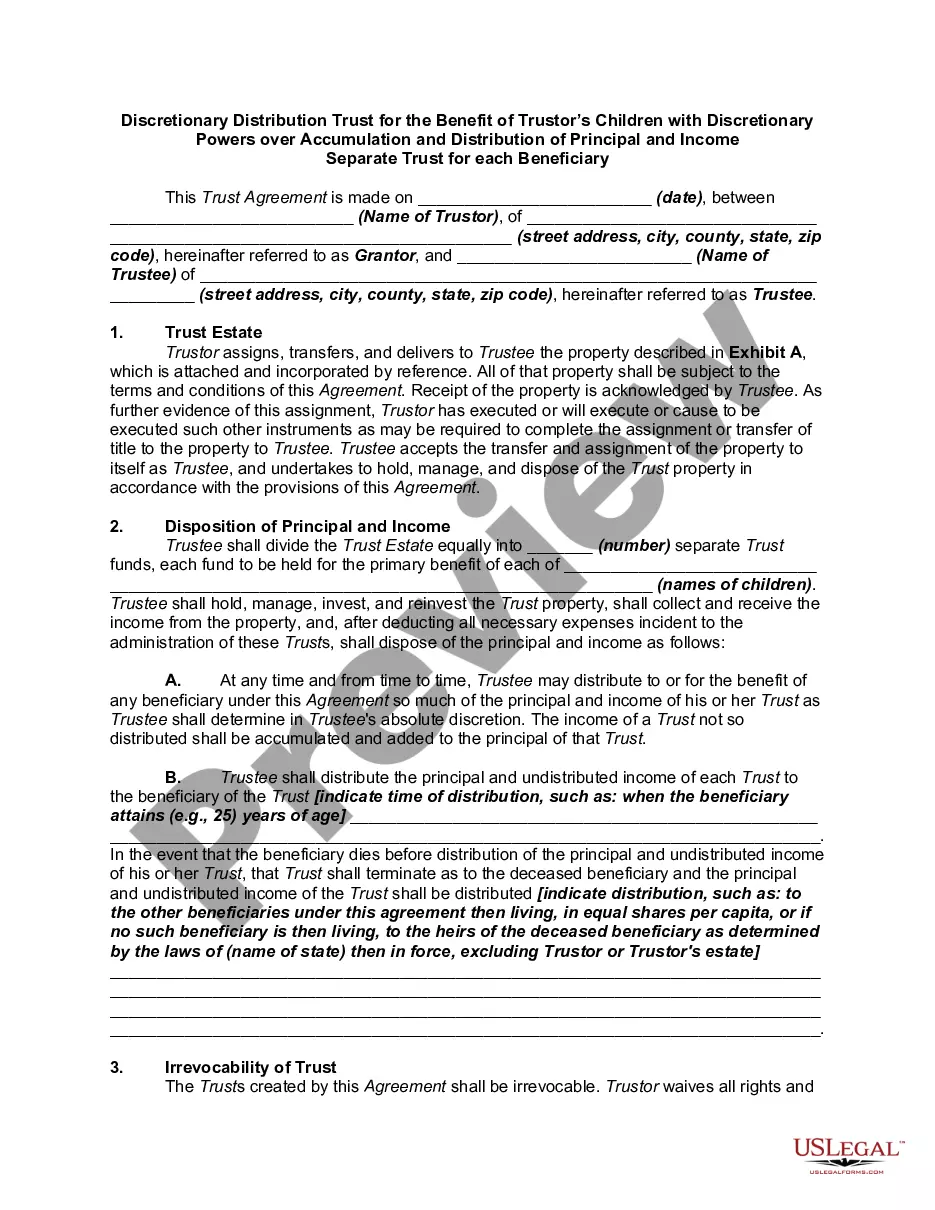
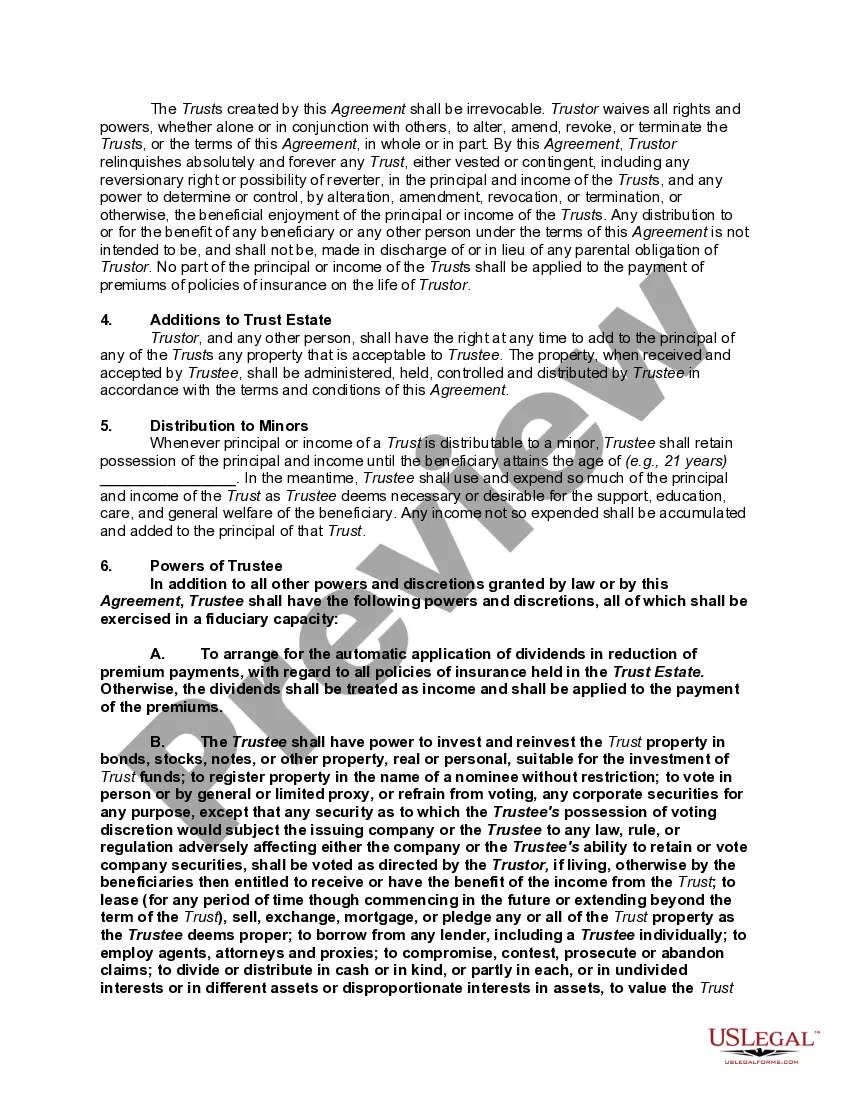
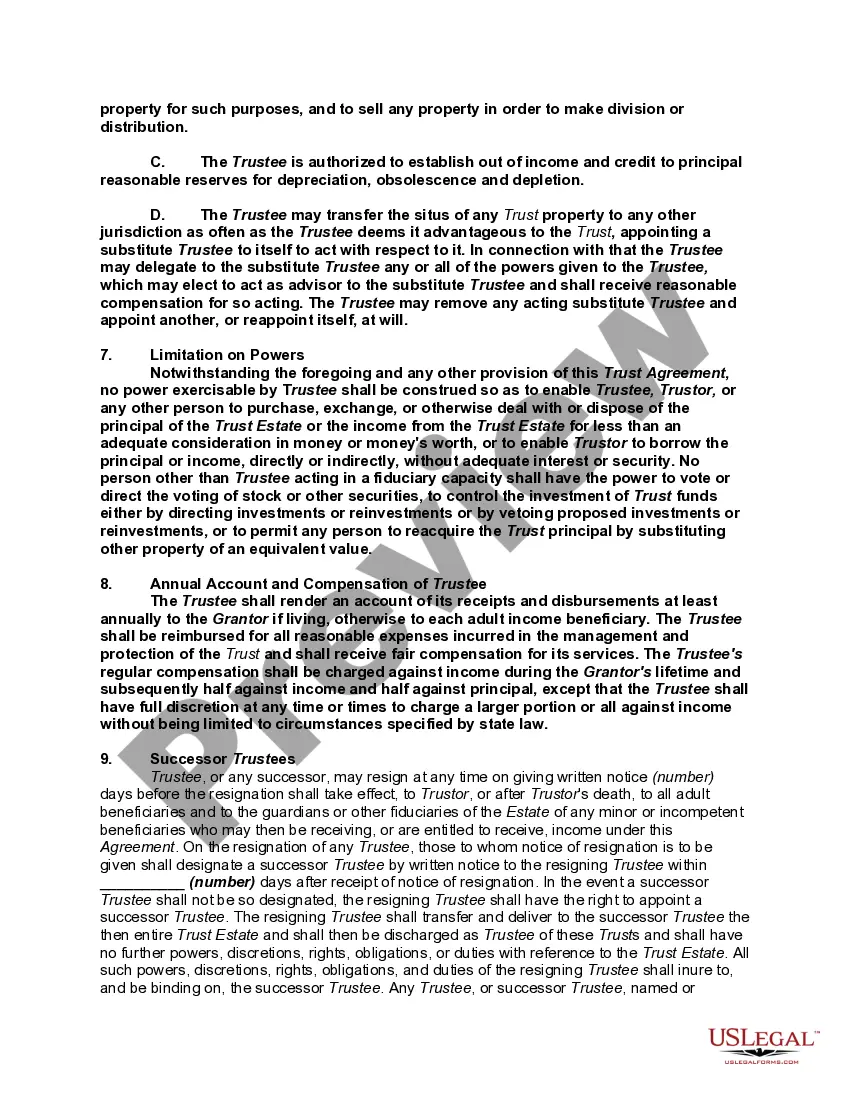
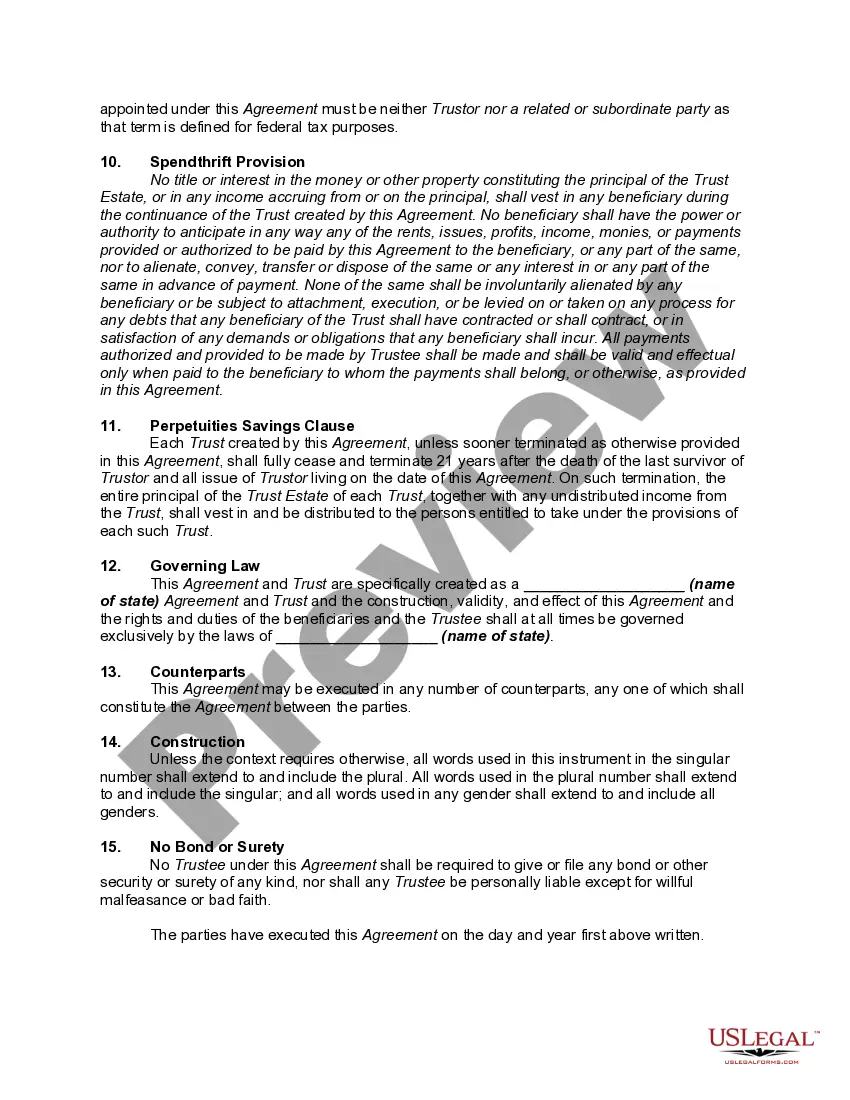
How to fill out Discretionary Distribution Trust For The Benefit Of Trustor's Children With Discretionary Powers Over Accumulation And Distribution Of Principal And Income Separate Trust For Each Beneficiary?
The Discretionary Trust For Child showcased on this site is a versatile legal framework crafted by skilled attorneys in compliance with national and local statutes.
For over 25 years, US Legal Forms has delivered individuals, businesses, and legal practitioners more than 85,000 validated, state-specific documents for various business and personal needs. It’s the quickest, simplest, and most trustworthy method to acquire the necessary paperwork, as the service ensures bank-level data protection and malware prevention.
Subscribe to US Legal Forms to have authenticated legal templates for every situation in life readily available.
- Search for the document you require and verify it.
- Browse the file you looked for and preview it or read the form description to ensure it meets your requirements. If it doesn’t, utilize the search bar to find the correct one. Click Buy Now after identifying the template you need.
- Enroll and sign in.
- Choose the pricing option that fits you and create an account. Use PayPal or a credit card for a swift payment. If you already possess an account, Log In and check your subscription to proceed.
- Acquire the fillable template.
- Select the format you desire for your Discretionary Trust For Child (PDF, DOCX, RTF) and save the document on your device.
- Complete and sign the document.
- Print the template to finish it by hand. Alternatively, leverage an online multifunctional PDF editor to swiftly and precisely complete and sign your form with an eSignature.
- Retrieve your documents again.
- Utilize the same document again whenever needed. Access the My documents tab in your profile to redownload any forms you previously saved.
Form popularity
FAQ
If a child is born to unmarried persons and there is no COURT ORDER identifying a father, Tennessee law states that the mother automatically has both legal and physical custody of the child. In order for a potential father to have any custody/visitation rights to a child, there MUST be a COURT ORDER.
Under Tennessee law, both parents are presumed to be the biological parents of a child born by the wife during the marriage. In that case, both parents typically have equal rights in terms of custody and visitation. There may be an exception in cases where abuse or neglect is present.
You'll pay $250 to $400 for divorce, at least $100 for separation and about $150 for a custody-only case. You'll get back a copy of the complaint or petition (with the case number stamped on it) and a summons.
To reach an agreement, parents may negotiate on their own, with lawyers or through an alternative dispute resolution method like mediation. Visualize your schedule. Get a written parenting plan. Calculate your parenting time.
Once you have established paternity and the court has issued an order to that effect, you can then petition the court for a custody hearing. The custody hearing will determine who the primary residential parent will be and set up a parenting time arrangement.
Tennessee child custody law states, in part, ?The gender of the party seeking to be the primary residential parent shall not give rise to a presumption of parental fitness or cause presumption in favor of or against such party.? When a child is doing well, the parent who has been the primary caregiver is more likely to ...
Signing the paternity form is voluntary. If parents are unmarried at the time of their child's birth, the mother is presumed to have custody. Legal parents have the right to have a relationship with their child and to visit their child. Once a father acknowledges paternity, he gains these rights.
If you can't afford to pay the fees now, you can file a Request to Postpone Filing Fees and Order. If the court grants your request, you won't have to pay any court costs during your divorce.