Trust Survives Grantor With No Reason
Description
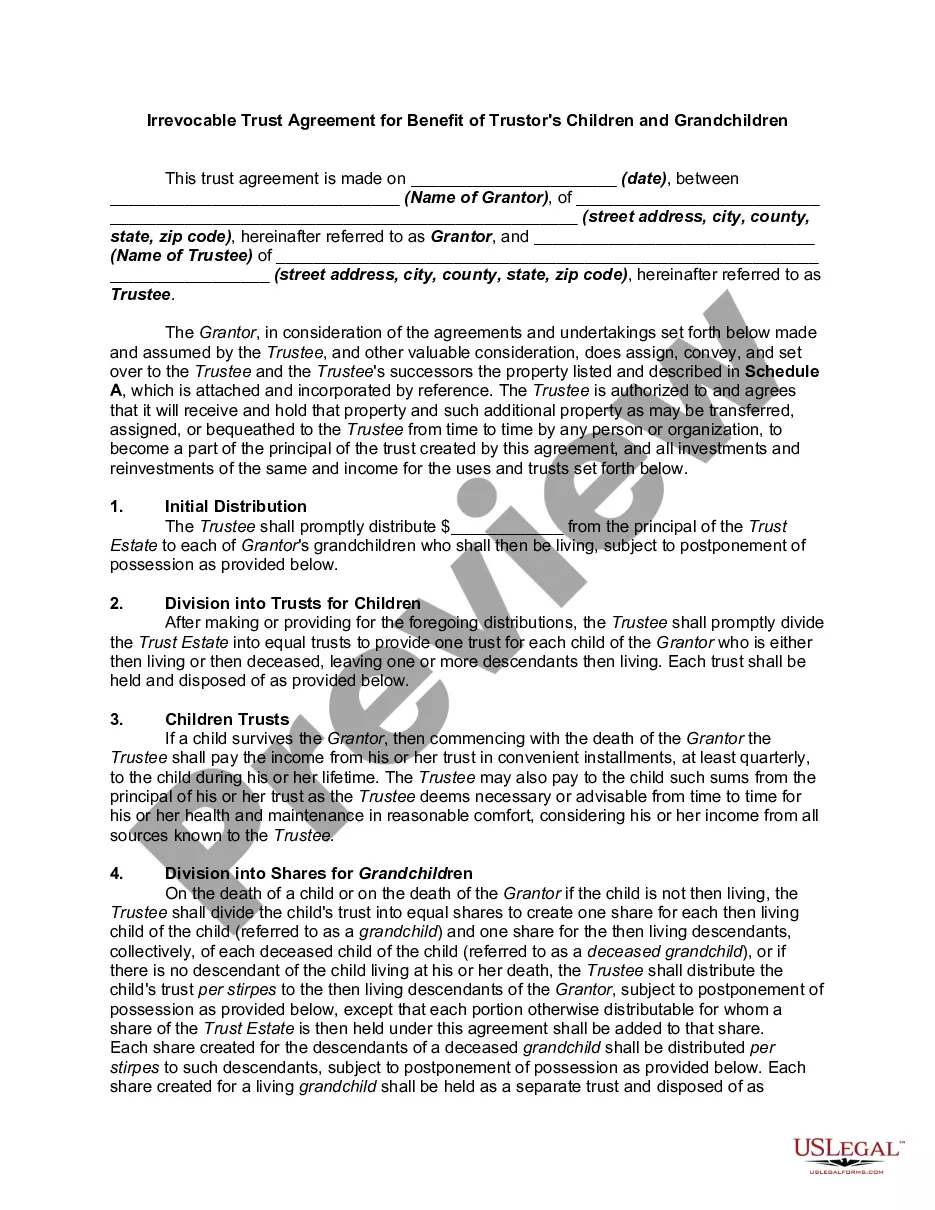
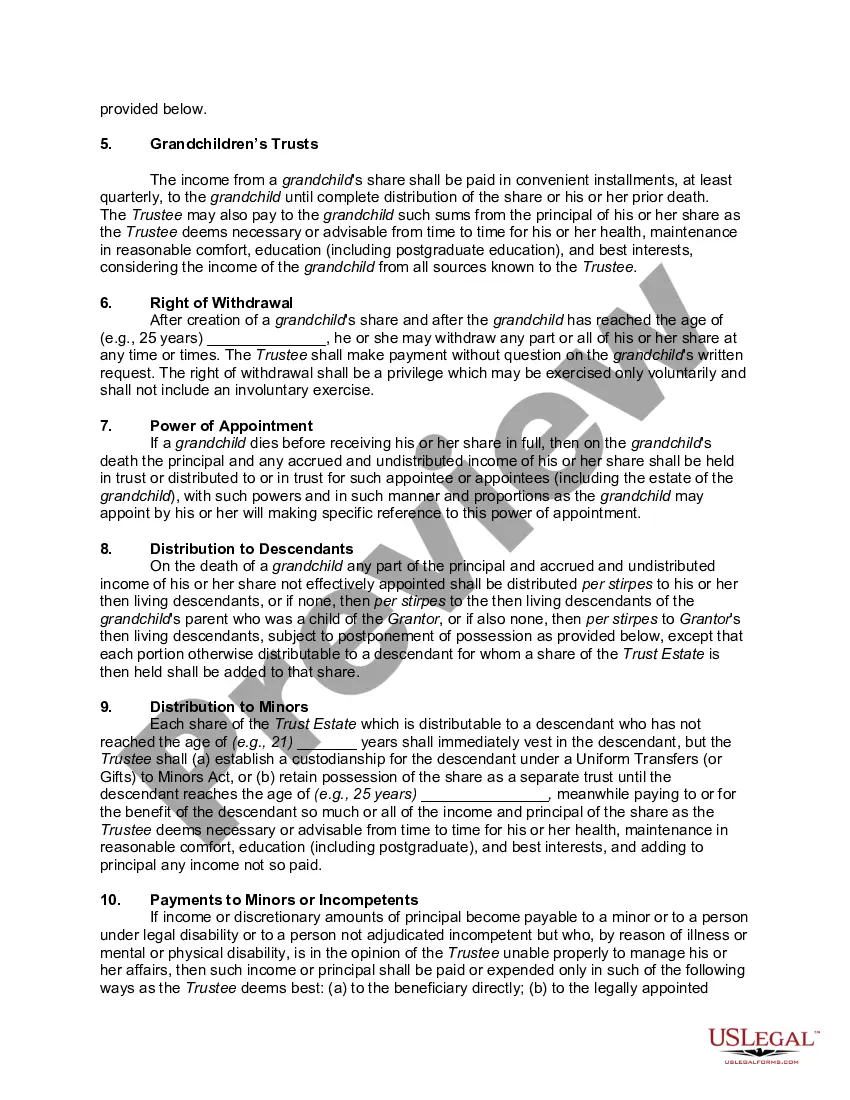
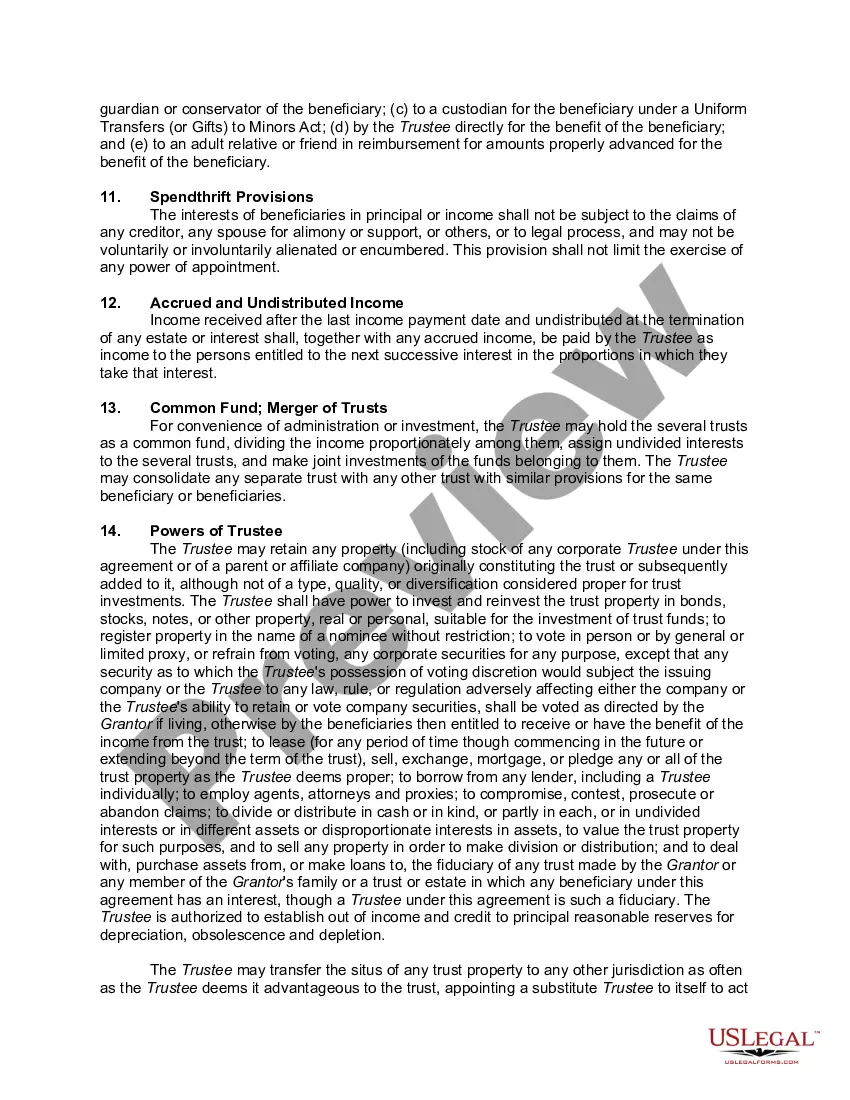
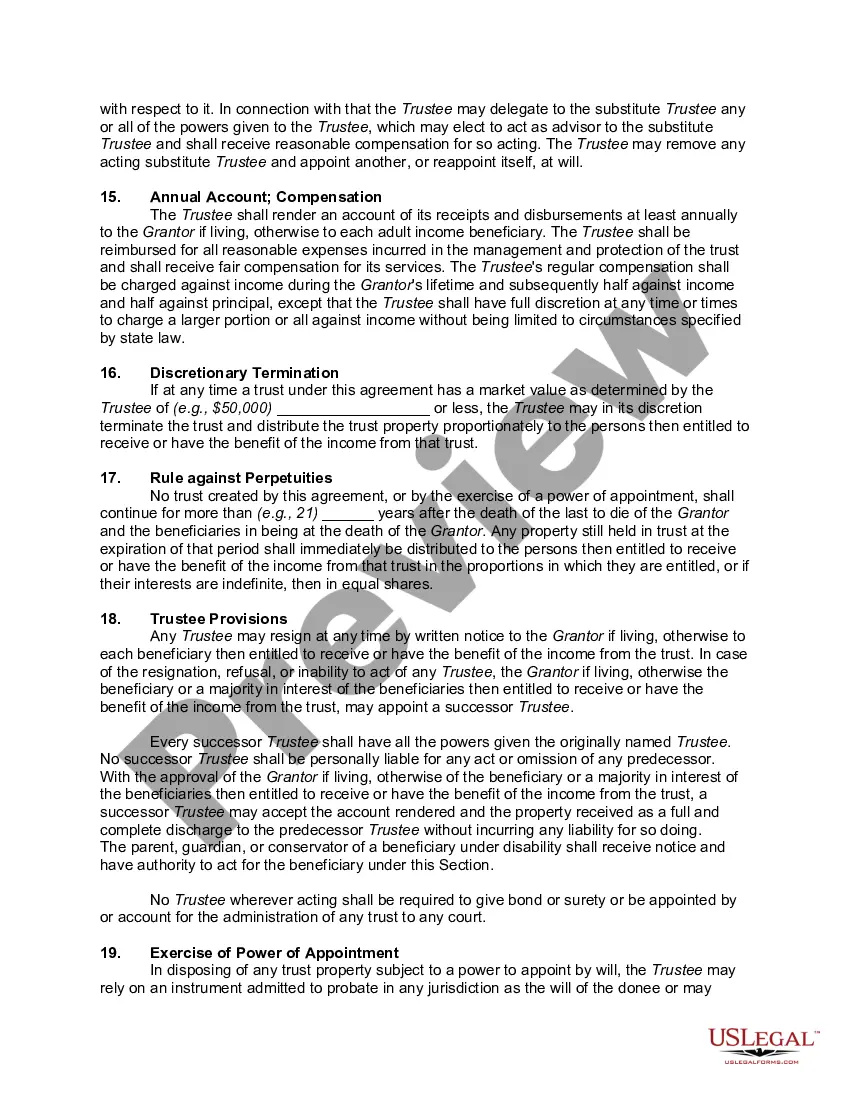

Get your form ready online
Our built-in tools help you complete, sign, share, and store your documents in one place.
Make edits, fill in missing information, and update formatting in US Legal Forms—just like you would in MS Word.
Download a copy, print it, send it by email, or mail it via USPS—whatever works best for your next step.
Sign and collect signatures with our SignNow integration. Send to multiple recipients, set reminders, and more. Go Premium to unlock E-Sign.
If this form requires notarization, complete it online through a secure video call—no need to meet a notary in person or wait for an appointment.
We protect your documents and personal data by following strict security and privacy standards.

Make edits, fill in missing information, and update formatting in US Legal Forms—just like you would in MS Word.

Download a copy, print it, send it by email, or mail it via USPS—whatever works best for your next step.

Sign and collect signatures with our SignNow integration. Send to multiple recipients, set reminders, and more. Go Premium to unlock E-Sign.

If this form requires notarization, complete it online through a secure video call—no need to meet a notary in person or wait for an appointment.

We protect your documents and personal data by following strict security and privacy standards.
Looking for another form?


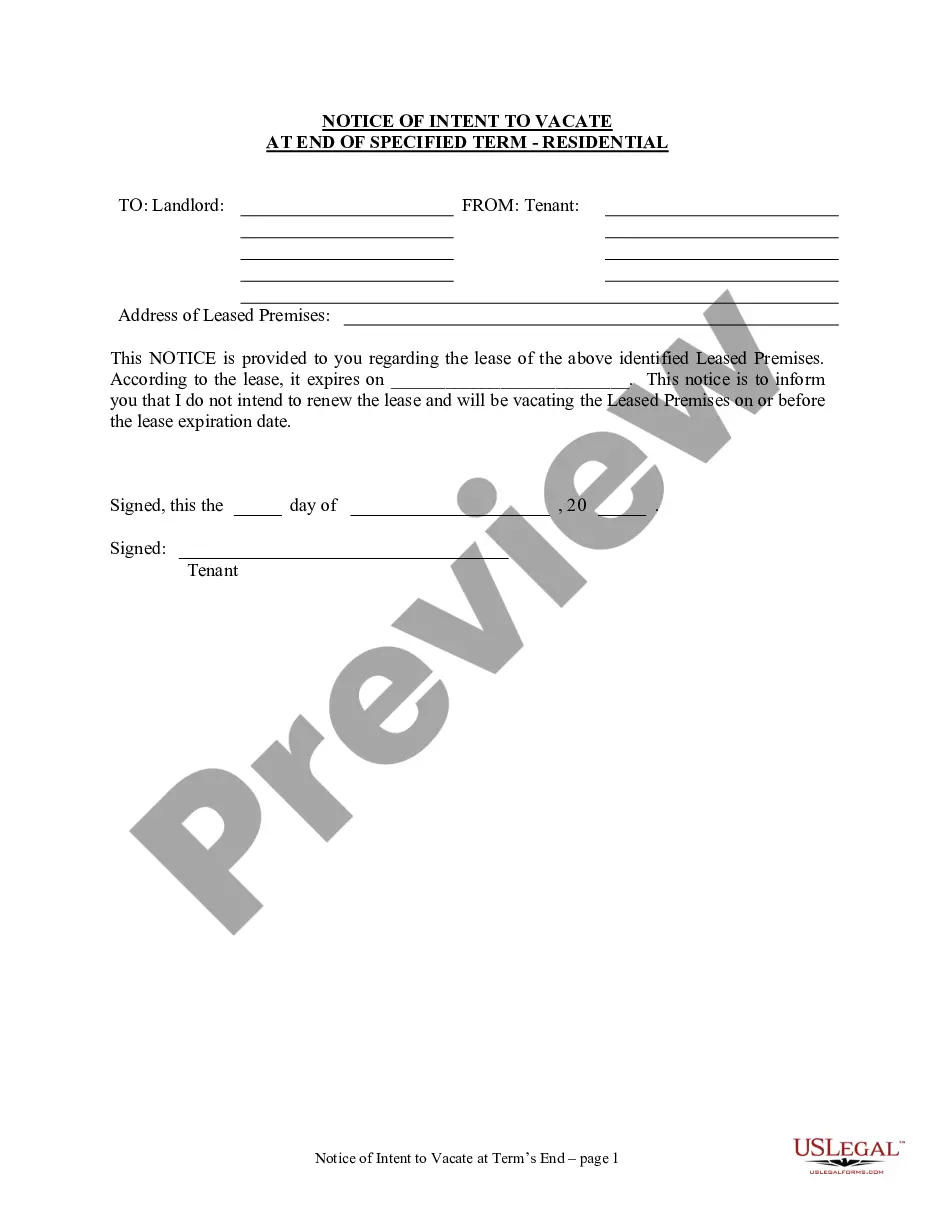





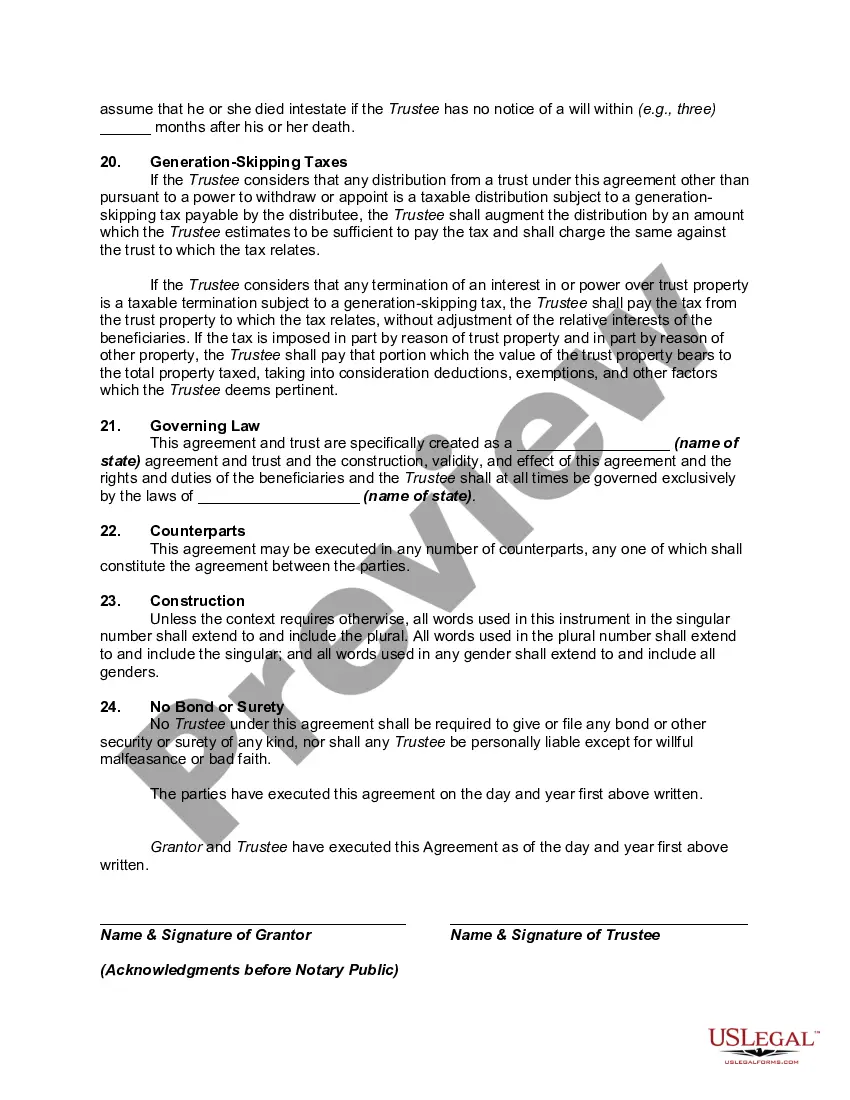
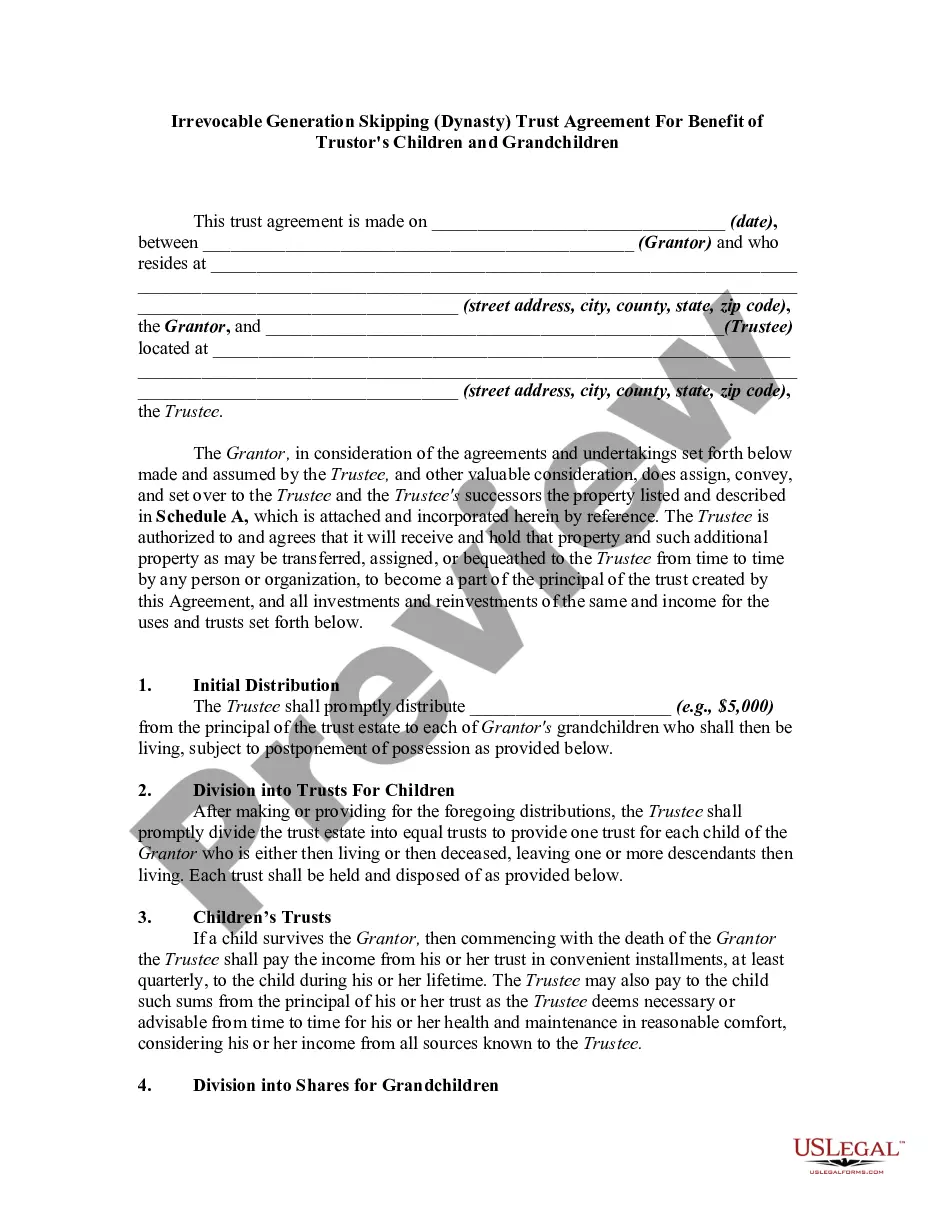
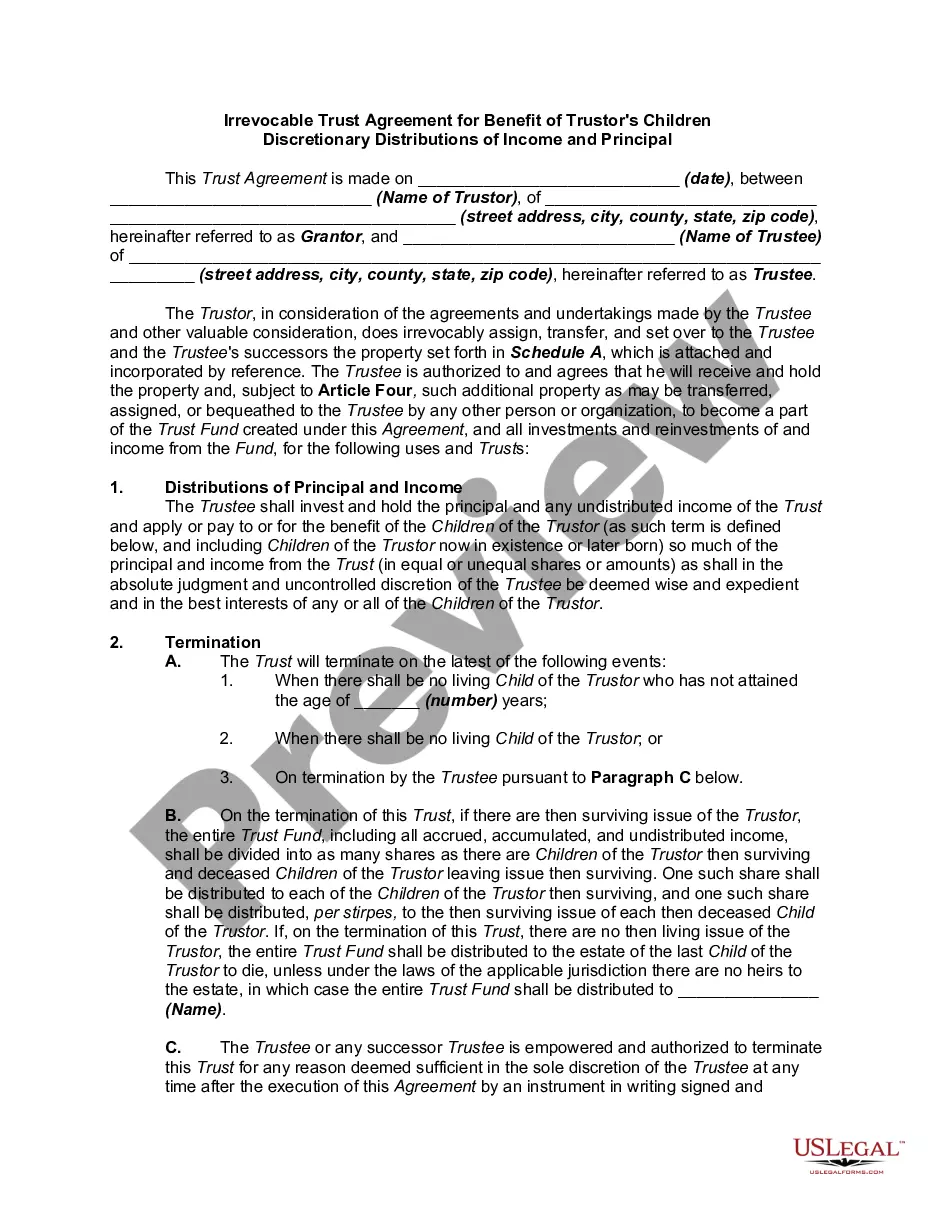
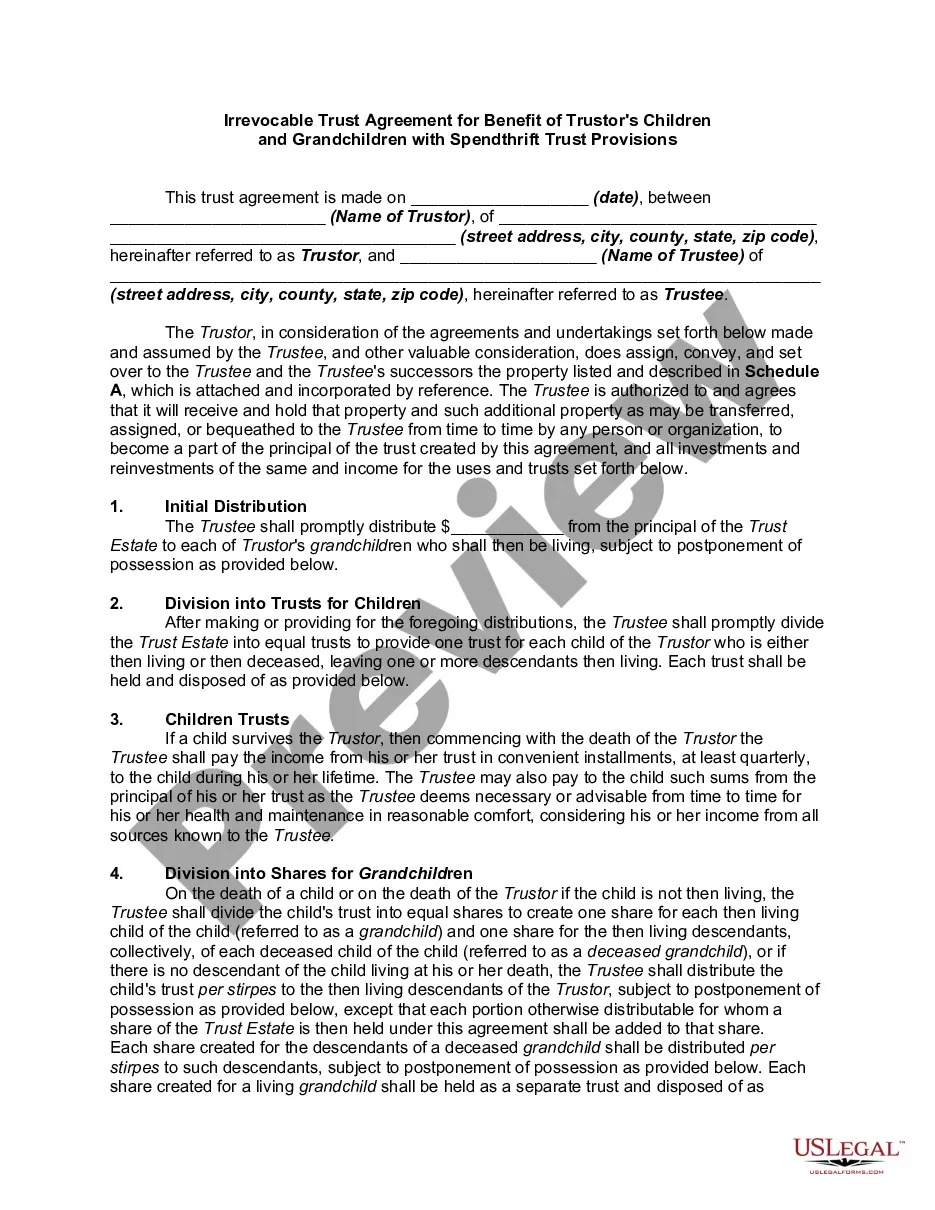
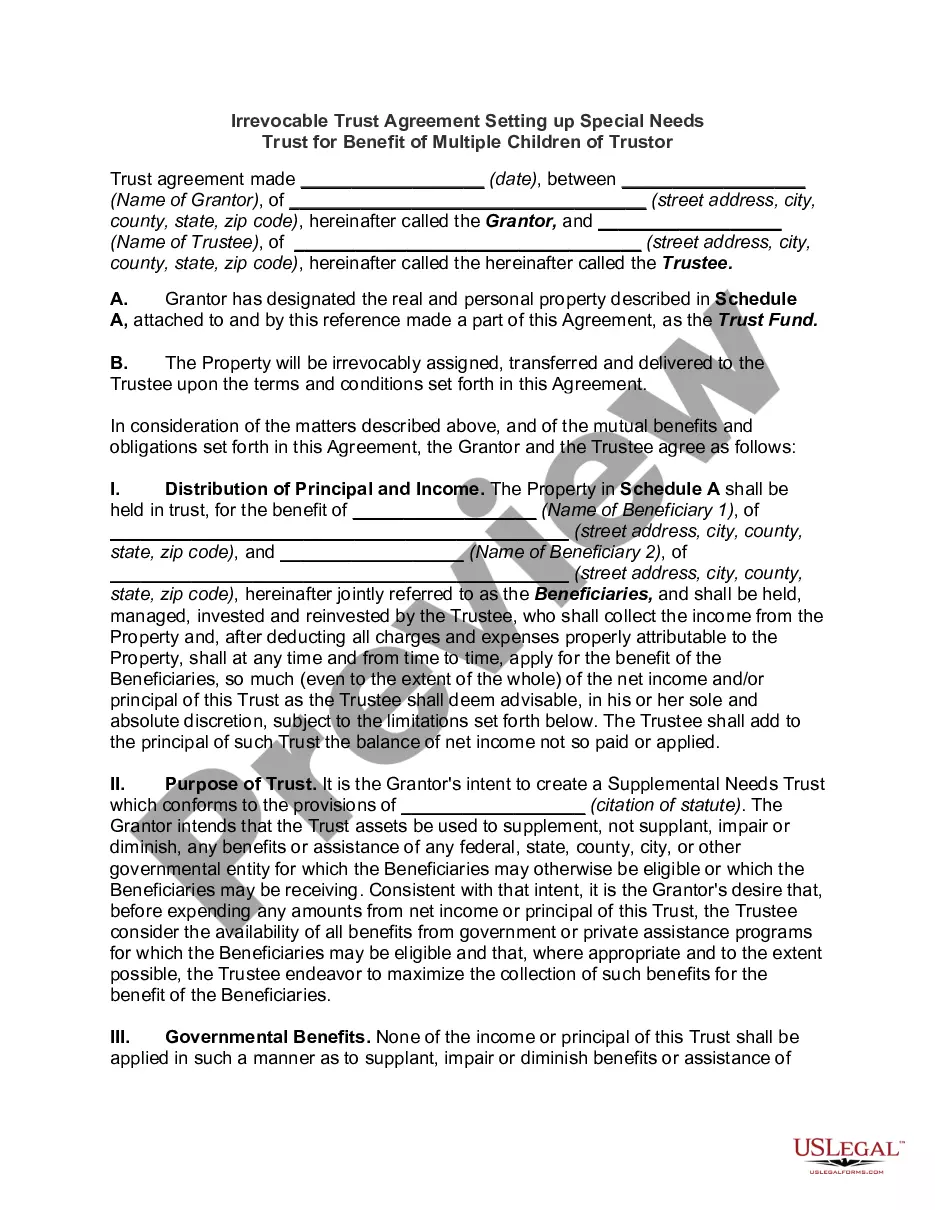
How to fill out Irrevocable Trust Agreement For Benefit Of Trustor's Children And Grandchildren?
- If you're a returning customer, log in to your account and check your subscription status. Ensure it’s valid to access your needed templates.
- For first-time users, begin by browsing the form library. Use the Preview mode to check form descriptions and verify that a selected template meets your jurisdiction's requirements.
- Should you need a different template, utilize the Search tab to find the exact document. Make sure it's the correct one before moving forward.
- After selecting your form, click on the Buy Now button and pick a subscription plan that suits your needs. You will need to register an account to access the complete library.
- Complete your purchase by entering your payment information, whether via credit card or PayPal. This grants you immediate access to your chosen forms.
- Finally, download your form to your device. You can always return to the My Forms section in your profile whenever needed.
By utilizing US Legal Forms, you gain access to a robust collection of over 85,000 forms, making it easier to find what you need—often at a better price than competitors.
Start simplifying your legal documentation process today. Visit US Legal Forms and take the first step towards efficient legal solutions.
Form popularity
FAQ
A family trust may have some disadvantages, such as limited flexibility in making changes once established and potential costs associated with managing it. Additionally, if not structured properly, it may complicate other estate planning strategies. However, the essence of a family trust is that it survives grantor with no reason, ensuring your family's future remains secure, regardless of the circumstances.
Placing assets in a trust can come with a few downsides, including the complexity of transferring ownership and the potential for administrative costs. Furthermore, once assets are placed in a trust, access to them may be more complicated compared to personal ownership. Despite these challenges, a trust survives grantor with no reason, providing ongoing protection and strategic management of assets.
When one of the grantors of a living trust dies, the trust typically becomes irrevocable, and the assets within it are managed according to the trust agreement. The surviving grantor continues to control the trust until their passing. After that, the trust ensures the distribution of assets aligns with the grantors' intentions. Remember, a trust survives grantor with no reason, maintaining clarity and structure in such scenarios.
Deciding whether your parents should place their assets in a trust depends on their financial situation and estate planning goals. A trust can help them avoid probate, manage taxes, and protect their assets from potential creditors. It's crucial to evaluate their specific needs. A trust survives grantor with no reason, which ultimately provides peace of mind for them and their beneficiaries.
If you have no income, you usually do not have to file a tax return, but there may be exceptions based on your specific circumstances. For instance, trusts that survive grantor with no reason might still have reporting requirements despite lacking income. Always consult tax guidelines to ensure compliance.
You generally do not have to file Form 1041 if the trust has no income, but it is wise to check specific requirements based on the trust type. However, if a trust survives grantor with no reason and later generates income, filing may become necessary. Clarity on these details helps avoid future complications.
Failure to file Form 1041 can lead to penalties, including interest accruing on unpaid taxes. Additionally, it may cause complications in trust administration since the trust survives grantor with no reason, and it remains accountable for its assets. Staying compliant is essential to prevent these issues.
The 5-year rule generally pertains to certain types of irrevocable trusts, particularly in connection with Medicaid planning. It states that if funds are gifted or placed in trust within five years of applying for Medicaid, they may be subject to penalties. Understanding this rule is vital for efficient trust management.
You typically need to file an estate tax return if the estate’s value exceeds the federal exclusion limit, even if there is no income. Since the trust survives grantor with no reason, it can still hold valuable assets. Consult a tax professional to assess your specific situation.
The minimum income to file Form 1041 varies based on the type of trust and the tax year, but generally, trusts must file if they have gross income over $600. This rule applies regardless of the grantor's status since the trust survives grantor with no reason. Keeping track of income is crucial for compliance.