Trust Survives Grantor With A Will
Description

Get your form ready online
Our built-in tools help you complete, sign, share, and store your documents in one place.
Make edits, fill in missing information, and update formatting in US Legal Forms—just like you would in MS Word.
Download a copy, print it, send it by email, or mail it via USPS—whatever works best for your next step.
Sign and collect signatures with our SignNow integration. Send to multiple recipients, set reminders, and more. Go Premium to unlock E-Sign.
If this form requires notarization, complete it online through a secure video call—no need to meet a notary in person or wait for an appointment.
We protect your documents and personal data by following strict security and privacy standards.
Make edits, fill in missing information, and update formatting in US Legal Forms—just like you would in MS Word.
Download a copy, print it, send it by email, or mail it via USPS—whatever works best for your next step.
Sign and collect signatures with our SignNow integration. Send to multiple recipients, set reminders, and more. Go Premium to unlock E-Sign.

If this form requires notarization, complete it online through a secure video call—no need to meet a notary in person or wait for an appointment.

We protect your documents and personal data by following strict security and privacy standards.
Looking for another form?





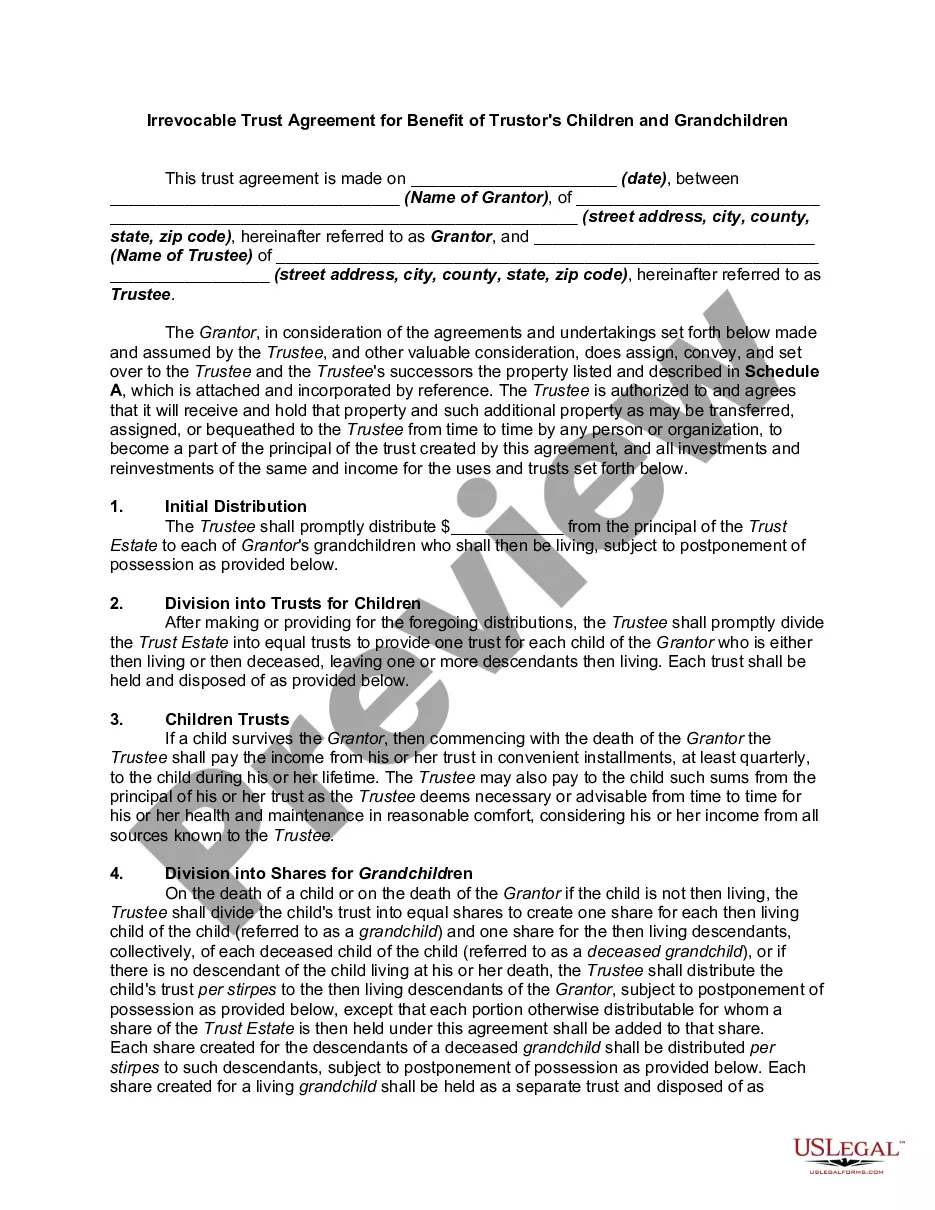
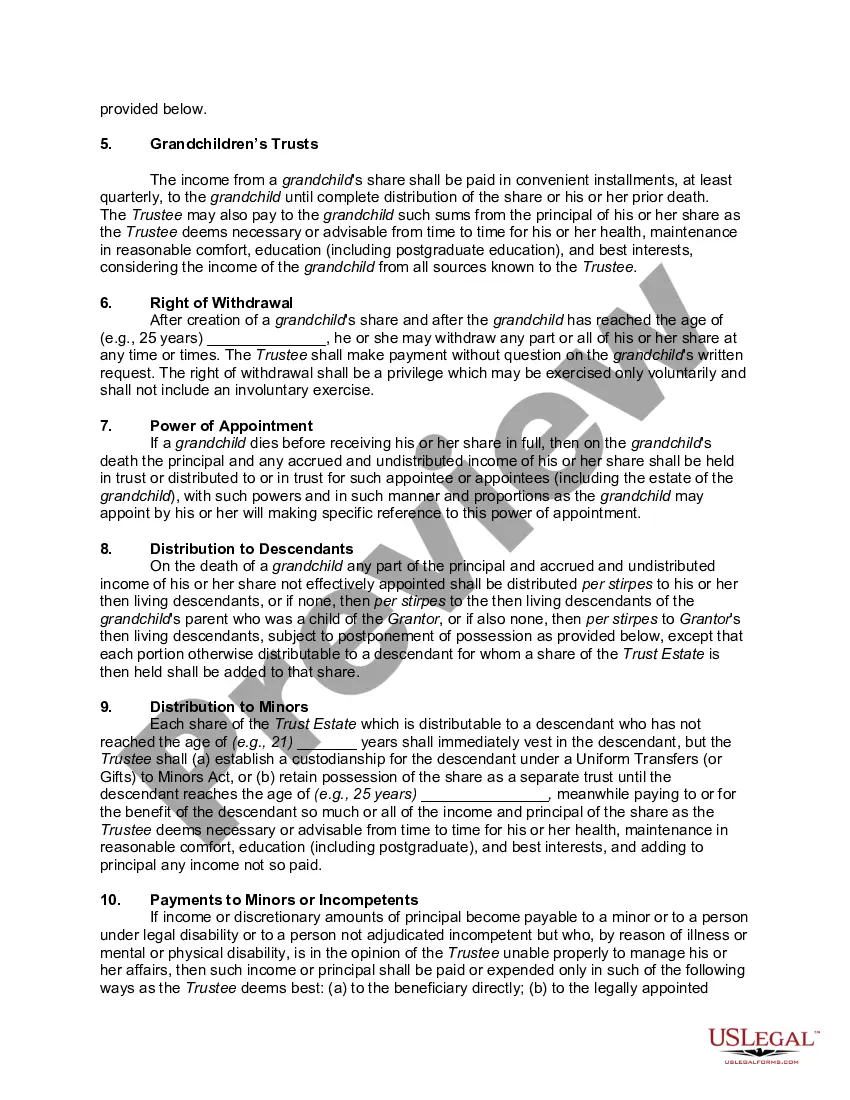
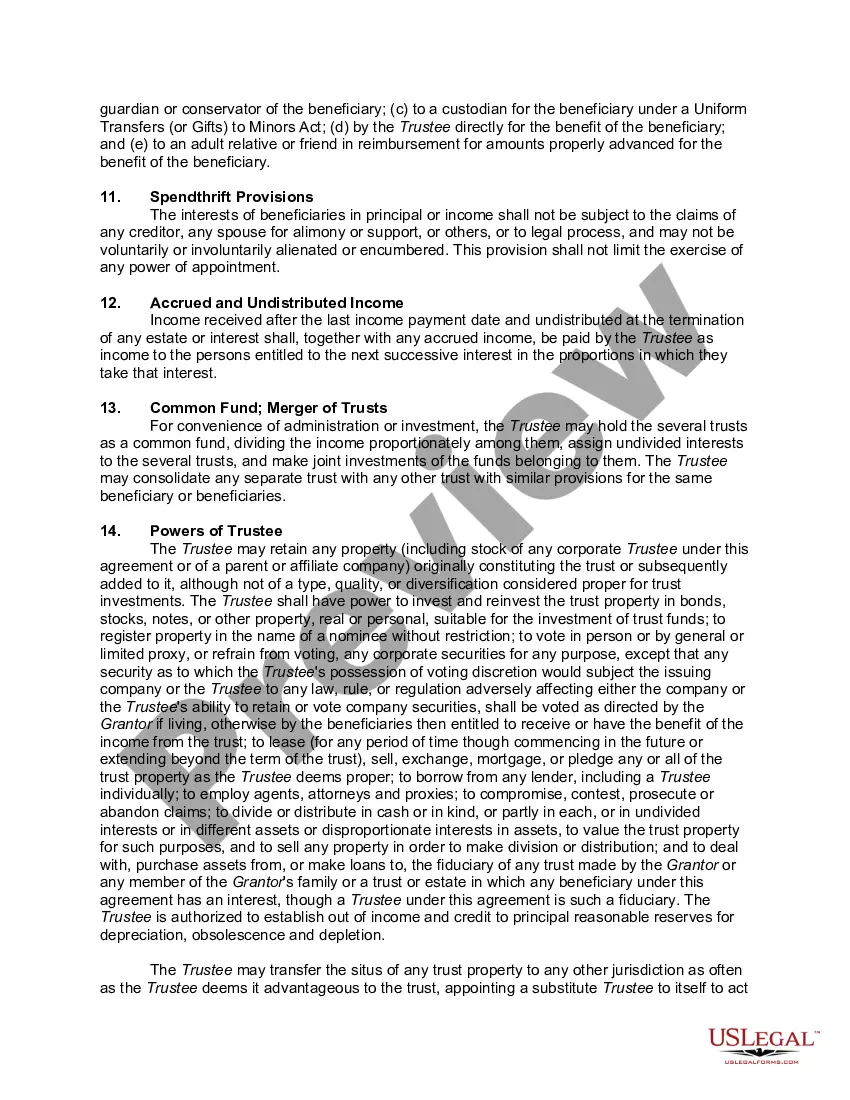
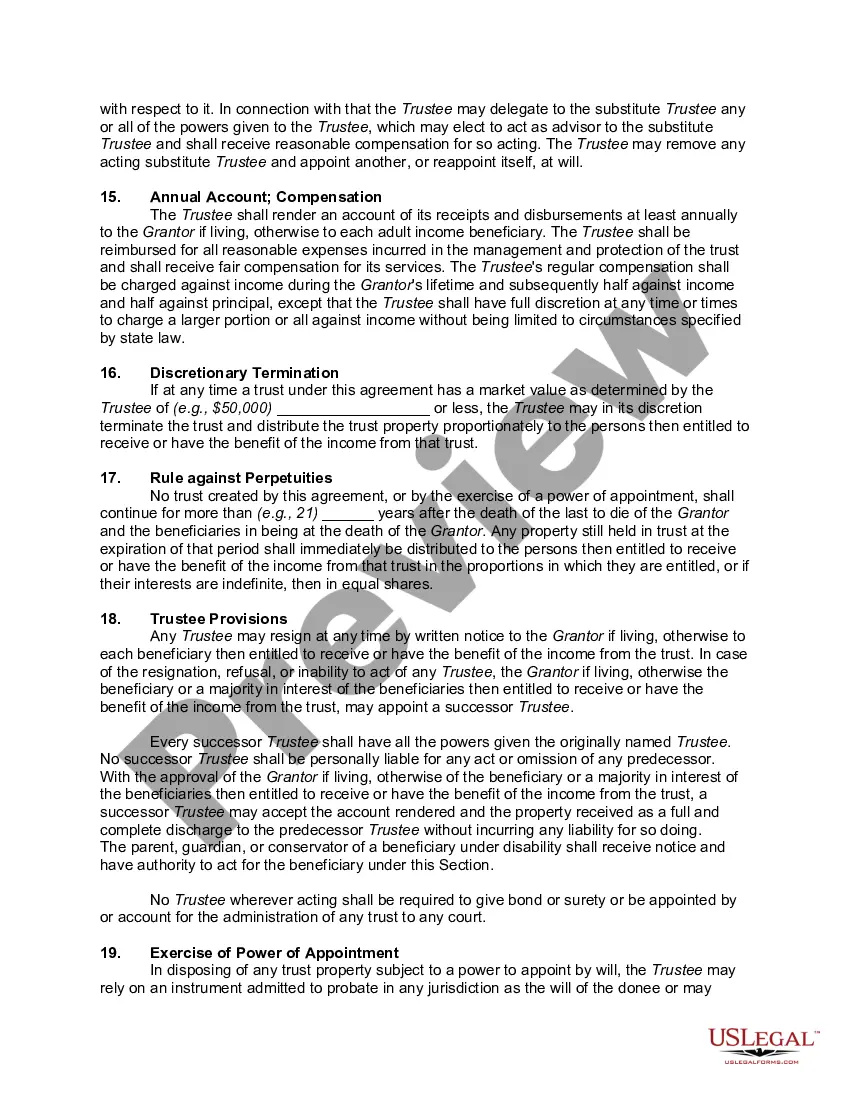
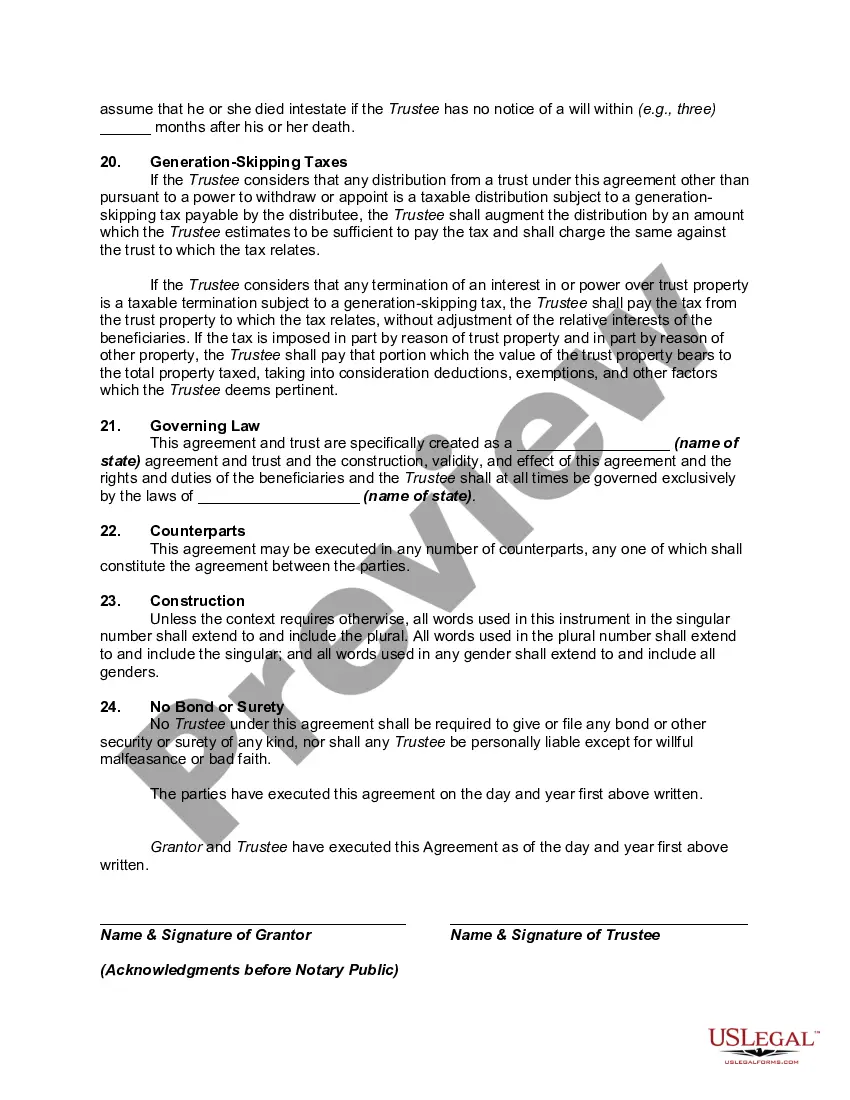
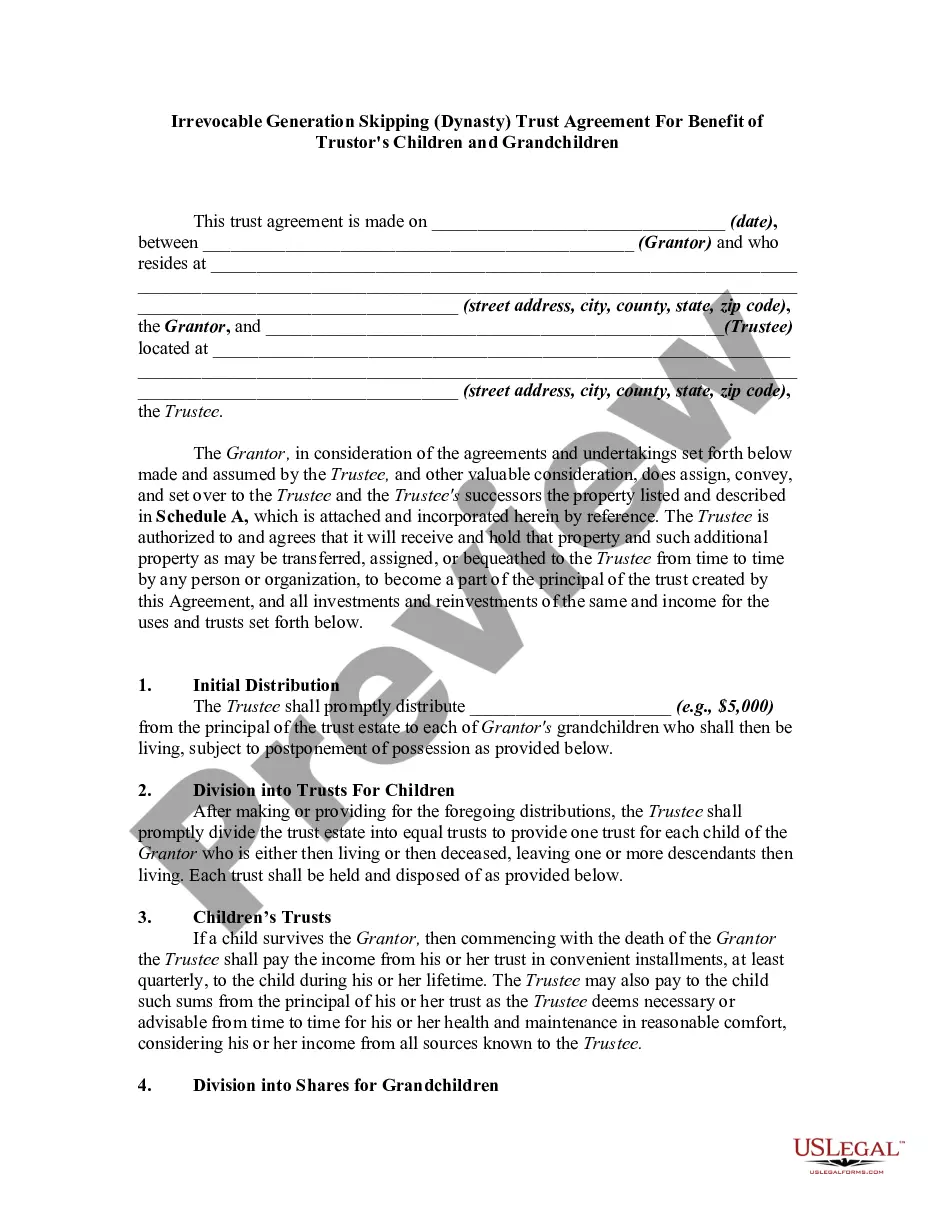
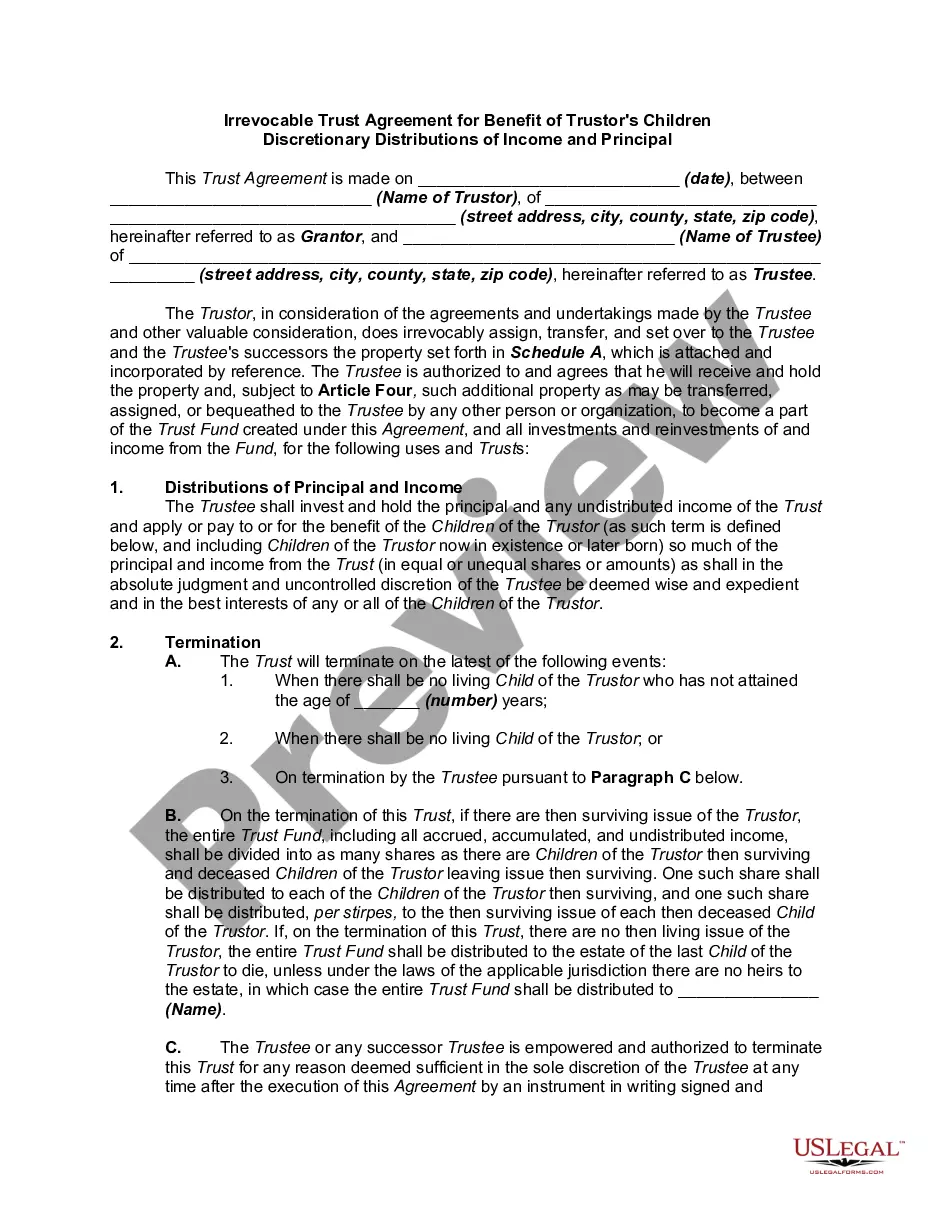
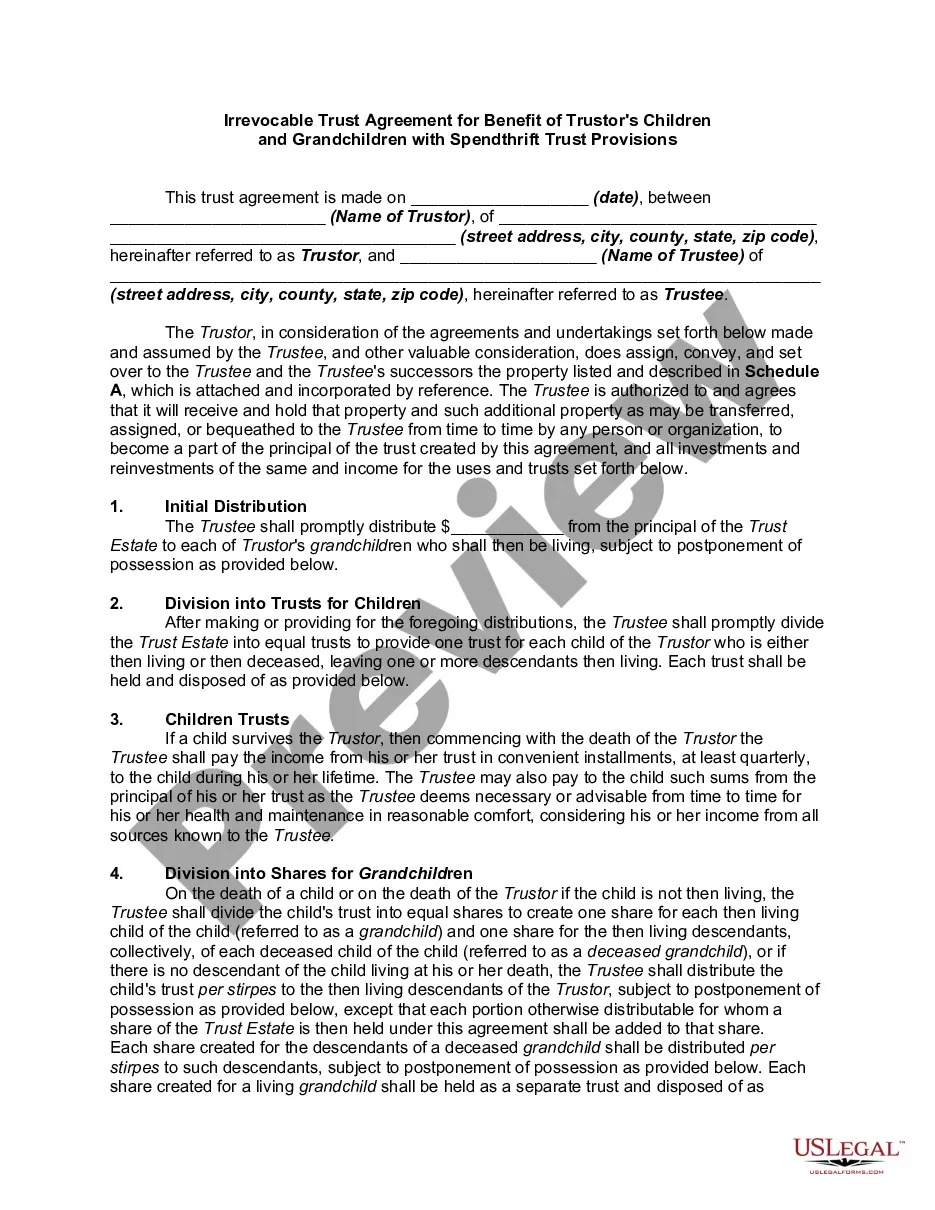
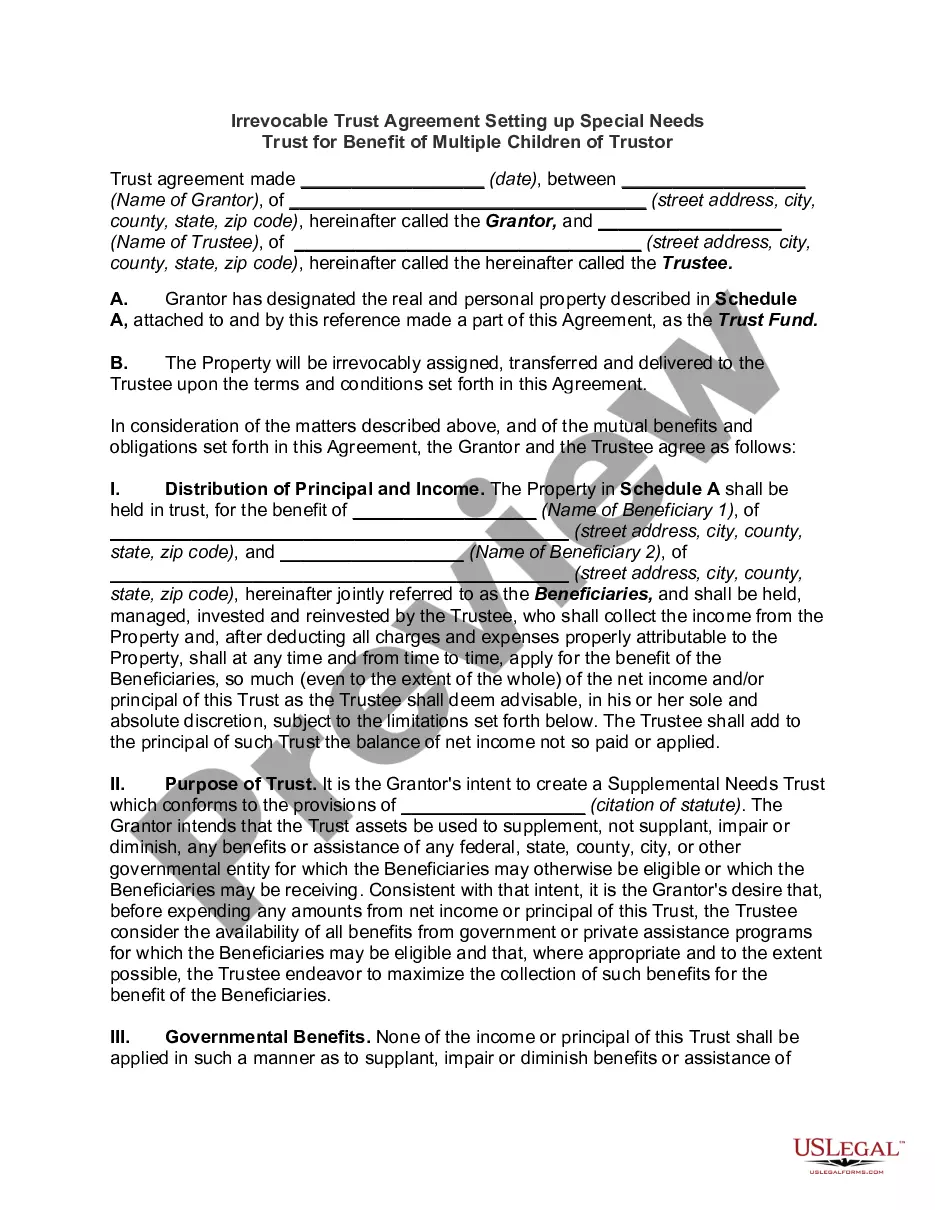
How to fill out Irrevocable Trust Agreement For Benefit Of Trustor's Children And Grandchildren?
- If you are a returning user, log in to your account to access your previously used form templates. Ensure your subscription is active; renew if necessary.
- For first-time users, begin by browsing available forms. Utilize the Preview mode to confirm you're selecting the correct document that aligns with your local legal requirements.
- If the chosen form isn’t quite right, utilize the Search feature to find alternatives that better meet your needs before proceeding.
- Once satisfied, click the Buy Now button and select your preferred subscription plan. Registration is required to access the complete library.
- Input your payment details to finalize the purchase, either via credit card or PayPal, ensuring secure transactions.
- After purchase, download the form directly to your device. Access it later from the My Forms section of your profile as needed.
Using US Legal Forms allows you to leverage a vast library of over 85,000 legal documents. The service not only streamlines this process but also provides expert support for form completion, ensuring every document meets legal standards.
In conclusion, trust in your estate planning process by utilizing US Legal Forms to obtain necessary documents. Start now and empower yourself with legal tools for a secure future!
Form popularity
FAQ
When the grantor of a trust dies, the trust does not dissolve; it continues to function as intended. The trust survives grantor with a will, allowing the successor trustee to step in and manage the assets according to the grantor's directives. This process simplifies the distribution of assets and avoids the probate process for those assets held in the trust. For further assistance in understanding the implications, visit US Legal Forms for comprehensive legal information and documents.
An irrevocable trust remains unchanged after the grantor's death, meaning its terms continue to apply as previously established. The trust continues to operate under the management of the successor trustee, ensuring that trust survives grantor with a will. This stability protects the trust assets and ensures they are distributed according to the grantor's final wishes. For more clarity on irrevocable trusts, you can explore options available through US Legal Forms.
No, the trustee does not become the grantor upon the grantor's death. The trustee's role is to manage the trust according to the grantor's wishes, as detailed in the trust agreement. The trust survives grantor with a will, meaning that the trustee's responsibility is to uphold the terms of the trust and manage the assets for the beneficiaries. If you have further questions on this topic, US Legal Forms can provide you with the necessary resources to navigate trust management.
After the death of the grantor, the trust continues to exist and is owned by the trust itself. The assets held in the trust are managed by the successor trustee as outlined in the trust documentation. This setup ensures that the trust survives grantor with a will, allowing for a seamless transition of asset management without the need for probate. If you need assistance with trusts, consider using US Legal Forms for easy access to vital legal documents.
The biggest mistake parents often make when setting up a trust fund is failing to communicate their intentions with their beneficiaries. Without clear explanations, beneficiaries may not understand how the trust works or what to expect from it. Proper documentation and guidance ensure that the trust survives grantor with a will, protecting your family's future and preventing misunderstandings.
When one of the grantors of a living trust dies, the trust continues to operate according to its terms. The surviving grantor typically assumes full control, but if they are also deceased, the trust becomes irrevocable. A well-structured trust survives grantor with a will, ensuring that assets are distributed smoothly to beneficiaries without going through probate.
The 5-year rule for trusts refers to the period during which gifts to a trust may affect a person's eligibility for Medicaid. If assets are transferred into a trust within five years of applying for Medicaid, they might be penalized as
An irrevocable trust generally is subject to the 5-year rule, which affects how assets are counted for Medicaid eligibility. This rule means that assets placed in an irrevocable trust may be considered transfers for less than fair market value if done within five years of applying for Medicaid. It's crucial to plan ahead, as a properly structured trust survives grantor with a will. Understanding these nuances can help you avoid penalties and protect your assets.
When the original grantor dies, the trust typically continues to function under the terms set by the grantor. The trust does not require a new grantor because it is intended to manage assets according to the established guidelines. This continuity means that the trust still honors the grantor's wishes, illustrating how a trust survives the grantor with a will. It ensures a seamless transition of asset management.
A survivor's trust operates by converting the trust's assets to be managed by the surviving spouse as the trustee. This setup allows the survivor to access the assets while ensuring they are preserved for the next generation. It outlines the rules of distribution and management as defined by the grantor. Understanding how a trust survives the grantor with a will helps clarify the survivor's role in maintaining the trust.