Trust Survives Grantor For Granting
Description


Get your form ready online
Our built-in tools help you complete, sign, share, and store your documents in one place.
Make edits, fill in missing information, and update formatting in US Legal Forms—just like you would in MS Word.
Download a copy, print it, send it by email, or mail it via USPS—whatever works best for your next step.
Sign and collect signatures with our SignNow integration. Send to multiple recipients, set reminders, and more. Go Premium to unlock E-Sign.
If this form requires notarization, complete it online through a secure video call—no need to meet a notary in person or wait for an appointment.
We protect your documents and personal data by following strict security and privacy standards.

Make edits, fill in missing information, and update formatting in US Legal Forms—just like you would in MS Word.

Download a copy, print it, send it by email, or mail it via USPS—whatever works best for your next step.

Sign and collect signatures with our SignNow integration. Send to multiple recipients, set reminders, and more. Go Premium to unlock E-Sign.

If this form requires notarization, complete it online through a secure video call—no need to meet a notary in person or wait for an appointment.

We protect your documents and personal data by following strict security and privacy standards.
Looking for another form?









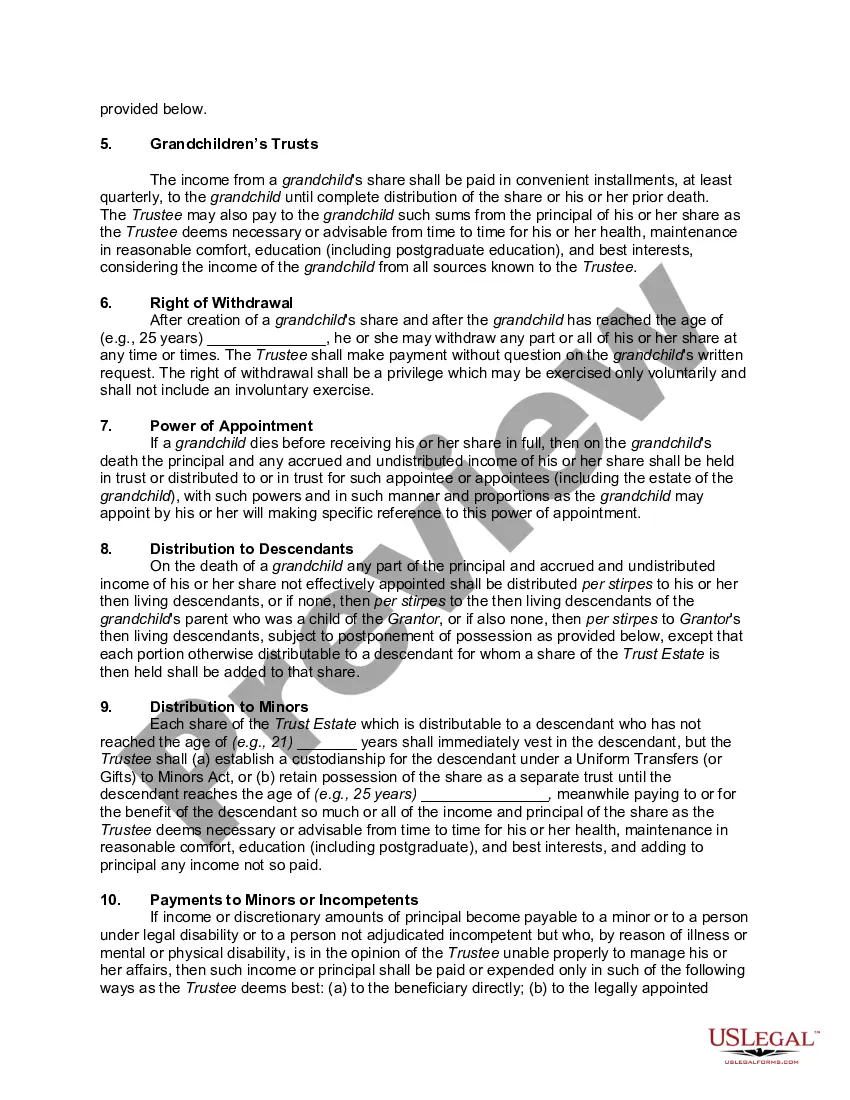
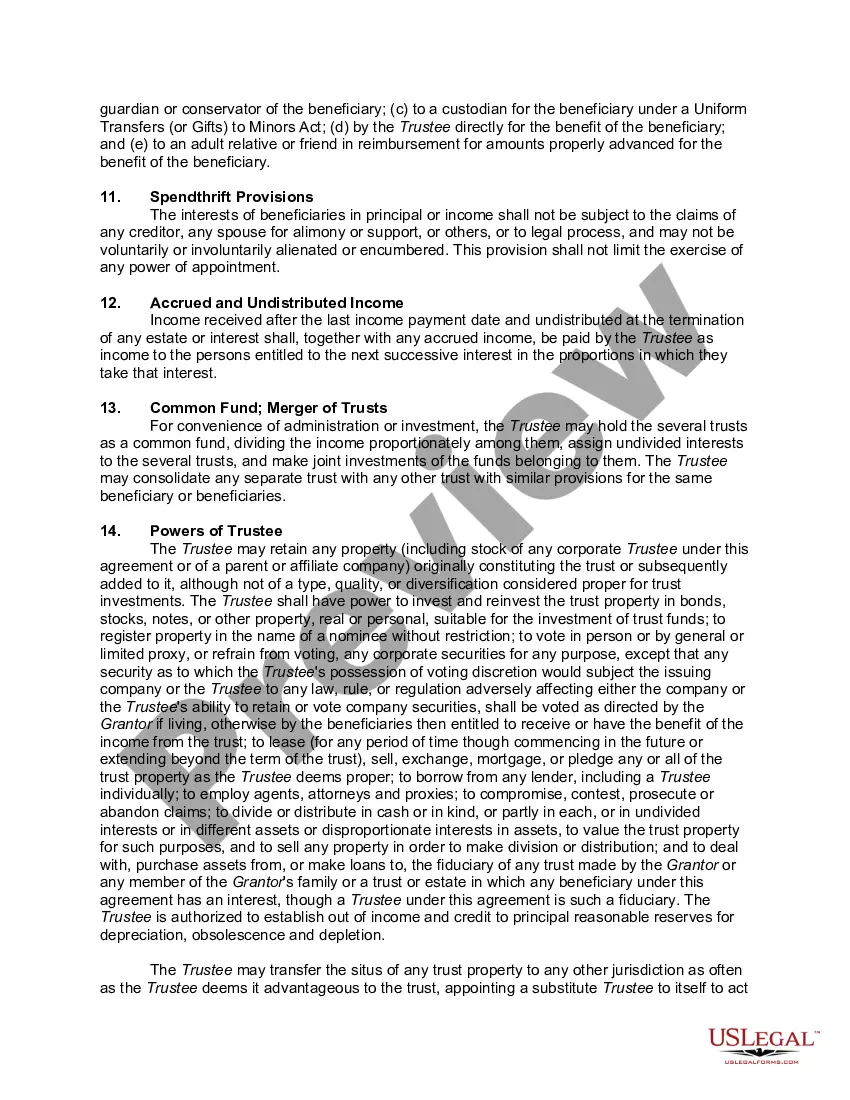
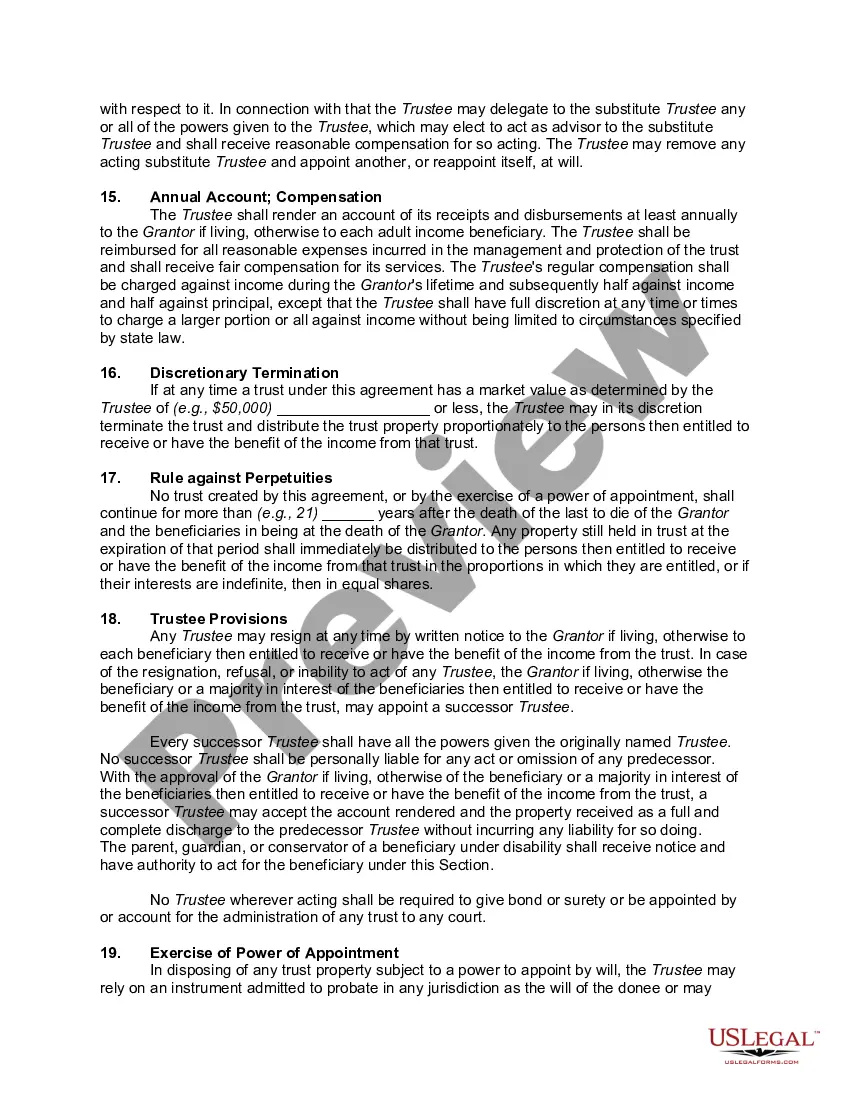
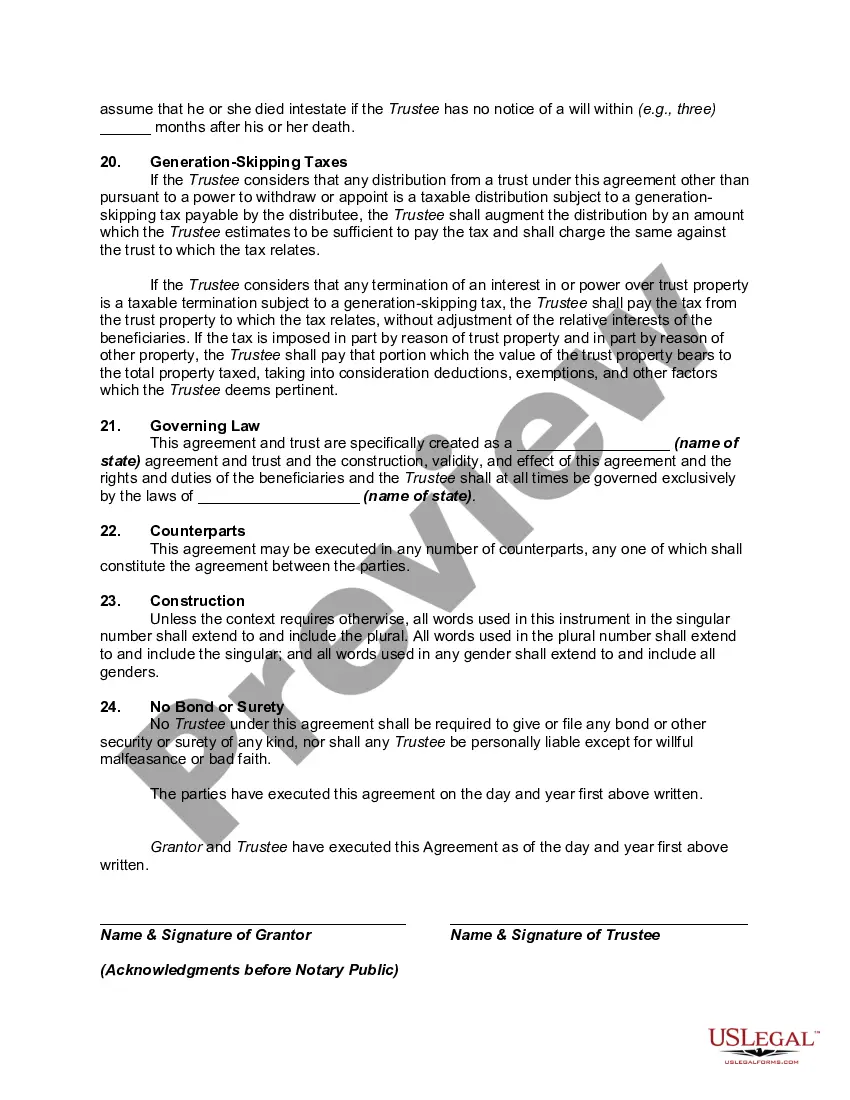
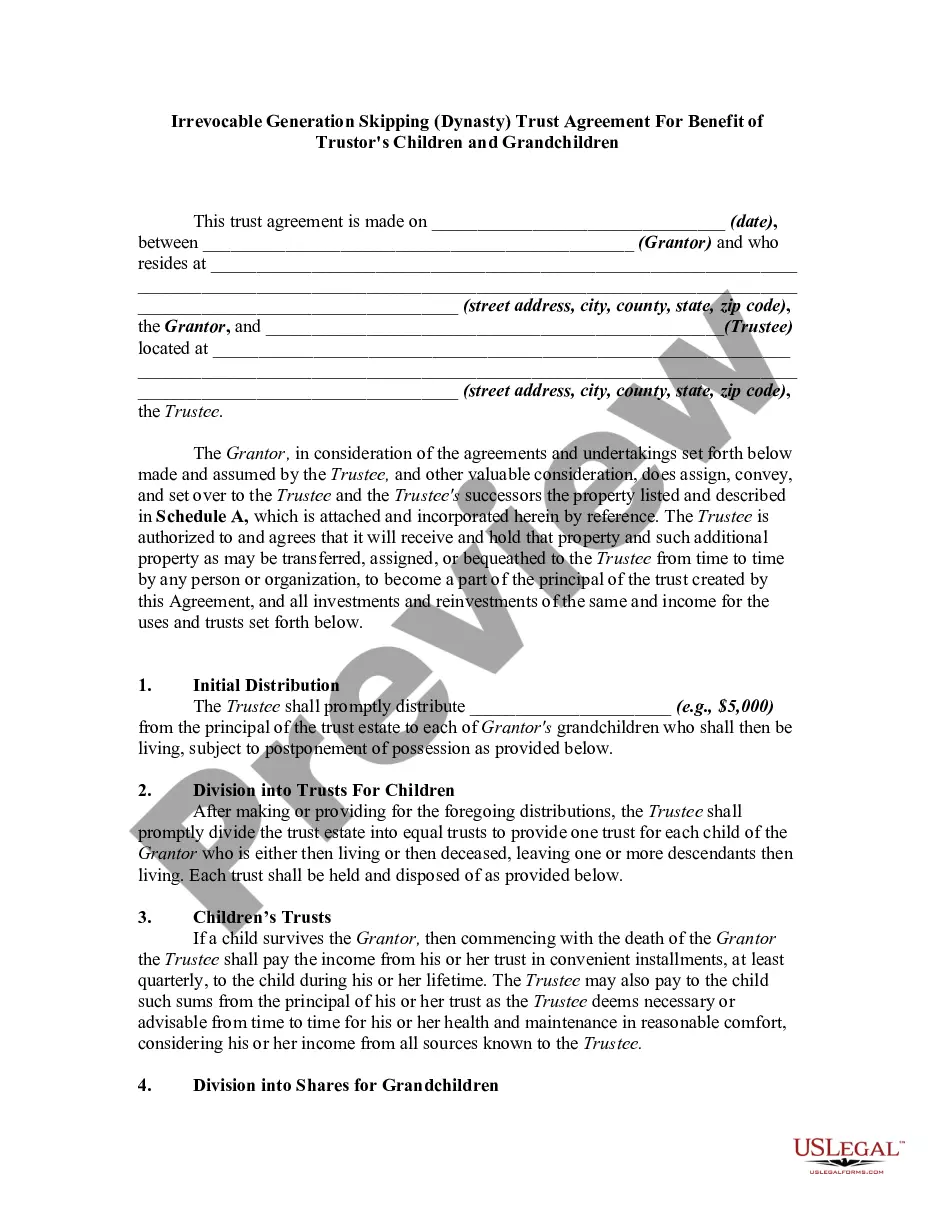
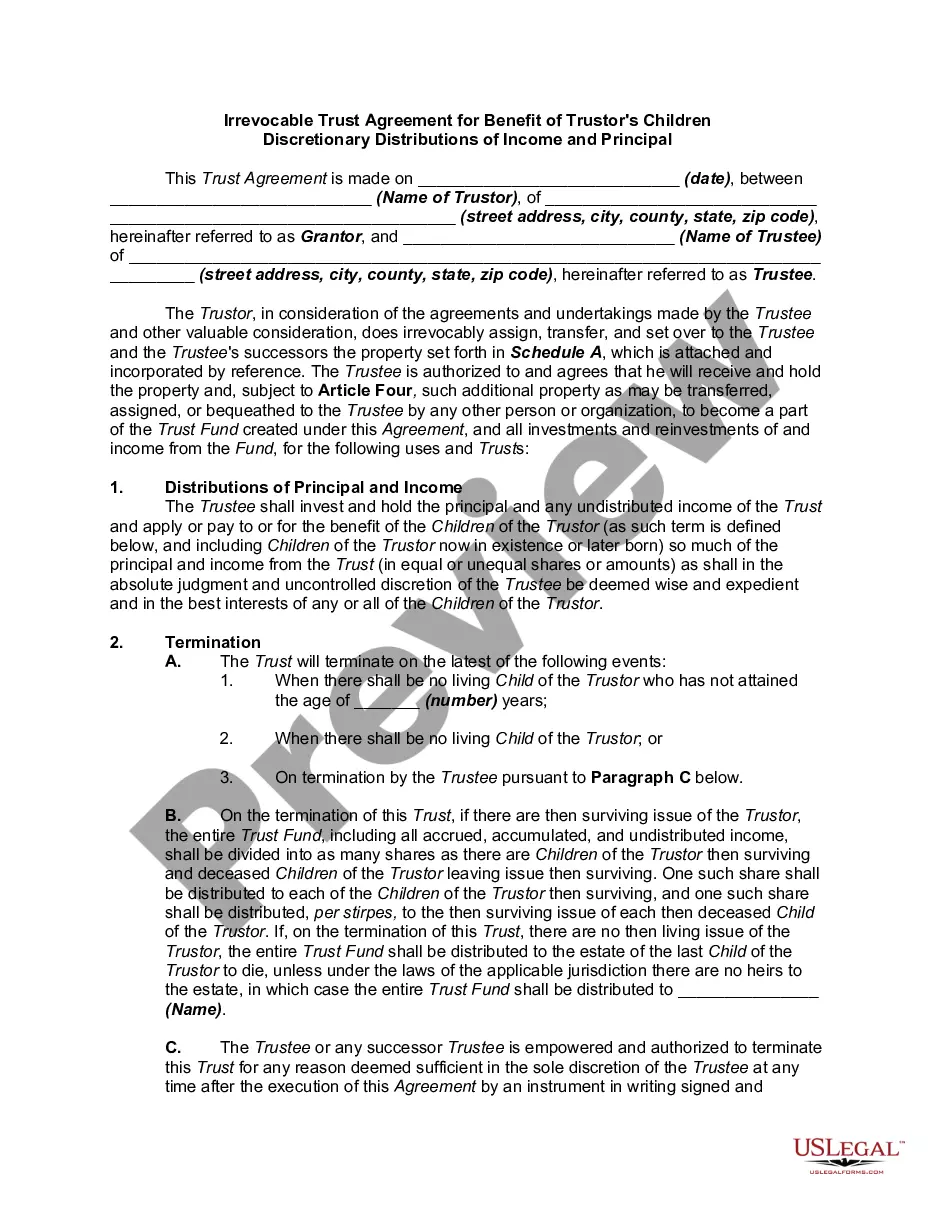
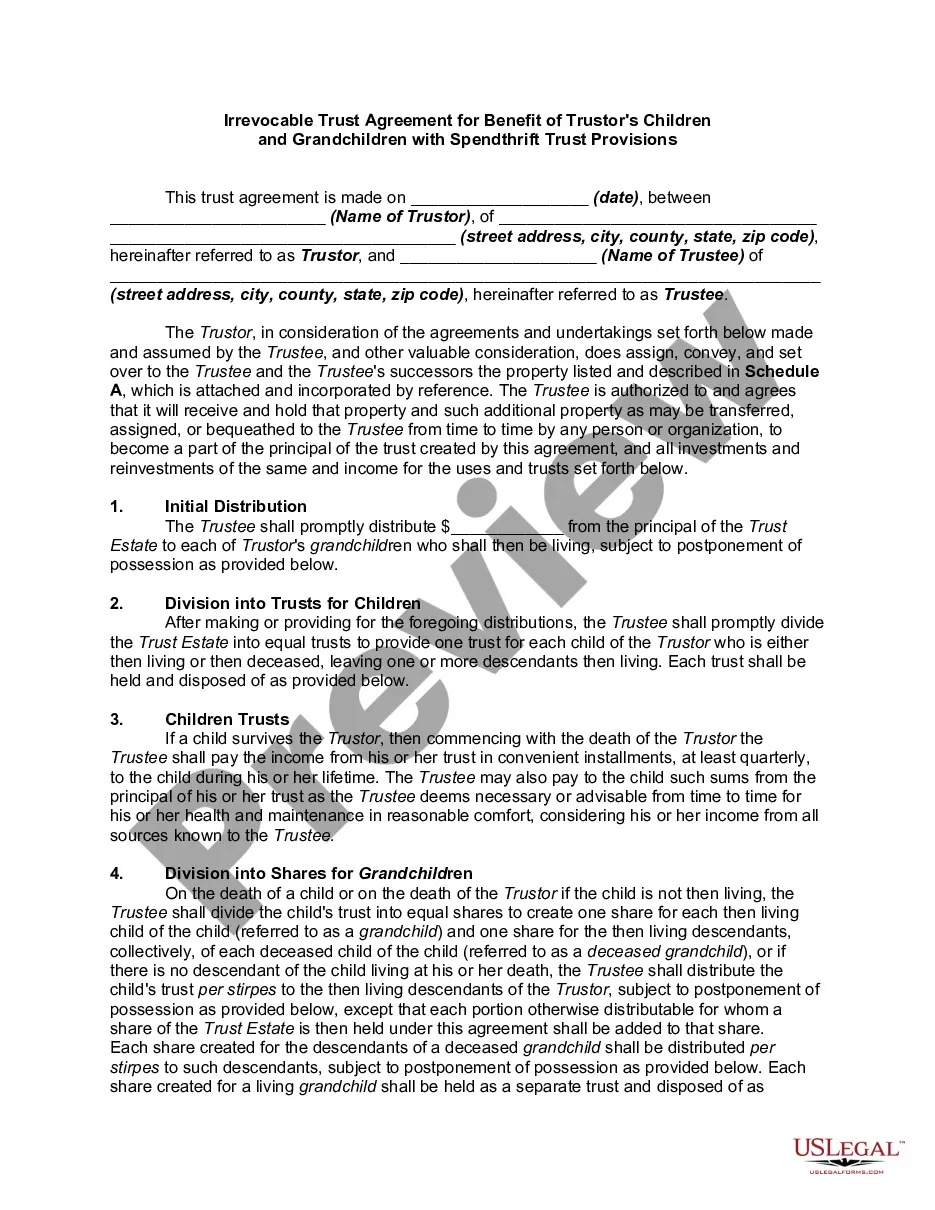
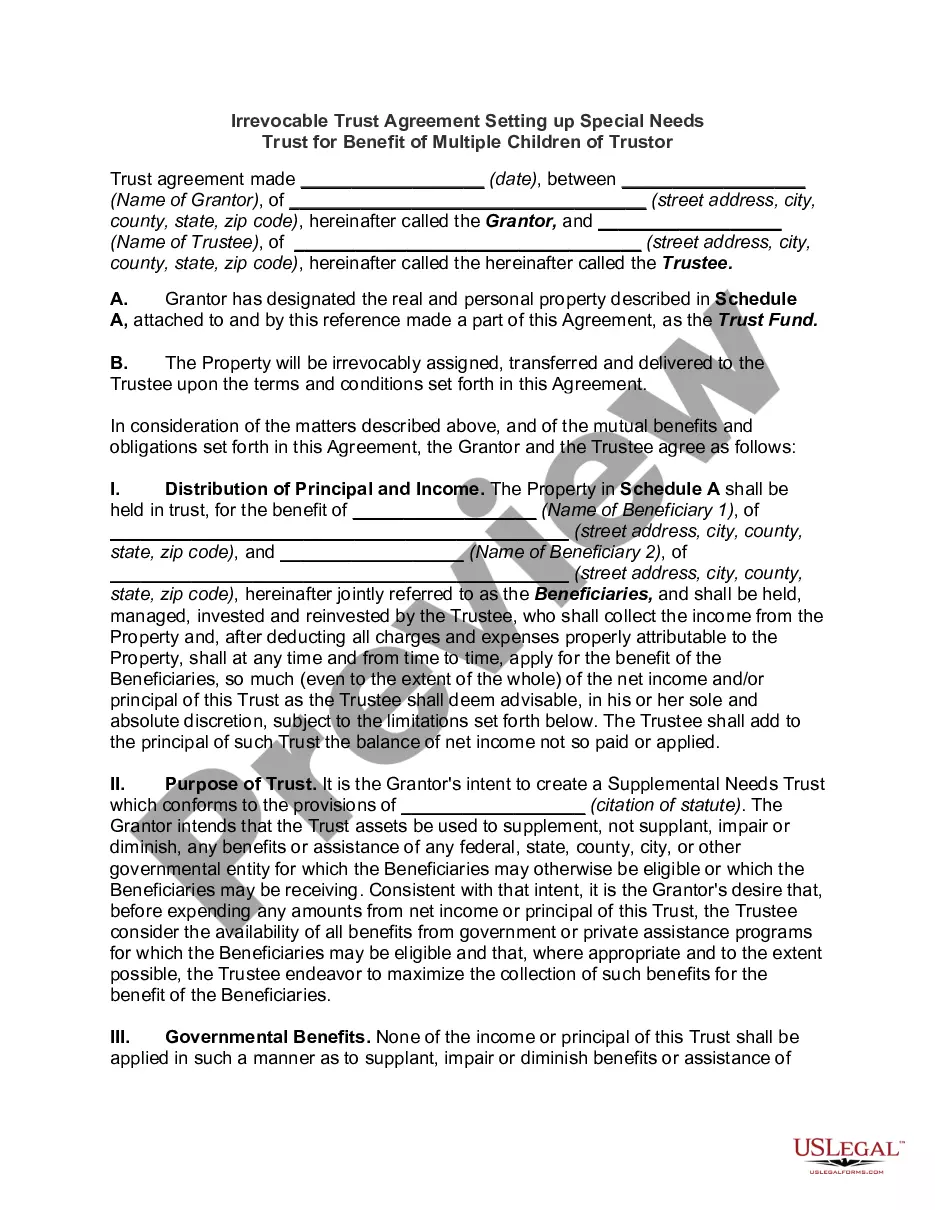
How to fill out Irrevocable Trust Agreement For Benefit Of Trustor's Children And Grandchildren?
- If you're a returning user, simply log in to your account and select the desired form template. Ensure your subscription is active; renew if needed.
- For first-time users, start by exploring the available forms. Utilize the Preview mode and description to confirm that the form suits your needs and local jurisdiction.
- Should you need to search for more templates, use the Search tab at the top to find alternatives or variations that meet your requirements.
- Proceed to purchase by clicking the Buy Now button, and choose your preferred subscription plan. You'll need to register to access our extensive library.
- Complete your transaction by entering your credit card details or opting for your PayPal account.
- Once payment is confirmed, download the form to your device. You can also access it later in the My Forms section of your profile.
In conclusion, US Legal Forms offers an extensive and user-friendly library that simplifies the process of obtaining legal documents. With over 85,000 forms at your fingertips, you can ensure that your legal needs are met accurately and efficiently.
Get started today and take advantage of the streamlined solutions US Legal Forms provides!
Form popularity
FAQ
Upon the death of the grantor, the trust continues to operate as specified in its terms. The phrase 'trust survives grantor for granting' signifies that the trust's provisions remain effective after the grantor's death. This setup enables a successor trustee to steward the trust’s assets and fulfill the grantor's wishes without delays. By choosing a trust, peace of mind is provided to both grantors and beneficiaries during a difficult time.
When the grantor of a trust passes away, the trust remains intact. Essentially, a trust survives grantor for granting, allowing assets to be managed according to the terms set forth in the trust document. The successor trustee takes over management responsibilities, ensuring the distribution of assets occurs as planned. This structure helps avoid probate, streamlining the transition for beneficiaries.
One way to avoid inheritance tax is by establishing a trust, as it can effectively transfer assets without causing tax liabilities. Since a trust survives grantor for granting, it provides a structured approach to asset distribution, ensuring your beneficiaries receive what you intend without incurring heavy taxes. By consulting with experts, such as those at uslegalforms, you can create a tailored trust that meets your specific needs and minimizes tax obligations.
The 5-year rule for trusts refers to a guideline that affects asset eligibility for Medicaid. If you transfer assets into an irrevocable trust and then apply for Medicaid within five years, those assets may count against you. Understanding that a trust survives grantor for granting helps clarify this rule's implications. It is wise to evaluate your finances thoroughly and seek guidance to navigate these regulations effectively.
Yes, an irrevocable trust can be subject to the 5-year rule, particularly when considering Medicaid eligibility. This rule applies if you transfer assets into the trust and seek government assistance within five years. Since a trust survives grantor for granting, the assets usually remain out of your control, which can lead to complications. Therefore, it is essential to plan ahead and consult with a professional to understand your specific situation.
Yes, a GRAT needs to file a tax return annually, even though the grantor reports the trust income on their own return. This filing ensures proper disclosure of income and compliance with IRS regulations. Understanding these requirements can help you navigate the complexities of trusts and ensure your trust survives grantor for granting as intended.
Yes, the income generated by a GRAT is taxable to the grantor. Since the GRAT is often considered a grantor trust, the grantor must report the trust's income on their personal tax return. It's vital to recognize how tax liabilities can impact your financial planning and to ensure your trust survives grantor for granting while minimizing tax burdens.
When one of the grantors of a living trust passes away, the trust becomes irrevocable. This means that it cannot be changed without the consent of the beneficiaries. Typically, the surviving grantor retains control of the assets; however, it's crucial to have a plan for the trust to effectively continue its benefits. A well-structured living trust can ensure that it survives grantor for granting purposes, thus maintaining its intent.
While a GRAT offers tax benefits, there are downsides to consider. If the grantor dies before the trust term ends, the assets may be included in their estate, negating some tax advantages. Furthermore, if the assets do not appreciate as expected, the purpose of the GRAT could be undermined. It's wise to evaluate the importance of ensuring your trust survives grantor for granting before proceeding.
Generally, you do not need to file a separate tax return for a revocable trust while the grantor is alive. The income and deductions from the trust are reported on the grantor's personal tax return. This means that a revocable trust allows for smooth management of assets, making it beneficial for those who want their trust to survive grantor for granting purposes.