Trust Proper Grantor With A
Description


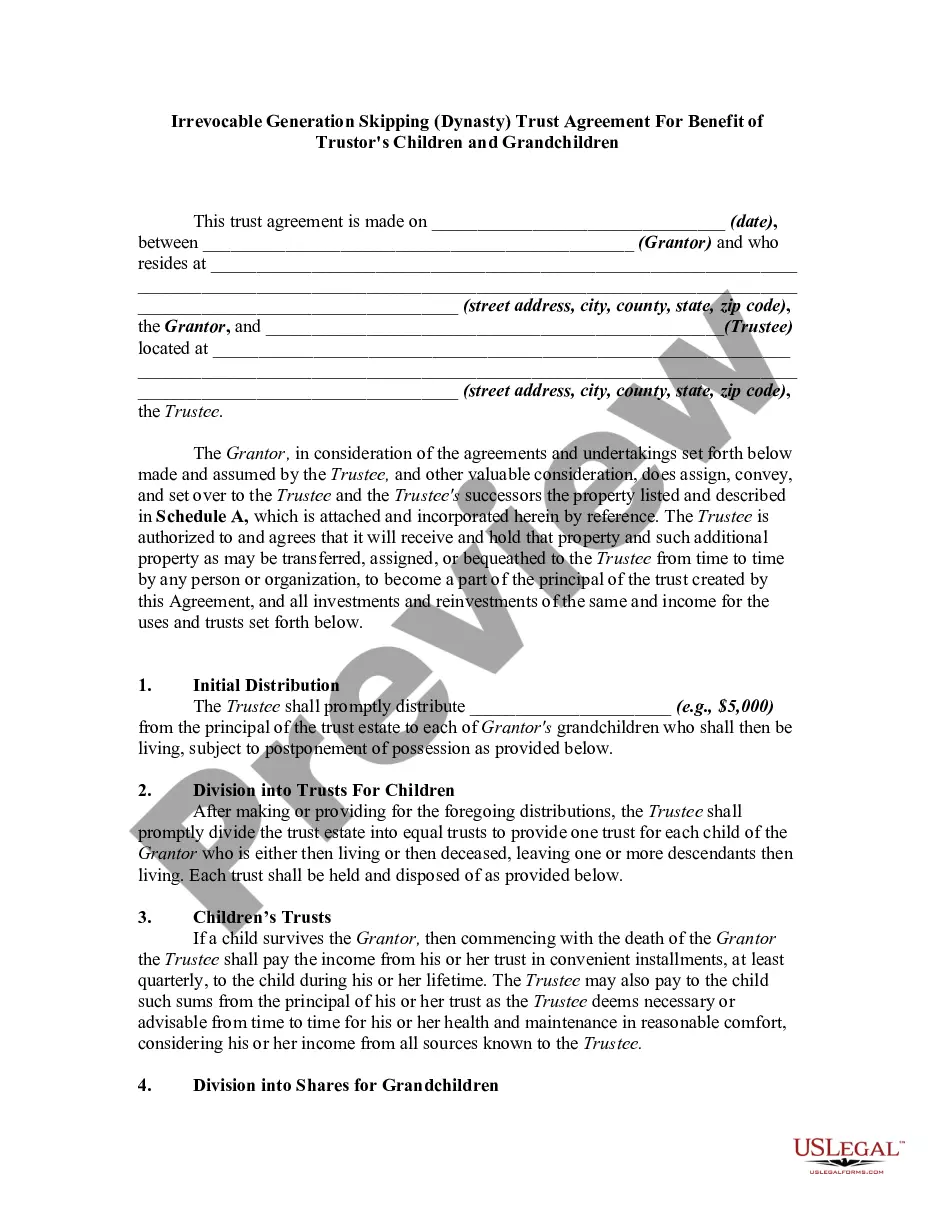
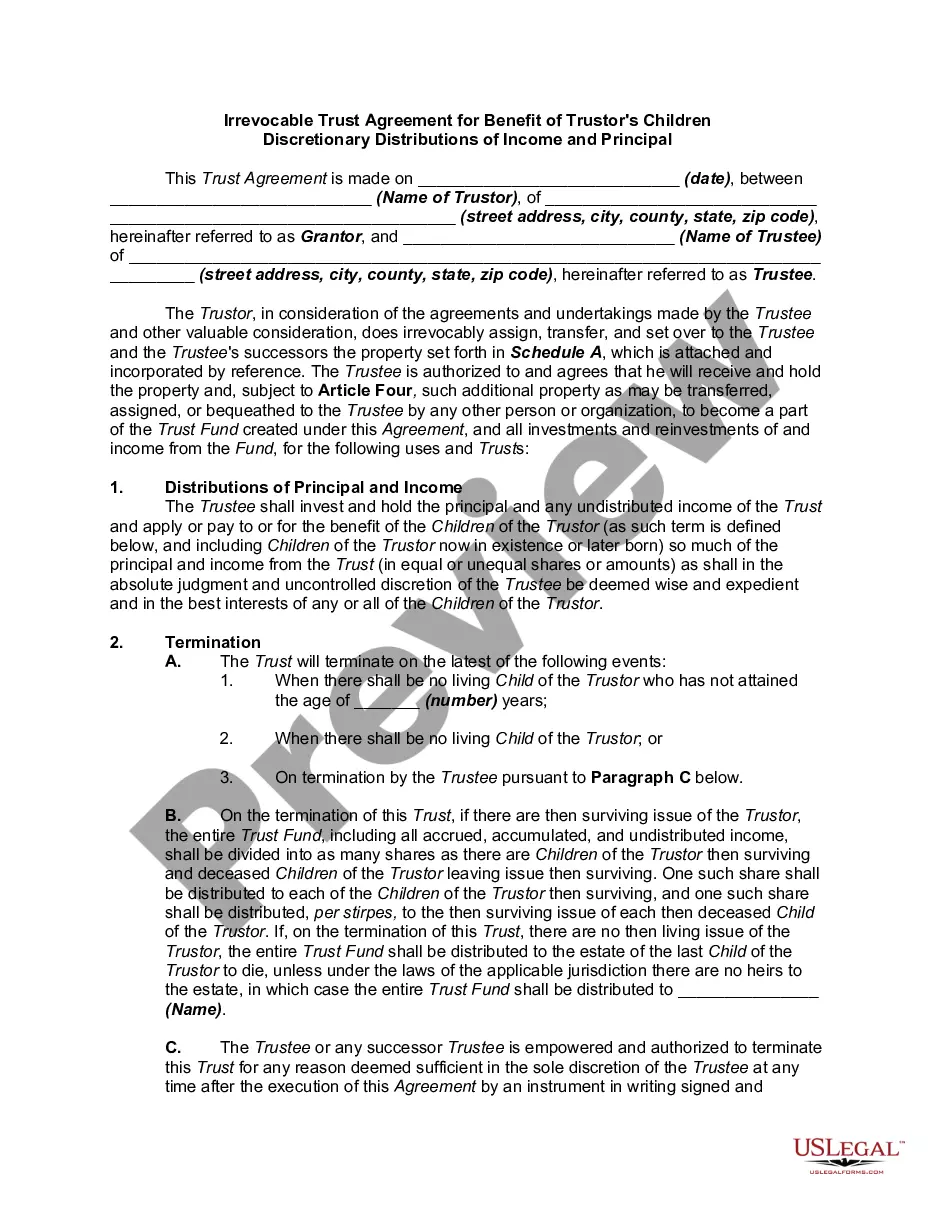


Get your form ready online
Our built-in tools help you complete, sign, share, and store your documents in one place.
Make edits, fill in missing information, and update formatting in US Legal Forms—just like you would in MS Word.
Download a copy, print it, send it by email, or mail it via USPS—whatever works best for your next step.
Sign and collect signatures with our SignNow integration. Send to multiple recipients, set reminders, and more. Go Premium to unlock E-Sign.
If this form requires notarization, complete it online through a secure video call—no need to meet a notary in person or wait for an appointment.
We protect your documents and personal data by following strict security and privacy standards.

Make edits, fill in missing information, and update formatting in US Legal Forms—just like you would in MS Word.

Download a copy, print it, send it by email, or mail it via USPS—whatever works best for your next step.

Sign and collect signatures with our SignNow integration. Send to multiple recipients, set reminders, and more. Go Premium to unlock E-Sign.

If this form requires notarization, complete it online through a secure video call—no need to meet a notary in person or wait for an appointment.

We protect your documents and personal data by following strict security and privacy standards.
Looking for another form?






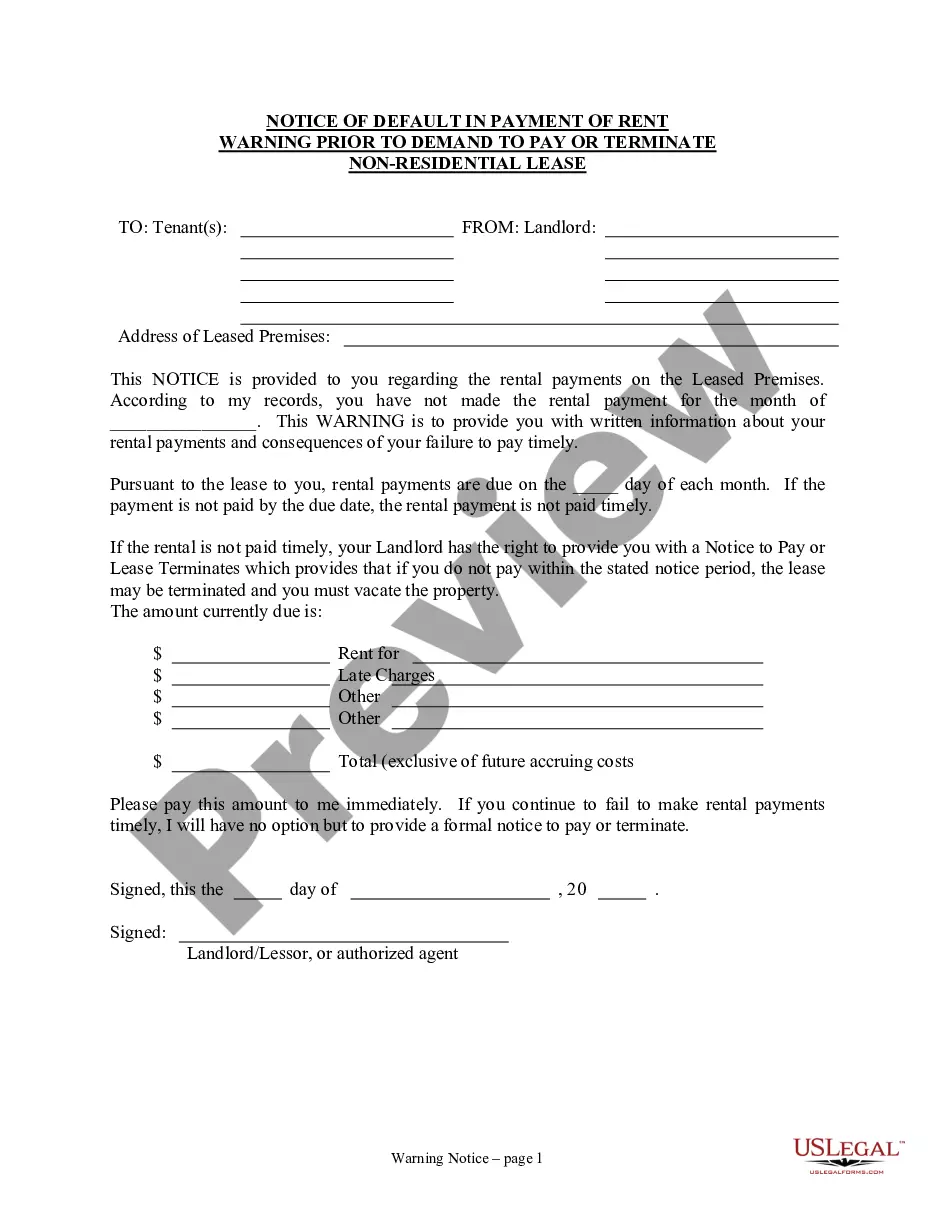
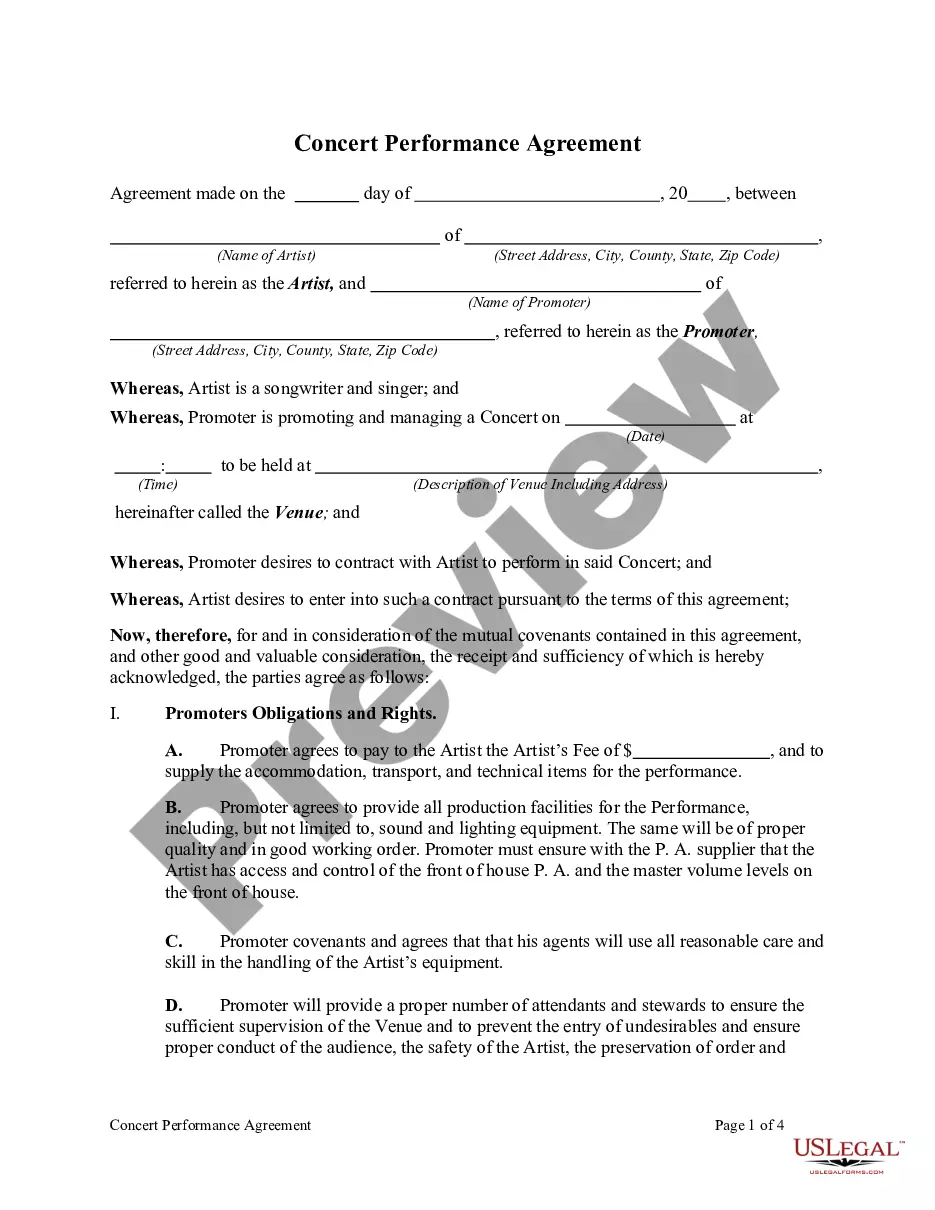


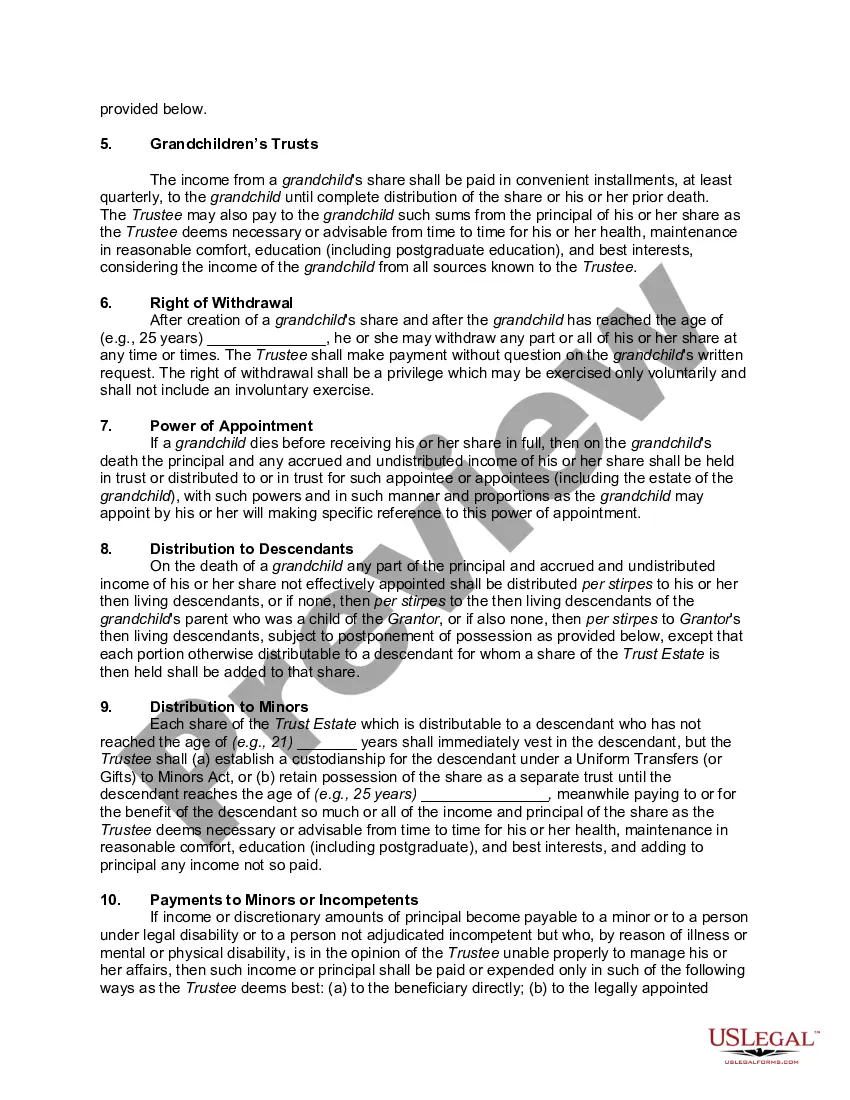
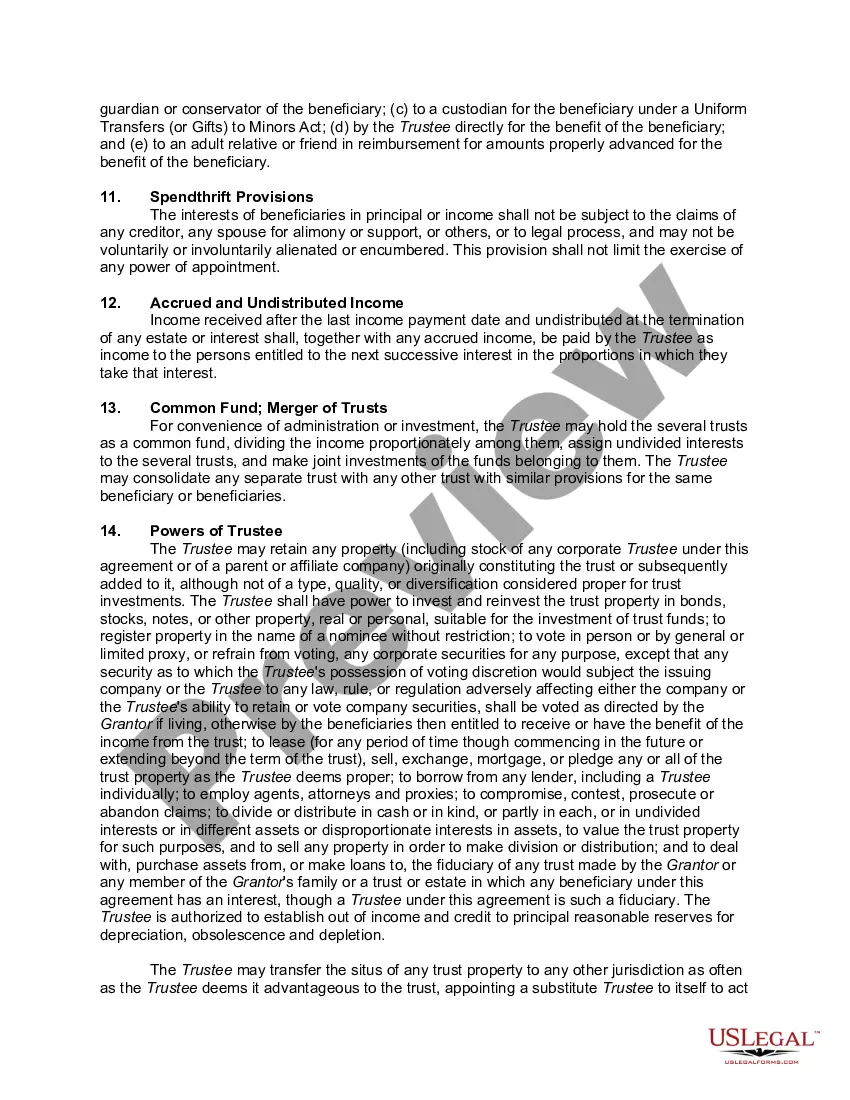
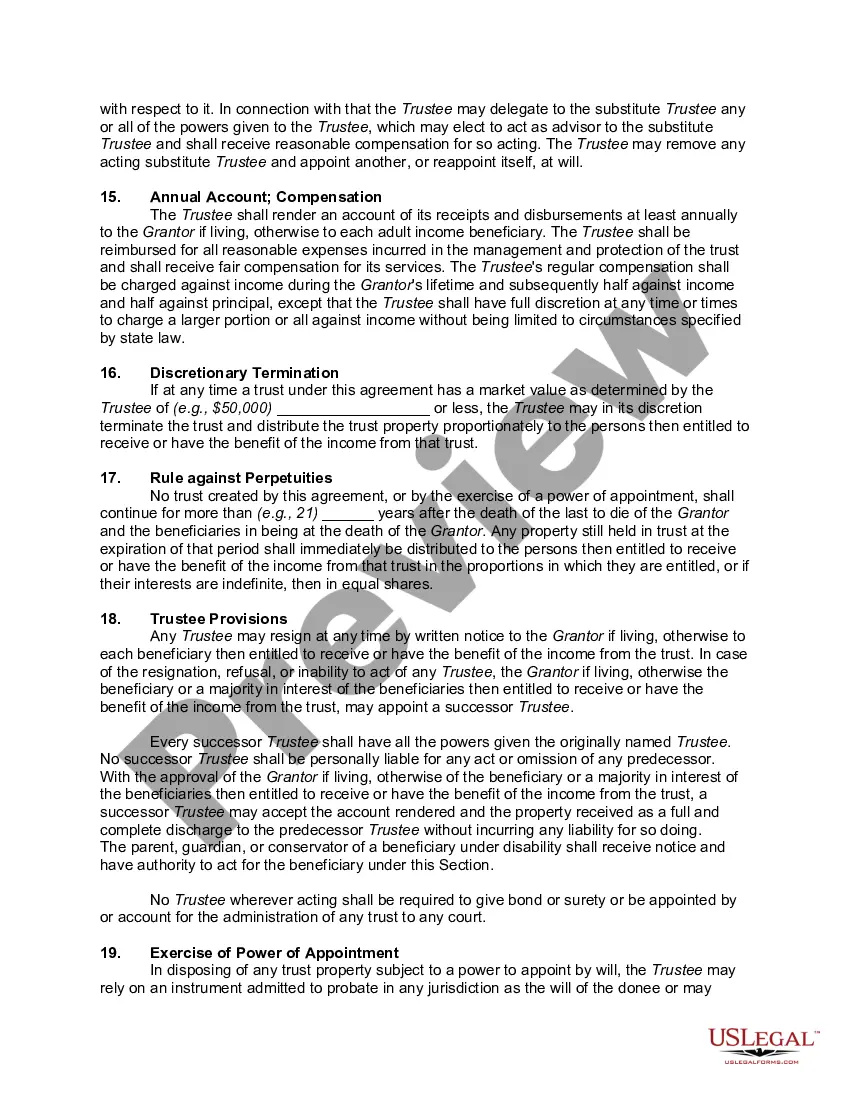
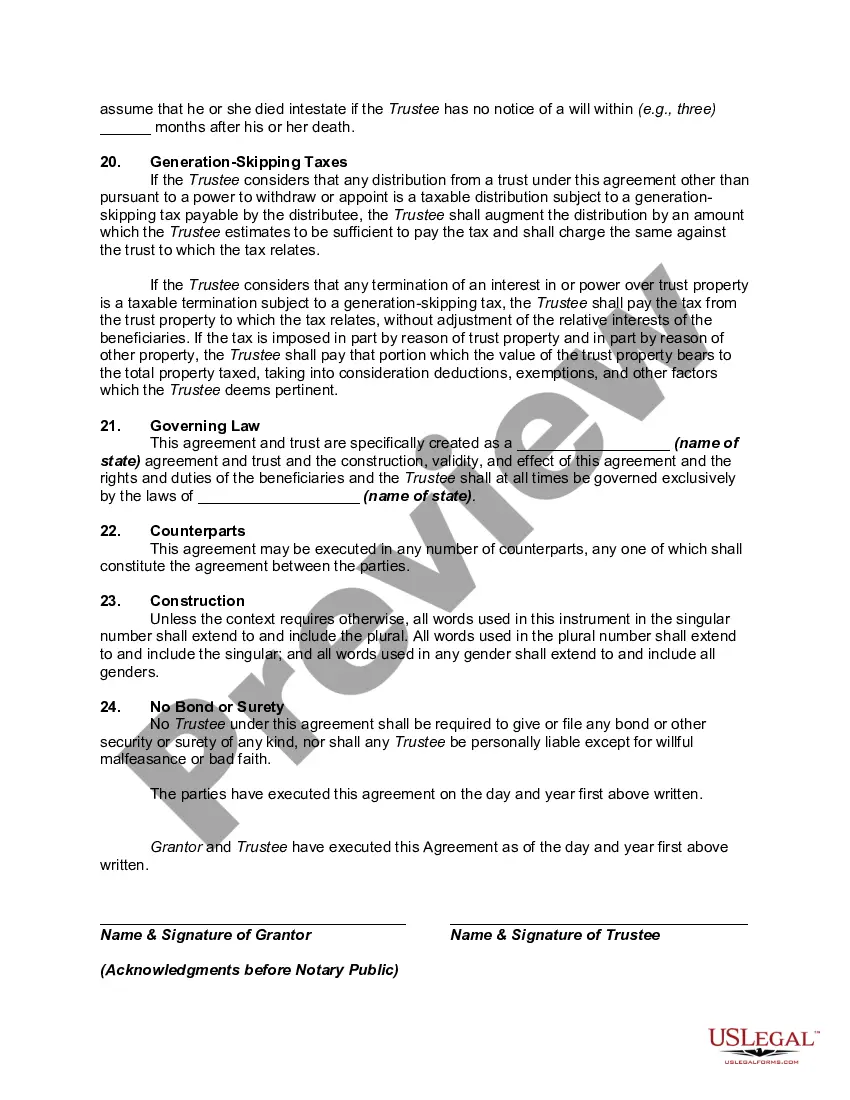
How to fill out Irrevocable Trust Agreement For Benefit Of Trustor's Children And Grandchildren?
- Log in to your US Legal Forms account if you’re a returning user. Ensure your subscription is up-to-date to access and download the necessary form template.
- For first-time users, start by exploring the Preview mode and form descriptions. This ensures you select a document that complies with your local jurisdiction requirements.
- If the document you selected doesn't meet your needs, utilize the Search tab to find a suitable alternative. Make sure it aligns with your requirements before proceeding.
- Purchase the desired document by clicking the Buy Now button and select your preferred subscription plan. Registration for an account is necessary for access.
- Complete your purchase by entering your credit card details or using your PayPal account to finalize the subscription.
- Download your form to your device. You can access the template anytime from the My Forms section in your user profile for easy completion and retrieval.
By leveraging US Legal Forms, you can ensure a hassle-free experience while obtaining essential legal documentation. Their robust collection and access to premium experts guarantee that your documents are completed accurately and professionally.
Start utilizing US Legal Forms today for all your legal documentation needs—trust the proper grantor for efficient and reliable solutions.
Form popularity
FAQ
Yes, a survivor trust typically requires its own EIN, especially if it becomes irrevocable upon the death of the grantor. This unique EIN is necessary for tax reporting and managing trust assets effectively. Trust proper grantor with an established process can simplify these requirements for your survivors.
The income of a grantor trust is reported by the grantor on their personal tax return, as it is considered a disregarded entity. This means the grantor remains responsible for the income tax liabilities generated by the trust. Trust proper grantor with detailed records makes this reporting straightforward and easier for everyone involved.
Yes, you will need a tax ID number for the trust after the grantor's death. This tax ID number is essential for reporting income and handling tax obligations related to the trust's assets. Trust proper grantor with a proactive approach to tax ID numbers ensures compliance and smooth management of the trust.
The responsible party for applying for a trust EIN after the grantor's death is typically the trustee or the executor of the estate. They manage the trust’s affairs and are tasked with ensuring all tax obligations are met. Trust proper grantor with a knowledgeable trustee can help alleviate concerns during this transition.
When the grantor of a grantor trust passes away, the trust generally requires a new Employer Identification Number (EIN). This is because the IRS views the trust differently now that it is irrevocable and has lost its disregarded entity status. Trust proper grantor with a clear understanding of tax responsibilities will help streamline this process for your heirs.
Upon the death of the grantor, the grantor trust often becomes irrevocable, meaning it can no longer be changed without the consent of the beneficiaries. The trust’s assets may then be subject to estate taxes, depending on the value of the estate. Trust proper grantor with a plan can ease this transition for your beneficiaries, ensuring they understand the steps to take.
To file a tax return for a grantor trust, you must report the income generated by the trust on your personal tax return using IRS Form 1040. The IRS typically treats grantor trusts as disregarded entities, which means you, as the grantor, will report the trust's income directly on your returns. Trust proper grantor with a clear understanding of these tax obligations makes the filing process easier.
The owner of a grantor trust is the grantor themselves, who creates and funds the trust. In this arrangement, the grantor retains certain control over the assets, which can have implications for taxes and estate planning. By recognizing how to trust proper grantor with a, you can take advantage of various benefits, such as avoiding probate and simplifying asset distribution. Using platforms like US Legal Forms can help you establish and manage your grantor trust effectively.
The beneficial owner of a grantor trust is typically the same person as the grantor. This means that the grantor enjoys the benefits and control over the assets held within the trust. Understanding how to trust proper grantor with a can help you structure the trust to maximize tax benefits and estate planning advantages. This setup allows for a seamless transition of assets while maintaining a degree of control.
The guarantor of a trust, often known as the trustee, is responsible for managing the trust according to the grantor's wishes. This individual or entity ensures that the trust operates smoothly, adhering to legal requirements and distributing assets to beneficiaries as specified. Trust proper grantor with a knowledgeable trustee to ensure that all duties are performed correctly and in a timely manner.