Trust Agreement Irrevocable For A Trustee
Description

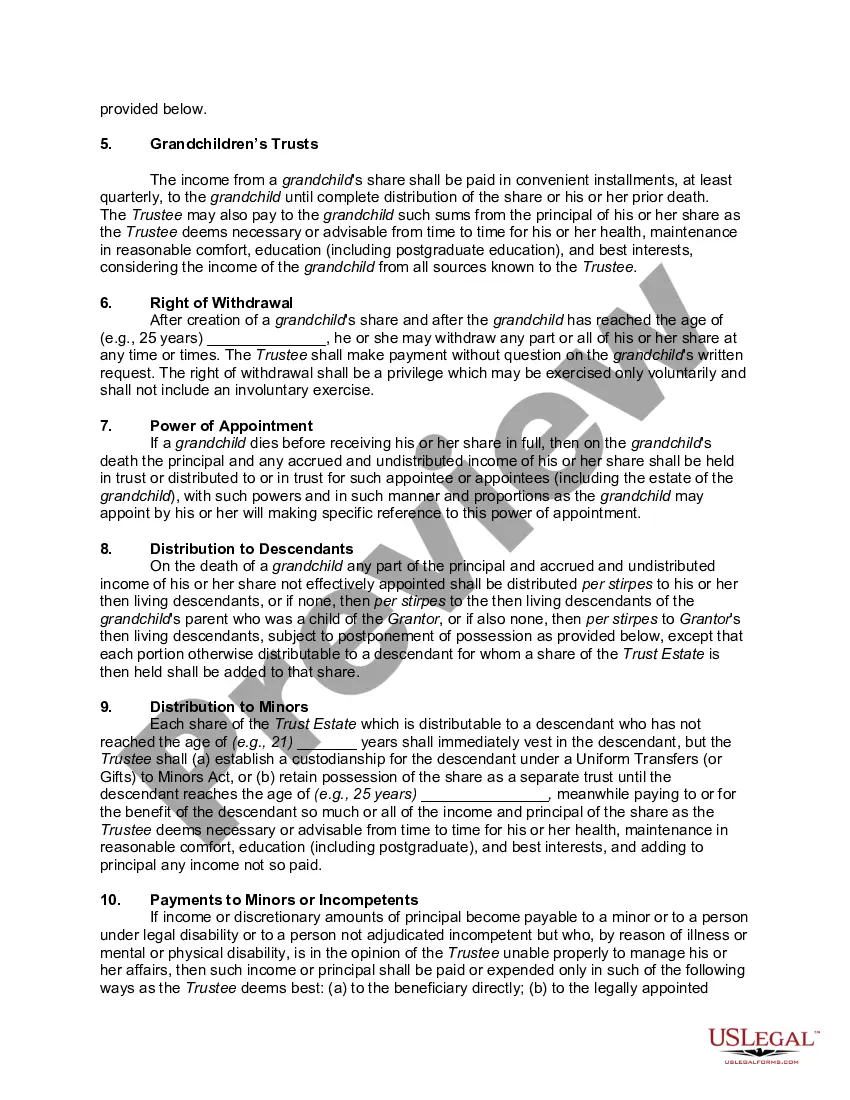
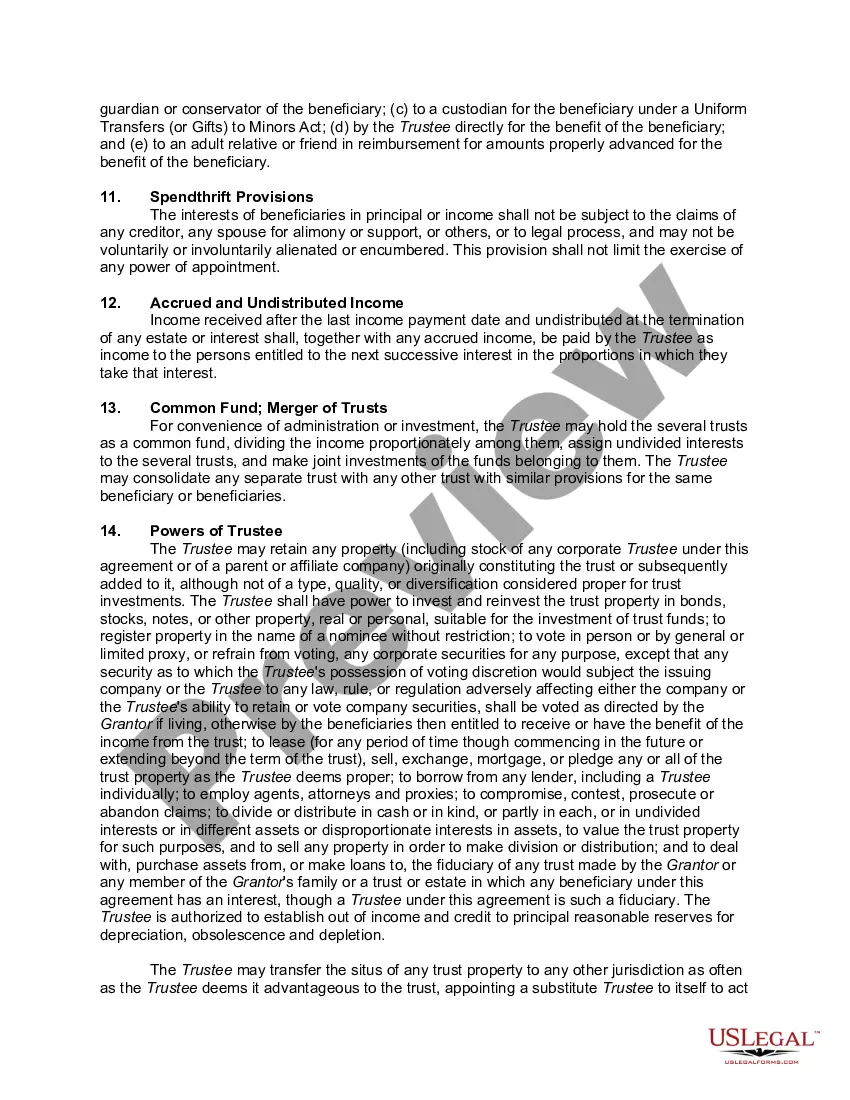
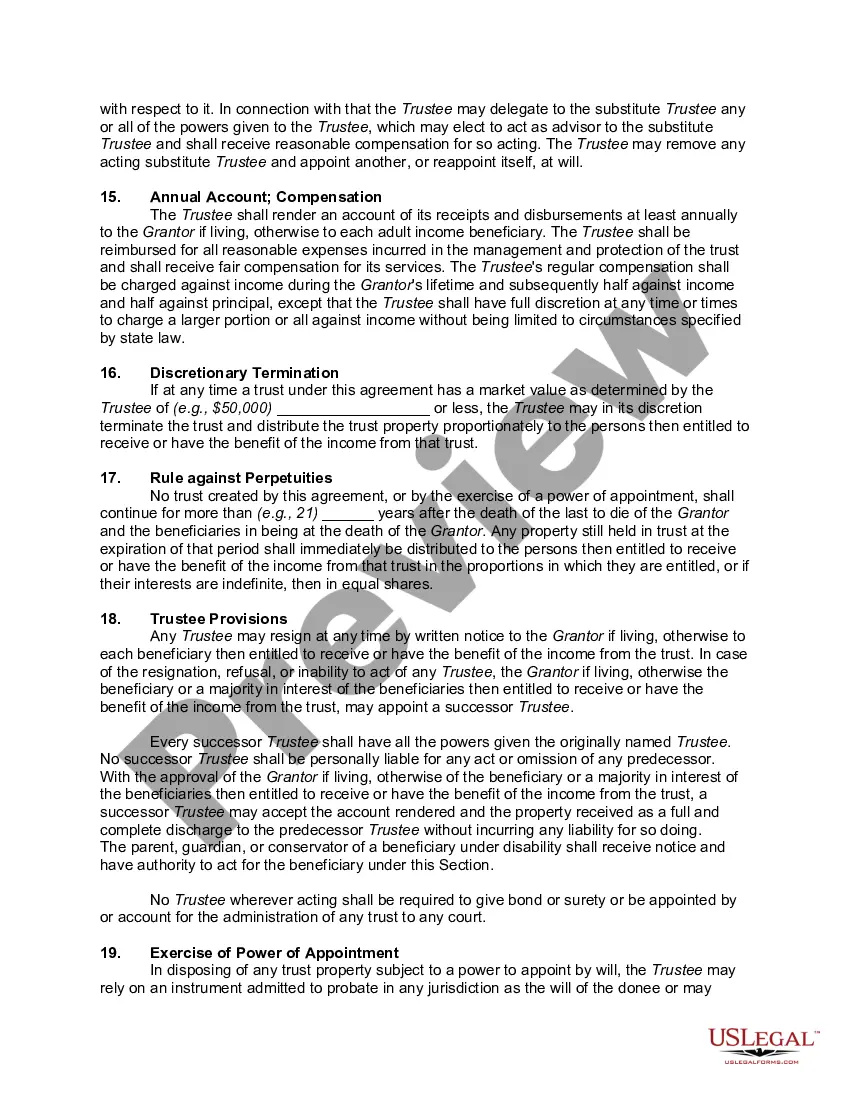
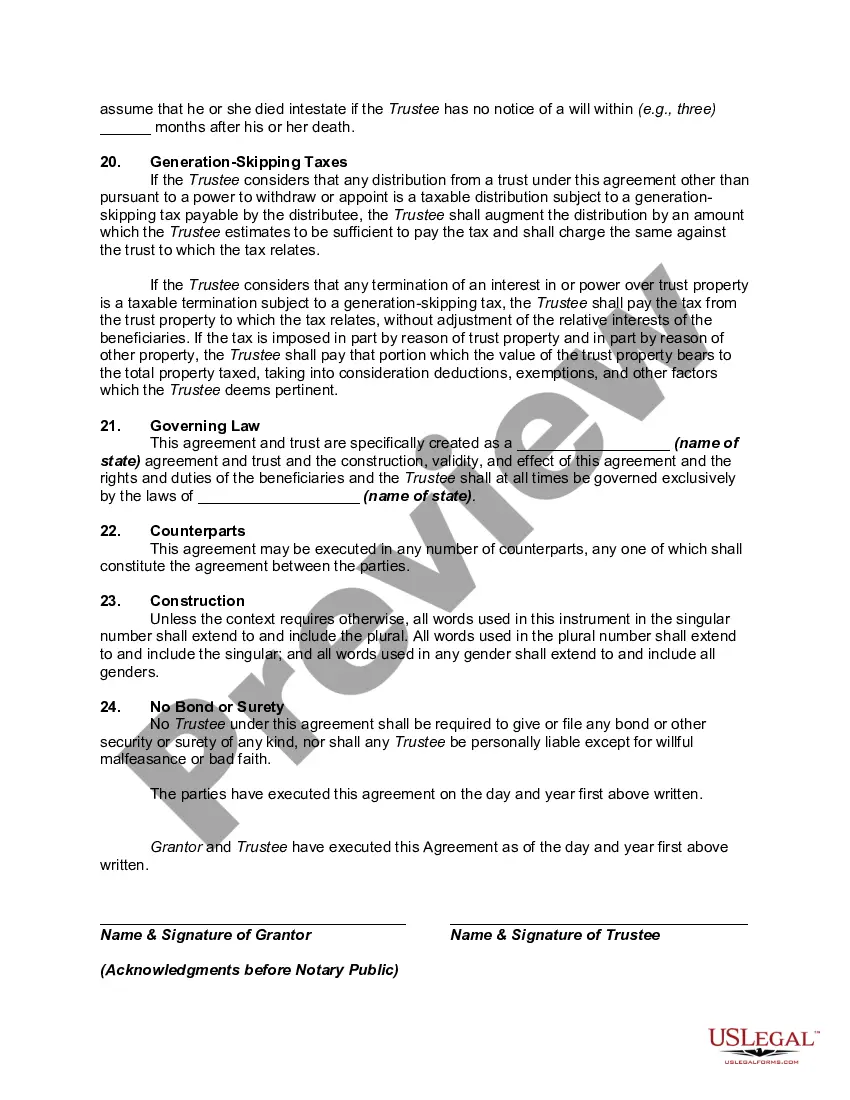

Get your form ready online
Our built-in tools help you complete, sign, share, and store your documents in one place.
Make edits, fill in missing information, and update formatting in US Legal Forms—just like you would in MS Word.
Download a copy, print it, send it by email, or mail it via USPS—whatever works best for your next step.
Sign and collect signatures with our SignNow integration. Send to multiple recipients, set reminders, and more. Go Premium to unlock E-Sign.
If this form requires notarization, complete it online through a secure video call—no need to meet a notary in person or wait for an appointment.
We protect your documents and personal data by following strict security and privacy standards.

Make edits, fill in missing information, and update formatting in US Legal Forms—just like you would in MS Word.

Download a copy, print it, send it by email, or mail it via USPS—whatever works best for your next step.

Sign and collect signatures with our SignNow integration. Send to multiple recipients, set reminders, and more. Go Premium to unlock E-Sign.

If this form requires notarization, complete it online through a secure video call—no need to meet a notary in person or wait for an appointment.

We protect your documents and personal data by following strict security and privacy standards.
Looking for another form?
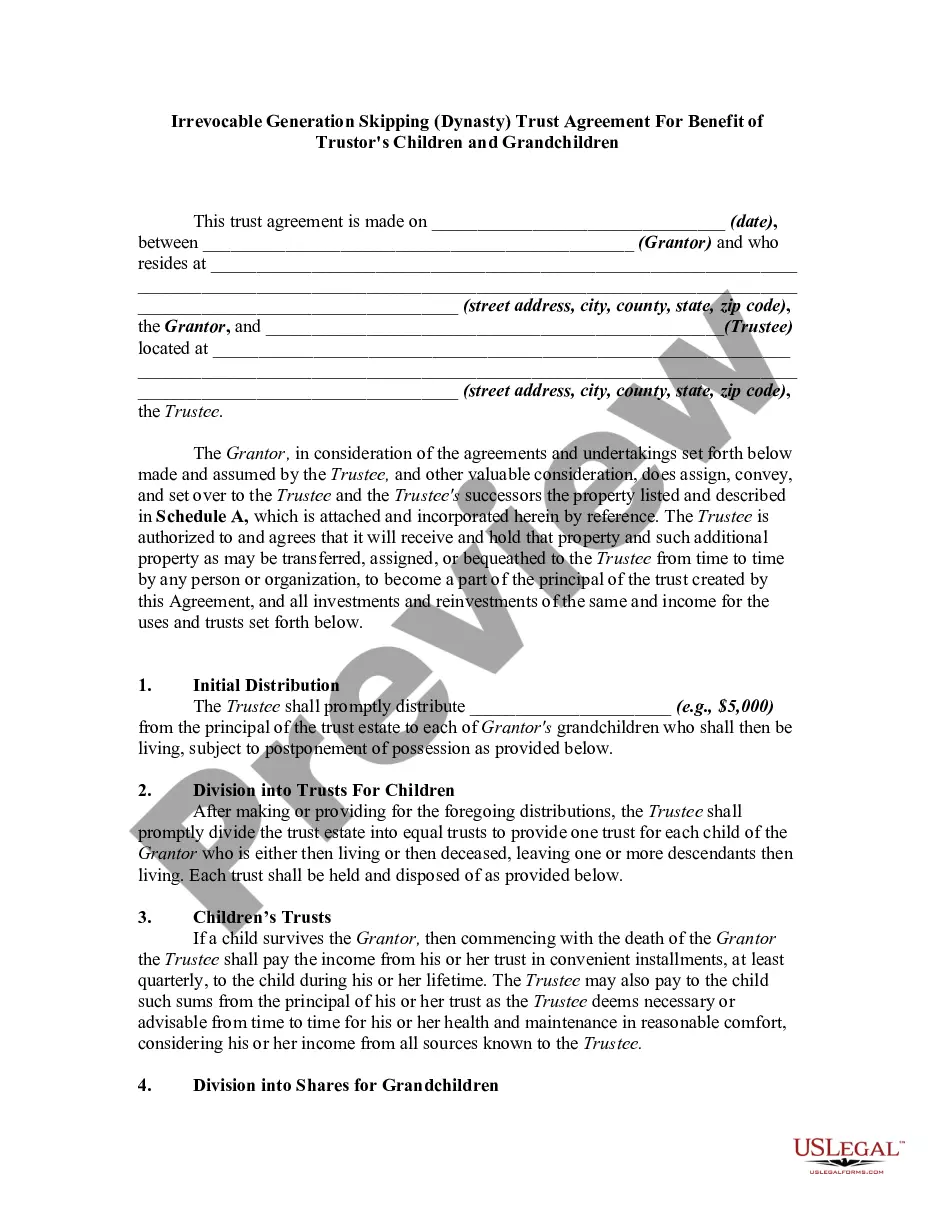
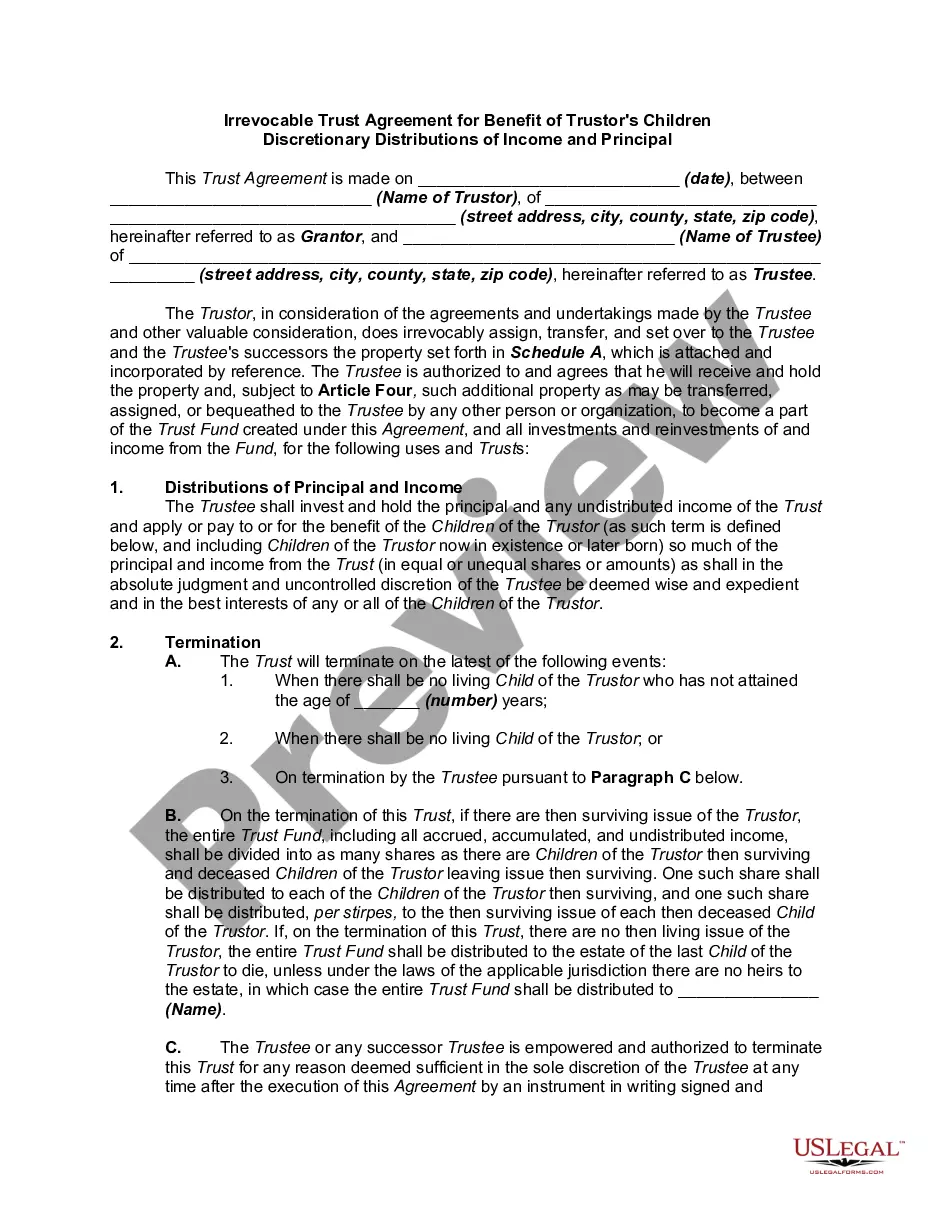
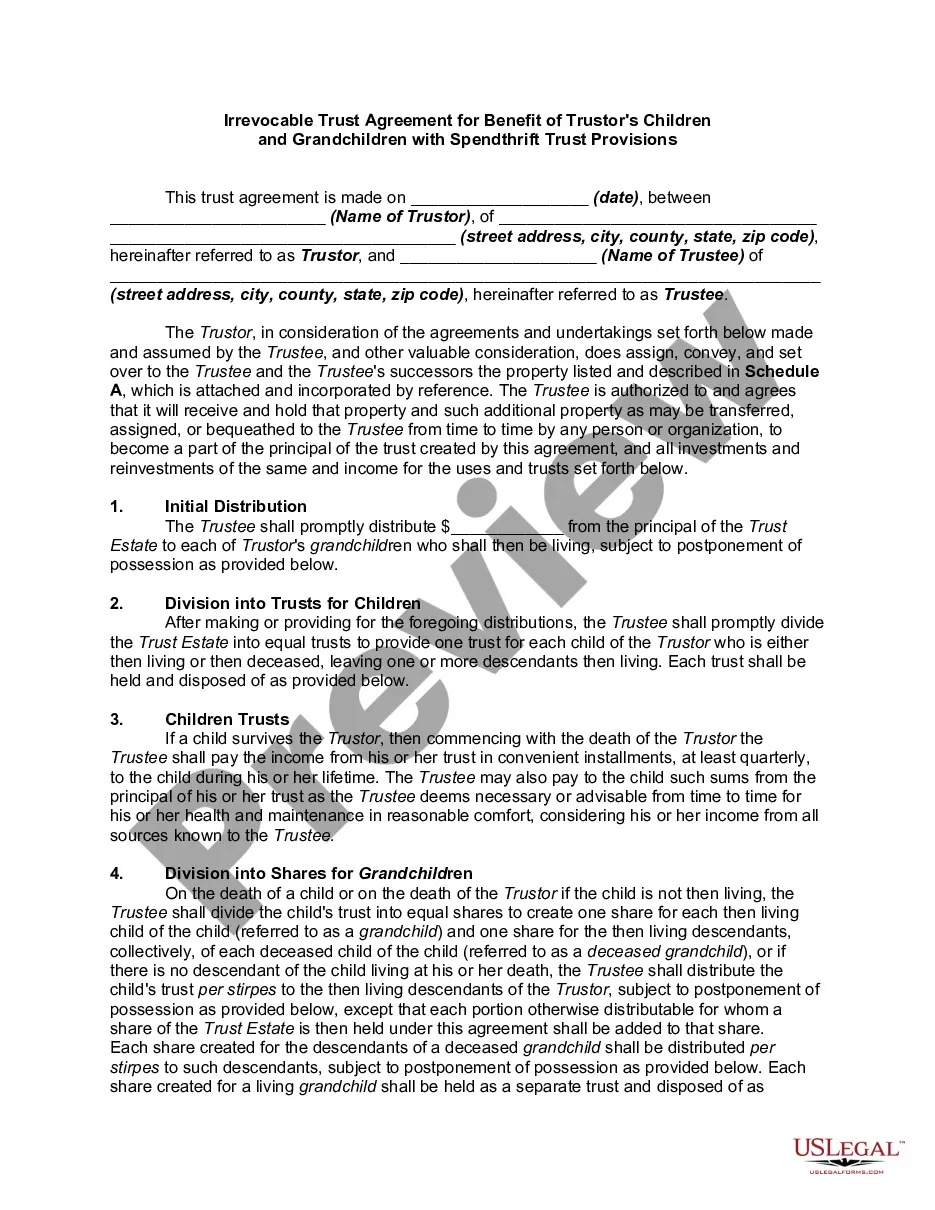
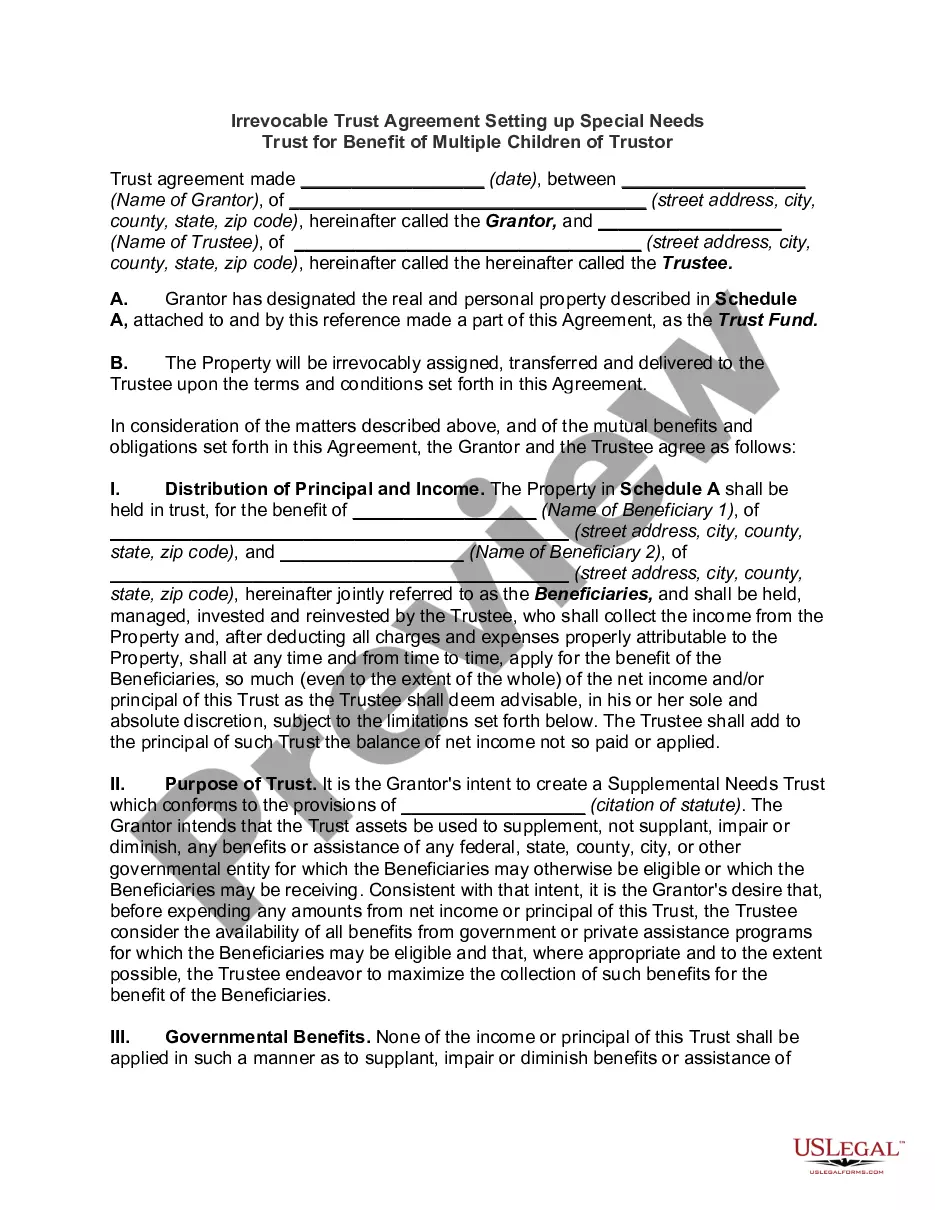
How to fill out Irrevocable Trust Agreement For Benefit Of Trustor's Children And Grandchildren?
- If you are an existing user, log into your US Legal Forms account and navigate to your dashboard to download the desired form by clicking the Download button. Ensure that your subscription is still active, and renew it if required.
- For new users, start by reviewing the form preview and descriptions. Confirm that you have selected the correct template that aligns with your specific needs and meets your local jurisdiction's regulations.
- If you require additional templates, utilize the Search feature to find what you need. Once satisfied, proceed to the next step.
- Purchase the document by clicking on the Buy Now button and select your preferred subscription plan. You will need to create an account to gain access to their vast library.
- Complete your purchase by entering your credit card information or using PayPal for payment.
- Download your form and save it to your device. You can also access it later from the My Forms section in your account.
In conclusion, using US Legal Forms simplifies the process of acquiring a trust agreement irrevocable for a trustee, giving you peace of mind that your legal needs are met efficiently.
Start your journey today and unlock the benefits of a robust legal document library!
Form popularity
FAQ
Yes, you can write your own trust agreement irrevocable for a trustee, but caution is necessary. Crafting a legally valid trust document involves understanding various legal requirements and terminology. Automating this process using online platforms, like USLegalForms, can provide guidance and templates which streamline the creation of a comprehensive and binding agreement. This approach reduces the risk of errors while ensuring your intentions are clearly documented.
To write a trust agreement irrevocable for a trustee, begin by clearly defining the grantor, trustee, and beneficiaries. Outline the assets that will be part of the trust and specify how you wish them to be managed and distributed. It's also essential to include any specific terms or conditions that must be met. Utilizing a template or service, like USLegalForms, can help simplify this process and ensure you include all necessary legal language.
When setting up a trust agreement irrevocable for a trustee, avoid including assets that may negatively impact your future financial situation. Personal property, like your primary residence, should typically remain outside the trust unless there's a specific reason to include it. Also, steer clear of assets that you may need access to in case of emergencies or unexpected expenses. Always consult a legal expert to guide you on the best choices for your situation.
An irrevocable clause in a trust specifies that the terms cannot be altered or canceled once established. This clause is vital as it ensures that the intentions of the grantor are carried out without changes later on. For a trustee, this means managing the trust's assets according to fixed instructions. When considering this type of trust, a trust agreement irrevocable for a trustee provides clarity and security in managing these assets.
First, you might want to reduce estate taxes, as assets placed in an irrevocable trust are typically not included in your estate. Second, preserving assets for beneficiaries while providing them with financial security is another significant reason. Lastly, protecting your assets from creditors can be crucial in some situations. Each of these aspects underscores the importance of a trust agreement irrevocable for a trustee in effective estate planning.
Irrevocable means that once the trust is established, it cannot be modified or revoked by the grantor. Thus, with a trust agreement irrevocable for a trustee, control over the assets shifts to the trustee, ensuring that the trust assets are safeguarded for beneficiaries. This permanence makes irrevocable trusts useful for estate planning and asset protection. Understanding this concept is essential for individuals considering setting up a trust.
A trustee manages the assets in an irrevocable trust according to the terms set forth in the trust agreement irrevocable for a trustee. This means they can handle investments, distribute income to beneficiaries, and ensure compliance with legal and tax obligations. However, they cannot change the terms of the trust or reclaim assets once placed in the trust. This arrangement helps protect the interests of the beneficiaries while adhering to the grantor's wishes.
To create a trust agreement irrevocable for a trustee, you must specify your intent clearly in the trust document. It typically requires the grantor to transfer assets to the trust permanently, thus relinquishing their control. Consider consulting a legal expert or using platforms like US Legal Forms to navigate the complexities of drafting such a trust document effectively. They can guide you through the necessary steps to ensure your trust meets all legal requirements.
People often prefer a trust agreement irrevocable for a trustee for several reasons. Primarily, it can protect assets from creditors and legal claims, which offers peace of mind. Moreover, it provides substantial tax benefits, as irrevocable trusts can often lower estate taxes. As a result, many individuals find this type of trust beneficial for long-term estate planning.
One downside of a trust agreement irrevocable for a trustee is that once established, you cannot easily change or terminate it. This means you surrender control over the assets placed in the trust. Additionally, some individuals may find themselves paying higher taxes on the trust income, as it is often considered separate from the grantor’s personal assets. Thus, it’s essential to weigh these factors before committing to an irrevocable trust.