Shall Grantor Her With A Will
Description


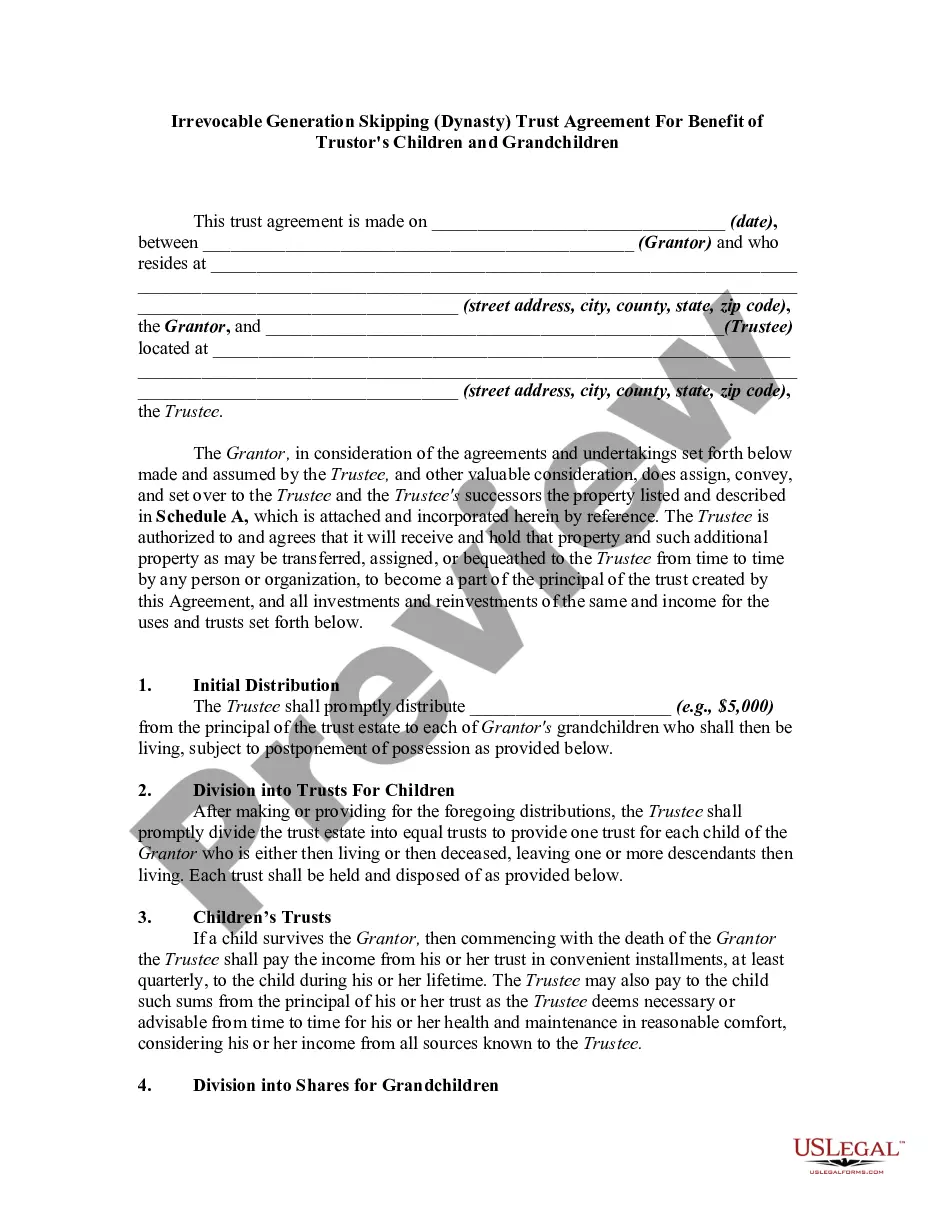
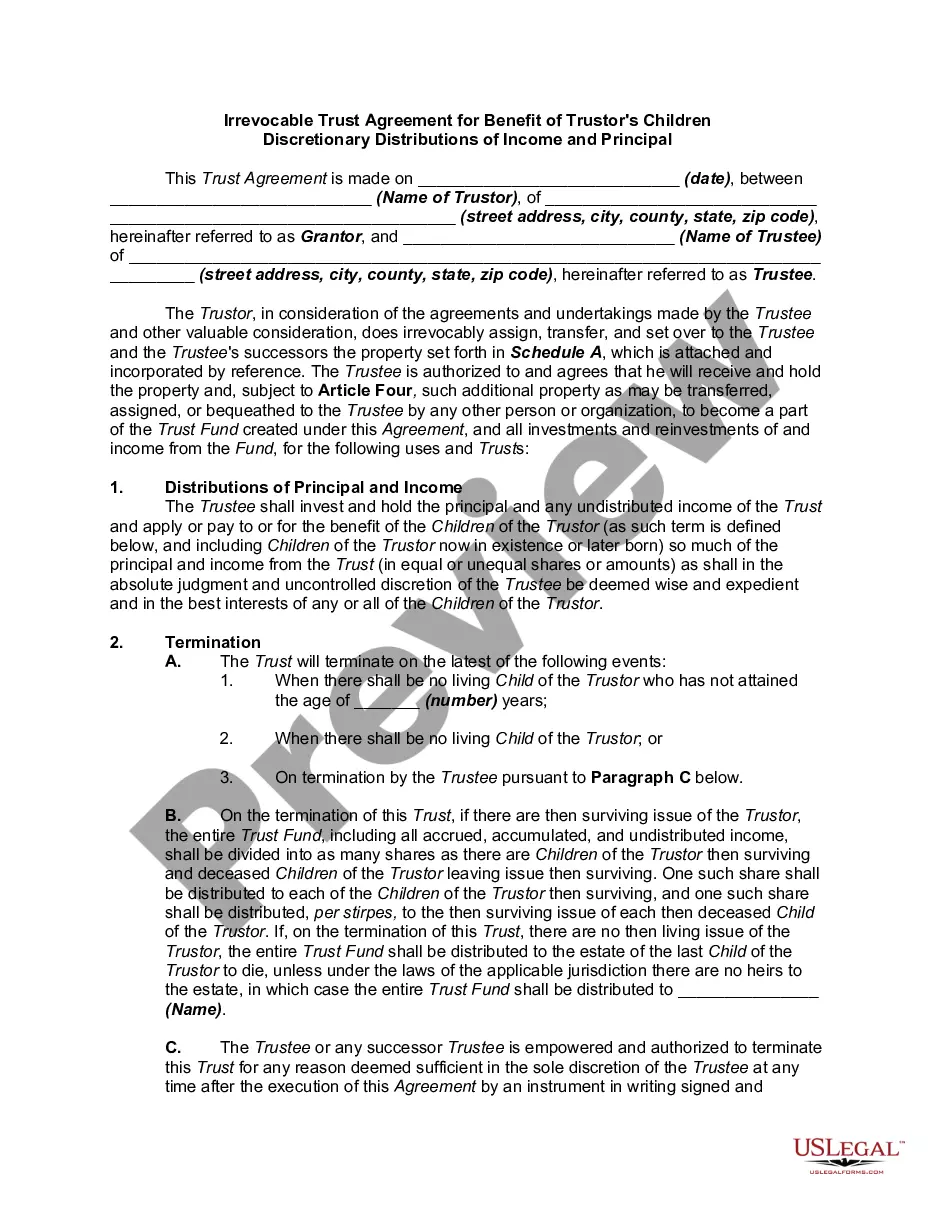


Get your form ready online
Our built-in tools help you complete, sign, share, and store your documents in one place.
Make edits, fill in missing information, and update formatting in US Legal Forms—just like you would in MS Word.
Download a copy, print it, send it by email, or mail it via USPS—whatever works best for your next step.
Sign and collect signatures with our SignNow integration. Send to multiple recipients, set reminders, and more. Go Premium to unlock E-Sign.
If this form requires notarization, complete it online through a secure video call—no need to meet a notary in person or wait for an appointment.
We protect your documents and personal data by following strict security and privacy standards.

Make edits, fill in missing information, and update formatting in US Legal Forms—just like you would in MS Word.

Download a copy, print it, send it by email, or mail it via USPS—whatever works best for your next step.

Sign and collect signatures with our SignNow integration. Send to multiple recipients, set reminders, and more. Go Premium to unlock E-Sign.

If this form requires notarization, complete it online through a secure video call—no need to meet a notary in person or wait for an appointment.

We protect your documents and personal data by following strict security and privacy standards.
Looking for another form?



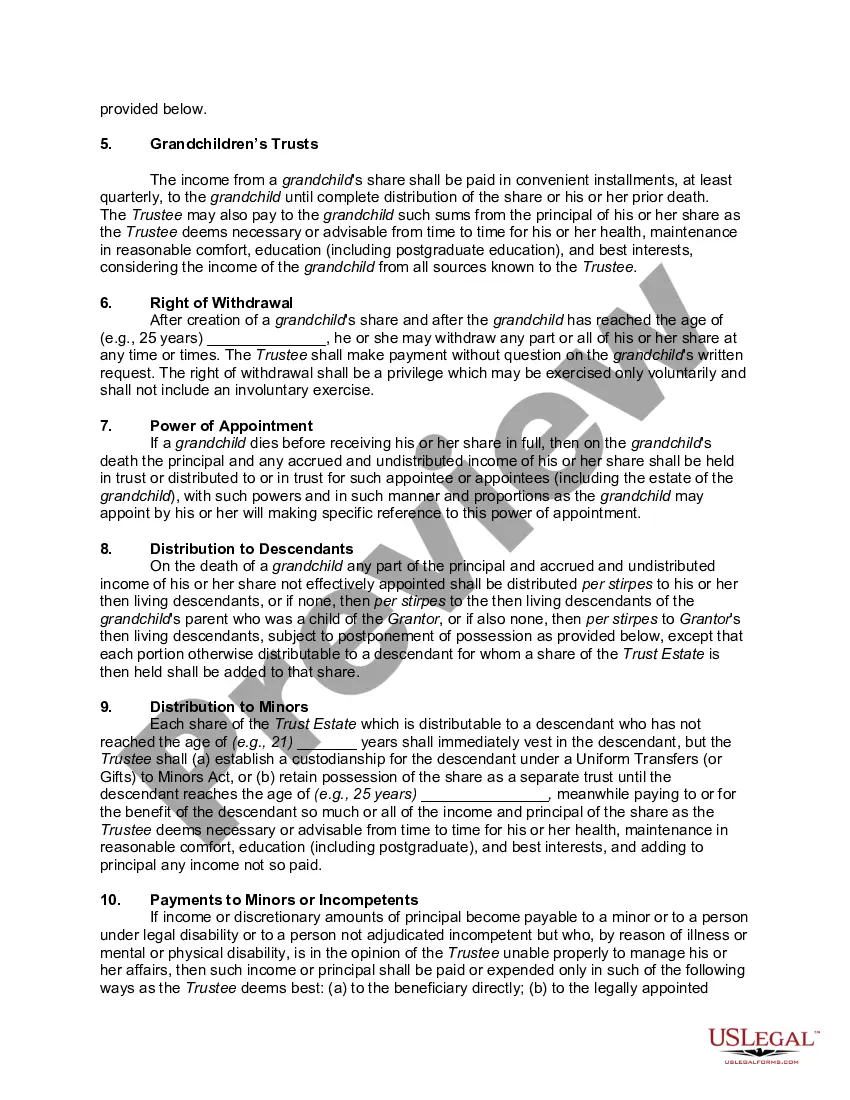
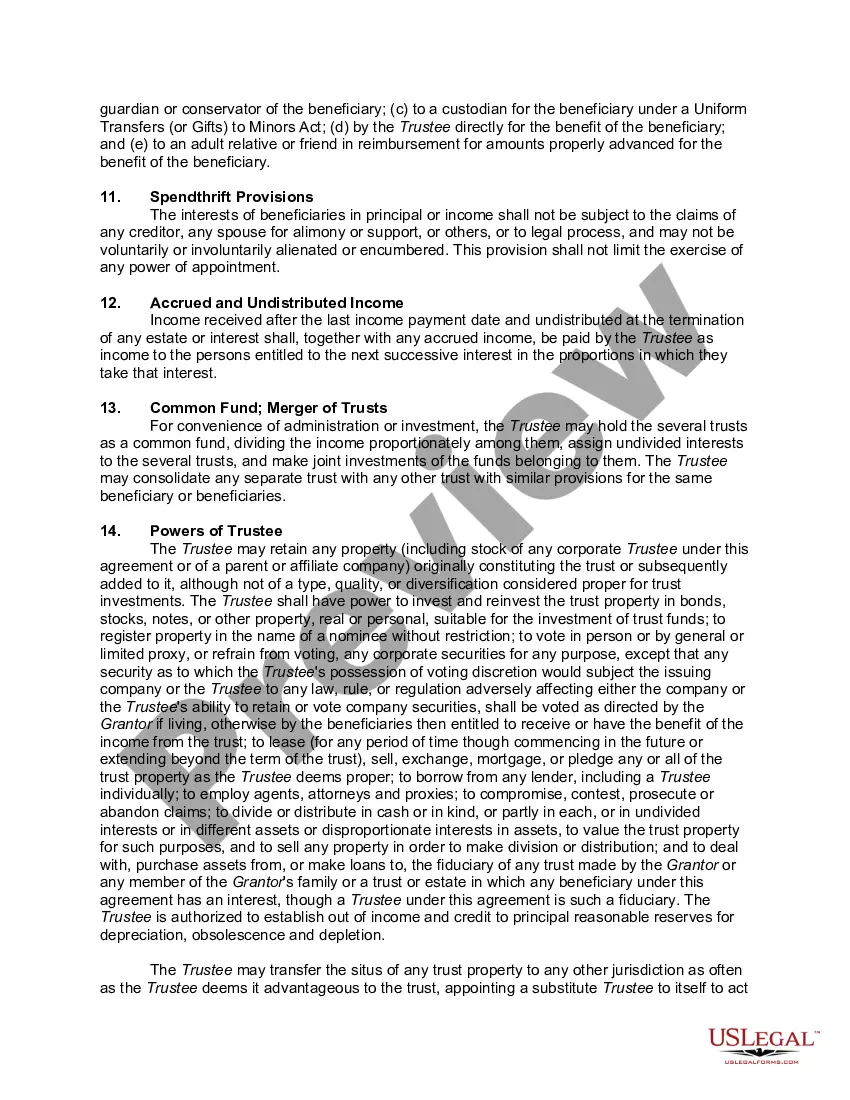
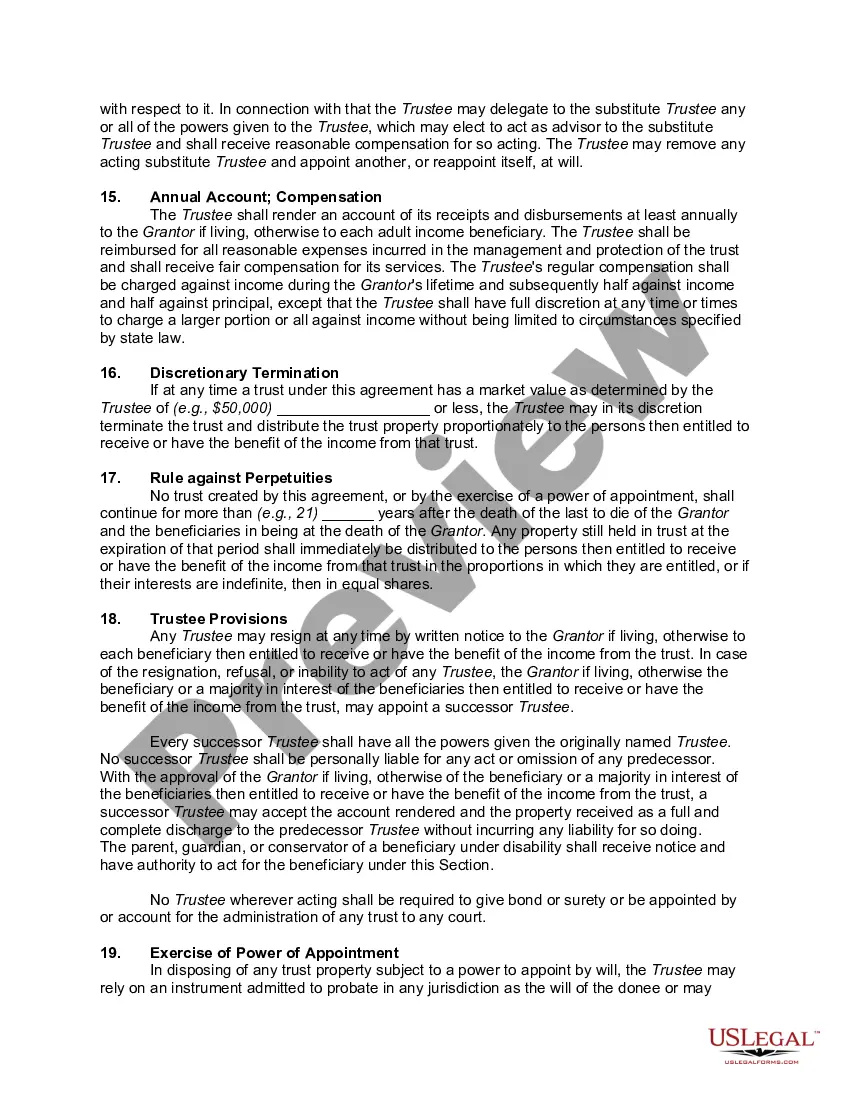
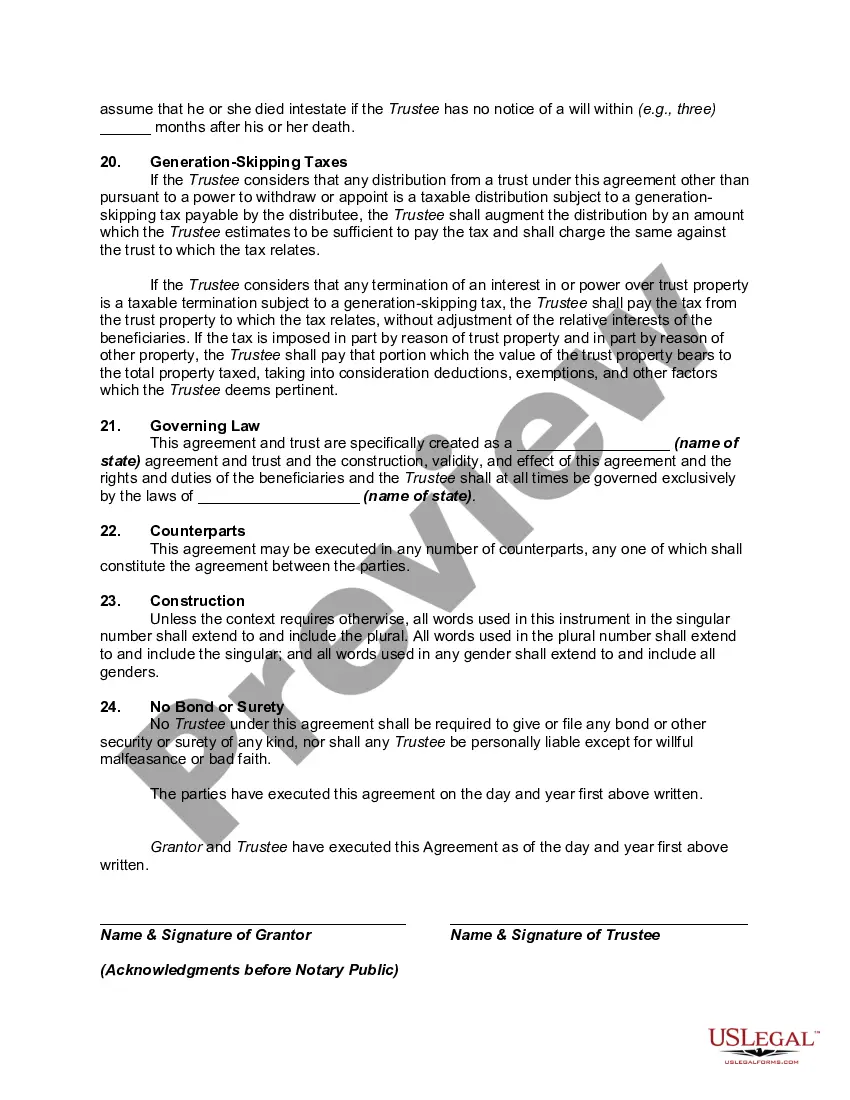
How to fill out Irrevocable Trust Agreement For Benefit Of Trustor's Children And Grandchildren?
- Log in to your existing US Legal Forms account. Verify that your subscription is active and ready for use.
- If you're new to the service, start by exploring the Preview mode and reviewing the form descriptions to ensure you select the appropriate document.
- Should you need an alternative template, utilize the Search tab to find other documents that fit your specific requirements.
- Once you've found the correct form, click on the 'Buy Now' button and choose a subscription plan that best suits your needs.
- Complete your purchase by providing payment details, either through credit card or PayPal.
- Download the form and save it to your device, making it accessible at any time through the 'My Forms' section in your profile.
By following these steps, you can rest assured that your will is tailored to your unique needs while adhering to local jurisdiction requirements.
Don't wait until it's too late; start with US Legal Forms today to secure your peace of mind and ensure your wishes are honored.
Form popularity
FAQ
The grantor is often the person initiating the trust or will, which may include parents, grandparents, or individuals planning their estate. Anyone with assets they wish to protect and pass on can take on this role. Remember, the phrase 'shall grantor her with a will' highlights the responsibility of the grantor to ensure that their intentions are clearly stated and legally enforceable.
The grantor in a will is the individual who creates and executes the will, determining how their assets will be distributed after their death. This person expresses their wishes through the will, ensuring that their beneficiaries receive what they deserve. It's essential to remember that the phrase 'shall grantor her with a will' signifies the importance of clearly outlining these wishes to avoid confusion for loved ones.
A grantor trust is a type of trust where the grantor retains control over the assets, allowing them to use the income generated by the trust. For example, if a grantor establishes a revocable living trust, they can alter the terms of the trust, ensuring flexibility in estate planning. In this context, the phrase 'shall grantor her with a will' is crucial, as it indicates that the grantor's intentions for asset distribution will be honored in their will.
A grantor is not automatically a trustee, though they often serve both roles in many trust setups. The grantor may choose to appoint themselves as the trustee for added control over trust assets. Understanding the distinctions between these roles can help you organize your affairs better, ensuring that you shall grantor her with a will seamlessly and effectively.
Grantor trusts usually do not need to file their own tax returns because the income is reported under the grantor's name. This distinction simplifies tax reporting but can vary based on state laws. Staying informed about these details is essential for anyone wanting to efficiently manage their estate and ensure they shall grantor her with a will.
Most grantor trusts do not require a separate tax return, as the income is reported on the grantor's personal tax return. However, specific scenarios may necessitate different reporting. It's essential to understand your obligations to ensure compliance. Effective planning, such as using resources like USLegalForms, can help you navigate this and provide guidance on how you shall grantor her with a will.
The tax treatment of a grantor trust allows the grantor to report the trust's income on their personal tax return, effectively treating the trust as part of the grantor’s estate. This can simplify tax filing but also requires careful planning to avoid unexpected tax liabilities. Understanding this process ensures that you shall grantor her with a will in a tax-efficient manner, benefiting from the trust’s strategic advantages.
The income of a grantor trust is generally reported by the grantor directly on their personal income tax return. Since the grantor retains certain powers, the IRS considers the trust's income as part of the grantor's taxable income. This direct reporting simplifies tax management but may also impact decisions surrounding estate planning. Remember, clarity about this can help you effectively shall grantor her with a will.
Not all trusts are required to file a tax return. For instance, certain revocable trusts are considered grantor trusts, allowing the grantor to report income directly on their personal tax returns. This also means that the trust does not need to file a separate return. It's beneficial to explore how different trust structures can impact your estate planning needs, ensuring that you efficiently shall grantor her with a will.
Typically, a grantor must file a tax return if the grantor's income exceeds the IRS thresholds. In general, income generated by a grantor trust is reported on the grantor's personal tax return. Thus, when planning your estate, it's essential to understand how this impacts your tax obligations and the execution of your will. Consulting with legal experts can clarify how your structure shall grantor her with a will.