Irrevocable Trust Withdrawals Without Penalty
Description


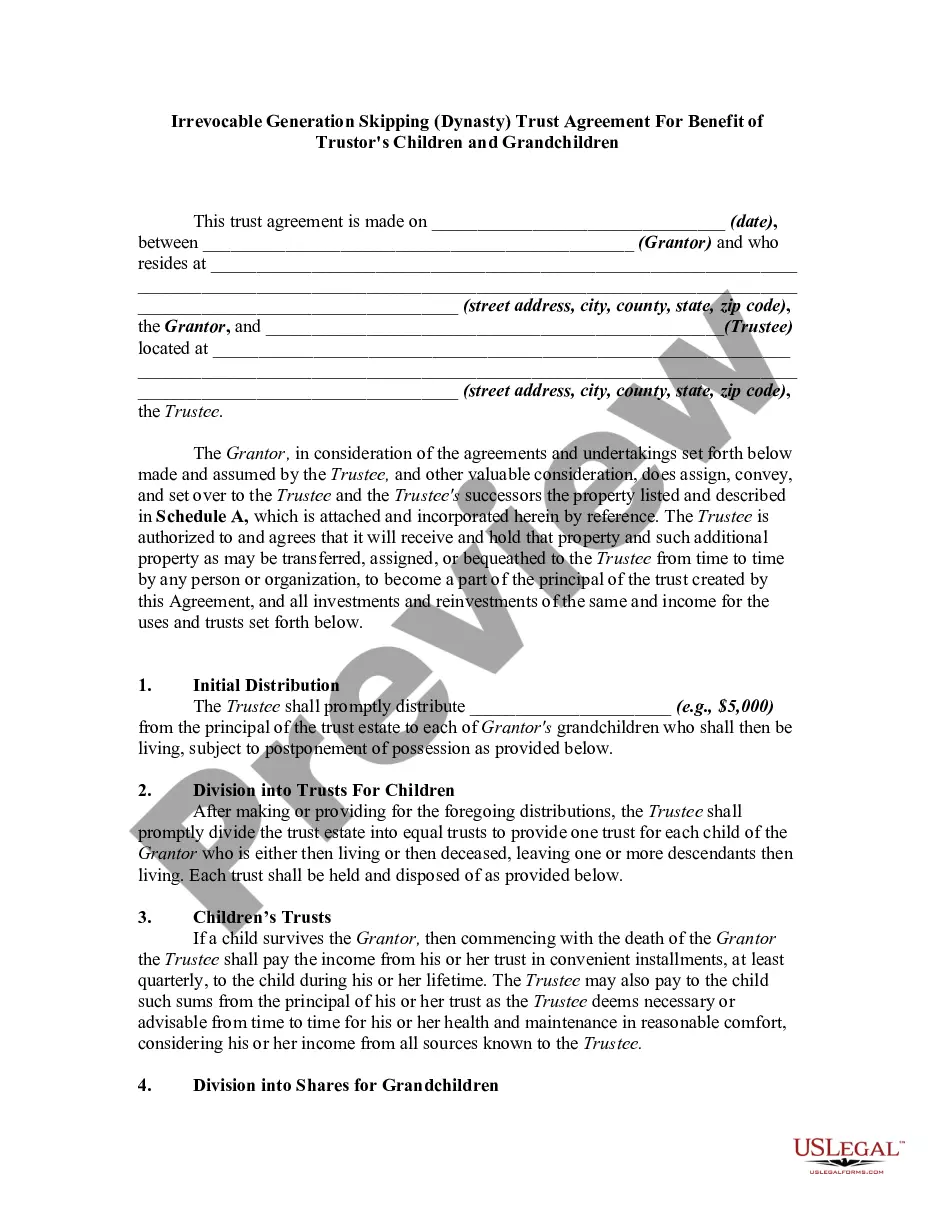
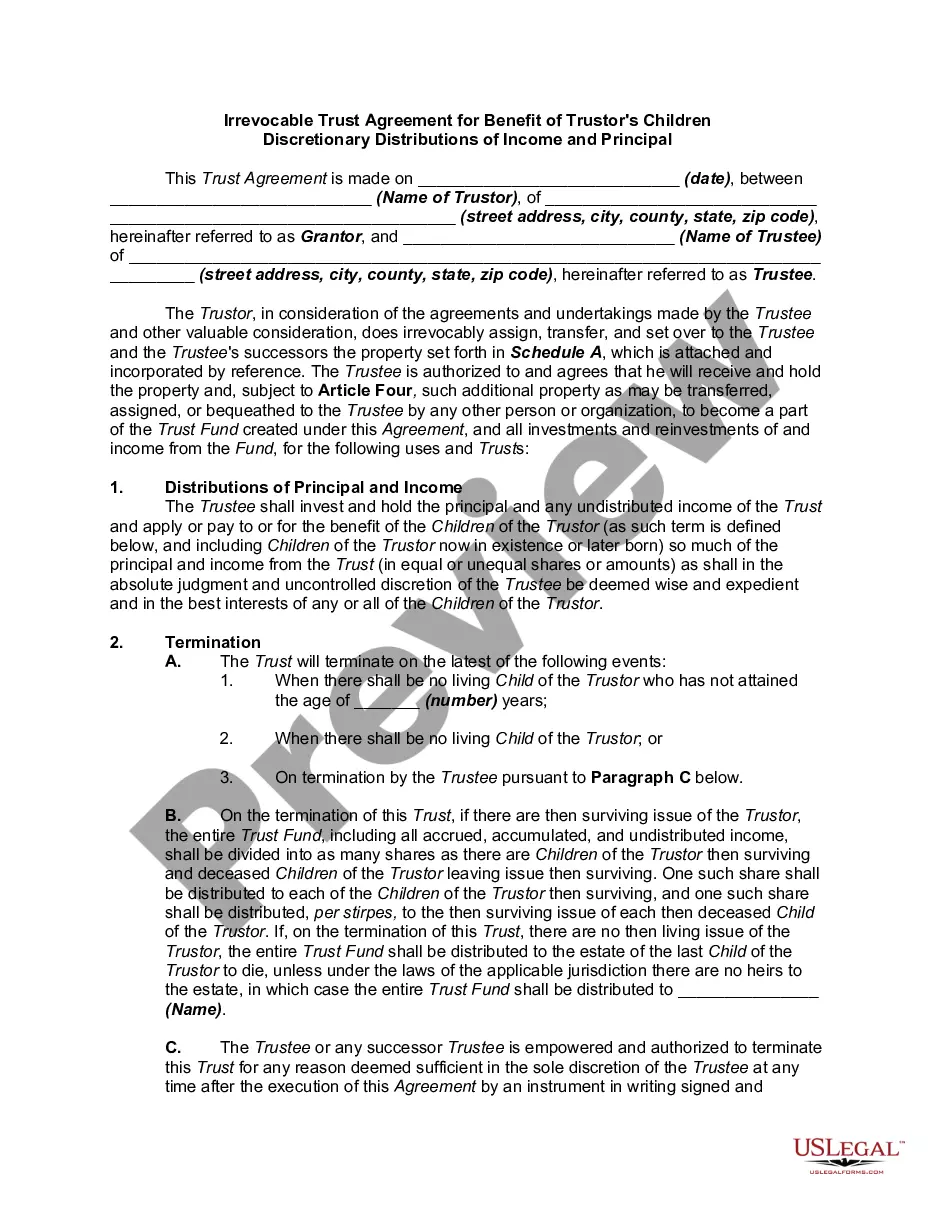
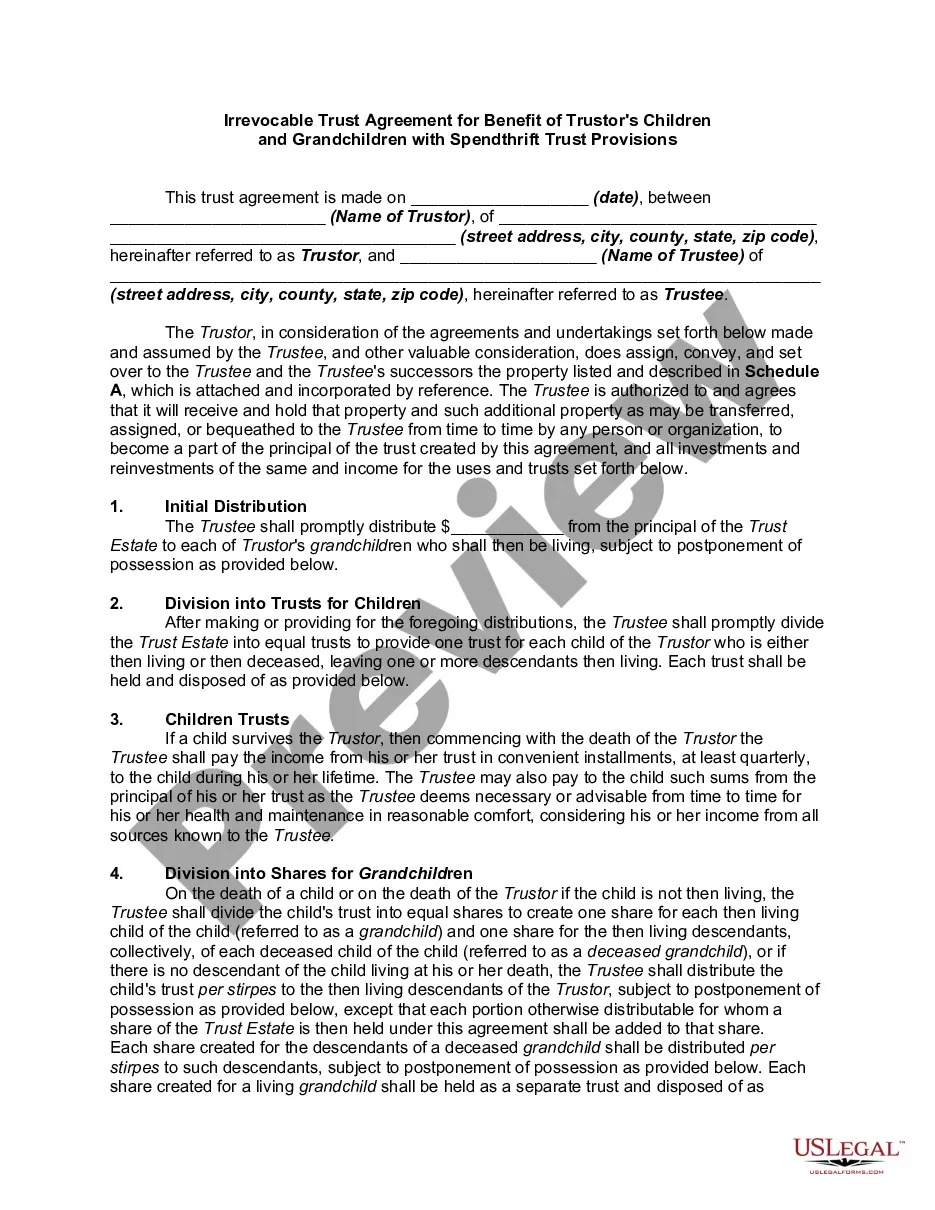
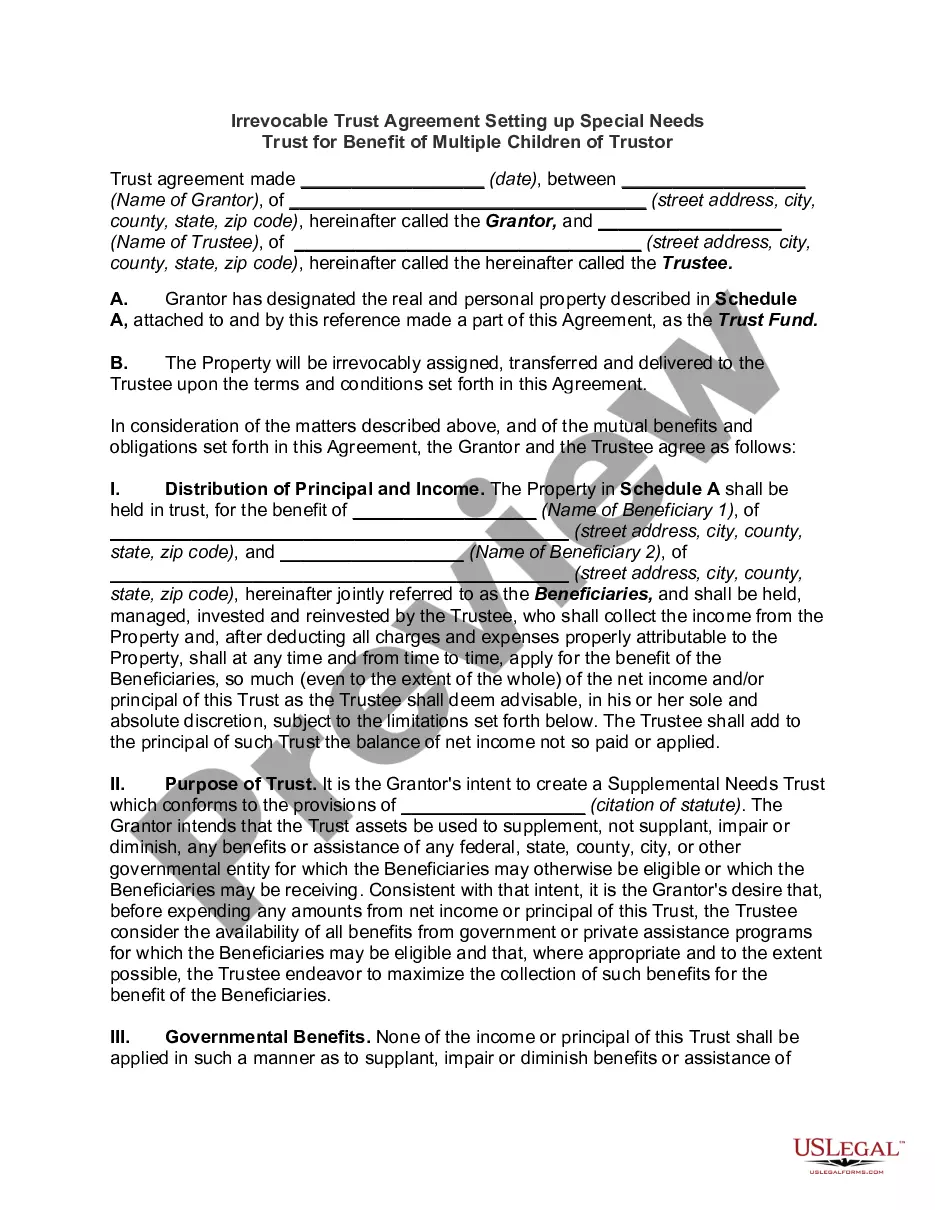
Get your form ready online
Our built-in tools help you complete, sign, share, and store your documents in one place.
Make edits, fill in missing information, and update formatting in US Legal Forms—just like you would in MS Word.
Download a copy, print it, send it by email, or mail it via USPS—whatever works best for your next step.
Sign and collect signatures with our SignNow integration. Send to multiple recipients, set reminders, and more. Go Premium to unlock E-Sign.
If this form requires notarization, complete it online through a secure video call—no need to meet a notary in person or wait for an appointment.
We protect your documents and personal data by following strict security and privacy standards.

Make edits, fill in missing information, and update formatting in US Legal Forms—just like you would in MS Word.

Download a copy, print it, send it by email, or mail it via USPS—whatever works best for your next step.

Sign and collect signatures with our SignNow integration. Send to multiple recipients, set reminders, and more. Go Premium to unlock E-Sign.

If this form requires notarization, complete it online through a secure video call—no need to meet a notary in person or wait for an appointment.

We protect your documents and personal data by following strict security and privacy standards.
Looking for another form?




How to fill out Irrevocable Trust Agreement For Benefit Of Trustor's Children And Grandchildren?
Securing a reliable source for the latest and suitable legal templates is a significant part of navigating bureaucracy.
Locating the correct legal documents demands accuracy and meticulousness, which is why it is crucial to obtain samples of Irrevocable Trust Withdrawals Without Penalty solely from reputable sources, such as US Legal Forms. An incorrect template can squander your time and prolong the issue you are facing. With US Legal Forms, you have minimal concerns. You can access and verify all details regarding the document’s applicability and relevance to your circumstances and in your jurisdiction.
Eliminate the stress that comes with your legal paperwork. Discover the vast collection of US Legal Forms where you can find legal samples, assess their relevance to your needs, and download them instantly.
- Utilize the catalog navigation or search feature to locate your template.
- Examine the form’s details to confirm it meets your state and county specifications.
- Check the form preview, if available, to ensure that the template is indeed the one you require.
- Return to the search to find the correct document if the Irrevocable Trust Withdrawals Without Penalty does not meet your needs.
- Once you are certain about the form’s relevance, download it.
- If you are a registered user, click Log in to verify and access your selected forms in My documents.
- If you do not have an account yet, click Buy now to obtain the template.
- Choose the pricing plan that suits your preferences.
- Proceed with the registration to complete your purchase.
- Finalise your purchase by selecting a payment option (credit card or PayPal).
- Choose the document format for downloading Irrevocable Trust Withdrawals Without Penalty.
- After acquiring the form on your device, you may alter it using the editor or print it out and fill it manually.
Form popularity
FAQ
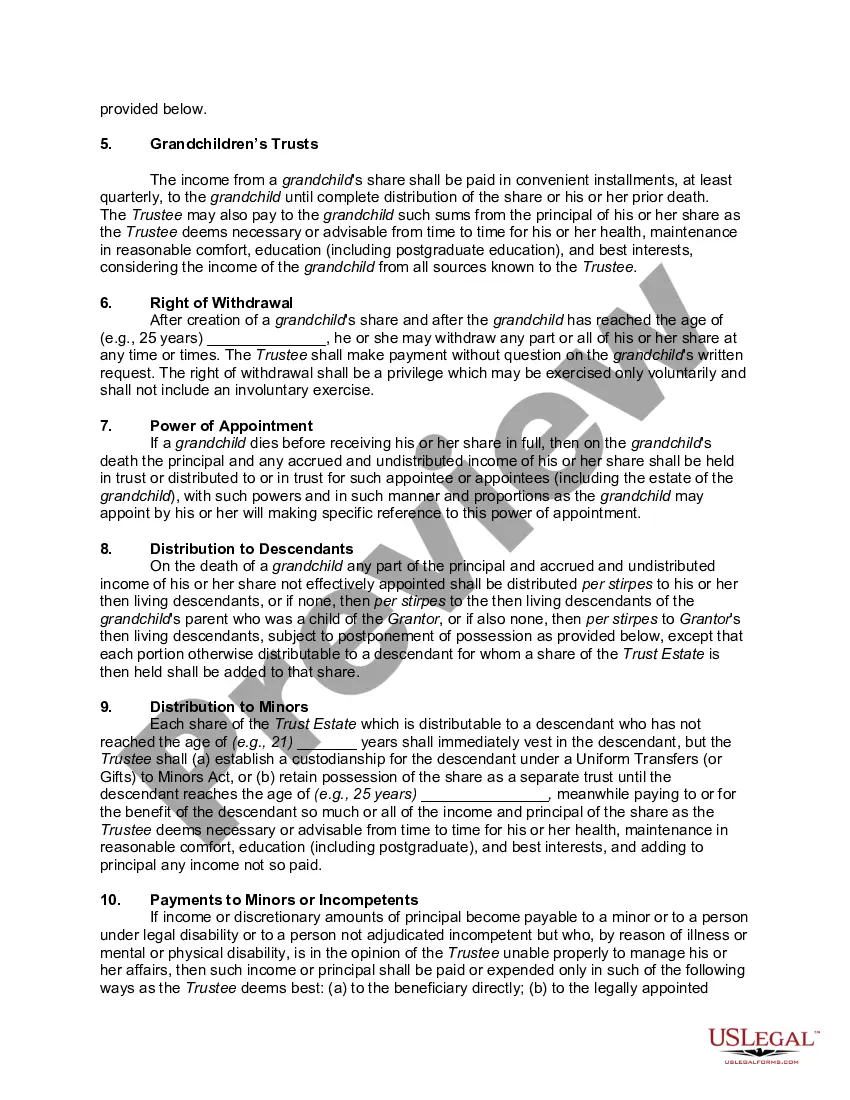
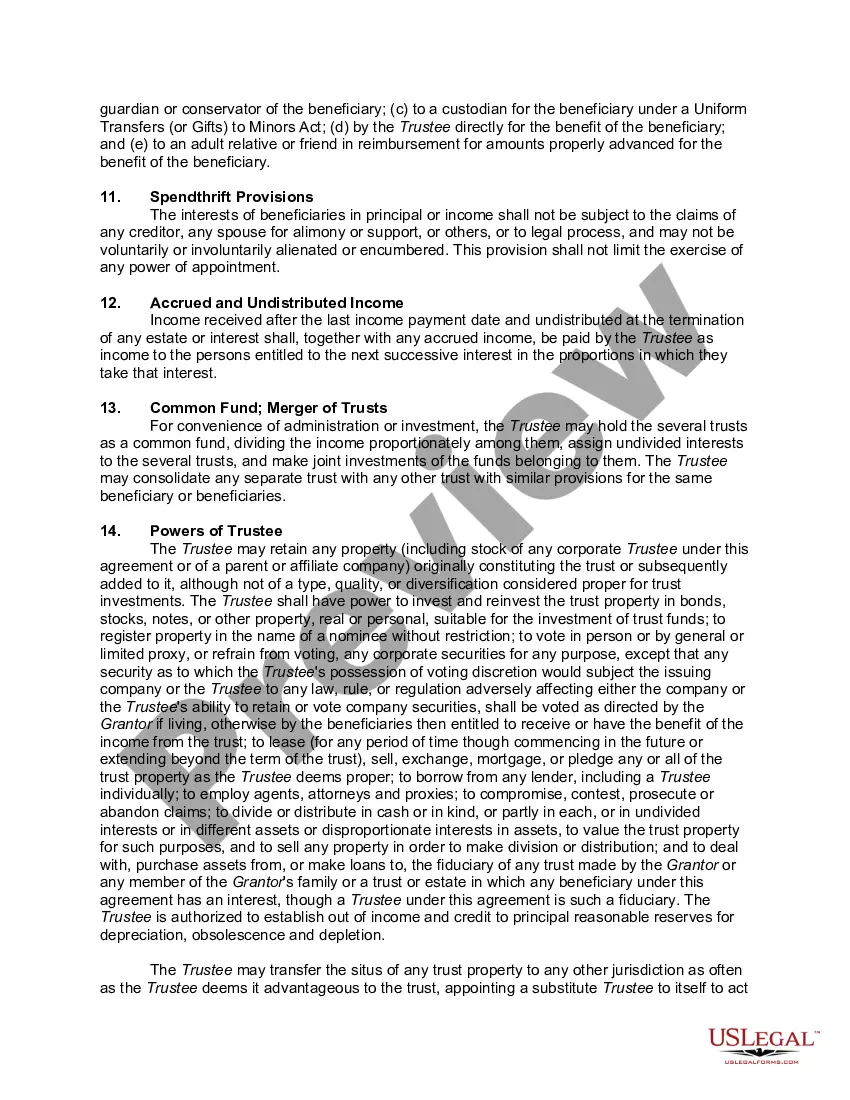
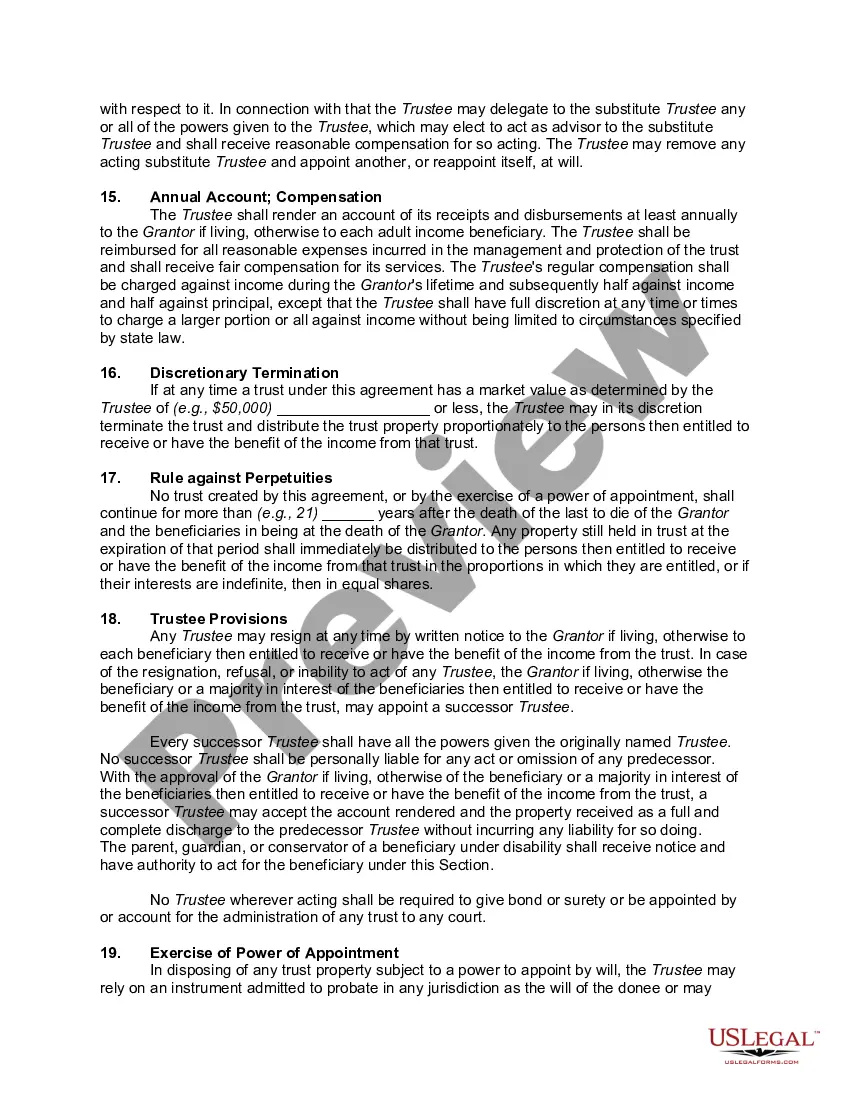
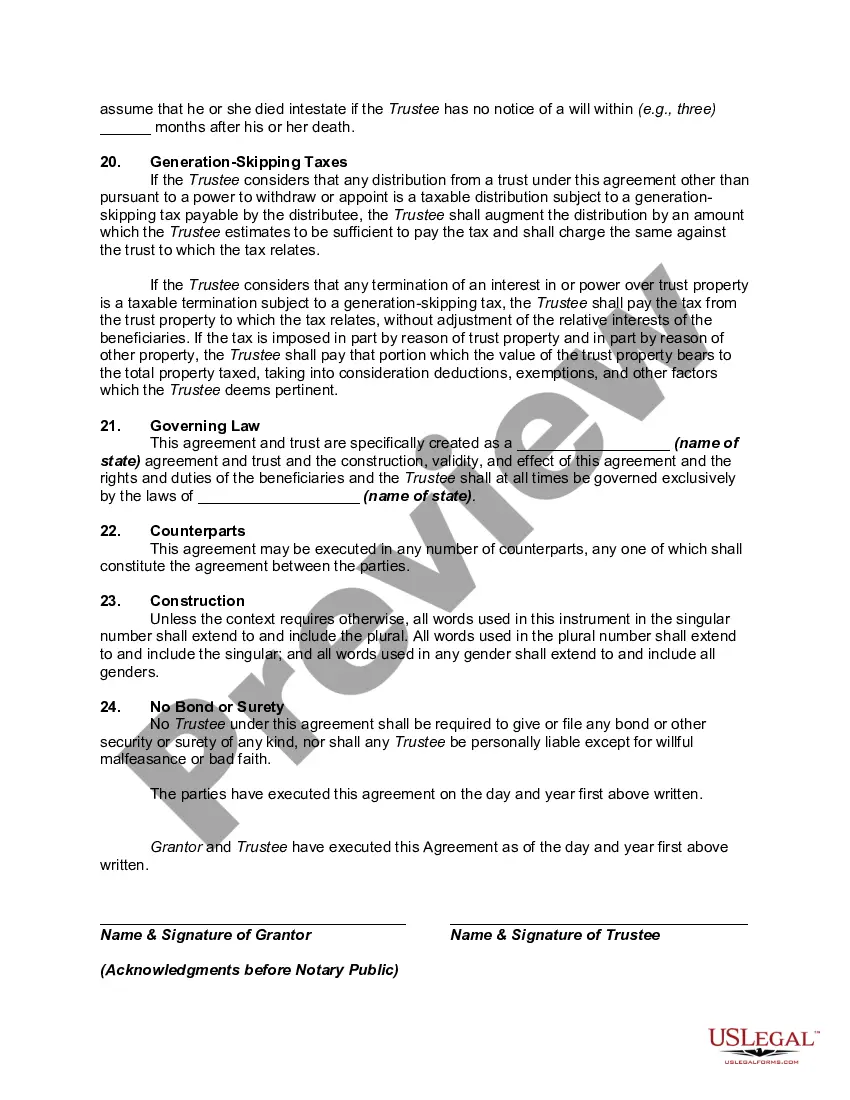
The 5-year rule for an irrevocable trust restricts how assets can be withdrawn or accessed without penalties. When planning your trust, knowing that any transfers or withdrawals may be scrutinized within five years can help you avoid complications down the line. By familiarizing yourself with this rule, you can strategize better and plan irrevocable trust withdrawals without penalty in a way that protects your assets.
If the trust holds the income and does not disburse it to the beneficiary by year-end, then the trust is liable for the taxes. However, if funds are distributed to one or more beneficiaries, the income is taxable to the person who receives it. The taxable amount depends on the interest vs. principal allocation.
As the Trustor of a trust, once your trust has become irrevocable, you cannot transfer assets into and out of your trust as you wish. Instead, you will need the permission of each of the beneficiaries in the trust to transfer an asset out of the trust.
If the trust holds the income and does not disburse it to the beneficiary by year-end, then the trust is liable for the taxes. However, if funds are distributed to one or more beneficiaries, the income is taxable to the person who receives it. The taxable amount depends on the interest vs. principal allocation.
Irrevocable Trust Tax Return The trustee will report estate taxes using Form 1041, U.S. Income Tax Return for Estates and Trusts. On this form, you'll disclose any interest income, deductions, gains and losses for the trust. You'll also report any distributions on this form.
With an irrevocable trust, the transfer of assets is permanent. So once the trust is created and assets are transferred, they generally can't be taken out again. You can still act as the trustee but you'd be limited to withdrawing money only on an as-needed basis to cover necessary expenses.