Irrevocable Trust Withdrawals Without A Trust
Description
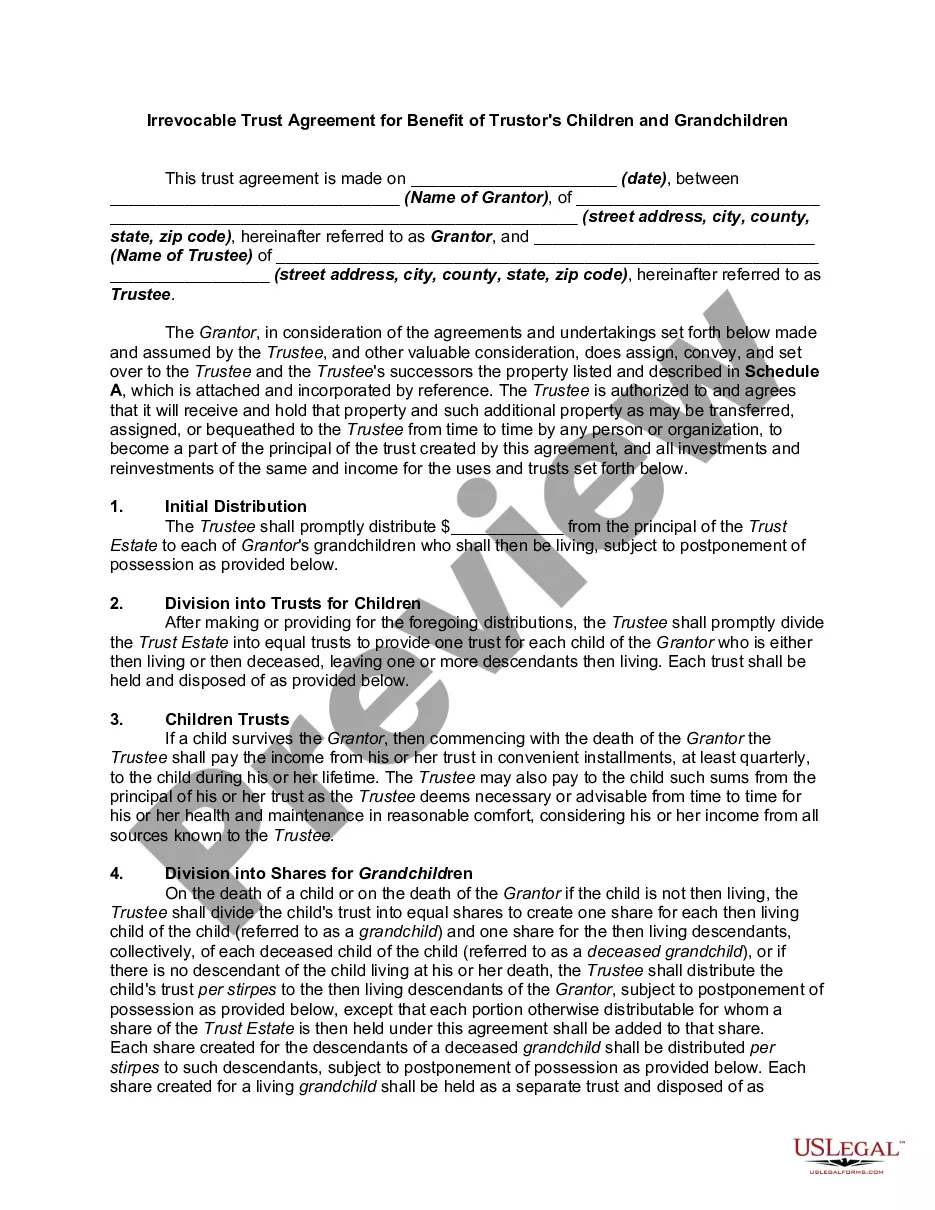
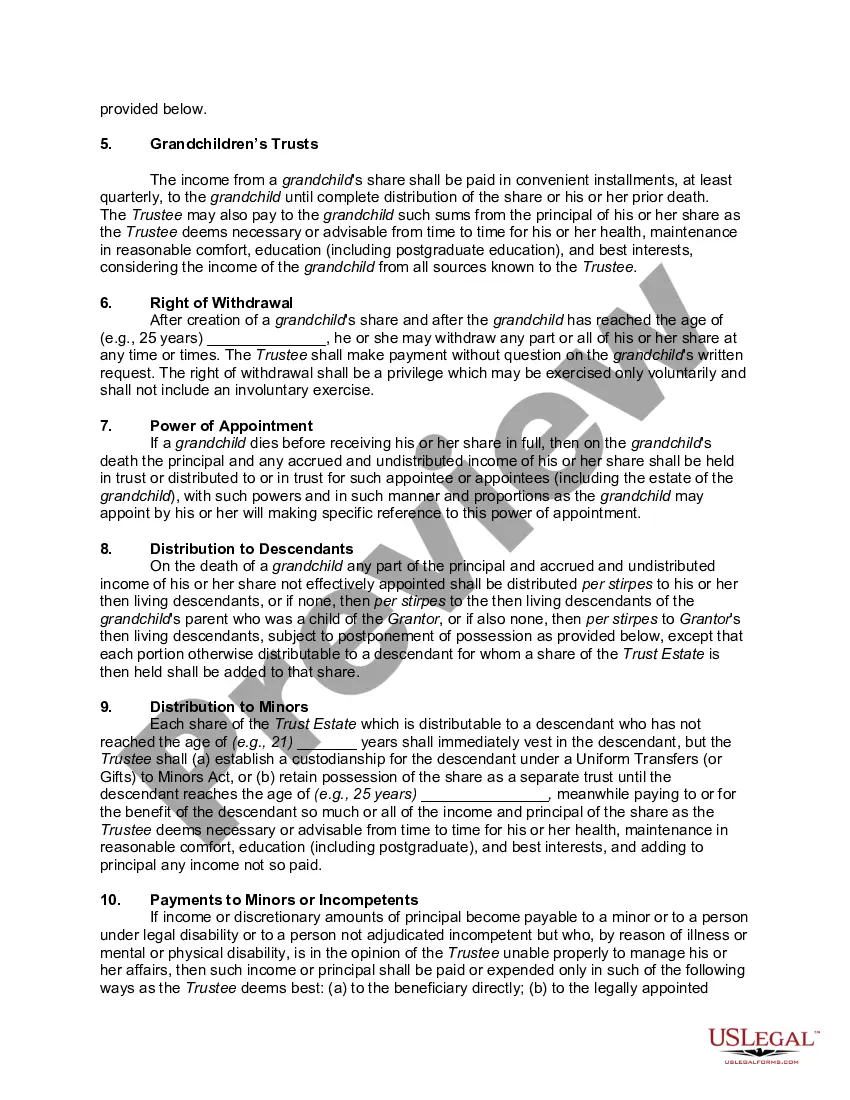
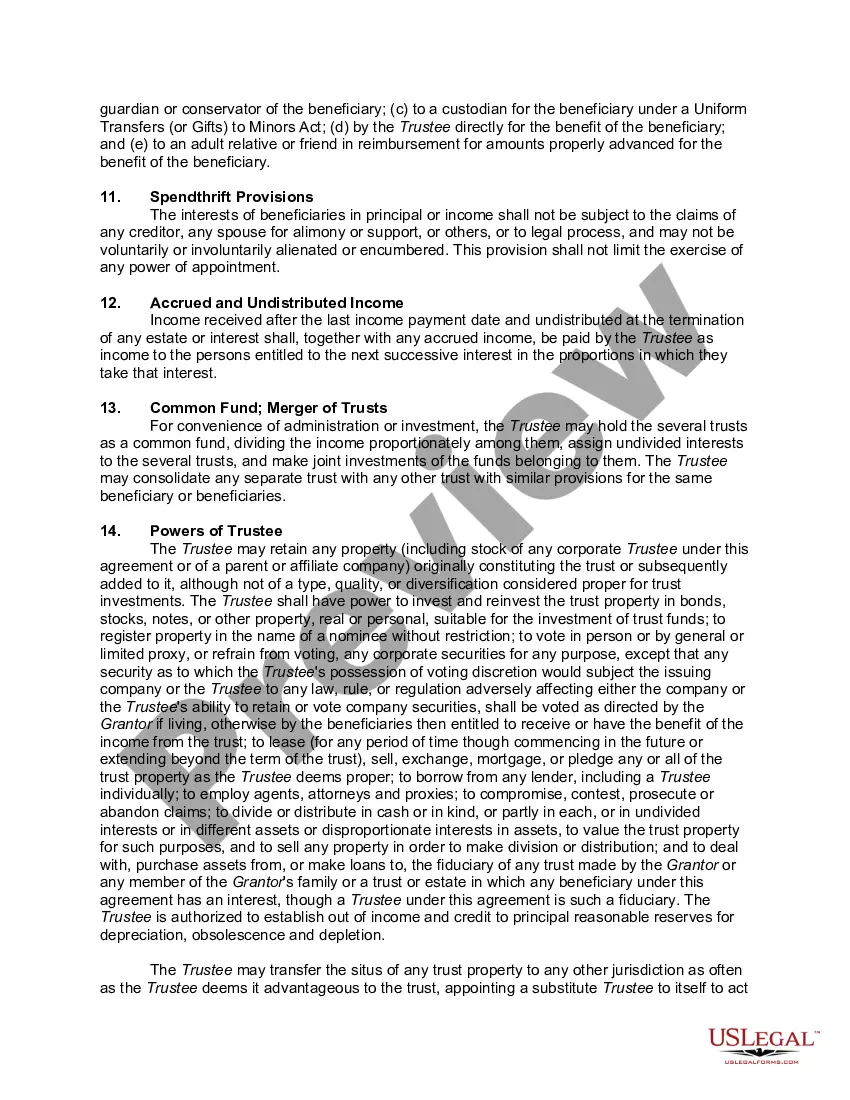
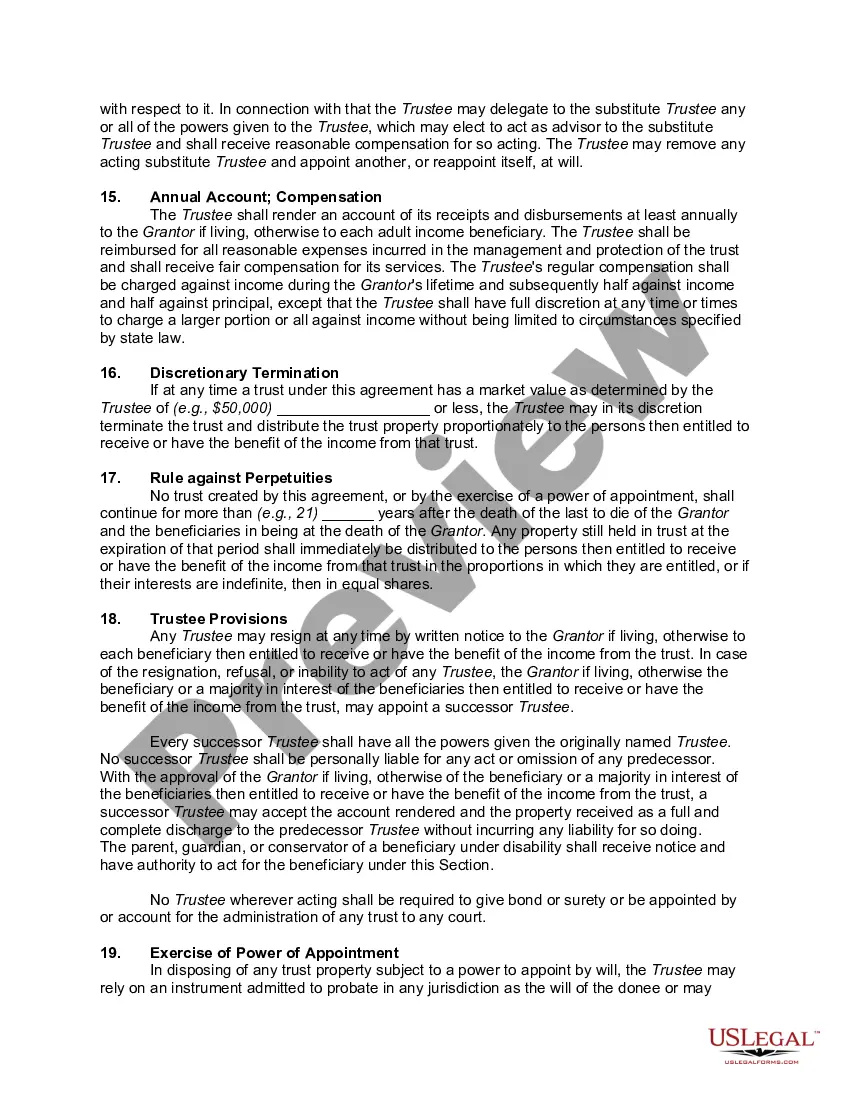

Get your form ready online
Our built-in tools help you complete, sign, share, and store your documents in one place.
Make edits, fill in missing information, and update formatting in US Legal Forms—just like you would in MS Word.
Download a copy, print it, send it by email, or mail it via USPS—whatever works best for your next step.
Sign and collect signatures with our SignNow integration. Send to multiple recipients, set reminders, and more. Go Premium to unlock E-Sign.
If this form requires notarization, complete it online through a secure video call—no need to meet a notary in person or wait for an appointment.
We protect your documents and personal data by following strict security and privacy standards.

Make edits, fill in missing information, and update formatting in US Legal Forms—just like you would in MS Word.

Download a copy, print it, send it by email, or mail it via USPS—whatever works best for your next step.

Sign and collect signatures with our SignNow integration. Send to multiple recipients, set reminders, and more. Go Premium to unlock E-Sign.

If this form requires notarization, complete it online through a secure video call—no need to meet a notary in person or wait for an appointment.

We protect your documents and personal data by following strict security and privacy standards.
Looking for another form?

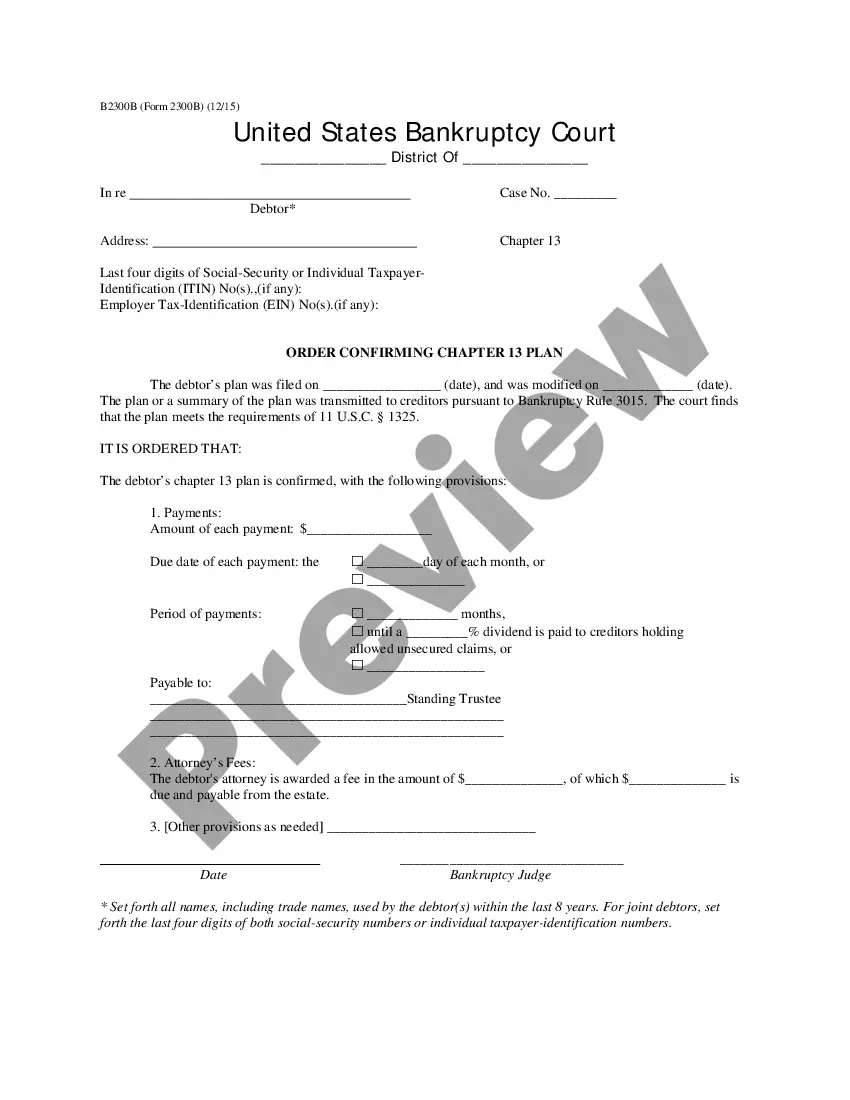



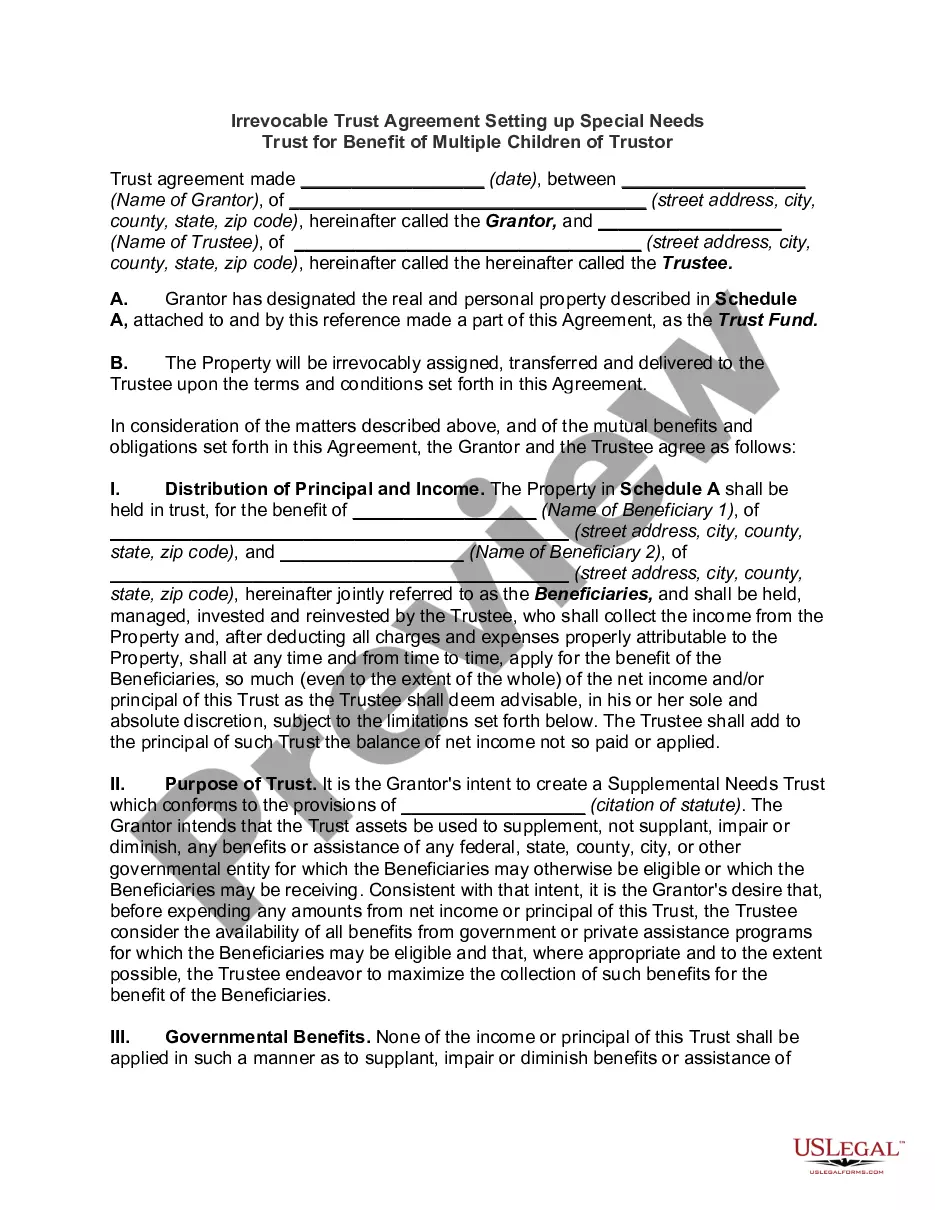
How to fill out Irrevocable Trust Agreement For Benefit Of Trustor's Children And Grandchildren?
Handling legal documentation and processes can be a lengthy addition to your whole day.
Irrevocable Trust Withdrawals Without A Trust and similar forms generally necessitate that you search for them and comprehend how to fill them out correctly.
For that reason, whether you are managing financial, legal, or personal affairs, possessing a thorough and functional online directory of forms readily available will significantly help.
US Legal Forms is the top online resource for legal templates, featuring over 85,000 state-specific forms along with an array of tools to help you finalize your paperwork with ease.
Is it your first time utilizing US Legal Forms? Sign up and create your account in just a few minutes, and you will gain access to the form directory and Irrevocable Trust Withdrawals Without A Trust. Then, follow the steps outlined below to complete your form: Ensure you have located the correct form by utilizing the Review feature and examining the form details. Choose Buy Now when you are prepared and select the monthly subscription plan that fits your needs. Click on Download, then finish, eSign, and print the form. US Legal Forms has twenty-five years of experience aiding clients in managing their legal documentation. Find the form you require today and streamline any process effortlessly.
- Browse the directory of relevant documents accessible with just one click.
- US Legal Forms provides state- and county-specific forms available for download at any time.
- Protect your document management processes with a premium service that enables you to create any form in a matter of minutes without any additional or hidden charges.
- Simply Log In to your account, locate Irrevocable Trust Withdrawals Without A Trust, and download it instantly from the My documents section.
- You can also retrieve previously saved forms.
Form popularity
FAQ
The 5-year rule for irrevocable trusts refers to a period during which funds or assets transferred into the trust may be subject to certain rules, including Medicaid eligibility guidelines. Specifically, if you withdraw assets from an irrevocable trust without a trust, they may impact your eligibility for benefits if completed within five years of applying for Medicaid. Therefore, it's crucial to manage withdrawals cautiously to avoid jeopardizing your financial assistance options. Understanding these rules can help you make informed decisions regarding your trust and withdrawals.
An irrevocable trust reports income on Form 1041, the IRS's trust and estate tax return. Even if a trust is a separate taxpayer, it may not have to pay taxes. If it makes distributions to a beneficiary, the trust will take a distribution deduction on its tax return and the beneficiary will receive IRS Schedule K-1.
If the trust holds the income and does not disburse it to the beneficiary by year-end, then the trust is liable for the taxes. However, if funds are distributed to one or more beneficiaries, the income is taxable to the person who receives it. The taxable amount depends on the interest vs. principal allocation.
With an irrevocable trust, the transfer of assets is permanent. So once the trust is created and assets are transferred, they generally can't be taken out again. You can still act as the trustee but you'd be limited to withdrawing money only on an as-needed basis to cover necessary expenses.
If the trust holds the income and does not disburse it to the beneficiary by year-end, then the trust is liable for the taxes. However, if funds are distributed to one or more beneficiaries, the income is taxable to the person who receives it. The taxable amount depends on the interest vs. principal allocation.
IRS Form for Irrevocable Trust The legal name of the trust, the Trustee name and address must be given to the IRS. Next, the Trustee should file the Form 1041 ? ?U.S. Income Tax Return for Estates and Trusts? with the IRS ? if the Irrevocable Trust has more than $600 in taxable income generated annually.