Irrevocable Trust Withdrawals For Medicaid
Description
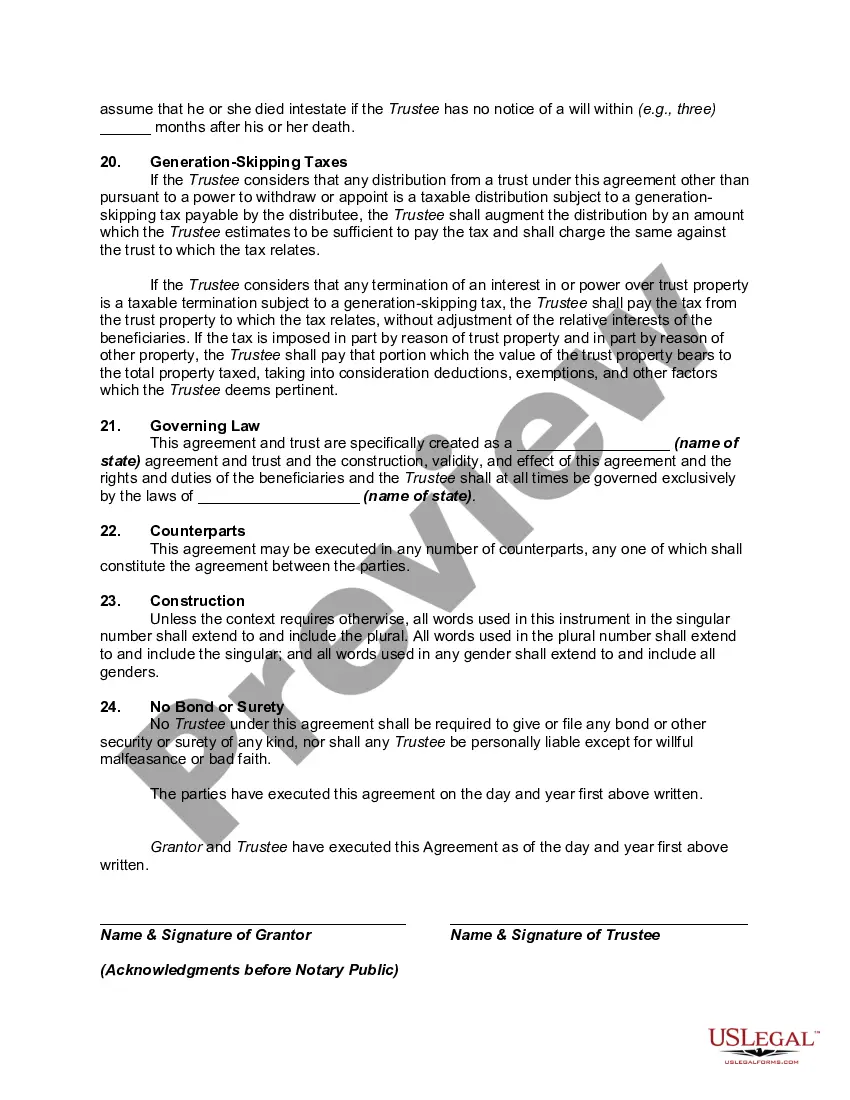

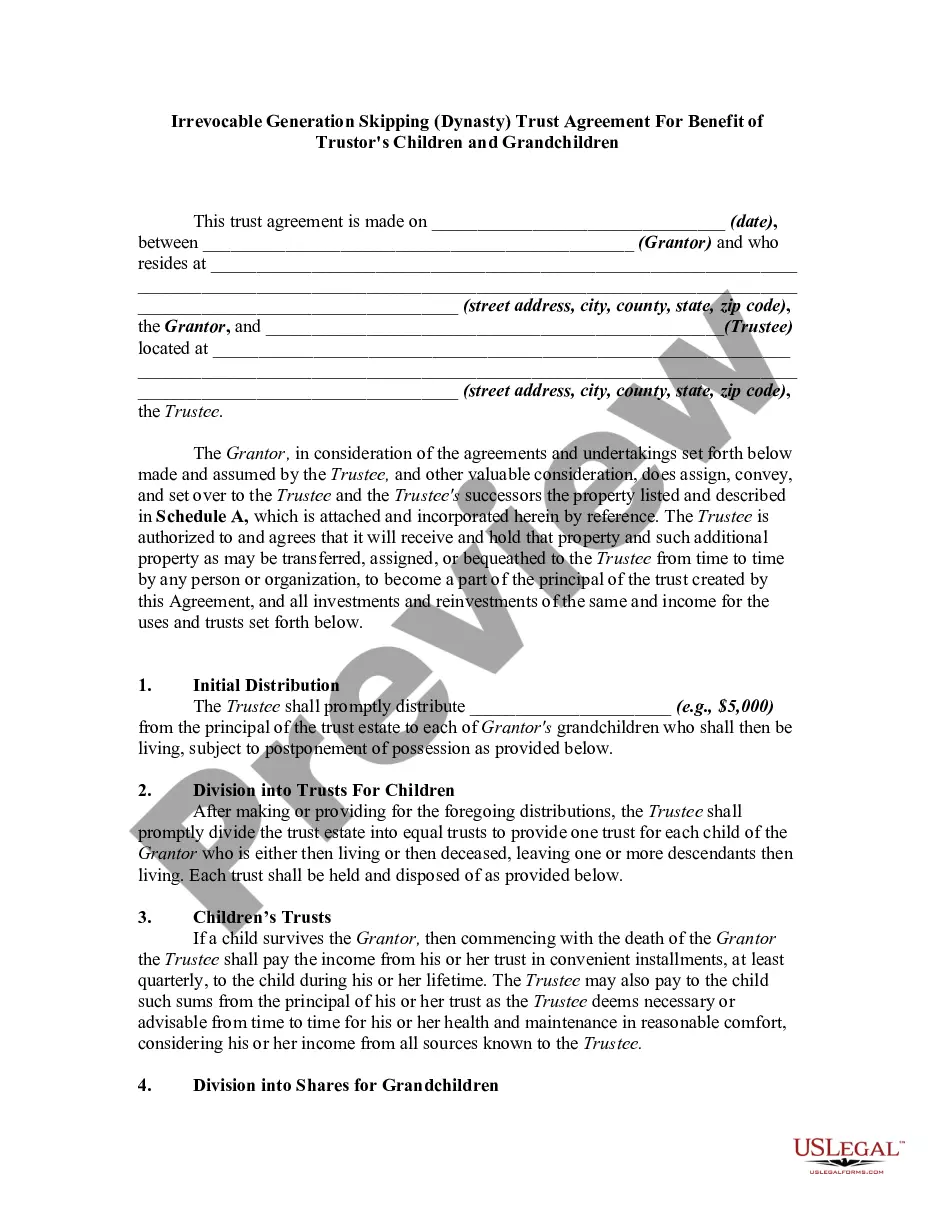
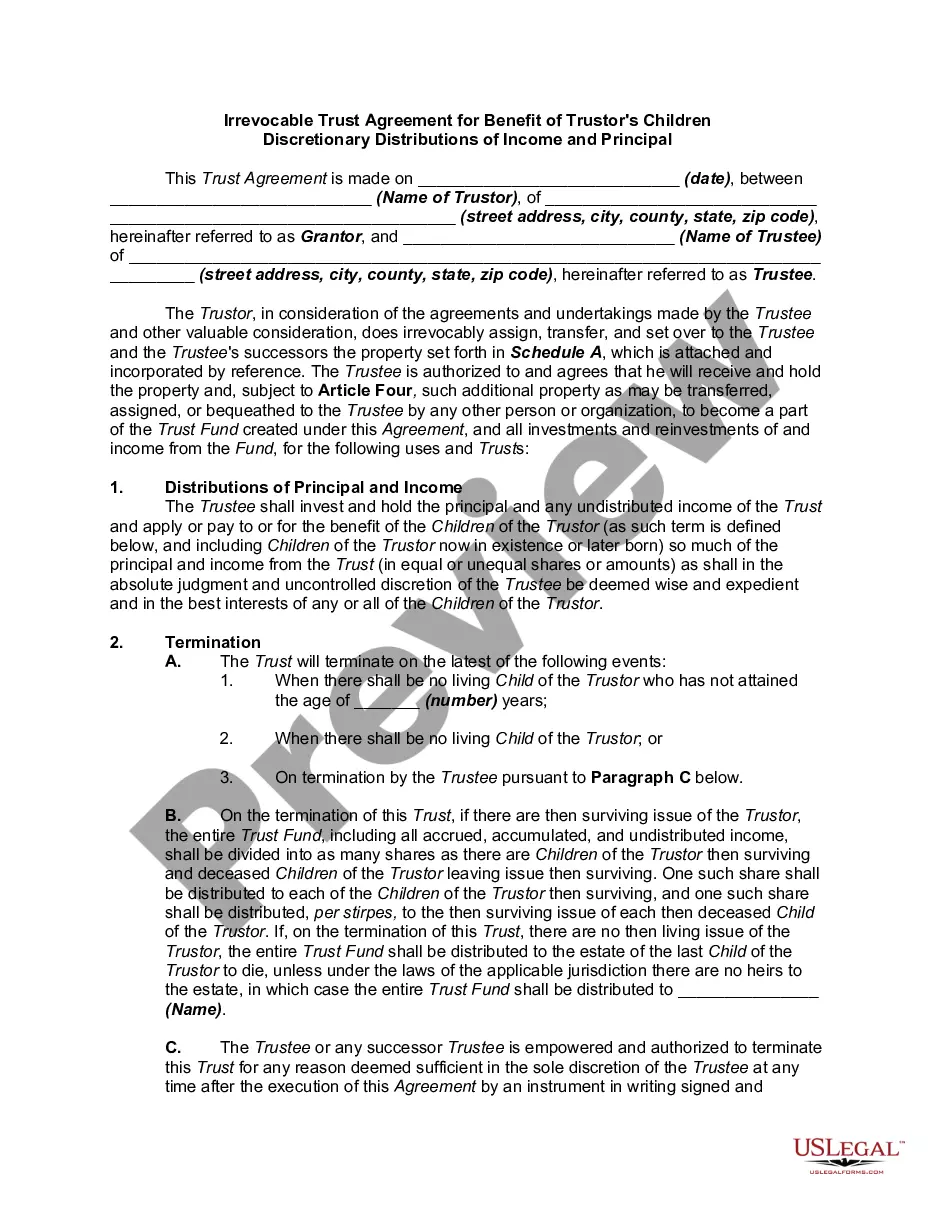

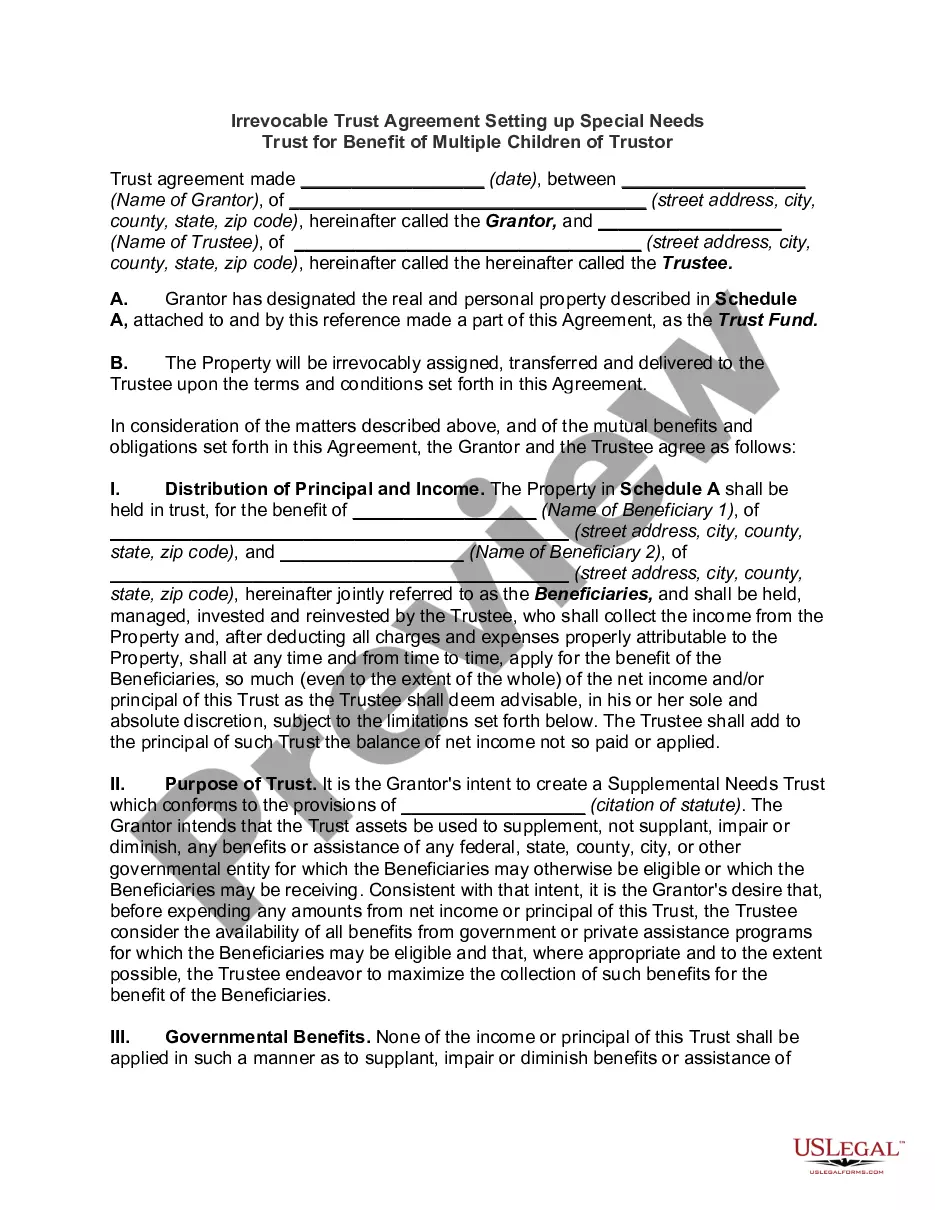
Get your form ready online
Our built-in tools help you complete, sign, share, and store your documents in one place.
Make edits, fill in missing information, and update formatting in US Legal Forms—just like you would in MS Word.
Download a copy, print it, send it by email, or mail it via USPS—whatever works best for your next step.
Sign and collect signatures with our SignNow integration. Send to multiple recipients, set reminders, and more. Go Premium to unlock E-Sign.
If this form requires notarization, complete it online through a secure video call—no need to meet a notary in person or wait for an appointment.
We protect your documents and personal data by following strict security and privacy standards.

Make edits, fill in missing information, and update formatting in US Legal Forms—just like you would in MS Word.

Download a copy, print it, send it by email, or mail it via USPS—whatever works best for your next step.

Sign and collect signatures with our SignNow integration. Send to multiple recipients, set reminders, and more. Go Premium to unlock E-Sign.

If this form requires notarization, complete it online through a secure video call—no need to meet a notary in person or wait for an appointment.

We protect your documents and personal data by following strict security and privacy standards.
Looking for another form?






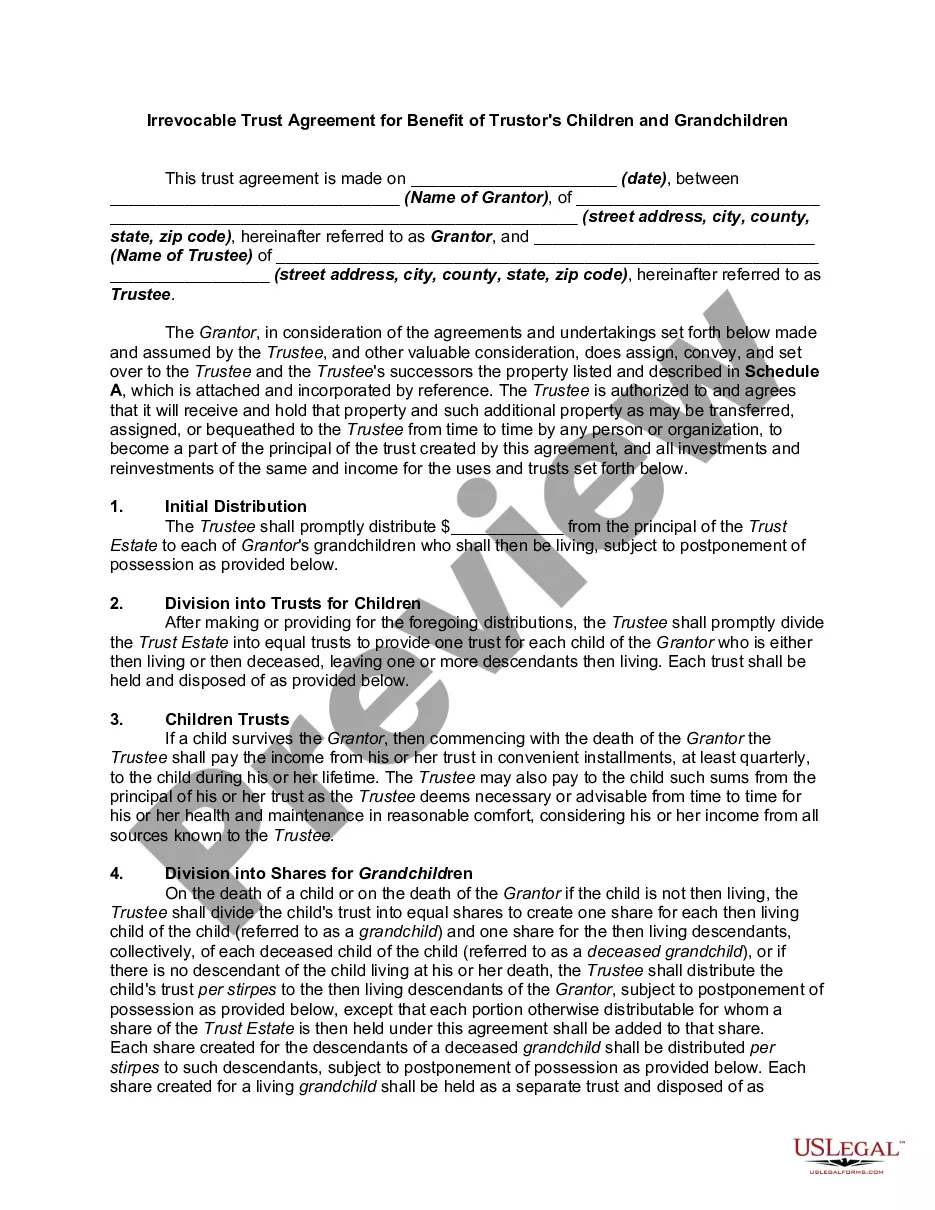
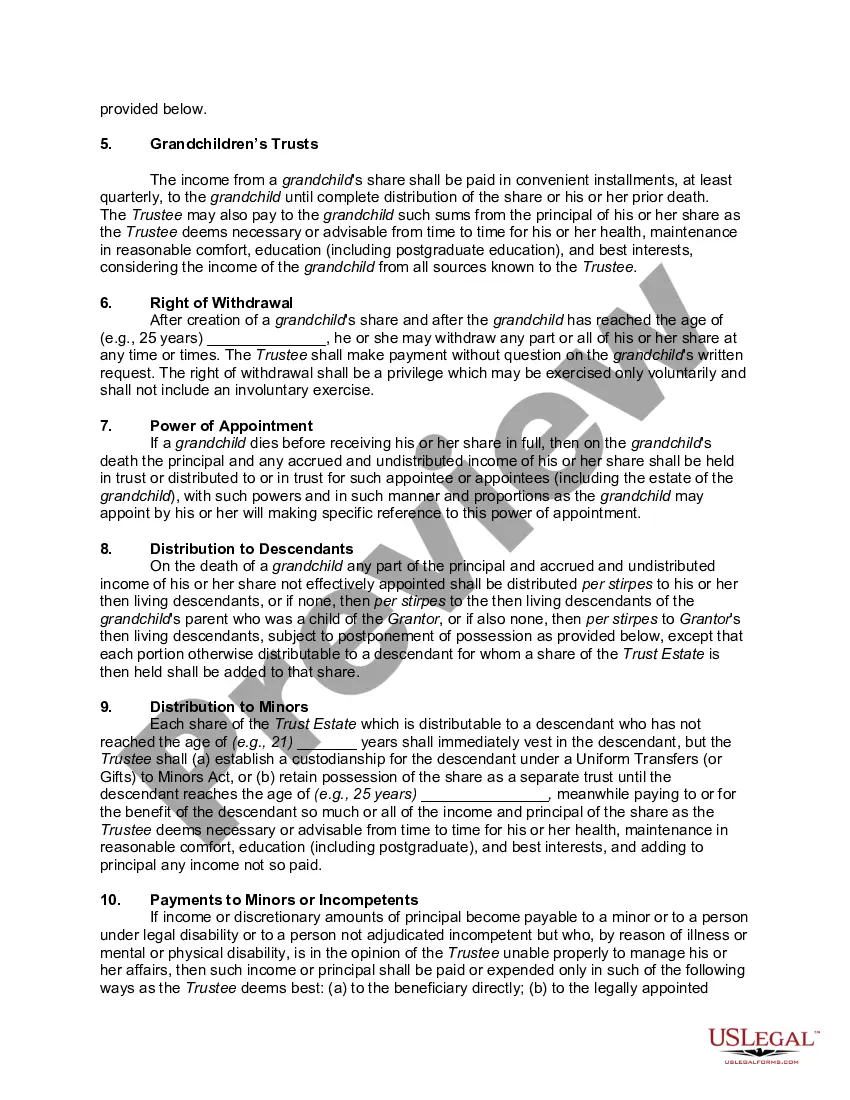
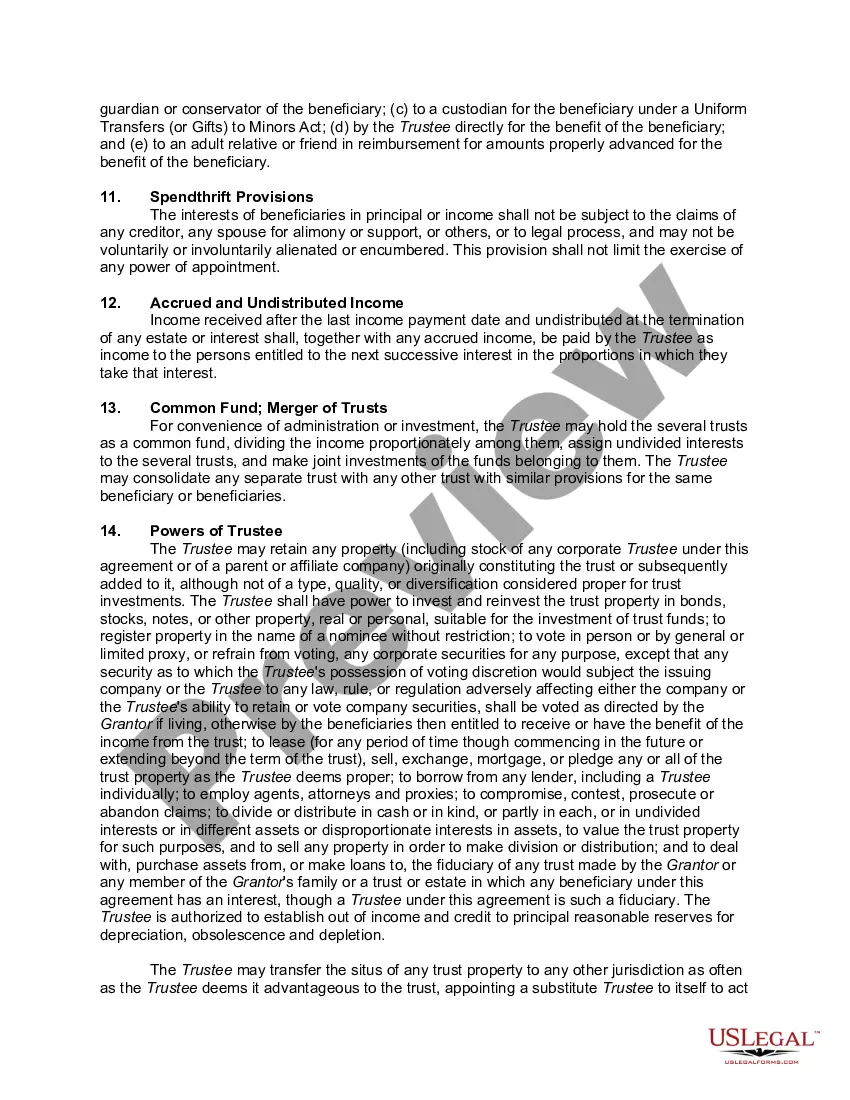
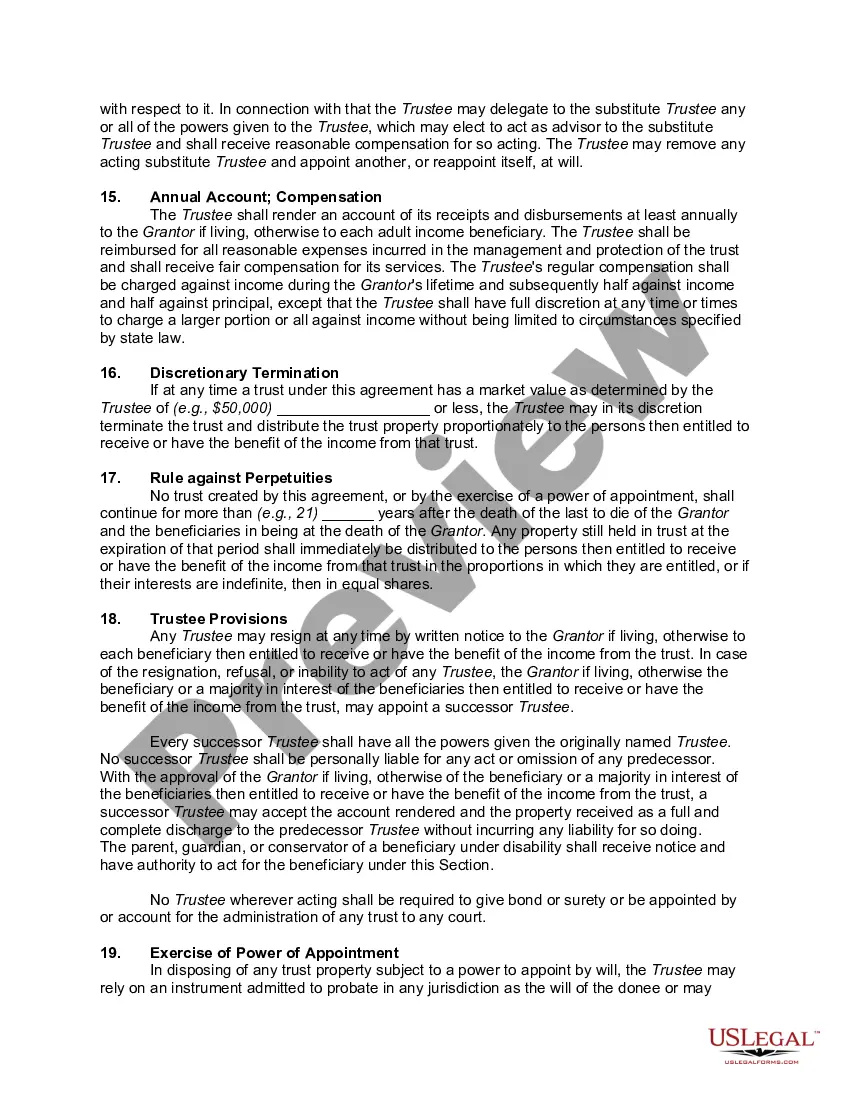
How to fill out Irrevocable Trust Agreement For Benefit Of Trustor's Children And Grandchildren?
It’s well-known that you cannot become a legal authority in an instant, nor can you quickly master how to properly prepare Irrevocable Trust Withdrawals For Medicaid without possessing a distinct set of competencies.
Assembling legal paperwork is a lengthy endeavor that necessitates certain education and expertise. So why not entrust the creation of the Irrevocable Trust Withdrawals For Medicaid to the experts.
With US Legal Forms, one of the largest libraries of legal documents, you can find everything from judicial forms to templates for in-house corporate communication.
You can regain access to your documents from the My documents section at any moment. If you’re a current client, you can simply Log In, and find and download the template from the same section.
Regardless of your document’s intention—whether financial, legal, or personal—our platform is here to assist you. Experience US Legal Forms today!
- Identify the document you require using the search function at the top of the site.
- Review it (if this feature is accessible) and examine the accompanying description to assess if Irrevocable Trust Withdrawals For Medicaid is what you are looking for.
- Restart your search if you need a different document.
- Create a complimentary account and select a subscription plan to buy the form.
- Click Buy now. Once your payment is processed, you can download the Irrevocable Trust Withdrawals For Medicaid, complete it, print it, and forward it to the appropriate individuals or organizations.
Form popularity
FAQ
Here are 6 tips. Keep the name short. The longer you make the name of a trust, the more possibility you have of making a mistake. ... Consider confidentiality. ... Consider something related to your family name. ... Consider naming it after the street address. ... Ensure that you are using legal names. ... Recheck the spelling of names.
IRT: Irrevocable Living Trust. A trust that can't be modified or terminated without the permission of the beneficiary.
With an irrevocable trust, the transfer of assets is permanent. So once the trust is created and assets are transferred, they generally can't be taken out again. You can still act as the trustee but you'd be limited to withdrawing money only on an as-needed basis to cover necessary expenses.
Just choose your preferred account on the ATM screen. If you use the credit card function on your Trust card at an ATM, this means you are taking a cash advance. Note that supplementary cardholders cannot take out a cash advance. If you use the debit card function, you are withdrawing cash from your savings account.
Disadvantages of Irrevocable Trusts Fairly Rigid terms: They are not very flexible. Once the terms are established, they can be difficult to change. The Three-Year Rule: If you include life insurance in an irrevocable trust and pass away within three years, the proceeds return to your estate and become taxable.