Irrevocable Trust Form Complete With The Right
Description


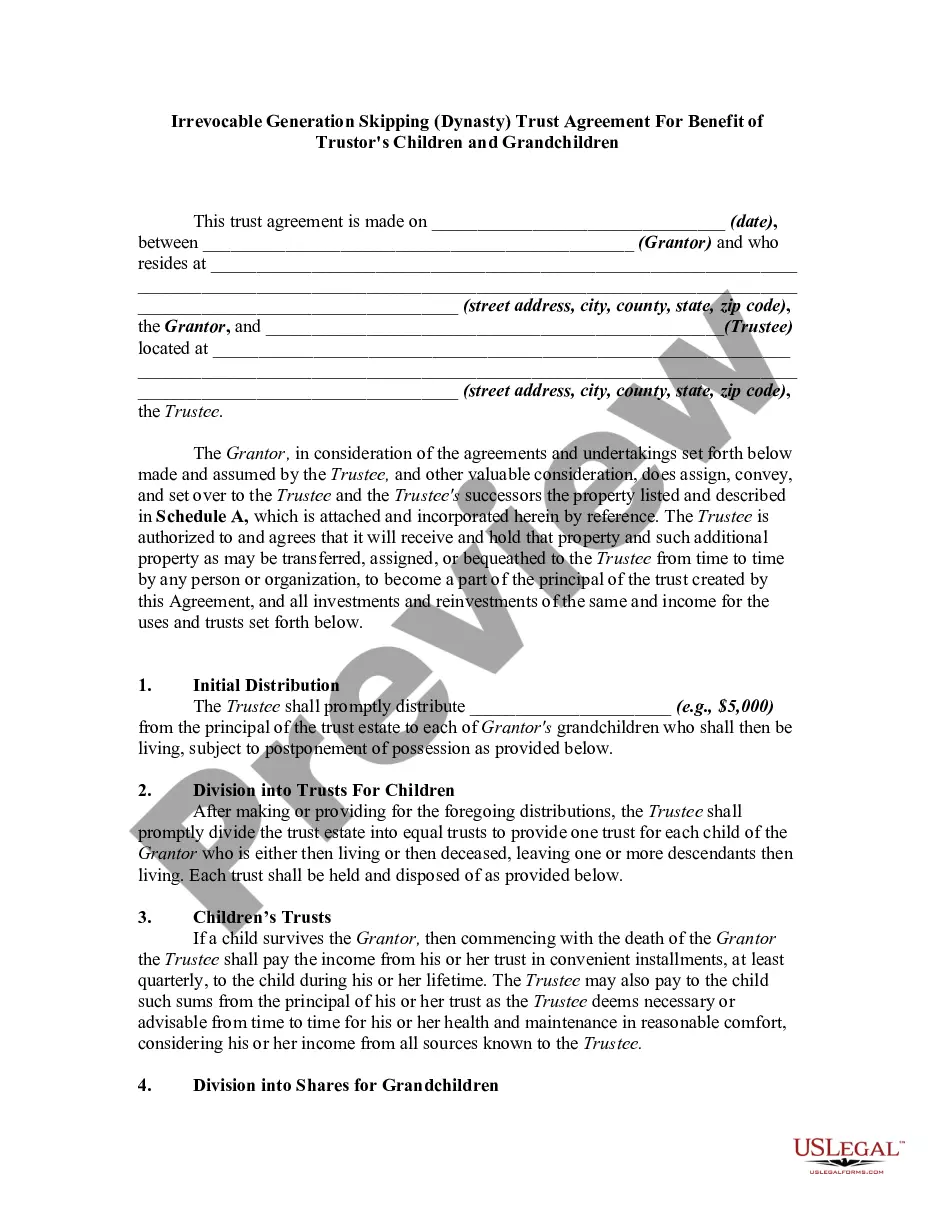
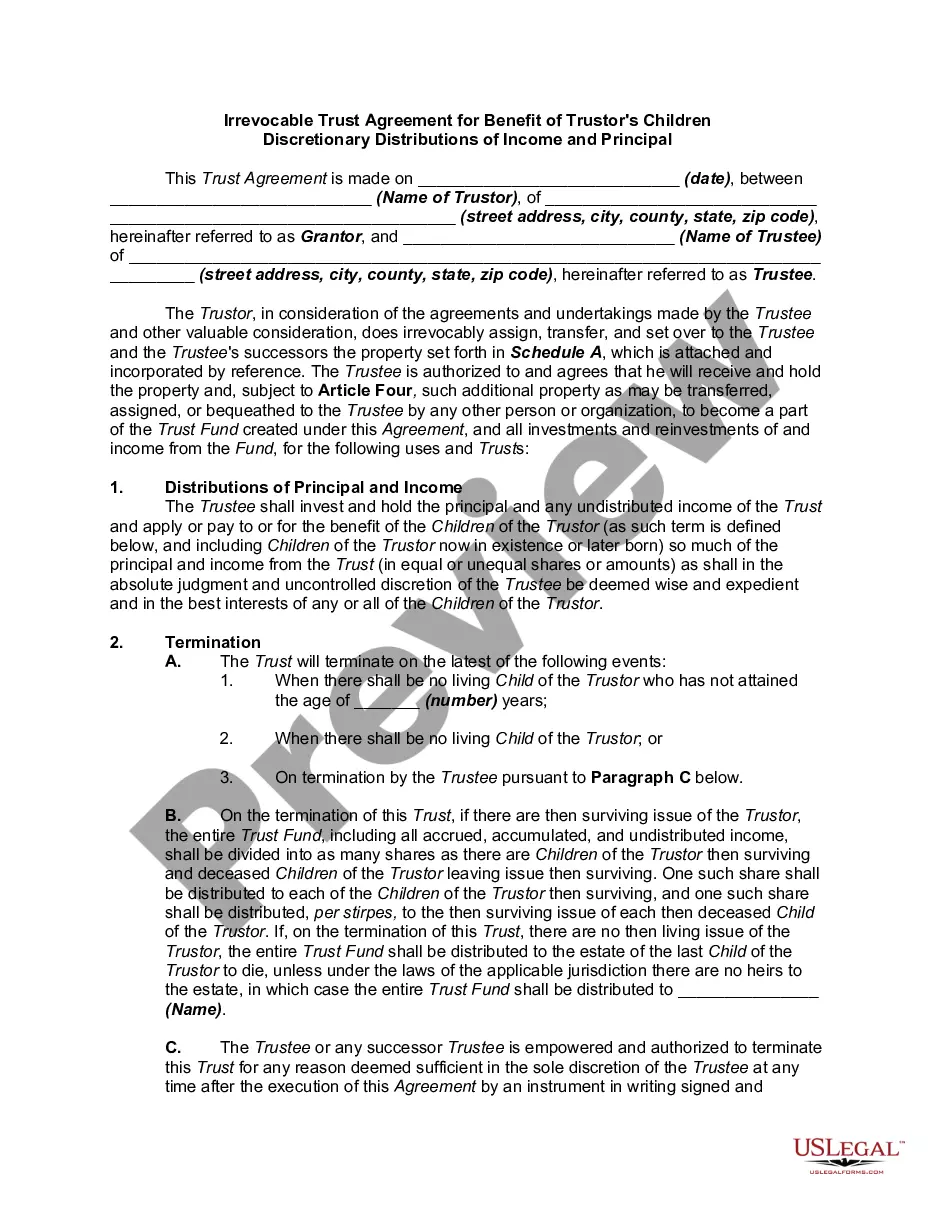

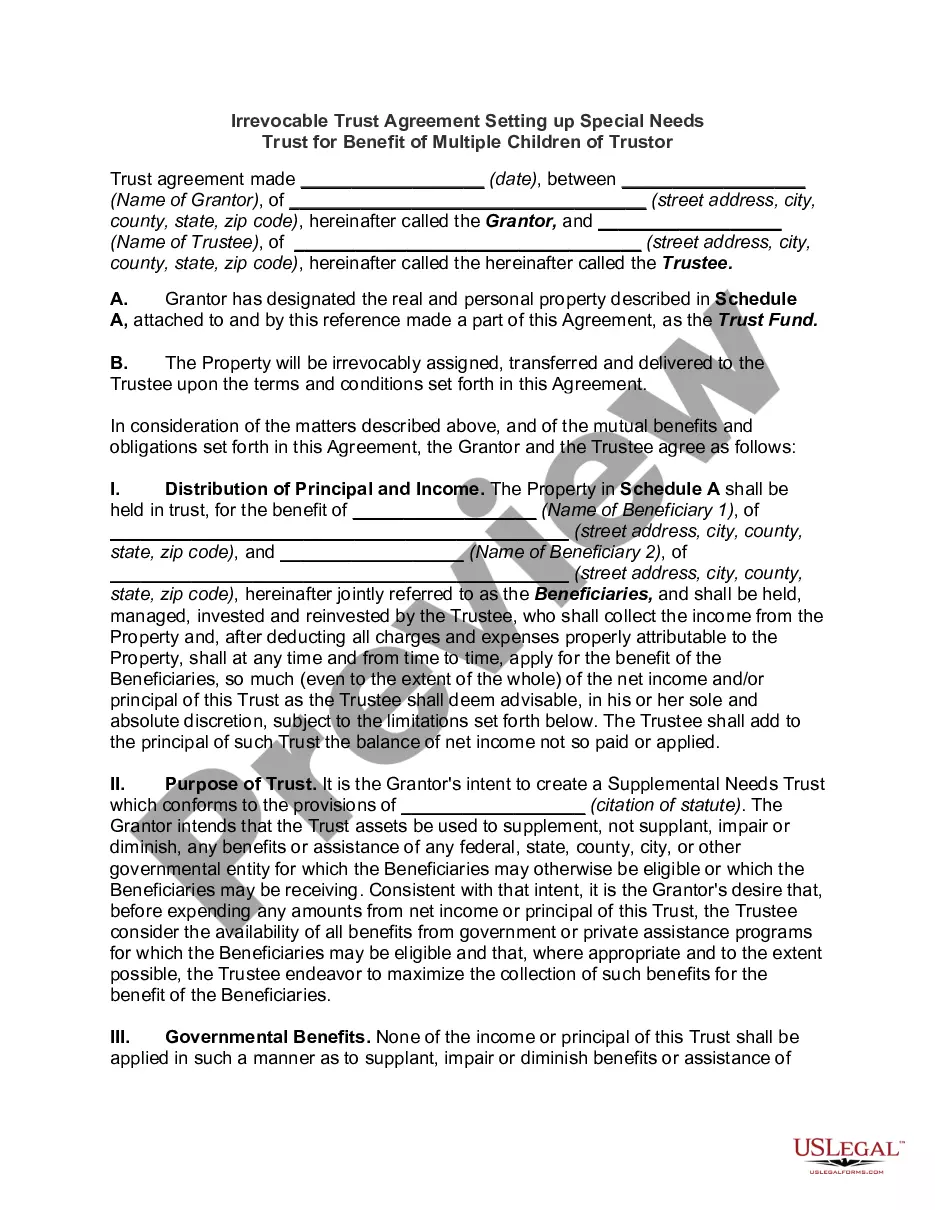
Get your form ready online
Our built-in tools help you complete, sign, share, and store your documents in one place.
Make edits, fill in missing information, and update formatting in US Legal Forms—just like you would in MS Word.
Download a copy, print it, send it by email, or mail it via USPS—whatever works best for your next step.
Sign and collect signatures with our SignNow integration. Send to multiple recipients, set reminders, and more. Go Premium to unlock E-Sign.
If this form requires notarization, complete it online through a secure video call—no need to meet a notary in person or wait for an appointment.
We protect your documents and personal data by following strict security and privacy standards.

Make edits, fill in missing information, and update formatting in US Legal Forms—just like you would in MS Word.

Download a copy, print it, send it by email, or mail it via USPS—whatever works best for your next step.

Sign and collect signatures with our SignNow integration. Send to multiple recipients, set reminders, and more. Go Premium to unlock E-Sign.

If this form requires notarization, complete it online through a secure video call—no need to meet a notary in person or wait for an appointment.

We protect your documents and personal data by following strict security and privacy standards.
Looking for another form?


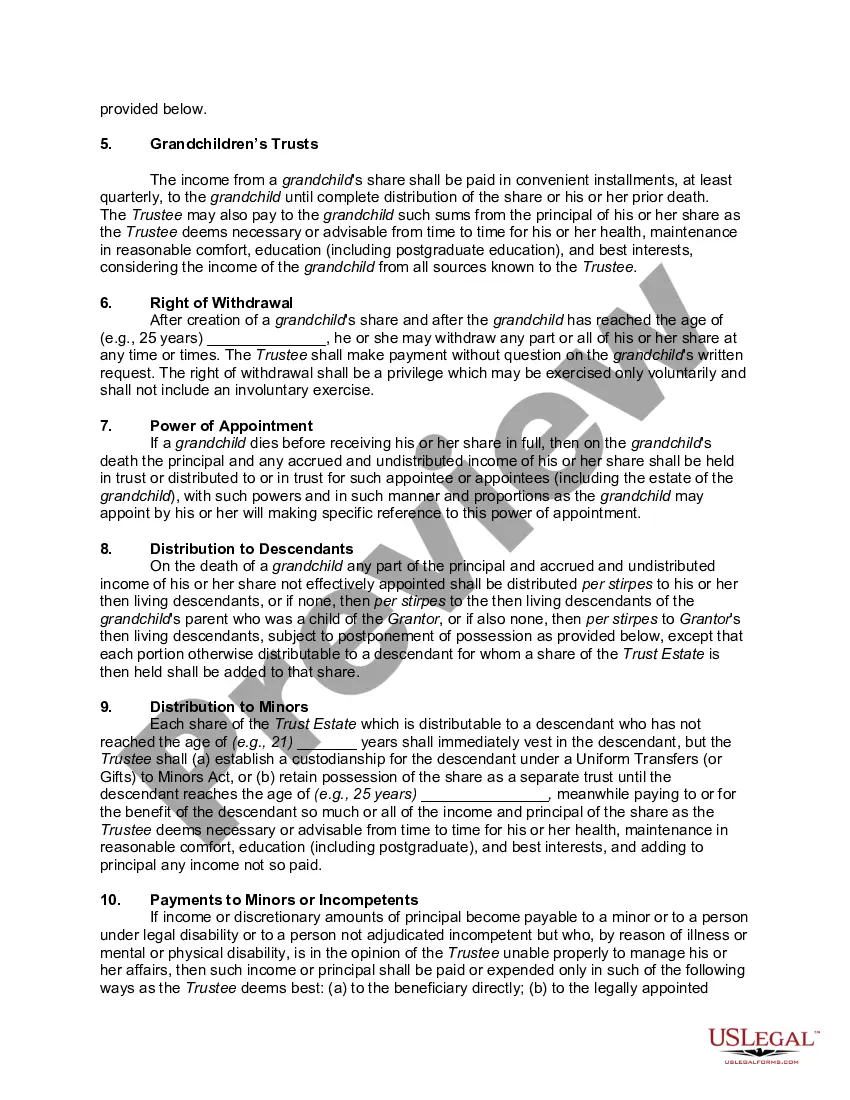
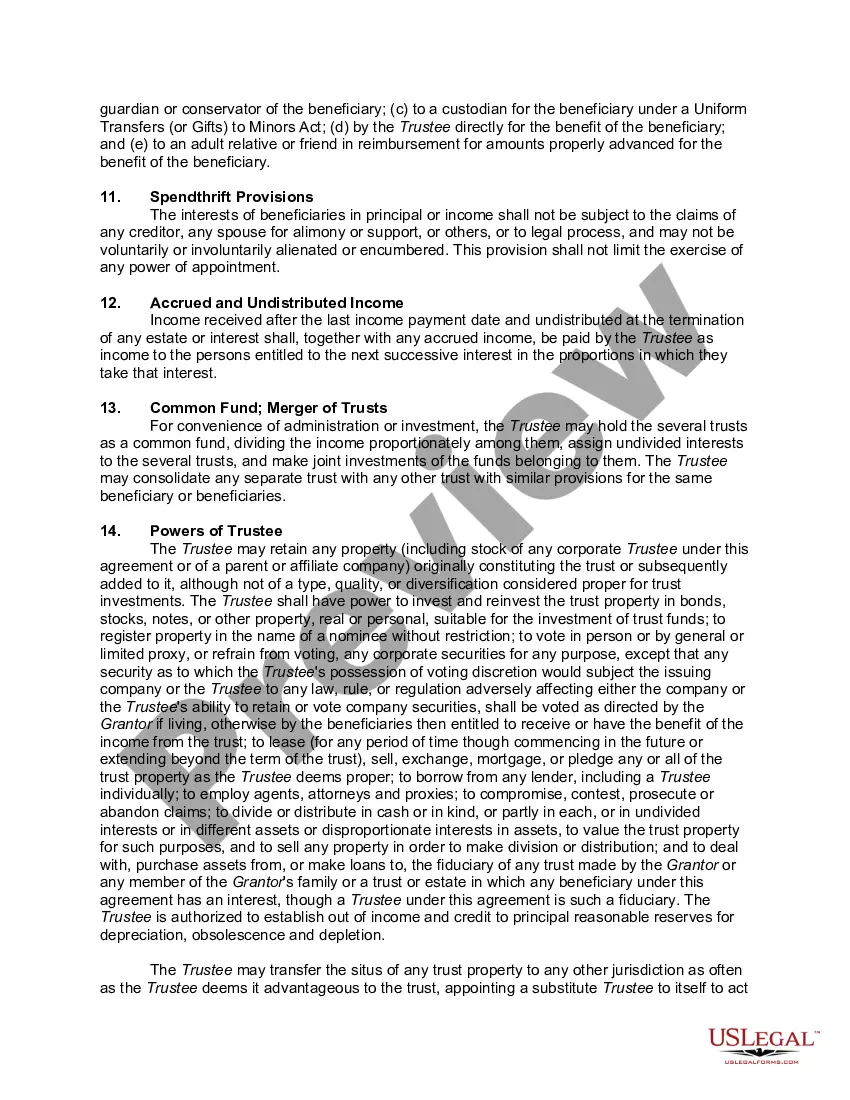
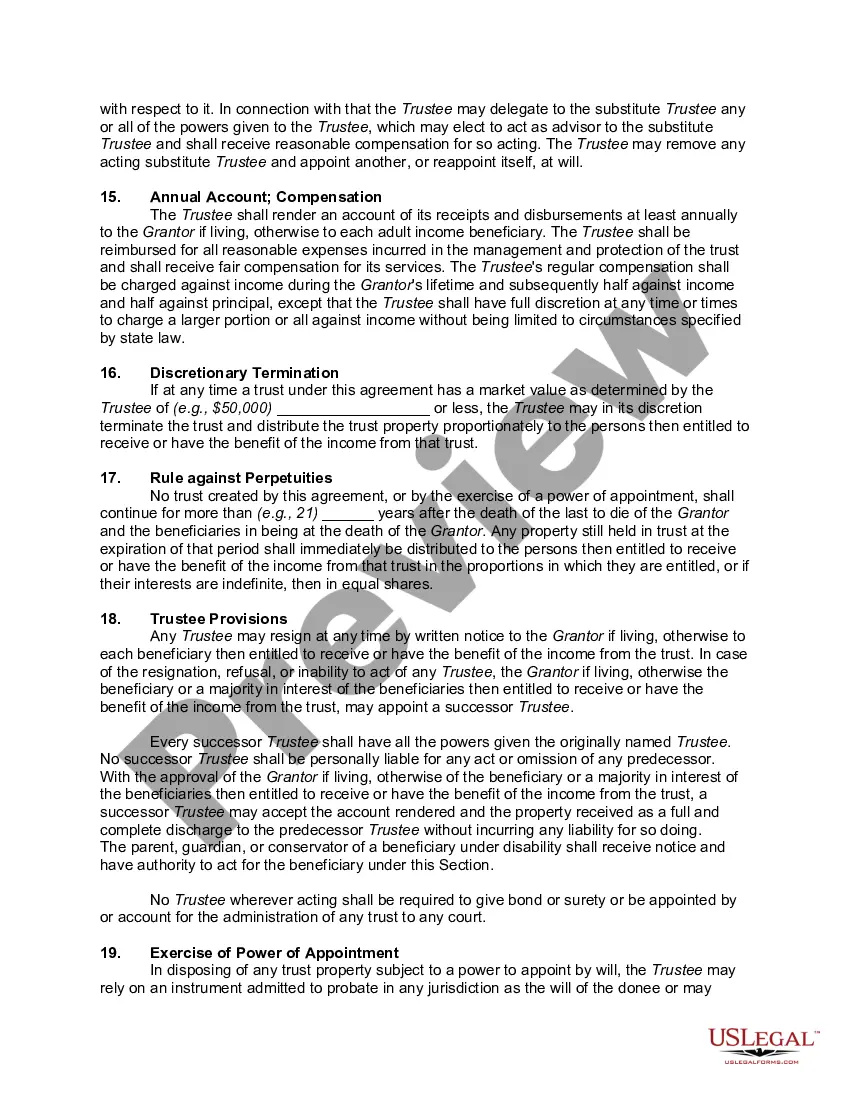
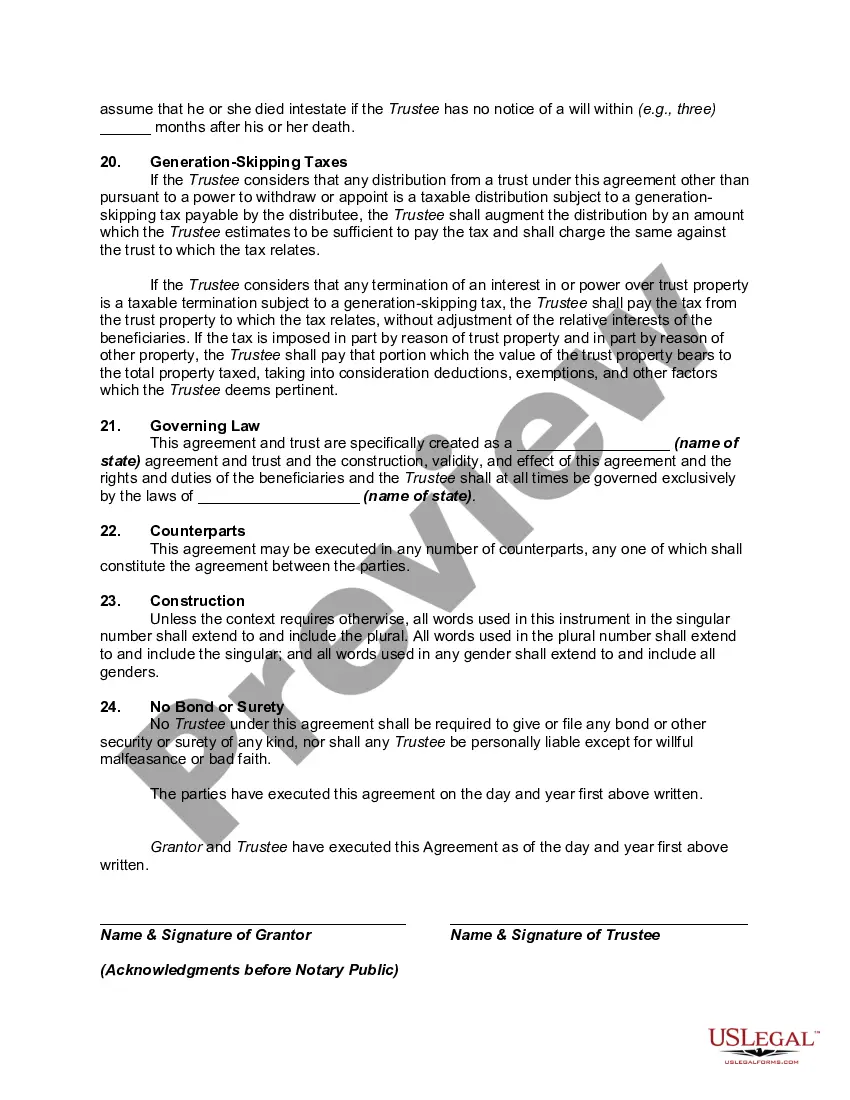
How to fill out Irrevocable Trust Agreement For Benefit Of Trustor's Children And Grandchildren?
- If you're an existing user, log in to your account and navigate to the Download section to retrieve the form you need. Confirm that your subscription is active; if it's expired, please renew it as per your plan.
- For new users, start by exploring the Preview mode to review the form description. Ensure you've selected the correct form that complies with your local laws.
- If the form doesn't meet your needs, use the Search feature above to find another option that better suits your requirements.
- Once you've found your desired document, click on the Buy Now button and select your preferred subscription plan. Be sure to create an account for comprehensive access.
- Complete your purchase by entering your credit card information or selecting your PayPal account to finalize the transaction.
- Download the necessary form directly to your device for completion. You can always revisit it through the My Forms section in your profile.
In conclusion, US Legal Forms empowers both individuals and legal professionals by providing an extensive library filled with over 85,000 forms, ensuring you find exactly what you need. With access to expert assistance, you can rest assured that your documents will be precise and legally sound.
Take advantage of the US Legal Forms service today to streamline your legal documentation process!
Form popularity
FAQ
One downside of putting assets in a trust is that it may limit your ability to access those assets in times of need. By completing an irrevocable trust form, your ability to make modifications or revoke the trust is restricted. Therefore, it is crucial to assess not only the benefits but also how it aligns with your current and future financial goals.
If your parents are considering protecting their assets and ensuring a smooth transfer upon death, an irrevocable trust might be a suitable option. However, they should reflect on their financial situation and discuss with a professional before completing an irrevocable trust form. Ultimately, creating a trust can provide peace of mind, but careful thought is necessary.
One major downfall of having a trust is the potential for high setup and ongoing maintenance costs. Although an irrevocable trust form can help you manage your assets, the legal fees and tax implications can add up over time. It's vital to weigh these costs against the benefits when considering establishing a trust.
A family trust may not provide the flexibility you want, particularly if you need to change beneficiaries or distribute assets differently later. When you complete an irrevocable trust form, you lose control over the assets placed in the trust. This can be challenging for families who might want to access those assets for emergencies or changes in circumstances.
Certain assets are not ideal for an irrevocable trust, such as retirement accounts, personal residences, and vehicles that may need liquidity or flexibility. These assets may face tax implications or restrict your access to them. It’s wise to consider the implications of placing assets in an irrevocable trust form complete with the right, ensuring you keep essential items outside of it for personal convenience.
For an irrevocable trust to be valid, it must have a clear purpose, identifiable beneficiaries, and transfer of assets must take place. You should ensure that the trust document is properly executed and complies with state laws, which often includes notarization and witness signatures. Using an irrevocable trust form complete with the right can help simplify this process and ensure that all necessary legal requirements are met.
Generally, an irrevocable trust cannot be easily broken or revoked once established. However, there are limited circumstances where a court might allow modification or termination, often requiring all beneficiaries' consent. Therefore, it’s crucial to understand the commitment involved when using an irrevocable trust form complete with the right and to consider your long-term plans carefully before proceeding.
To write an irrevocable trust document, start by clearly identifying the grantor, trustee, and beneficiaries. You should include details about the assets being placed in the trust and articulate the purposes of the trust. It’s advisable to use an irrevocable trust form complete with the right, and consult a legal professional to ensure that the document meets state requirements and accurately reflects your intentions.
You should consider using an irrevocable trust form complete with the right for three key reasons: estate tax reduction, asset protection, and qualifying for government benefits. First, this trust can help lower the taxable estate, thus saving your heirs potentially significant taxes. Second, it protects assets from creditors and lawsuits, providing peace of mind for you and your family. Lastly, an irrevocable trust helps you qualify for Medicaid by removing your assets from consideration.
Filling out an irrevocable trust requires you to include essential information, such as the grantor's details, trustee information, and beneficiary designations. Start by outlining your intentions for the trust, then follow a structured form to ensure accuracy. Services like uslegalforms provide templates that guide you step by step, ensuring your irrevocable trust form is complete with the right elements. This approach reduces errors and streamlines the trust creation process.