Irrevocable Grantor Trust Filing Requirements
Description

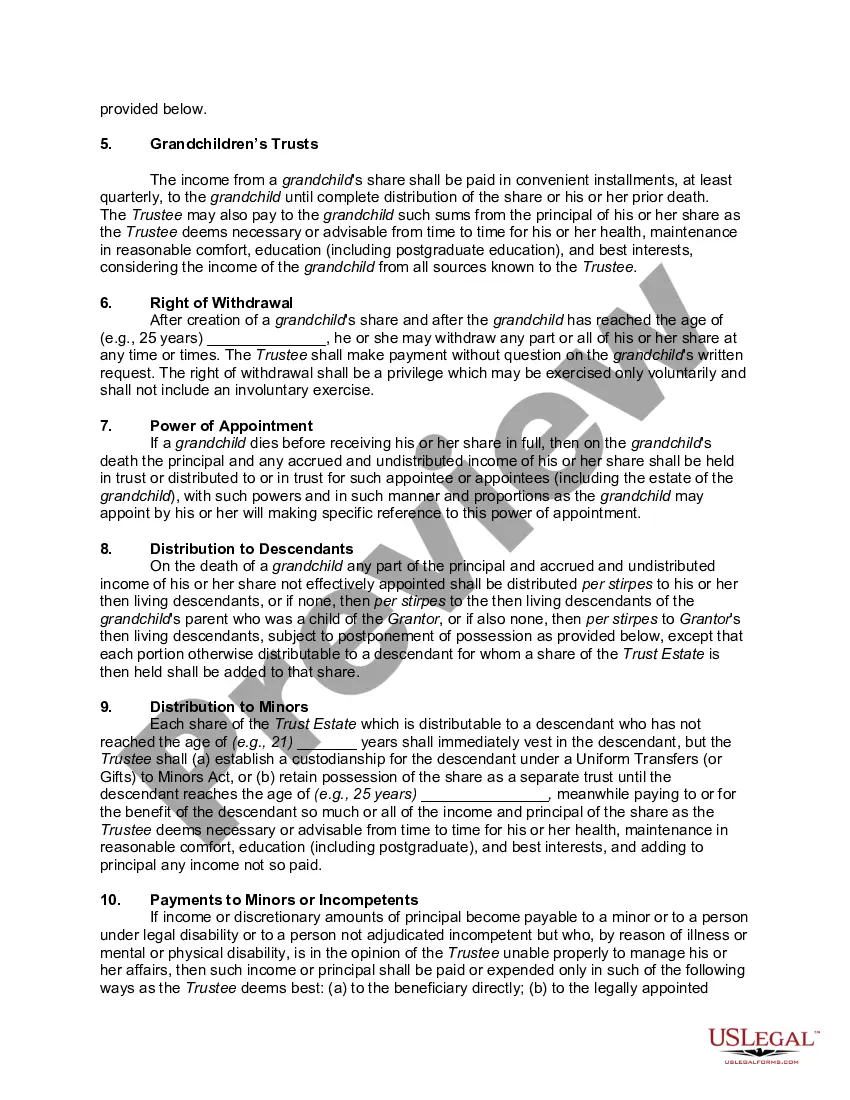
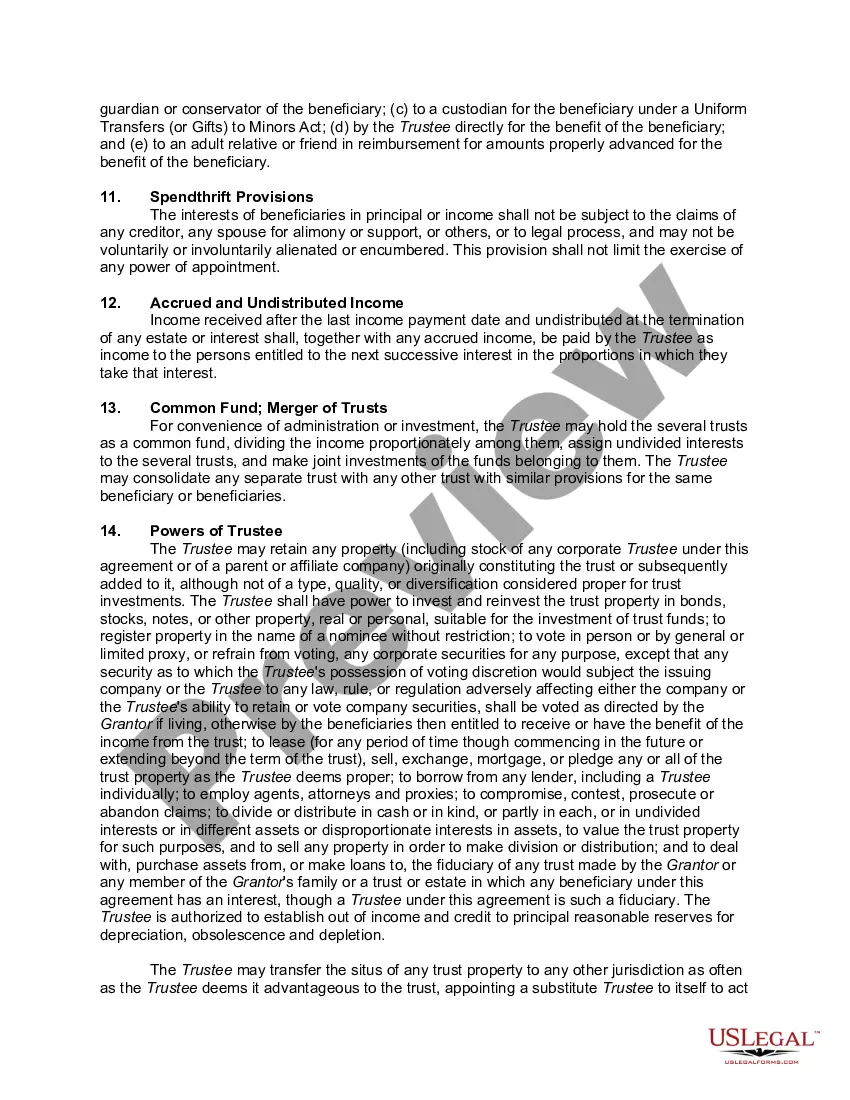
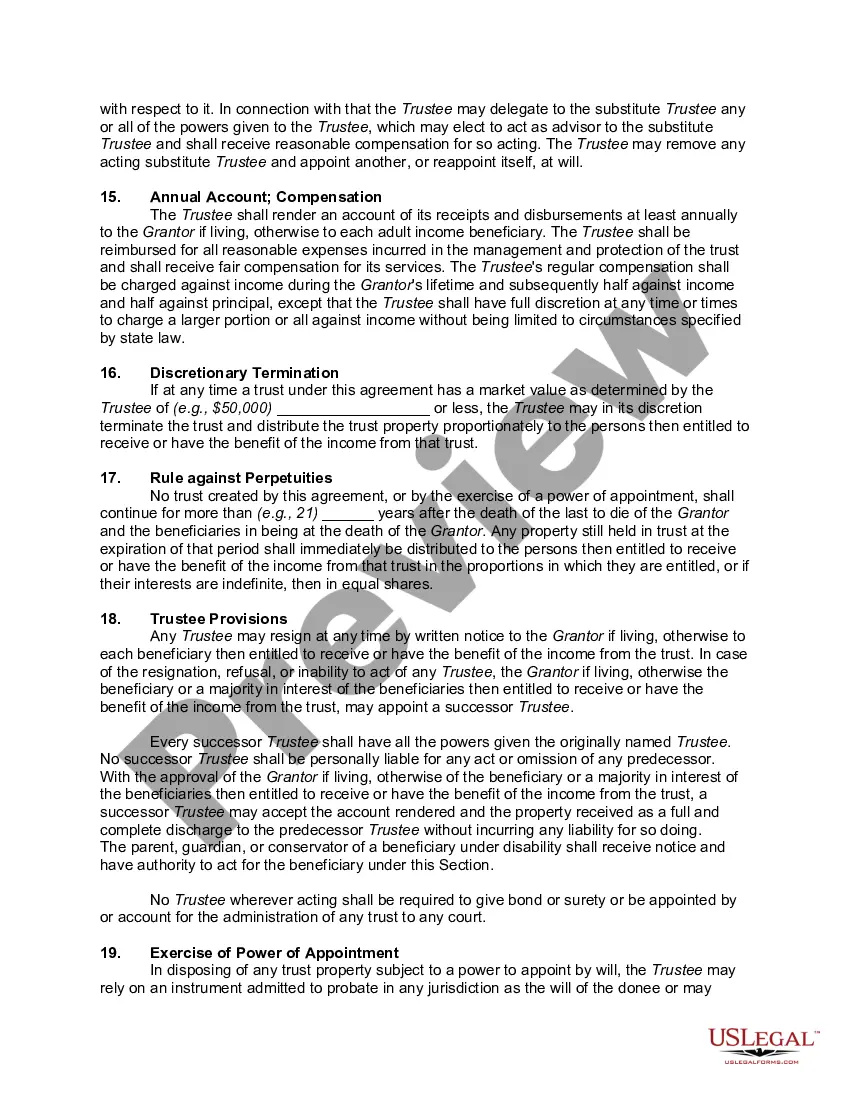
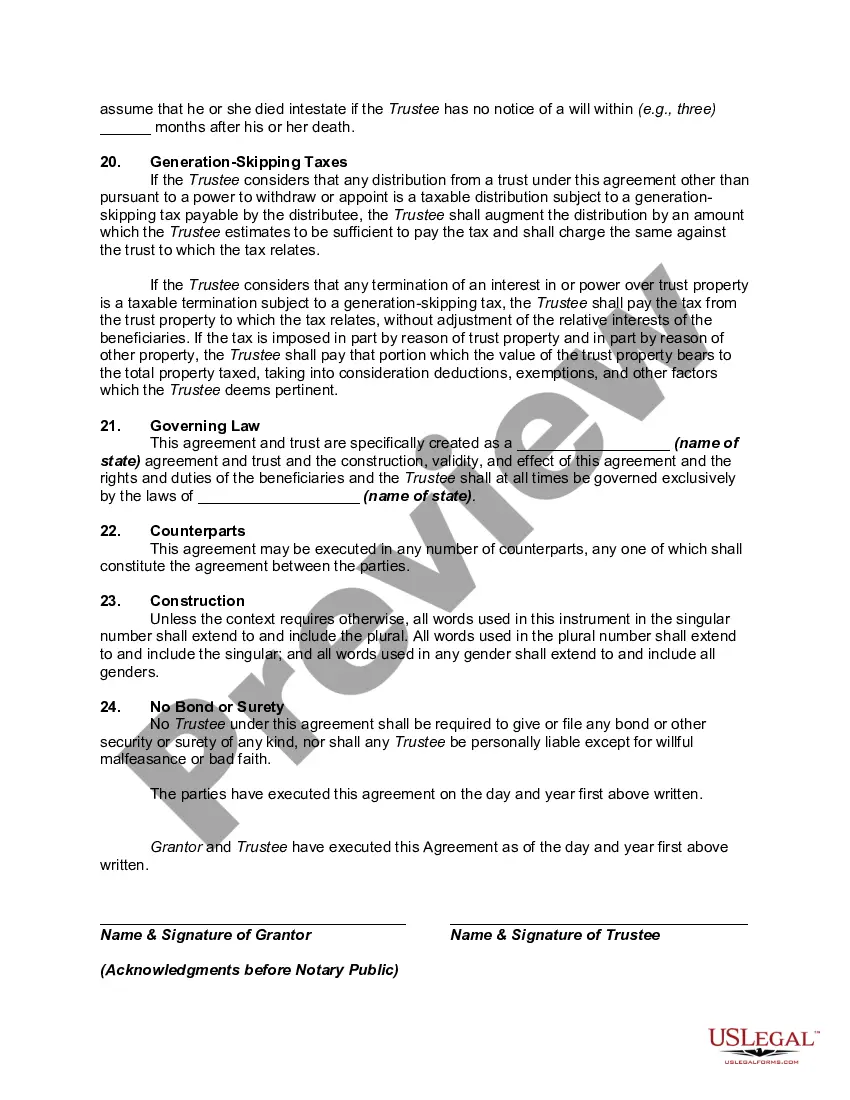



Get your form ready online
Our built-in tools help you complete, sign, share, and store your documents in one place.
Make edits, fill in missing information, and update formatting in US Legal Forms—just like you would in MS Word.
Download a copy, print it, send it by email, or mail it via USPS—whatever works best for your next step.
Sign and collect signatures with our SignNow integration. Send to multiple recipients, set reminders, and more. Go Premium to unlock E-Sign.
If this form requires notarization, complete it online through a secure video call—no need to meet a notary in person or wait for an appointment.
We protect your documents and personal data by following strict security and privacy standards.

Make edits, fill in missing information, and update formatting in US Legal Forms—just like you would in MS Word.

Download a copy, print it, send it by email, or mail it via USPS—whatever works best for your next step.

Sign and collect signatures with our SignNow integration. Send to multiple recipients, set reminders, and more. Go Premium to unlock E-Sign.

If this form requires notarization, complete it online through a secure video call—no need to meet a notary in person or wait for an appointment.

We protect your documents and personal data by following strict security and privacy standards.
Looking for another form?






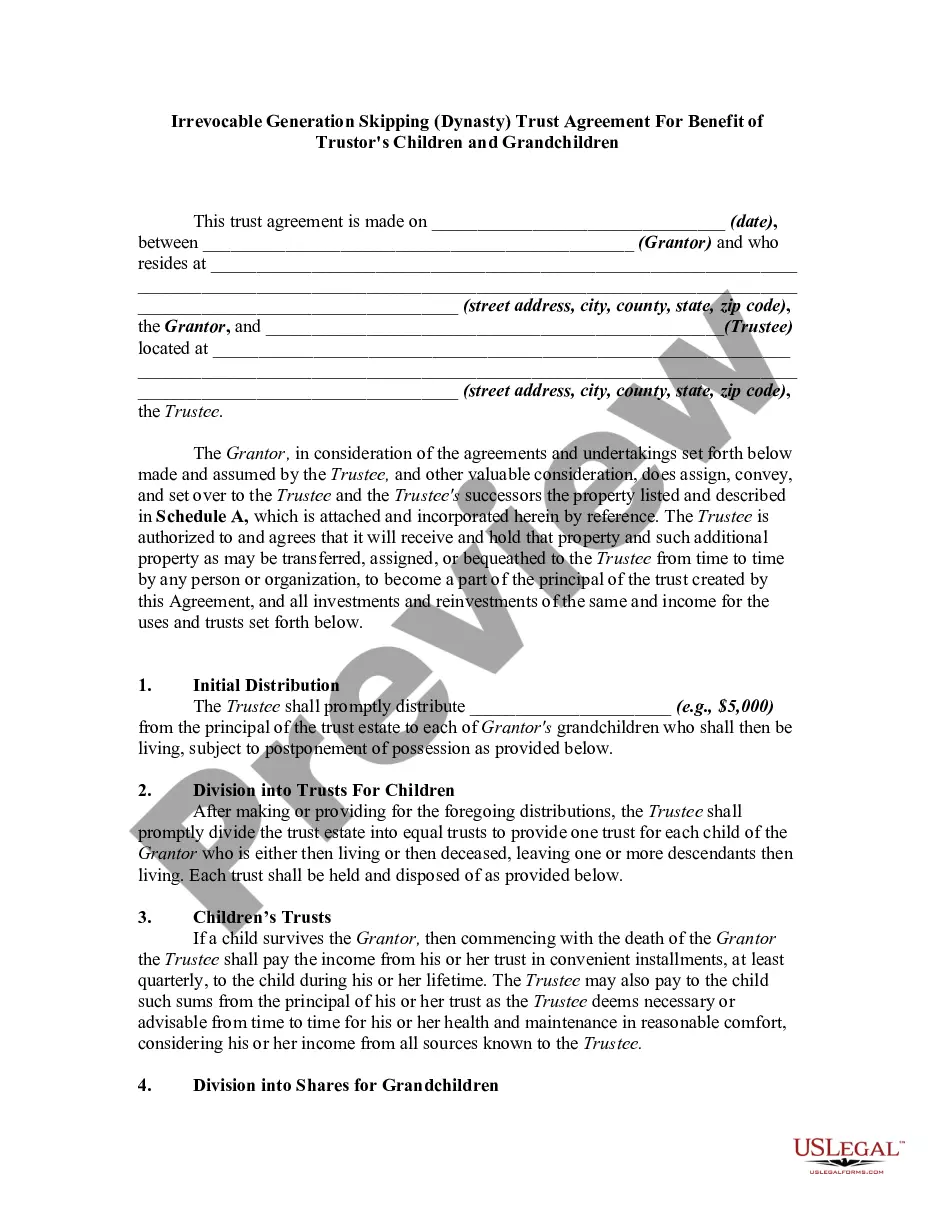
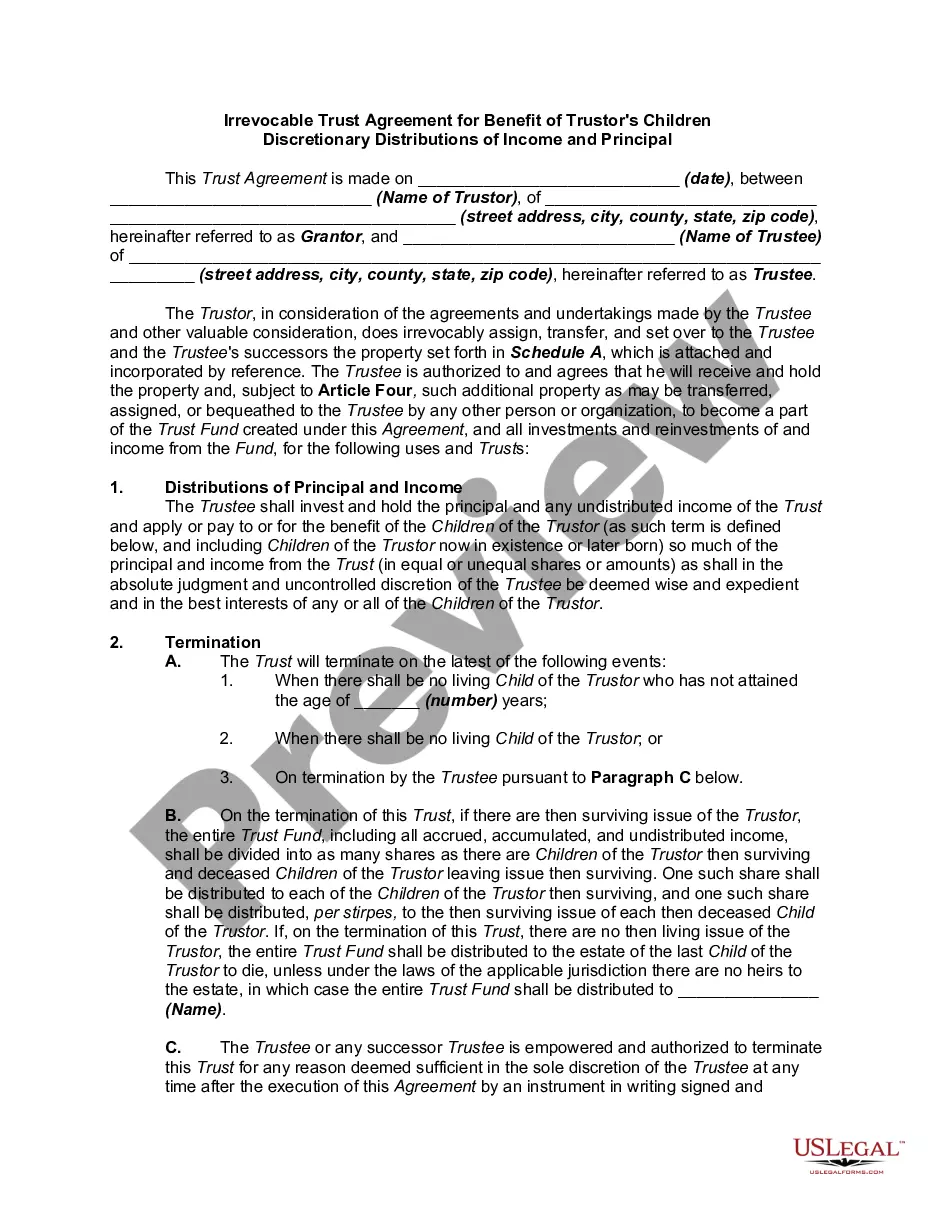
How to fill out Irrevocable Trust Agreement For Benefit Of Trustor's Children And Grandchildren?
Whether for commercial endeavors or personal issues, everyone must confront legal circumstances at some point in their lives.
Completing legal paperwork requires meticulous care, starting with choosing the appropriate form sample.
With a comprehensive US Legal Forms catalog at your disposal, you will never have to waste time searching for the right template online. Utilize the library's straightforward navigation to obtain the correct template for any occasion.
- Obtain the template you need through the search bar or catalog browsing.
- Review the form's details to ensure it corresponds with your situation, jurisdiction, and area.
- Click on the form's preview to view it.
- If it is not the correct document, return to the search feature to find the Irrevocable Grantor Trust Filing Requirements template you need.
- Download the template once it fulfills your criteria.
- If you possess a US Legal Forms profile, click Log in to access your previously stored files in My documents.
- If you do not have an account yet, you can download the form by clicking Buy now.
- Choose the appropriate pricing option.
- Fill out the profile registration form.
- Select your payment method: use a credit card or PayPal account.
- Choose the file format you prefer and download the Irrevocable Grantor Trust Filing Requirements.
- After downloading it, you can either fill out the form using editing software or print it out and complete it manually.
Form popularity
FAQ
How quickly do you get a life insurance payout? After you file a claim, you should be paid in 14 to 60 days. In rare cases, the insurance company may take longer to investigate a claim. This usually happens if the insured person dies within the first two years that the policy was active.
Surrender the policy You'll generally receive most or all of the cash value of your life insurance policy, but it may be subject to surrender fees and federal income taxes.
The waiting period for a standard life insurance application is four to six weeks on average, but it can be longer. Temporary insurance pays out to your beneficiaries if you die during the waiting period. Accelerated underwriting and final expense life insurance policies offer almost immediate coverage.
Depending on the insurer, a life insurance payout can typically be distributed in three ways: in the form of a lump sum, via a life insurance annuity, or through a retained asset account. Check with the insurer to see which life insurance payout options they offer.
Please contact your human resources department for more information. Q: If my claim is approved, when will I get paid? A: Once your claim is approved, we process payments immediately. It takes about seven days for direct deposits to show up in your bank account or 7 ? 10 business days to receive a check in the mail.
In your web browser, navigate to naic.org, hover over Consumer, and click Life Insurance Policy Locator under Tools. Submit a search request by entering the deceased's information from the death certificate: Social Security number. Legal first name.
Life insurance covers death due to natural causes, illness, and accidents. However, the insurance company can deny paying out your death benefit in certain circumstances, such as if you lie on your application, engage in risky behaviors, or fail to pay your premiums.