Form Trust Irrevocable Withdrawal Rights
Description


Get your form ready online
Our built-in tools help you complete, sign, share, and store your documents in one place.
Make edits, fill in missing information, and update formatting in US Legal Forms—just like you would in MS Word.
Download a copy, print it, send it by email, or mail it via USPS—whatever works best for your next step.
Sign and collect signatures with our SignNow integration. Send to multiple recipients, set reminders, and more. Go Premium to unlock E-Sign.
If this form requires notarization, complete it online through a secure video call—no need to meet a notary in person or wait for an appointment.
We protect your documents and personal data by following strict security and privacy standards.

Make edits, fill in missing information, and update formatting in US Legal Forms—just like you would in MS Word.

Download a copy, print it, send it by email, or mail it via USPS—whatever works best for your next step.

Sign and collect signatures with our SignNow integration. Send to multiple recipients, set reminders, and more. Go Premium to unlock E-Sign.

If this form requires notarization, complete it online through a secure video call—no need to meet a notary in person or wait for an appointment.

We protect your documents and personal data by following strict security and privacy standards.
Looking for another form?
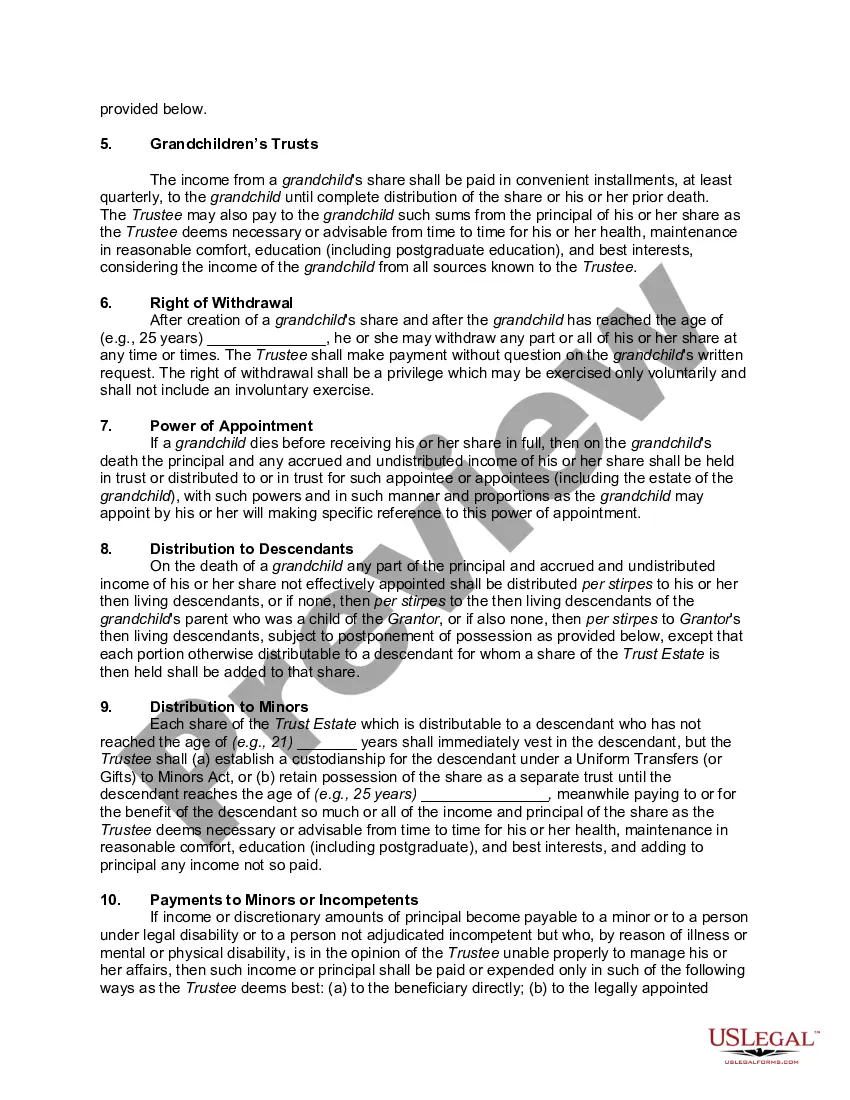
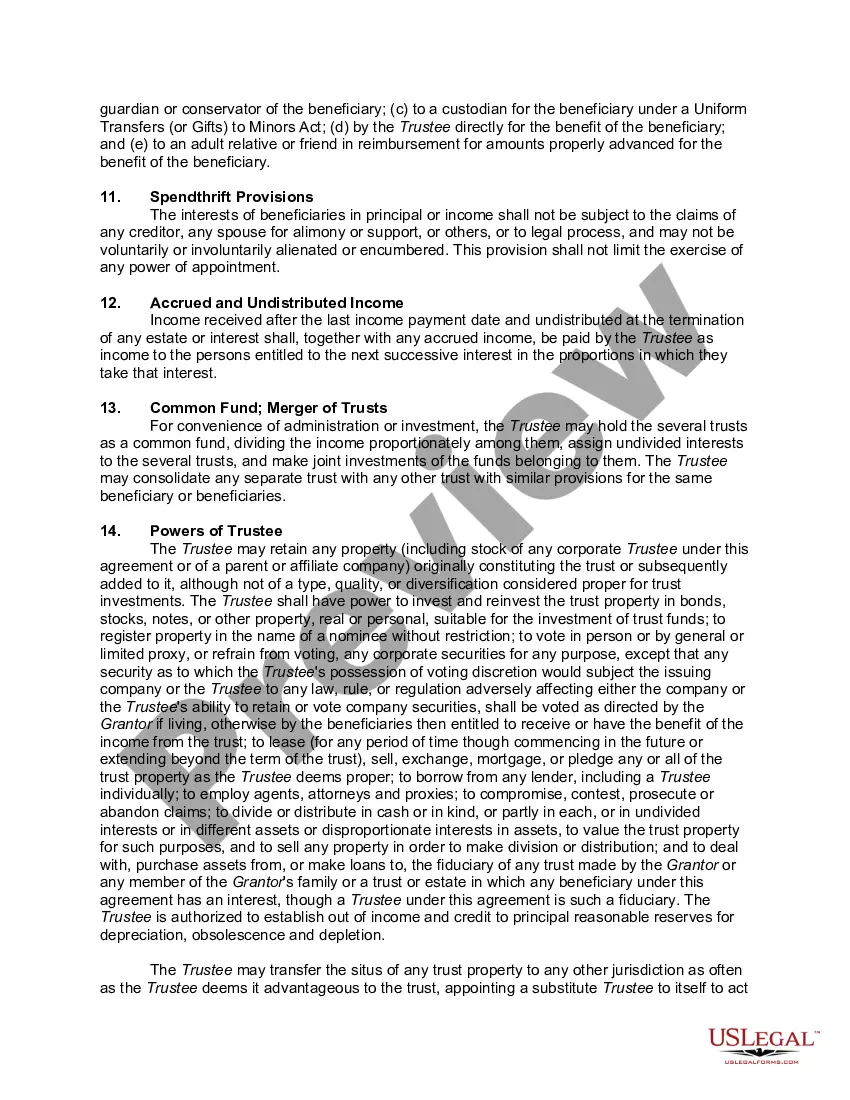
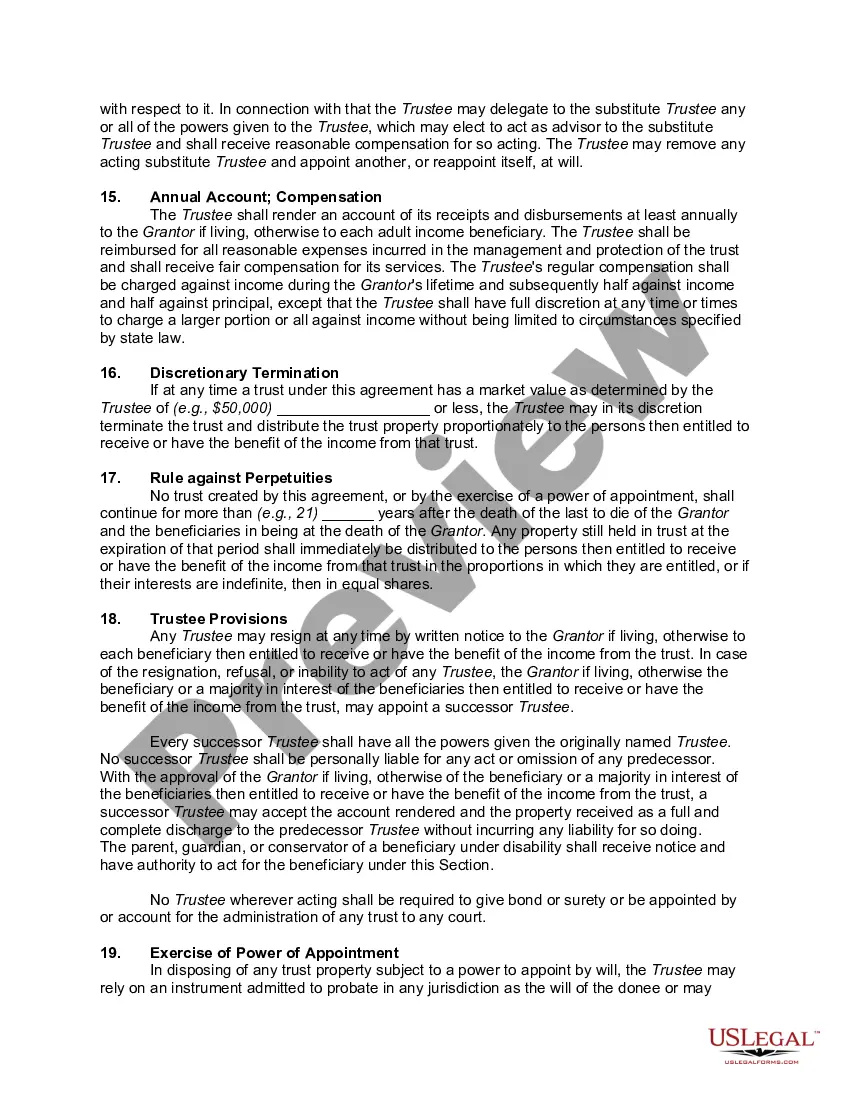
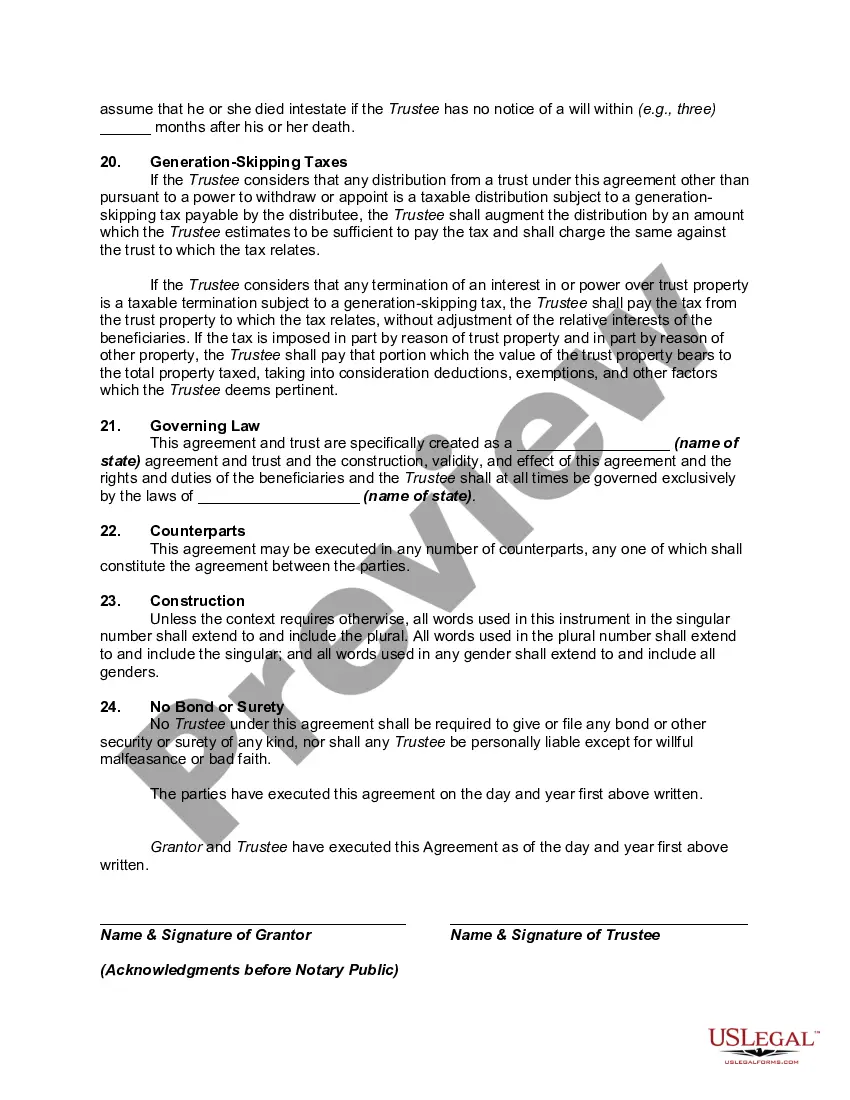
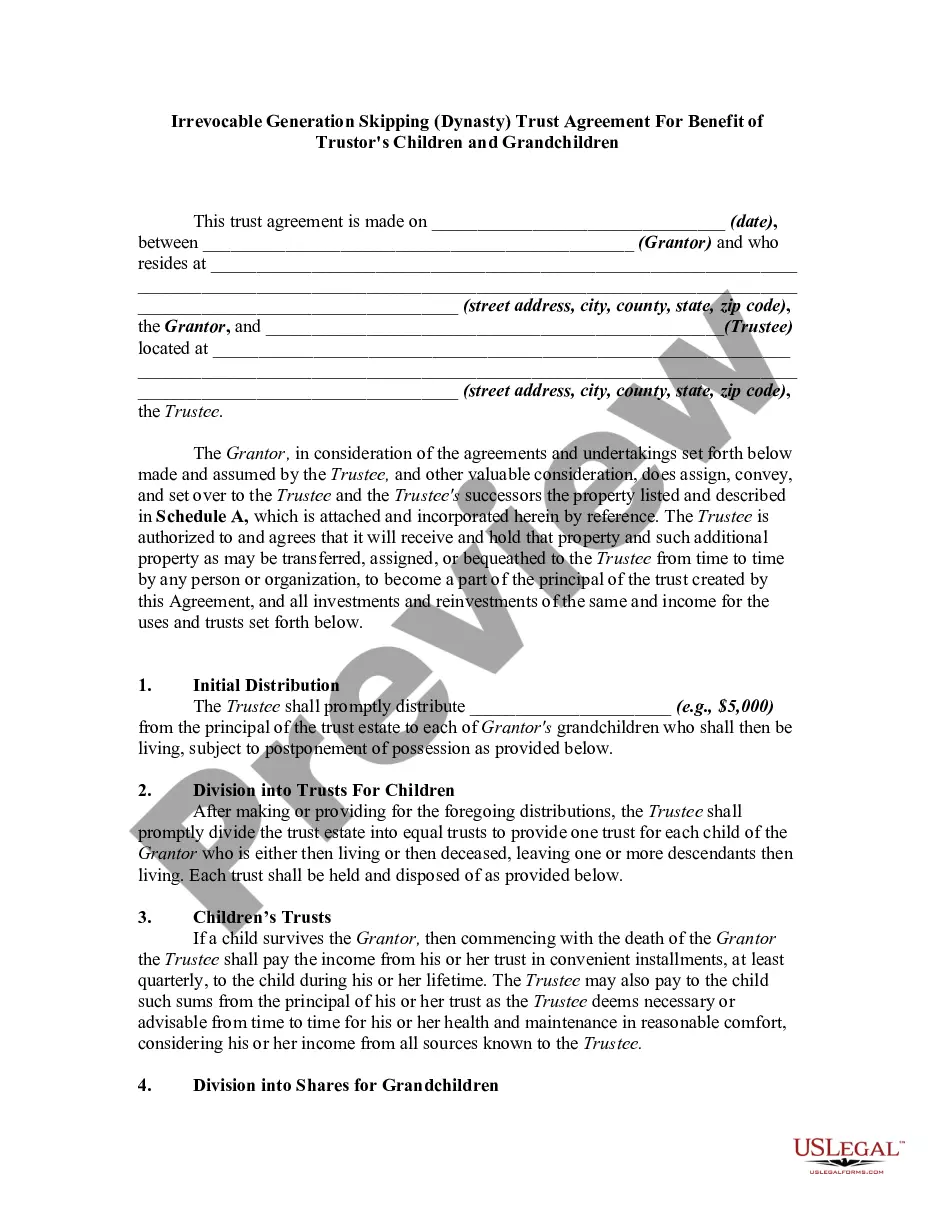
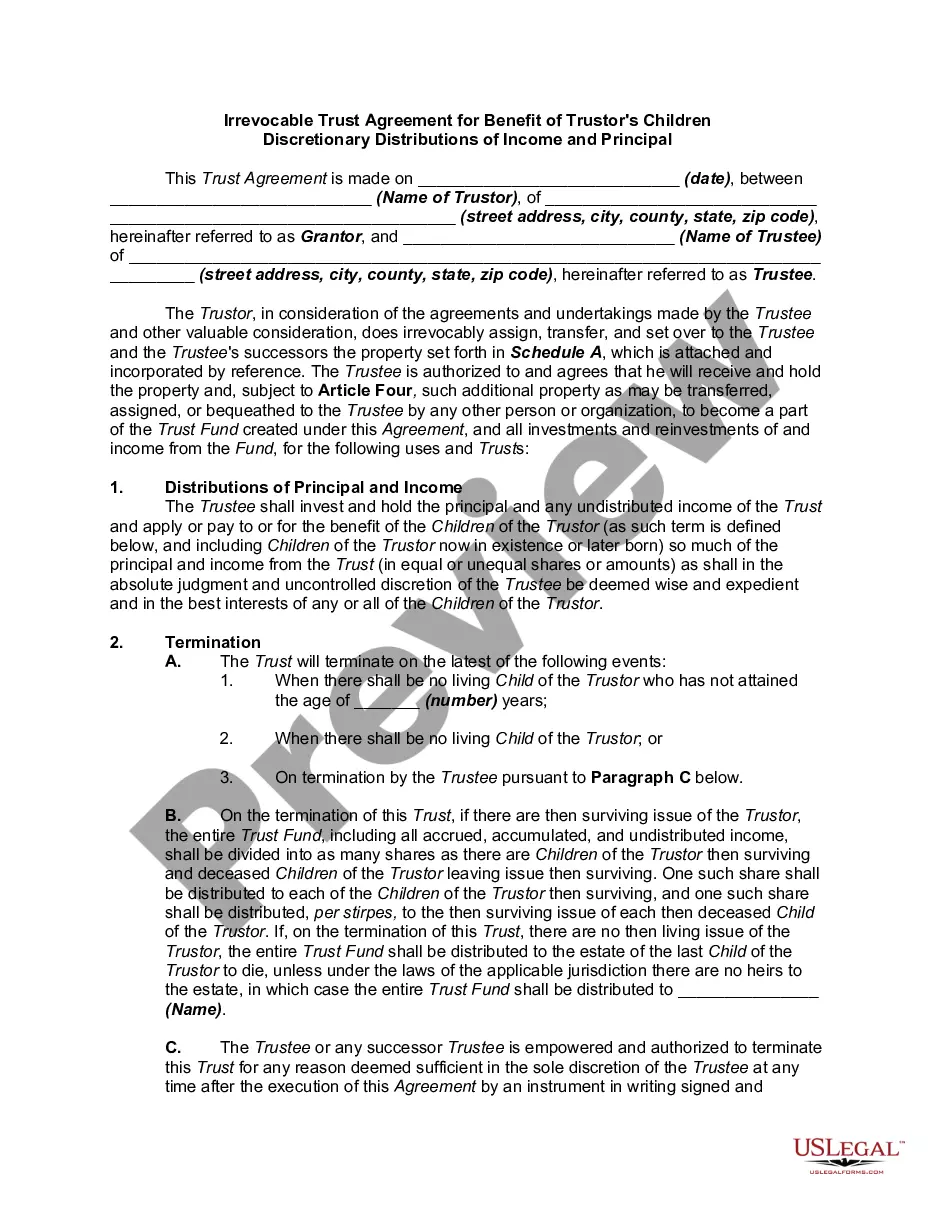
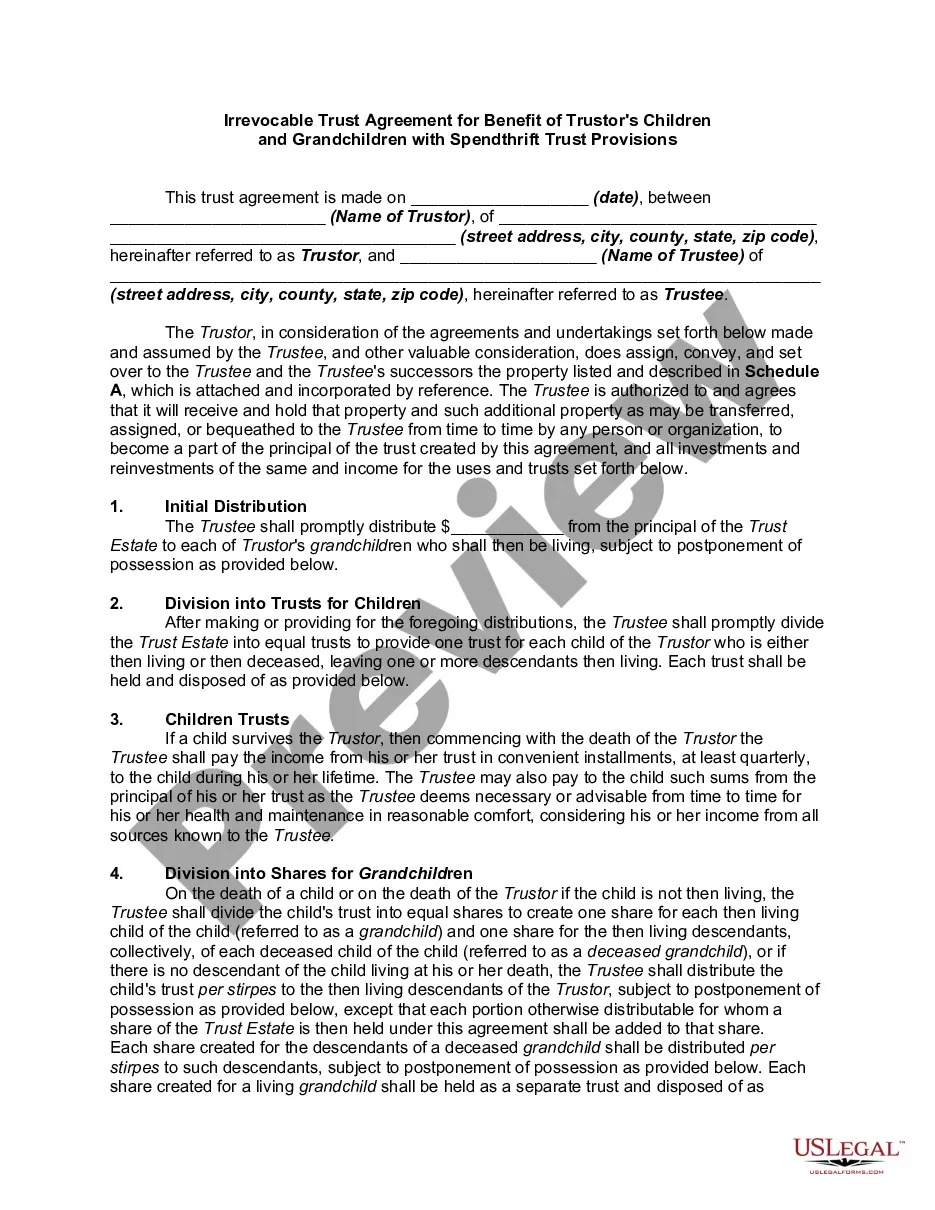
How to fill out Irrevocable Trust Agreement For Benefit Of Trustor's Children And Grandchildren?
It’s well known that you cannot instantly become a legal authority, nor can you quickly learn how to efficiently compose the Form Trust Irrevocable Withdrawal Rights without possessing a specific skill set.
Generating legal documents is a lengthy procedure that demands particular education and expertise.
So why not entrust the development of the Form Trust Irrevocable Withdrawal Rights to the professionals.
Preview it (if this choice is available) and review the accompanying description to determine if the Form Trust Irrevocable Withdrawal Rights is what you're looking for.
If you require a different template, start your search anew. Register for a complimentary account and select a subscription option to purchase the form.
- With US Legal Forms, a comprehensive library of legal templates, you can discover everything from courtroom papers to templates for internal business communication.
- We recognize the significance of compliance and adherence to federal and state laws and regulations.
- Consequently, on our platform, all templates are localized and current.
- Begin with our site to obtain the form you require in just a few minutes.
- Locate the document you seek by utilizing the search bar located at the top of the webpage.
Form popularity
FAQ
As stated in Section 340 of the Banking Law, ?No person or other entity shall engage in the business of making loans in the principal amount of twenty-five thousand dollars or less for any loan to an individual for personal, family, household, or investment purposes and in a principal amount of fifty thousand dollars ...
A Loan Agreement, also known as a term loan, demand loan, or a loan contract, is a contract that documents a financial agreement between two parties, where one is the lender and the other is the borrower. This contract specifies the amount of the loan, any interest charges, the repayment plan, and payment dates.
Banks do not give loans for unregistered properties. Hence it is mandatory to have registration documents before applying for a home loan. If the property is under construction, the home loan can be obtained without registration documents.
Submit an application through the Nationwide Mortgage Licensing System (NMLS) Complete 20 hours of NMLS approved Pre-licensing Education Courses, including 3 hours of New York law; Pass the SAFE Mortgage Loan Originator Test, consisting of a National Component with Uniform State Content.
This license allows lenders to charge interest rates above those permitted by law. State law prohibits businesses from making loans of $25,000 or less to individuals or $50,000 or less to businesses with an interest rate above 16%. Higher interest rates may only be given by licensed lenders.
As long as you engage in mortgage loan origination related to New York residential real estate or supervise loan processors or underwriters and are not considered exempt pursuant to Article 12-E, you must be licensed as an MLO by the Department of Financial Services .
When can you lend money without a license? The answer depends on the state in which you make the hard loan. As a private lender, you must comply with each state's usury and banking laws, and the rates you can charge are regulated. Furthermore, some states will not let you lend a certain amount without a license.