Form Irrevocable Trust With The Client
Description

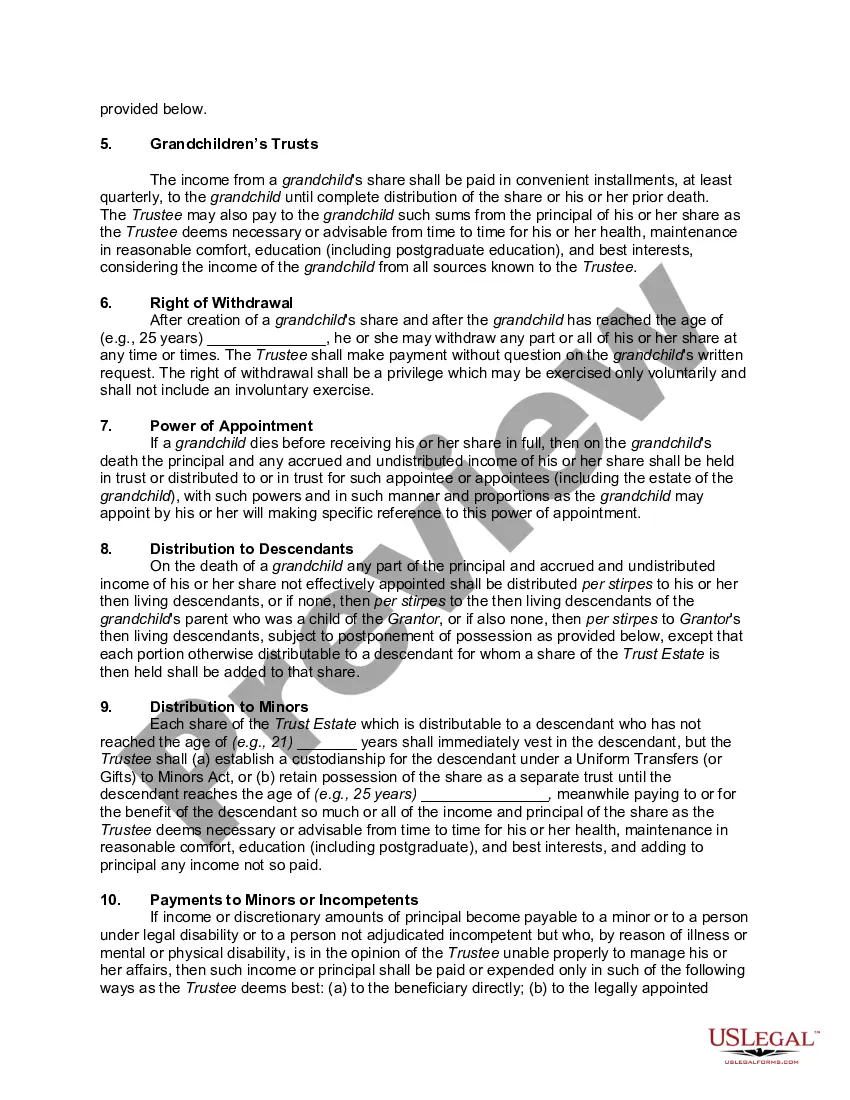
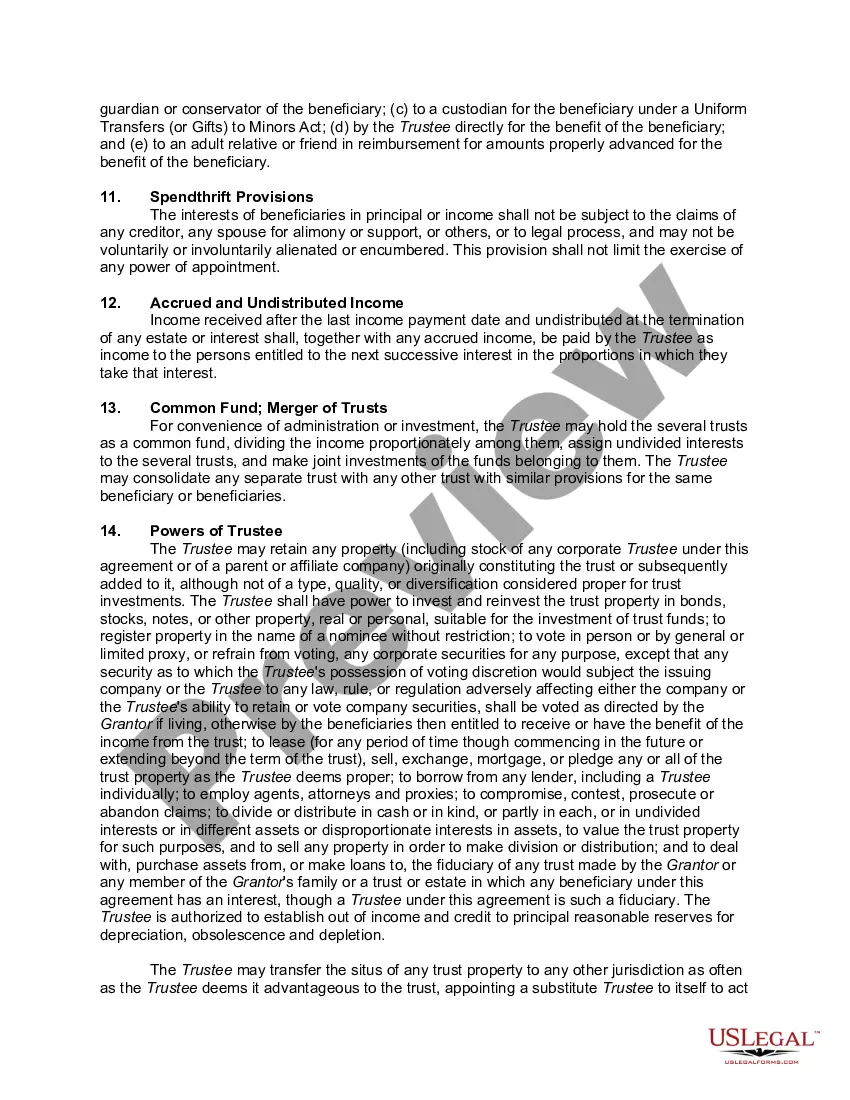
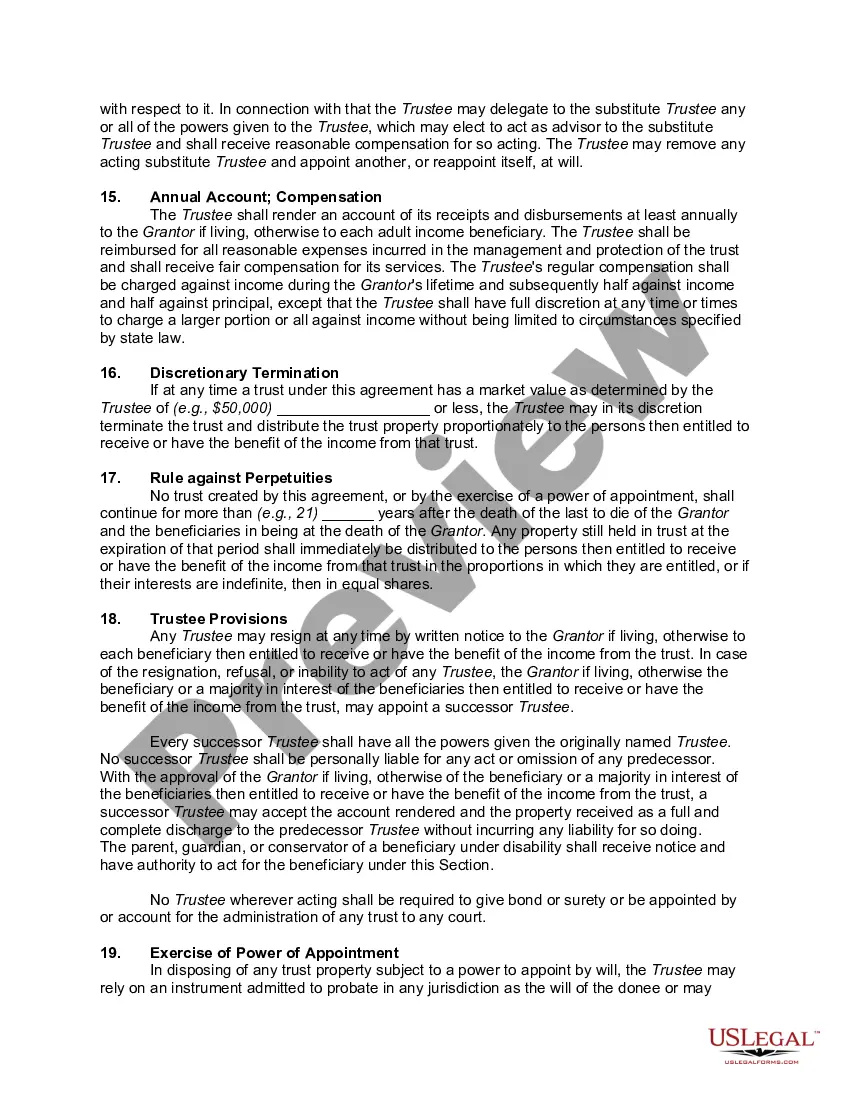
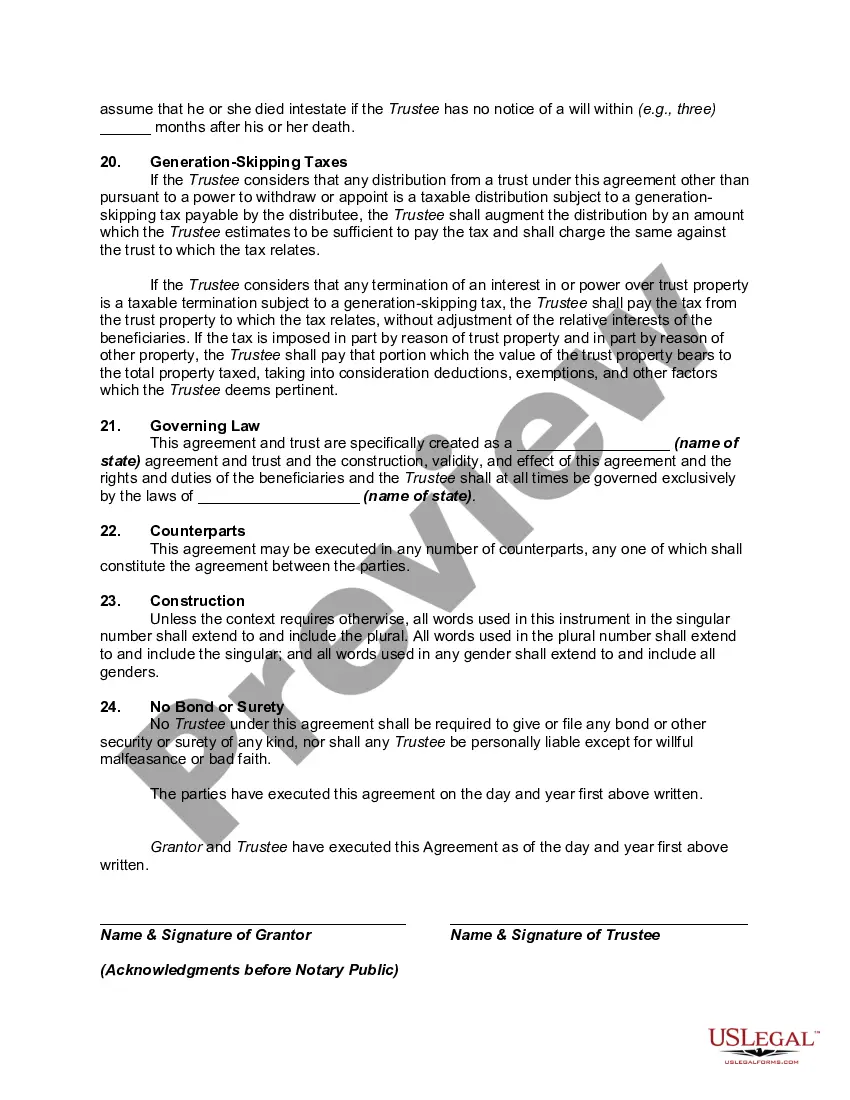

Get your form ready online
Our built-in tools help you complete, sign, share, and store your documents in one place.
Make edits, fill in missing information, and update formatting in US Legal Forms—just like you would in MS Word.
Download a copy, print it, send it by email, or mail it via USPS—whatever works best for your next step.
Sign and collect signatures with our SignNow integration. Send to multiple recipients, set reminders, and more. Go Premium to unlock E-Sign.
If this form requires notarization, complete it online through a secure video call—no need to meet a notary in person or wait for an appointment.
We protect your documents and personal data by following strict security and privacy standards.

Make edits, fill in missing information, and update formatting in US Legal Forms—just like you would in MS Word.

Download a copy, print it, send it by email, or mail it via USPS—whatever works best for your next step.

Sign and collect signatures with our SignNow integration. Send to multiple recipients, set reminders, and more. Go Premium to unlock E-Sign.

If this form requires notarization, complete it online through a secure video call—no need to meet a notary in person or wait for an appointment.

We protect your documents and personal data by following strict security and privacy standards.
Looking for another form?
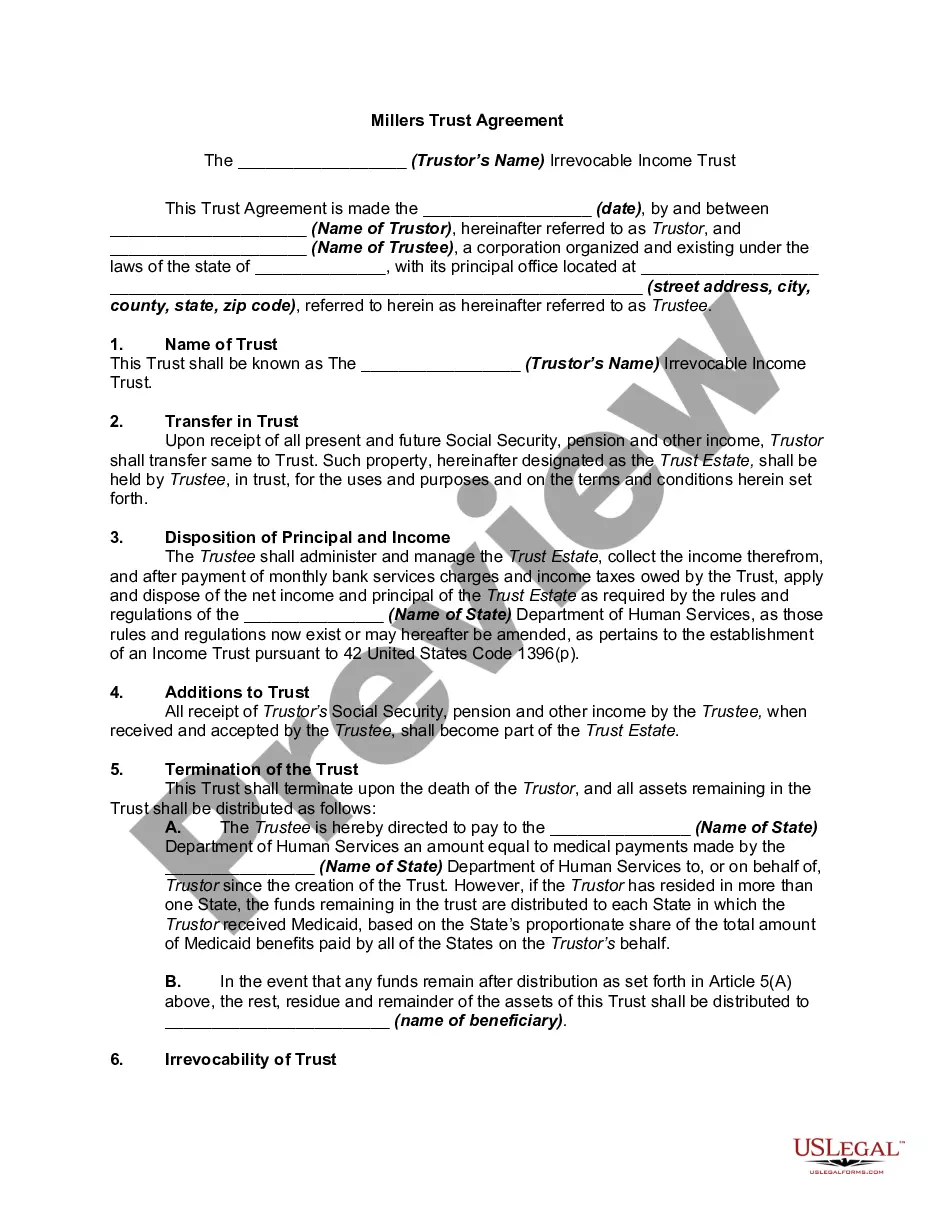







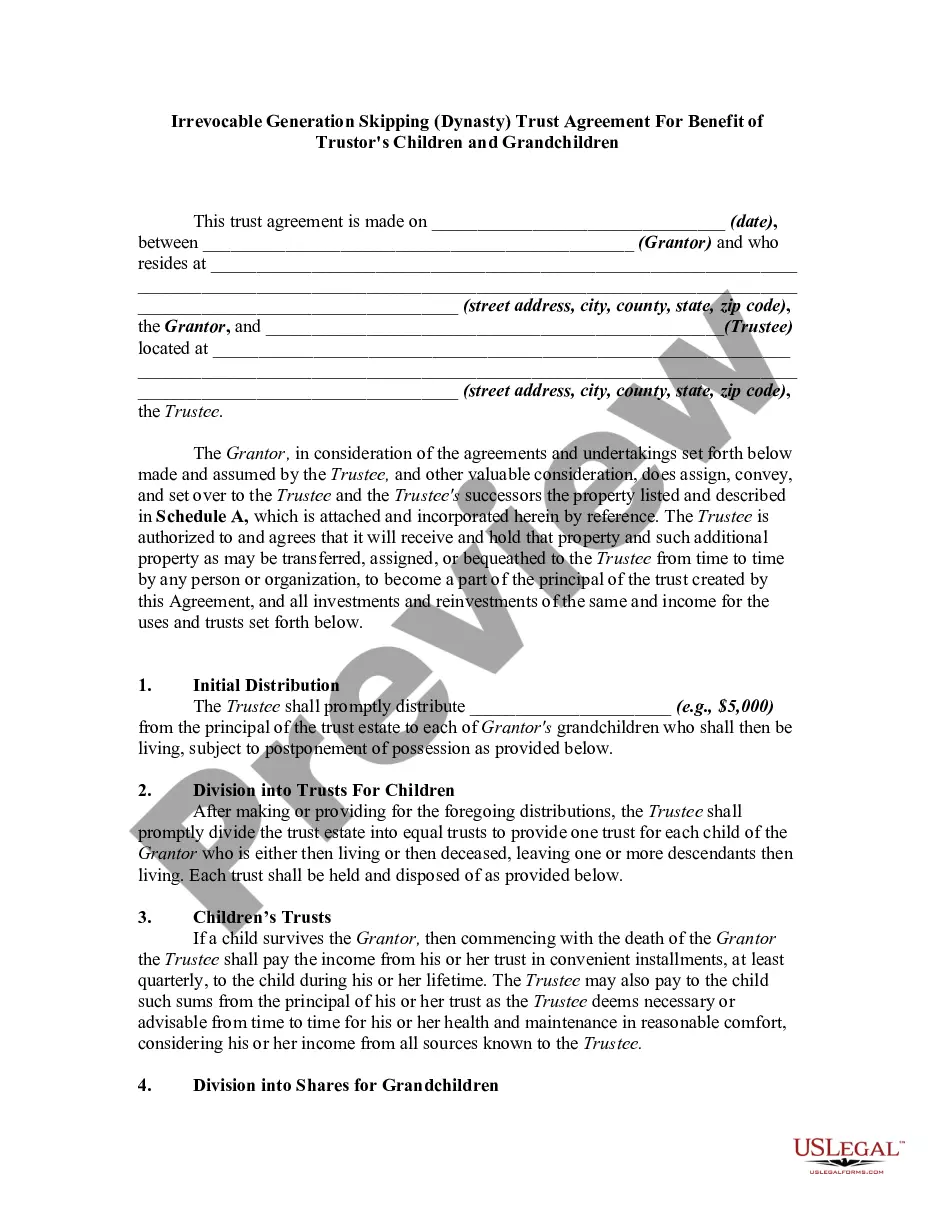
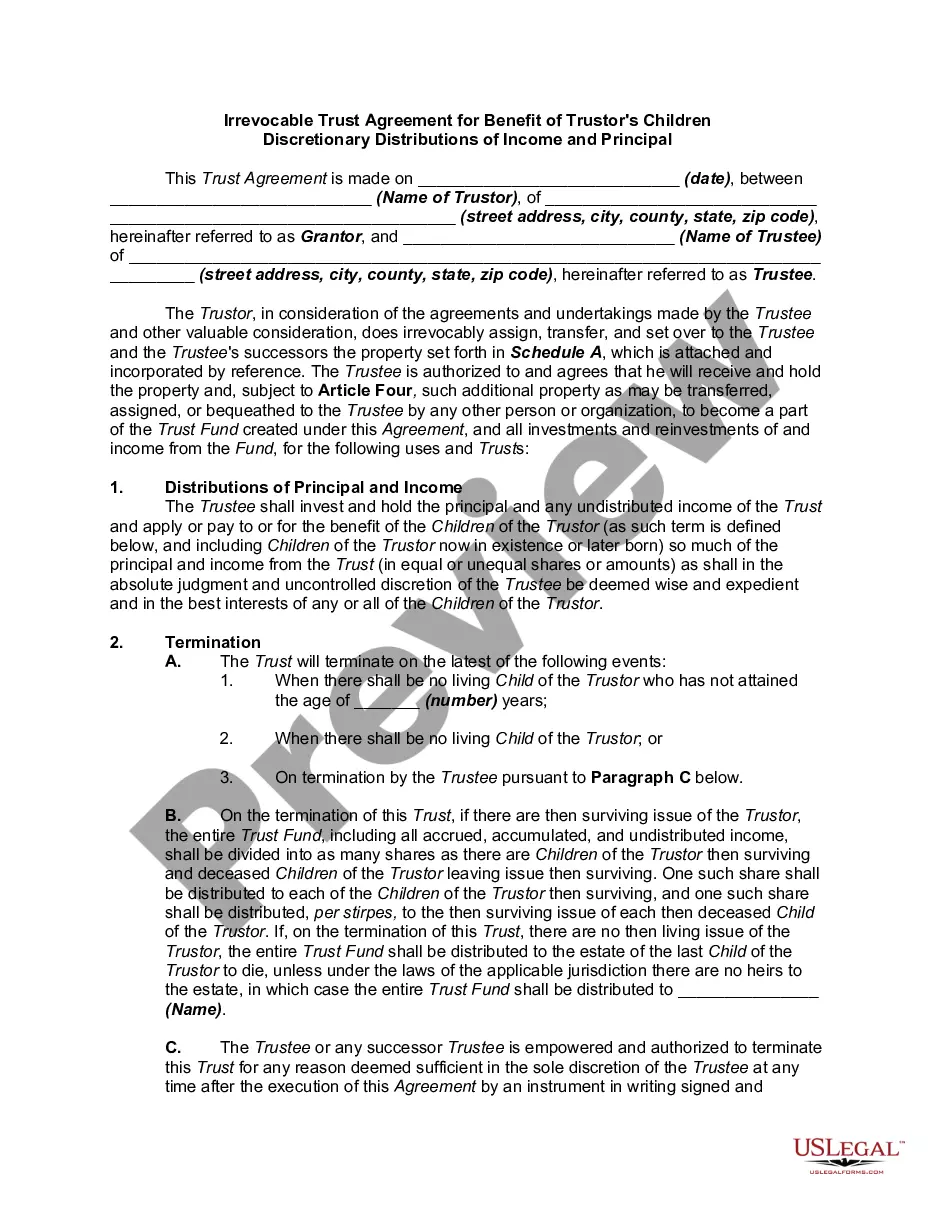
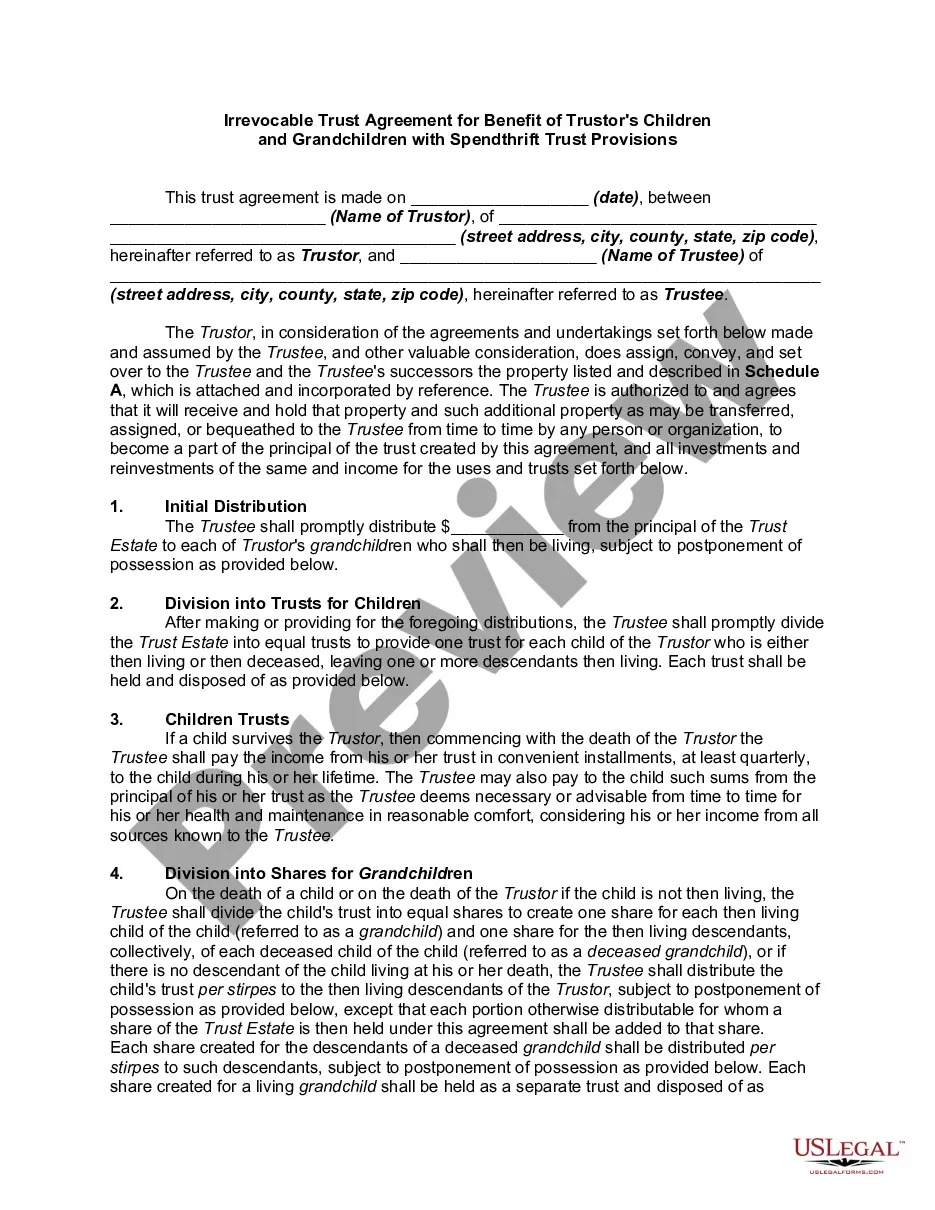
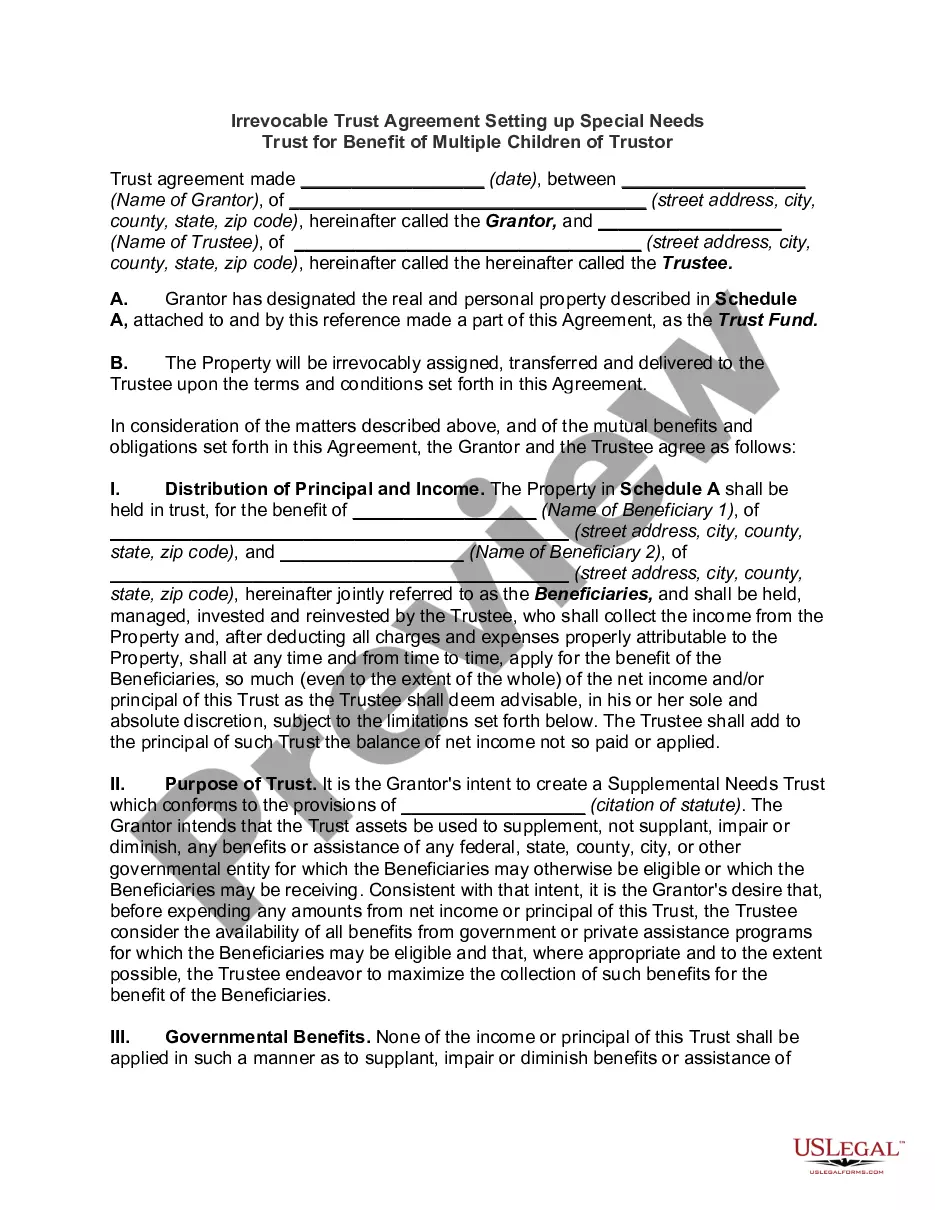
How to fill out Irrevocable Trust Agreement For Benefit Of Trustor's Children And Grandchildren?
- Log in to your US Legal Forms account if you're an existing user. Click the Download button to access the relevant form template.
- If you're a new user, start by browsing the extensive online library. Check the Preview mode and ensure the selected template meets your needs and complies with local regulations.
- Use the Search tab to find alternative templates if your initial choice is unsuitable. Confirm the new template aligns with your requirements.
- Proceed to purchase the document by clicking the Buy Now button. Choose a subscription plan that fits your preferences.
- Complete your order by entering your payment details via credit card or PayPal. Ensure the transaction goes through to access your forms.
- Download the completed form to your device. You can also find it anytime in the My Forms section of your profile.
With US Legal Forms, not only do you gain access to a vast collection of legal documents, but you also receive support from premium experts who guarantee accurate and compliant forms.
Start your journey today and form an irrevocable trust with confidence. Visit US Legal Forms and streamline your legal document preparation!
Form popularity
FAQ
To effectively form irrevocable trust with the client, you should start by outlining the trust's purpose and the assets involved. Clearly name the trustee and beneficiaries, detailing their rights and responsibilities. It's essential to follow state laws and requirements; you may find it helpful to use platforms like USLegalForms that provide templates and guidance to ensure your document meets all necessary legal standards.
When you decide to form irrevocable trust with the client, you typically encounter three main types. These include the irrevocable life insurance trust, which allows you to manage life insurance assets, the charitable remainder trust that benefits a charity while providing income to the trustor, and the qualified personal residence trust, which helps in transferring a home while minimizing tax implications. Understanding these types can help you select the one that best fits your goals.
Typically, an attorney or estate planning professional crafts the irrevocable trust document. These experts understand the intricacies of trust law and can tailor the document to meet your specific needs. While anyone can draft a basic trust document, the best approach is to collaborate with a qualified professional to ensure you have a solid form irrevocable trust with the client.
Writing an irrevocable trust document involves several important steps. Start by clearly defining the trust's purpose and identify the assets to be placed in the trust. Then, outline the roles of the trustee and beneficiaries. For an effective document, it is often advisable to seek guidance from legal experts who can help you create a comprehensive form irrevocable trust with the client.
To establish an irrevocable trust, you will need to complete a specific form, often called a trust agreement or trust declaration. This document outlines the terms and conditions of the trust, including the responsibilities of the trustee and the rights of the beneficiaries. It is crucial to ensure that this form is tailored to your unique situation, so consider working with a professional to fill out the form irrevocable trust with the client.
It's important to avoid including certain assets in your irrevocable trust to maintain its effectiveness. Do not place assets that require personal management or those that may incur high taxes. When you form an irrevocable trust with the client, focus on the long-term goals for your beneficiaries. Platforms like US Legal Forms can help guide you on which assets to exclude.
Filling out an irrevocable trust involves several important steps. First, you need to gather essential information about your assets and beneficiaries. Then, you can form an irrevocable trust with the client by using user-friendly platforms such as US Legal Forms, which provide clear templates and instructions. Be sure to review your completed trust for accuracy before signing.
Yes, you can write your own irrevocable trust, but it's crucial to ensure that you meet all legal requirements. Many people find it beneficial to form an irrevocable trust with the client by using a reliable platform like US Legal Forms. This helps guide you through the required steps and documents, reducing the risk of mistakes. Consulting with a legal expert can further enhance the effectiveness of your trust.
One major mistake parents make is underestimating the importance of thorough planning. Many focus solely on the financial aspects without considering the long-term implications for their children. When you form an irrevocable trust with the client, it's vital to address potential future scenarios and ensure that the trust aligns with their goals for their beneficiaries.
Filing an irrevocable trust typically involves submitting the trust document to the court, if required by your state. The process may vary based on local laws, so it's wise to consult an attorney or a professional platform like USLegalForms for assistance. When you form an irrevocable trust with the client, ensure that all necessary steps are taken to satisfy legal requirements.