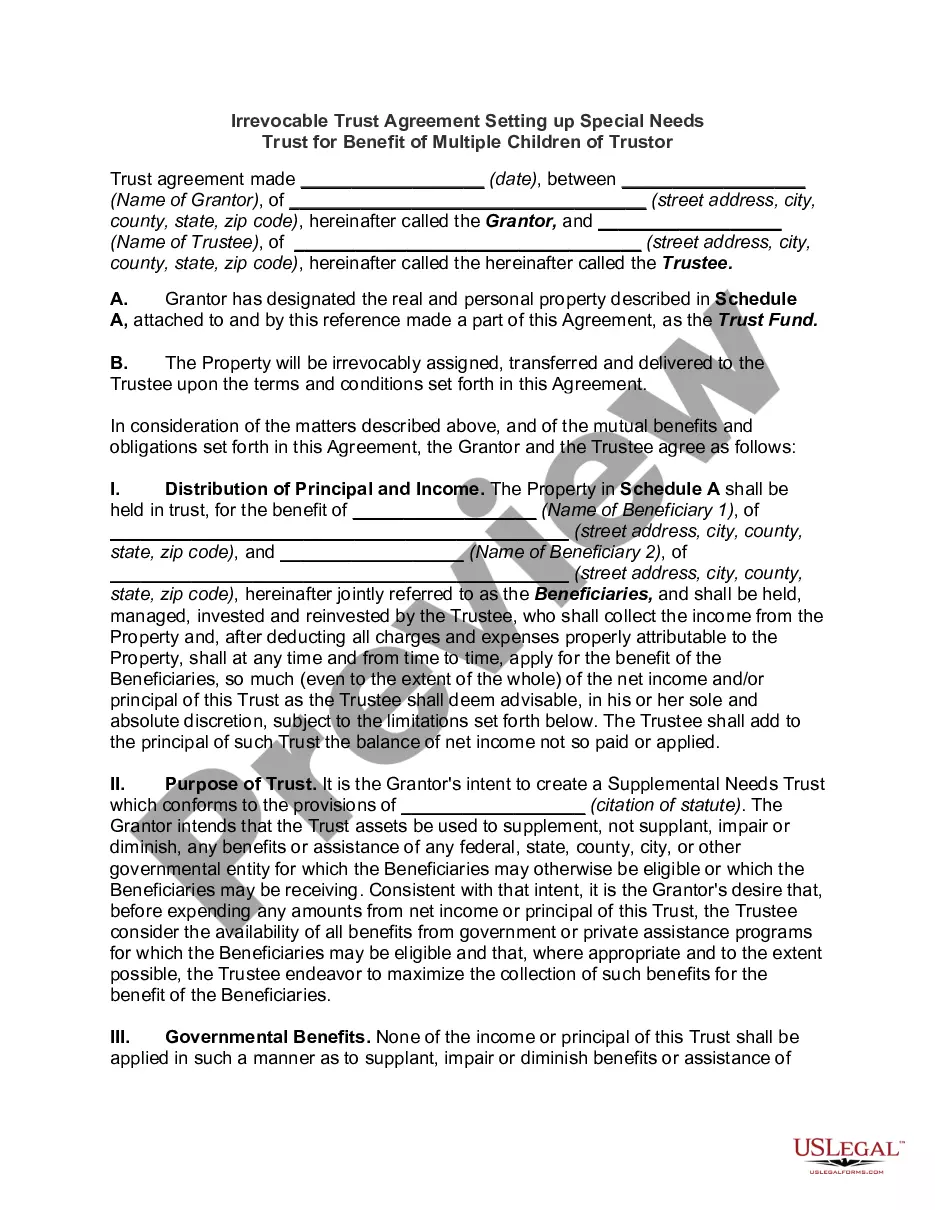
Agreement Irrevocable Trust For The Future
Description

Get your form ready online
Our built-in tools help you complete, sign, share, and store your documents in one place.
Make edits, fill in missing information, and update formatting in US Legal Forms—just like you would in MS Word.
Download a copy, print it, send it by email, or mail it via USPS—whatever works best for your next step.
Sign and collect signatures with our SignNow integration. Send to multiple recipients, set reminders, and more. Go Premium to unlock E-Sign.
If this form requires notarization, complete it online through a secure video call—no need to meet a notary in person or wait for an appointment.
We protect your documents and personal data by following strict security and privacy standards.

Make edits, fill in missing information, and update formatting in US Legal Forms—just like you would in MS Word.

Download a copy, print it, send it by email, or mail it via USPS—whatever works best for your next step.

Sign and collect signatures with our SignNow integration. Send to multiple recipients, set reminders, and more. Go Premium to unlock E-Sign.

If this form requires notarization, complete it online through a secure video call—no need to meet a notary in person or wait for an appointment.

We protect your documents and personal data by following strict security and privacy standards.
Looking for another form?







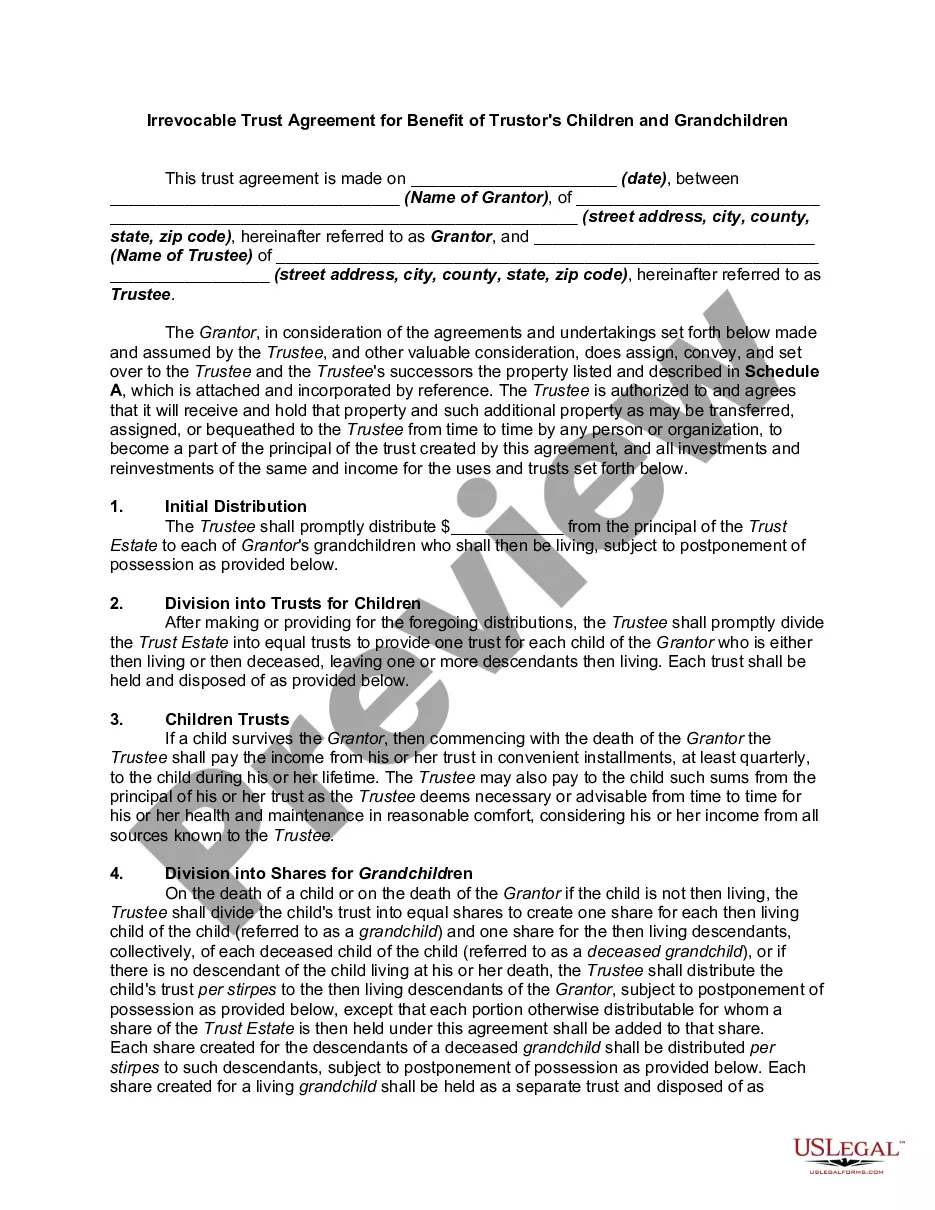
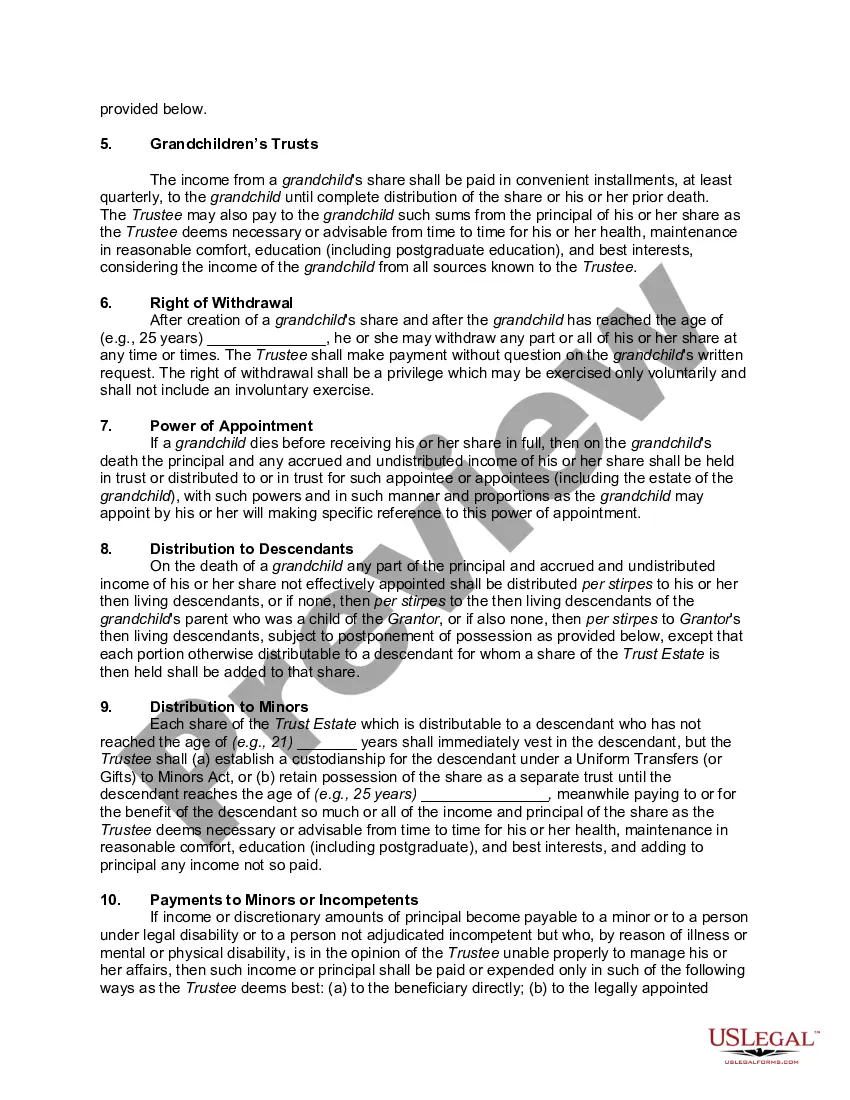
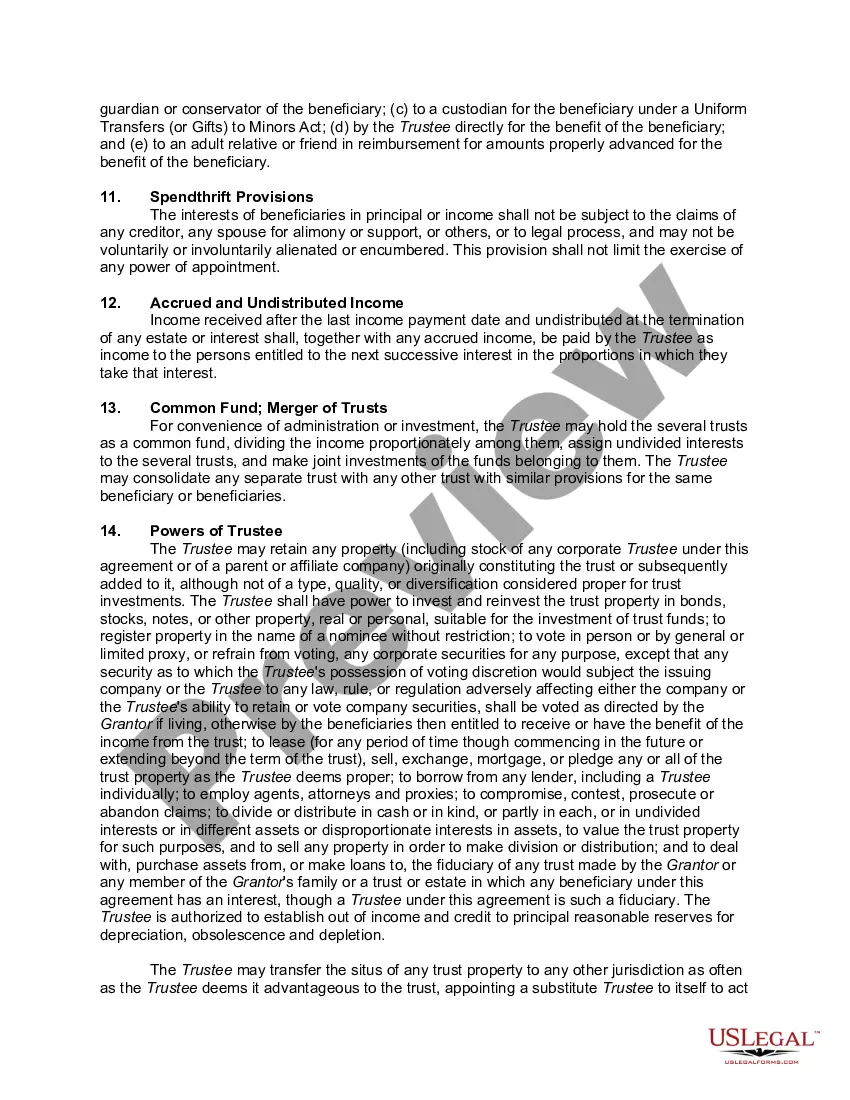
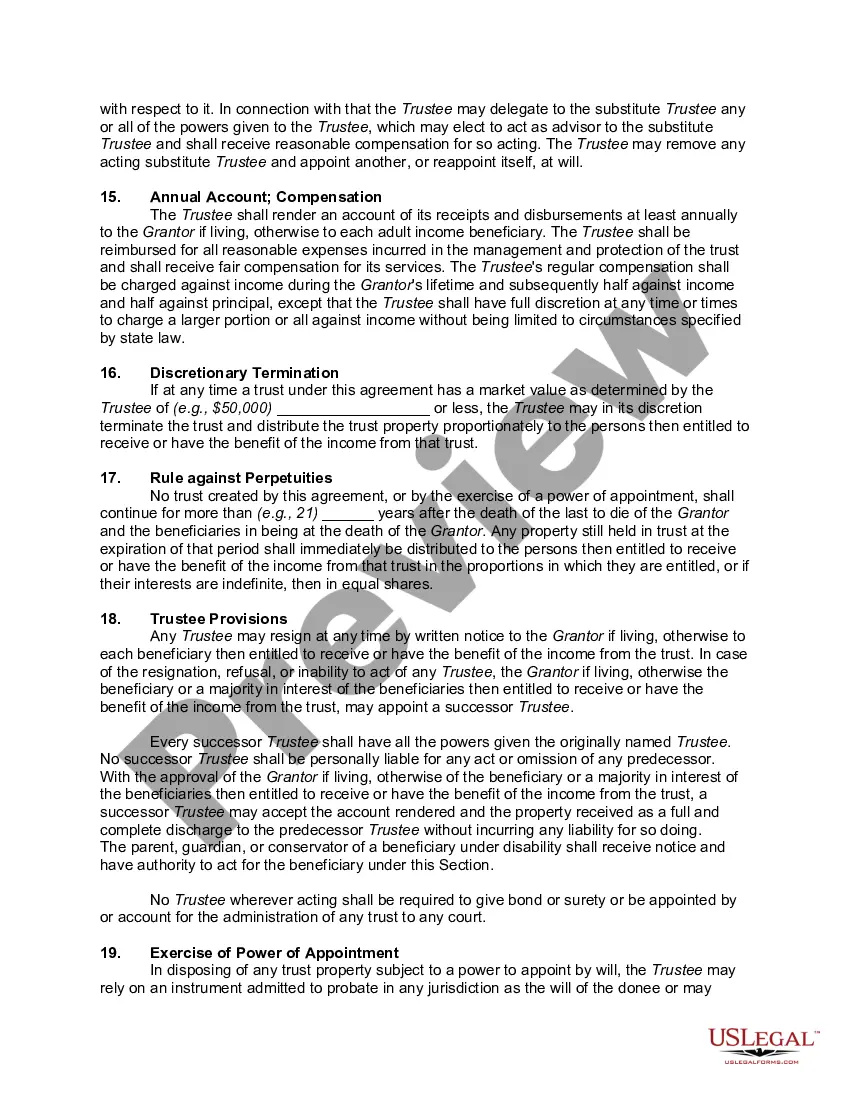
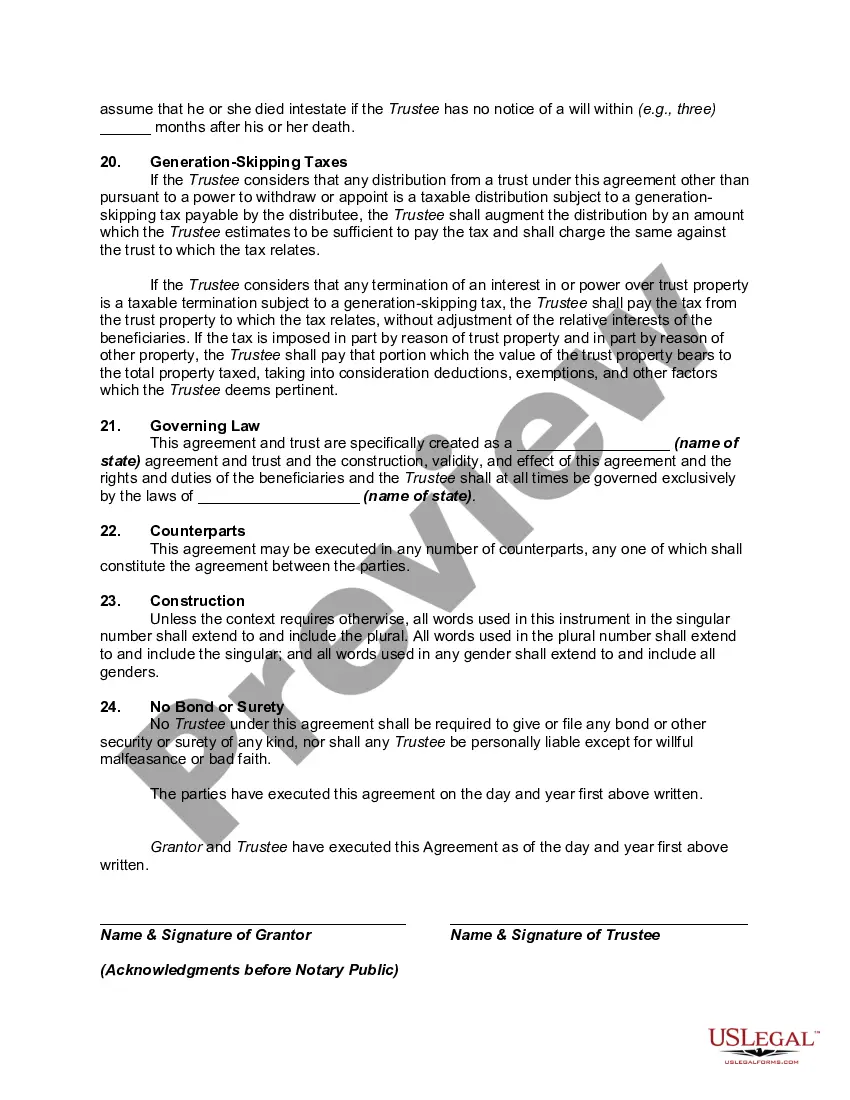
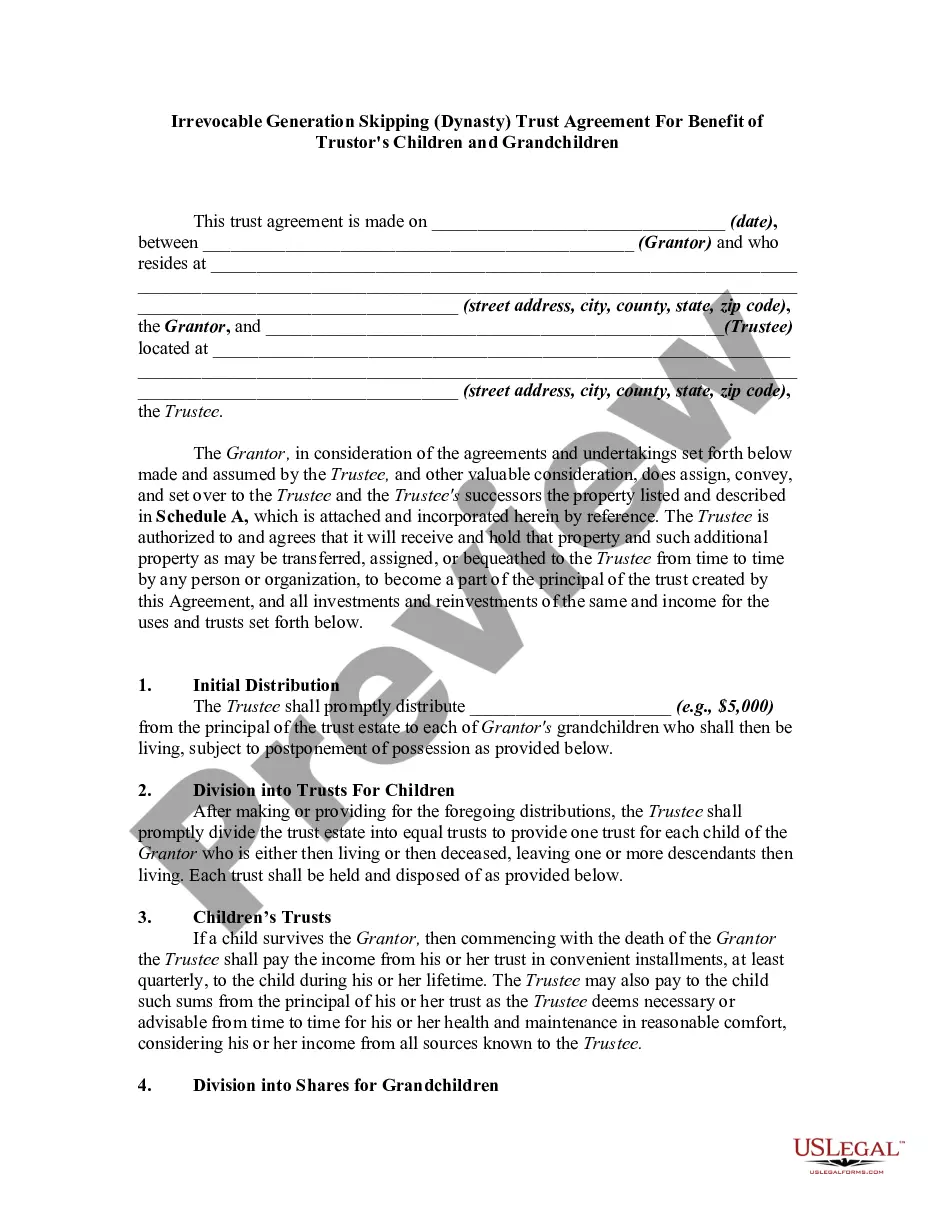
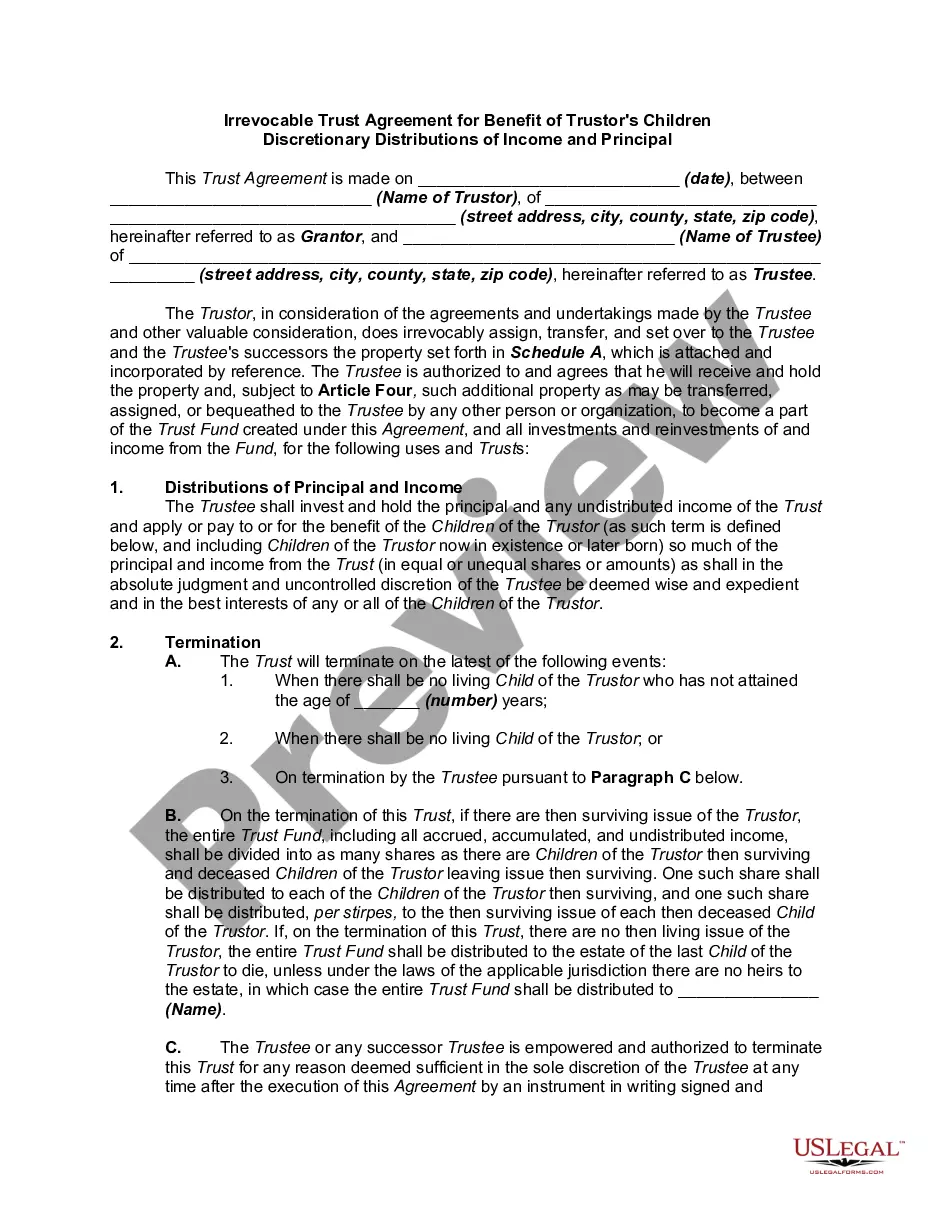
How to fill out Irrevocable Trust Agreement For Benefit Of Trustor's Children And Grandchildren?
- Log in to your US Legal Forms account if you're a returning user. Ensure your subscription is active to access the necessary forms.
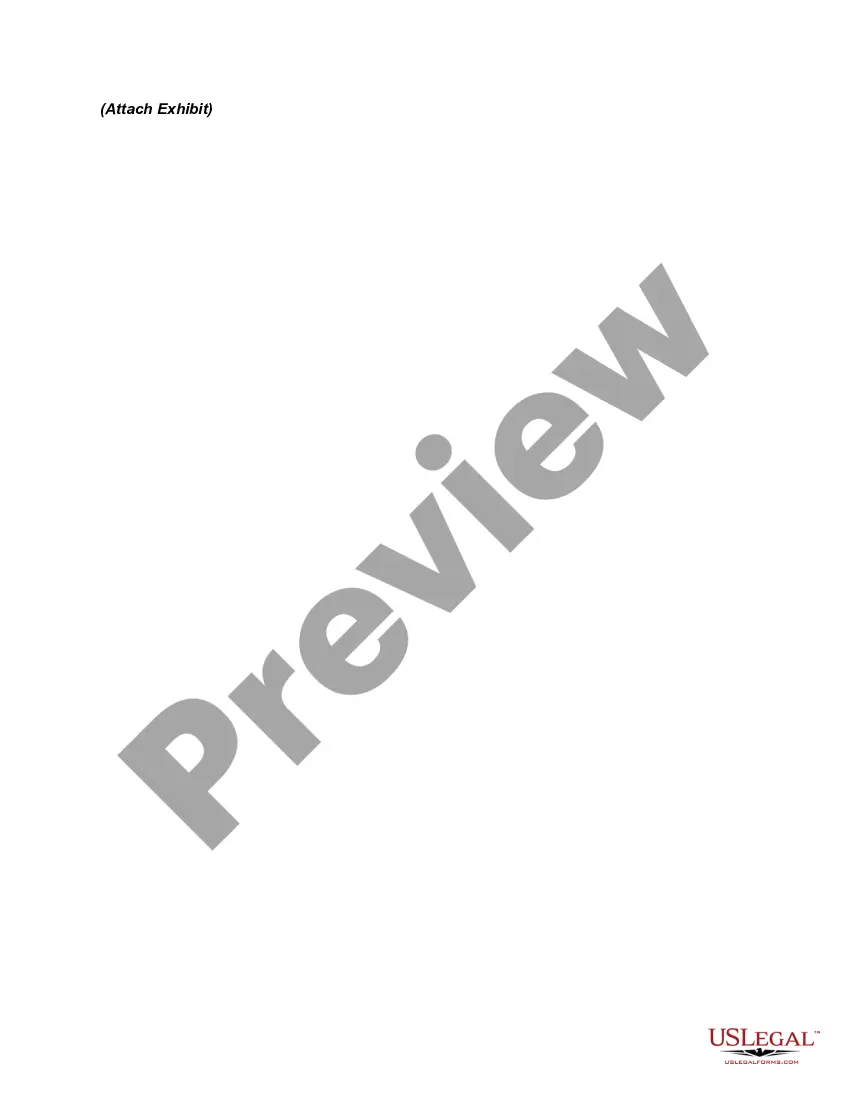
- For first-time users, start by browsing the form library. Use the Preview mode to confirm the suitability of the Agreement irrevocable trust for the future.
- If needed, utilize the Search functionality to find the precise document that aligns with your local requirements.
- Once you locate the correct form, click 'Buy Now' and select a subscription plan that meets your needs. You'll need to create an account to gain library access.
- Complete your purchase by inputting your payment information through a credit card or PayPal.
- Finally, download your Agreement irrevocable trust for the future template to your device for completion. You can find it in the 'My Forms' section of your profile anytime.
In conclusion, US Legal Forms simplifies the process of drafting essential legal documents like an Agreement irrevocable trust for the future. With a robust library and expert assistance, you can ensure accurate and effective legal documents.
Don't wait—start your estate planning today with US Legal Forms to secure your financial future!
Form popularity
FAQ
The 5-year rule for irrevocable trusts refers to a stipulation that affects eligibility for Medicaid and similar benefits when assets are transferred to an agreement irrevocable trust for the future. This rule necessitates that individuals wait five years after the transfer to apply for these benefits. This ensures that individuals do not attempt to shield assets from creditors or future needs by prematurely placing them in a trust. Understanding this rule is essential for effective estate planning.
The lookback period for an irrevocable trust is a crucial consideration when you transfer assets. This period is often five years, which means that any asset transfers made within this timeframe may affect your eligibility for Medicaid or other benefits. When creating your agreement irrevocable trust for the future, understanding this period helps you in structuring your estate plan effectively. Always consult legal professionals to navigate complexities surrounding transfer rules.
In most cases, your house cannot be taken by the IRS if it is held in an agreement irrevocable trust for the future, as the trust typically protects the asset from creditors. However, if there are tax liabilities associated with the property, the IRS may pursue funds from the trust to settle debts. You should carefully manage your trust assets and consult with a legal advisor to ensure protection. By doing so, you build security around your home while setting your estate plan.
The 5-year rule in an agreement irrevocable trust for the future refers to a period during which any assets transferred into the trust could be subject to penalties if you apply for Medicaid benefits. This rule helps prevent individuals from transferring assets to qualify for assistance while still retaining benefits. Essentially, if you transfer assets to an irrevocable trust, you cannot apply for certain benefits for five years. Therefore, understanding this rule is crucial for proper estate planning.
An irrevocable trust agreement is a legal document that transfers your assets into a trust, which cannot be changed or revoked once established. This provides security for your beneficiaries and can offer tax benefits. When properly created, an agreement irrevocable trust for the future safeguards your plans and intentions, making it a crucial tool in estate planning.
Yes, you can write your own irrevocable trust, but it's essential to ensure that it meets all legal requirements. Engaging a professional can help to ensure the agreement irrevocable trust for the future is valid and well-structured. If you're unsure about the legal language or specific clauses, consider using a platform like USLegalForms to guide you through the process.
To fill out an agreement irrevocable trust for the future, start by gathering all necessary information about your assets and beneficiaries. Next, follow the prompts in the chosen template, ensuring you provide accurate details about the trust's terms and the roles of trustees and beneficiaries. Using a resource like US Legal Forms can simplify the process, guiding you step-by-step and ensuring you complete the document correctly.
Usually, an attorney who specializes in estate planning prepares the agreement irrevocable trust for the future. They ensure that the document complies with state laws and accurately reflects your wishes. However, you might also use online platforms like US Legal Forms to create your trust agreement, offering an accessible and efficient way to manage your estate planning needs.
When considering an agreement irrevocable trust for the future, it is essential to recognize a few drawbacks. First, once you establish this type of trust, you typically cannot modify the terms or reclaim the assets. This permanence can limit your flexibility, especially if your financial situation changes. Additionally, the trust may incur administrative costs and fees that can add up over time.
Certain assets may not be suitable for inclusion in an irrevocable trust, such as retirement accounts and certain types of real estate. When establishing an agreement irrevocable trust for the future, you should carefully consider the implications of transferring various assets. Consulting with a legal expert will help you make informed decisions about asset placement.