Rico Act Law Definition For Dummies
Description
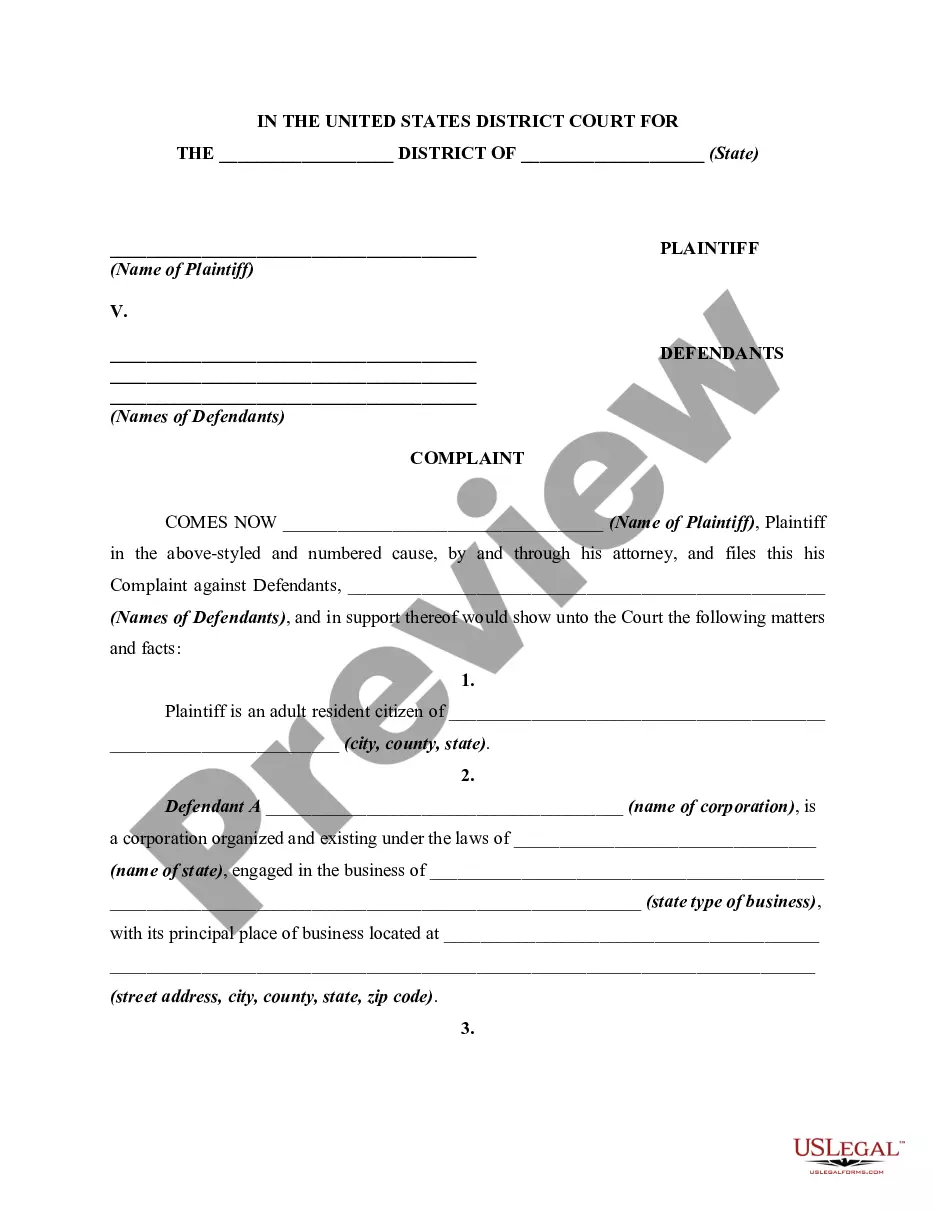
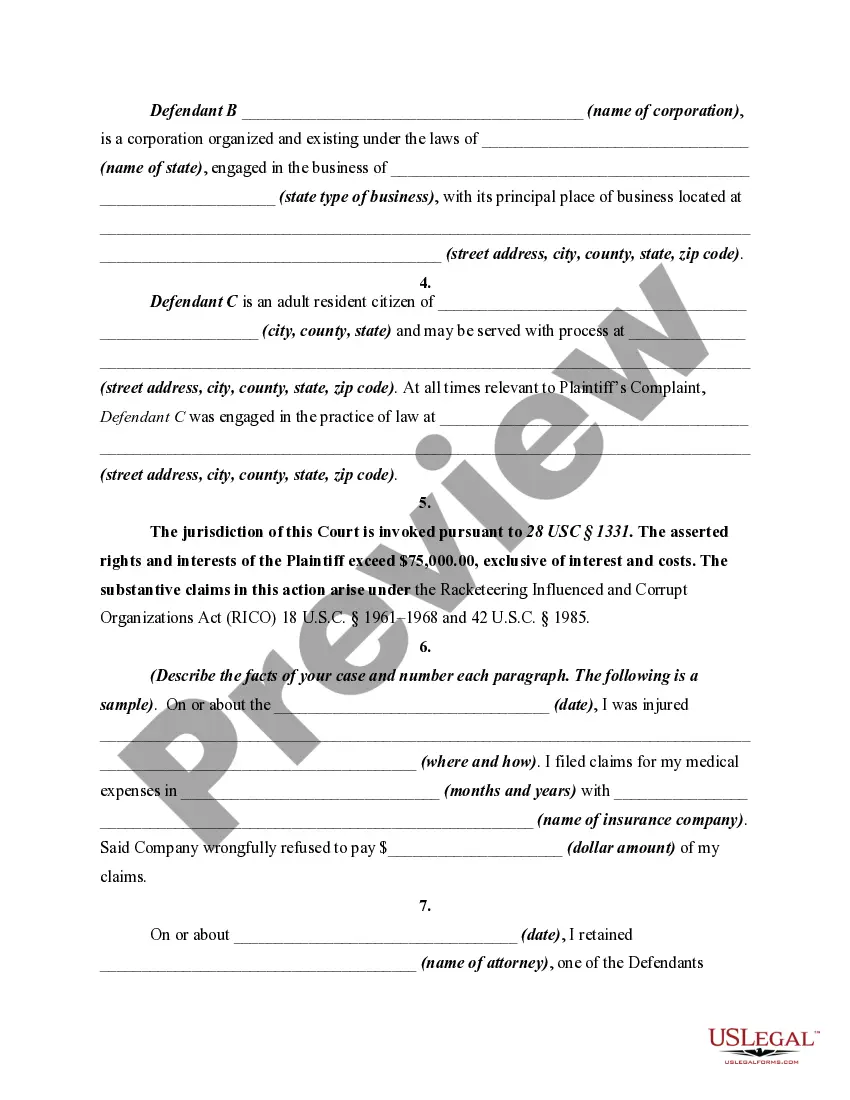
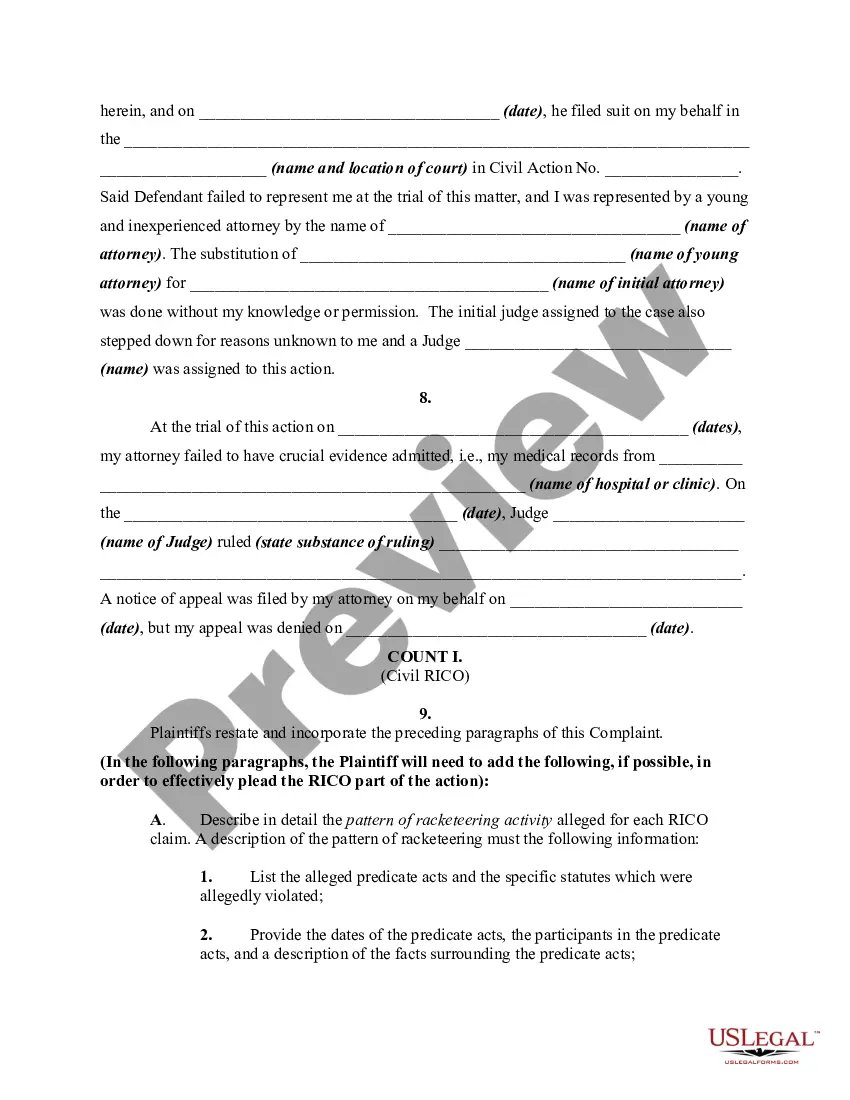
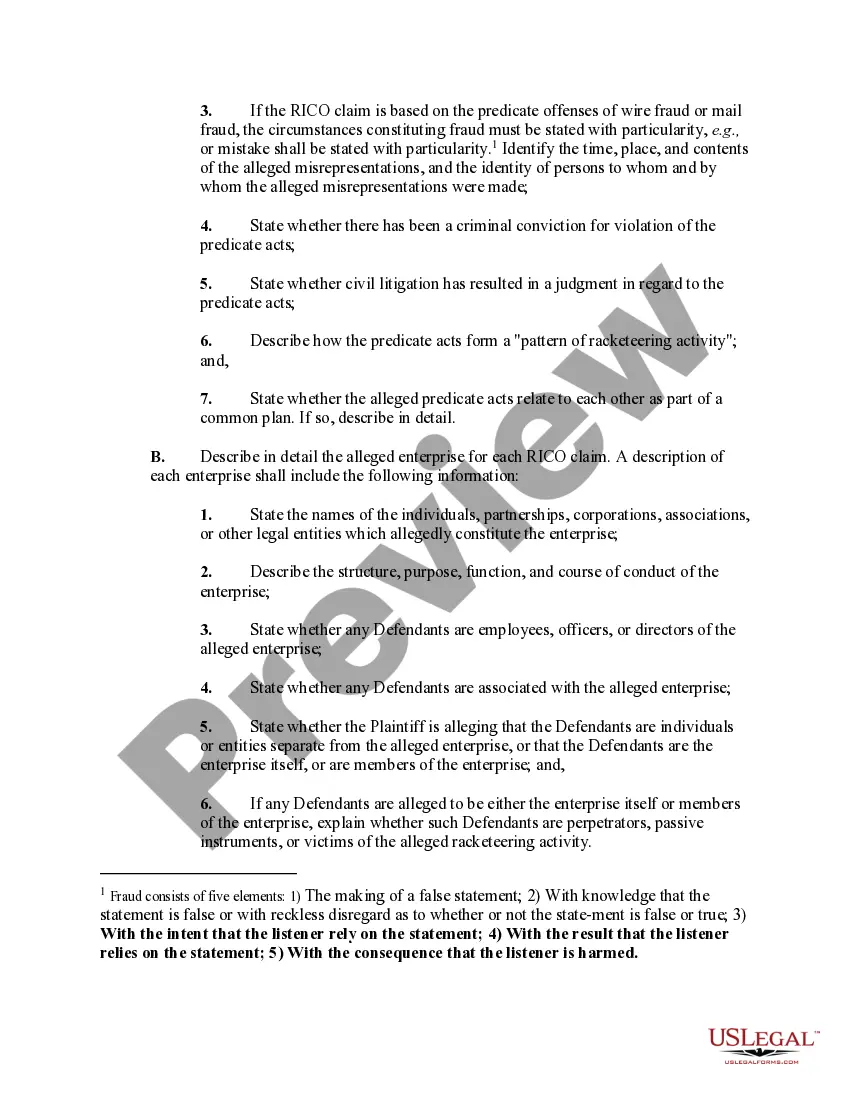
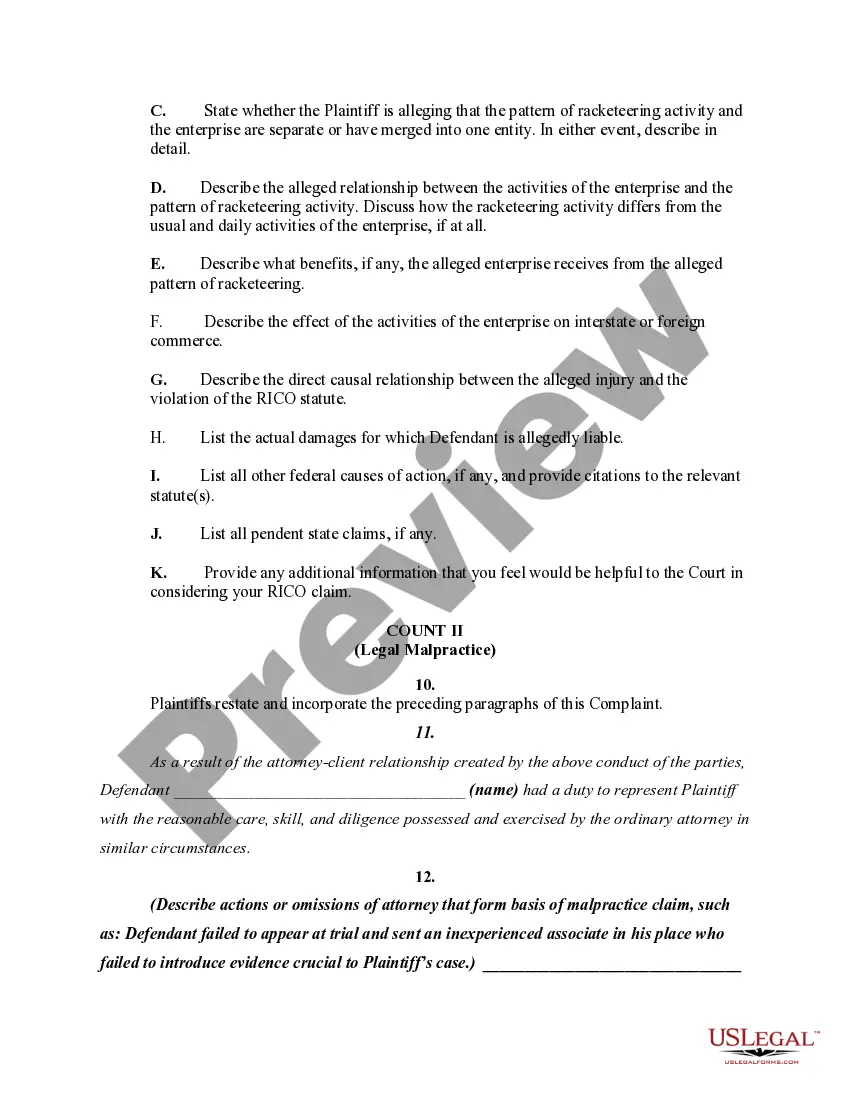
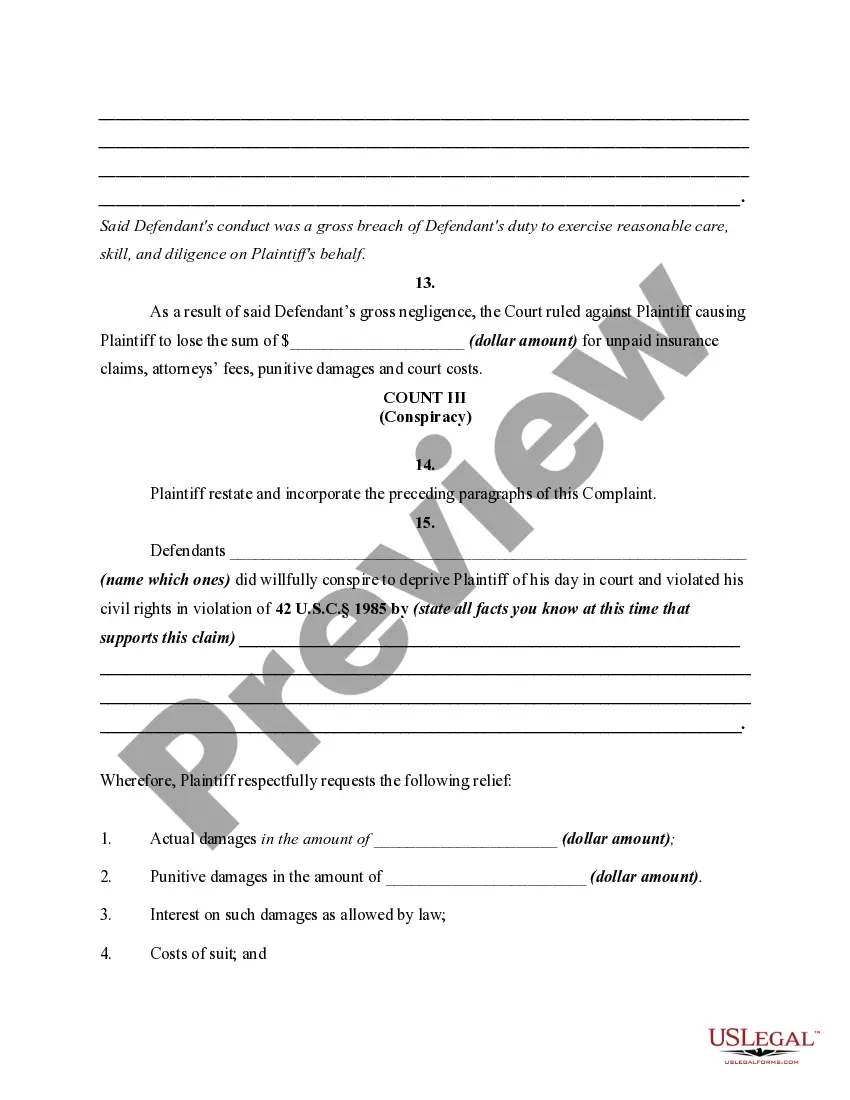






How to fill out Complaint In Federal Court For Conspiracy To Interfere With The Civil Rights Of Plaintiff, RICO, And Legal Malpractice?
Creating legal documents from the ground up can frequently be daunting.
Certain situations may require extensive research and significant financial investment.
If you’re searching for a simpler and more cost-effective method of crafting Rico Act Law Definition For Dummies or any other documents without the hassle of navigating obstacles, US Legal Forms is readily available to you.
Our online compilation of over 85,000 current legal forms encompasses nearly every facet of your financial, legal, and personal concerns. With just a few clicks, you can swiftly obtain state- and county-compliant forms meticulously prepared for you by our legal experts.
Examine the document preview and descriptions to ensure you are viewing the intended form.
- Utilize our site whenever you require trustworthy and dependable services for quickly finding and downloading the Rico Act Law Definition For Dummies.
- If you’re familiar with our offerings and have previously registered an account with us, simply sign in to your account, locate the template, and download it or re-acquire it at any time in the My documents section.
- Don’t possess an account? No problem. It takes just a few moments to register and explore the collection.
- However, prior to directly downloading Rico Act Law Definition For Dummies, consider these suggestions.
Form popularity
FAQ
An example of a RICO violation could include organized crime activities like racketeering or drug trafficking. These actions involve multiple individuals working together to commit illegal acts, which aligns with the Rico act law definition for dummies. Understanding these examples can help you recognize the broad scope of RICO-related crimes. If you’re concerned about RICO implications, seeking guidance is crucial.
The length of jail time for RICO charges can vary significantly. For serious violations, you could face extensive sentences, sometimes even decades. It is essential to understand the Rico act law definition for dummies, as penalties will typically reflect the severity of the offense. Consulting with a legal expert can provide clarity on your specific situation.
RICO rules refer to the legal principles that guide how the RICO Act is applied. These rules outline what constitutes racketeering, the necessary evidence for prosecution, and the penalties involved. They help ensure fair application of the law across different cases. Familiarizing yourself with the RICO Act law definition for dummies can aid in navigating these important legal rules.
A RICO case simplified involves prosecuting a group of individuals accused of conducting illegal activities consistently over time. These activities can range from extortion to fraud, often linked by a common organization. The law allows for harsher penalties for those involved in organized crime. By grasping the RICO Act law definition for dummies, you can better understand the complexities of such cases.
The purpose of the RICO Act is to combat organized crime in the United States. It allows authorities to prosecute individuals involved in racketeering activities. This law aims to eliminate illegal enterprises by targeting not just the individuals, but the associations involved. Understanding the RICO Act law definition for dummies helps clarify its significance in fighting corruption and organized crime.
Yes, there have been instances where defendants have successfully beaten a RICO case. Notable examples involve situations where the prosecution lacked sufficient evidence or failed to meet the legal criteria. Winning a RICO case often requires skilled legal representation and a solid understanding of the law. For help navigating these complexities, consider resources that offer a clear explanation of the Rico Act law definition for dummies.
For dummies, RICO means dealing with serious crime that disrupts communities, like organized crime or fraud. It empowers authorities to tackle complex criminal enterprises and hold multiple people accountable. RICO aims to dismantle these networks to protect society. This is a simplified take on the Rico Act law definition for dummies, making it more approachable.
Yes, it is possible to beat a RICO case, but it can be challenging. Defendants can argue that they were not part of a criminal enterprise or did not commit the requisite acts. Legal defenses might also include a lack of evidence or showing that the activities did not meet the legal standards of racketeering. For those looking for strategies, understanding the Rico Act law definition for dummies can be beneficial.
In simple terms, the RICO law allows for the prosecution of individuals involved in organized crime. It stands for the Racketeer Influenced and Corrupt Organizations Act, which targets illegal activities conducted by a group, including businesses. The RICO law helps law enforcement hold accountable those who attempt to profit from such criminal enterprises. This is key for grasping the Rico Act law definition for dummies.
To convict someone under the Rico Act, prosecutors must demonstrate a pattern of racketeering activity connected to an enterprise. This means there must be evidence of at least two qualifying criminal acts within a ten-year period. Further, the prosecution must show that the defendant was involved in the management or operation of the enterprise. Understanding the Rico Act law definition for dummies can clarify these elements.