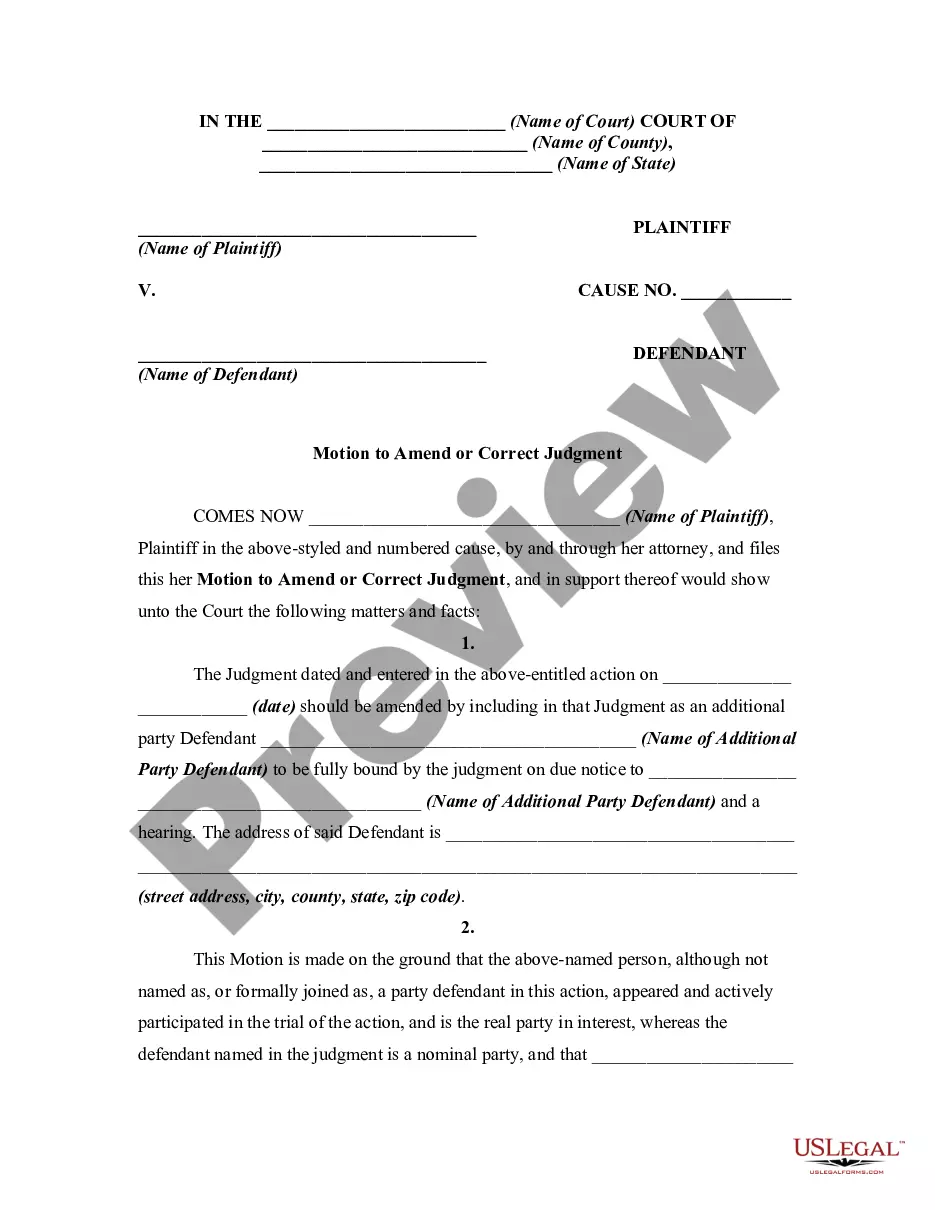
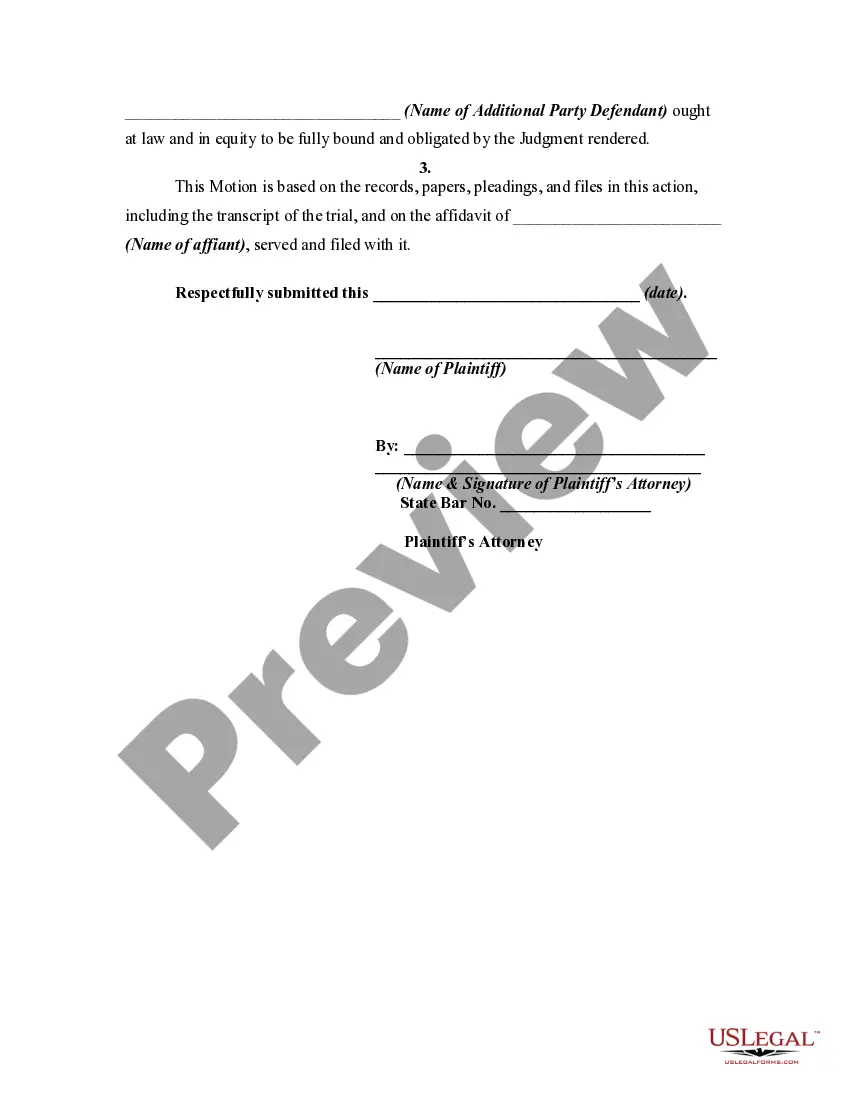
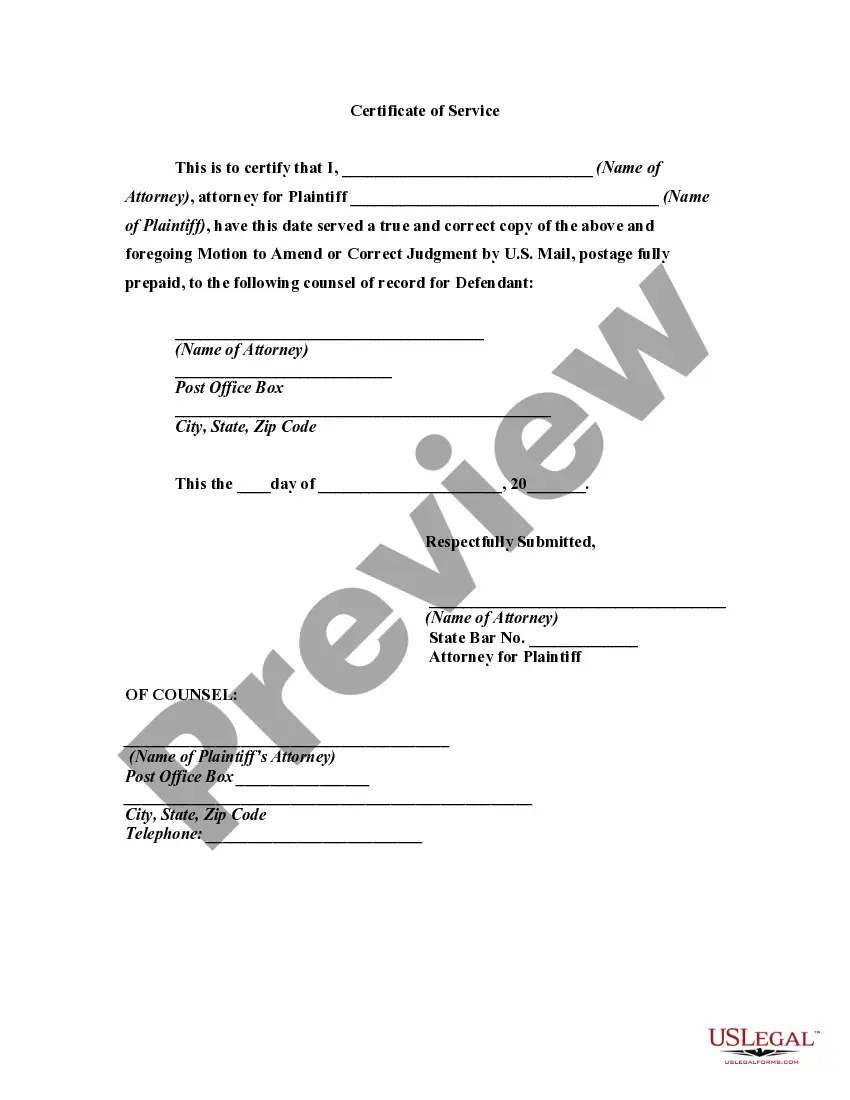
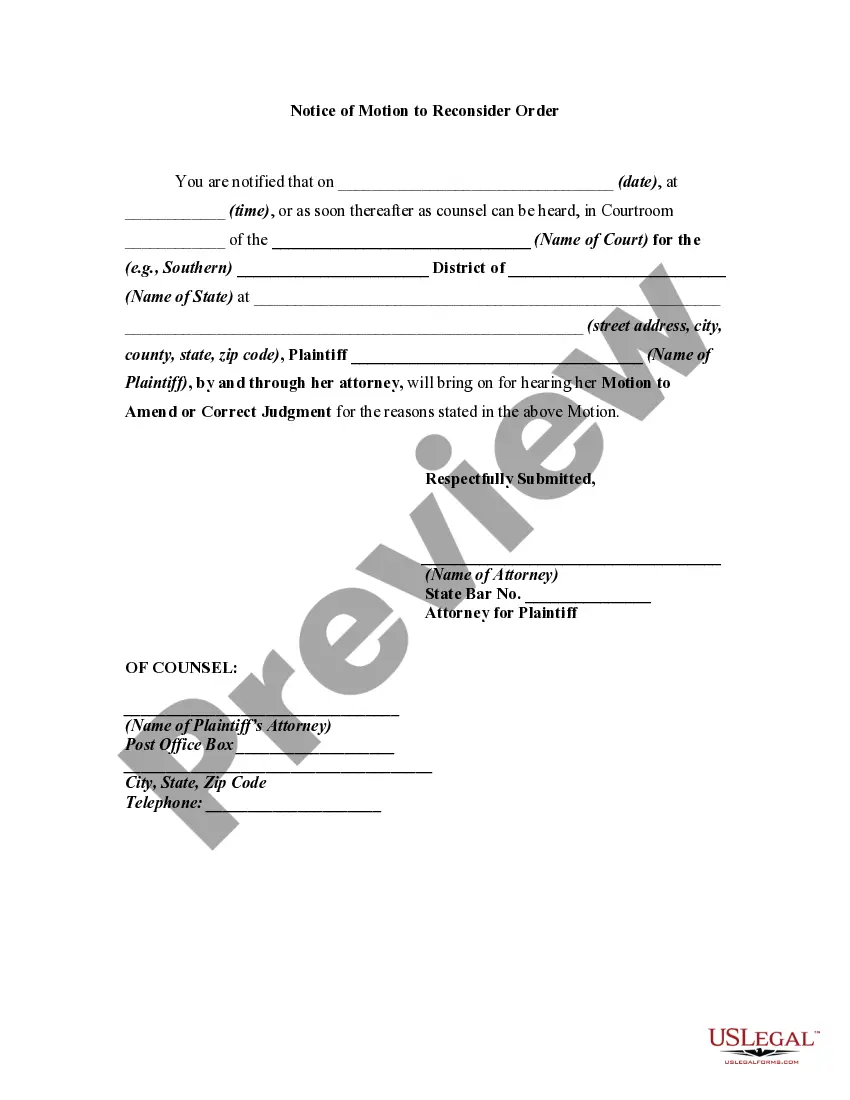
Motion To Correct Name Of Defendant
Description
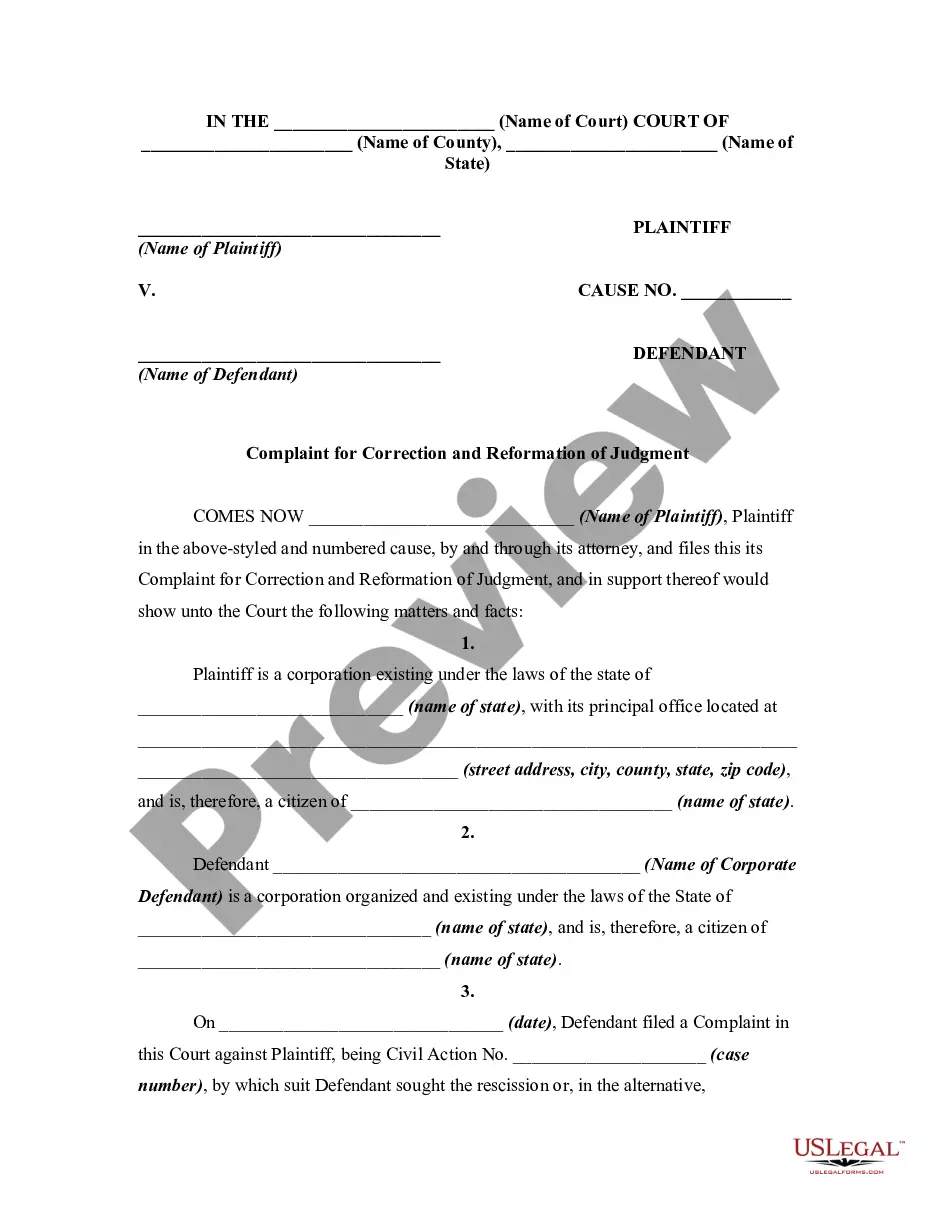
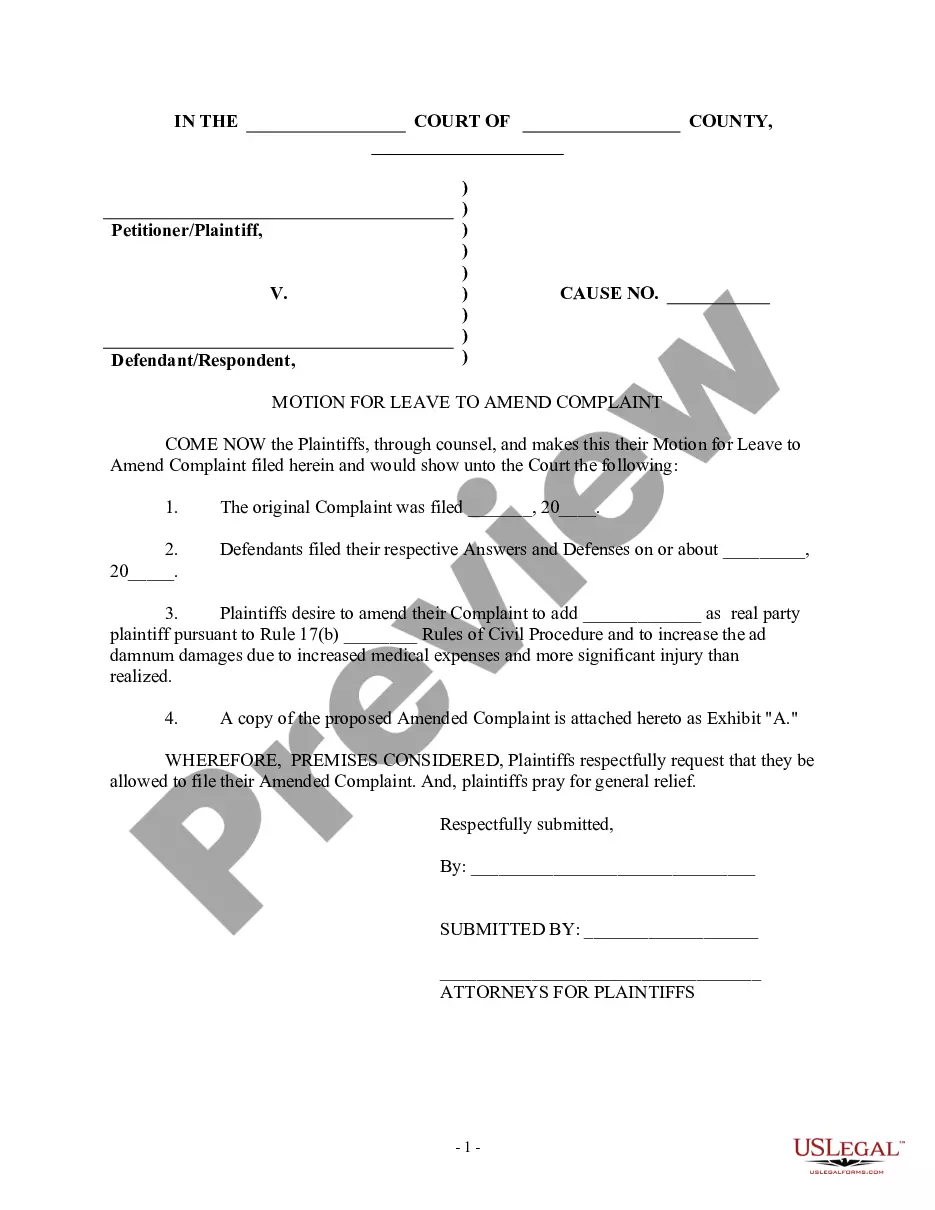
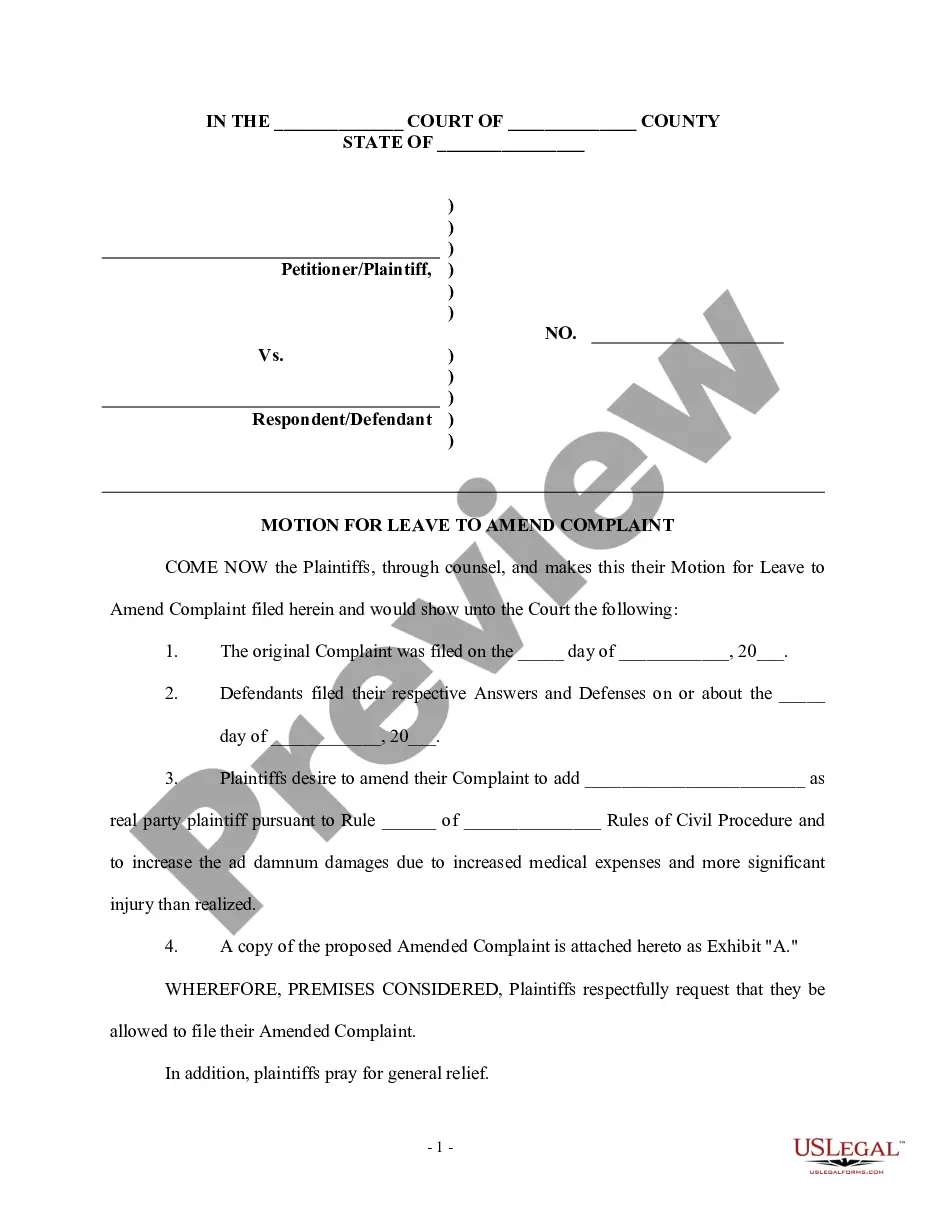
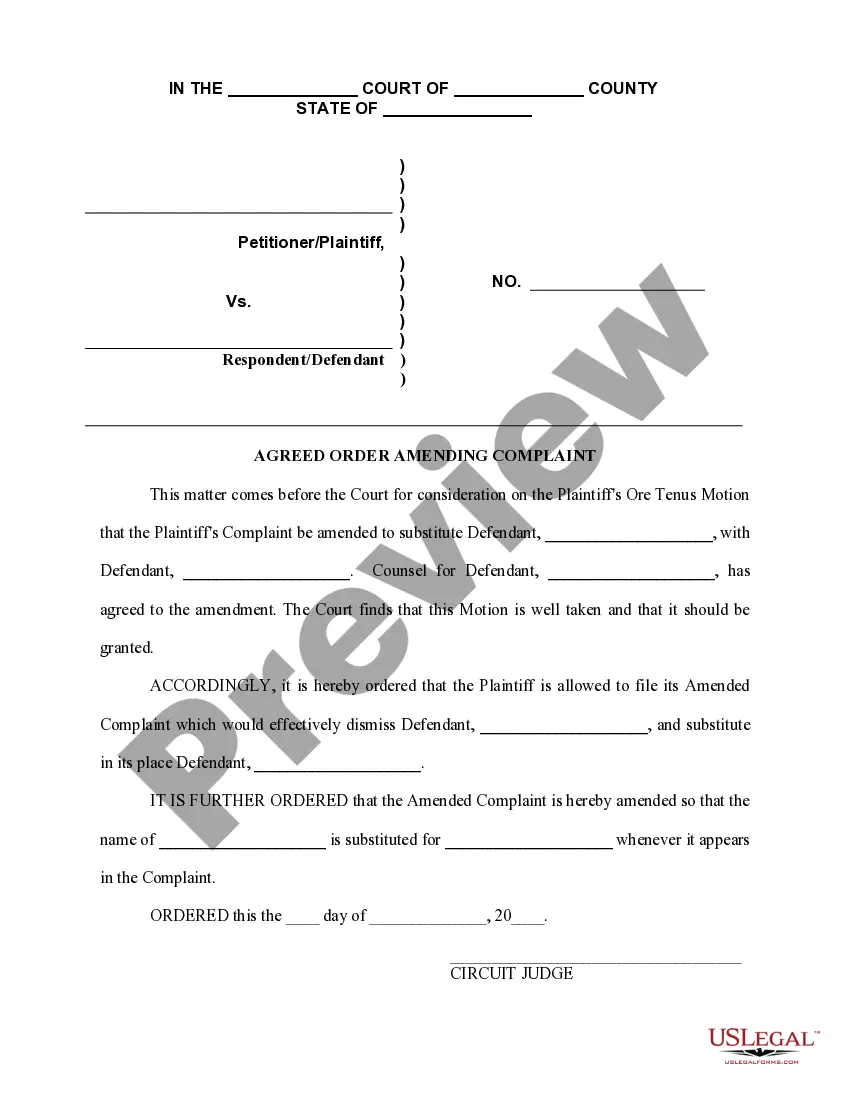
Get your form ready online
Our built-in tools help you complete, sign, share, and store your documents in one place.
Make edits, fill in missing information, and update formatting in US Legal Forms—just like you would in MS Word.
Download a copy, print it, send it by email, or mail it via USPS—whatever works best for your next step.
Sign and collect signatures with our SignNow integration. Send to multiple recipients, set reminders, and more. Go Premium to unlock E-Sign.
If this form requires notarization, complete it online through a secure video call—no need to meet a notary in person or wait for an appointment.
We protect your documents and personal data by following strict security and privacy standards.

Make edits, fill in missing information, and update formatting in US Legal Forms—just like you would in MS Word.

Download a copy, print it, send it by email, or mail it via USPS—whatever works best for your next step.

Sign and collect signatures with our SignNow integration. Send to multiple recipients, set reminders, and more. Go Premium to unlock E-Sign.

If this form requires notarization, complete it online through a secure video call—no need to meet a notary in person or wait for an appointment.

We protect your documents and personal data by following strict security and privacy standards.
Looking for another form?
How to fill out Motion To Amend Or Correct Judgment To Include Additional Party Defendant As Real Party In Interest?
The Motion To Amend Name Of Defendant you see on this page is a reusable legal template created by qualified attorneys in accordance with federal and state regulations.
For over 25 years, US Legal Forms has offered individuals, companies, and legal practitioners access to more than 85,000 validated, state-specific templates for any business and personal event. It’s the quickest, easiest, and most dependable method to secure the documentation you require, as the service ensures the highest standard of data protection and anti-malware measures.
Register for US Legal Forms to have authenticated legal templates for all of life’s situations at your fingertips.
- Search for the document you need and verify it.
- Browse through the template you sought and preview it or review the form description to confirm it meets your standards. If it does not, use the search tool to find the appropriate one. Click Buy Now once you have found the form you need.
- Enroll and Log In.
- Choose the payment plan that best fits you and establish an account. Use PayPal or a credit card for a fast checkout. If you already possess an account, Log In and check your subscription to continue.
- Obtain the editable template.
- Select the format you prefer for your Motion To Amend Name Of Defendant (PDF, DOCX, RTF) and download the template to your device.
- Fill out and sign the document.
- Print the template to complete it manually. Alternatively, use an online versatile PDF editor to quickly and accurately complete and sign your form with an electronic signature.
- Redownload your paperwork as needed.
- Access the same document again any time required. Navigate to the My documents section in your profile to redownload any previously acquired templates.
Form popularity
FAQ
A motion to correct is a request made to a court to amend or adjust a legal document to rectify errors or misstatements. This motion is particularly relevant when addressing the incorrect naming of a defendant in a lawsuit, warranting a motion to correct name of defendant. Using this motion allows parties to clarify their positions and promote a smoother legal process. It’s essential for parties to take action swiftly to avoid delays in their case.
A misnomer in a lawsuit occurs when a party is incorrectly named, leading to potential confusion in the legal process. For example, a case may name the wrong individual as the defendant, necessitating a motion to correct name of defendant. Recognizing and addressing misnomers is essential to uphold the integrity of legal proceedings and ensure that justice is served correctly. Correct parties must be held accountable, making motions an important tool.
A claim by a named defendant against the plaintiff is a legal assertion made by the defendant in response to the plaintiff's accusations. This claim can counter the charges or seek damages against the plaintiff as a result of their actions. In such situations, accurately identifying the correct defendant through a motion to correct name of defendant is crucial for ensuring a fair resolution. Misidentification can lead to unwarranted claims and further complications in the case.
A motion to amend seeks to alter or add information in a legal document to ensure clarity and accuracy. This could involve changing the name of a defendant in a case to reflect the correct party. By filing a motion to correct name of defendant, parties aim to remove any ambiguity that could impact the outcomes of legal proceedings. Clarity and accuracy promote fair trials and support the integrity of the judicial process.
The defendant in error refers to the party named in a legal action who may be held liable for the claims brought against them. In certain cases, this may not be the correct individual, leading to the need for a motion to correct name of defendant. It's vital to clearly identify the defendant to ensure justice is served accurately. When an error occurs, it can complicate the legal process, making a correction necessary.
You can file a motion in court without an attorney by following the court's specific procedures for self-representation. Begin by preparing your motion, ensuring that it includes all necessary information, like a motion to correct the name of the defendant. You might also need to understand local court rules and filing fees. Resources such as uslegalforms offer valuable templates and instructions that can assist you through the filing process without legal representation.
The Rule 15 motion to amend specifically refers to the court procedure that allows a party to make changes to their pleadings in a civil case. This includes correcting any inaccuracies, such as a motion to correct the name of the defendant. The intent is to clarify the record and ensure that all parties involved are properly identified. Understanding this rule helps you properly navigate legal amendments.
Filing a motion to amend involves several steps, including preparing the appropriate documents and submitting them to the court. You should include the specific reasons for the amendment, such as the need for a motion to correct the name of the defendant. Additionally, it is crucial to follow your jurisdiction's rules regarding format and submission deadlines. Many find that services like uslegalforms simplify this process by providing templates and guidance.
The primary purpose of the motion to amend is to allow parties to correct mistakes in legal documents, ensuring accurate representation in court. When you file a motion to correct the name of the defendant, you are officially asking the court to change the name to reflect the correct identity. This can lead to more efficient legal proceedings and reduce complications that arise from naming errors. It is an essential tool for upholding the integrity of the legal process.
The Rule 15 motion is a provision in the Federal Rules of Civil Procedure that allows a party to amend their pleadings. Specifically, it enables parties to correct errors, such as improper naming, through a motion to correct the name of the defendant. This rule is designed to facilitate justice by allowing necessary adjustments to legal documents. By utilizing Rule 15, you can streamline the amendment process in your case.