Support Child Out For College Students
Description

Get your form ready online
Our built-in tools help you complete, sign, share, and store your documents in one place.
Make edits, fill in missing information, and update formatting in US Legal Forms—just like you would in MS Word.
Download a copy, print it, send it by email, or mail it via USPS—whatever works best for your next step.
Sign and collect signatures with our SignNow integration. Send to multiple recipients, set reminders, and more. Go Premium to unlock E-Sign.
If this form requires notarization, complete it online through a secure video call—no need to meet a notary in person or wait for an appointment.
We protect your documents and personal data by following strict security and privacy standards.

Make edits, fill in missing information, and update formatting in US Legal Forms—just like you would in MS Word.

Download a copy, print it, send it by email, or mail it via USPS—whatever works best for your next step.

Sign and collect signatures with our SignNow integration. Send to multiple recipients, set reminders, and more. Go Premium to unlock E-Sign.

If this form requires notarization, complete it online through a secure video call—no need to meet a notary in person or wait for an appointment.

We protect your documents and personal data by following strict security and privacy standards.
Looking for another form?








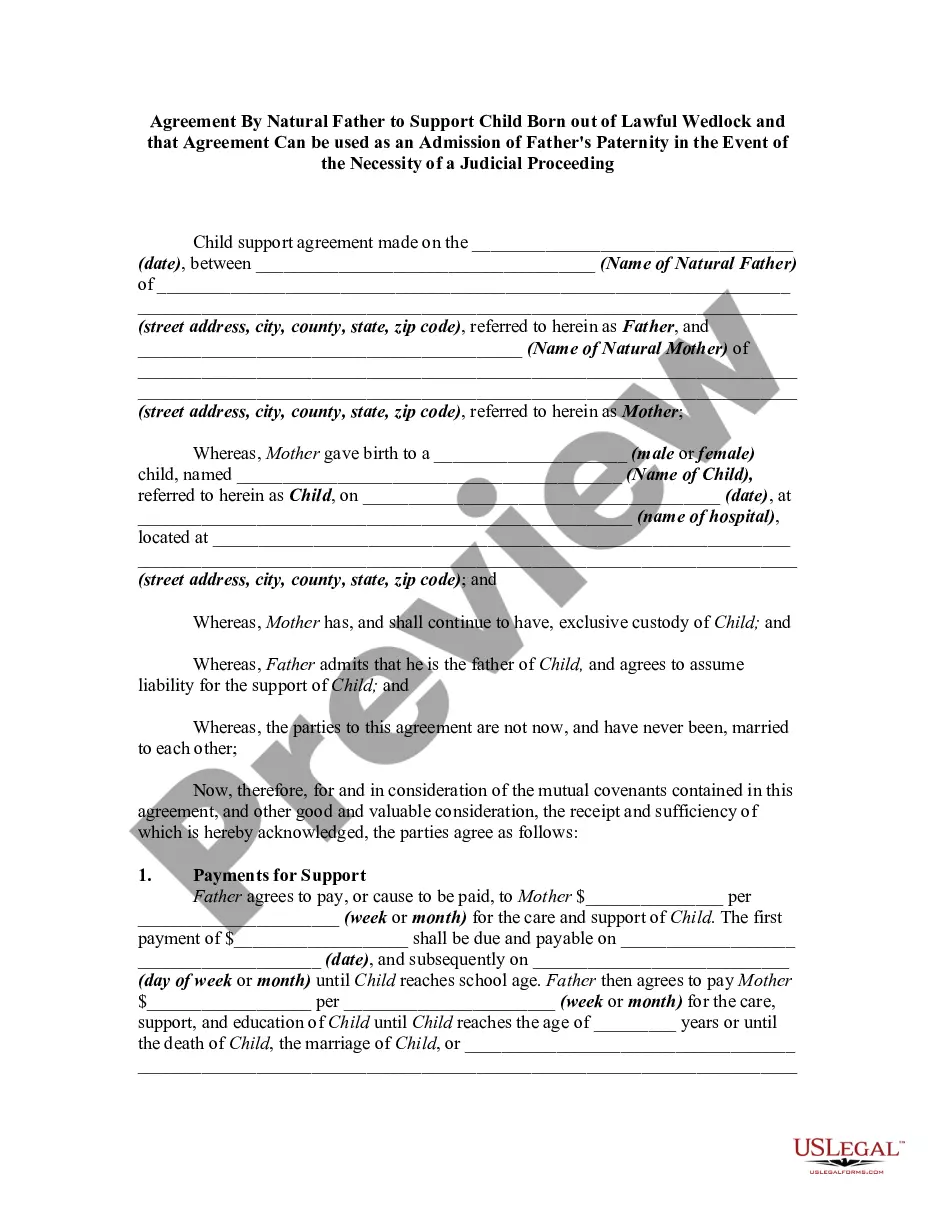
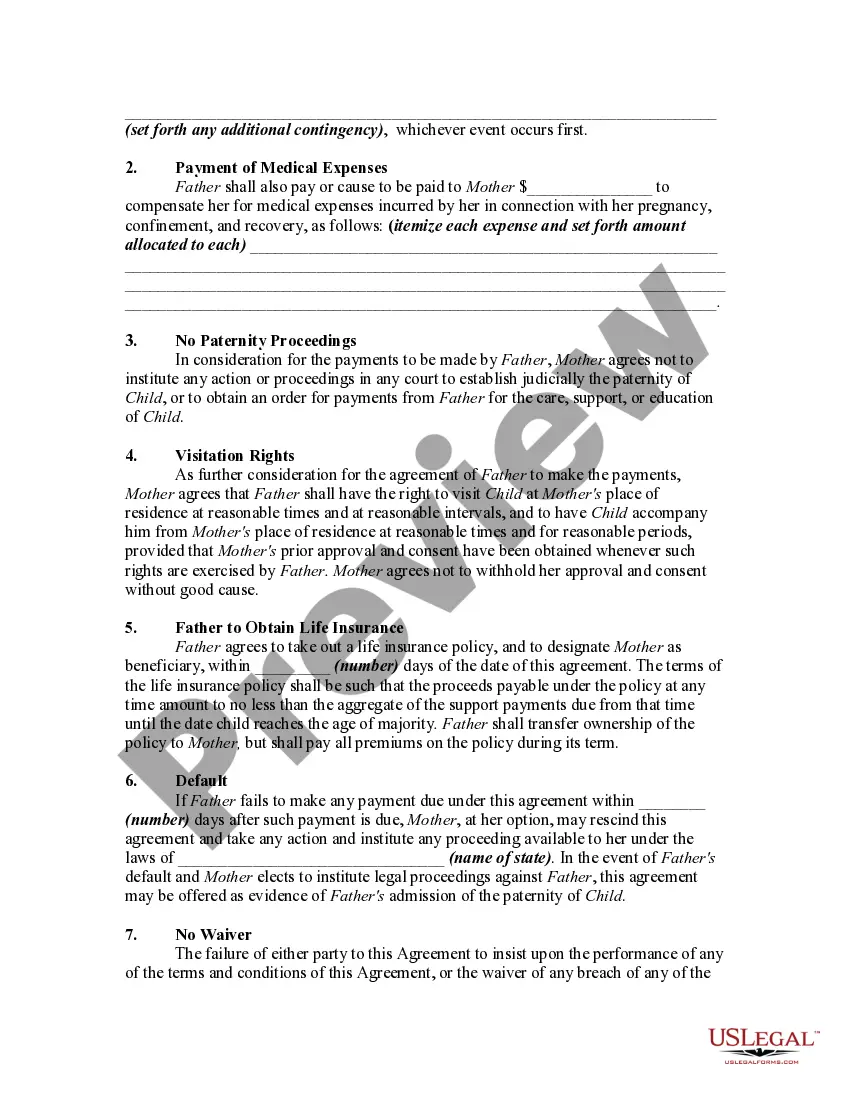
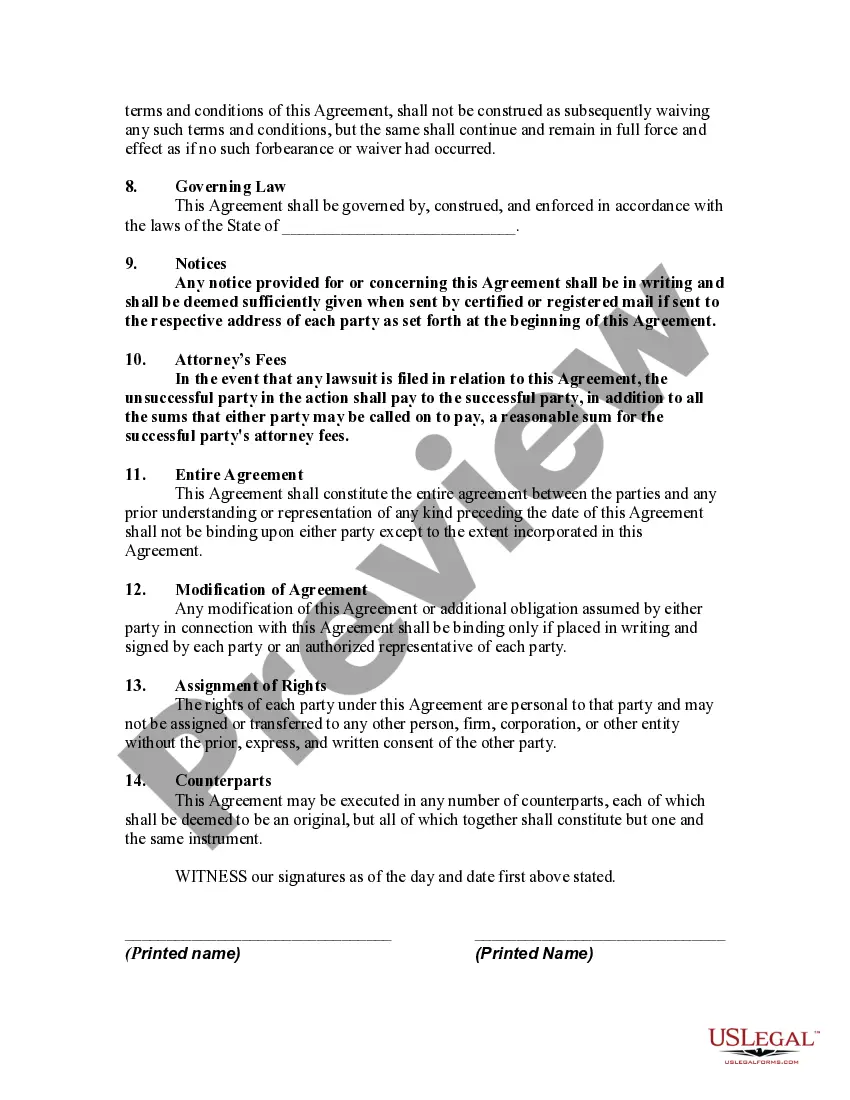
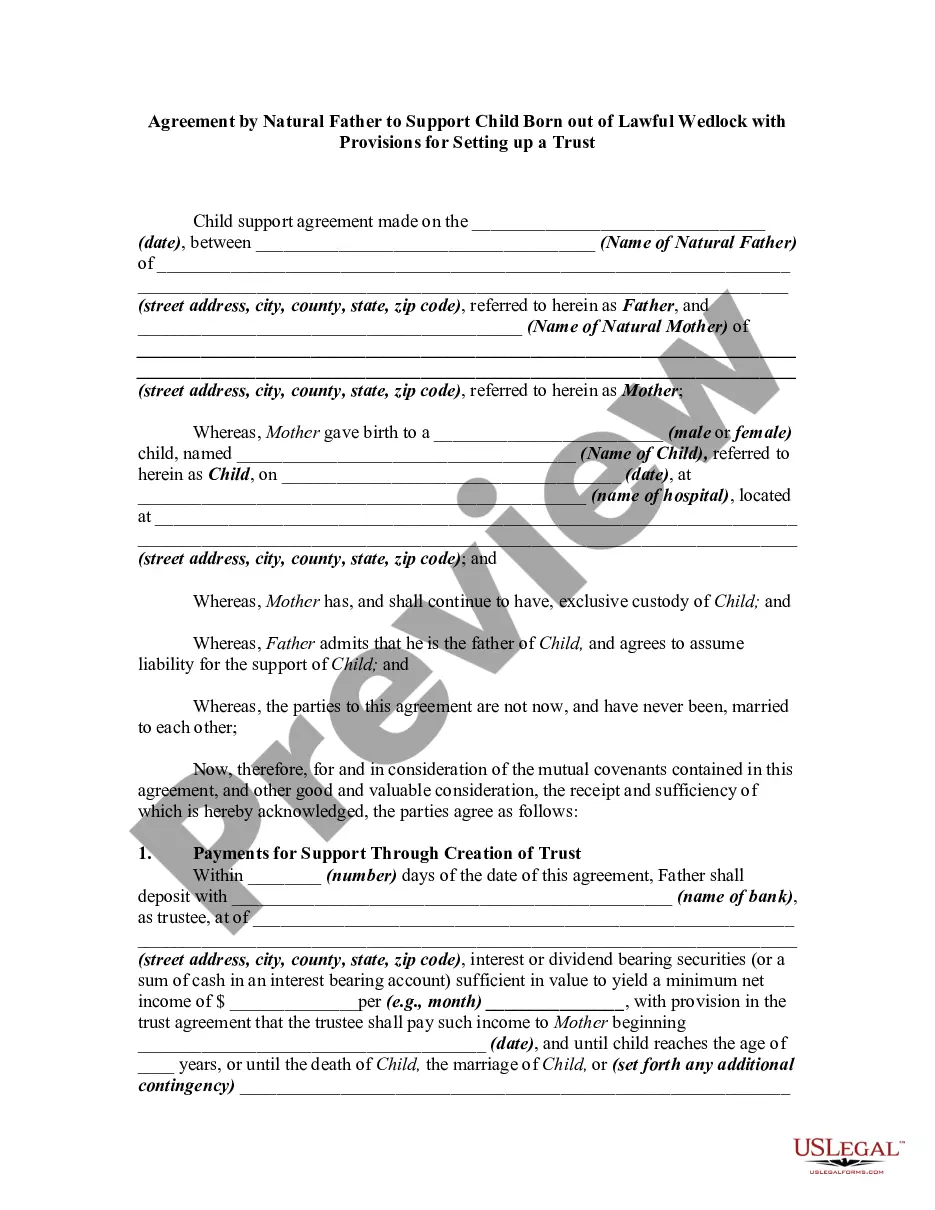
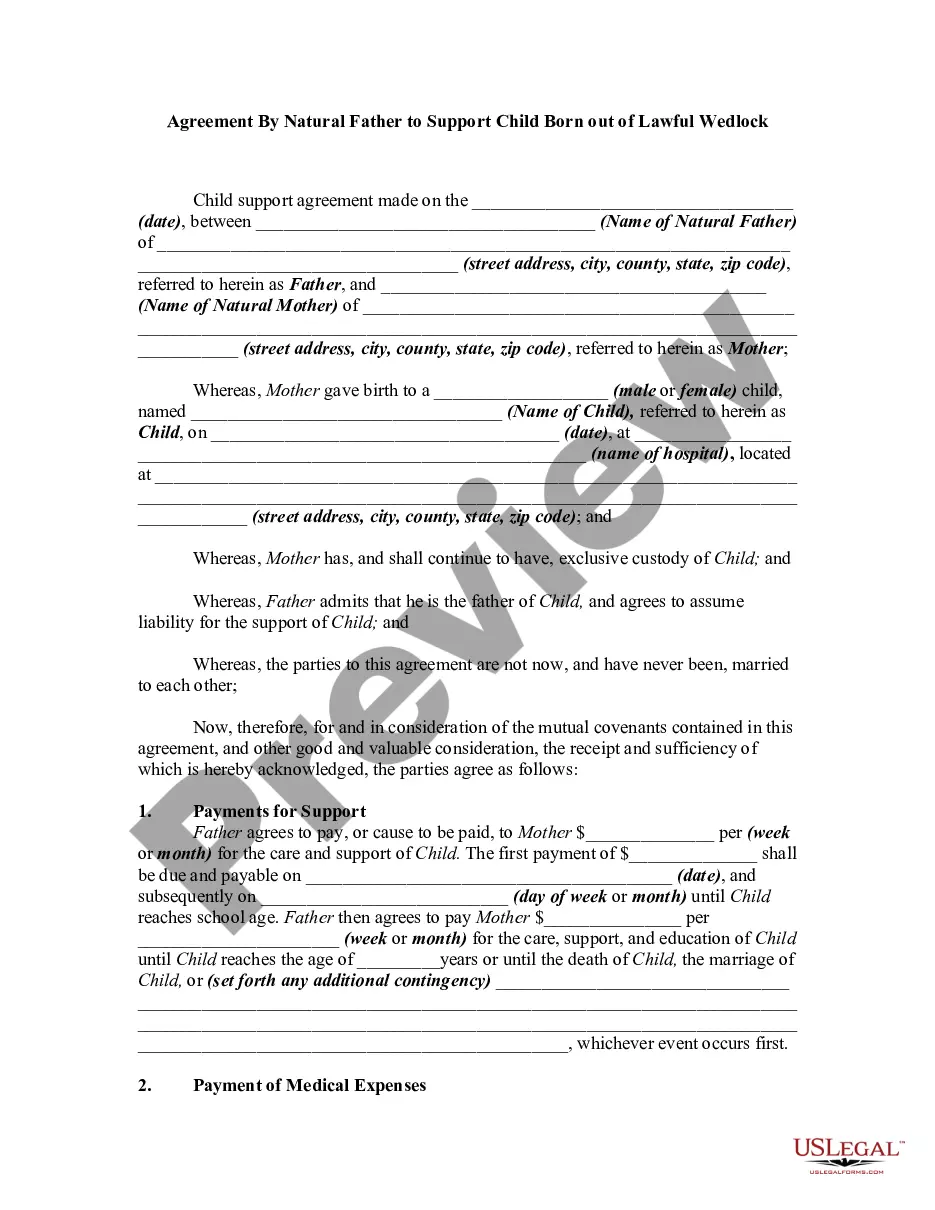
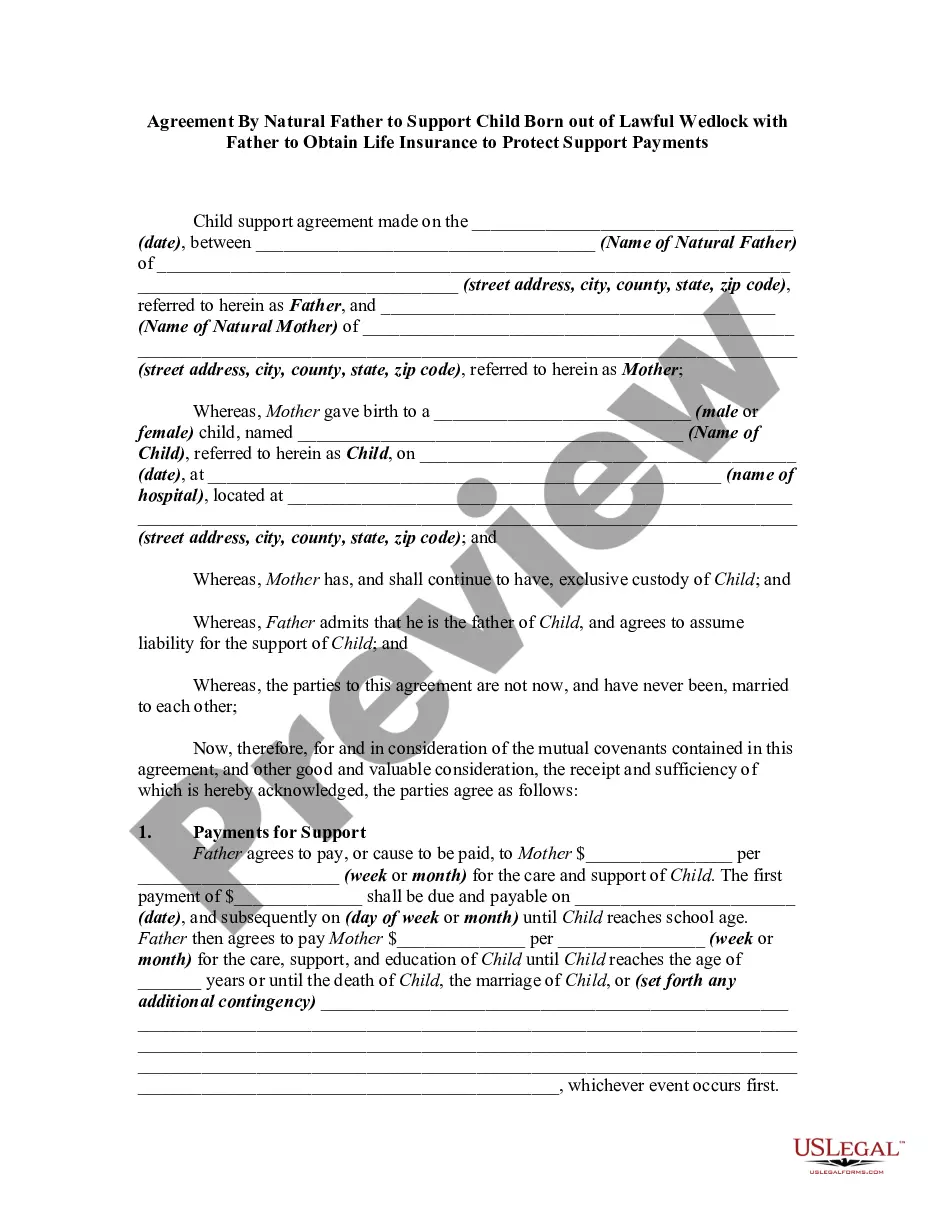
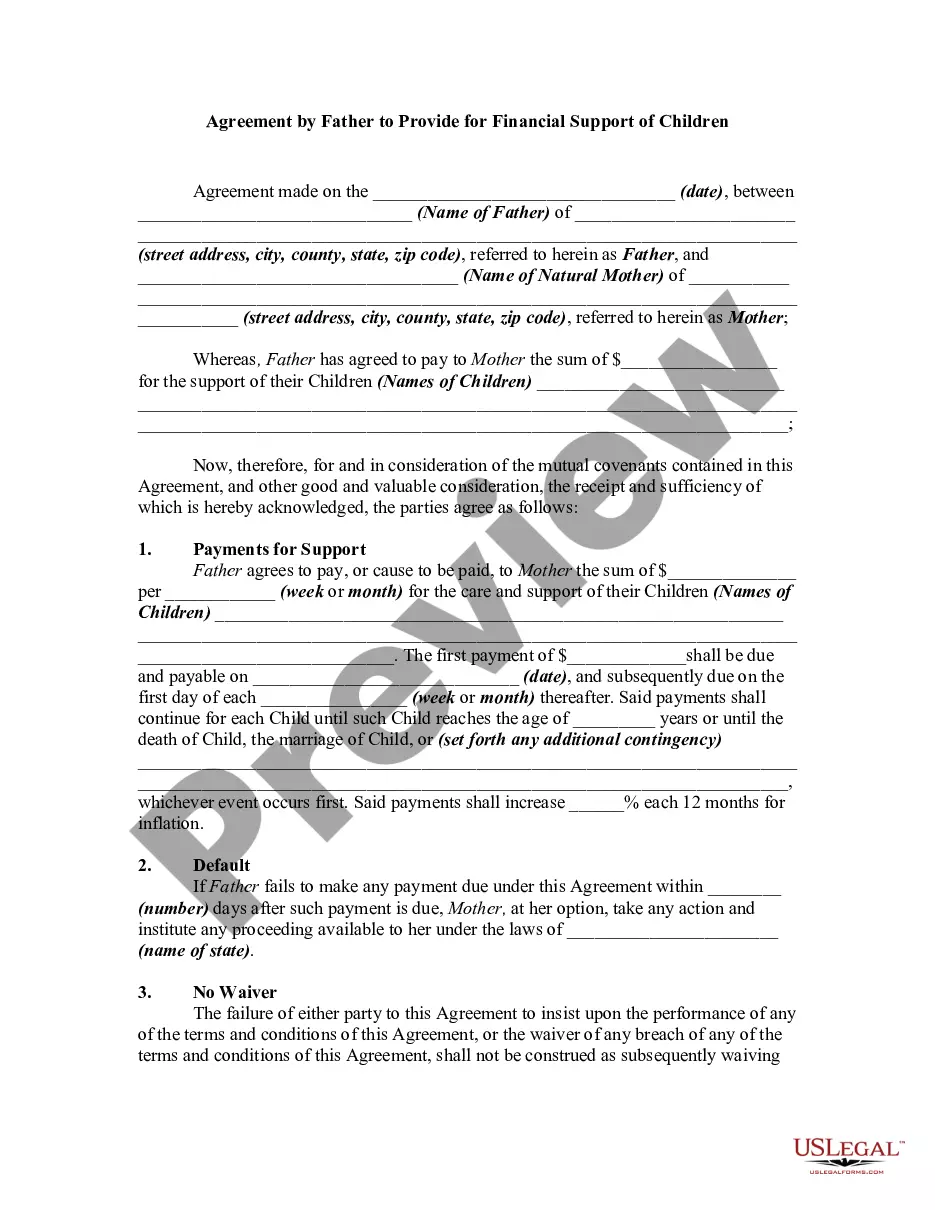
How to fill out Agreement By Natural Father To Support Child Born Out Of Lawful Wedlock And That Agreement Can Be Used As An Admission Of Father's Paternity In The Event Of The Necessity Of A Judicial Proceeding?
Legal documentation administration can be perplexing, even for the most adept professionals.
When you are looking for a Support Child Out For College Students and lack the time to invest searching for the appropriate and up-to-date version, the processes can be taxing.
Gain entry to a valuable repository of articles, guides, and resources pertinent to your circumstances and needs.
Save time and energy seeking the documents you require, and use US Legal Forms' sophisticated search and Review feature to find Support Child Out For College Students and obtain it.
Appreciate the US Legal Forms online library, supported by 25 years of experience and reliability. Enhance your daily document management in a seamless and user-friendly manner today.
- If you have a subscription, Log In to your US Legal Forms account, search for the document, and download it.
- Check the My documents tab to review the documents you previously saved and manage your folders as needed.
- If this is your initial experience with US Legal Forms, create a free account and enjoy unlimited access to all benefits of the library.
- Here are the steps to follow after obtaining the document you desire.
- Verify it is the correct document by previewing it and examining its description.
- Ensure that the sample is recognized in your state or county.
- Choose Buy Now when you are prepared.
- Select a subscription plan.
- Find the format you prefer, and Download, complete, eSign, print, and deliver your documents.
- Access state- or county-specific legal and business documents.
- US Legal Forms caters to any requirements you may have, from personal to commercial paperwork, all in one location.
- Utilize advanced tools to complete and manage your Support Child Out For College Students.
Form popularity
FAQ
Many states allow child support to continue while a child is in college, but the rules vary widely. States like California and New York provide clear guidelines that support child out for college students. It is essential to check specific state laws, as some require proof of enrollment or academic progress to maintain support. US Legal Forms can assist you in understanding your state's requirements and ensuring compliance with the necessary legal procedures.
Yes, a child can receive child support while attending college. The obligation for parents to support their child typically continues through their college years. However, this support often depends on the laws of the state and the specific arrangements made during the divorce or separation. To navigate these complexities, consider using US Legal Forms to help establish or modify child support agreements that include college expenses.
In Minnesota, child support typically continues until the child turns 18 or graduates from high school, whichever comes later. However, support can extend if the child is enrolled in college, as many parents want to support child out for college students. It's crucial to review your specific support agreement, as terms can vary based on the situation. Legal resources, such as US Legal Forms, can help clarify these agreements and ensure compliance.
Support for a college student can include tuition fees, housing costs, textbooks, and living expenses. Additionally, health insurance and transportation costs also fall under this category. When navigating how to support child out for college students, it’s essential to understand what expenses are included in support agreements. Clear communication about these expenses can help prevent misunderstandings between parents.
The 30% rule in parenting refers to the guideline that suggests a parent should contribute about 30% of their income towards supporting their child. This rule helps ensure that financial support is fair and sustainable for both parents, especially when considering how to support child out for college students. It's important for parents to communicate and document their financial contributions to avoid disputes later.
Your child can still be considered a dependent if they are in college, provided they meet certain age and income criteria. Students under 24 who are full-time may qualify, allowing you to benefit from tax credits. This designation can ease financial pressures while supporting your child out for college students. Always verify eligibility with IRS guidelines to make informed decisions.
A student is generally no longer a dependent when they turn 19 or 24 if they are a full-time student. If they provide more than half of their own financial support, they may also lose dependent status. Understanding these age limits is critical for financial planning and tax purposes. This clarity can help you provide the best support for your child out for college students.
To fill out the FAFSA, a parent needs to gather financial information, including their income and tax returns. The form requires details about the student’s school and expected financial contributions. This process can determine eligibility for financial aid, making it an essential step to support your child out for college students. Consider using resources like USLegalForms to ensure your application is accurate and complete.
Child support for a college student usually depends on state laws and specific agreements between parents. In some cases, support may continue to cover educational expenses, while in others, it may cease once the child turns 18. Understanding your state's laws can clarify obligations and rights. This knowledge is crucial to effectively support your child out for college students.
A child in college can be considered a dependent if they meet specific criteria, such as age and income limits. Full-time students under the age of 24 generally qualify as dependents, which can provide tax benefits to parents. This status can significantly ease financial burdens while supporting your child out for college students. Always check with current IRS regulations to confirm eligibility.