Transmittal for Collection
What this document covers
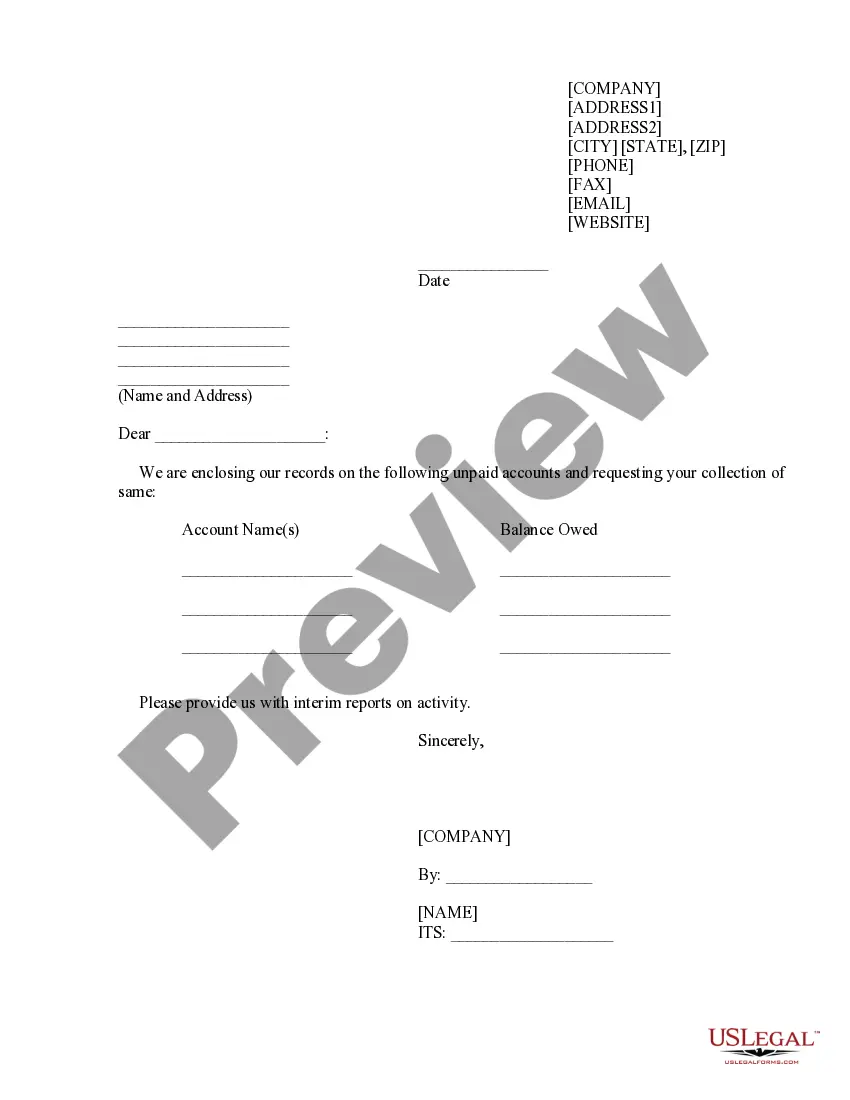
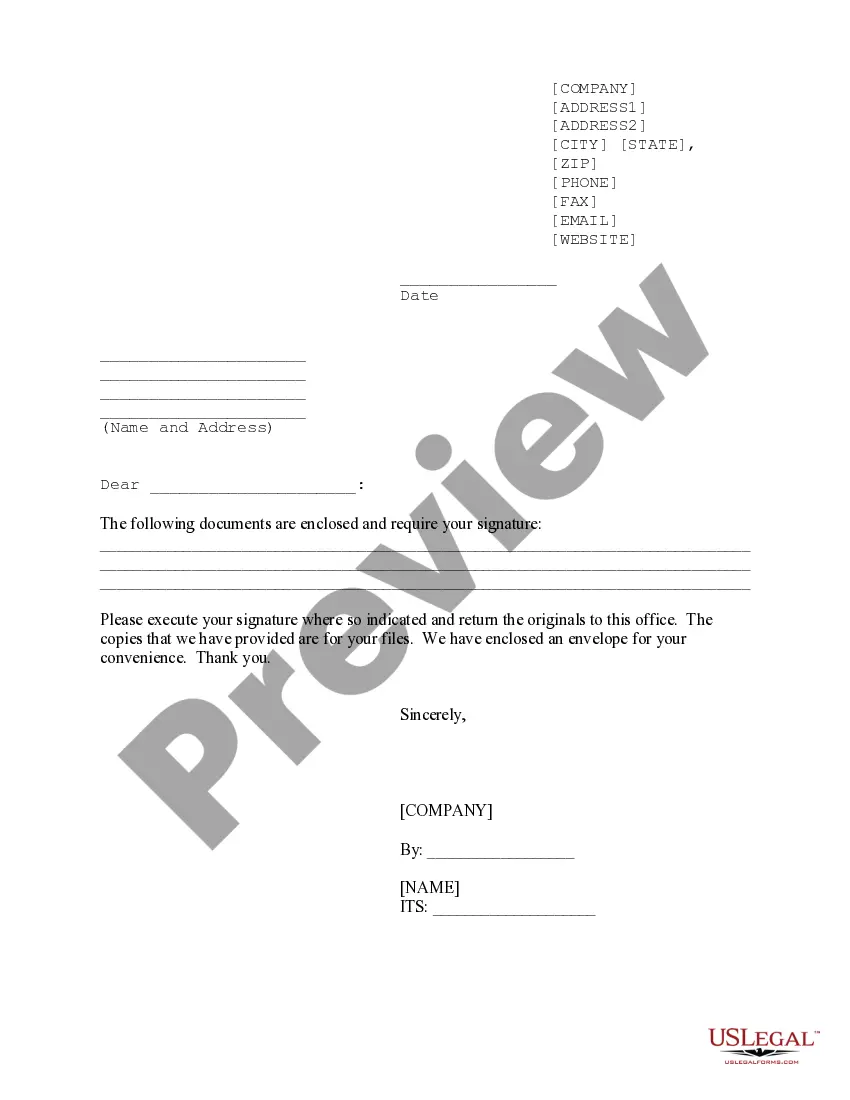
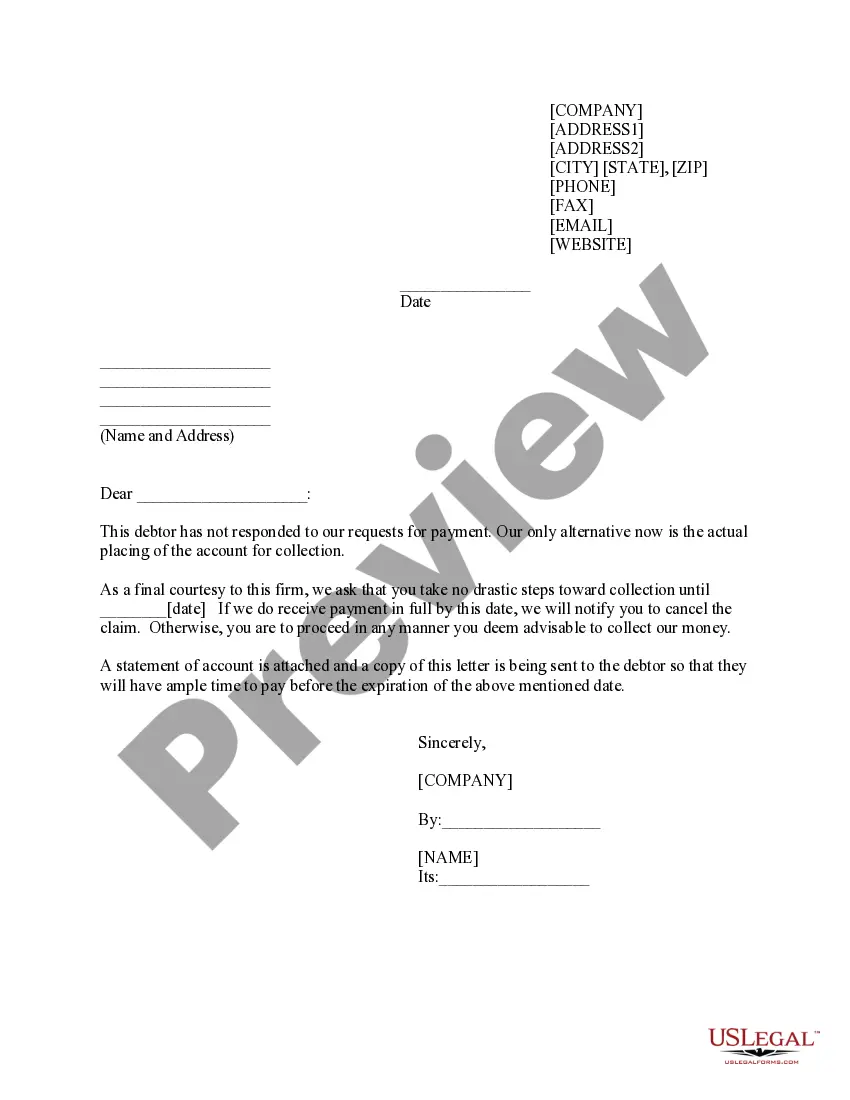
The Transmittal for Collection is a legal document used to request the collection of unpaid accounts from an agent or agency. This form facilitates the transfer of account information and emphasizes the need for collection services, ensuring that creditors have a clear process to follow in the recovery of outstanding debts. Distinct from generic collection notices, this form specifies the accounts involved and includes requests for interim updates on progress.
What’s included in this form
- Sender's contact information, including address, phone number, and email.
- Date of transmittal to the collection agency.
- Recipient's contact information, specifying the collection agency's name and address.
- List of account names and their corresponding balance owed.
- Request for interim reports on collection activity.
- Signature line for the sender, including the name and title of the person submitting the form.
Situations where this form applies
This form is typically used when a business or individual has attempted to collect a debt but remains unsuccessful. It serves to formally assign the collection of specific unpaid accounts to a designated agency for further action. It may be needed in situations where previous collection efforts have failed, or when the creditor desires professional assistance in recovering the owed amounts.
Intended users of this form
- Businesses seeking to recover unpaid debts from customers.
- Individuals who have overdue accounts and require professional debt collection services.
- Collection agencies receiving accounts for collection efforts.
Steps to complete this form
- Identify and fill in your contact information at the top of the form.
- Enter the date of sending the transmittal.
- Provide the name and address of the collection agency you are contacting.
- List each account name along with the balance owed for each.
- Indicate a request for interim reports on the collection process.
- Sign the document and include your printed name and title to validate the request.
Notarization guidance
This form does not typically require notarization to be legally valid. However, some jurisdictions or document types may still require it. US Legal Forms provides secure online notarization powered by Notarize, available 24/7 for added convenience.
Get your form ready online
Our built-in tools help you complete, sign, share, and store your documents in one place.
Make edits, fill in missing information, and update formatting in US Legal Forms—just like you would in MS Word.
Download a copy, print it, send it by email, or mail it via USPS—whatever works best for your next step.
Sign and collect signatures with our SignNow integration. Send to multiple recipients, set reminders, and more. Go Premium to unlock E-Sign.
If this form requires notarization, complete it online through a secure video call—no need to meet a notary in person or wait for an appointment.
We protect your documents and personal data by following strict security and privacy standards.

Make edits, fill in missing information, and update formatting in US Legal Forms—just like you would in MS Word.

Download a copy, print it, send it by email, or mail it via USPS—whatever works best for your next step.

Sign and collect signatures with our SignNow integration. Send to multiple recipients, set reminders, and more. Go Premium to unlock E-Sign.

If this form requires notarization, complete it online through a secure video call—no need to meet a notary in person or wait for an appointment.

We protect your documents and personal data by following strict security and privacy standards.
Common mistakes
- Failing to provide complete contact information for both the sender and recipient.
- Omitting the date of transmittal, which can cause confusion over timelines.
- Not listing all unpaid accounts or providing incorrect balances due.
- Forgetting to request interim reports, leading to a lack of updates on collection efforts.
- Neglecting to sign the form, which can render it invalid.
Benefits of completing this form online
- Convenient access to a professionally drafted form that saves time.
- Editable format that allows you to customize the information easily.
- Reliability of using legal templates created by licensed attorneys.
Looking for another form?
Form popularity
FAQ
How to Write a Letter of Transmittal Use a formal heading. Start your letter with a formal heading, including your name and information, the date, and the recipient's information.State the purpose of the letter.Go into details.Give any instructions.Thank them and give your contact info.Use a professional signature.
How to write a letter of transmittal Include a heading with the date and recipient's address. Include a heading with your full name and company address, located in the top left corner of the page.Greet the recipient appropriately.Write the letter body.Include a short closing paragraph.
A letter or memo of transmittal conveys the report to the person requesting it, or the primary audience for the report. It provides a context for reading the report. Unlike the report proper, a letter of transmittal may use ?I? and be less formal in tone than the rest of the report.
Which of the following is the most appropriate beginning for a letter of transmittal? Begin the transmittal with a brief paragraph that says, essentially, "Here is the report." Briefly identify the report's contents and purpose and, if appropriate, its authorization (who assigned the report, when, and why).
A transmittal letter might also include information for the user to follow, like specific instructions or clearly defined requirements for the reader. For example, if you sent a list of all the new customers to your company, then you might also send a transmittal letter succinctly explaining what the report contains.
Transmittal letters are usually brief. The first paragraph describes what is being sent and the purpose for sending it. A longer transmittal letter may summarize key elements of the proposal in one or two sentences and provide the recipient with other useful information.
Transmittals are used to keep detailed records of information sent from one party to another. On construction projects, it's important to know when information, like revised a plan, was distributed and who received it. Transmittals provide that documentation and detail the information needed to prove delivery.
A Transmittal Letter is a business letter and is formatted ingly, it should include the recipient's address, sender's address, distribution list, a salutation and closing. It typically includes why it should receive the reader's consideration, and what the reader should do with it.