Bailment For Hire Example
Description

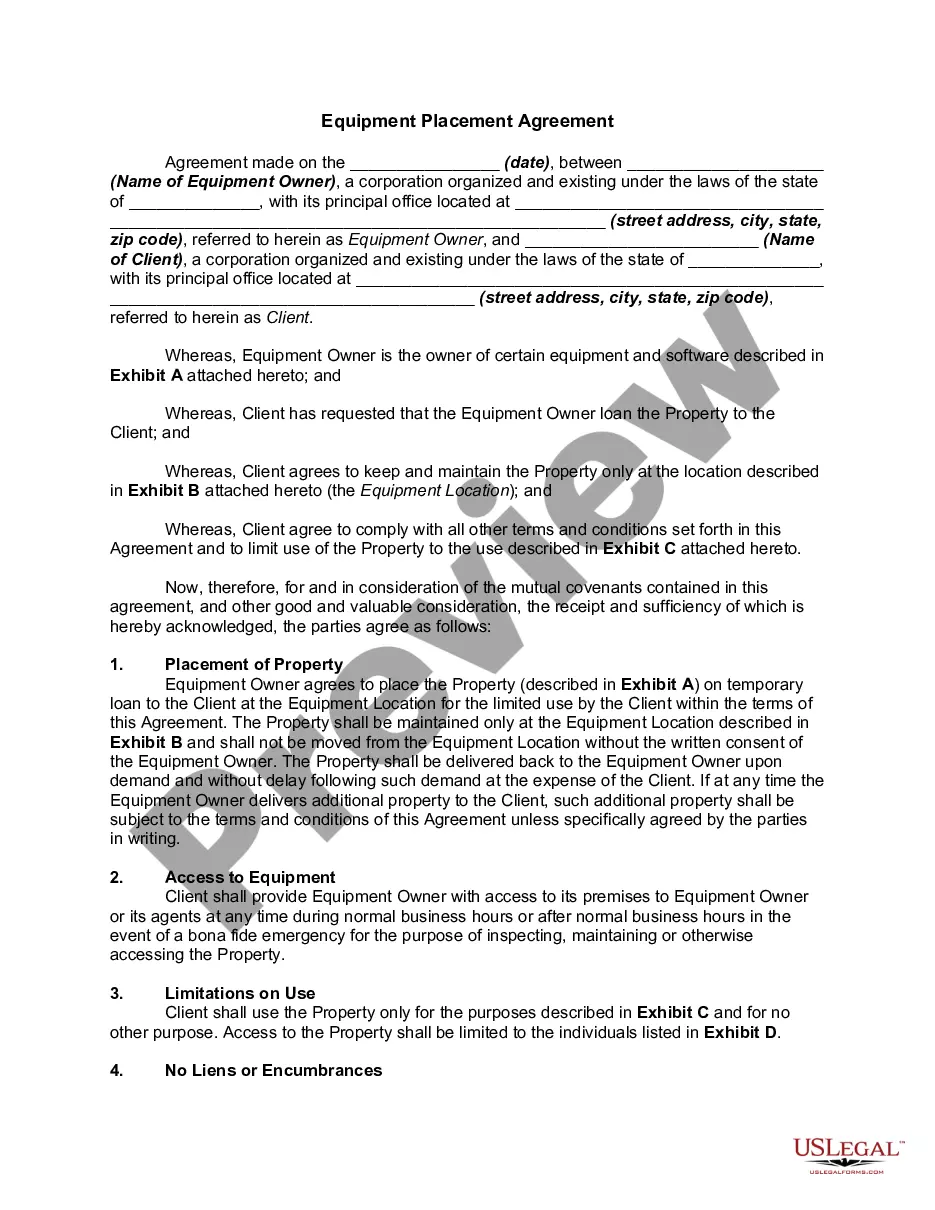
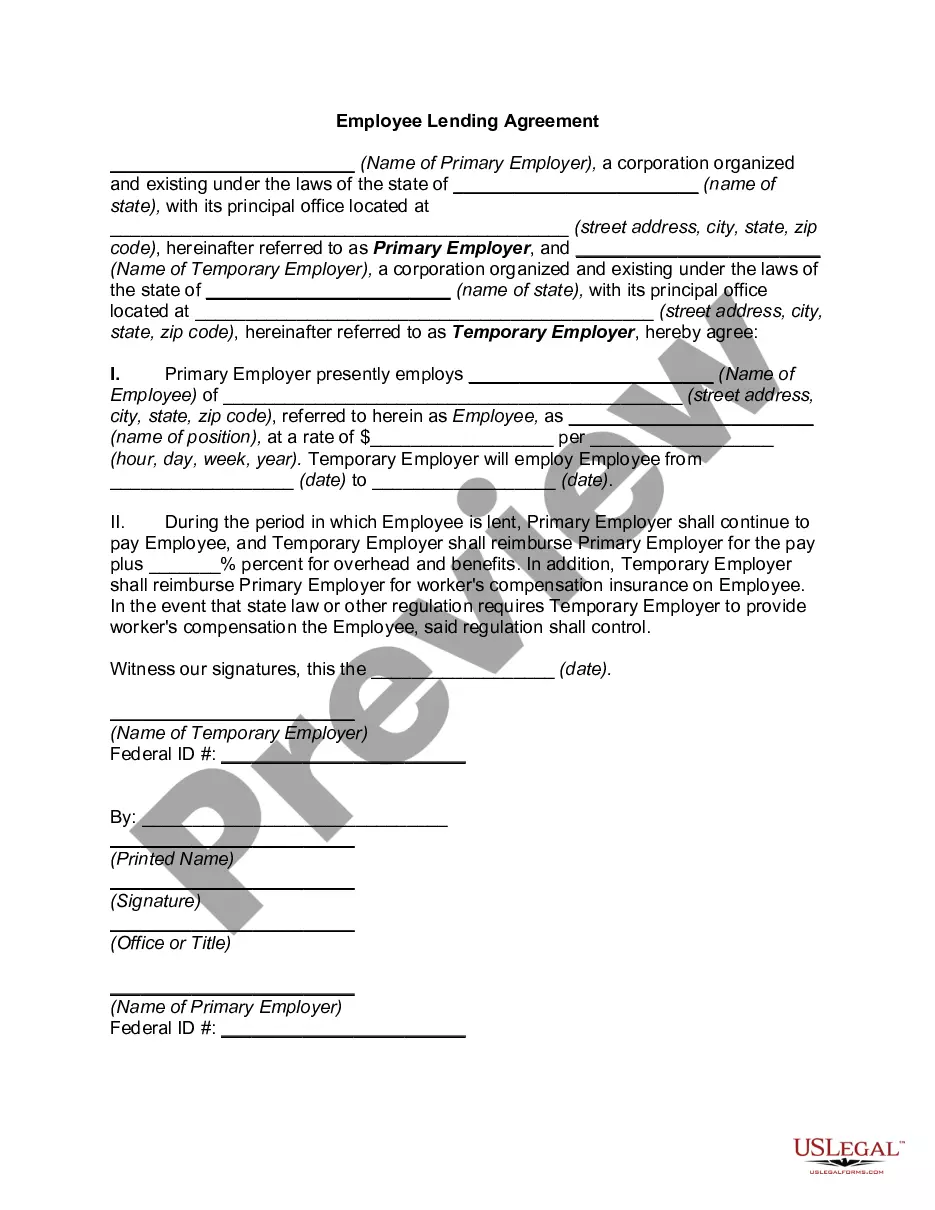
Get your form ready online
Our built-in tools help you complete, sign, share, and store your documents in one place.
Make edits, fill in missing information, and update formatting in US Legal Forms—just like you would in MS Word.
Download a copy, print it, send it by email, or mail it via USPS—whatever works best for your next step.
Sign and collect signatures with our SignNow integration. Send to multiple recipients, set reminders, and more. Go Premium to unlock E-Sign.
If this form requires notarization, complete it online through a secure video call—no need to meet a notary in person or wait for an appointment.
We protect your documents and personal data by following strict security and privacy standards.

Make edits, fill in missing information, and update formatting in US Legal Forms—just like you would in MS Word.

Download a copy, print it, send it by email, or mail it via USPS—whatever works best for your next step.

Sign and collect signatures with our SignNow integration. Send to multiple recipients, set reminders, and more. Go Premium to unlock E-Sign.

If this form requires notarization, complete it online through a secure video call—no need to meet a notary in person or wait for an appointment.

We protect your documents and personal data by following strict security and privacy standards.
Looking for another form?

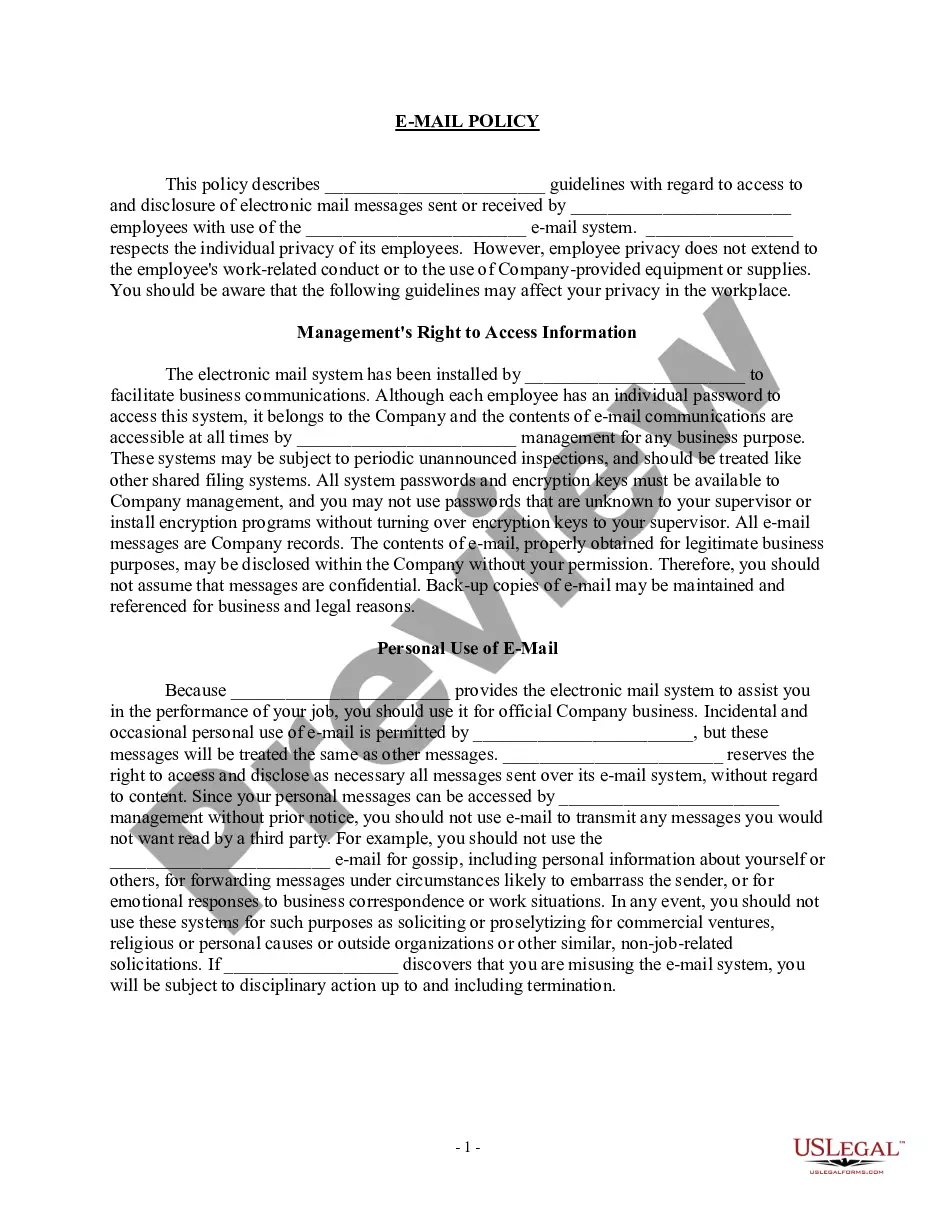



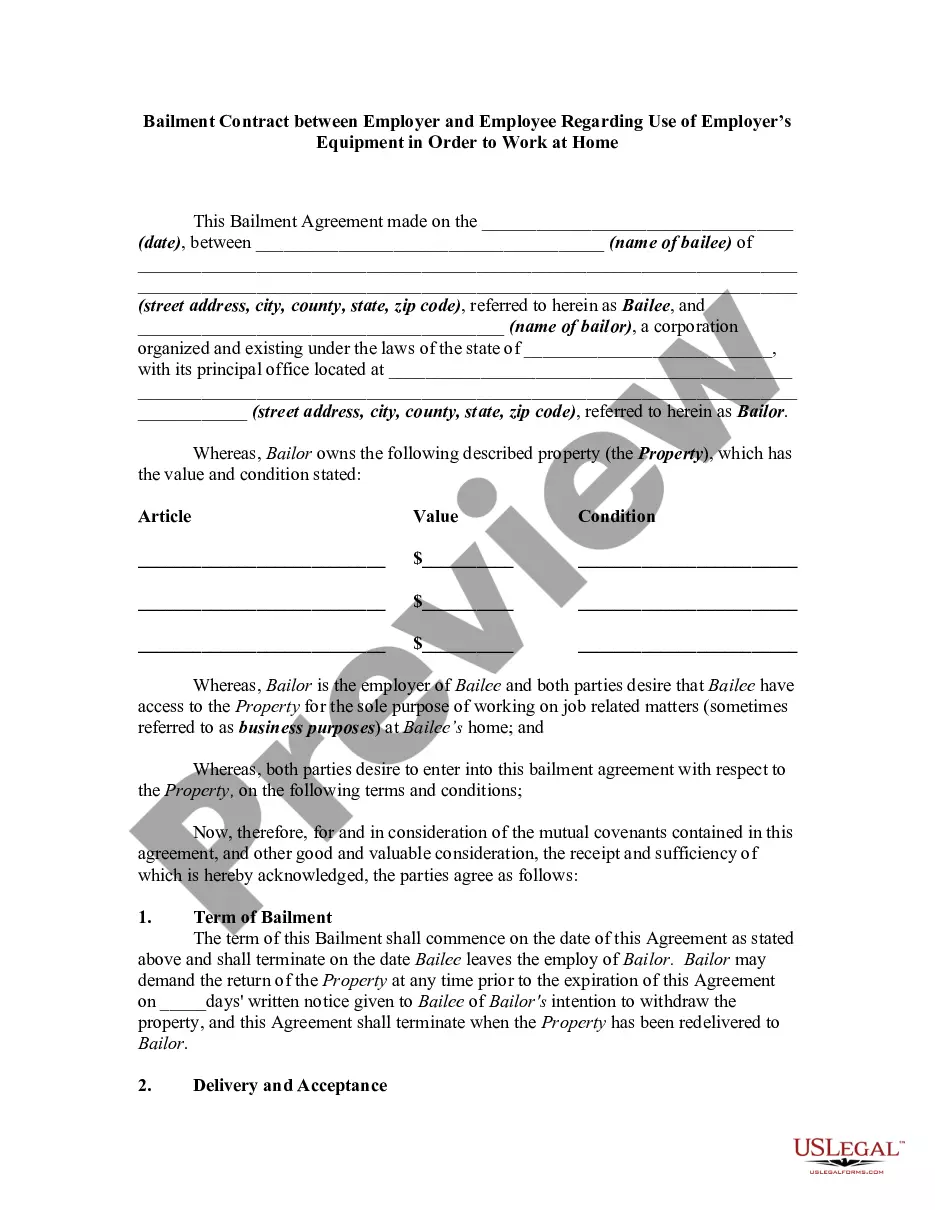
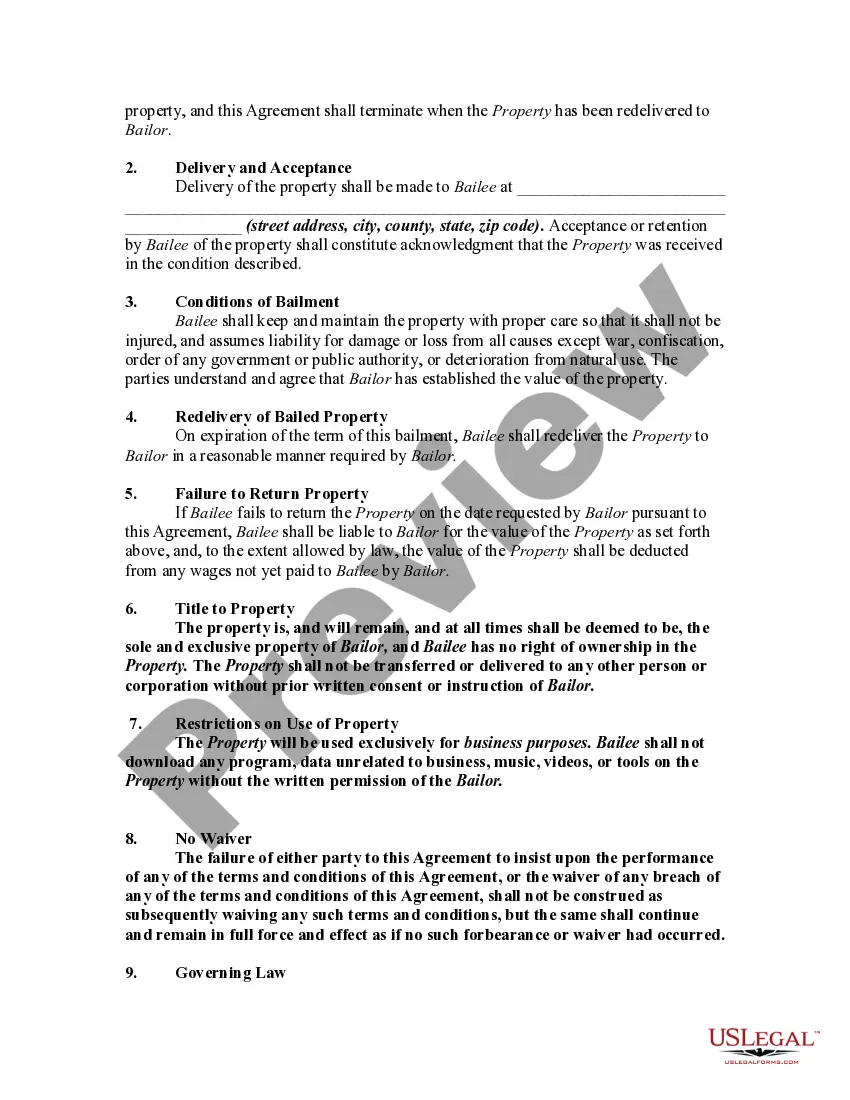
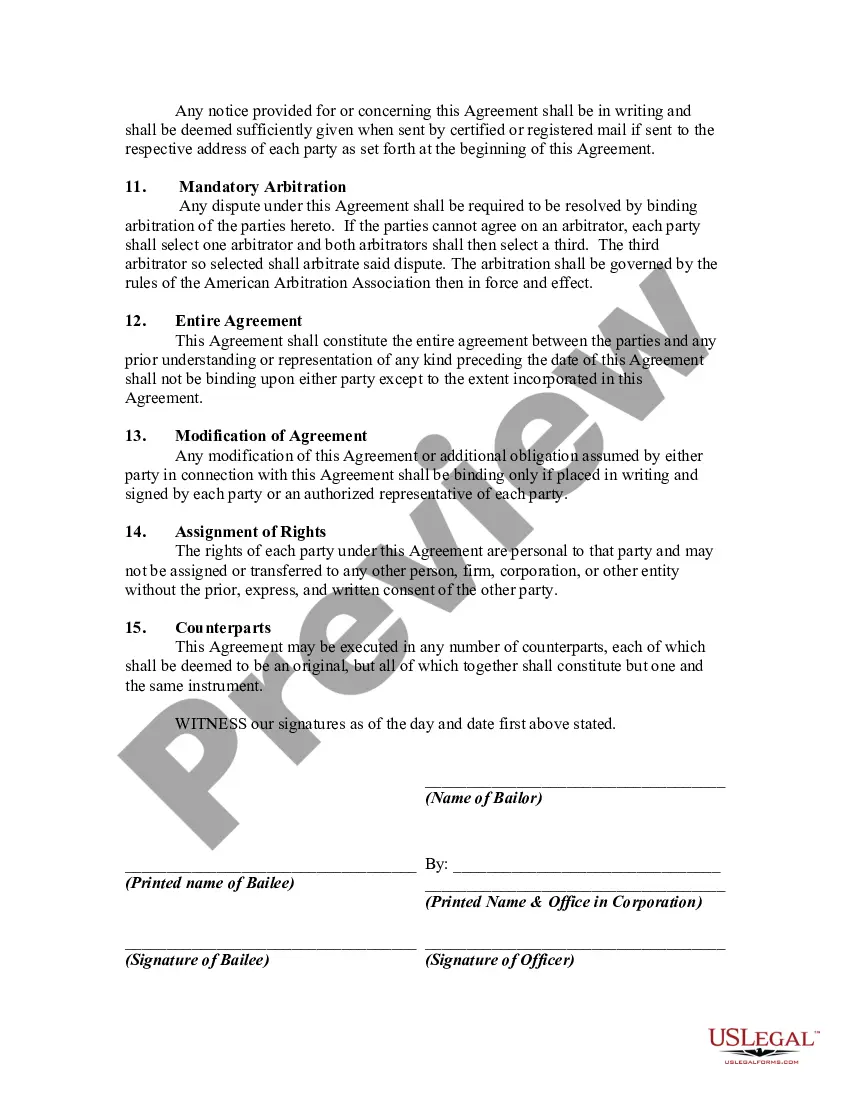
How to fill out Bailment Contract Between Employer And Employee Regarding Use Of Employer's Equipment In Order To Work At Home?
- Log in to your US Legal Forms account if you're a returning user. Ensure your subscription is active before proceeding.
- For first-time users, start by selecting a template. Review the Preview mode and form description to confirm it aligns with your local jurisdiction.
- In case the chosen form doesn't meet your requirements, utilize the Search tab to find an alternative template that suits your needs.
- Proceed to purchase the document by clicking the Buy Now button. Select your preferred subscription plan and register for an account.
- Complete your purchase by entering your payment information, using either a credit card or PayPal.
- Download the completed template to your device. You can access it anytime through the My Forms menu in your profile.
Once you've acquired your bailment for hire agreement, you'll be equipped to navigate legal obligations seamlessly. US Legal Forms provides a vast collection of over 85,000 forms, ensuring you have what you need at your fingertips.
Start your journey towards effortless legal compliance today by exploring US Legal Forms and enhancing your understanding of legal documents!
Form popularity
FAQ
An example of a bailment for the benefit of the bailor can be seen when a neighbor watches your house while you are away on vacation. In this arrangement, you benefit from the service without providing any compensation, and the neighbor has a responsibility to take care of your property. This scenario emphasizes the trust inherent in many bailment relationships.
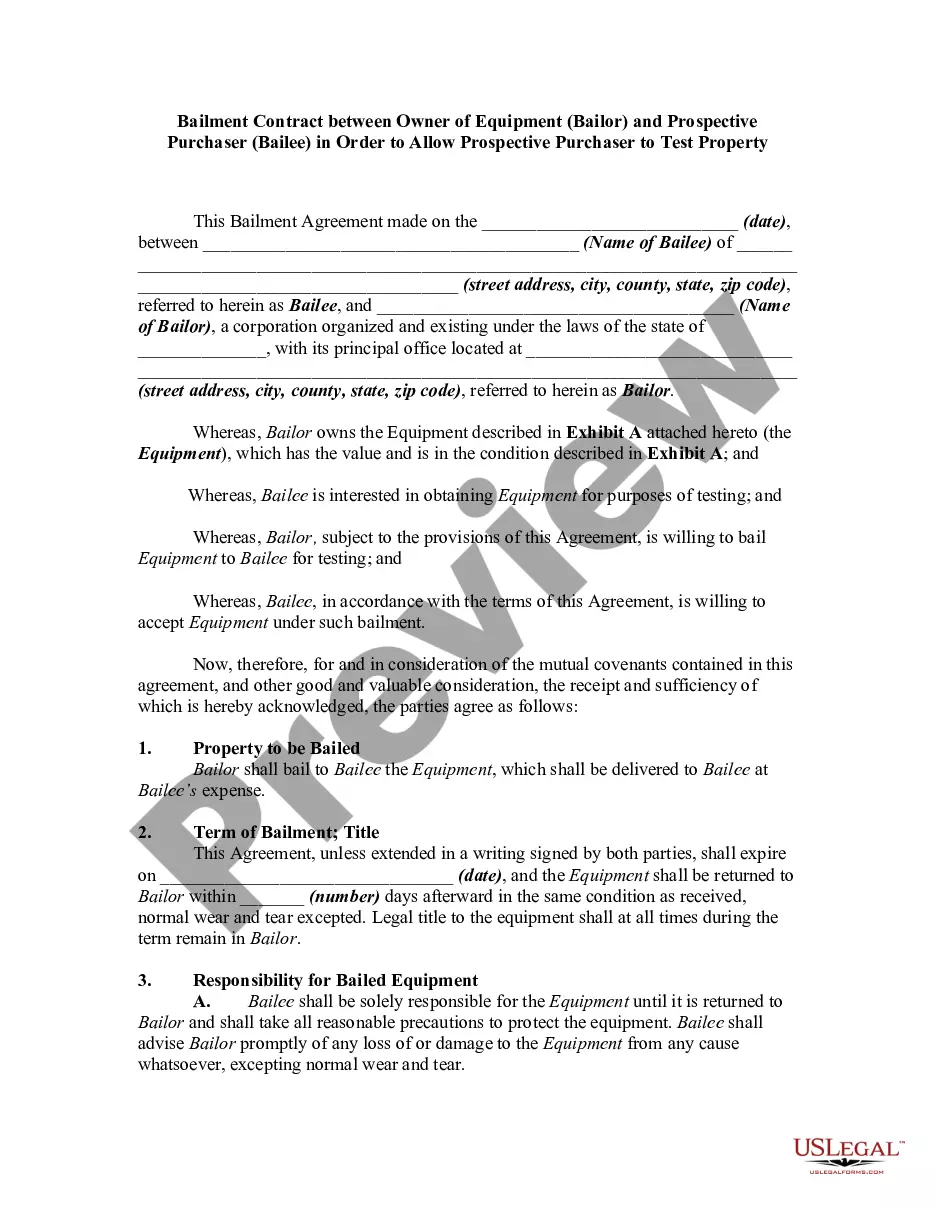
A bailment for hire is a specific arrangement where one party provides their property to another in exchange for payment. This often includes services like renting a car or leasing equipment. The essence of a bailment for hire example is that both parties have clear expectations regarding the use and care of the property.
A bailment occurs when one person temporarily hands over property to another for some purpose. For instance, if you leave your car with a mechanic for repairs, you create a bailment. This scenario illustrates a basic bailment, which involves the transfer of possession, but not ownership.
A common bailment for hire example occurs when you drop your car off at a repair shop. In this case, you entrust your vehicle to the shop for repairs, establishing a bailment agreement. The repair shop has a duty to take reasonable care of your car while it is in their possession. This kind of arrangement not only clarifies responsibilities but also protects your rights as the property owner.
In simple terms, bailment refers to the temporary transfer of property from one person to another, while retaining ownership. You allow someone else to take care of your belongings, like lending your friend a book. This relationship can also be seen in a bailment for hire example, reflecting the trust and agreement between the owner and the caretaker.
The three types of bailments are bailment for the sole benefit of the bailor, bailment for the sole benefit of the bailee, and mutual benefit bailment. Each type serves a different purpose, impacting the responsibilities and liabilities of the parties involved. For instance, a bailment for hire falls under the mutual benefit category, as both the bailor and the bailee receive advantages. Understanding these categories is essential to grasp the complexities of a bailment for hire example.
To create a bailment, you need a clear agreement between the bailor and the bailee. This arrangement involves the transfer of possession of personal property with the understanding that the property will be returned or disposed of according to the bailor's instructions. A written document often helps clarify the terms. For a strong bailment for hire example, ensure that both parties understand their roles and responsibilities.