Deposit Box Form With Key
Description
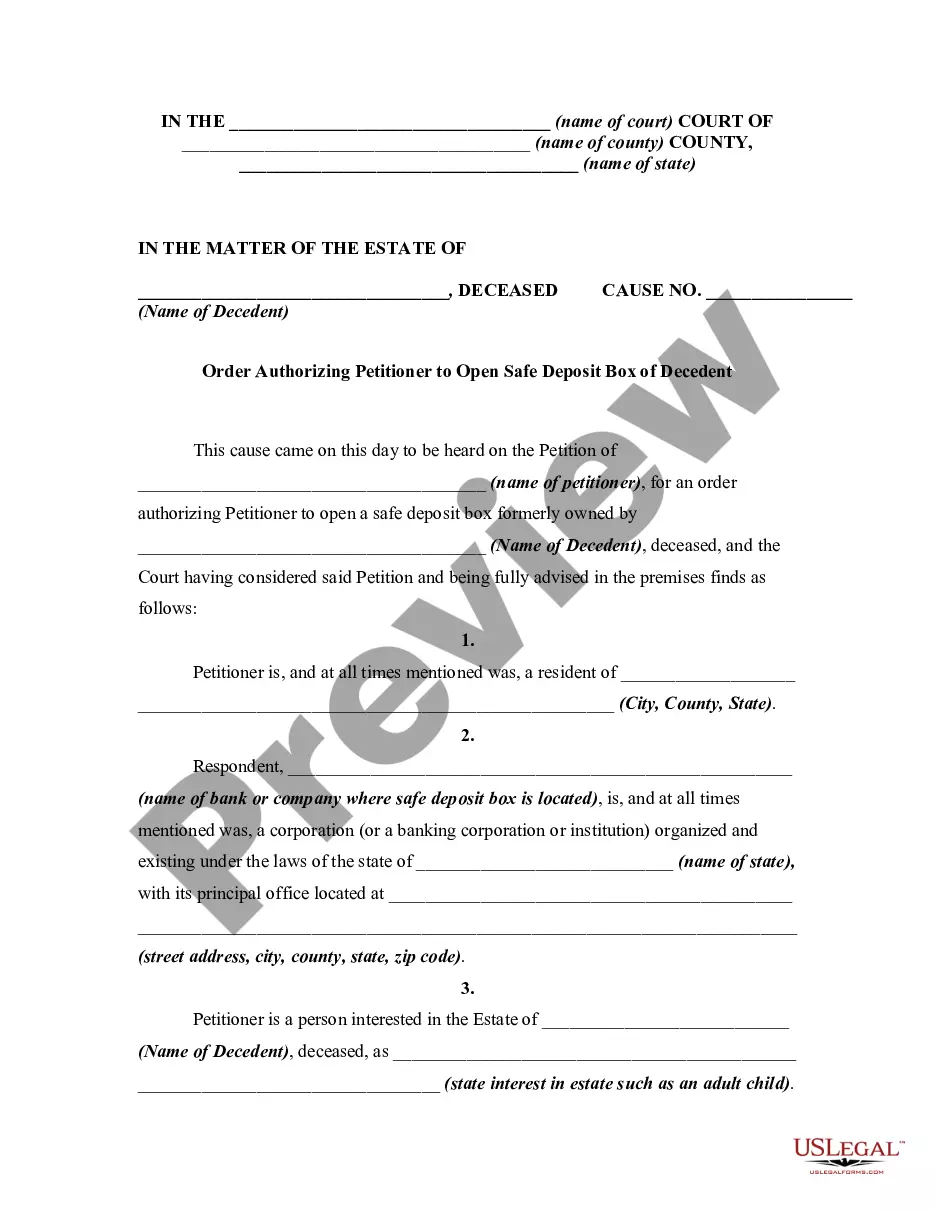
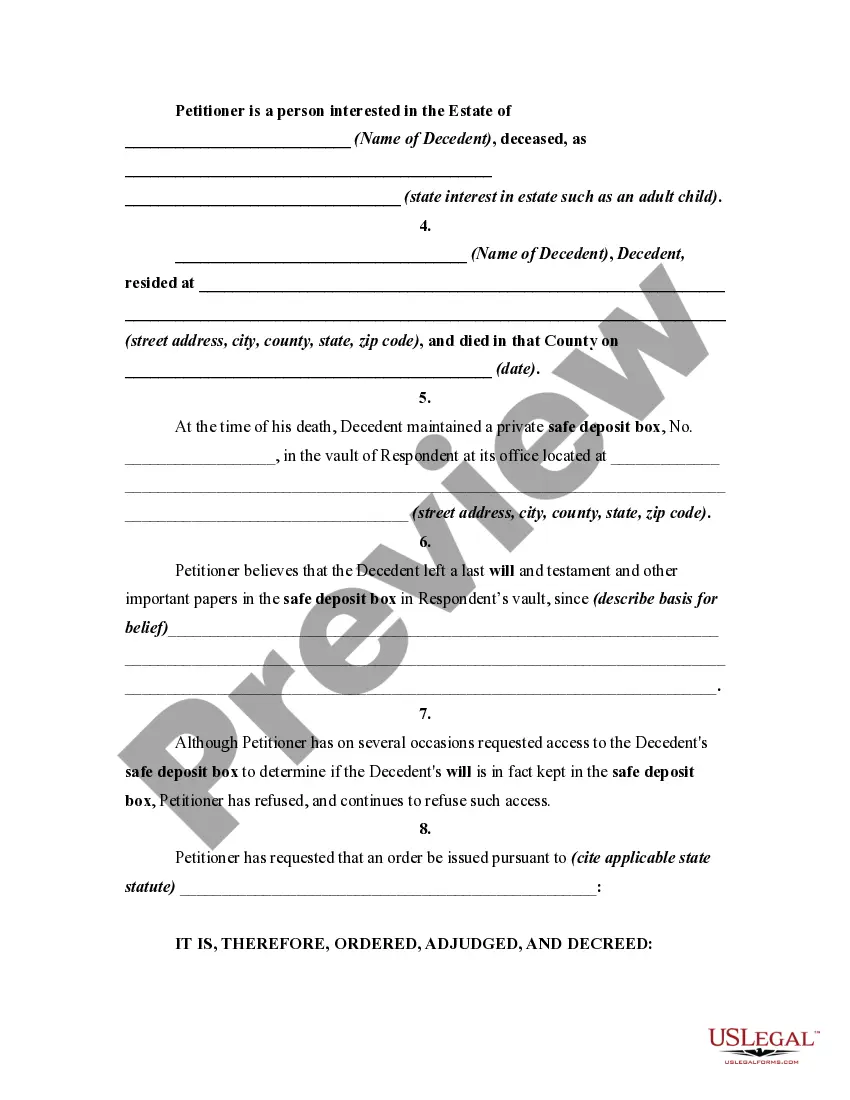
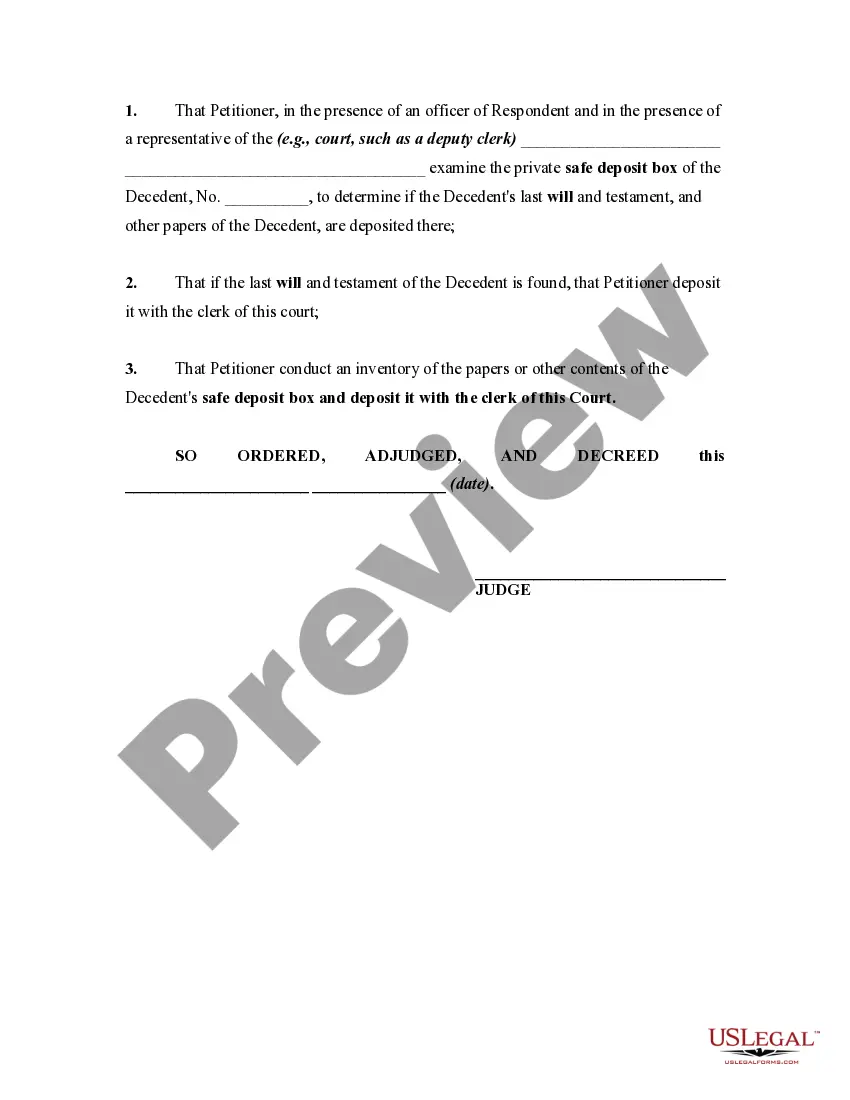
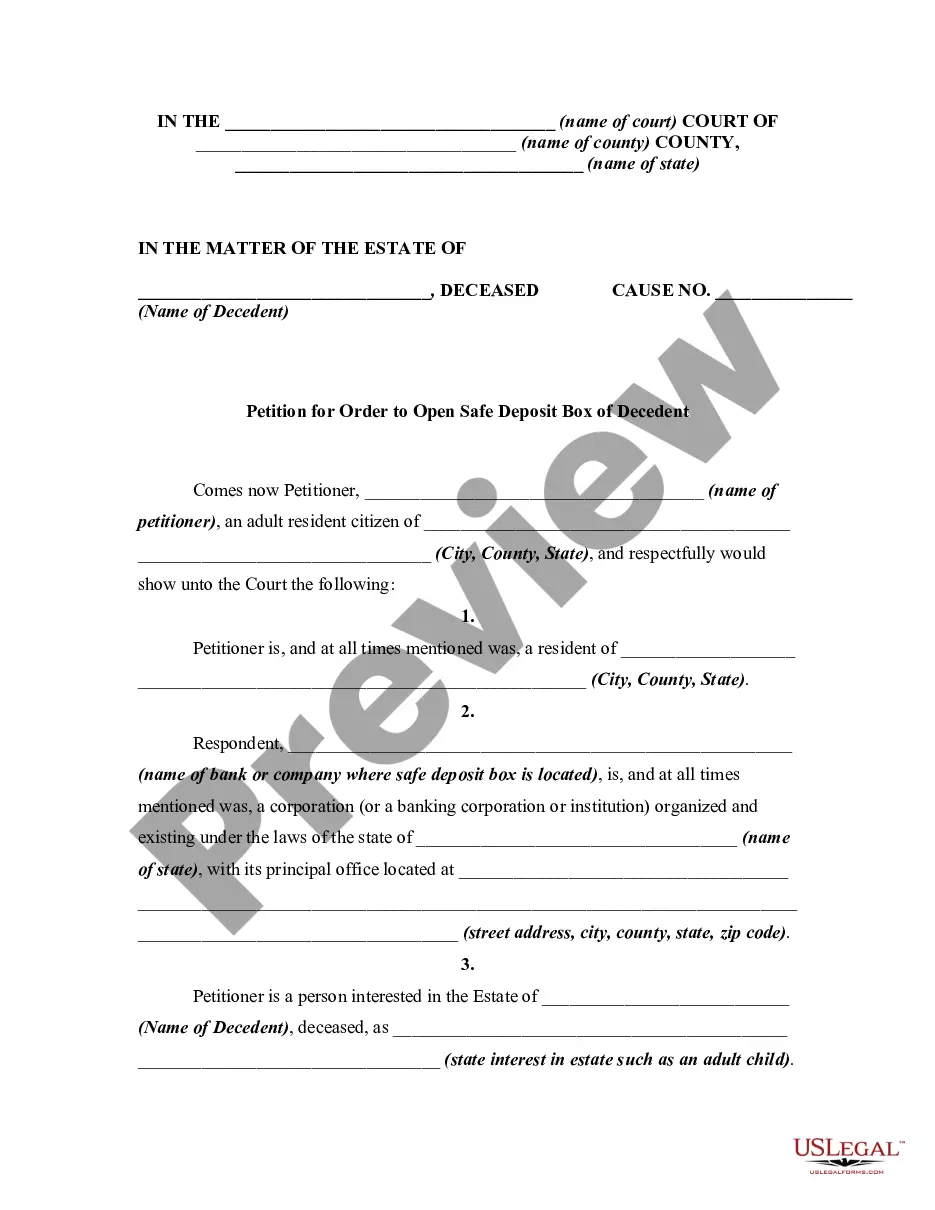
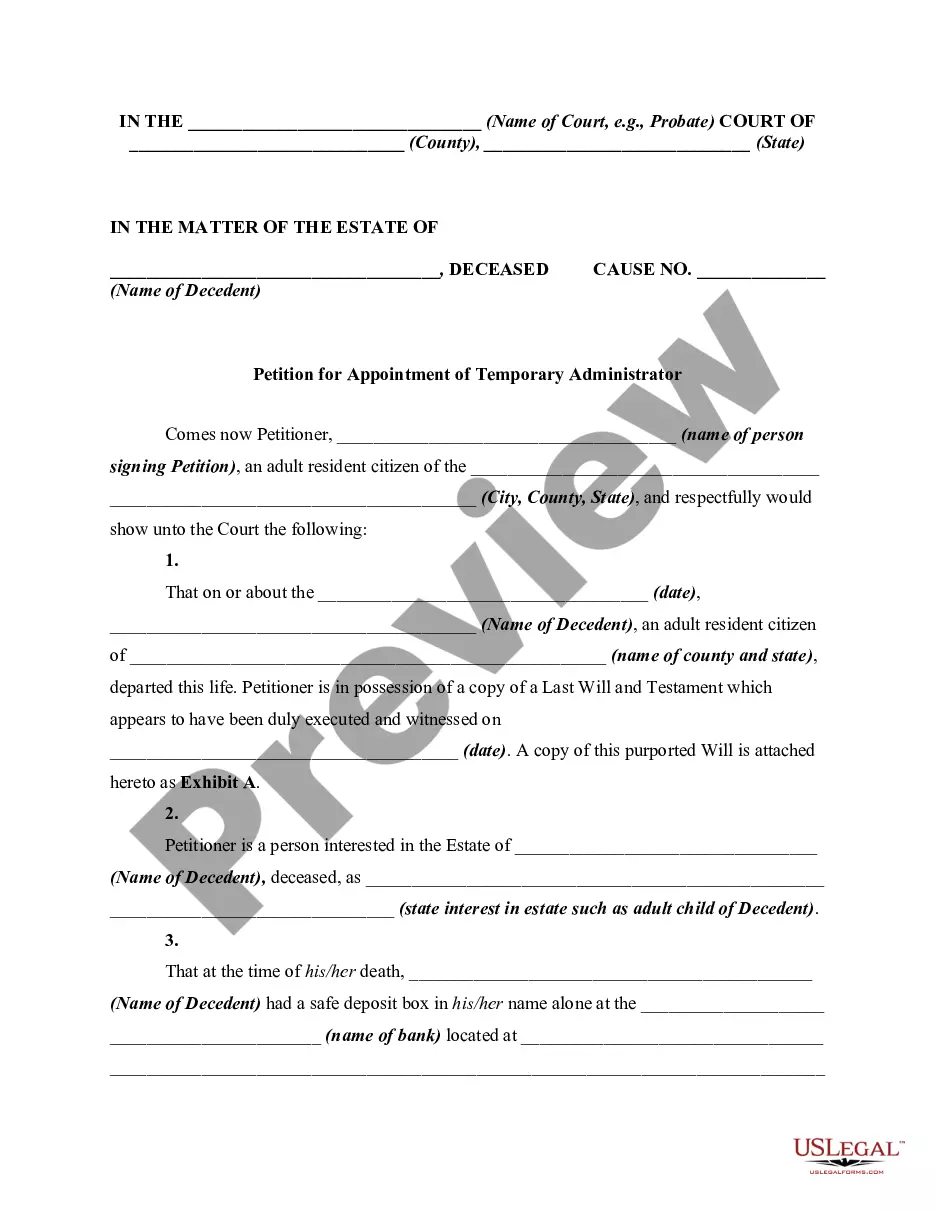
How to fill out Order Authorizing Petitioner To Open Safe Deposit Box Of Decedent?
Whether for commercial objectives or personal matters, everyone has to manage legal circumstances sooner or later in their lives.
Filling out legal documentation demands meticulous attention, starting from selecting the appropriate form template.
With a vast US Legal Forms collection at your disposal, you don’t need to waste time searching for the right example across the web. Utilize the library’s straightforward navigation to find the appropriate form for any situation.
- Locate the example you need by using the search bar or directory navigation.
- Review the form’s details to ensure it suits your case, state, and locality.
- Click on the form’s preview to examine it.
- If it is the incorrect form, return to the search feature to find the Deposit Box Form With Key example you need.
- Download the template if it aligns with your specifications.
- If you already possess a US Legal Forms account, simply click Log in to access previously saved templates in My documents.
- If you do not have an account yet, you can download the form by clicking Buy now.
- Choose the appropriate pricing option.
- Fill out the account registration form.
- Select your payment method: you can use a credit card or PayPal account.
- Choose the document format you desire and download the Deposit Box Form With Key.
- Once downloaded, you can fill out the form using editing software or print it and complete it manually.
Form popularity
FAQ
To unlock a safe box with a key, simply insert the key into the lock and turn it as instructed. Ensure you have the correct key for your specific box. If you face any difficulty, consult your bank for assistance or consider using a Deposit box form with key for streamlined processes.
You're better off keeping the following items out of your safe deposit box: Passports. Only copies of living wills, advanced medical directives, and durable powers of attorney. Valuables you have not insured. Cash. Anything illegal.
Key Duplication Most of the time, safe deposit keys are prohibited from duplication because it can significantly increase the risk of the box being opened by unauthorized people who have a key copy. Normally, there is a ?Do Not Duplicate? sign on the keys so that most locksmiths won't duplicate them.
A customer is required to fill out the deposit slip before approaching the bank teller to deposit funds. The account number must be written at the bottom of the slip where indicated if the customer uses a deposit slip provided by the bank.
How to fill out a bank deposit slip Make sure you provide your name as it appears on your account. Include the account number. ... If you are requesting cash back, you may be required to sign the deposit slip in the appropriate space. Include a subtotal for the cash and checks along with any amount you want back.
A person can place just about anything that will fit in a safe deposit box in one. Holders of these boxes are granted complete privacy by the financial institutions where they're located. Someone could store cash, jewelry and other valuables, savings bonds, deeds to property and information about an inheritance there.