Denial For Insurance
Description
Get your form ready online
Our built-in tools help you complete, sign, share, and store your documents in one place.
Make edits, fill in missing information, and update formatting in US Legal Forms—just like you would in MS Word.
Download a copy, print it, send it by email, or mail it via USPS—whatever works best for your next step.
Sign and collect signatures with our SignNow integration. Send to multiple recipients, set reminders, and more. Go Premium to unlock E-Sign.
If this form requires notarization, complete it online through a secure video call—no need to meet a notary in person or wait for an appointment.
We protect your documents and personal data by following strict security and privacy standards.

Make edits, fill in missing information, and update formatting in US Legal Forms—just like you would in MS Word.

Download a copy, print it, send it by email, or mail it via USPS—whatever works best for your next step.

Sign and collect signatures with our SignNow integration. Send to multiple recipients, set reminders, and more. Go Premium to unlock E-Sign.

If this form requires notarization, complete it online through a secure video call—no need to meet a notary in person or wait for an appointment.

We protect your documents and personal data by following strict security and privacy standards.
Looking for another form?


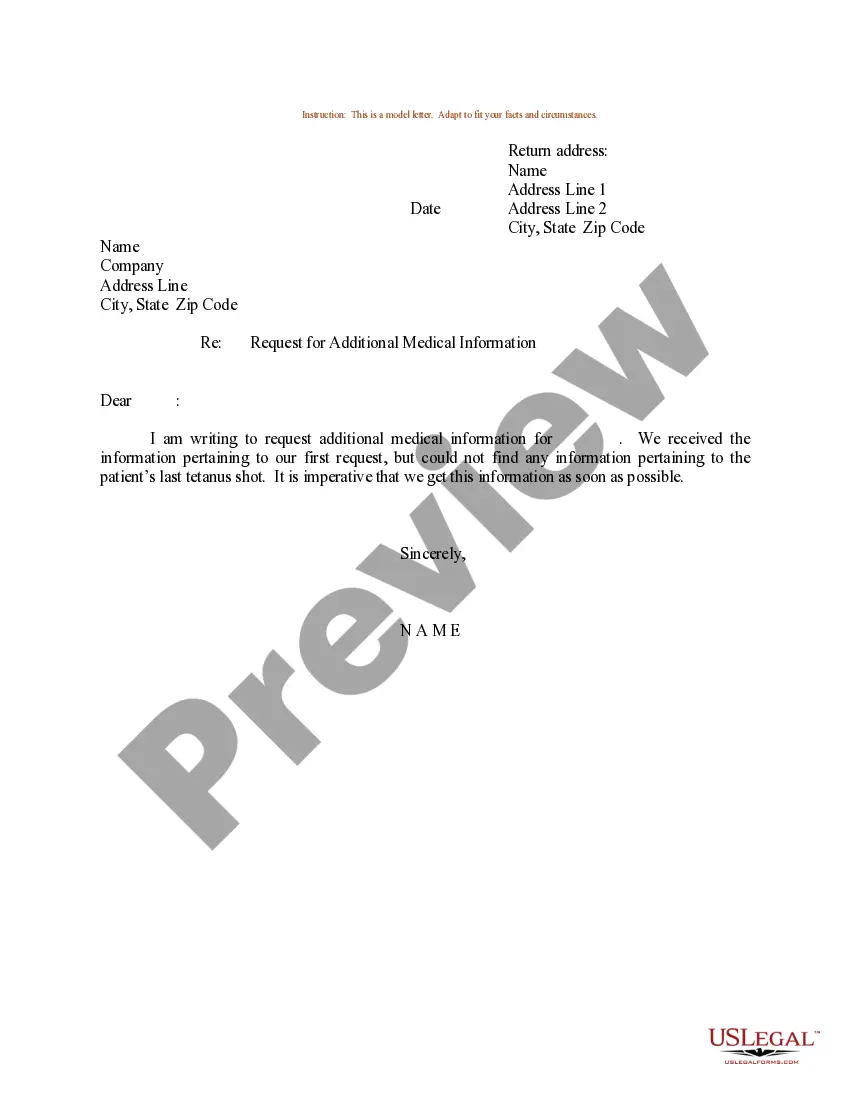
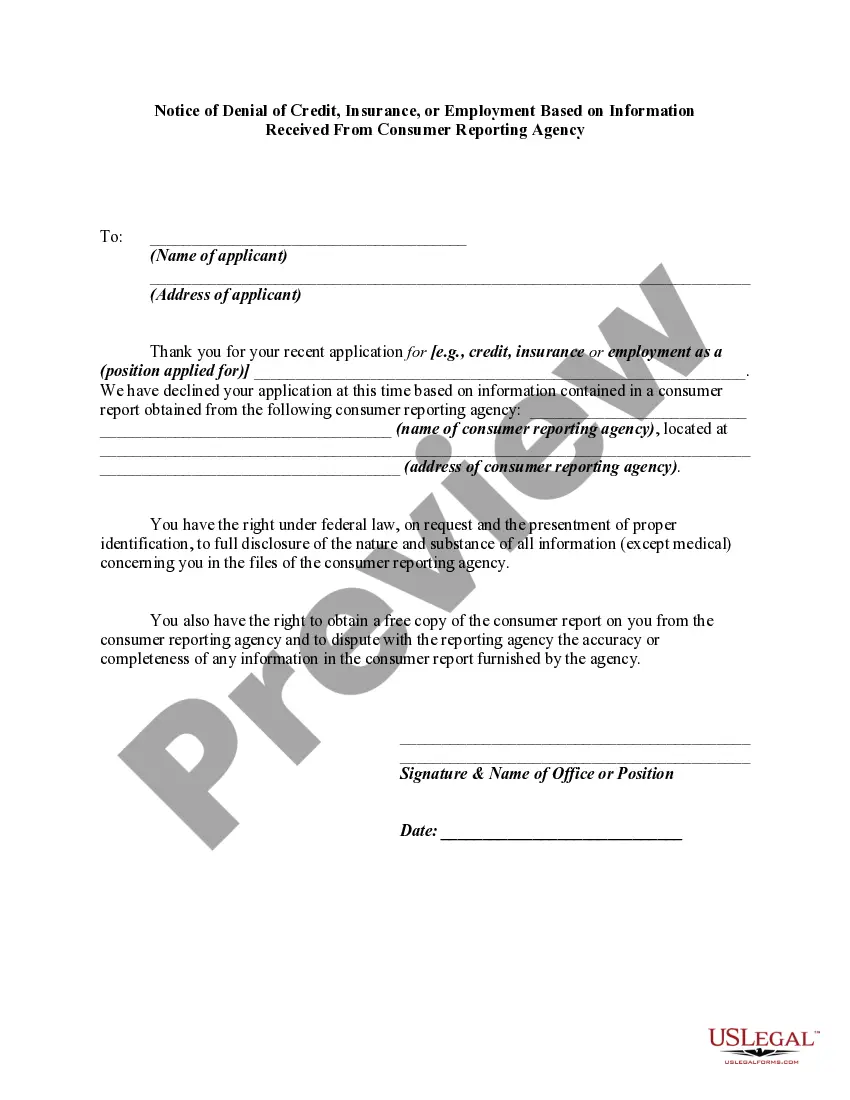
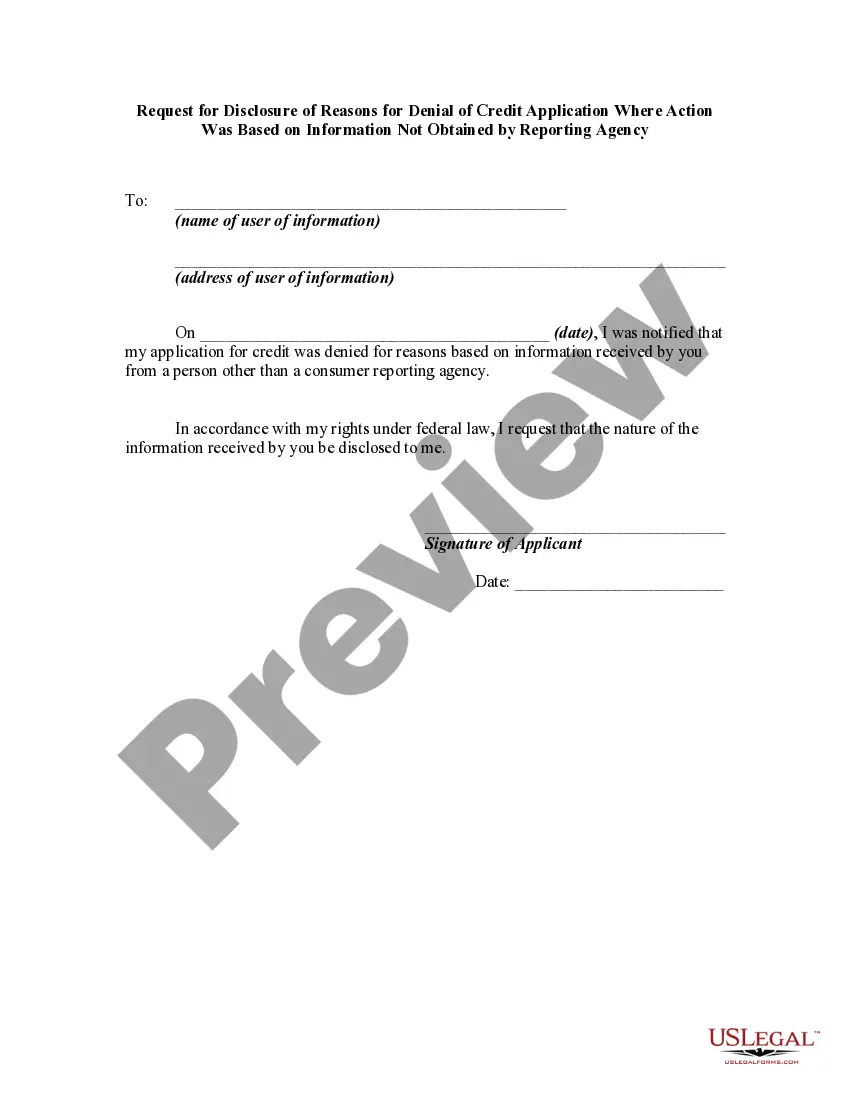
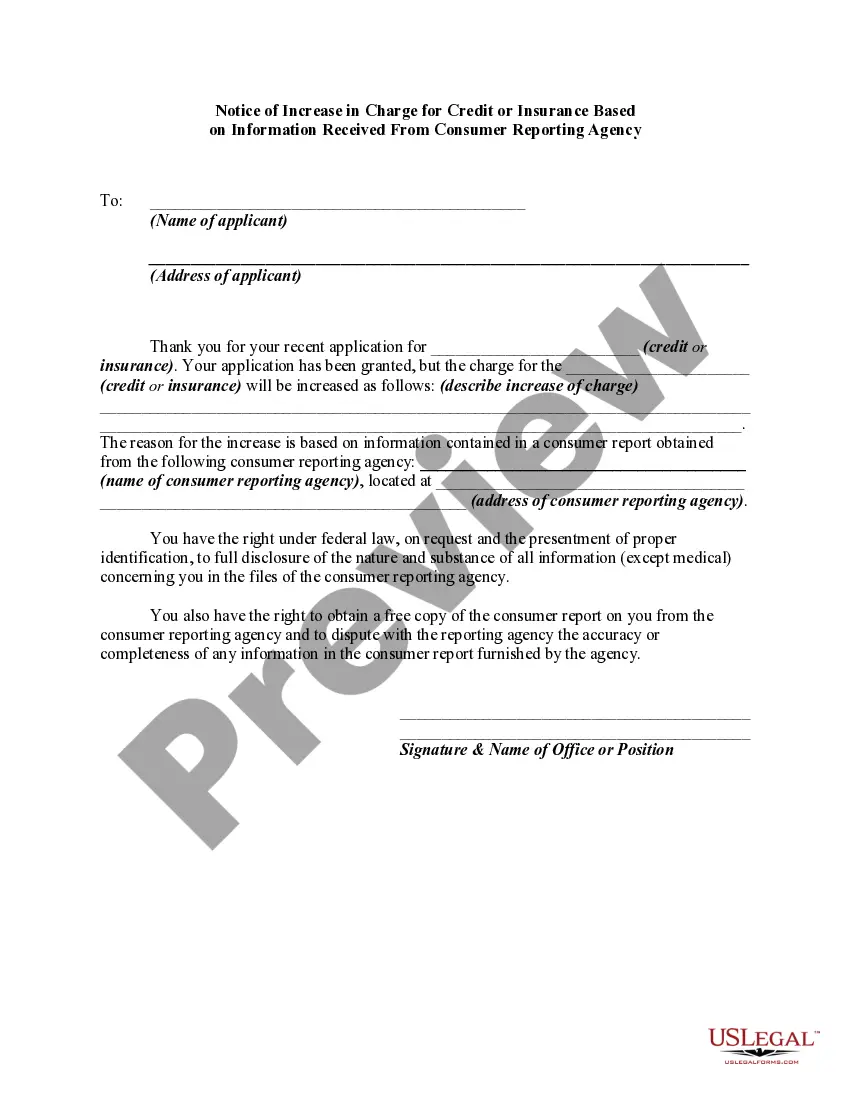
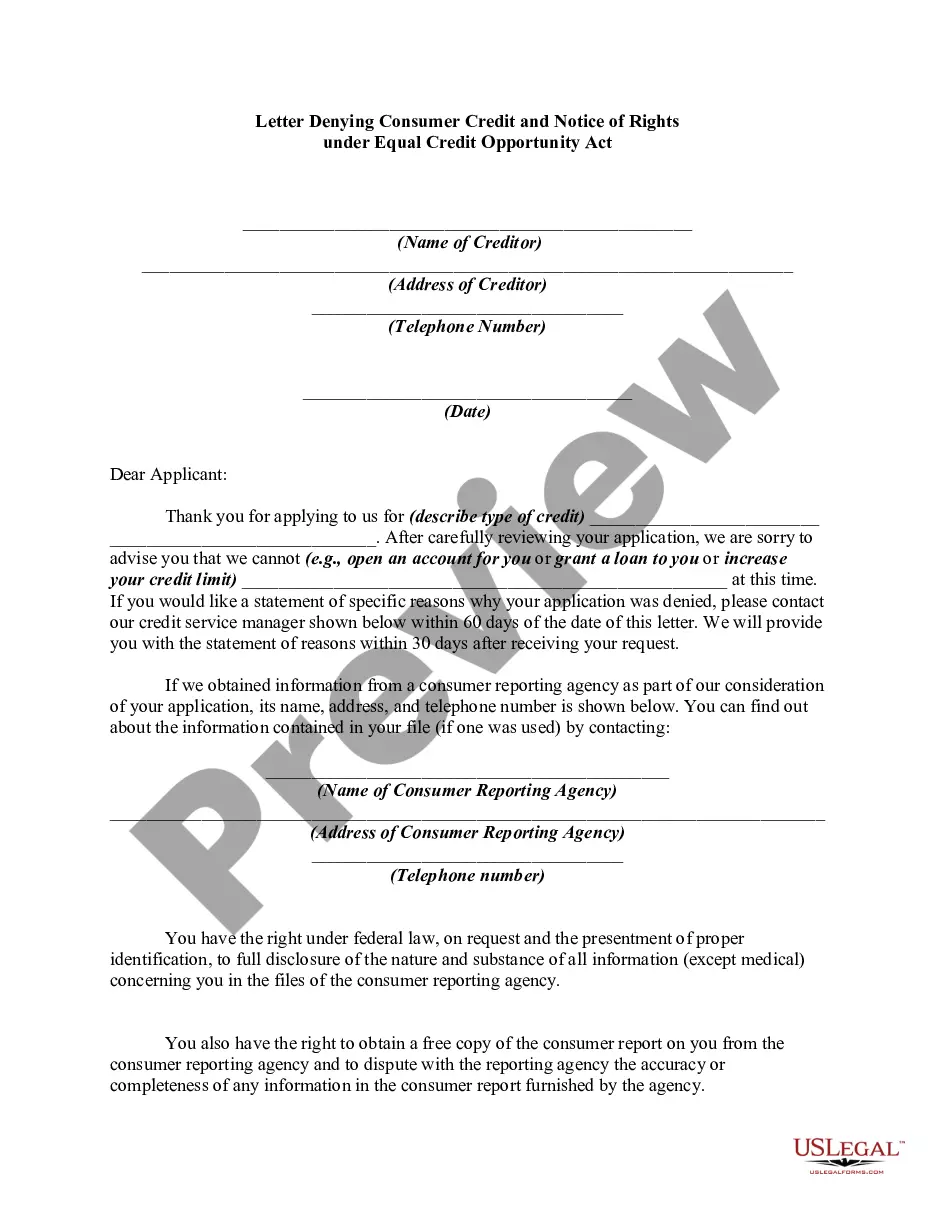
How to fill out Notice Of Denial Of Credit, Insurance, Or Employment Based On Information Received From Consumer Reporting Agency?
Whether for corporate intentions or personal matters, everyone inevitably confronts legal circumstances at some point during their lifetime. Completing legal paperwork requires meticulous focus, starting from choosing the correct form template.
For example, if you select an erroneous version of a Denial For Insurance, it will be rejected upon submission. Consequently, it is crucial to obtain a trustworthy source of legal documents such as US Legal Forms.
With an extensive US Legal Forms catalog available, you do not need to waste time searching for the correct sample online. Utilize the library’s user-friendly navigation to find the suitable template for any circumstance.
- Locate the template you require by using the search bar or browsing the catalog.
- Review the description of the form to confirm it matches your situation, state, and area.
- Click on the preview of the form to examine it.
- If it is the wrong document, return to the search function to find the Denial For Insurance template you require.
- Obtain the file if it satisfies your criteria.
- If you have a US Legal Forms account already, simply click Log in to access previously stored templates in My documents.
- In case you do not possess an account yet, you can acquire the form by clicking Buy now.
- Select the appropriate pricing option.
- Complete the account registration form.
- Choose your payment method: you can utilize a credit card or PayPal account.
- Select the desired file format and download the Denial For Insurance.
- Once downloaded, you can fill out the form using editing software or print it and complete it by hand.
Form popularity
FAQ
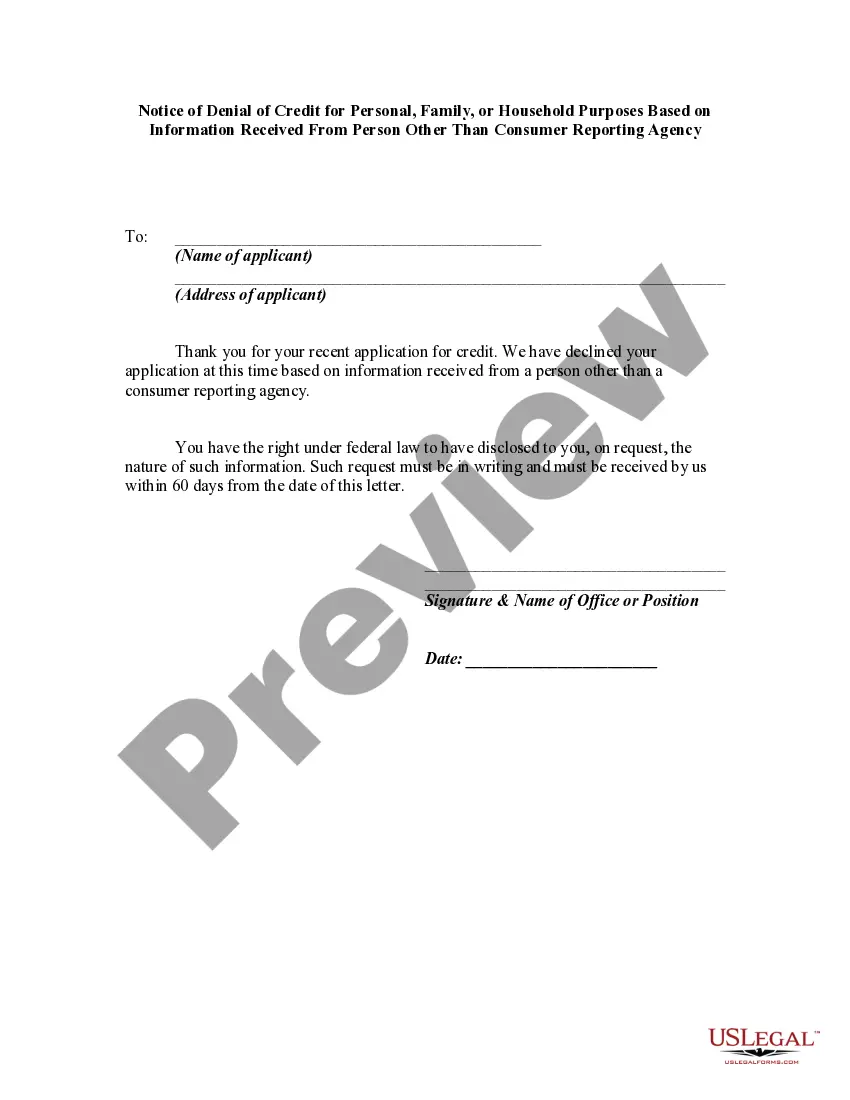
An insurance denial signifies that the provider will not honor a claim or that coverage is not available to you. This decision could be based on various factors, including policy terms, eligibility criteria, or claims history. If faced with a denial, it is essential to understand the rationale behind it and take appropriate steps to rectify the situation.
Common reasons for an insurance denial include non-payment of premiums, missing or incorrect information on applications, or pre-existing conditions. Insurance companies are stringent in their criteria, which can sometimes lead to unexpected outcomes. Familiarizing yourself with these reasons allows you to avoid them and enhances your chances of approval.
Insurance denials typically fall into three categories: administrative, technical, and clinical. Administrative denials arise from paperwork errors, while technical denials relate to policy limitations. Clinical denials may involve coverage disputes regarding medical necessity. Understanding these categories can help you identify the type of denial you face and how to address it.
When you receive a denial for insurance, responding promptly is crucial. Begin by reviewing the reason for denial in the letter, gather relevant documentation, and draft a clear appeal. Utilizing services like USLegalForms can streamline this process by providing templates and guidance tailored to your situation.
Many insurance claims face denial due to reasons like insufficient documentation, coverage limitations, or late submissions. Companies often require specific proof for claims, and missing this can lead to automatic denials. Knowing the common pitfalls can help you prepare better and increase your chances of success.
An insurance denial occurs when an insurance company refuses to provide coverage or payment for a claim, citing a variety of reasons. This refusal can happen during the application process or after you submit a claim. Understanding the nature of your denial can help you address it effectively and improve your chances for future acceptance.
Receiving a denial for insurance can stem from various factors, such as a history of claims, poor credit scores, or technical errors in your application. Often, insurance companies assess risk based on specific criteria. If you're unsure, it’s vital to review your application carefully and consult with a professional who can help clarify any misunderstanding.
To respond to an insurance denial, start by reviewing the denial notice carefully to understand the specific reasons given. Draft a comprehensive response that addresses each point raised, including any evidence or documentation that supports your case. It is crucial to maintain a professional tone and to comply with the deadlines set by the insurance company for appealing the decision. Consider seeking assistance from USLegalForms to provide you with the right templates and guidance.
Writing a letter to an insurance company regarding a claim denial should be clear and factual. Include your policy number, the claim details, and denote the specific reasons for denial as mentioned in their correspondence. Make sure to attach any supporting documents that may help your case. You can use templates from USLegalForms to streamline the process and ensure all essential elements are included.
Dealing with rejection in insurance often requires resilience and proactive measures. First, understand the factors contributing to the denial for insurance, and then seek advice or clarification from a knowledgeable source, such as a legal professional or an insurance agent. Avoid taking rejection personally; instead, focus on gathering the necessary information to strengthen future applications or appeals.