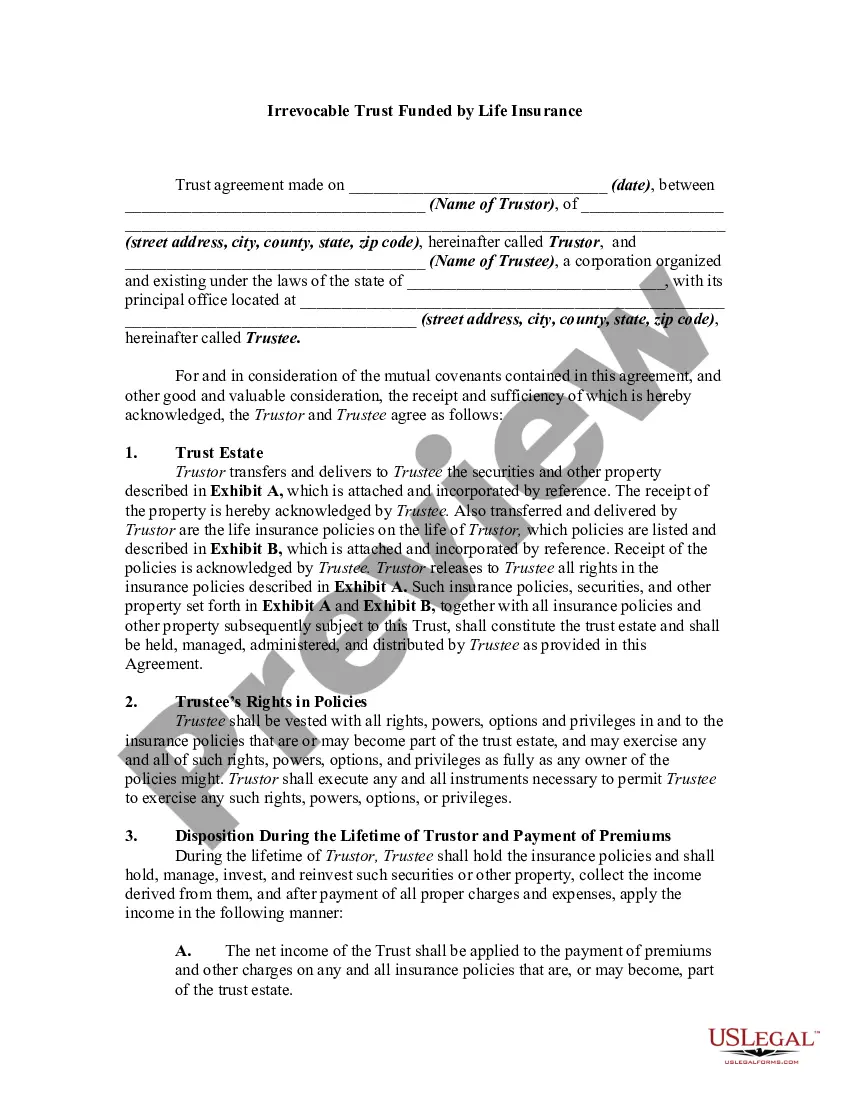
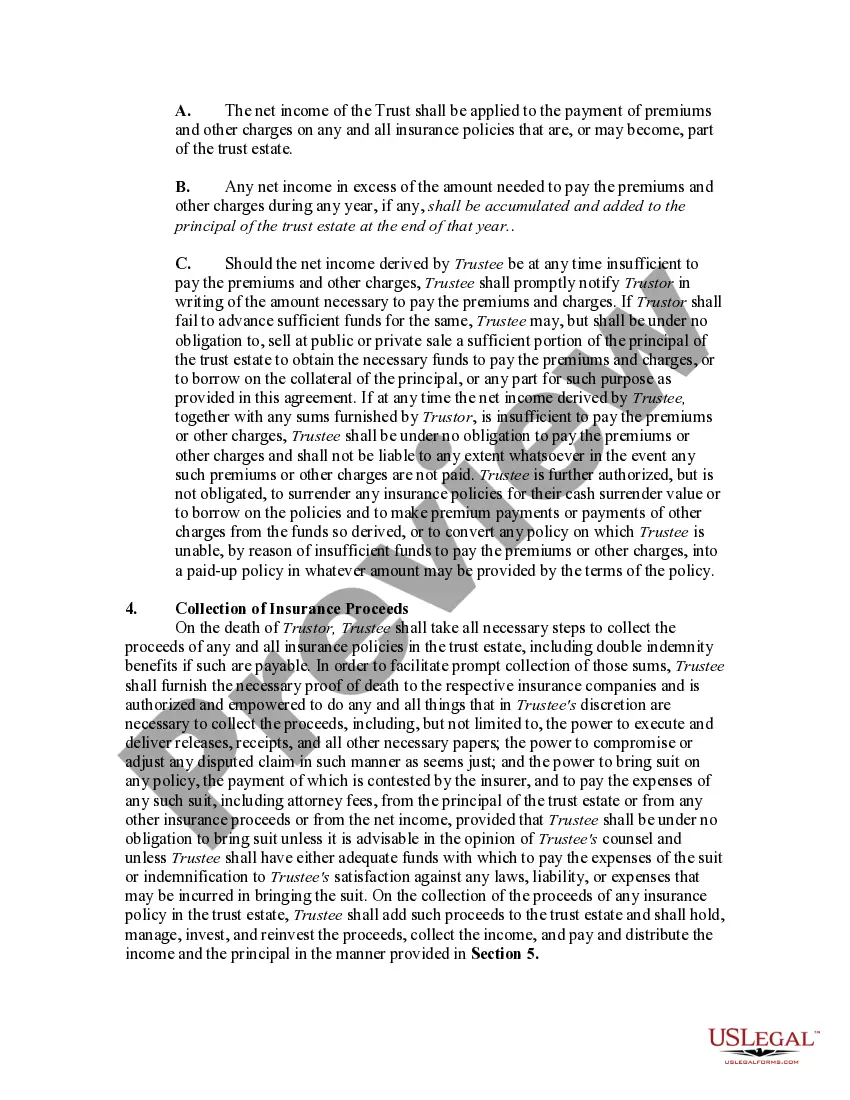
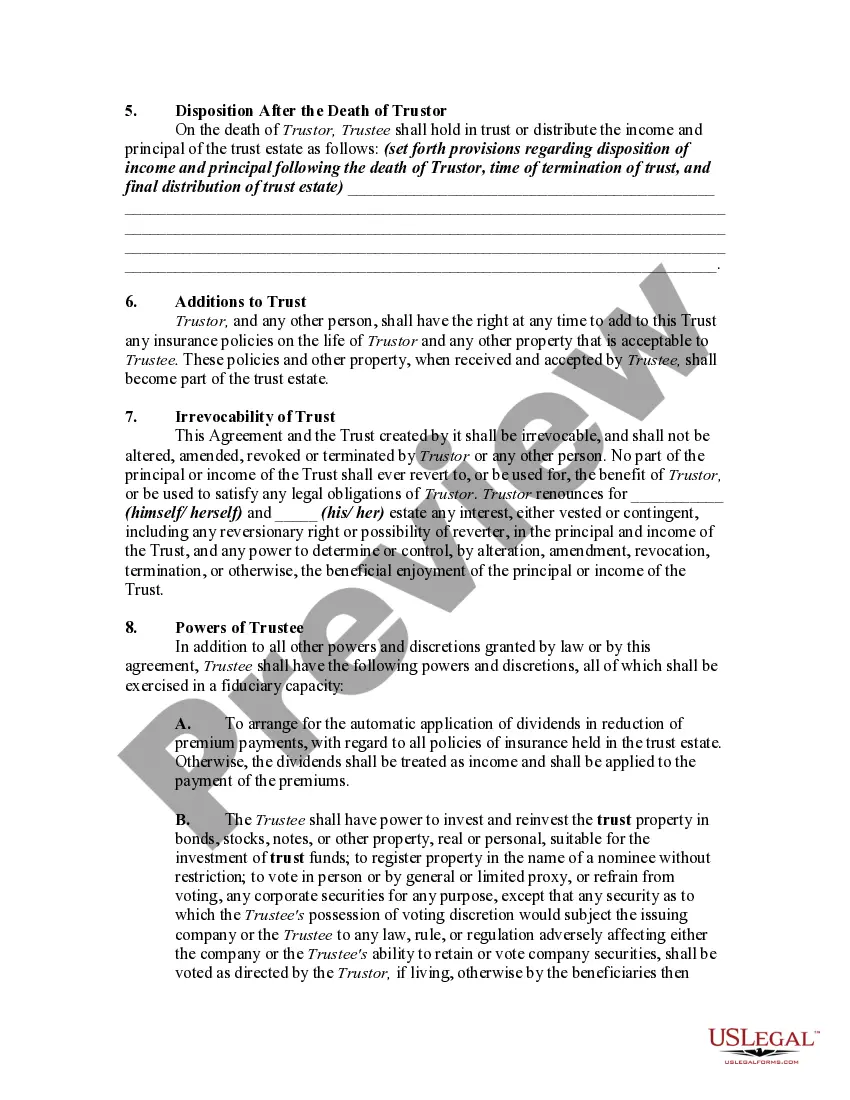
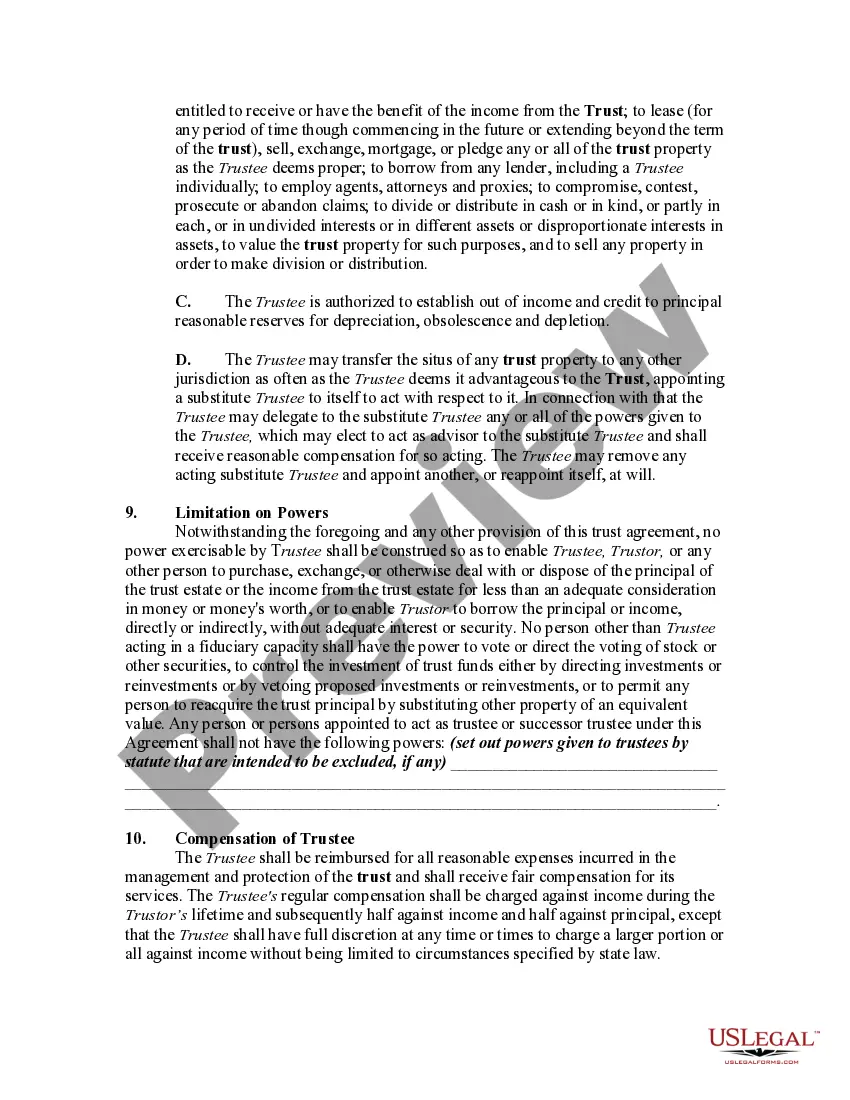
Irrevocable Life Insurance Trust Form With Divorce
Description
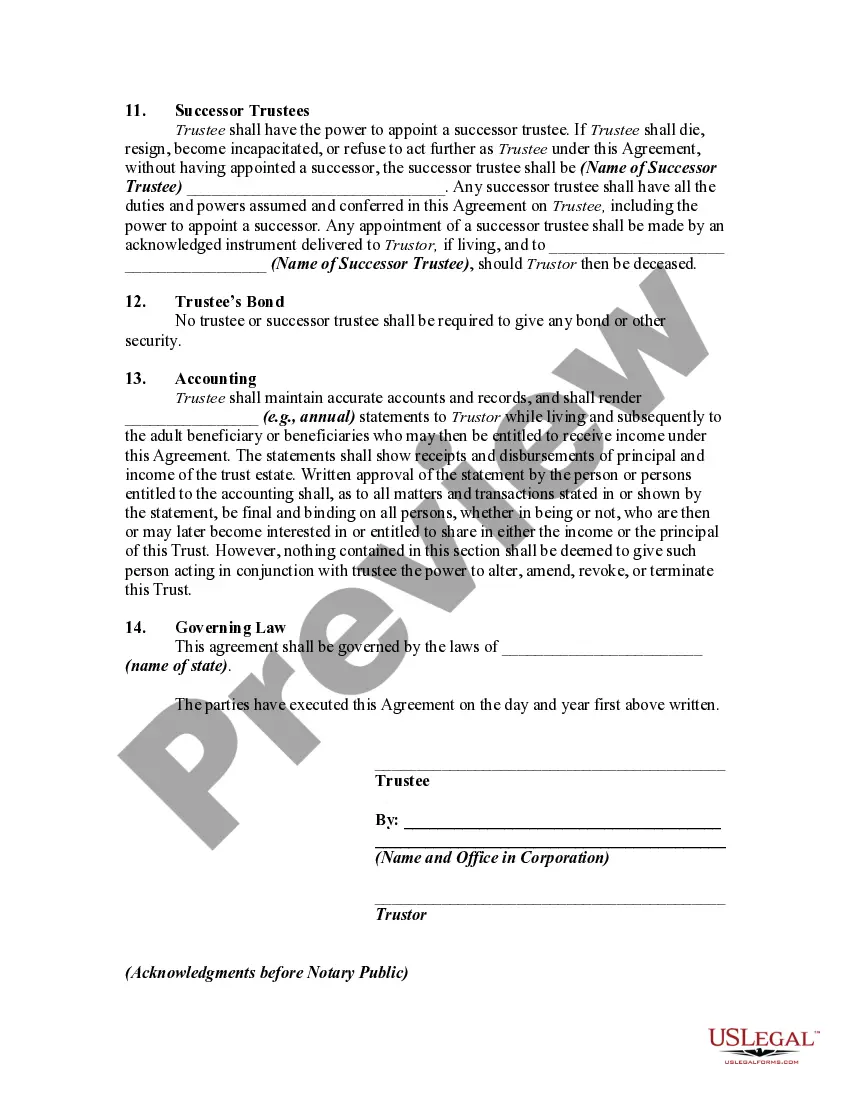

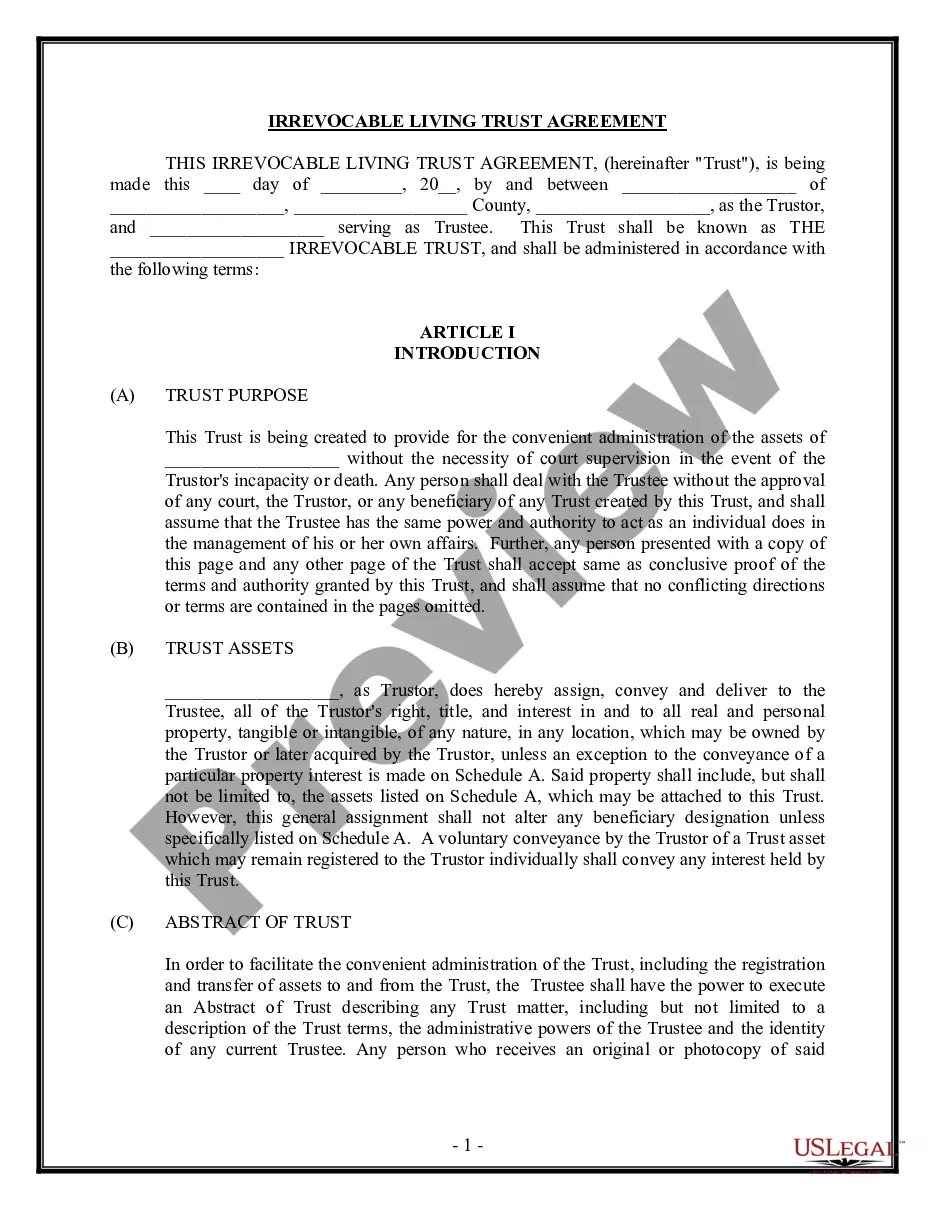
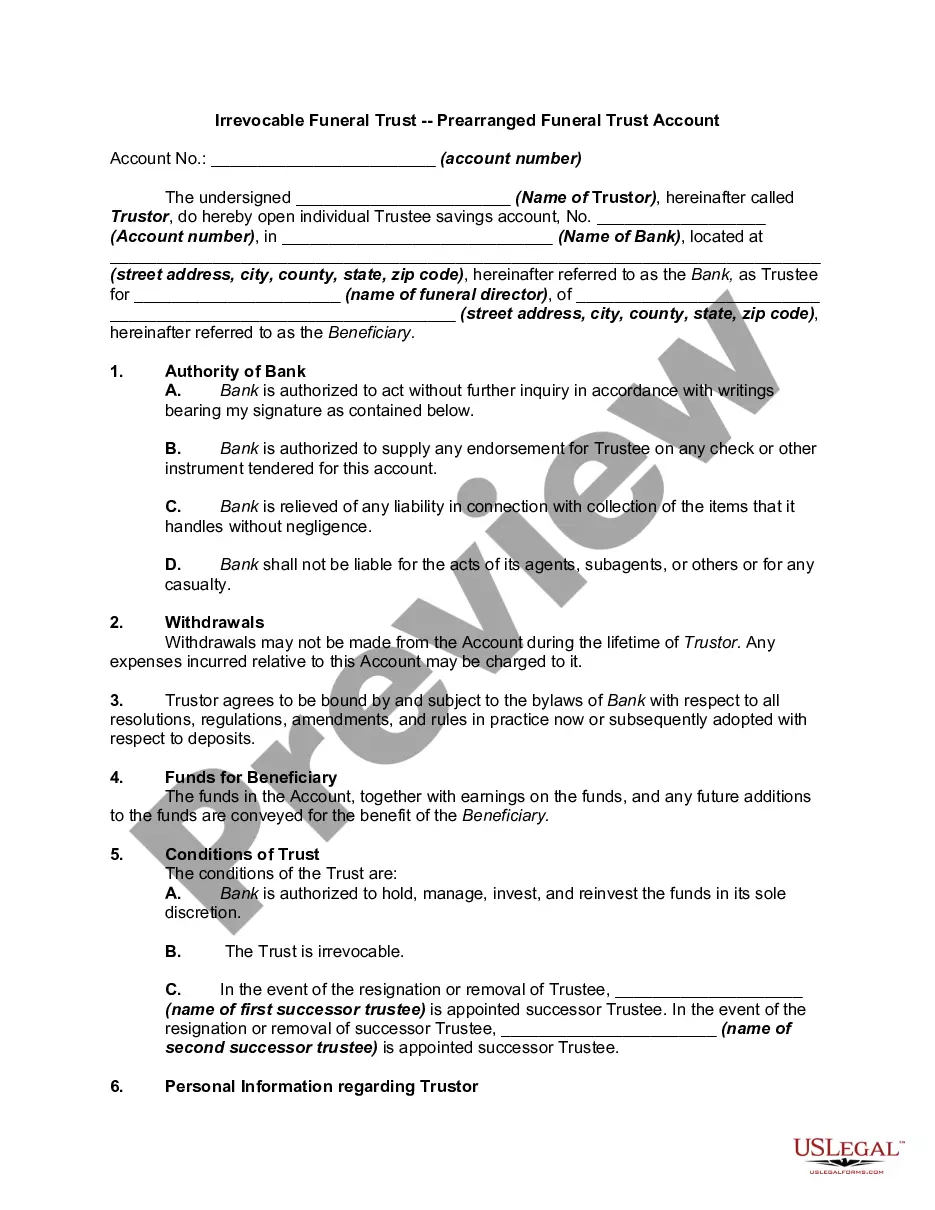
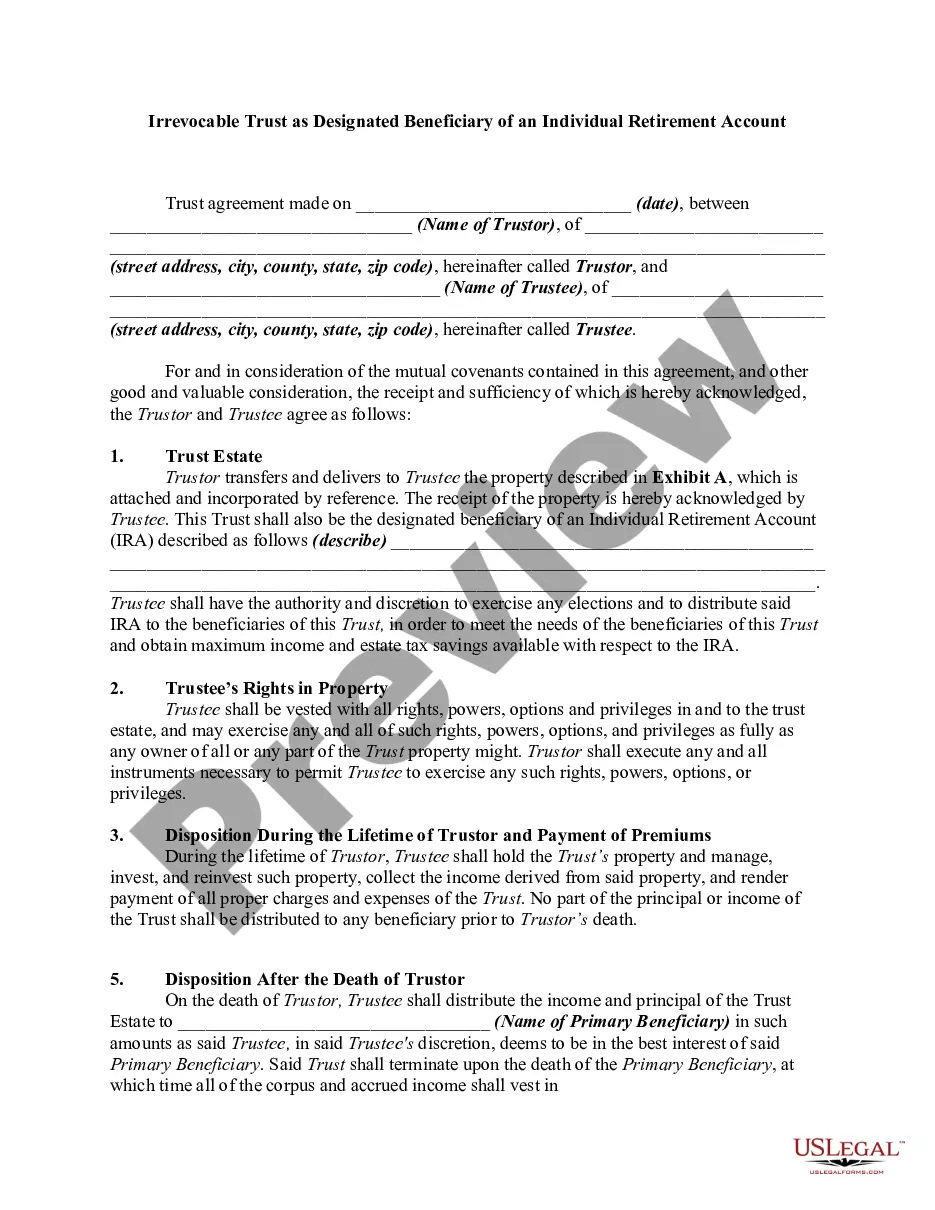
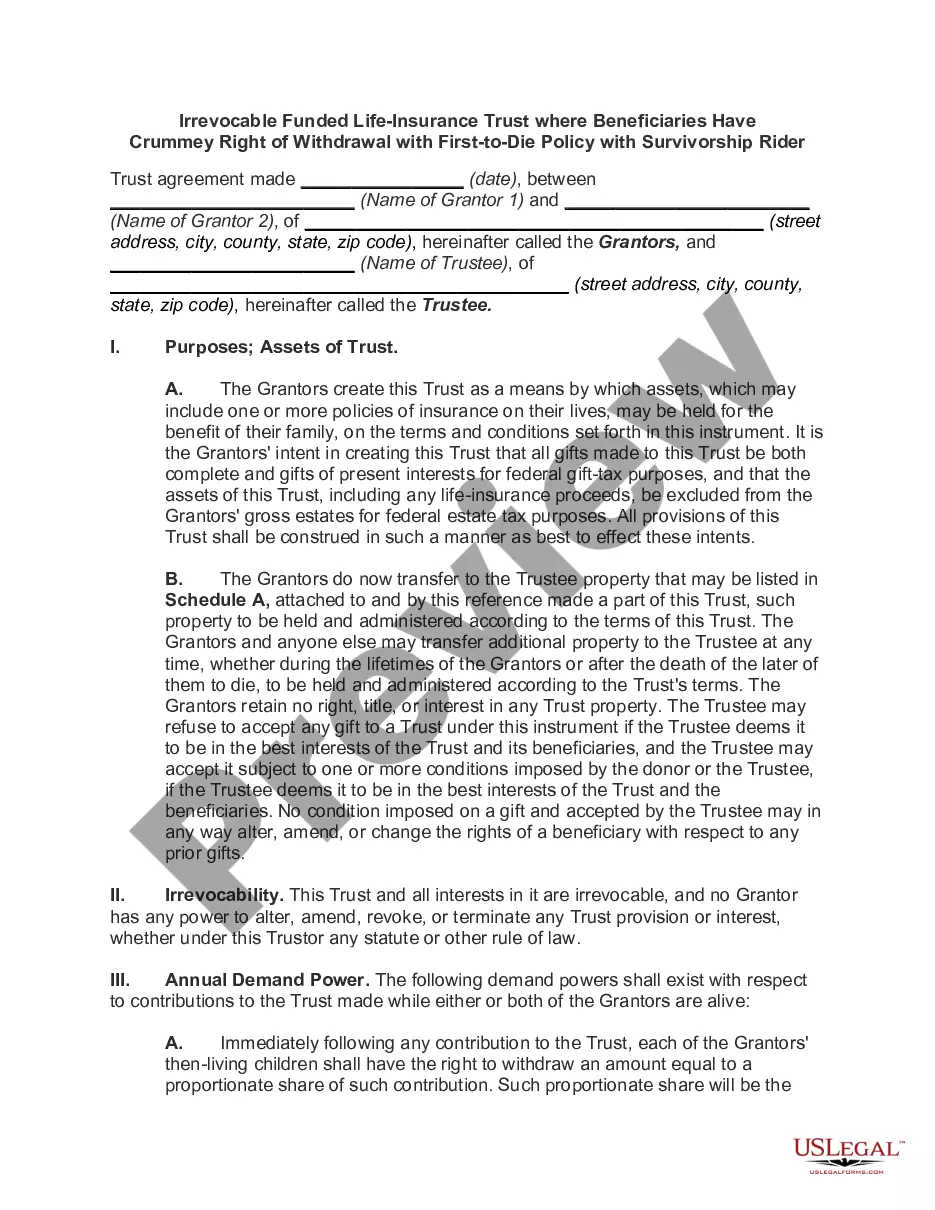
Get your form ready online
Our built-in tools help you complete, sign, share, and store your documents in one place.
Make edits, fill in missing information, and update formatting in US Legal Forms—just like you would in MS Word.
Download a copy, print it, send it by email, or mail it via USPS—whatever works best for your next step.
Sign and collect signatures with our SignNow integration. Send to multiple recipients, set reminders, and more. Go Premium to unlock E-Sign.
If this form requires notarization, complete it online through a secure video call—no need to meet a notary in person or wait for an appointment.
We protect your documents and personal data by following strict security and privacy standards.

Make edits, fill in missing information, and update formatting in US Legal Forms—just like you would in MS Word.

Download a copy, print it, send it by email, or mail it via USPS—whatever works best for your next step.

Sign and collect signatures with our SignNow integration. Send to multiple recipients, set reminders, and more. Go Premium to unlock E-Sign.

If this form requires notarization, complete it online through a secure video call—no need to meet a notary in person or wait for an appointment.

We protect your documents and personal data by following strict security and privacy standards.
Looking for another form?







Form popularity
FAQ
The IRS treats irrevocable trusts as separate tax entities. This means that any income generated must be reported on a tax return specific to the trust. If you are managing an irrevocable life insurance trust form with divorce arrangements, it's crucial to understand these rules to ensure compliance and optimize your financial arrangements.
Yes, an irrevocable life insurance trust usually must file a tax return, even if it generates no taxable income. This filing ensures that the trust remains compliant with tax regulations and legal requirements. If you are using the irrevocable life insurance trust form with divorce, consulting with a tax professional can provide guidance tailored to your situation.
Irrevocable trusts typically require their own tax returns. This is because once you transfer assets into an irrevocable trust, you effectively remove personal ownership, placing them under the trust's name. Moreover, if you have an irrevocable life insurance trust form with divorce provisions, proper tax documentation is essential for clarity and compliance with the IRS.
If you get divorced, the irrevocable trust usually remains intact and unaffected, depending on the jurisdiction. The assets within the trust, such as those connected to the irrevocable life insurance trust form with divorce, are protected from division during the divorce proceedings. To ensure clarity and compliance with state laws, it's advisable to seek legal advice regarding your specific circumstances.
Setting up an irrevocable life insurance trust involves several steps, starting with drafting the trust document. You'll need to define the trust's terms, choose a trustee, and transfer the life insurance policy into the trust. When preparing the irrevocable life insurance trust form with divorce, consider consulting professional resources, such as USLegalForms, for guidance and templates.
Typically, a trust does not automatically dissolve after a divorce. The irrevocable life insurance trust remains in place and continues to function as intended unless a court orders otherwise. It's important to consult legal guidance on how the irrevocable life insurance trust form with divorce affects your specific situation.
In a divorce, certain assets are often protected, including those held in an irrevocable life insurance trust. Because this type of trust separates ownership from the policyholder, the assets within the trust generally remain safe from division during divorce proceedings. To secure these assets, you should consider how to properly set up the irrevocable life insurance trust form with divorce in mind.
A divorce can have significant implications for an irrevocable trust, particularly when it involves asset division and beneficiary designations. Assets in an irrevocable trust are generally not subject to division during divorce proceedings, which can protect them from being claimed by a spouse. However, it's essential to revisit the terms of the irrevocable life insurance trust form with divorce to ensure that the changes reflect your current status and intentions for asset distribution.
Divorce can greatly affect the beneficiary designation of a life insurance policy, often altering the intended recipient of the policy's benefits. If the divorce settlement specifies changes to beneficiary designations, it is crucial to update these records promptly to reflect your current intentions. This is particularly important when dealing with an irrevocable life insurance trust form with divorce, as it requires careful planning to align your estate and insurance policies with your new circumstances.
The 3 year rule for an irrevocable trust is similar to that of an irrevocable life insurance trust, where transfers made within three years of death can affect estate tax consequences. This rule emphasizes the importance of timing and planning in estate management. When dealing with an irrevocable life insurance trust form with divorce, understanding this rule will help you structure your assets appropriately to ensure they go to your intended beneficiaries.
