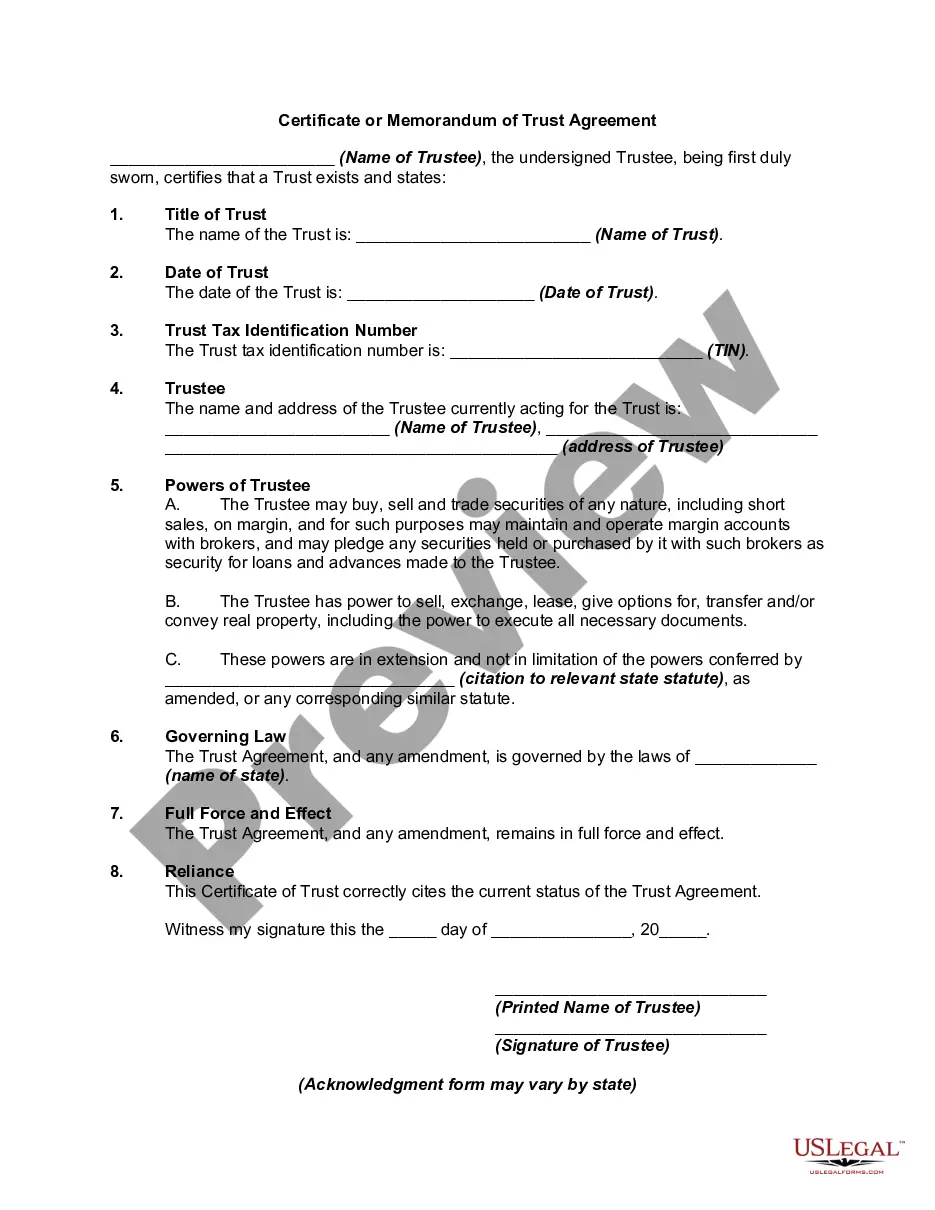
Testamentary Trust Form For Grandchildren
Description

Get your form ready online
Our built-in tools help you complete, sign, share, and store your documents in one place.
Make edits, fill in missing information, and update formatting in US Legal Forms—just like you would in MS Word.
Download a copy, print it, send it by email, or mail it via USPS—whatever works best for your next step.
Sign and collect signatures with our SignNow integration. Send to multiple recipients, set reminders, and more. Go Premium to unlock E-Sign.
If this form requires notarization, complete it online through a secure video call—no need to meet a notary in person or wait for an appointment.
We protect your documents and personal data by following strict security and privacy standards.

Make edits, fill in missing information, and update formatting in US Legal Forms—just like you would in MS Word.

Download a copy, print it, send it by email, or mail it via USPS—whatever works best for your next step.

Sign and collect signatures with our SignNow integration. Send to multiple recipients, set reminders, and more. Go Premium to unlock E-Sign.

If this form requires notarization, complete it online through a secure video call—no need to meet a notary in person or wait for an appointment.

We protect your documents and personal data by following strict security and privacy standards.
Looking for another form?









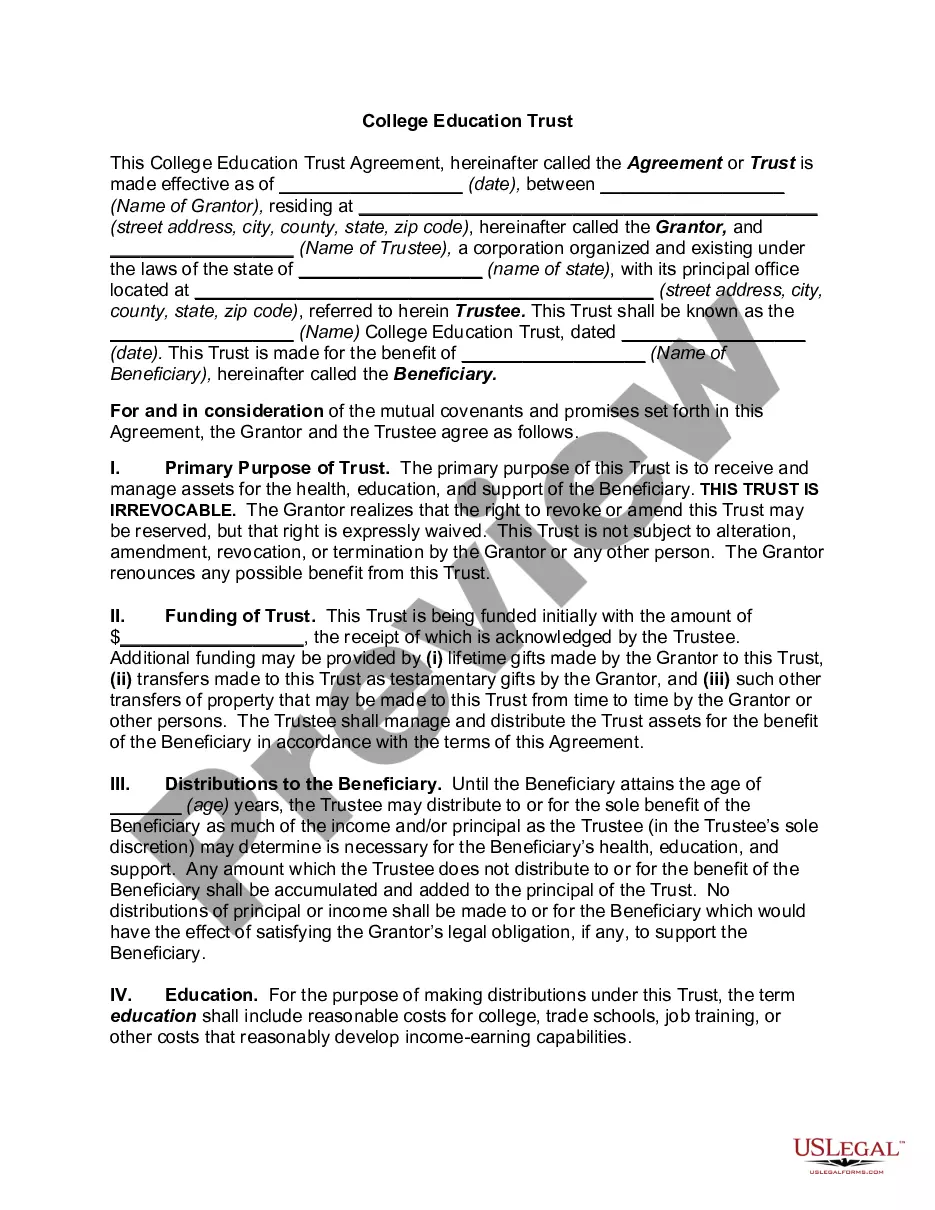
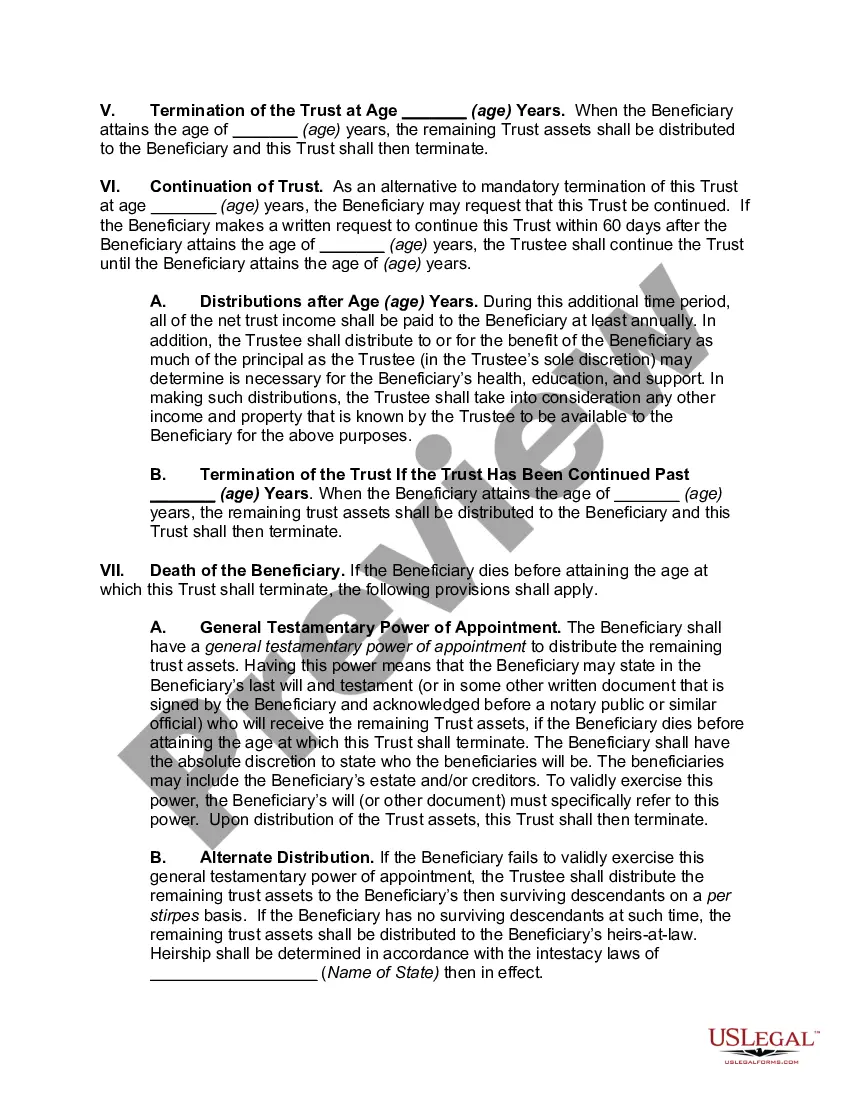
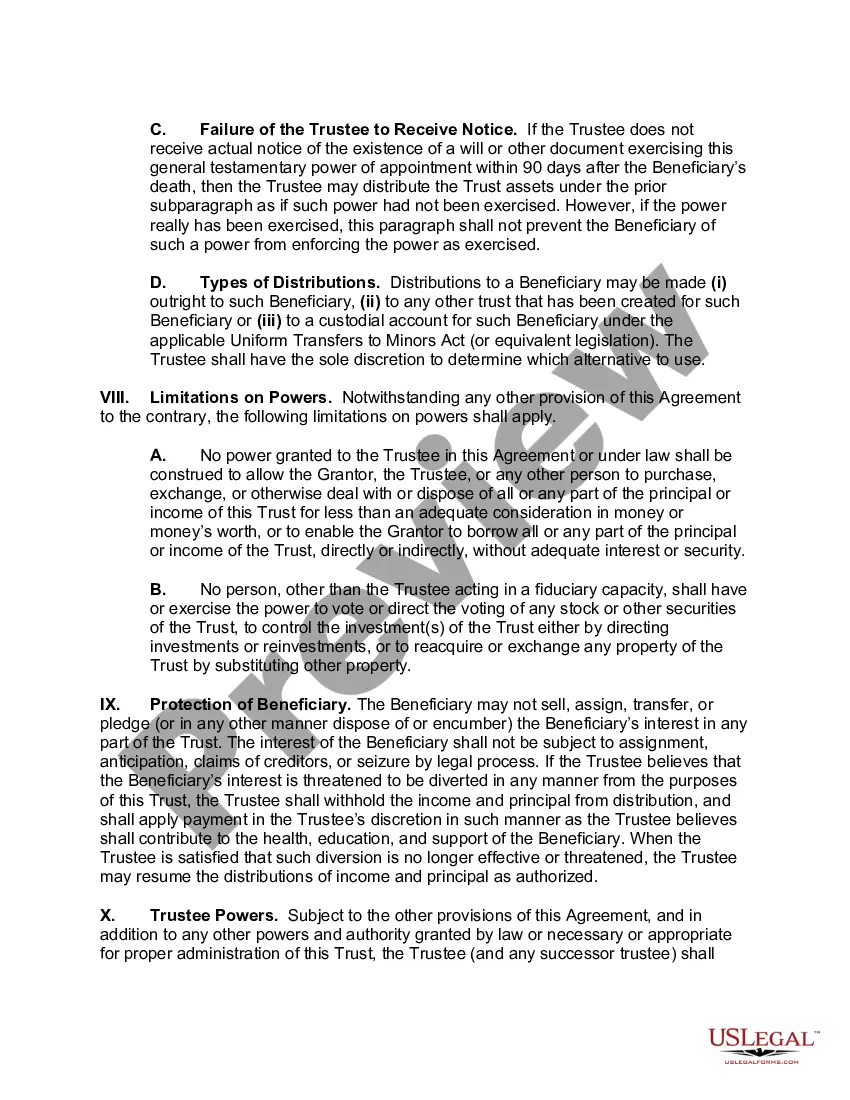
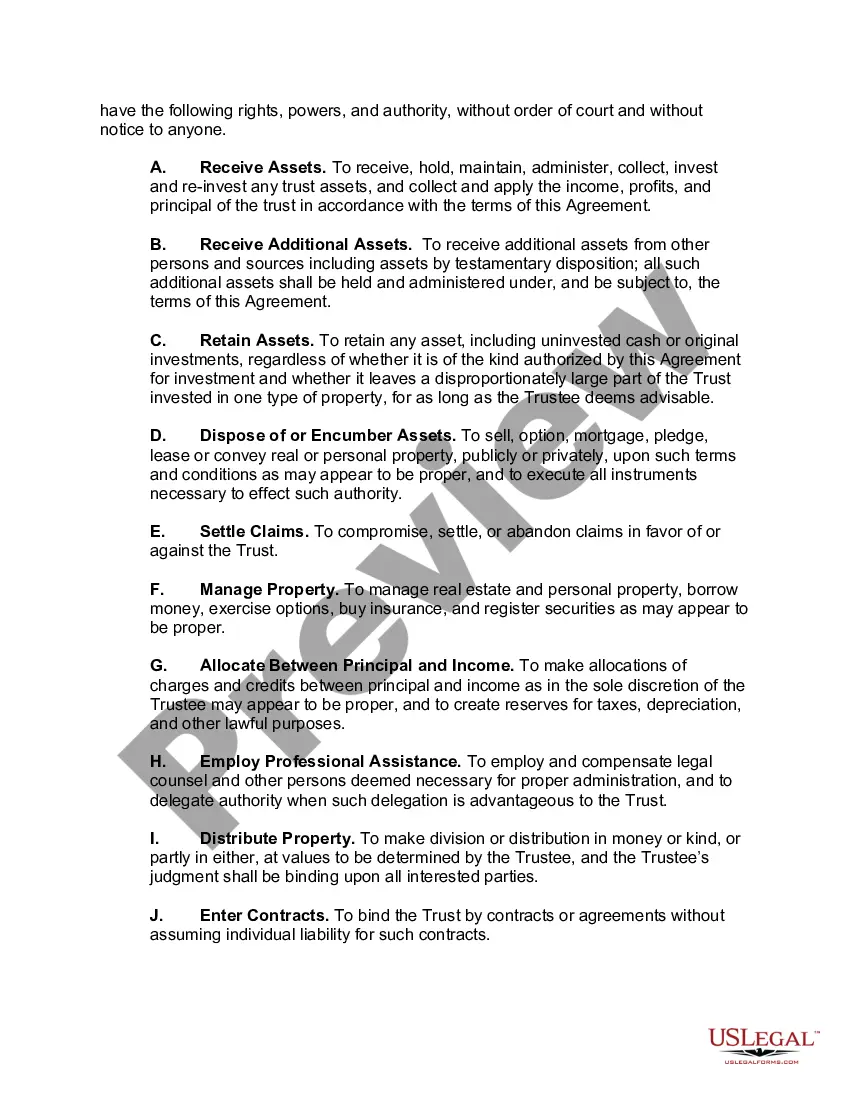
How to fill out College Education Trust Agreement?
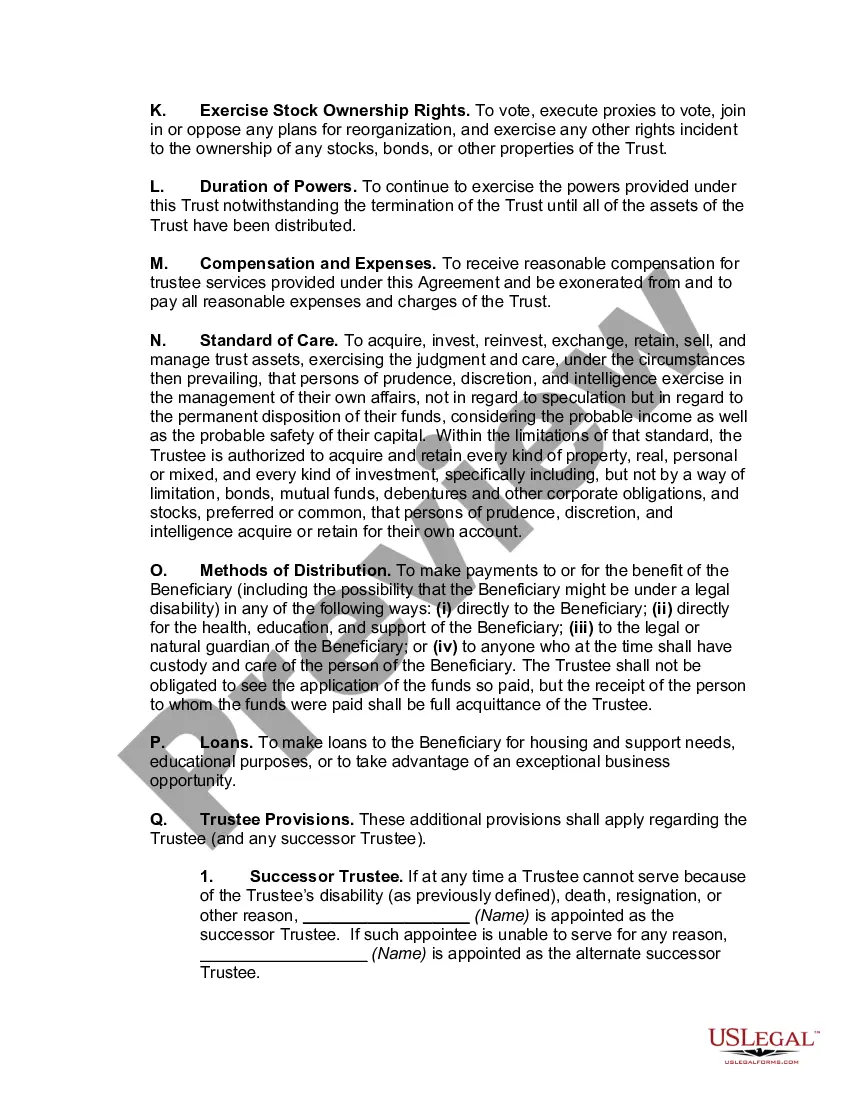
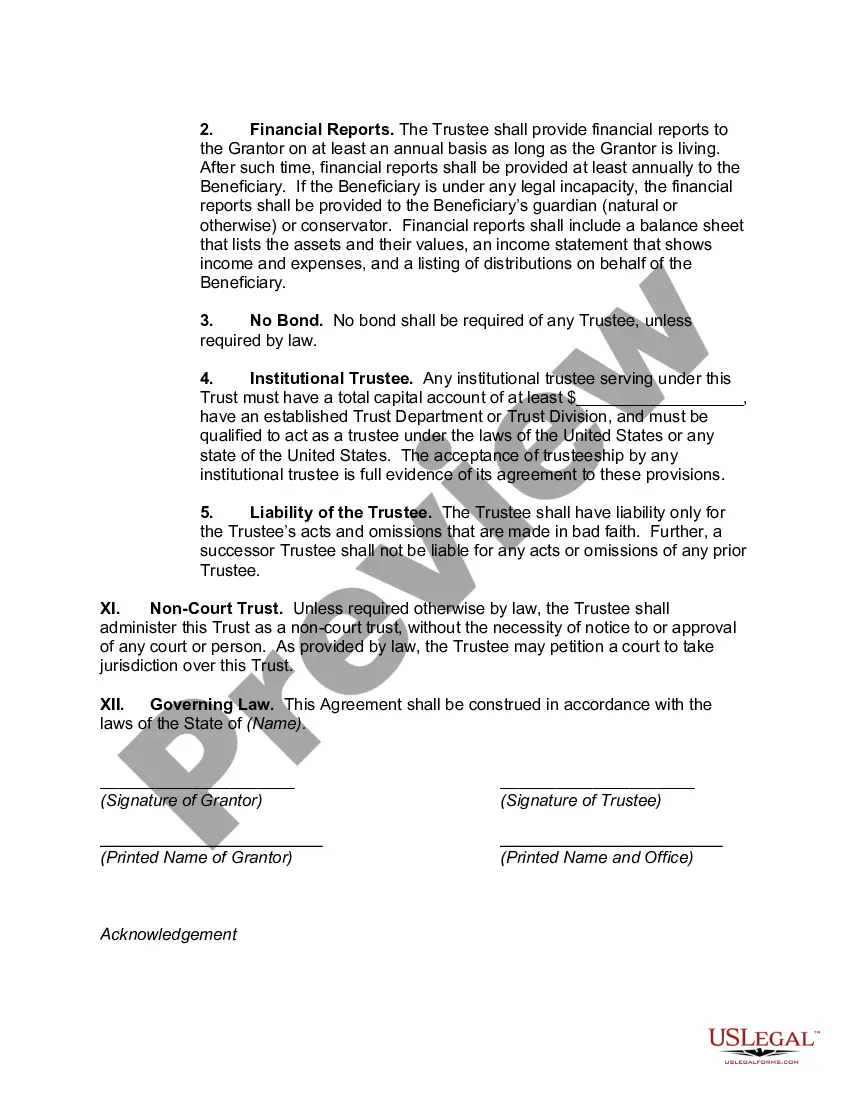
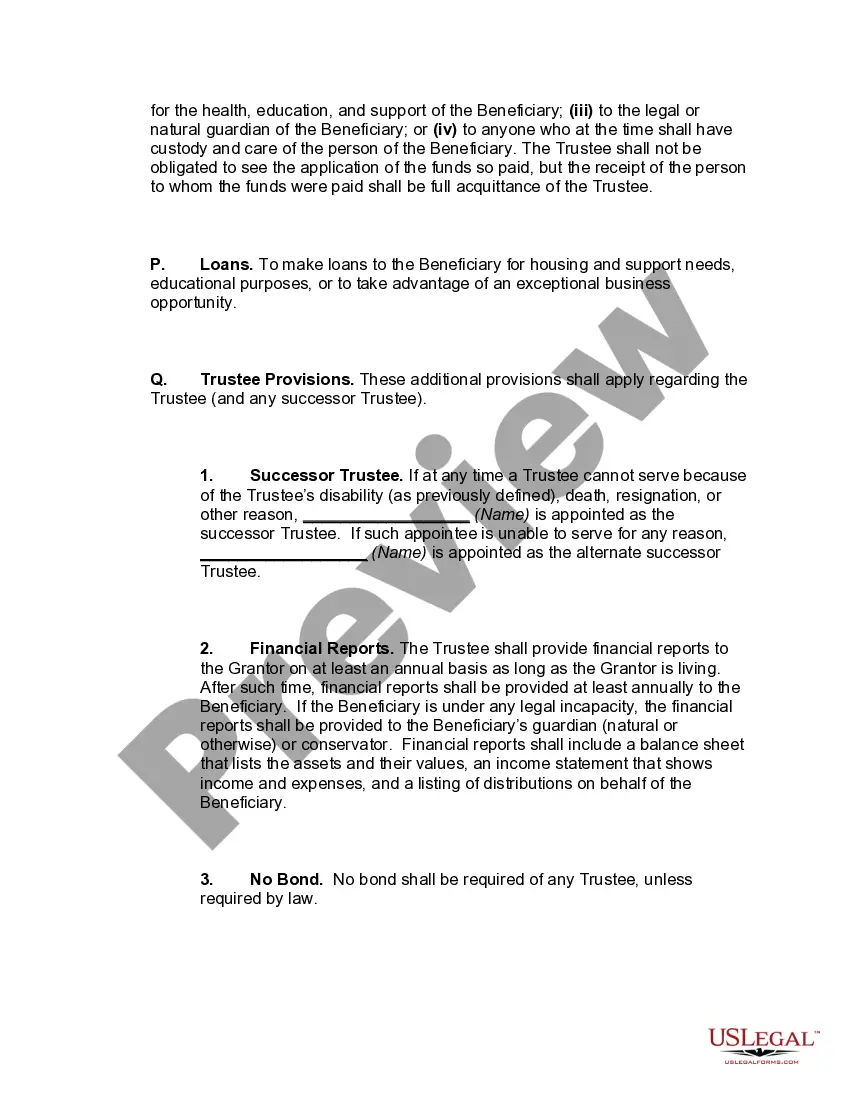
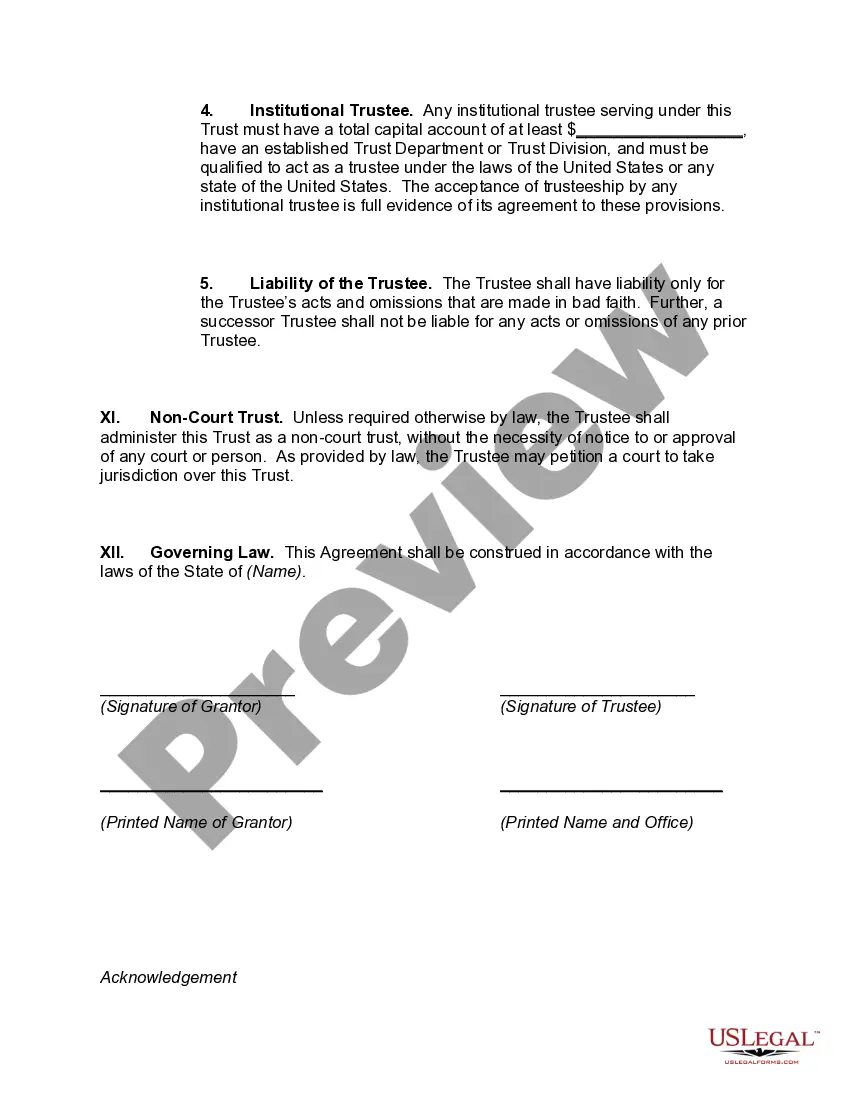
The Testamentary Trust Document For Grandchildren you observe on this page is a versatile legal template crafted by expert attorneys in accordance with federal and state laws.
For over 25 years, US Legal Forms has supplied individuals, businesses, and lawyers with more than 85,000 authenticated, state-specific forms for any professional and personal event. It’s the fastest, easiest, and most reliable method to acquire the documentation you require, as the service guarantees bank-level data protection and anti-malware safeguards.
Subscribe to US Legal Forms to have verified legal templates for all of life’s circumstances at your service.
- Search for the document you require and review it.
- Browse through the file you searched and preview it or review the form description to confirm it meets your requirements. If it does not, utilize the search feature to find the appropriate one. Click Buy Now once you have located the template you need.
- Register and Log In.
- Choose the pricing plan that fits you and create an account. Use PayPal or a credit card for a quick payment. If you already possess an account, Log In and verify your subscription to proceed.
- Obtain the fillable template.
- Select the format you prefer for your Testamentary Trust Document For Grandchildren (PDF, DOCX, RTF) and download the example to your device.
- Fill out and sign the document.
- Print the template to complete it by hand. Alternatively, utilize an online multifunctional PDF editor to swiftly and accurately fill out and sign your form with an electronic signature.
- Re-download your documents.
- Utilize the same document again whenever necessary. Access the My documents tab in your profile to redownload any previously acquired forms.
Form popularity
FAQ
Disadvantages of a Testamentary Trust Lack of Privacy: Testamentary trusts are part of a person's will, which becomes public record upon their death. This means that the details of the trust and its beneficiaries are accessible to the public.
One way to get around this problem is to leave assets in trust for the grandchildren. When doing so, it is vital to consider an appropriate age for the child to receive the inheritance, so that they are mature enough to use it wisely. An age contingent trust such as this is normally written into the will.
Establishing a trust Since trusts for grandchildren are legal structures, you'll work with an attorney to establish them. However, you may also want to discuss wealth planning and investment options with your contacts at Wells Fargo Private Bank before you finalize your plans, Sowell says.
The Primary Beneficiary is, quite simply, the main person who will benefit from the Trust. Who this is will depend on your circumstances, but ordinarily, this would be your spouse and then your children. In addition to the Primary Beneficiary, a Testamentary Trust also has General Beneficiaries.
The general beneficiaries usually include relatives of the primary beneficiary (including parents, spouses, siblings, children, grandchildren, aunts and uncles), as well as companies and trusts that the primary beneficiary has an interest in, and charities.