Informed Consent With Mental Health
Description
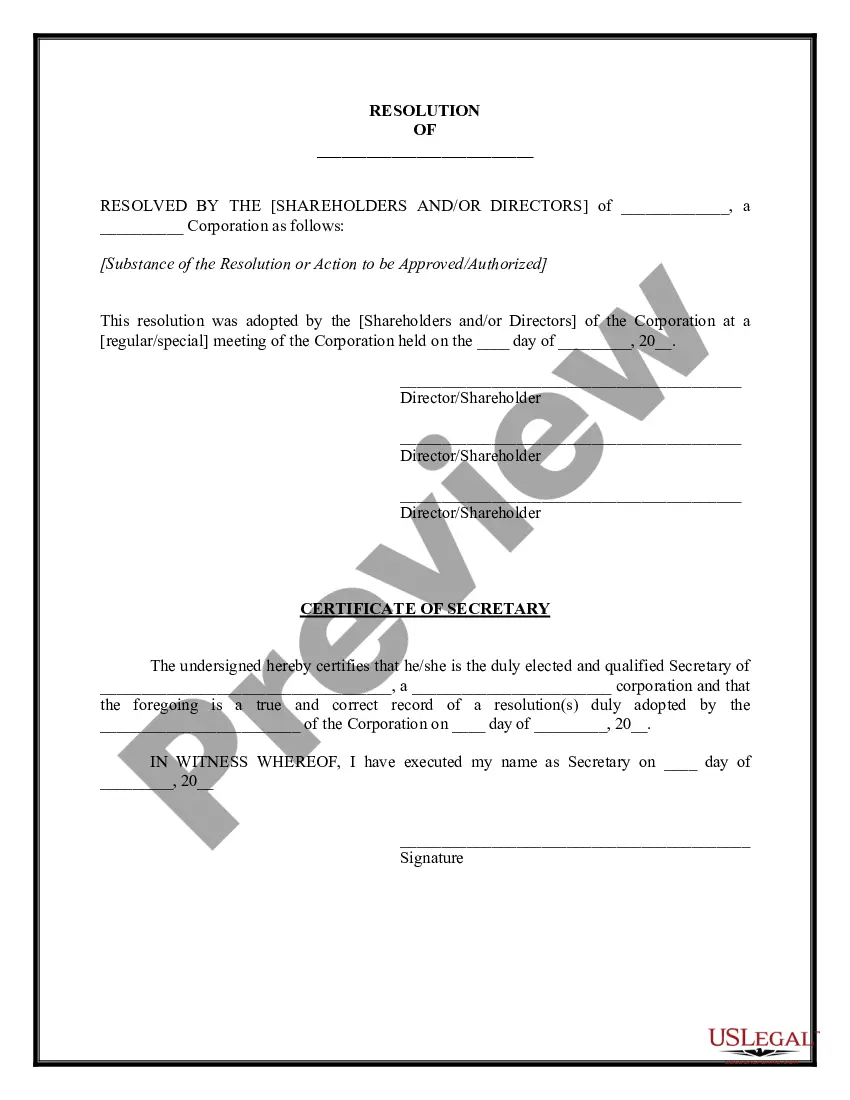
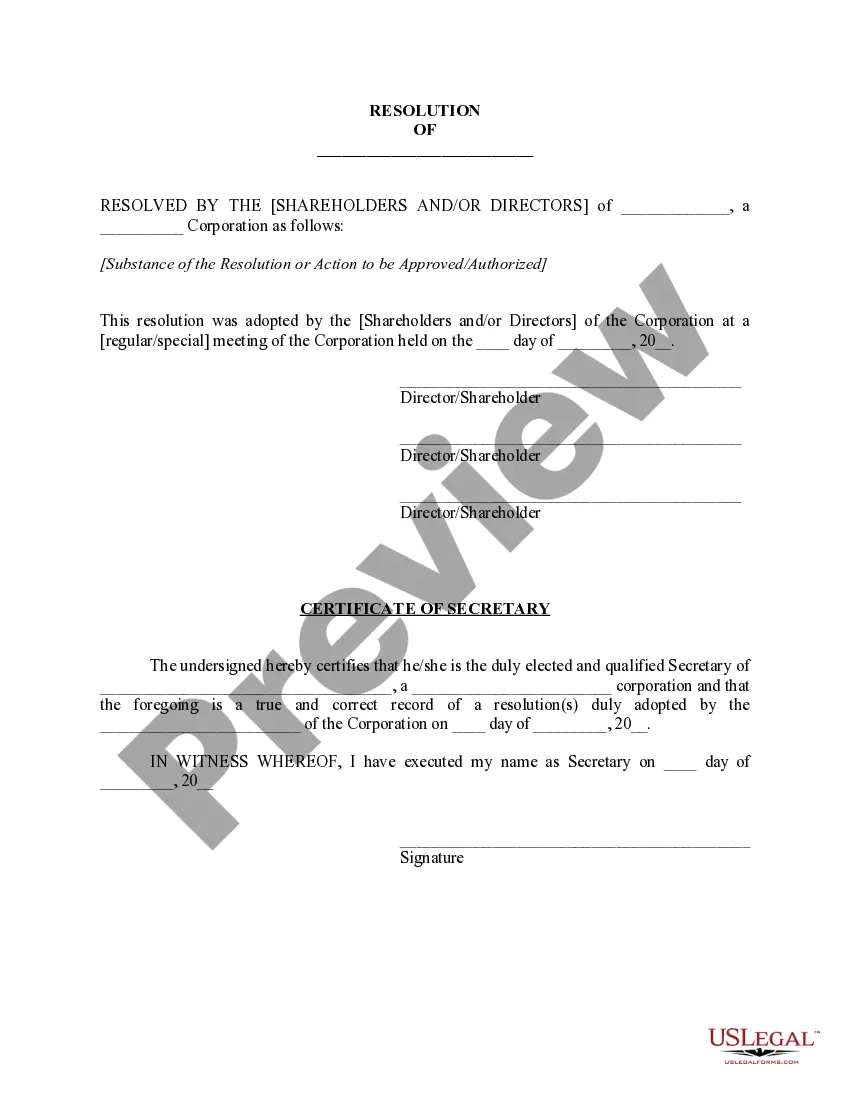
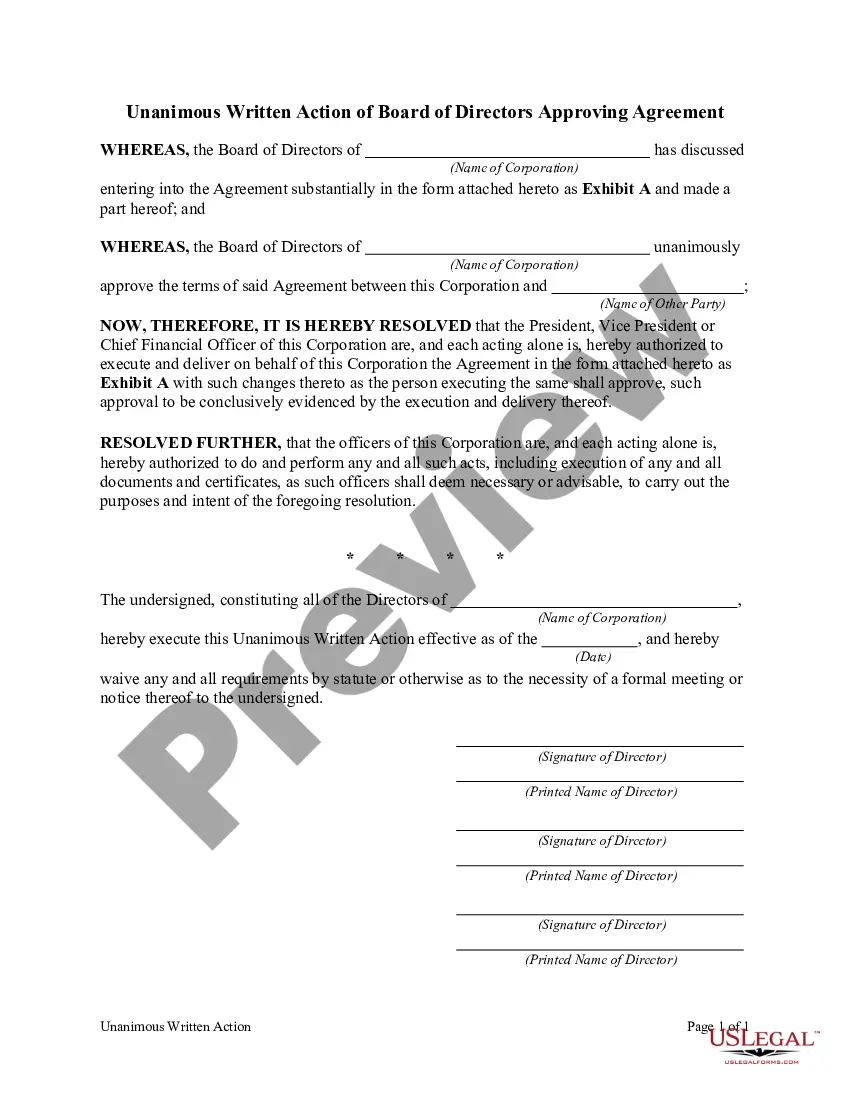





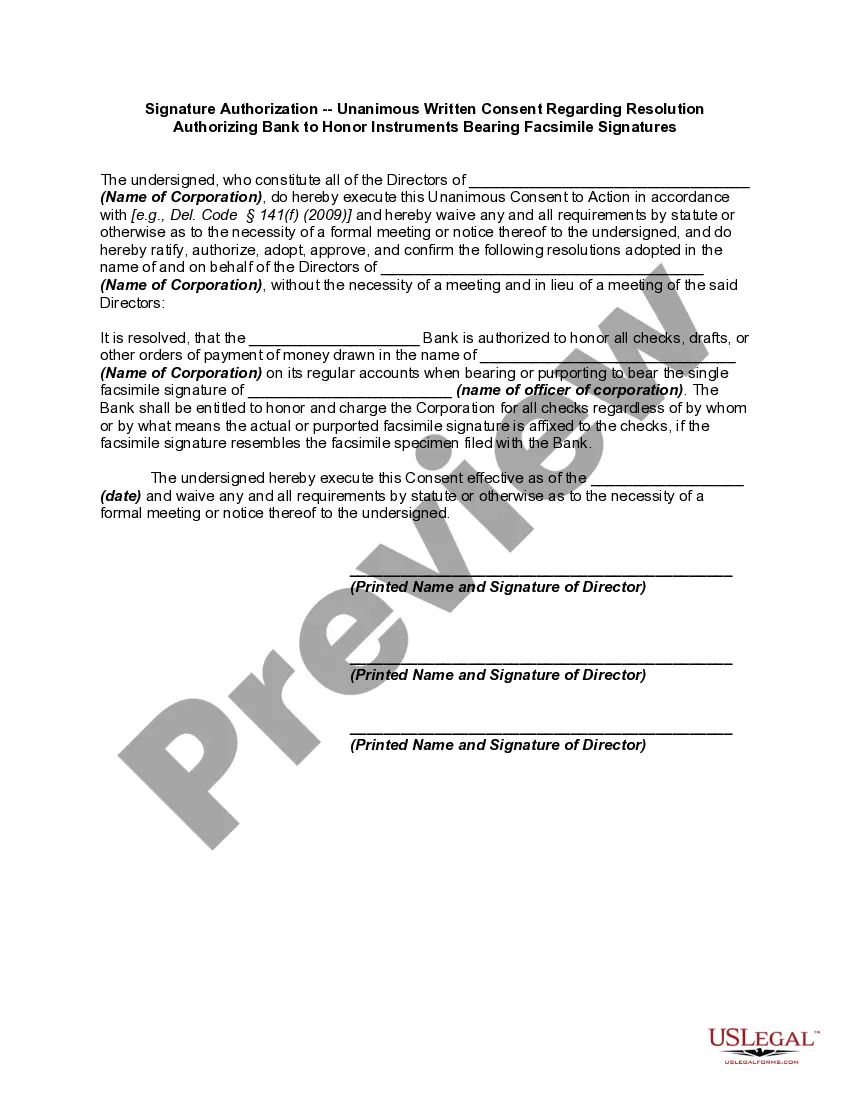
How to fill out Signature Authorization - Unanimous Written Consent Regarding Resolution Authorizing Bank To Honor Instruments Bearing Facsimile Signatures?
Handling legal paperwork and processes can be a lengthy addition to your daily routine.
Informed Consent With Mental Health and similar forms frequently require you to locate them and figure out how to fill them out accurately.
Thus, whether you are addressing financial, legal, or personal issues, having an extensive and user-friendly online repository of forms readily available will significantly help.
US Legal Forms is the premier online platform for legal templates, providing over 85,000 state-specific forms and various tools to assist you in completing your documents effortlessly.
Are you using US Legal Forms for the first time? Register and create your account in a few minutes to gain access to the form library and Informed Consent With Mental Health. Then, follow the steps outlined below to complete your form: Ensure you have the correct form by using the Preview feature and reviewing the form description. Select Buy Now when you are ready, and choose the monthly subscription plan that suits you best. Click Download then fill out, eSign, and print the form. US Legal Forms has twenty-five years of experience helping users manage their legal documents. Get the form you need today and simplify any process without hassle.
- Explore the collection of pertinent documents accessible to you with just one click.
- US Legal Forms offers you state- and county-specific forms available for download at any time.
- Safeguard your document management processes using exceptional support that enables you to prepare any form within minutes without incurring extra or hidden fees.
- Simply Log In to your account, locate Informed Consent With Mental Health, and download it instantly from the My documents section.
- You can also access previously downloaded forms.
Form popularity
FAQ
The best definition of informed consent is the process by which a person voluntarily agrees to a treatment after being provided with all relevant information regarding that treatment. This includes understanding the nature of the treatment, the potential risks, and any alternatives available. Informed consent with mental health focuses on ensuring that you feel comfortable and knowledgeable about your choices. Utilizing US Legal Forms can assist you in drafting clear consent documents that reflect your understanding.
Informed consent for mental health refers to the process where you receive comprehensive information about your treatment options, including risks and benefits. This process is designed to ensure that you understand what to expect and can make informed decisions regarding your mental health care. It emphasizes your right to be an active participant in your treatment plan. Resources such as US Legal Forms offer templates that can streamline this process.
Informed consent with mental health requires five key elements: the capacity to make decisions, information about the treatment, understanding of the information provided, voluntary agreement to proceed, and the opportunity to ask questions. Each of these components ensures that you engage in your mental health treatment with full knowledge and confidence. When these elements are present, you can feel empowered to make choices that are right for you. Using platforms like US Legal Forms can help you navigate the informed consent process.
Considerations in preparing the informed consent document: Elements of consent present. Complete explanations. Lay language. Protection of confidentiality. No unproven claims of effectiveness. Device studies include a statement that the study includes an evaluation of the safety of the test article.
The psychotherapist's credentials and relevant professional experience. The client's right to refuse or withdraw without penalty, emphasizing the voluntary nature of participation. Reasonably available treatment options and alternatives, and their relative risks and benefits, to include no treatment at all.
It has been seen that all patients taking psychiatric treatment are not fully incompetent to give consent. In the mentioned study9, several patients with even major mental disorders could understand and provide consent. Gross excitement or intoxication were common barriers.
The content of informed consent may vary depending upon the client and treatment plan; however, informed consent generally necessitates that the client: (a) has the capacity to consent; (b) has been adequately informed of significant information concerning treatment processes and procedures; (c) has been adequately ...
For an ethically valid consent, information provided to a research subject should include, but not be limited to: information about the health condition for which the research is proposed; details of the nature and purpose of the research; the expected duration of the subject's participation; a detailed description of ...