Transfer To Trust Account
Description
Get your form ready online
Our built-in tools help you complete, sign, share, and store your documents in one place.
Make edits, fill in missing information, and update formatting in US Legal Forms—just like you would in MS Word.
Download a copy, print it, send it by email, or mail it via USPS—whatever works best for your next step.
Sign and collect signatures with our SignNow integration. Send to multiple recipients, set reminders, and more. Go Premium to unlock E-Sign.
If this form requires notarization, complete it online through a secure video call—no need to meet a notary in person or wait for an appointment.
We protect your documents and personal data by following strict security and privacy standards.

Make edits, fill in missing information, and update formatting in US Legal Forms—just like you would in MS Word.

Download a copy, print it, send it by email, or mail it via USPS—whatever works best for your next step.

Sign and collect signatures with our SignNow integration. Send to multiple recipients, set reminders, and more. Go Premium to unlock E-Sign.

If this form requires notarization, complete it online through a secure video call—no need to meet a notary in person or wait for an appointment.

We protect your documents and personal data by following strict security and privacy standards.
Looking for another form?










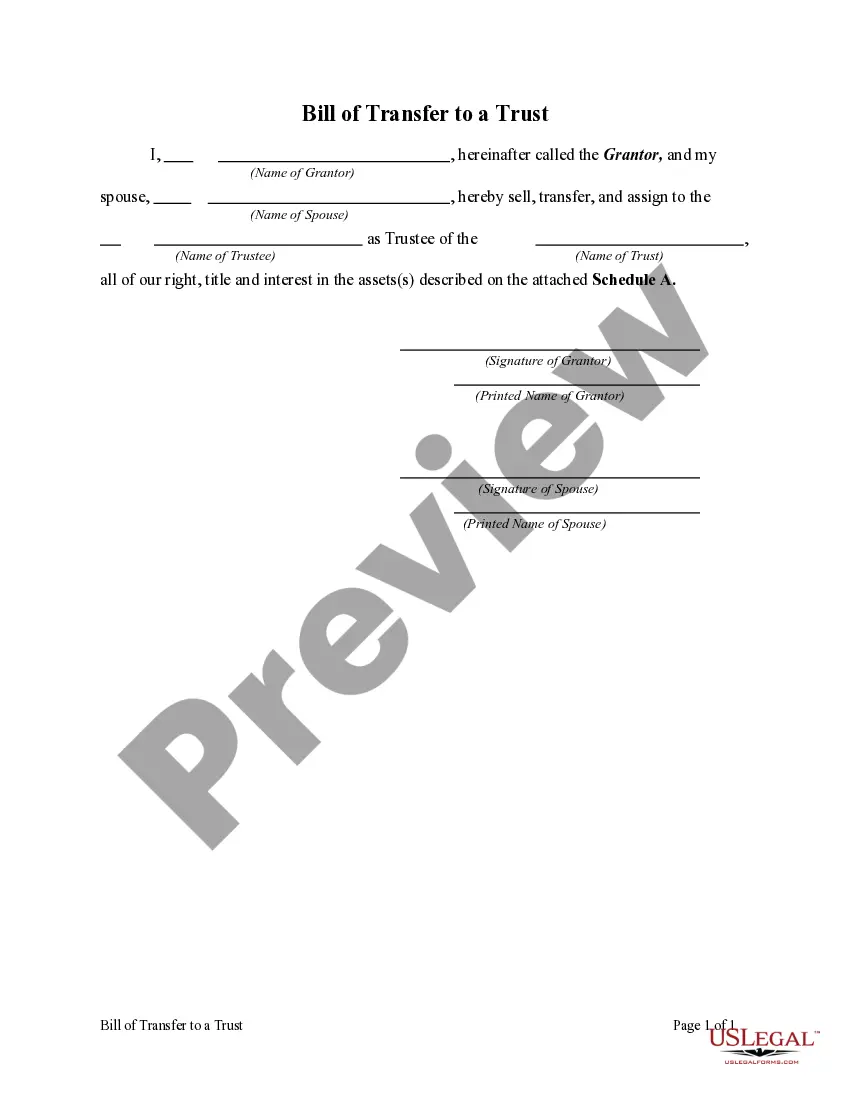
How to fill out Bill Of Transfer To A Trust?
Whether for commercial objectives or personal matters, everyone must address legal issues at some stage in their existence.
Completing legal documents requires meticulous focus, starting from choosing the appropriate form template.
With an extensive catalog of US Legal Forms available, you do not need to waste time searching online for the right template. Utilize the library’s user-friendly navigation to obtain the correct form for any situation.
- Locate the template you need by using the search box or catalog browsing.
- Review the form’s details to ensure it aligns with your situation, state, and county.
- Click on the form’s preview to view it.
- If it’s the incorrect form, return to the search feature to find the Transfer To Trust Account template you require.
- Download the template once it fits your requirements.
- If you already possess a US Legal Forms account, simply click Log in to access previously saved templates in My documents.
- If you do not have an account yet, you may acquire the form by clicking Buy now.
- Select the suitable pricing choice.
- Complete the registration form for an account.
- Choose your preferred payment method: you can utilize a credit card or PayPal account.
- Select the file format you wish and download the Transfer To Trust Account.
- Once saved, you can fill out the form with the aid of editing software or print it and complete it by hand.
Form popularity
FAQ
To transfer funds to a trust account, you first need to ensure that the account has been properly established by your attorney or legal advisor. Then, gather the necessary documents to ensure compliance with legal requirements. Next, you can initiate the transfer through your bank or financial institution by providing them with the trust account details. Using a trusted platform like US Legal Forms can simplify this process, offering guidance and templates to help you effectively transfer to your trust account.
Transferring items into a trust involves a few key steps. First, you need to identify the assets you want to transfer and ensure they are eligible. Next, you should prepare the necessary documents, such as a trust agreement. After creating or updating your estate plan, you will formally transfer assets to the trust account, often requiring notifications to financial institutions. If you need assistance, US Legal Forms offers resources and templates to help simplify the process.
Transferring assets into a trust involves several clear steps. First, you need to identify the assets to include—like real estate or bank accounts. Once identified, you can prepare the necessary documents to transfer to trust account the specified assets. Utilizing a platform like USLegalForms can simplify this process by providing templates and guidance.
Determining whether your parents should put their assets in a trust depends on their unique financial situation. If they have substantial assets or wish to avoid probate, a trust can be beneficial. On the other hand, if they need liquidity for expenses, it might not be the best option. Discussing this option can lead to better financial planning, especially as they consider whether to transfer to trust account.
While putting assets in a trust offers advantages, there are downsides to consider. For instance, once you transfer to trust account, those assets may become harder to access in emergencies. Moreover, trusts can involve ongoing maintenance costs and require regular oversight. Evaluating these factors helps ensure that a trust is the right choice for your situation.
One of the biggest mistakes parents make is not clearly defining the terms of the trust funding. This can lead to confusion and disagreements among family members later on. Additionally, failing to transfer to trust account assets properly can hinder the trust's effectiveness. Always consult with a legal expert to avoid these common pitfalls.
A family trust can come with potential disadvantages, including limited access to funds. Once you transfer to trust account, the trust controls the assets, which may restrict your family's ability to access them easily. Furthermore, there can be tax implications and administrative expenses that could outweigh the potential benefits. It's advisable to consider these factors carefully.
One major downfall of having a trust is the complexity involved in its setup and management. While it provides benefits like avoiding probate, it can also require significant time and effort to create and maintain. Additionally, you may incur legal fees when establishing the trust. It’s important to weigh these factors against the benefits of transferring your assets to a trust account.
Yes, you generally need to report a trust fund to the IRS, especially if it generates income. When you transfer to a trust account, the trust will need its own tax identification number for reporting purposes. This ensures compliance with tax regulations and helps you manage any potential tax obligations. Consulting resources like USLegalForms can guide you through the necessary reporting requirements for your trust fund.
Transferring your bank account to a trust can provide significant benefits for estate planning. It helps ensure that your assets go to your intended beneficiaries without going through probate. Additionally, a trust can provide more control over your assets during your lifetime and after. Using a platform like USLegalForms can simplify the process of setting up a trust and facilitate the transfer to a trust account.