Is A Transfer To An Irrevocable Trust A Gift
Description
Get your form ready online
Our built-in tools help you complete, sign, share, and store your documents in one place.
Make edits, fill in missing information, and update formatting in US Legal Forms—just like you would in MS Word.
Download a copy, print it, send it by email, or mail it via USPS—whatever works best for your next step.
Sign and collect signatures with our SignNow integration. Send to multiple recipients, set reminders, and more. Go Premium to unlock E-Sign.
If this form requires notarization, complete it online through a secure video call—no need to meet a notary in person or wait for an appointment.
We protect your documents and personal data by following strict security and privacy standards.

Make edits, fill in missing information, and update formatting in US Legal Forms—just like you would in MS Word.

Download a copy, print it, send it by email, or mail it via USPS—whatever works best for your next step.

Sign and collect signatures with our SignNow integration. Send to multiple recipients, set reminders, and more. Go Premium to unlock E-Sign.

If this form requires notarization, complete it online through a secure video call—no need to meet a notary in person or wait for an appointment.

We protect your documents and personal data by following strict security and privacy standards.
Looking for another form?
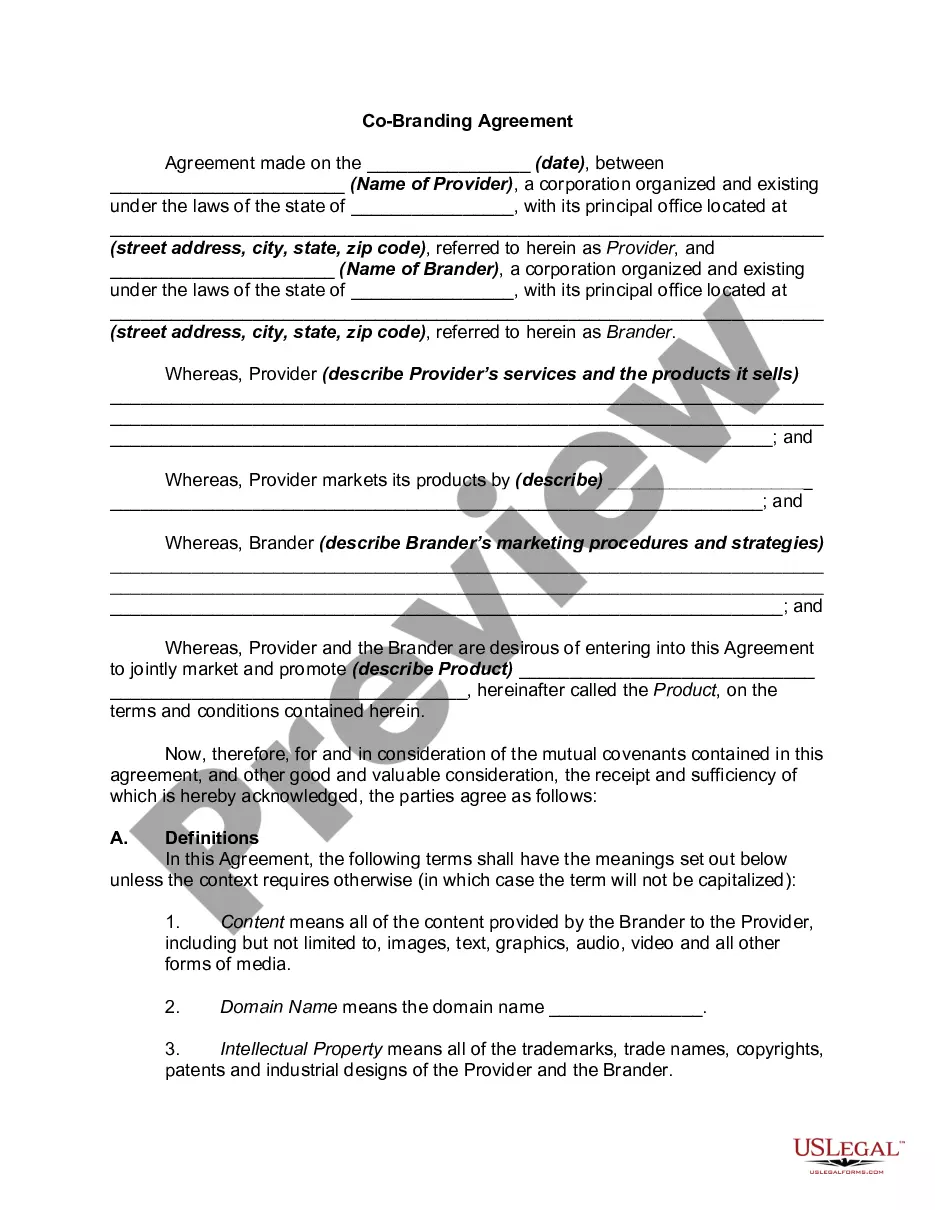





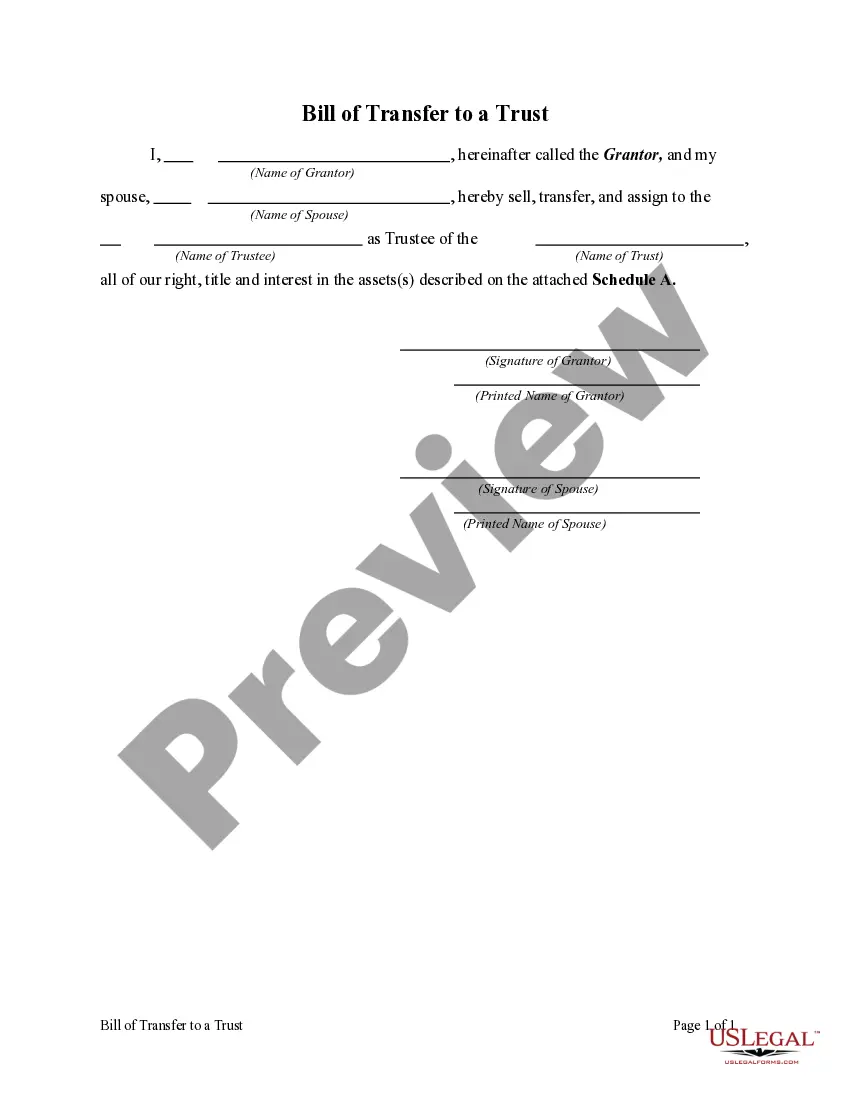
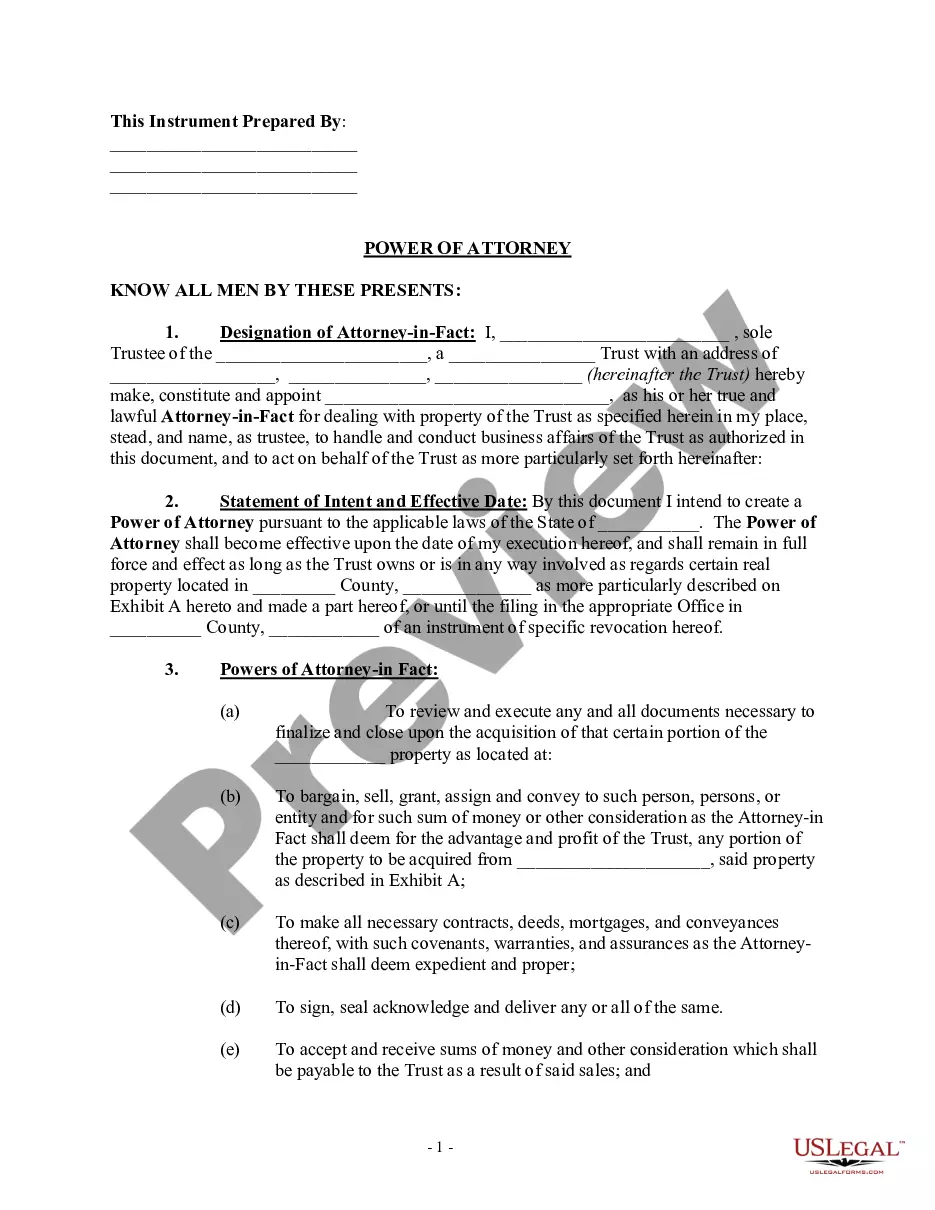
How to fill out Bill Of Transfer To A Trust?
- Begin by checking the Preview mode and reviewing the form description to confirm it aligns with your needs and local jurisdiction requirements.
- If adjustments are needed, utilize the Search tab to find a more suitable template. Once identified, proceed to the next step.
- Choose the document you wish to purchase by clicking the Buy Now button and selecting an appropriate subscription plan. You'll need to create an account for full library access.
- Enter your payment information, either via credit card or PayPal, to finalize your subscription and gain access to the library.
- Once completed, download your form directly to your device. You can find it in the My Forms section of your profile for easy access later.
US Legal Forms offers unparalleled benefits for legal document templates, ensuring users have access to a vast library of over 85,000 forms. This ease of use empowers both individuals and attorneys to efficiently create legally sound documents.
Explore the extensive options available at US Legal Forms today and take a confident step towards securing your estate. Start your legal document process now!
Form popularity
FAQ
When considering if a transfer to a grantor trust is a gift, it’s essential to understand the nature of the trust. A grantor trust typically allows the grantor to maintain control over the trust assets, which can complicate the gift classification. It’s crucial to note that the IRS may view such transfers differently based on specific circumstances. Therefore, whether a transfer to an irrevocable trust is a gift can depend on factors like control and the intended use of the assets.
To report a gift to an irrevocable trust on IRS Form 709, you must provide detailed information about the transfer. Ensure you include the trust's value and the identity of the beneficiaries. This step is crucial when determining if your transfer to an irrevocable trust is a gift that exceeds the annual exclusion limit. Using resources like the US Legal Forms platform can simplify the process, offering templates and guidance for accurate reporting.
Transfers to an irrevocable trust can have tax implications, depending on the value of the assets transferred. When considering if a transfer to an irrevocable trust is a gift, remember that if the value exceeds the annual gift exclusion limit, it may be subject to gift tax. However, these transfers can also be structured to minimize tax exposure. Consulting with a tax professional can help clarify the specific tax obligations related to your situation.
Yes, transfers to a trust, specifically an irrevocable trust, are typically considered gifts. Once assets are placed into this trust, you lose control over them, which meets the definition of a gift for tax purposes. It’s crucial to plan for any gift taxes that may arise, as they can affect your overall estate strategy. For clarity and assistance, consider using resources like uslegalforms to help navigate these legal aspects.
Generally, a transfer to an irrevocable trust is not a taxable event at the time of the transfer. However, it does lead to potential gift tax considerations since this type of trust often qualifies as a gift for tax purposes. Keep this in mind when planning your estate, as it benefits you to be aware of any tax liabilities. Consulting with a tax advisor can provide clear guidance tailored to your situation.
A transfer to a grantor trust is usually not classified as a completed gift. In this case, the grantor retains certain controls over the trust assets, which means the IRS does not treat it as a completed gift. This distinction can significantly affect your estate planning and tax obligations. If you're considering how this impacts your situation, professional advice helps navigate these waters easily.
Transferring assets to an irrevocable trust is typically not considered a taxable event. However, it can have tax implications in the long run, especially concerning gift taxes and future capital gains. You might wonder, 'Is a transfer to an irrevocable trust a gift?' As mentioned earlier, yes, and it's wise to prepare for potential taxation scenarios. Consulting a tax expert can clarify these complexities.
Distributions from a trust can be considered gifts if they are made to beneficiaries who have not earned them. In this context, the funds or assets given from the trust may be counted as gifts for tax purposes. It's crucial to consult with a tax professional to understand how these distributions could affect your financial situation. Thus, always remember that gifts can have tax implications.
A transfer to an irrevocable trust is generally considered a gift. When you move assets into this type of trust, you relinquish control over them, which typically meets the criteria for gifting. It is essential to understand this distinction, as it can impact your estate planning and taxes. Therefore, if you're asking, 'Is a transfer to an irrevocable trust a gift?', the clear answer is yes.
Yes, you can transfer assets into an irrevocable trust, provided you follow the legal steps necessary to fund the trust properly. This includes drafting the trust document and titling the assets correctly. As you consider the implications, remember, this transfer raises the question: Is a transfer to an irrevocable trust a gift, as it affects your ownership and control over these assets?