Zoning Variance Vs Conditional Use Permit
Description
Get your form ready online
Our built-in tools help you complete, sign, share, and store your documents in one place.
Make edits, fill in missing information, and update formatting in US Legal Forms—just like you would in MS Word.
Download a copy, print it, send it by email, or mail it via USPS—whatever works best for your next step.
Sign and collect signatures with our SignNow integration. Send to multiple recipients, set reminders, and more. Go Premium to unlock E-Sign.
If this form requires notarization, complete it online through a secure video call—no need to meet a notary in person or wait for an appointment.
We protect your documents and personal data by following strict security and privacy standards.

Make edits, fill in missing information, and update formatting in US Legal Forms—just like you would in MS Word.

Download a copy, print it, send it by email, or mail it via USPS—whatever works best for your next step.

Sign and collect signatures with our SignNow integration. Send to multiple recipients, set reminders, and more. Go Premium to unlock E-Sign.

If this form requires notarization, complete it online through a secure video call—no need to meet a notary in person or wait for an appointment.

We protect your documents and personal data by following strict security and privacy standards.
Looking for another form?









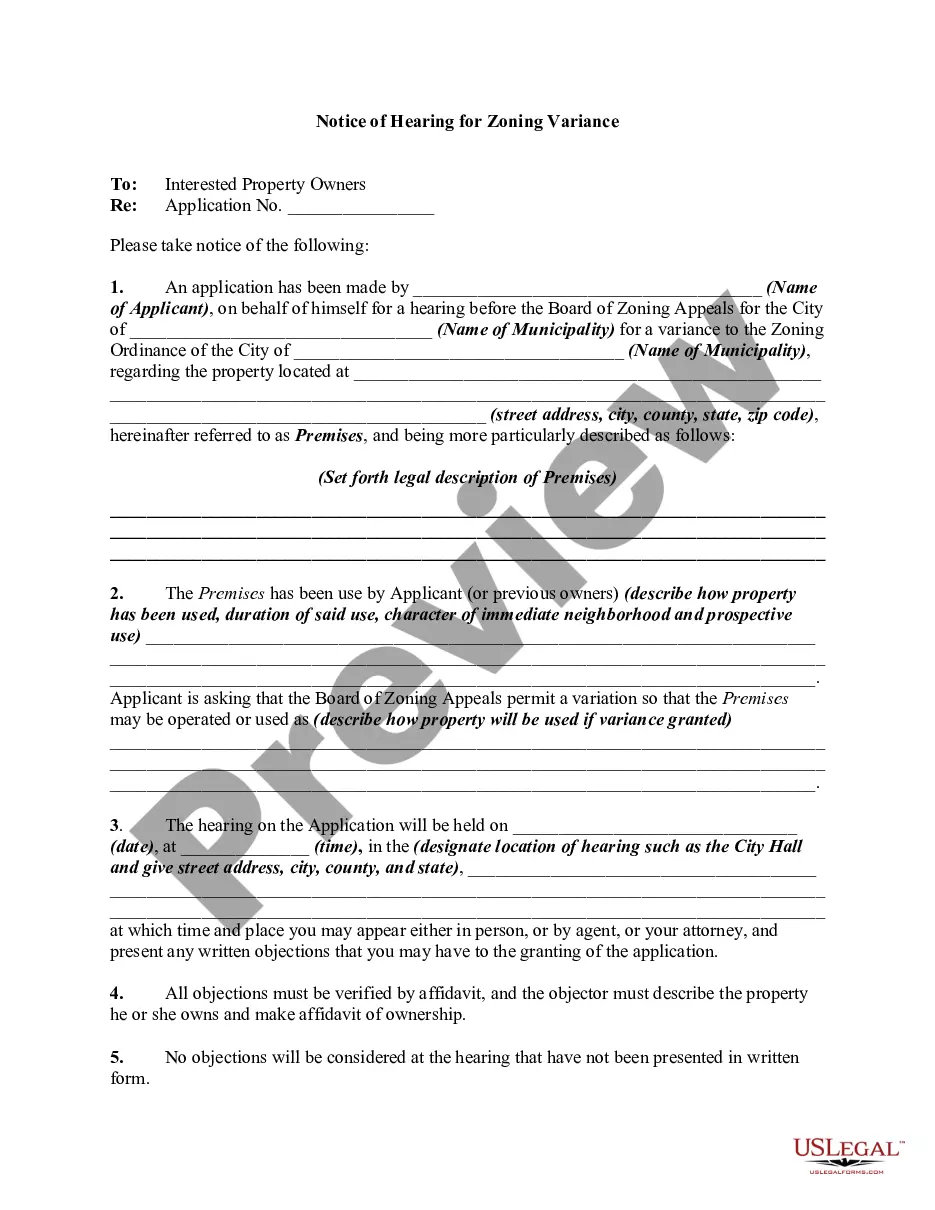
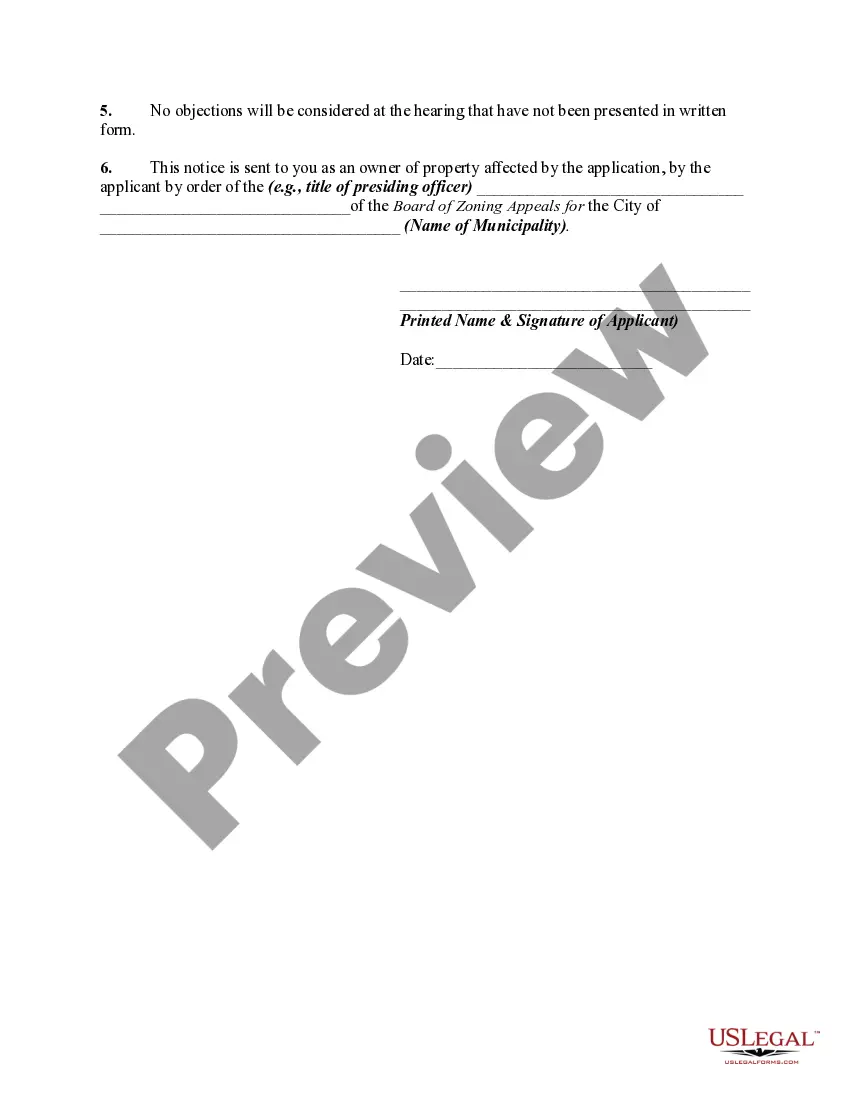
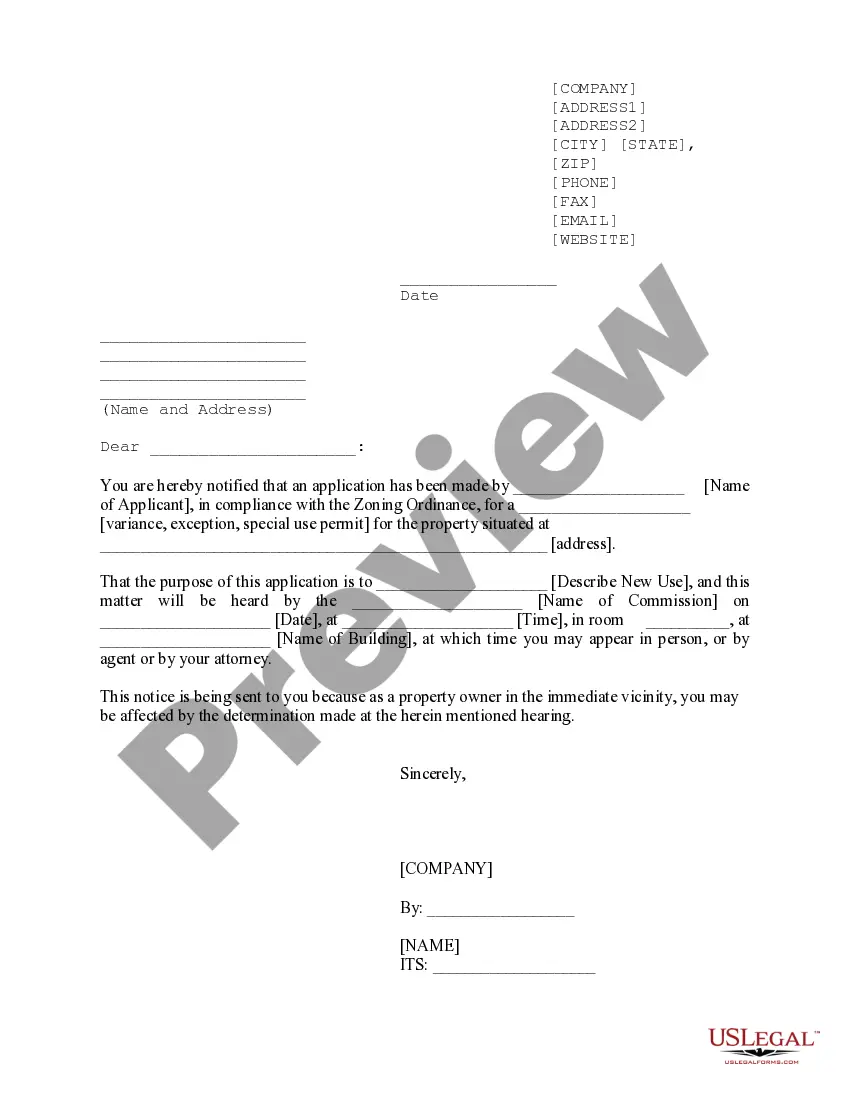
How to fill out Notice Of Hearing For Variance Before Board Of Zoning Appeals - Notice To Be Sent By Applicant To Interested Property Owners?
- Log in to your US Legal Forms account if you're a returning user. Make sure your subscription is active before proceeding to the next step.
- For new users, start by browsing the extensive legal library. Use the Preview mode and read the form descriptions to ensure the document fits your local jurisdiction requirements.
- If necessary, search for additional templates using the Search tab to find a document that better suits your needs.
- Choose the form by clicking the Buy Now button. Select a subscription plan that works for you and create an account to access the resources.
- Complete your purchase by providing payment information through credit card or PayPal.
- Download the form to your device. You can access this document at any time through the My Forms section in your profile.
After following these steps, you'll have the correct document at your fingertips, ready for completion and submission. US Legal Forms streamlines the process, allowing you to focus on achieving your objectives.
Maximize your legal preparation with US Legal Forms today. Start accessing expert resources and build your understanding of zoning regulations efficiently!
Form popularity
FAQ
A conditional use permit allows a property owner to use their land in a way that differs from current zoning rules, provided they meet certain conditions. For instance, if a residential area wants to permit a small daycare center, it may require a conditional use permit. This ensures that the daycare won't disrupt the community. Knowing the distinction between zoning variance vs conditional use permit can help you navigate local regulations effectively.
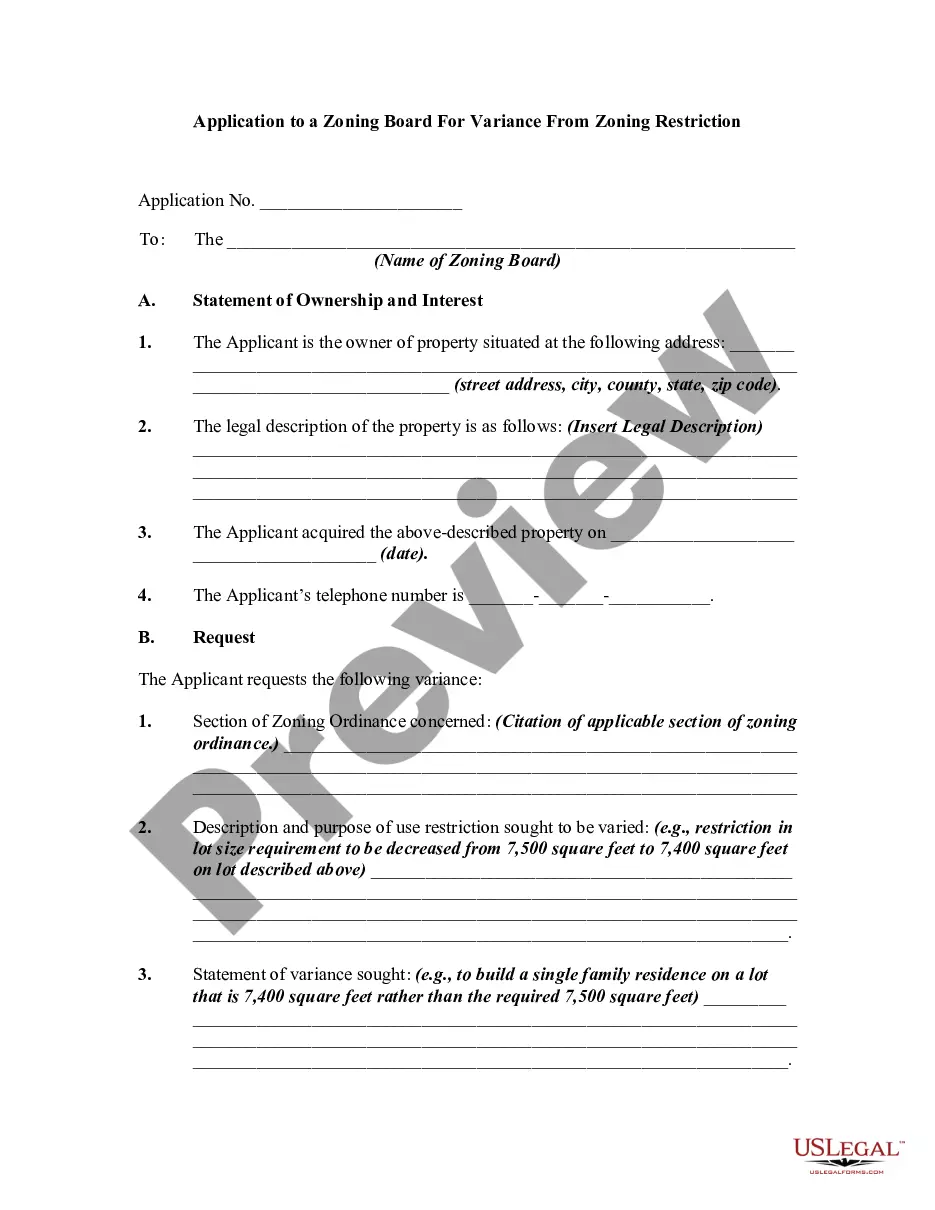
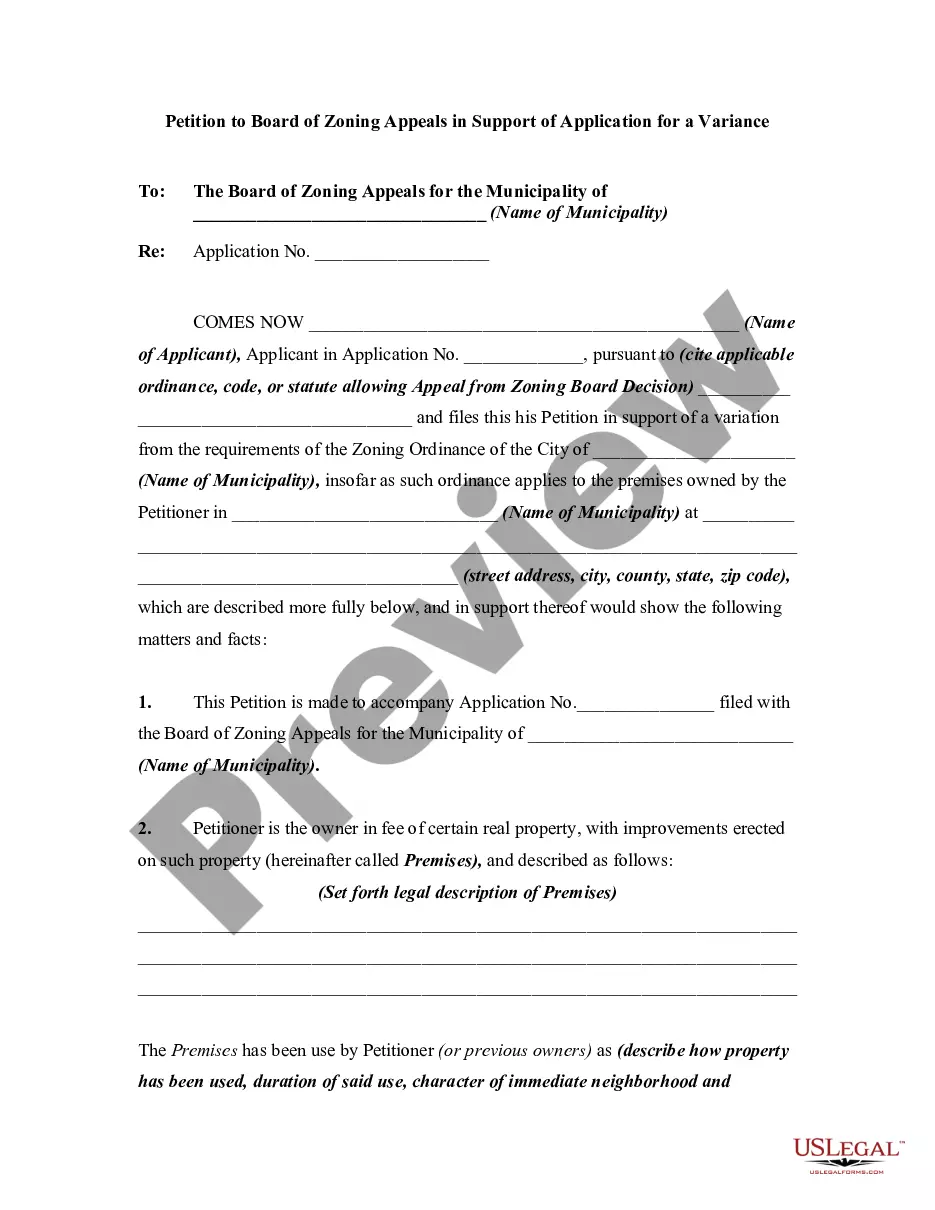
Obtaining a zoning variance can be challenging, as it typically requires demonstrating that you meet specific criteria set by local authorities. You must show that your situation is unique and that the variance won't negatively impact the surrounding area. The process often involves public hearings, where neighbors can voice their opinions. Utilizing a service like US Legal Forms can help streamline the application process and provide essential guidance.
A zoning ordinance is a law governing land use in a specific area to ensure stability and order within communities. A variance, conversely, is a legal exception to these laws, granted when standard compliance creates undue hardship. Understanding these terms helps clarify the discussions on zoning variance vs conditional use permit.
The primary difference lies in purpose: a zoning variance provides relief from strict zoning requirements due to unique property characteristics, while a conditional use permit allows specified uses that align with zoning but under certain conditions. Knowing this distinction aids in effectively navigating zoning variance vs conditional use permit scenarios.
A use permit generally refers to permissions granted for specific uses under zoning laws, while a conditional use permit includes conditions that must be met to proceed. Both serve essential roles in land use management, making the differences within the framework of zoning variance vs conditional use permit critical.
A zoning variance is an approval that allows property owners relief from zoning restrictions. It’s essential for addressing unique circumstances that impact the property’s use. Recognizing this concept is vital when exploring zoning variance vs conditional use permit options.
A variance allows a property owner to deviate from specific zoning laws due to unique circumstances, while a conditional use permit operates within zoning regulations with added conditions. These permits serve different purposes and understanding the zoning variance vs conditional use permit will guide your project effectively.
A special use permit enables a property owner to conduct specific types of business that aren’t generally allowed in a zone, while a use variance allows deviations from the zoning’s standard uses. Both require applications and public hearings, making the zoning variance vs conditional use permit comparison important for homeowners.
In real estate, a conditional use permit allows a property owner to use their property in a way that differs from the zoning classification. This use typically aligns with public interest, and permits come with specific conditions to mitigate potential impacts. Understanding this is essential when comparing zoning variance vs conditional use permit.
A zoning variance is a legal exception to zoning laws, allowing a property owner to deviate from specific restrictions. It’s designed to alleviate unique hardships that arise due to the property’s circumstances. This difference is crucial when discussing zoning variance vs conditional use permit.