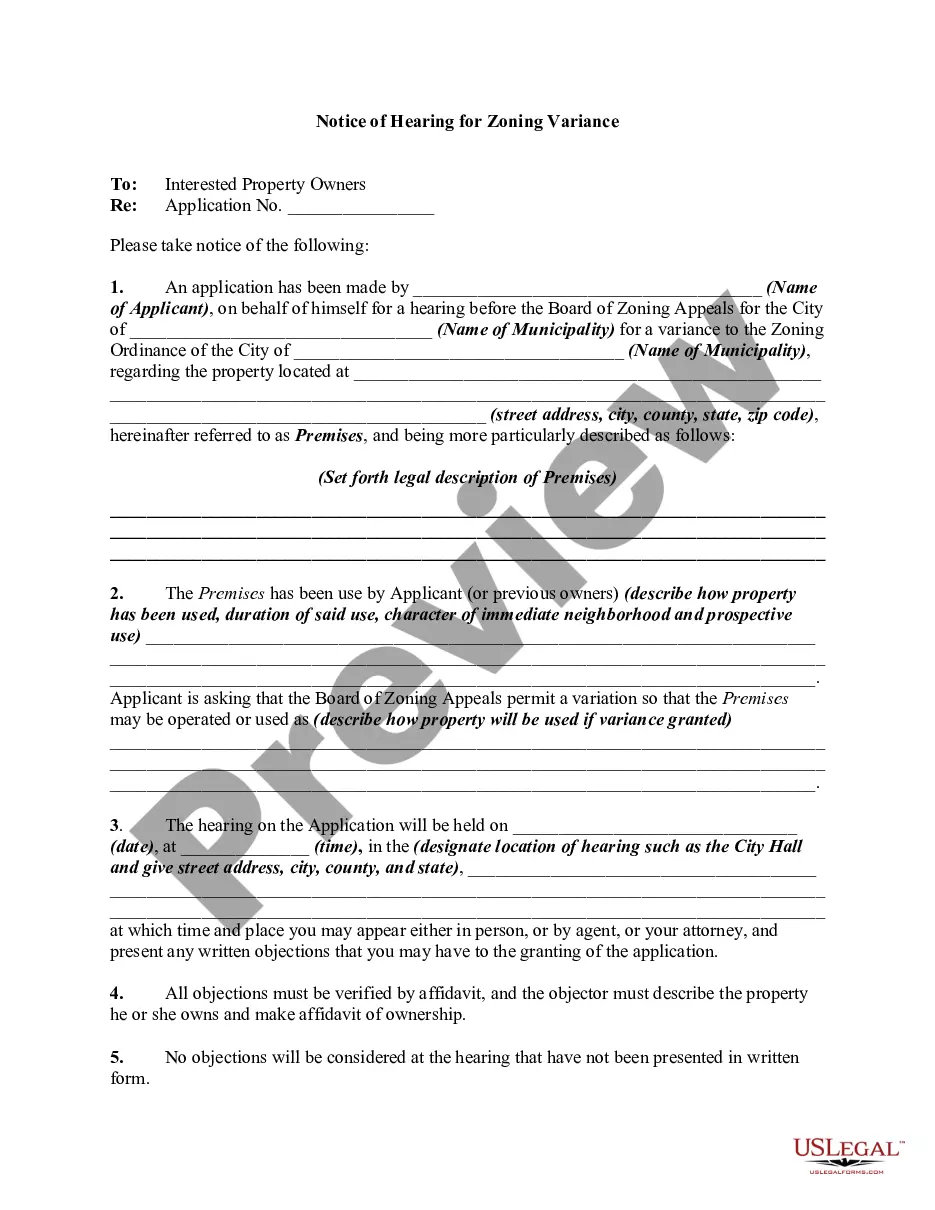
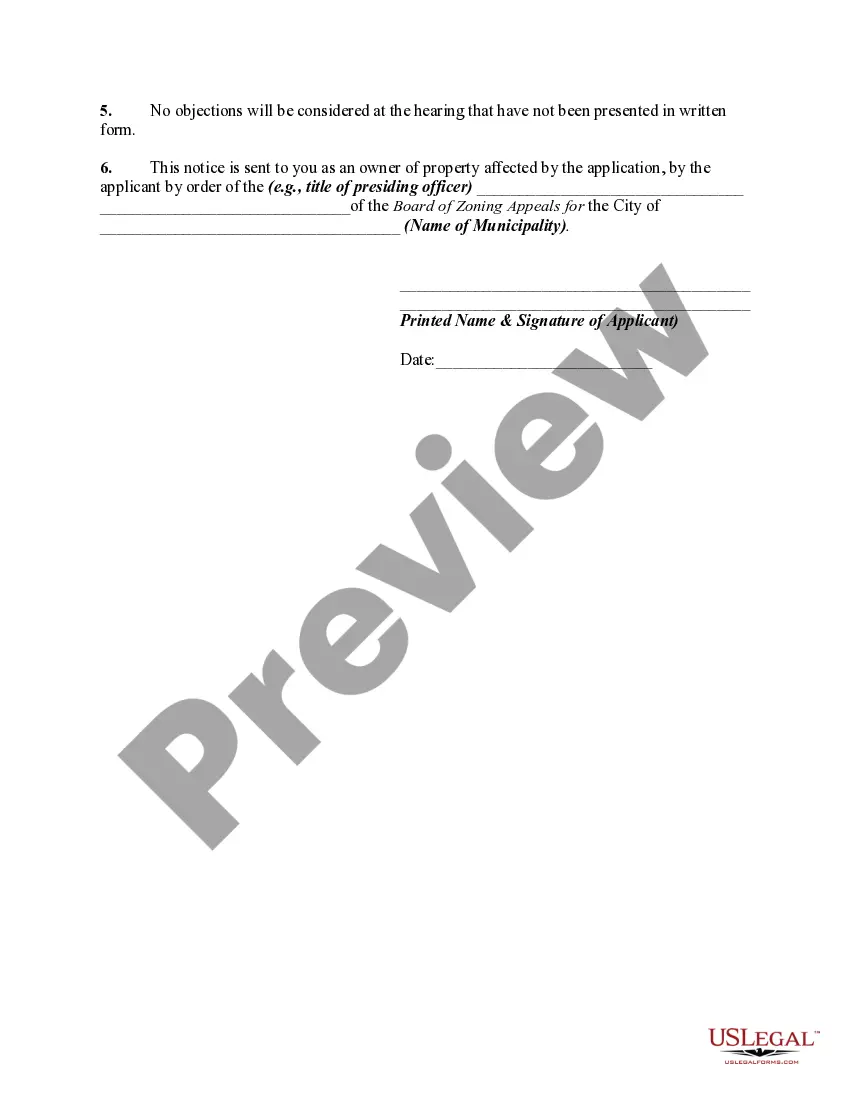
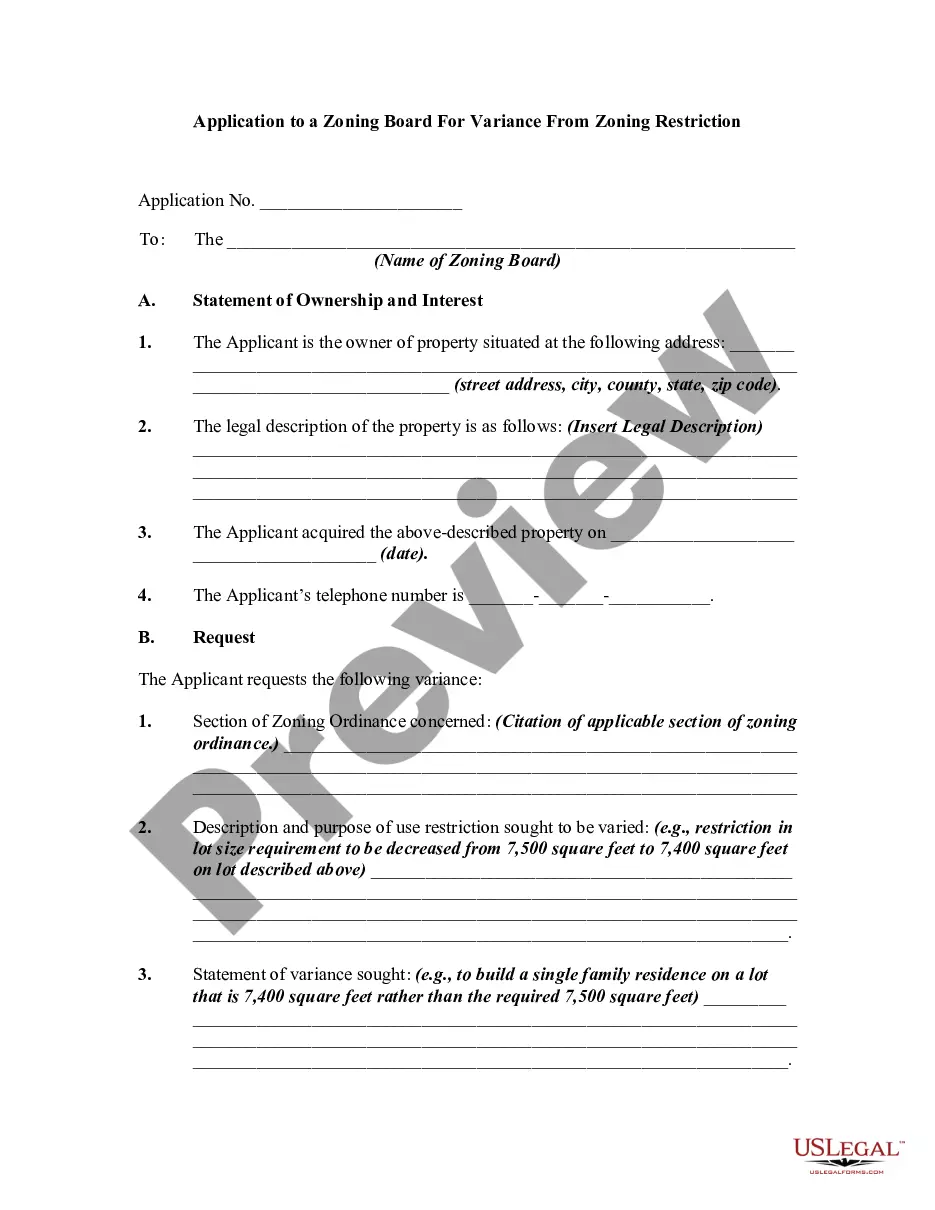
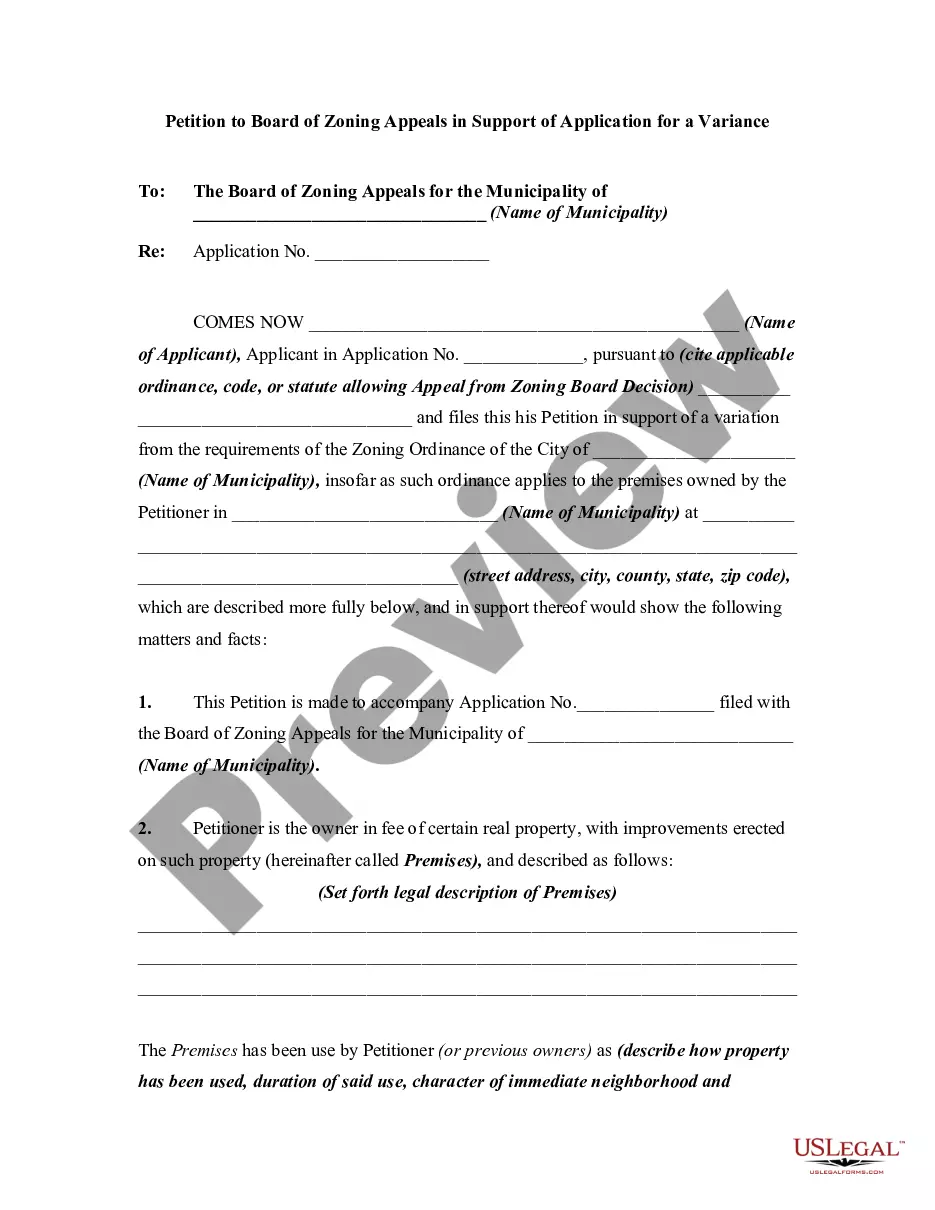
Notice Variance Template For Data
Description
Get your form ready online
Our built-in tools help you complete, sign, share, and store your documents in one place.
Make edits, fill in missing information, and update formatting in US Legal Forms—just like you would in MS Word.
Download a copy, print it, send it by email, or mail it via USPS—whatever works best for your next step.
Sign and collect signatures with our SignNow integration. Send to multiple recipients, set reminders, and more. Go Premium to unlock E-Sign.
If this form requires notarization, complete it online through a secure video call—no need to meet a notary in person or wait for an appointment.
We protect your documents and personal data by following strict security and privacy standards.

Make edits, fill in missing information, and update formatting in US Legal Forms—just like you would in MS Word.

Download a copy, print it, send it by email, or mail it via USPS—whatever works best for your next step.

Sign and collect signatures with our SignNow integration. Send to multiple recipients, set reminders, and more. Go Premium to unlock E-Sign.

If this form requires notarization, complete it online through a secure video call—no need to meet a notary in person or wait for an appointment.

We protect your documents and personal data by following strict security and privacy standards.
Looking for another form?




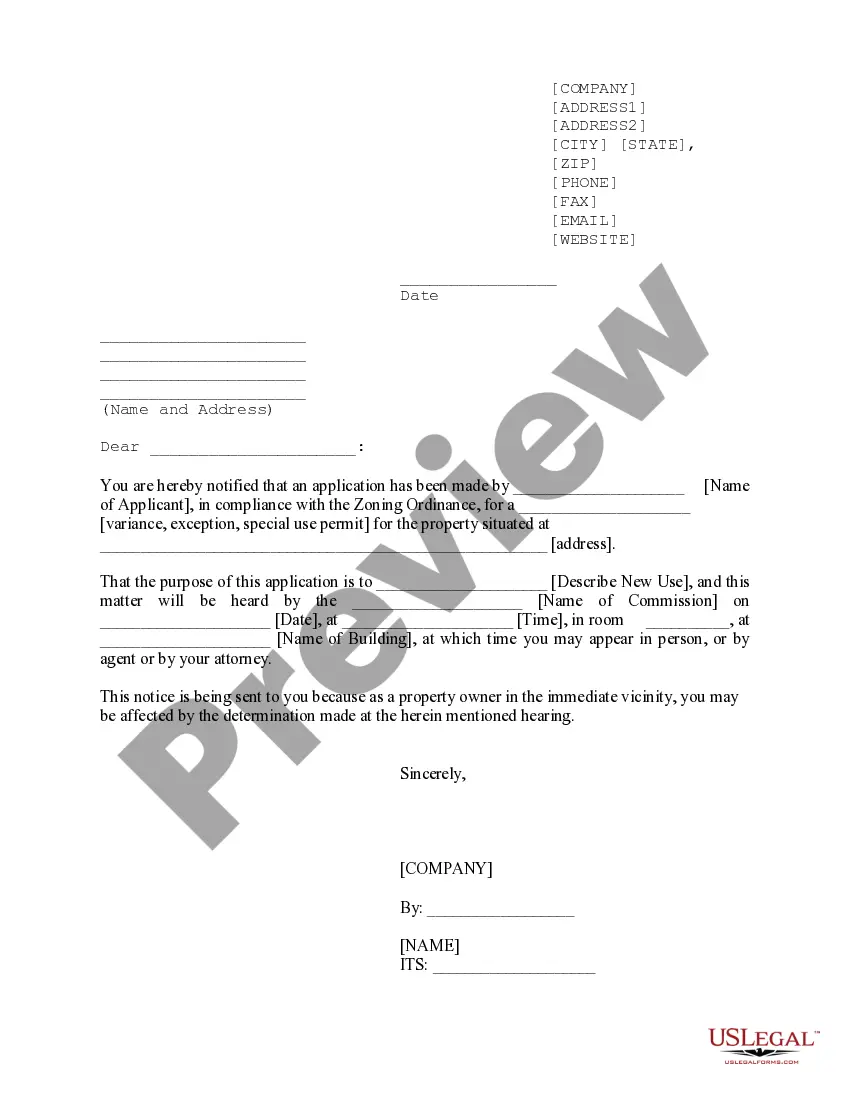
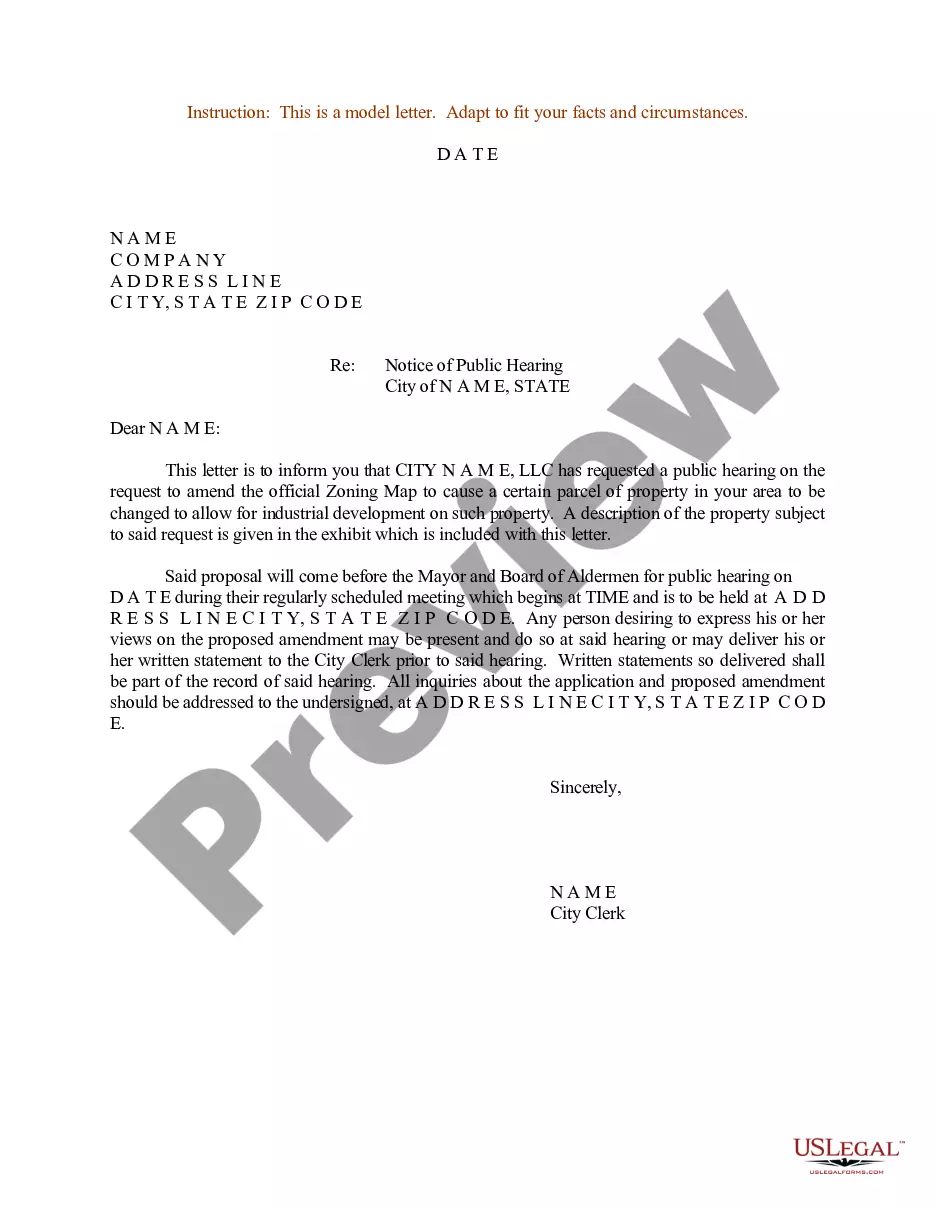
How to fill out Notice Of Hearing For Variance Before Board Of Zoning Appeals - Notice To Be Sent By Applicant To Interested Property Owners?
Legal documentation administration can be perplexing, even for experienced professionals.
If you are looking for a Notice Variance Template For Data and lack the opportunity to invest time in finding the right and current version, the process can be stressful.
Access legal and business documents tailored to your state or county. US Legal Forms encompasses all needs you may have, from personal to corporate documents, in one location.
Employ sophisticated tools to complete and oversee your Notice Variance Template For Data.
After downloading the desired form, follow these steps: Verify it is the correct form by previewing it and reviewing its details. Ensure that the template is approved in your state or county. Select Buy Now when you are ready. Choose a monthly subscription option. Select the file format you prefer, and Download, fill out, eSign, print, and send your document. Enjoy the US Legal Forms online library, backed by 25 years of expertise and dependability. Streamline your daily document management into a seamless and user-friendly process today.
- Tap into a wealth of articles, guides, and manuals relevant to your circumstances and requirements.
- Conserve time and energy in seeking the forms you require, and utilize US Legal Forms’ advanced search and Review tool to find Notice Variance Template For Data and download it.
- For subscribers with a monthly plan, Log In to your US Legal Forms account, search for the form, and download it.
- Check the My documents tab to view the documents you have previously downloaded and manage your folders as needed.
- If this is your first experience with US Legal Forms, create a free account to gain unlimited access to all features of the library.
- A comprehensive online form repository could be a revolutionary solution for anyone aiming to handle these matters efficiently.
- US Legal Forms is a frontrunner in the realm of online legal documents, offering over 85,000 state-specific legal templates accessible at any moment.
- With US Legal Forms, you can.
Form popularity
FAQ
8 Steps to Creating an Efficient Variance Report Step 1: Remove background colors of your variance report. ... Step 2: Remove the borders. ... Step 3: Align values properly. ... Step 4: Prepare the formatting. ... Step 5: Insert absolute variance charts. ... Step 6: Insert relative variance charts. ... Step 7: Write the key message.
You must explain what occurred to cause the variance, whether positive or negative. Best practices dictate that you should use unemotional language and be short and concise. Indicate the variance you're speaking about.
Use a consistent presentation, such as stating the variance, then the reason behind it, and the resulting potential or actual effect on the company's performance. Whether you are comparing one month of actual results to another or budget to actual performance makes a difference.
While there might be other ways of producing variance analysis, this is perhaps the most common approach and simply involves placing the budgeted values in one column and placing actual results in an adjacent column followed by the variance in the third column.
In accounting, a variance is a difference between a budgeted, planned, or standard cost and the actual amounts on the financial statements. While there are multiple types of variances, the most common variances include prior year to current year balances or budgeted to actual amounts.