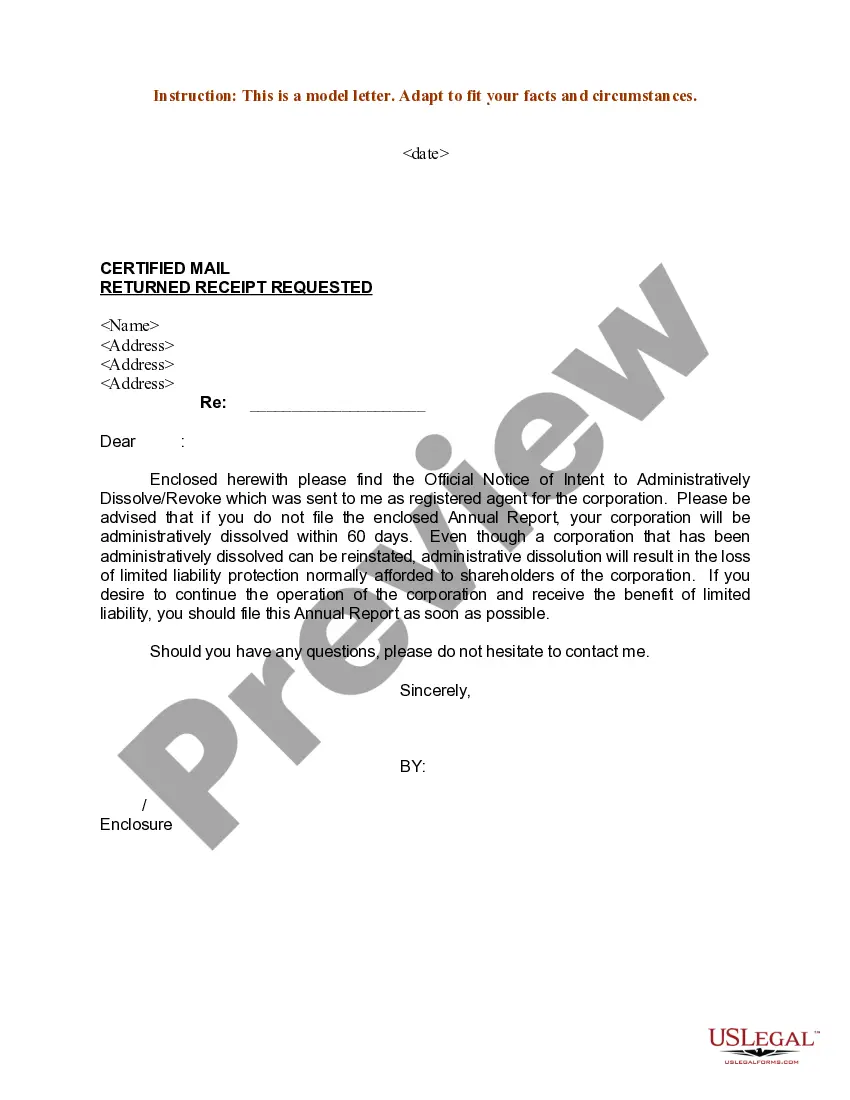
Administrative Dissolution Without Liquidation
Description
Get your form ready online
Our built-in tools help you complete, sign, share, and store your documents in one place.
Make edits, fill in missing information, and update formatting in US Legal Forms—just like you would in MS Word.
Download a copy, print it, send it by email, or mail it via USPS—whatever works best for your next step.
Sign and collect signatures with our SignNow integration. Send to multiple recipients, set reminders, and more. Go Premium to unlock E-Sign.
If this form requires notarization, complete it online through a secure video call—no need to meet a notary in person or wait for an appointment.
We protect your documents and personal data by following strict security and privacy standards.

Make edits, fill in missing information, and update formatting in US Legal Forms—just like you would in MS Word.

Download a copy, print it, send it by email, or mail it via USPS—whatever works best for your next step.

Sign and collect signatures with our SignNow integration. Send to multiple recipients, set reminders, and more. Go Premium to unlock E-Sign.

If this form requires notarization, complete it online through a secure video call—no need to meet a notary in person or wait for an appointment.

We protect your documents and personal data by following strict security and privacy standards.
Looking for another form?



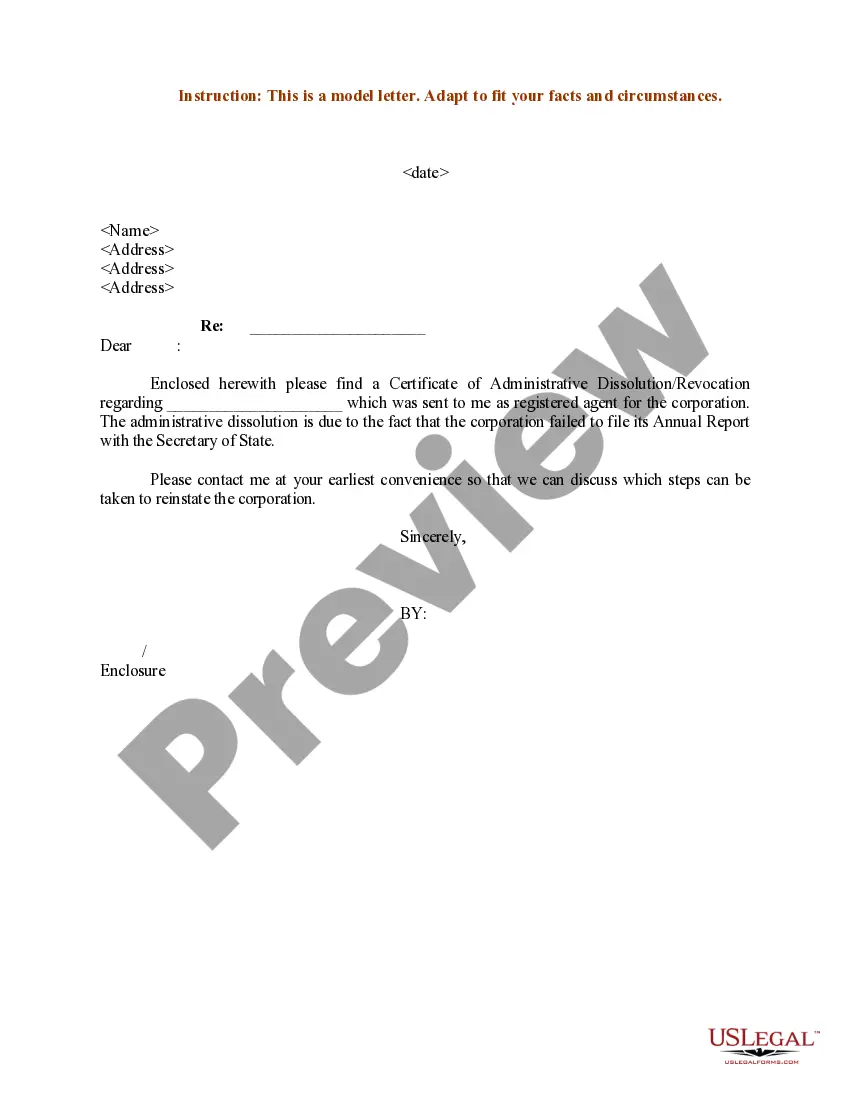
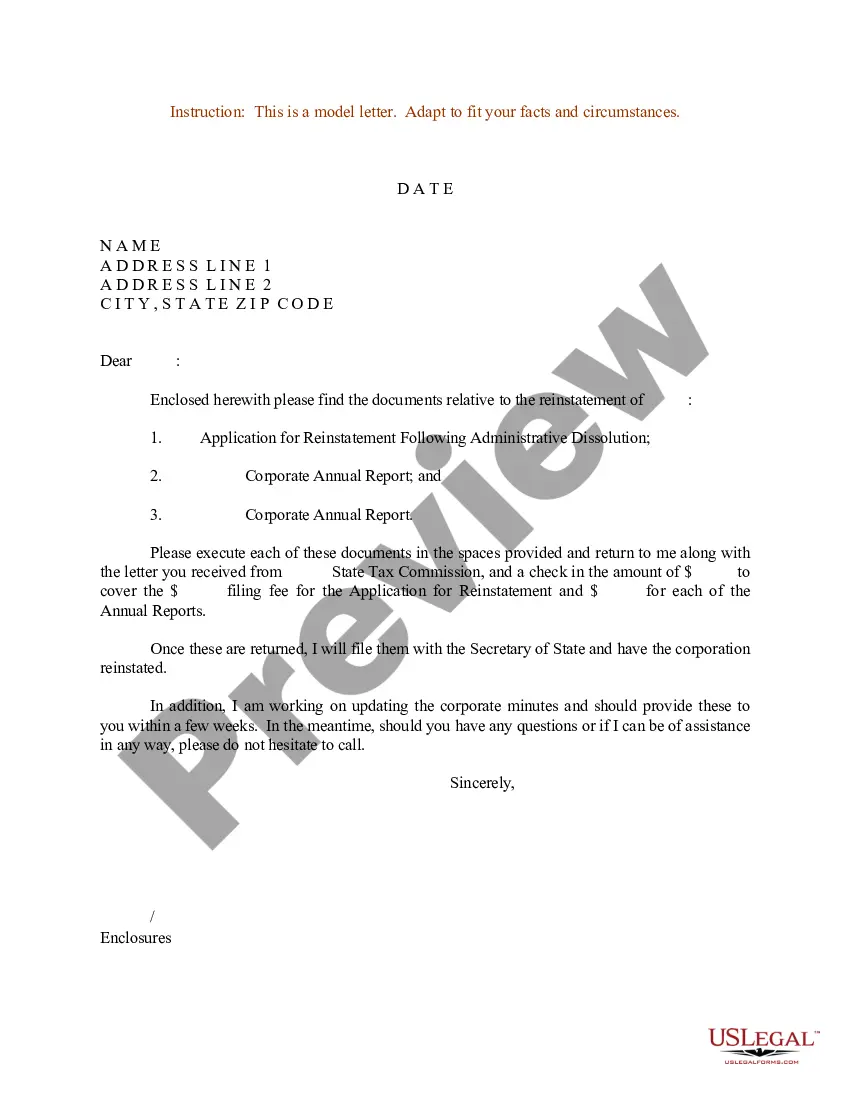
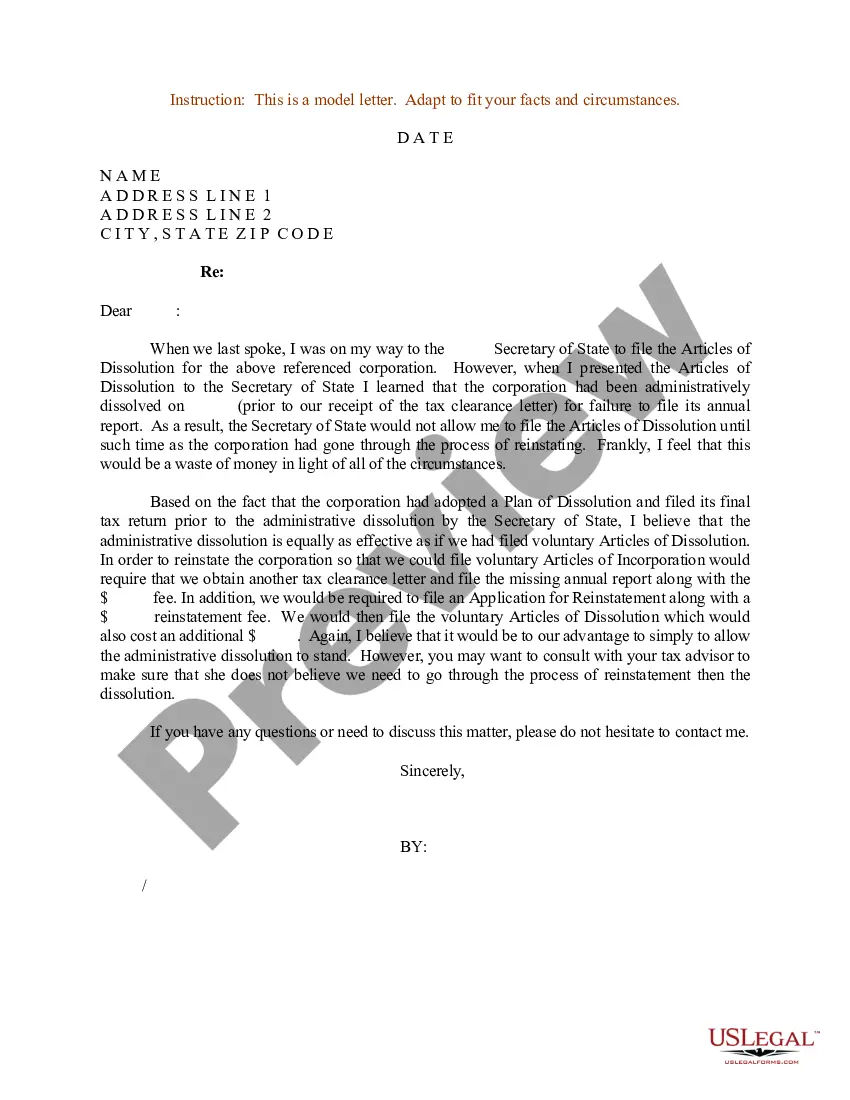
How to fill out Sample Letter Regarding Notification Of Official Notice Of Intent To Administratively Dissolve Or Revoke Corporation?
Legal management may be overwhelming, even for the most knowledgeable professionals. When you are looking for a Administrative Dissolution Without Liquidation and do not have the a chance to commit searching for the right and up-to-date version, the operations could be stress filled. A robust online form catalogue might be a gamechanger for anybody who wants to manage these situations effectively. US Legal Forms is a market leader in web legal forms, with more than 85,000 state-specific legal forms accessible to you whenever you want.
With US Legal Forms, you are able to:
- Access state- or county-specific legal and business forms. US Legal Forms handles any needs you might have, from personal to organization documents, all-in-one place.
- Make use of advanced resources to accomplish and handle your Administrative Dissolution Without Liquidation
- Access a useful resource base of articles, tutorials and handbooks and materials connected to your situation and requirements
Help save effort and time searching for the documents you need, and utilize US Legal Forms’ advanced search and Preview feature to discover Administrative Dissolution Without Liquidation and acquire it. For those who have a subscription, log in to the US Legal Forms account, search for the form, and acquire it. Review your My Forms tab to find out the documents you previously downloaded as well as to handle your folders as you see fit.
If it is your first time with US Legal Forms, create a free account and obtain unlimited use of all benefits of the library. Here are the steps to consider after getting the form you want:
- Verify it is the right form by previewing it and reading through its description.
- Be sure that the sample is approved in your state or county.
- Select Buy Now once you are all set.
- Choose a monthly subscription plan.
- Pick the format you want, and Download, complete, sign, print and deliver your document.
Enjoy the US Legal Forms online catalogue, supported with 25 years of experience and stability. Transform your everyday document administration in a smooth and easy-to-use process today.
Form popularity
FAQ
Dissolution is the end of the legal existence of a corporation. It usually occurs after liquidation, which is the process of paying debts and distributing assets.
The difference between the two are: Winding up involves ending all business affairs and includes the closure of the company (including liquidation or dissolution). Liquidation is specifically about selling off company assets in order to pay creditors and then closing the company.
Administrative dissolution is the taking away of the rights, powers, and authority of a domestic corporation, LLC, or other statutory business entity by the state administrator overseeing business entities, due to the entity's failure to comply with certain obligations of the business entity statute.
What are the differences between liquidation and dissolution? Dissolving a company through the process of dissolution often takes place when a company is solvent, but is no longer trading. Liquidation however, occurs due to a company having financial difficulties and therefore being unable to keep up with their debts.
In general, secured creditors have the highest priority followed by priority unsecured creditors. The remaining creditors are often paid prior to equity shareholders.