Writ Of Execution For Wage Garnishment
Description




Get your form ready online
Our built-in tools help you complete, sign, share, and store your documents in one place.
Make edits, fill in missing information, and update formatting in US Legal Forms—just like you would in MS Word.
Download a copy, print it, send it by email, or mail it via USPS—whatever works best for your next step.
Sign and collect signatures with our SignNow integration. Send to multiple recipients, set reminders, and more. Go Premium to unlock E-Sign.
If this form requires notarization, complete it online through a secure video call—no need to meet a notary in person or wait for an appointment.
We protect your documents and personal data by following strict security and privacy standards.

Make edits, fill in missing information, and update formatting in US Legal Forms—just like you would in MS Word.

Download a copy, print it, send it by email, or mail it via USPS—whatever works best for your next step.

Sign and collect signatures with our SignNow integration. Send to multiple recipients, set reminders, and more. Go Premium to unlock E-Sign.

If this form requires notarization, complete it online through a secure video call—no need to meet a notary in person or wait for an appointment.

We protect your documents and personal data by following strict security and privacy standards.
Looking for another form?


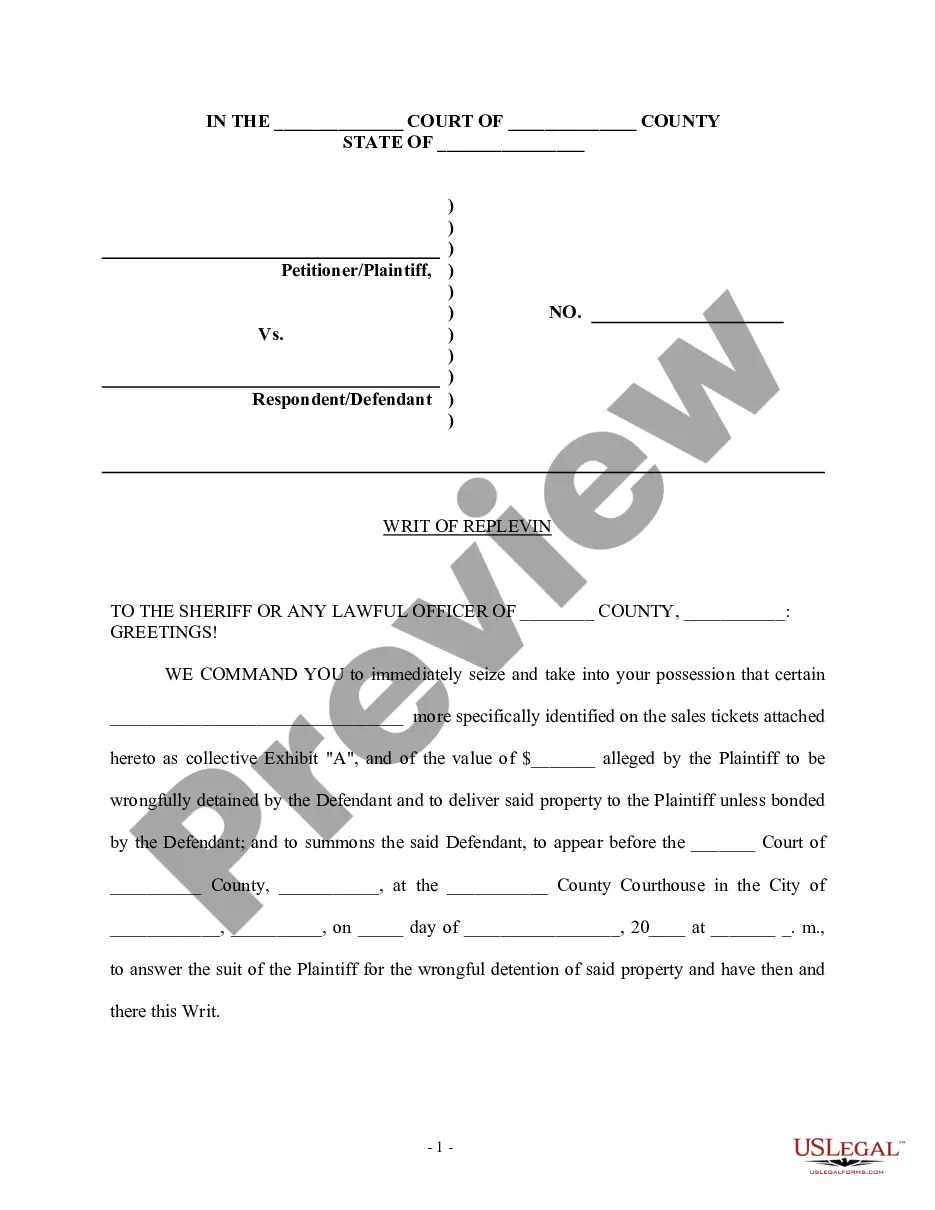
How to fill out Writ Of Replevin Or Repossession?
It's clear that one cannot become a legal expert instantly, nor can one swiftly learn how to efficiently prepare a Writ of Execution for Wage Garnishment without possessing a specialized skill set.
Compiling legal documents is a labor-intensive process that requires specific training and expertise. So, why not entrust the creation of the Writ of Execution for Wage Garnishment to the professionals.
With US Legal Forms, which offers one of the most extensive libraries of legal templates, you can locate everything from court forms to templates for corporate communications. We understand the importance of compliance with federal and state regulations.
You can access your documents anytime from the My documents tab. If you're an existing user, just Log In and locate the template in the same section.
Regardless of the reason for your documents—whether they are for financial, legal, or personal use—our website has you covered. Experience US Legal Forms today!
- Utilize the search bar at the top of the page to find the form you need.
- If available, preview it and read the accompanying description to determine if the Writ of Execution for Wage Garnishment meets your requirements.
- If you're looking for a different template, restart your search.
- Create a free account and choose a subscription plan to purchase the template.
- Select Buy now. Once payment is processed, you can download the Writ of Execution for Wage Garnishment, fill it out, print it, and send it to the relevant parties or organizations.
Form popularity
FAQ
Filling out a wage garnishment exemption form involves closely following state guidelines. You need to provide personal details, your income information, and reasons for claiming an exemption. This form is critical if a writ of execution for wage garnishment is in play, as it helps protect your essential living expenses and income from being garnished unfairly.
To write an objection letter for wage garnishment, start by addressing the court or the creditor with your contact information. Clearly state your reasons for objecting to the garnishment, and support your claims with evidence, such as financial records. A well-prepared letter can be a powerful step against a writ of execution for wage garnishment.
Yes, you can appeal a garnishee order, but you must act quickly, as strict deadlines apply. Review the order carefully and identify the legal grounds for your appeal. Engaging a professional familiar with writs of execution for wage garnishment can provide you with the necessary guidance to navigate the appeals process effectively.
Filling out a challenge to garnishment form requires you to provide accurate information about your finances, income, and the reason for your challenge. Begin by detailing why you believe the garnishment is incorrect or excessive, and include supporting documents. If this issue involves a writ of execution for wage garnishment, make sure to specify how it impacts your financial stability.
Execution and garnishment are two distinct legal processes in debt collection. Execution refers broadly to the enforcement of a court judgment, allowing creditors to claim a debtor's assets. Garnishment, on the other hand, specifically targets wages or bank accounts under a writ of execution for wage garnishment. Recognizing these differences can assist you in understanding your rights and responsibilities in debt recovery situations.
In New Jersey, wage garnishment rules dictate that a creditor can only take a portion of your earnings, typically limited to a percentage of your disposable income. There must be a court order, such as a writ of execution for wage garnishment, to begin this process. Additionally, New Jersey law protects certain minimum wage levels, ensuring you retain enough income for your basic needs. Knowing these rules is essential for anyone facing potential wage garnishment.
A writ of garnishment and a writ of execution, while related, serve different functions. A writ of execution gives a creditor the right to collect a debt by seizing property or funds, including wages. In contrast, a writ of garnishment specifically targets a debtor's income or bank account to fulfill the debt. Understanding these distinctions can help you better manage your financial obligations and respond appropriately if faced with garnishment.
In garnishment, 'writ' refers to a legal order that authorizes the seizure of a debtor's earnings or assets. A writ of execution for wage garnishment specifically allows creditors to claim a portion of your wages directly from your employer. This legal process ensures that creditors can obtain the repayment they are owed while still allowing you to retain a portion of your income. Familiarizing yourself with this term can help you navigate the legal landscape of debt collection.
To stop garnishment, you should write a clear and concise letter to your creditor or the court that issued the writ of execution for wage garnishment. In your letter, explain your situation, and if applicable, provide evidence of any changes in your financial status. Be respectful but firm, and make sure to request a stop to the garnishment process. Uslegalforms can guide you in drafting an effective letter that highlights your rights.
Yes, it is possible for someone to garnish your wages without your knowledge. Creditors often obtain a writ of execution for wage garnishment through the court system, which allows them to collect debts directly from your paycheck. However, you typically receive notice before the garnishment begins, giving you the opportunity to respond. If you are concerned about potential garnishment, staying informed about your debts is essential.