Sample Trustee Accounting To Beneficiaries
Description
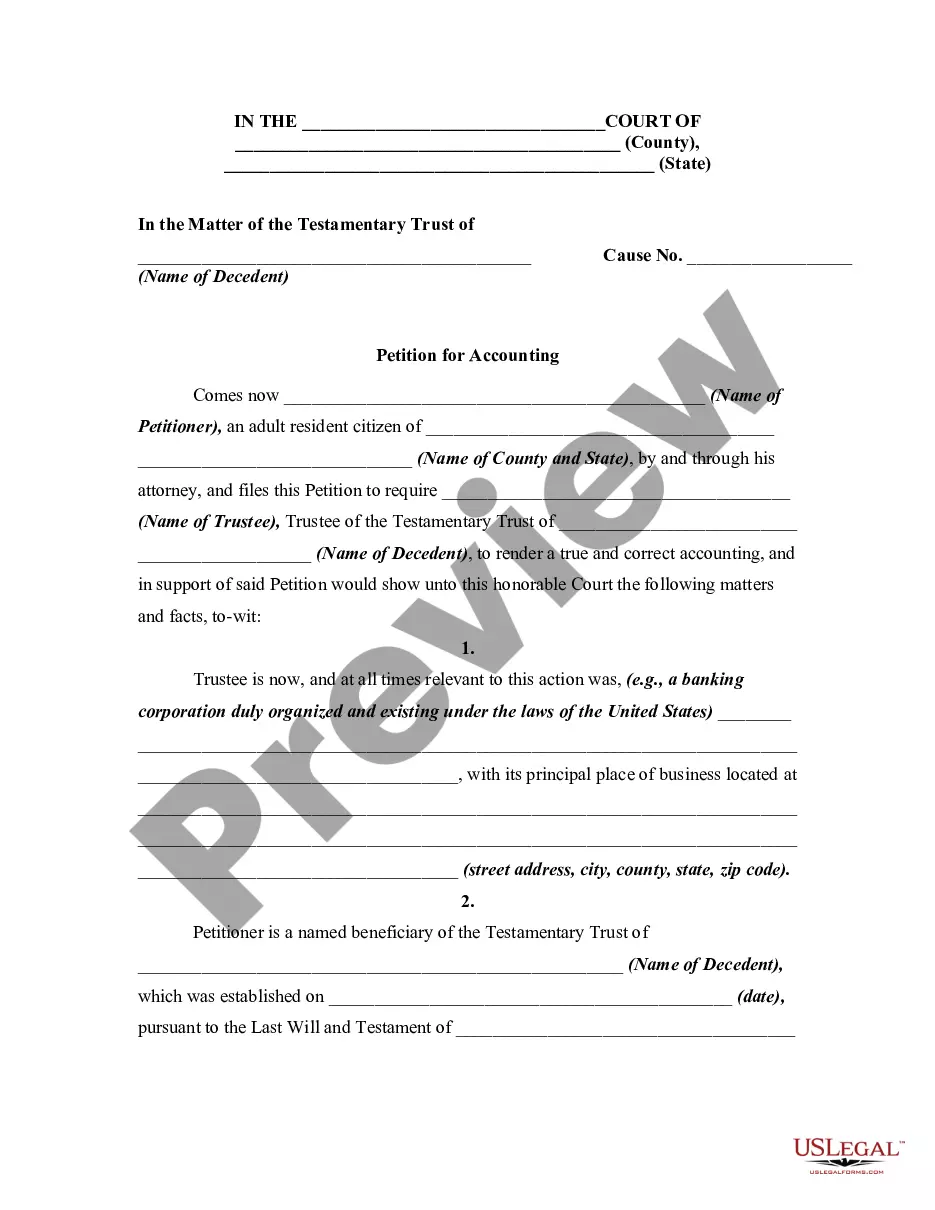
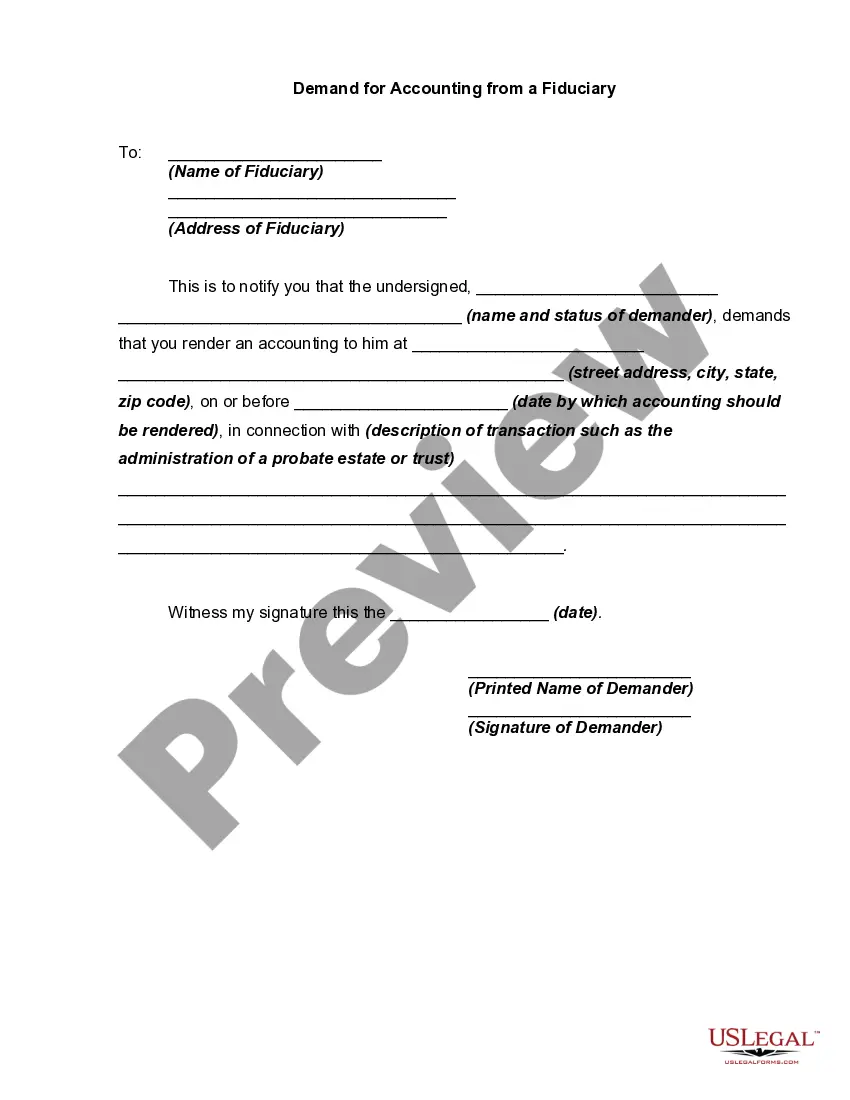
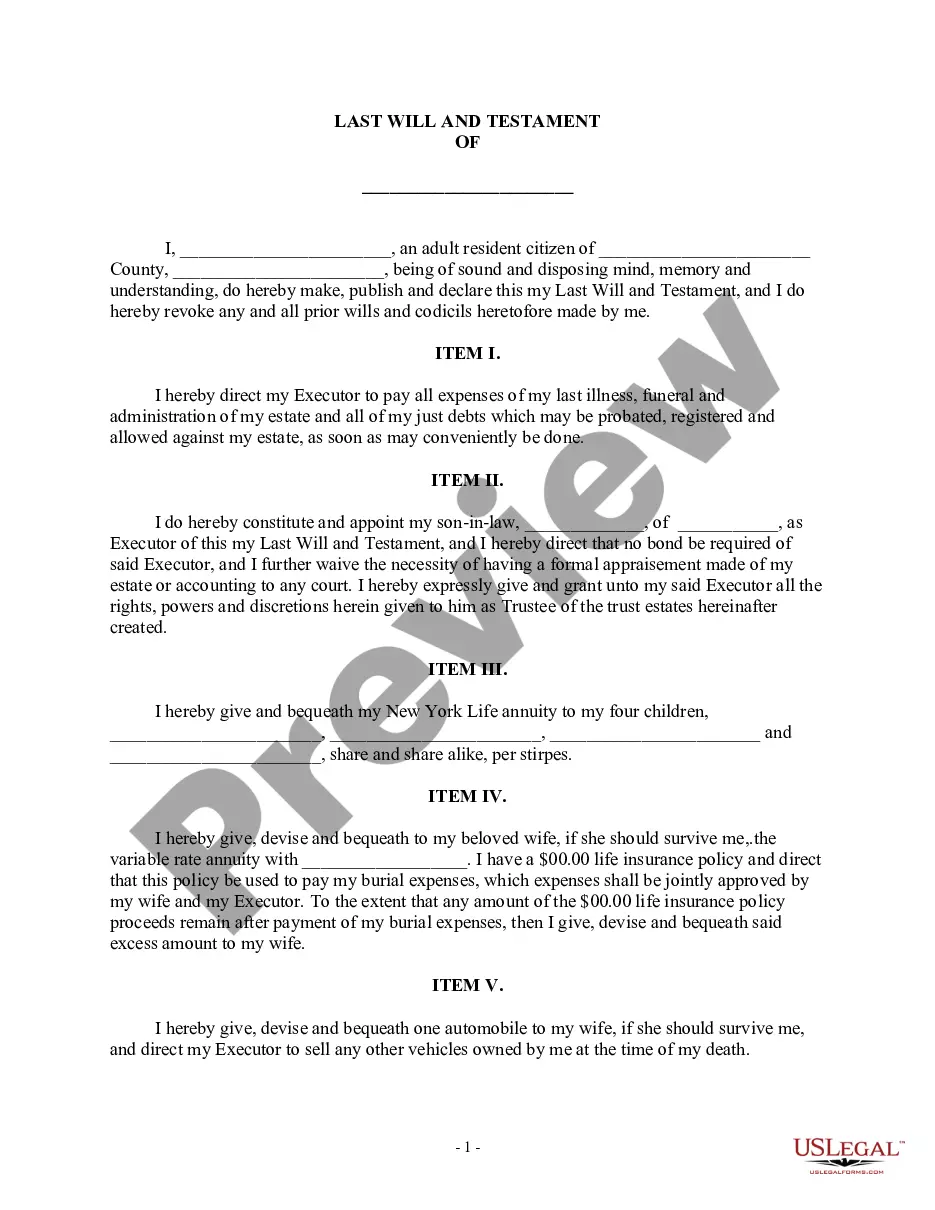

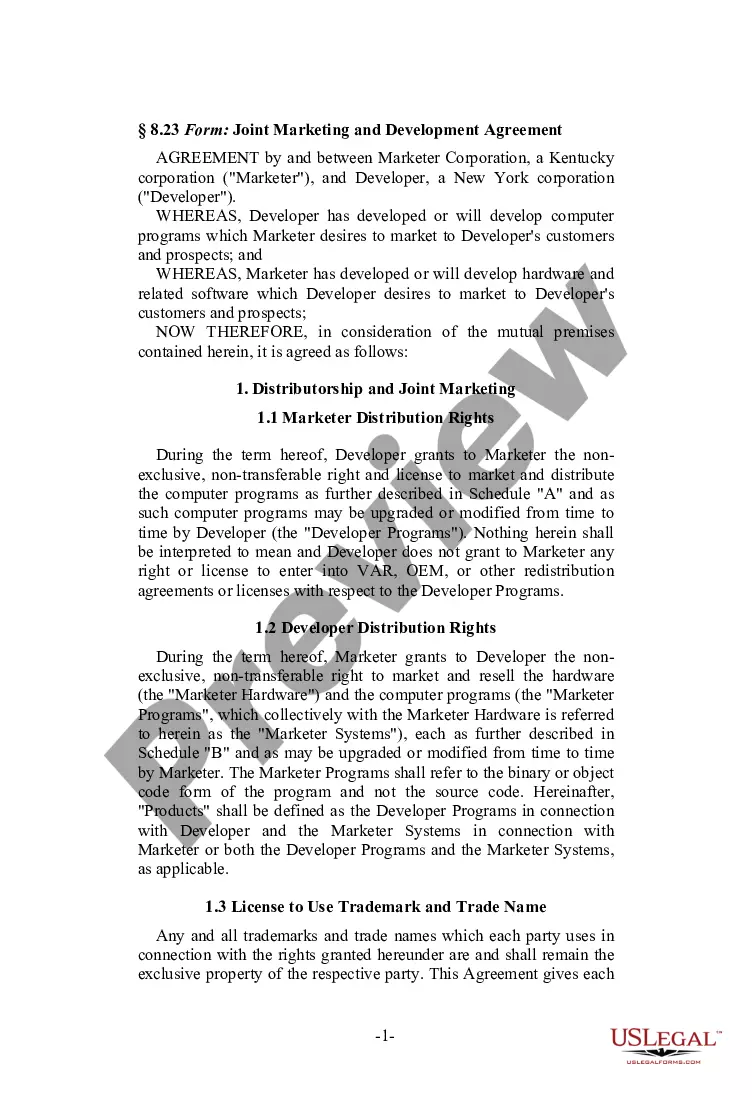
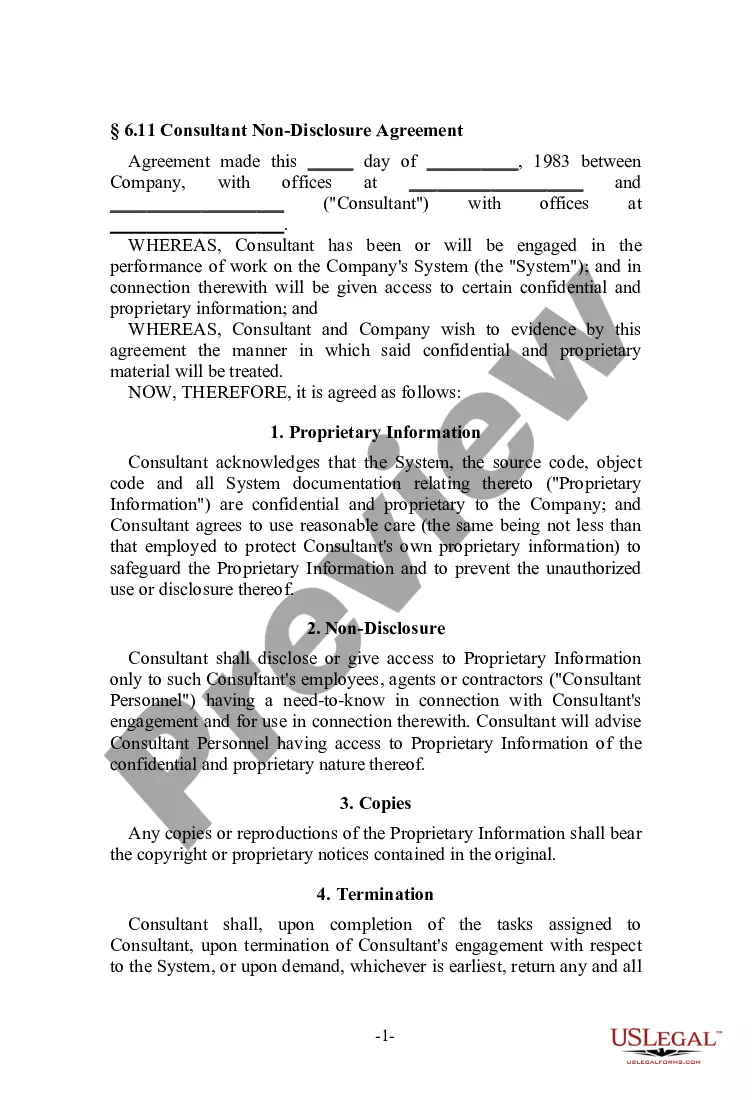

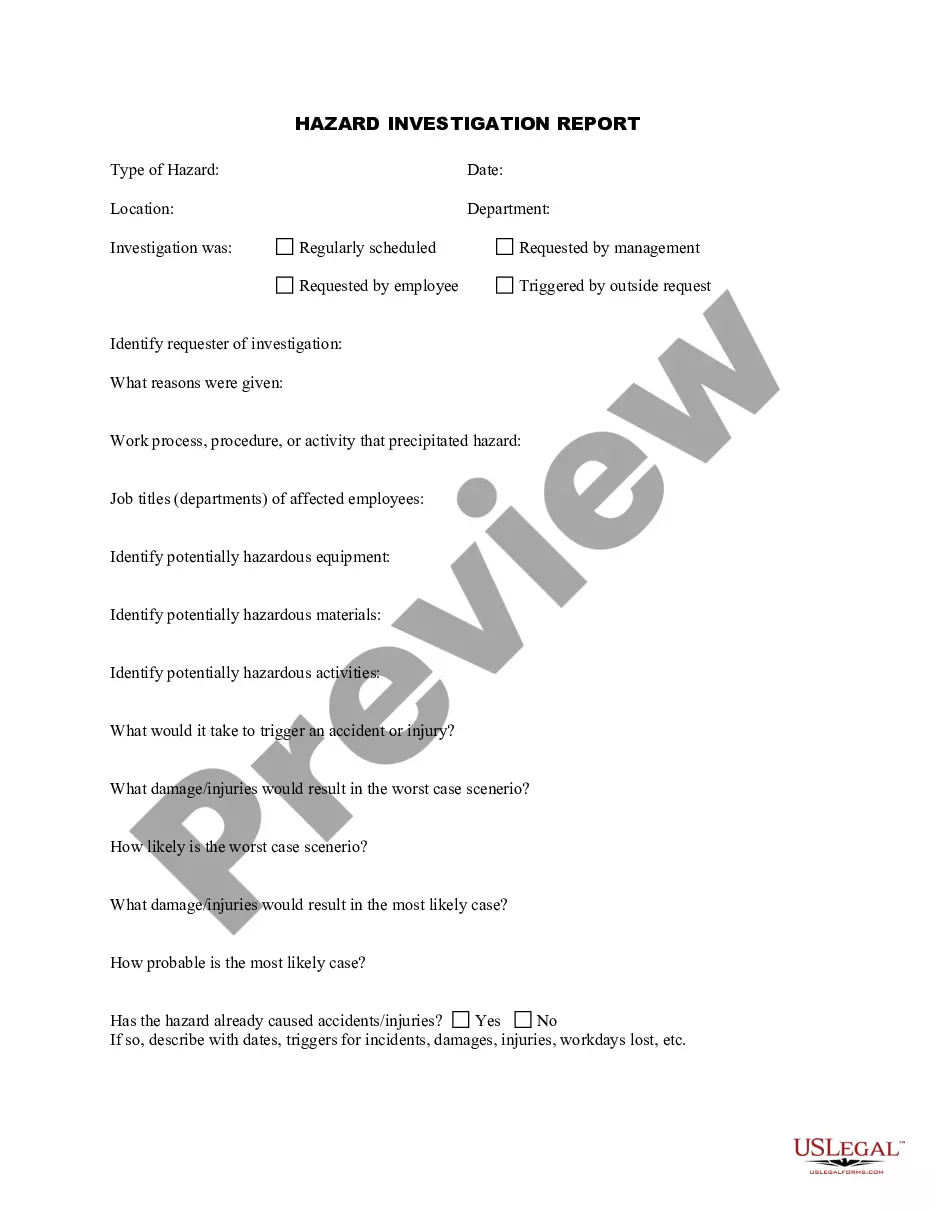
How to fill out Demand For Accounting From A Fiduciary Such As An Executor, Conservator, Trustee Or Legal Guardian?
- Log in to your US Legal Forms account if you're a returning customer. Ensure your subscription remains active to access all features.
- For new users, explore the Preview mode of the desired form template. Verify that it aligns with your specific needs and jurisdiction requirements.
- Utilize the Search functionality to find alternative forms if your chosen document doesn't meet all requirements.
- Purchase your document by clicking the Buy Now button and select the subscription plan that suits you best. You’ll need to create an account for full access.
- Complete your transaction by entering your payment information via credit card or PayPal.
- Finally, download the form directly to your device. You can always access it later from the My Documents section of your profile.
By following these straightforward steps, you will have the tools necessary for proper trustee accounting preparation. US Legal Forms not only provides an extensive library of over 85,000 legal documents but also connects you to premium experts for assistance.
Unlock the benefits of US Legal Forms today and make your legal documentation process hassle-free!
Form popularity
FAQ
An example of a trust account could involve a nonprofit organization managing donations received for a specific project. The organization would establish a trust account to keep these funds separate and track their usage. Implementing sample trustee accounting to beneficiaries ensures financial transparency, allowing stakeholders to see how donations are allocated and spent.
One example of trust is a living trust, which allows individuals to manage their property during their lifetime and specify how their assets will be distributed after their passing. This setup helps avoid probate, simplifying the transition for beneficiaries. Using sample trustee accounting to beneficiaries can clarify how assets are handled, ensuring everyone involved understands the process.
A trust account example could be a family trust designated to manage a vacation property. The trust would hold the property and manage expenses, ensuring it serves the family's interests. By using sample trustee accounting to beneficiaries, the trustee can offer transparent records of income and expenses, helping family members understand how the asset is being maintained.
A simple example of a trust involves a parent setting up a trust for their child. In this situation, the parent can transfer assets into the trust, ensuring the child receives financial support at a specified age. This method provides a secure way to manage funds until the child can responsibly handle them, making sample trustee accounting to beneficiaries essential for tracking distributions.
Accounting standards for a trust typically revolve around principles that ensure fairness and transparency in financial reporting. These standards mandate the timely recording of transactions and periodic reporting to beneficiaries. Utilizing sample trustee accounting to beneficiaries guarantees adherence to best practices, ultimately protecting both the trustee and the beneficiaries.
On a balance sheet, a trust account is categorized under assets. It represents the funds managed by the trustee for the benefit of the beneficiaries. Knowing where to place these accounts, along with effective sample trustee accounting to beneficiaries, can enhance financial transparency and easier assessment of the trust's overall health.
Yes, a trustee has a legal obligation to account to beneficiaries regarding the trust's financial status. This requirement includes providing sample trustee accounting to beneficiaries, which ensures they are informed of all financial transactions. Timely and accurate accounting fosters trust and helps beneficiaries understand their entitlement.
A formal accounting of a trust is a detailed report prepared by the trustee, summarizing all activities within the trust. This report typically includes all receipts, disbursements, and the current financial status of the trust. Providing a formal accounting, along with sample trustee accounting to beneficiaries, helps maintain trust and transparency among beneficiaries.
The trust accounting process involves tracking financial transactions related to a trust. This includes documenting income, expenses, and disbursements made to beneficiaries. Accurate sample trustee accounting to beneficiaries ensures that all financial activities are transparent and can be reviewed easily by all parties involved.
Yes, a beneficiary can formally demand an accounting from a trustee if they have concerns about the management of the trust. This request helps ensure that the trustee meets their legal obligations and provides accountability. If the trustee is uncooperative, beneficiaries may need to seek legal recourse. A sample trustee accounting to beneficiaries can serve as a useful reference during discussions with your trustee.