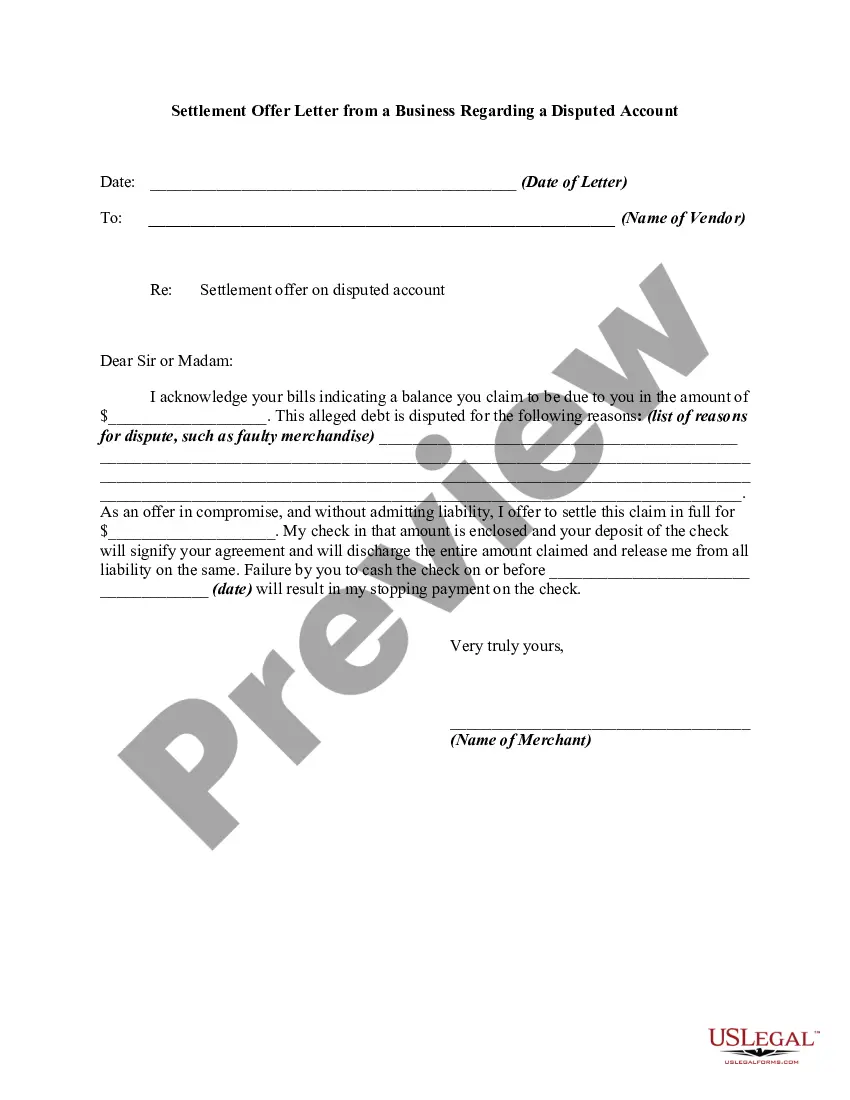
Settlement In Business Term
Description
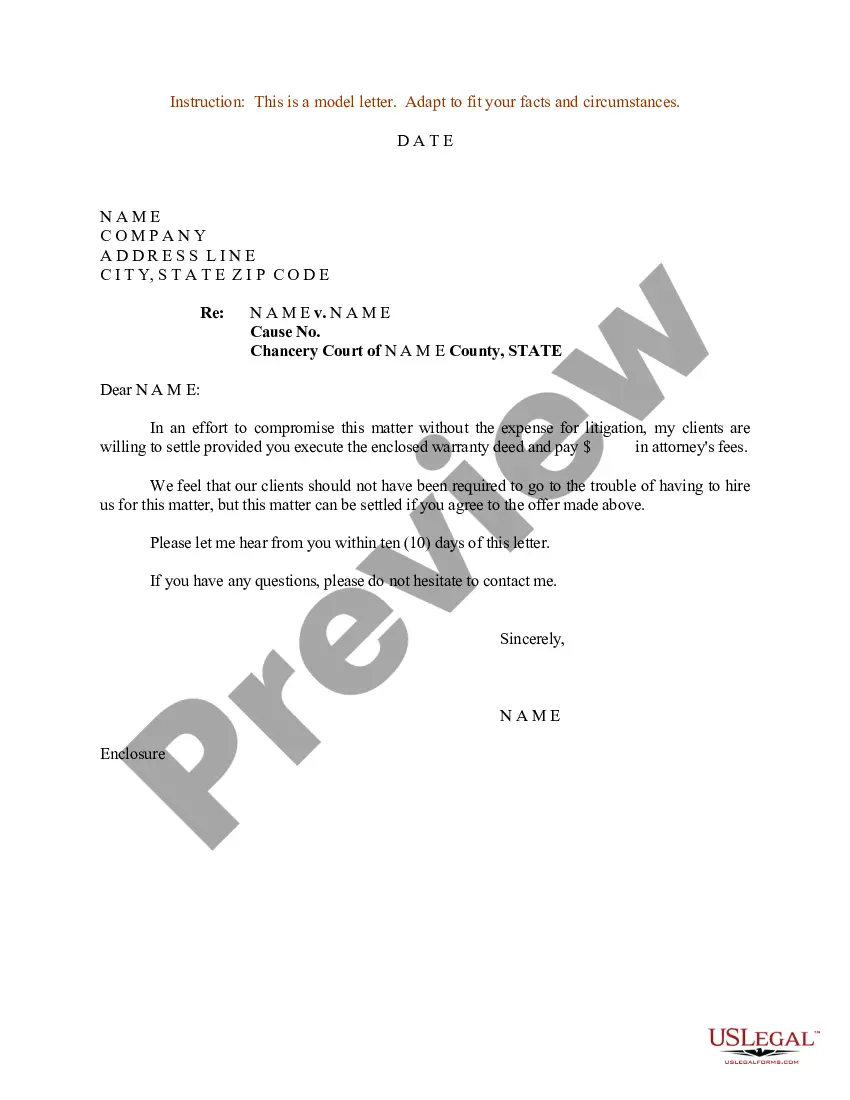
Get your form ready online
Our built-in tools help you complete, sign, share, and store your documents in one place.
Make edits, fill in missing information, and update formatting in US Legal Forms—just like you would in MS Word.
Download a copy, print it, send it by email, or mail it via USPS—whatever works best for your next step.
Sign and collect signatures with our SignNow integration. Send to multiple recipients, set reminders, and more. Go Premium to unlock E-Sign.
If this form requires notarization, complete it online through a secure video call—no need to meet a notary in person or wait for an appointment.
We protect your documents and personal data by following strict security and privacy standards.

Make edits, fill in missing information, and update formatting in US Legal Forms—just like you would in MS Word.

Download a copy, print it, send it by email, or mail it via USPS—whatever works best for your next step.

Sign and collect signatures with our SignNow integration. Send to multiple recipients, set reminders, and more. Go Premium to unlock E-Sign.

If this form requires notarization, complete it online through a secure video call—no need to meet a notary in person or wait for an appointment.

We protect your documents and personal data by following strict security and privacy standards.
Looking for another form?

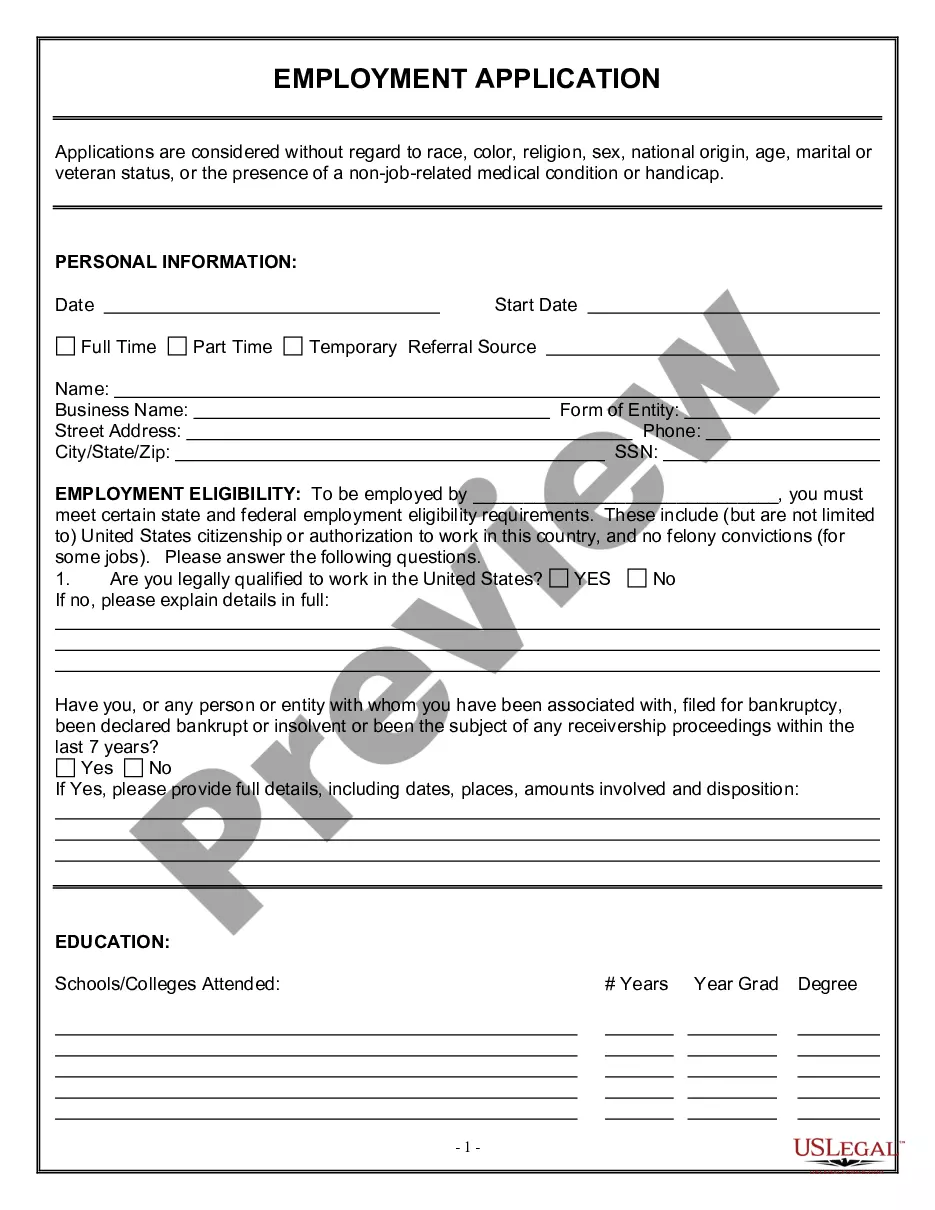
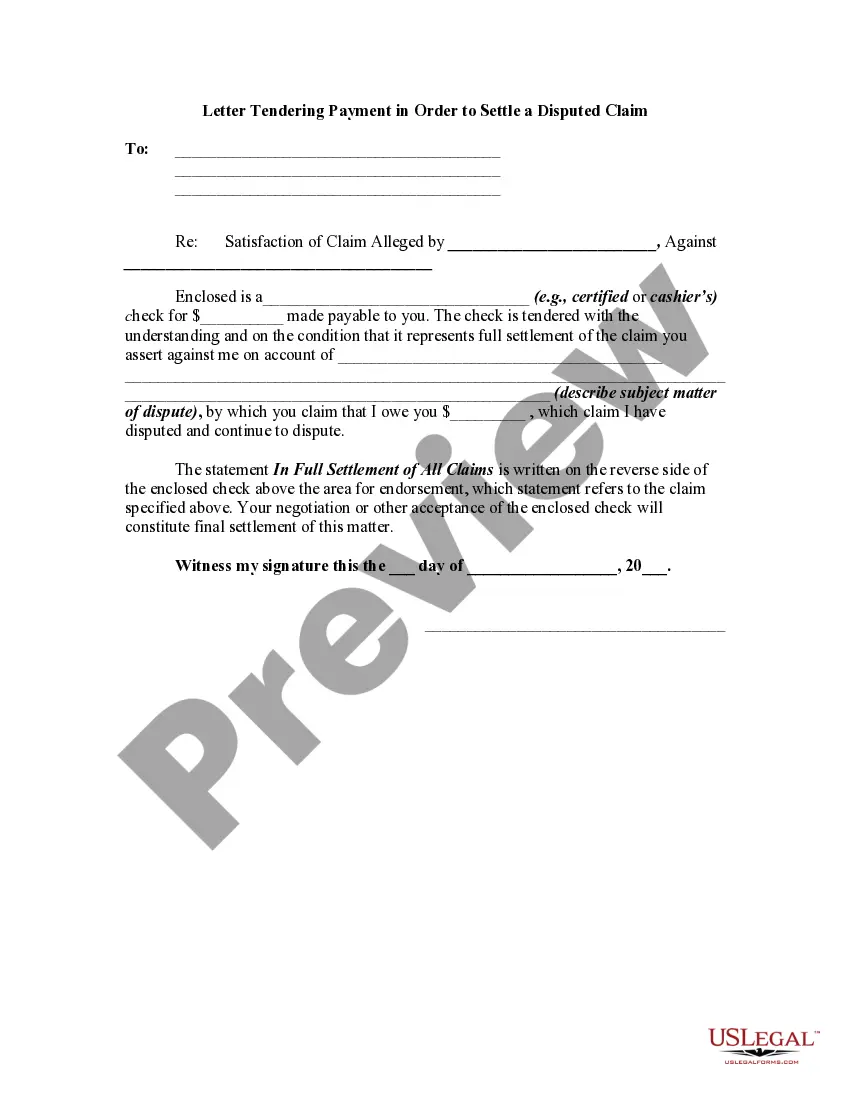
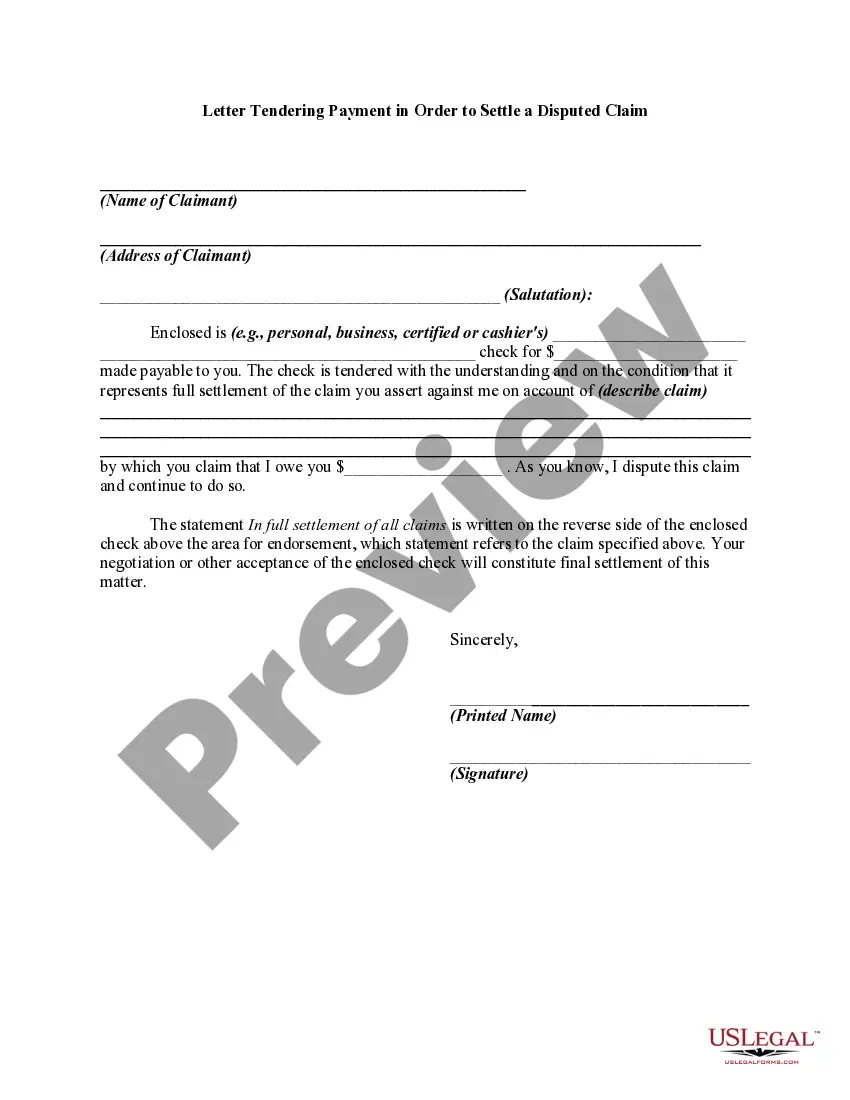
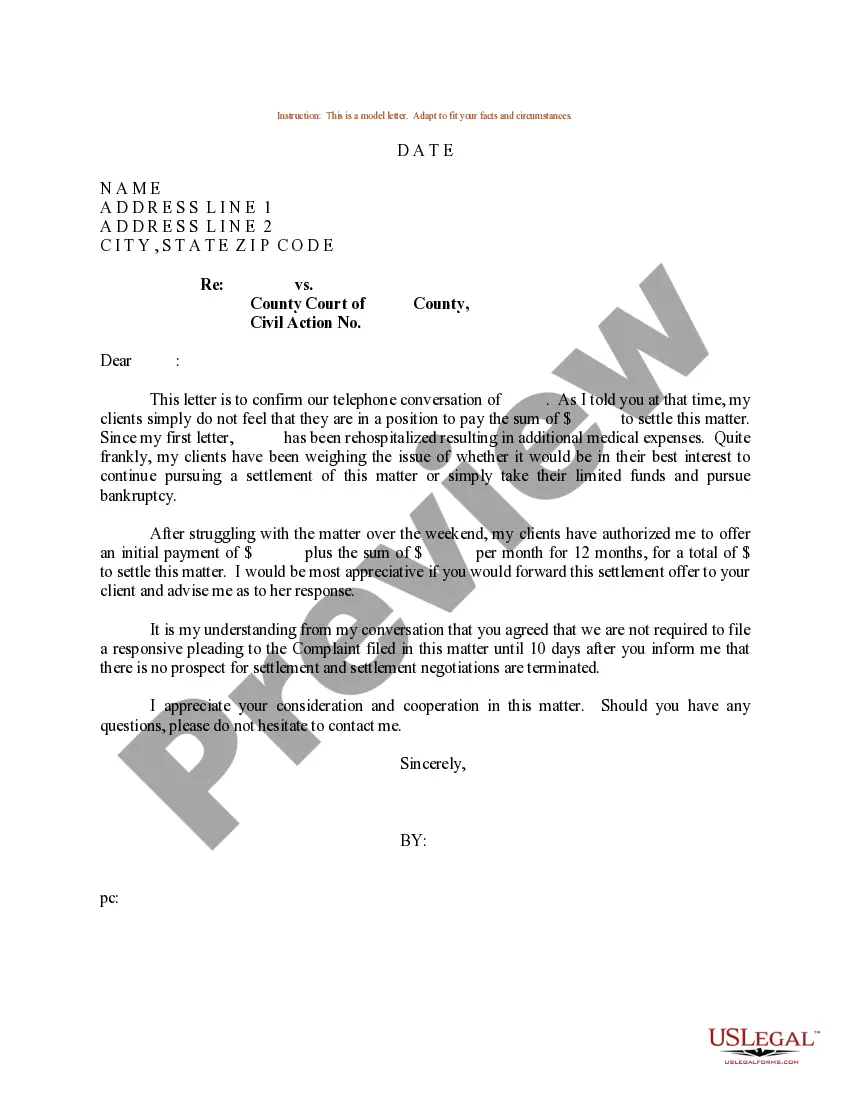
How to fill out Settlement Offer Letter From A Business Regarding A Disputed Account?
It’s clear that you cannot transform into a legal expert instantly, nor can you understand how to swiftly draft Settlement In Business Term without possessing a distinct skill set.
Assembling legal documents is a lengthy process that necessitates specific education and expertise.
So why not entrust the development of the Settlement In Business Term to the specialists.
Examine it (if this option is available) and read the accompanying description to confirm whether Settlement In Business Term meets your needs.
Initiate your search anew if you require a different template. Create a free account and select a subscription plan to purchase the template.
- With US Legal Forms, one of the most comprehensive legal template repositories, you can obtain everything from court documents to templates for in-house communication.
- We recognize how essential compliance and adherence to federal and state regulations are.
- That’s why, on our platform, all forms are location-specific and current.
- Here’s how to begin with our website and obtain the document you require in just minutes.
- Locate the document you need using the search bar located at the top of the page.
Form popularity
FAQ
The settlement process involves several key steps, beginning with negotiation between the involved parties to reach an agreement. Once an agreement is made, it is crucial to document the terms clearly and accurately. Following that, the final settlement payment is processed, and all related accounting entries are updated. Understanding these steps will help you navigate settlements in business terms more effectively.
In most cases, settlements are not reported as income; instead, they are recorded as expenses or reductions in liabilities. However, if the settlement compensates for lost profits, it could potentially be reported as income. Understanding how to classify settlements in business terms is crucial for accurate financial reporting and proper tax treatment.
A settlement typically falls under the category of operating expenses in a business's financial statements. These expenses can arise from legal disputes or agreements that require payment, impacting the overall profitability of the business. By distinguishing between different types of expenses, a business can better manage its financial health and understand the implications of settlements in business terms.
A settlement in accounting refers to the resolution of a financial obligation, often involving the payment or receipt of agreed amounts. This process can arise in various situations, such as legal disputes, breaches of contract, or even debt management. Understanding settlements in business terms is vital for accurate financial reporting and compliance.
Business settlements can be taxable, depending on the nature of the settlement and your specific circumstances. Generally, if a settlement is considered compensation for lost income or revenue, it may be subject to taxes. It is advisable to consult with a tax professional to ensure you understand the implications of your particular situation regarding settlements in business terms.
A business settlement is an arrangement that resolves disputes or claims between companies or individuals within the business context. Such settlements may include payment agreements, service completions, or operational changes. Engaging in a settlement can prevent costly litigation and foster cooperation. Using platforms like uslegalforms can facilitate the documentation and execution of business settlements, providing support and guidance throughout the process.
A settlement in business is an agreement reached by two or more parties to resolve a dispute or finalize a transaction. This agreement typically outlines the rights and obligations of each party, providing clarity and closure. Settlements help maintain positive relationships and reduce the likelihood of future conflicts. Understanding what a settlement means in business is vital for effective management.
In accounting terms, settlement refers to the process of reconciling accounts when transactions are completed. This may involve the exchange of payments or the finalization of any outstanding balances. Keeping track of settlements ensures accurate financial records and compliance with legal regulations. Recognizing the settlement in business term is essential for maintaining the integrity of your financial statements.
Settlement in business refers to an agreement that concludes a dispute or completes a transaction. It signifies that the parties involved have reached mutual understanding, resolving any outstanding issues. This concept is crucial as it reduces uncertainties and fosters better relationships between stakeholders. Understanding the settlement in business term helps organizations navigate conflicts professionally.
The process of settlement in business involves reaching an agreement between parties to resolve a dispute or fulfill an obligation. It often includes negotiations and discussions to clarify terms and conditions. Once both parties agree, the settlement is documented, ensuring all parties understand their responsibilities moving forward. This process helps to avoid lengthy legal battles and promotes efficient resolution.