Trustee Sample For Beneficiaries
Description
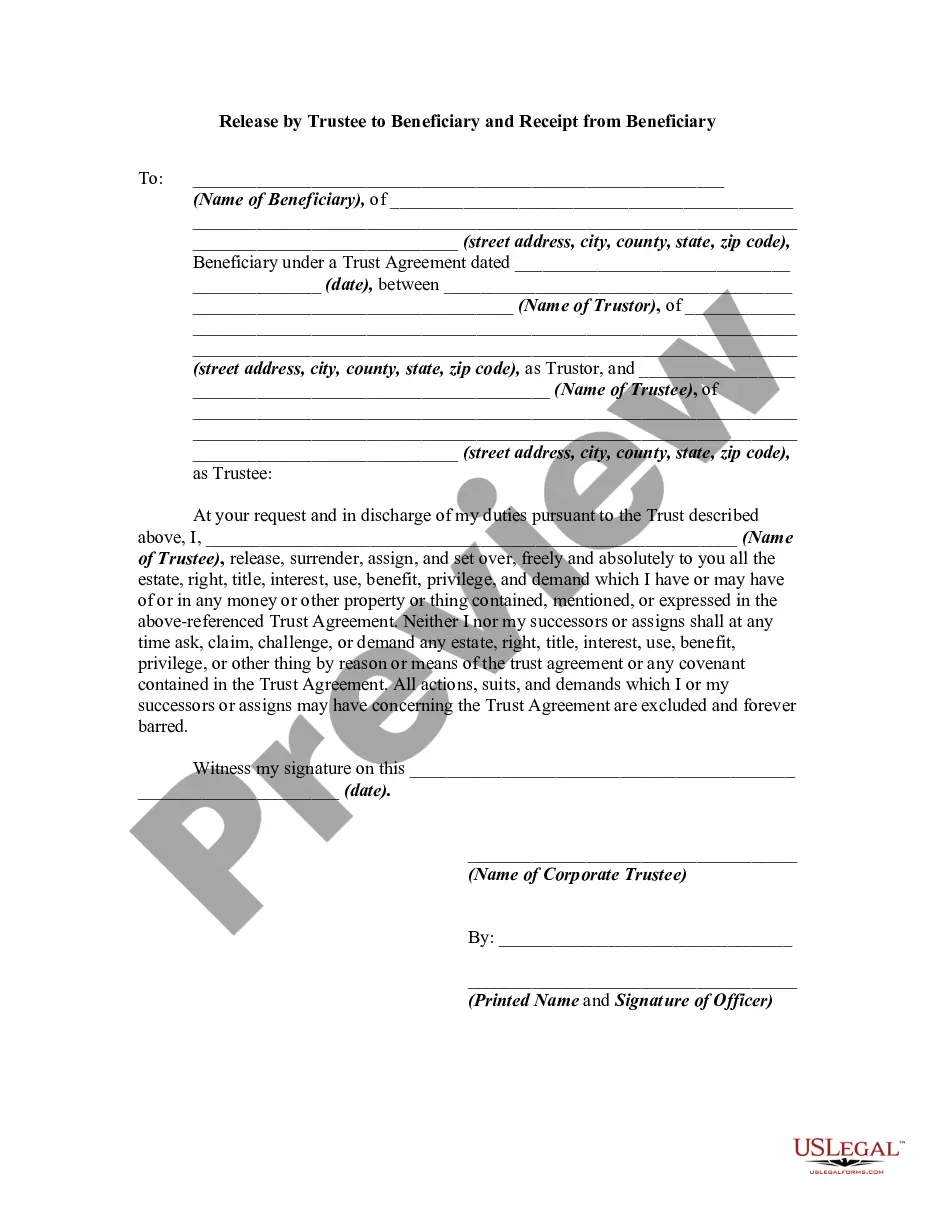
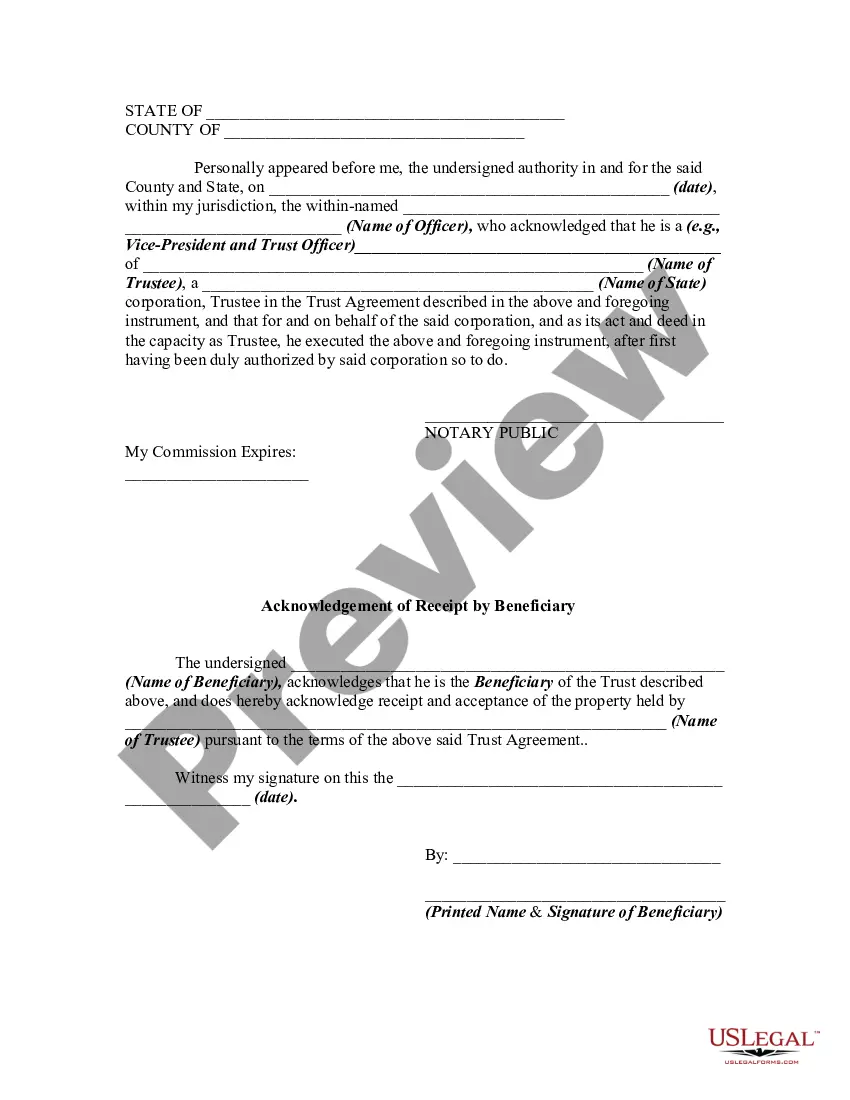
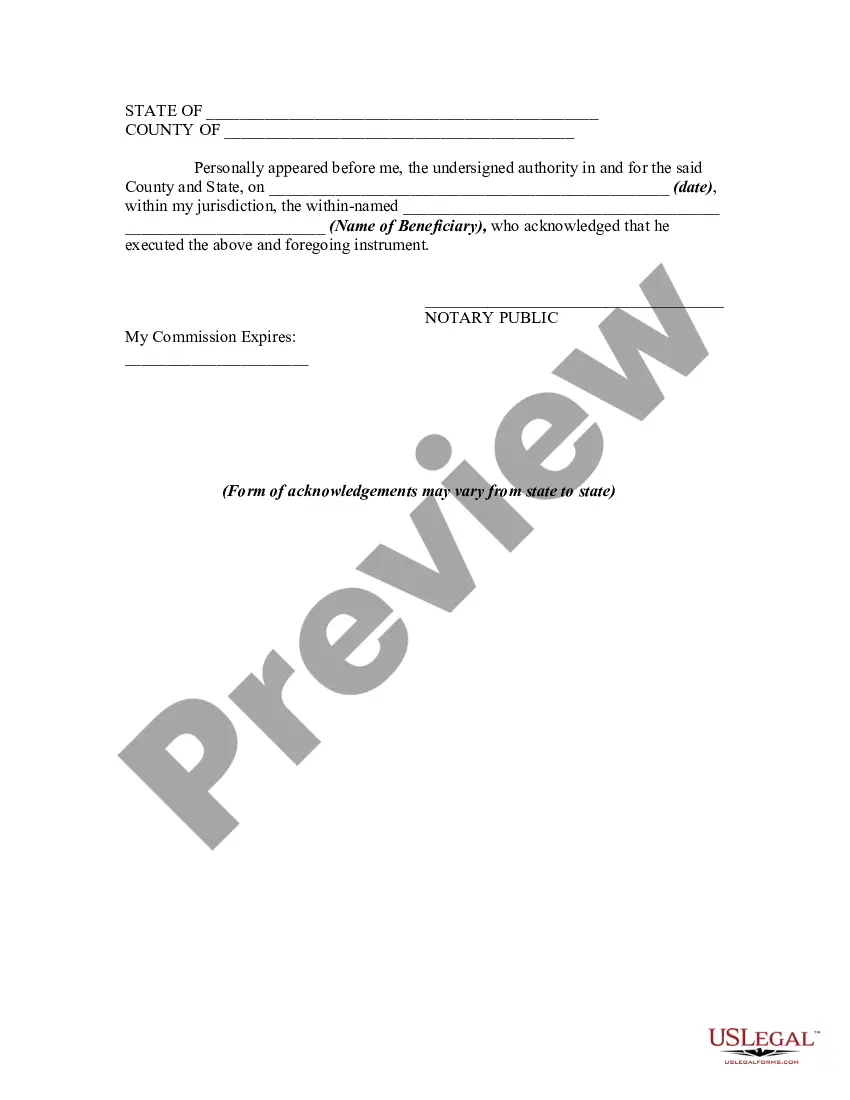
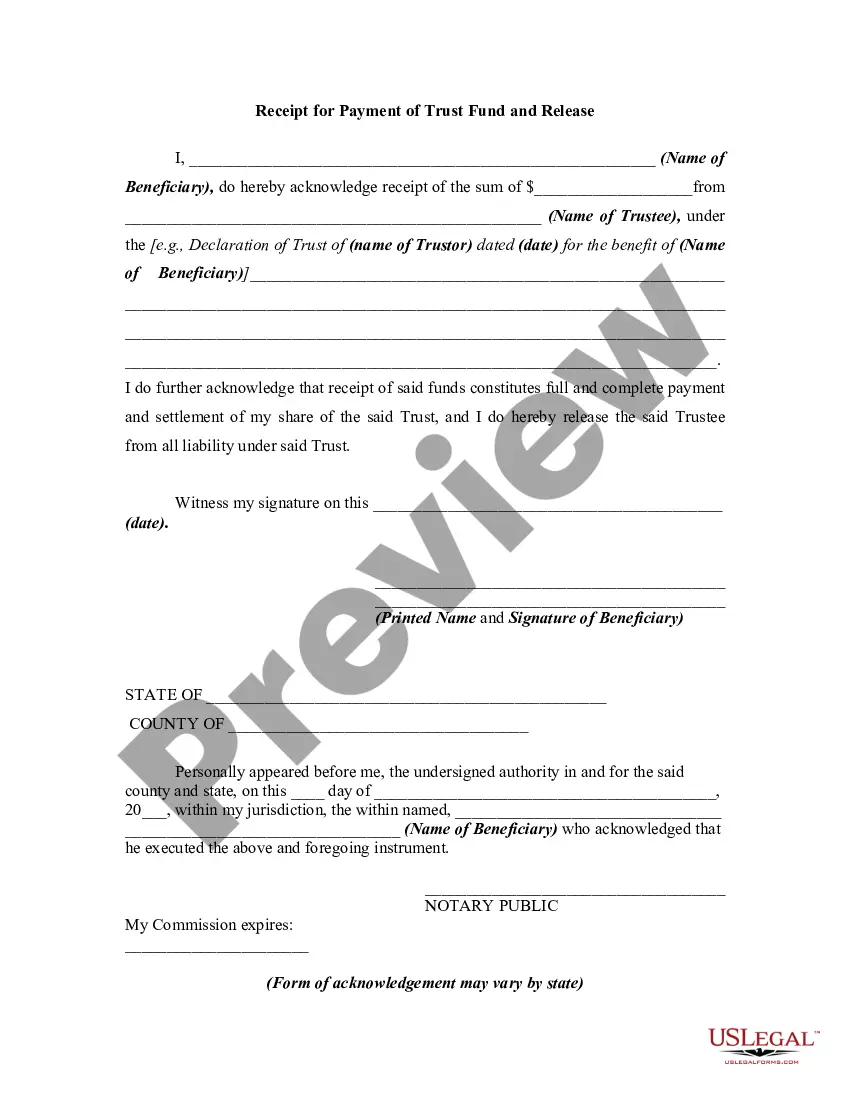
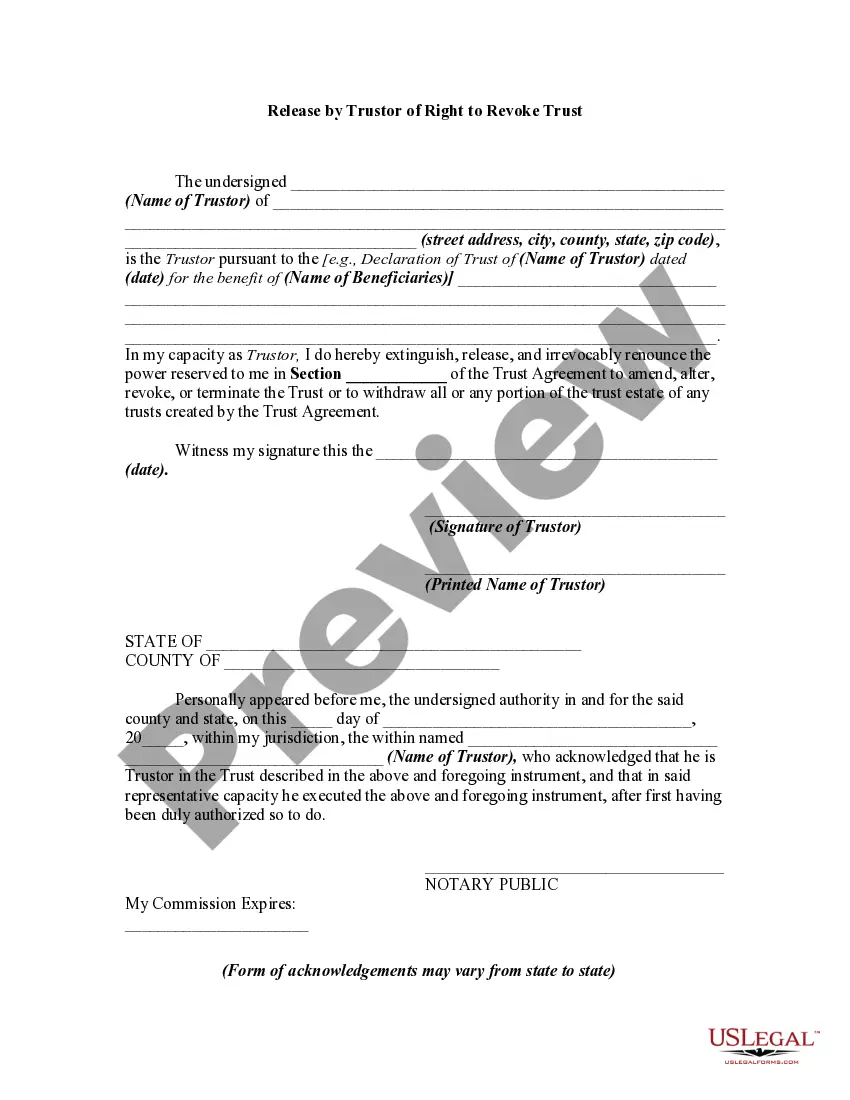
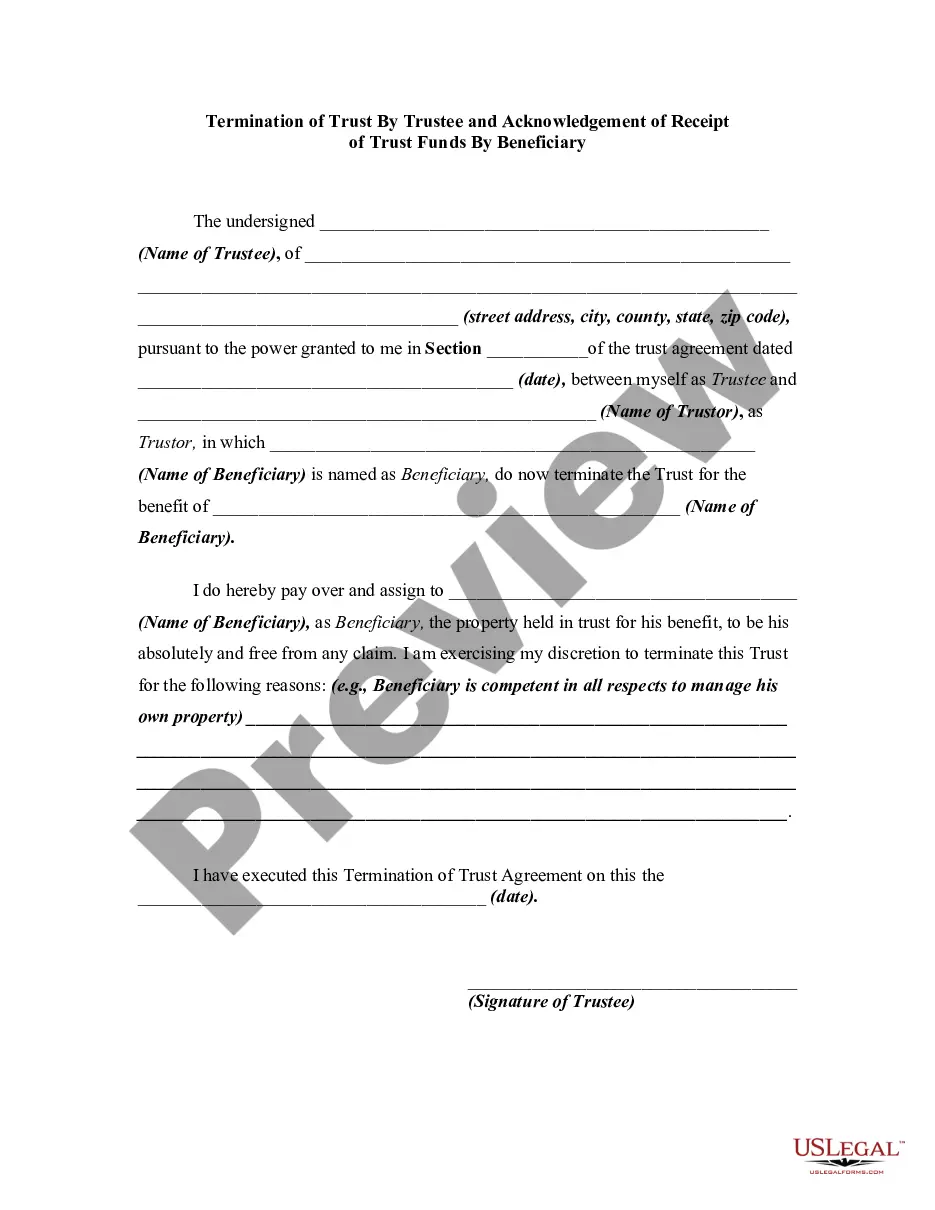





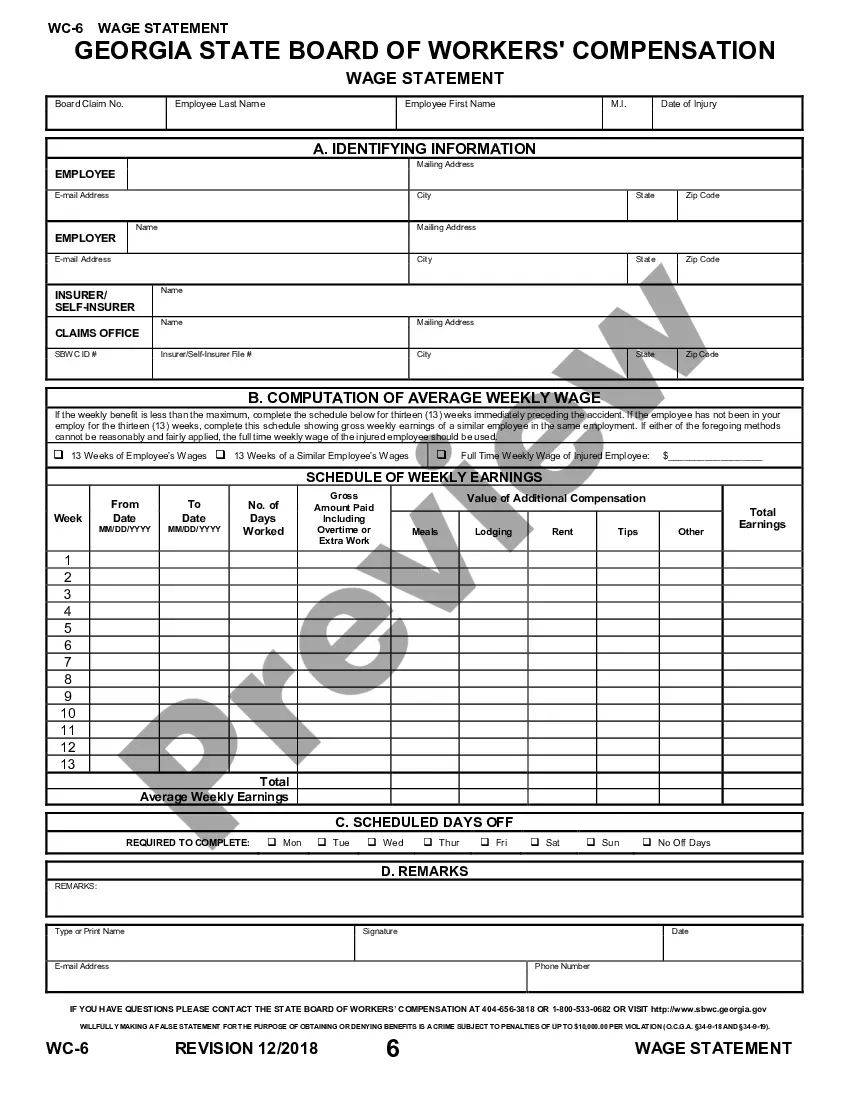

How to fill out Release By Trustee To Beneficiary And Receipt From Beneficiary?
Handling legal documentation and processes can be a lengthy addition to your day.
Trustee Sample For Beneficiaries and similar forms frequently require you to search for them and figure out how to fill them out correctly.
Therefore, whether you're managing financial, legal, or personal issues, utilizing a thorough and effective online repository of forms readily available will be beneficial.
US Legal Forms is the leading online service for legal templates, providing over 85,000 state-specific documents and various resources to help you complete your paperwork easily.
Simply Log In to your account, locate Trustee Sample For Beneficiaries, and download it instantly from the My documents section. You may also access previously downloaded forms.
- Browse the collection of pertinent documents accessible with just one click.
- US Legal Forms offers state- and county-specific forms that can be downloaded at any time.
- Streamline your document management processes with a premium service that enables you to prepare any form in moments without additional or hidden charges.
Form popularity
FAQ
A trustee beneficiary statement is a document that outlines the details of the trust and specifies what beneficiaries are entitled to receive. This statement can include information about assets, their values, and distribution timelines. It serves as a vital tool for transparency between the trustee and beneficiaries. To create a comprehensive trustee beneficiary statement, you can refer to the resources found on USLegalForms.
A trust distribution occurs when the trustee allocates assets to beneficiaries as outlined in the trust document. For example, a trust may mandate that a certain percentage of its assets be distributed to the beneficiaries at specific milestones, such as reaching adulthood. This structured approach ensures that beneficiaries receive their share appropriately. Using a trustee sample for beneficiaries can help clarify these processes.
No, trustees and beneficiaries are not the same. The trustee manages and distributes the assets held in the trust, while beneficiaries are the individuals or entities who receive those assets. Understanding this distinction is crucial in trust management. If you need a clear trustee sample for beneficiaries, consider referencing materials available on USLegalForms.
Filling out a beneficiary form for a trust requires specific information about each beneficiary. You need to provide their names, contact details, and the share of the trust assets they will receive. You can find trustee samples for beneficiaries that guide you through this process. For streamlined assistance, consider tools available on USLegalForms to help you complete this form accurately.
A trustee is an individual or organization responsible for managing a trust for the benefit of others. For instance, a parent may establish a trust and appoint a close friend as the trustee. Their children would be the beneficiaries, receiving the assets per the trust’s terms. This relationship highlights how a trustee ensures that the wishes of the person who created the trust are honored for the benefit of the beneficiaries.
To fill a beneficiary form, start by entering your personal information accurately. Next, specify the relationship to the trust and the percentage of benefits you will receive. It’s crucial to review the form for errors before submission. A trustee sample for beneficiaries can serve as a helpful reference to ensure you complete the form correctly.
Yes, a trustee is required to provide accounting to beneficiaries upon request. This accounting includes detailed records of income, expenses, and distributions from the trust. Transparency in financial matters not only builds trust but also keeps beneficiaries informed. You can find useful formats by examining a trustee sample for beneficiaries.
Filling out a beneficiary designation form for a trust is straightforward. Begin by providing the trust’s name and identifying the beneficiaries with their full legal names. Include their respective shares of the trust. For a clearer view of this process, consult a trustee sample for beneficiaries, which provides structured guidance.
A trustee must disclose essential information regarding the trust’s assets, how they are managed, and any changes in the trust’s value. Additionally, beneficiaries should receive details about distributions and the trust’s terms. Understanding this information helps beneficiaries stay informed and ensures transparency. For a comprehensive approach, consider reviewing a trustee sample for beneficiaries to aid in clear communication.
Yes, beneficiaries are entitled to access trust documents, as this is essential for understanding their rights and interests. The trustee should facilitate this access to support transparency and trust. In situations where clarity is needed, a trustee sample for beneficiaries can serve as a valuable tool. It helps establish the right documents to share and reinforces the trustee's duties to beneficiaries.