Terminate Trust Agreement For Minors
Description
Get your form ready online
Our built-in tools help you complete, sign, share, and store your documents in one place.
Make edits, fill in missing information, and update formatting in US Legal Forms—just like you would in MS Word.
Download a copy, print it, send it by email, or mail it via USPS—whatever works best for your next step.
Sign and collect signatures with our SignNow integration. Send to multiple recipients, set reminders, and more. Go Premium to unlock E-Sign.
If this form requires notarization, complete it online through a secure video call—no need to meet a notary in person or wait for an appointment.
We protect your documents and personal data by following strict security and privacy standards.

Make edits, fill in missing information, and update formatting in US Legal Forms—just like you would in MS Word.

Download a copy, print it, send it by email, or mail it via USPS—whatever works best for your next step.

Sign and collect signatures with our SignNow integration. Send to multiple recipients, set reminders, and more. Go Premium to unlock E-Sign.

If this form requires notarization, complete it online through a secure video call—no need to meet a notary in person or wait for an appointment.

We protect your documents and personal data by following strict security and privacy standards.
Looking for another form?

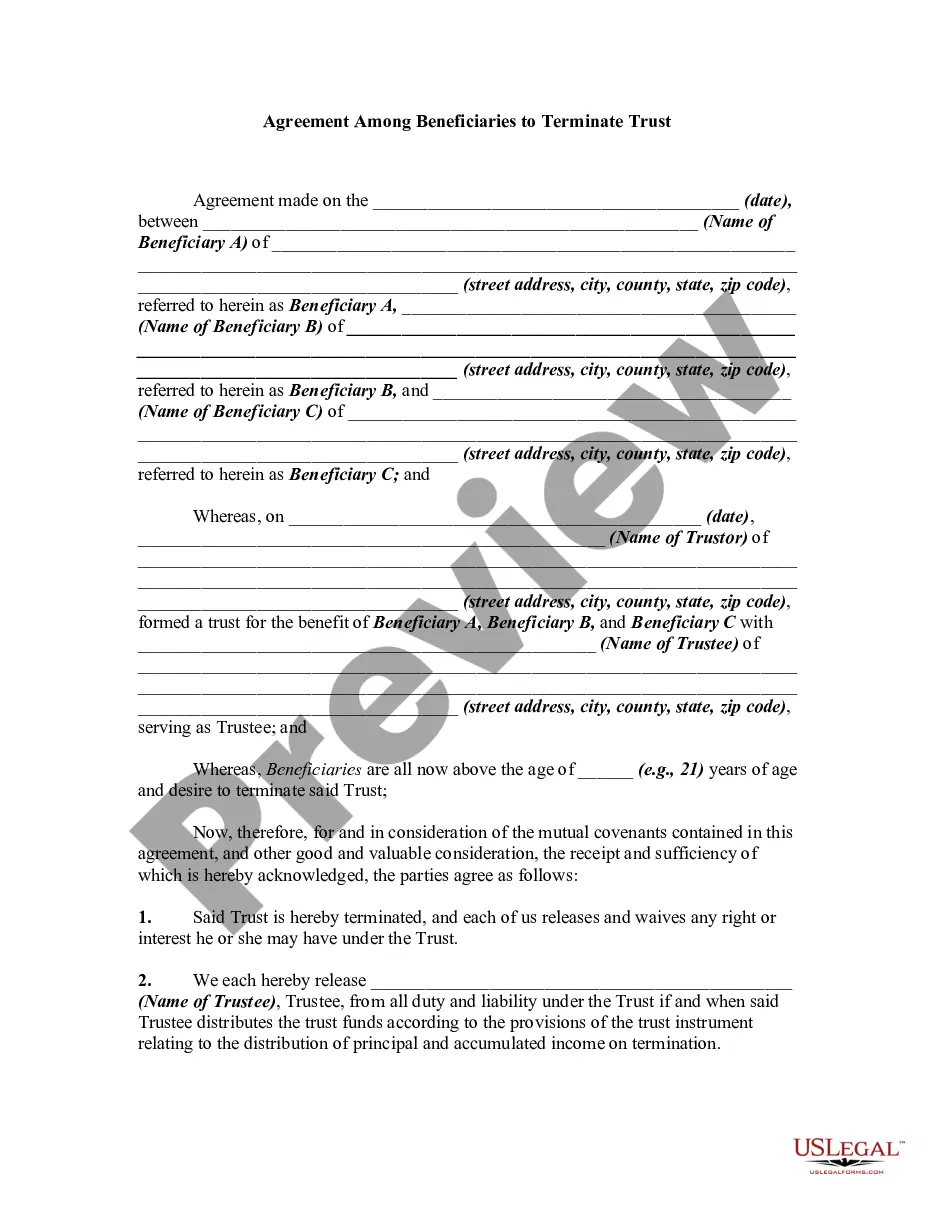
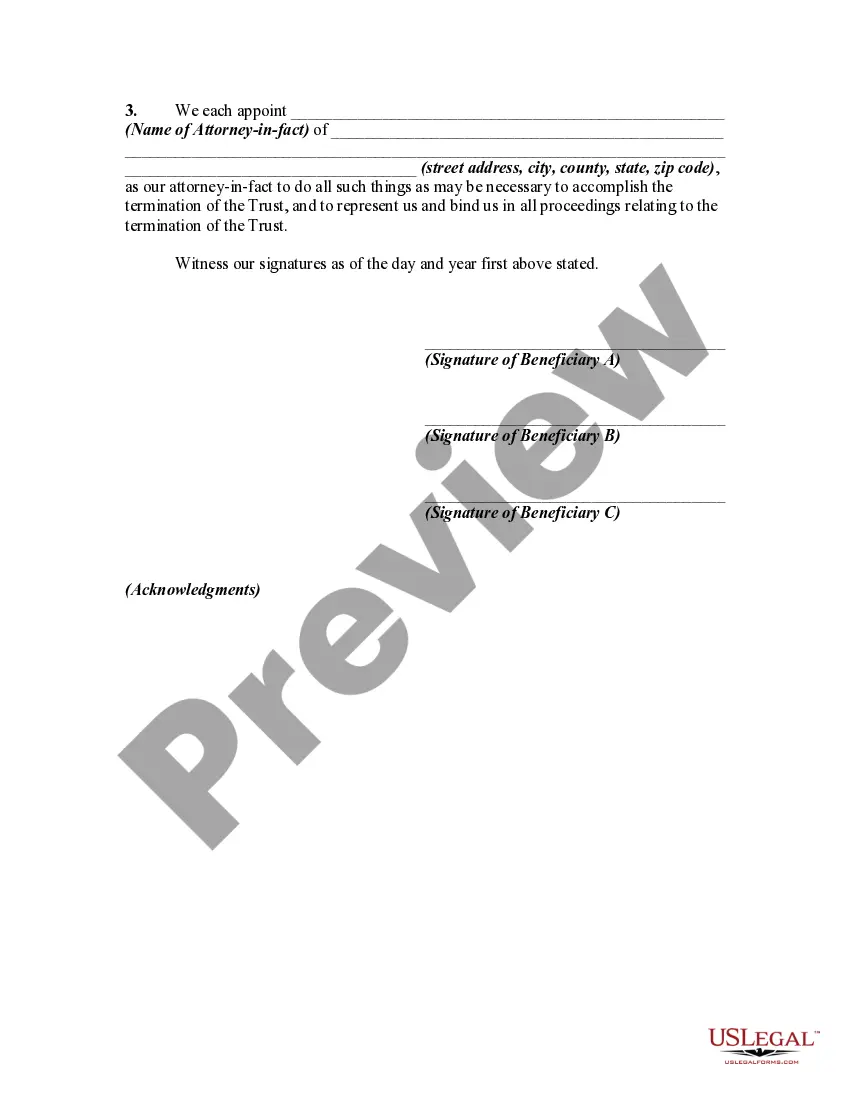
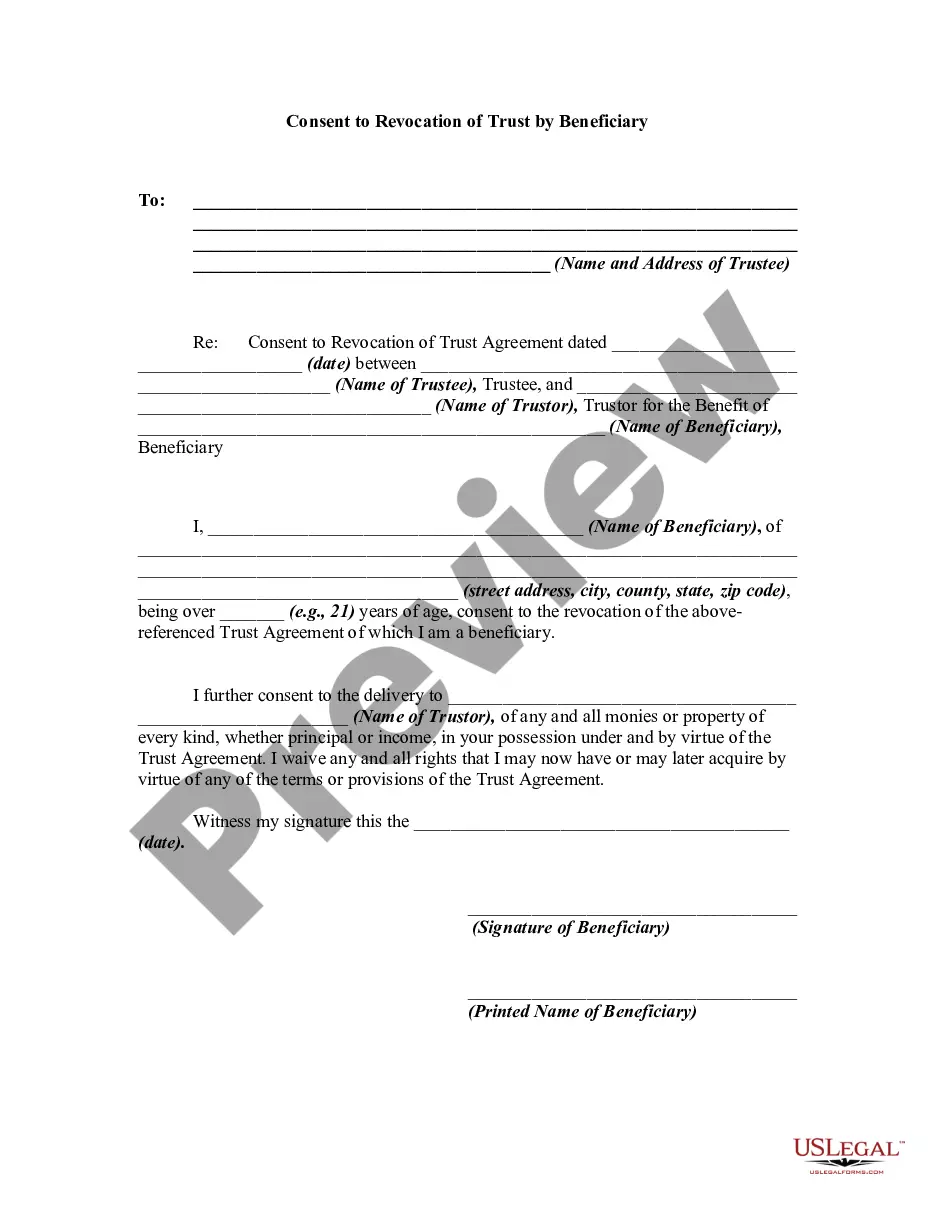
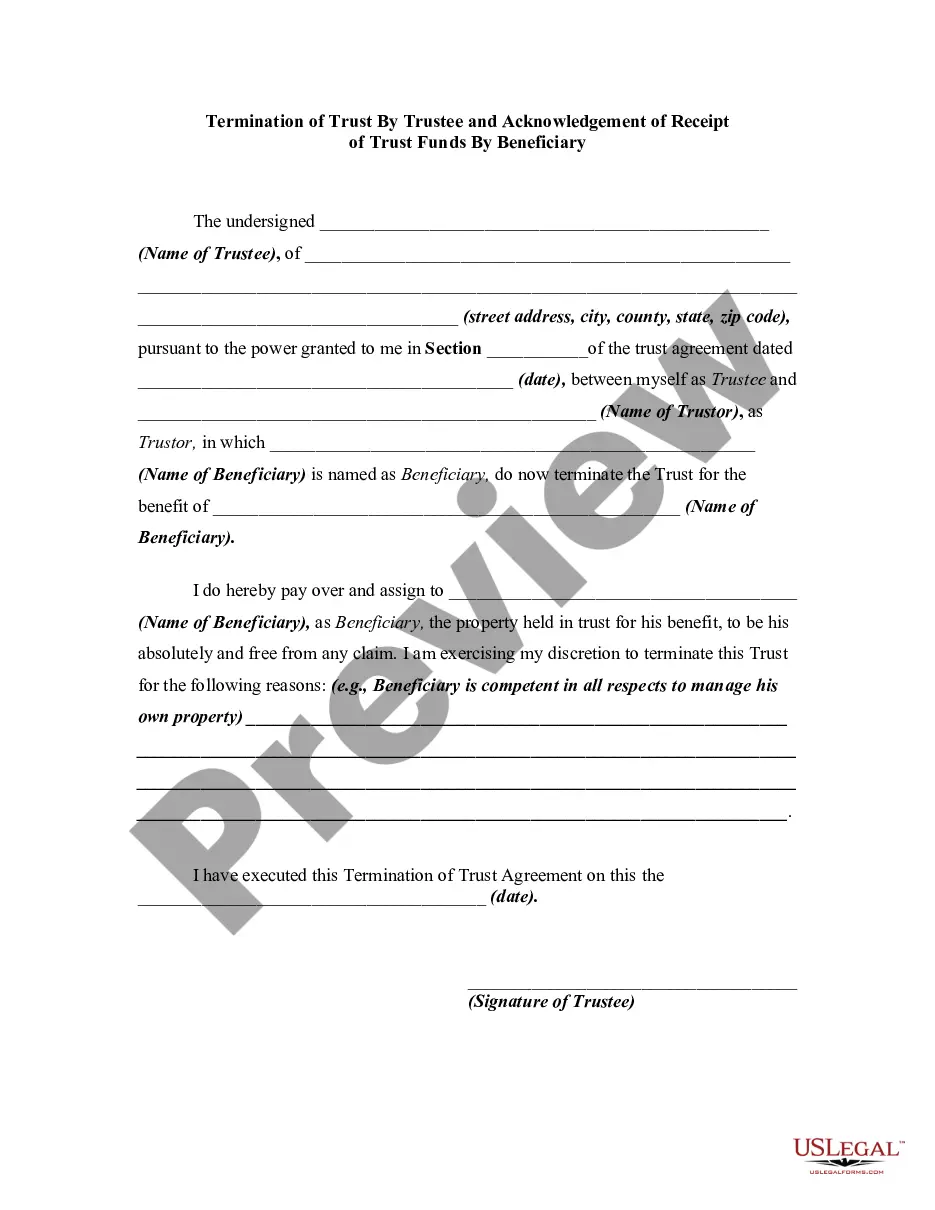
How to fill out Agreement Among Beneficiaries To Terminate Trust?
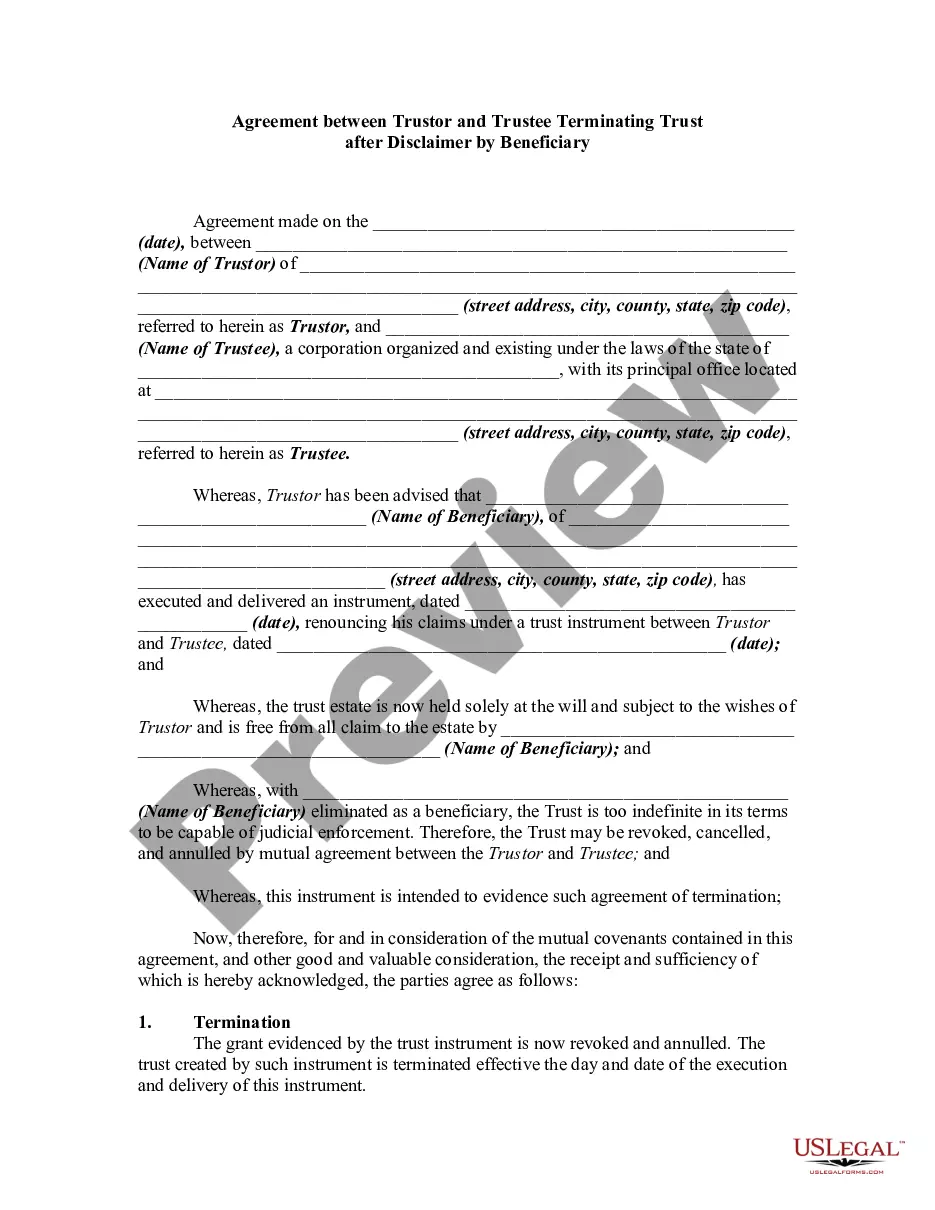
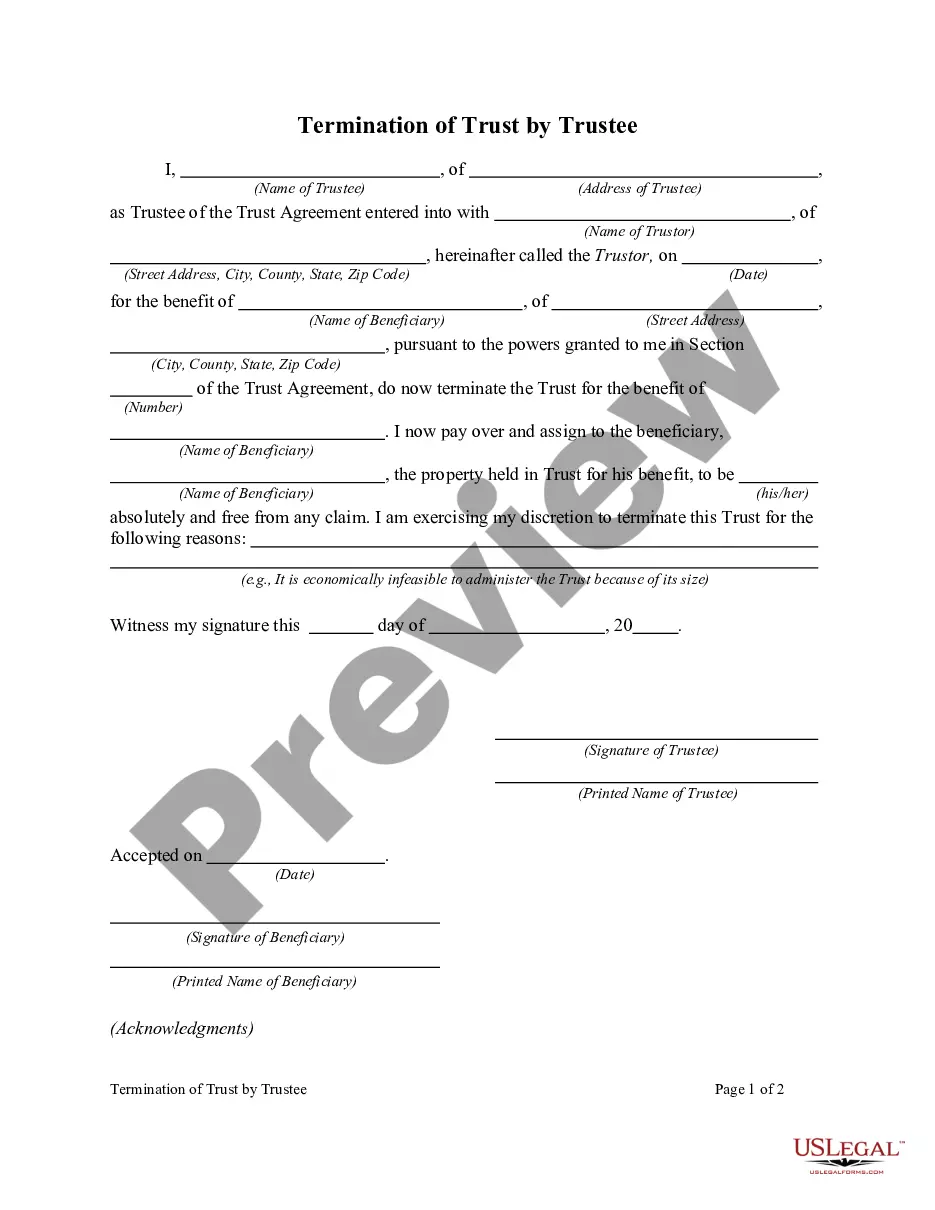
The Terminate Trust Agreement For Minors displayed on this page is a versatile legal template crafted by expert attorneys in accordance with federal and local regulations.
For over 25 years, US Legal Forms has supplied individuals, businesses, and legal practitioners with more than 85,000 authenticated, state-specific documents for any commercial and personal scenario. It’s the quickest, easiest, and most reliable way to acquire the paperwork you require, as the service ensures the utmost level of data security and anti-malware safeguards.
Re-download your documents whenever necessary. Access the My documents tab in your profile to re-download any forms previously acquired. Enroll in US Legal Forms to have verified legal templates for all of life’s situations readily available.
- Search for the document you require and examine it.
- Browse through the file you searched and preview it or check the form description to confirm it meets your needs. If it doesn’t, utilize the search feature to locate the correct one. Click Buy Now once you have found the template you need.
- Select and Log In.
- Pick the pricing option that works for you and set up an account. Use PayPal or a credit card to make a swift payment. If you already possess an account, Log In and verify your subscription to proceed.
- Acquire the editable template.
- Select the format you prefer for your Terminate Trust Agreement For Minors (PDF, Word, RTF) and download the sample to your device.
- Complete and sign the documents.
- Print the template to fill it out by hand. Alternatively, use an online multifunctional PDF editor to quickly and accurately complete and sign your form digitally.
Form popularity
FAQ
Termination by Agreement Trust termination may occur through a mutual agreement between the parties involved, such as the beneficiaries and the trustee. This type of termination usually requires the consent of all beneficiaries and may involve the distribution of the trust assets as agreed upon by the parties.
Estate planning tools like wills and trusts are the best options for leaving money to your children because you can outline how and when your children will receive the money. If the child is a minor, you can even dictate how they can spend the money.
Set Up a Trust for Each Child Another approach is to establish a trust for each child. With this arrangement, you use your will or living trust to name a trustee (usually a trusted relative or friend), who will handle money or property the child inherits until the child reaches the age you specify.
Bottom Line. Terminating an irrevocable trust can have significant tax consequences, triggering a combination of income, capital gains and estate taxes.
The main methods of terminating a trust are by revocation, setting aside, passing of time, distribution of the trust fund or termination by the beneficiaries under the rule in Saunders v Vautier.