Revoking Trust Notice Without
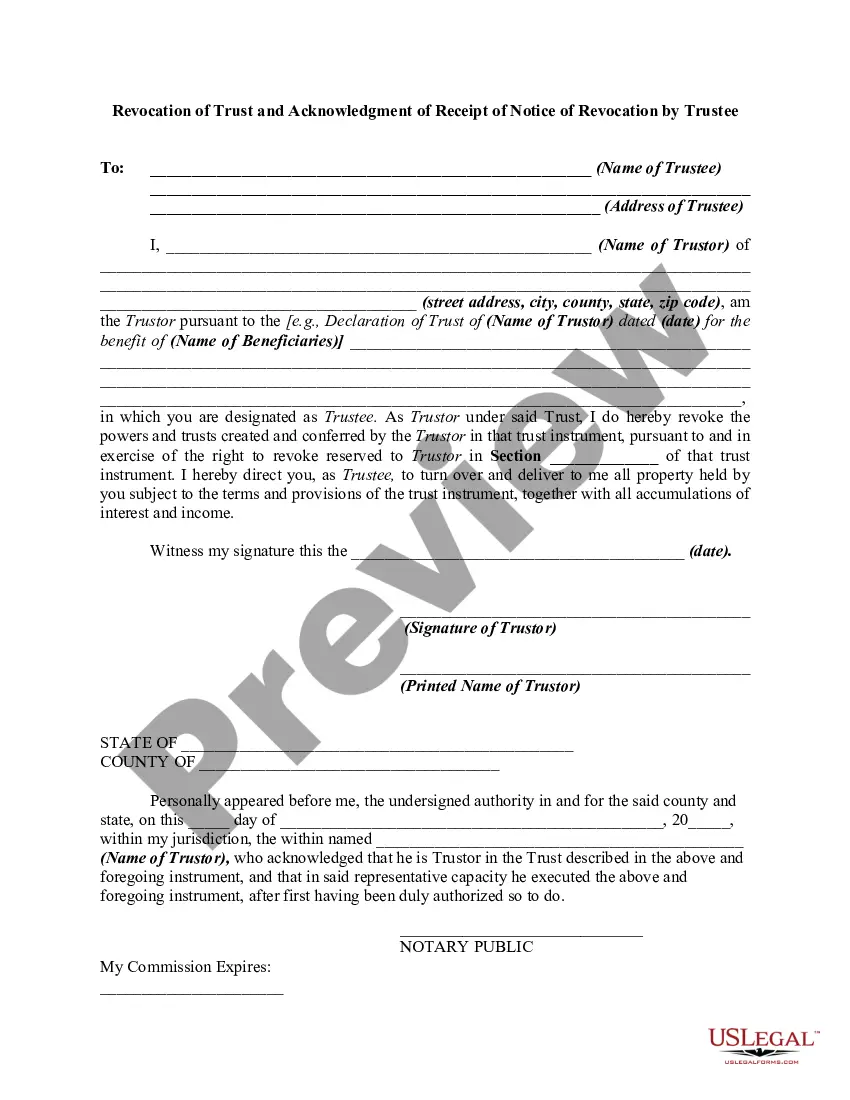
Description
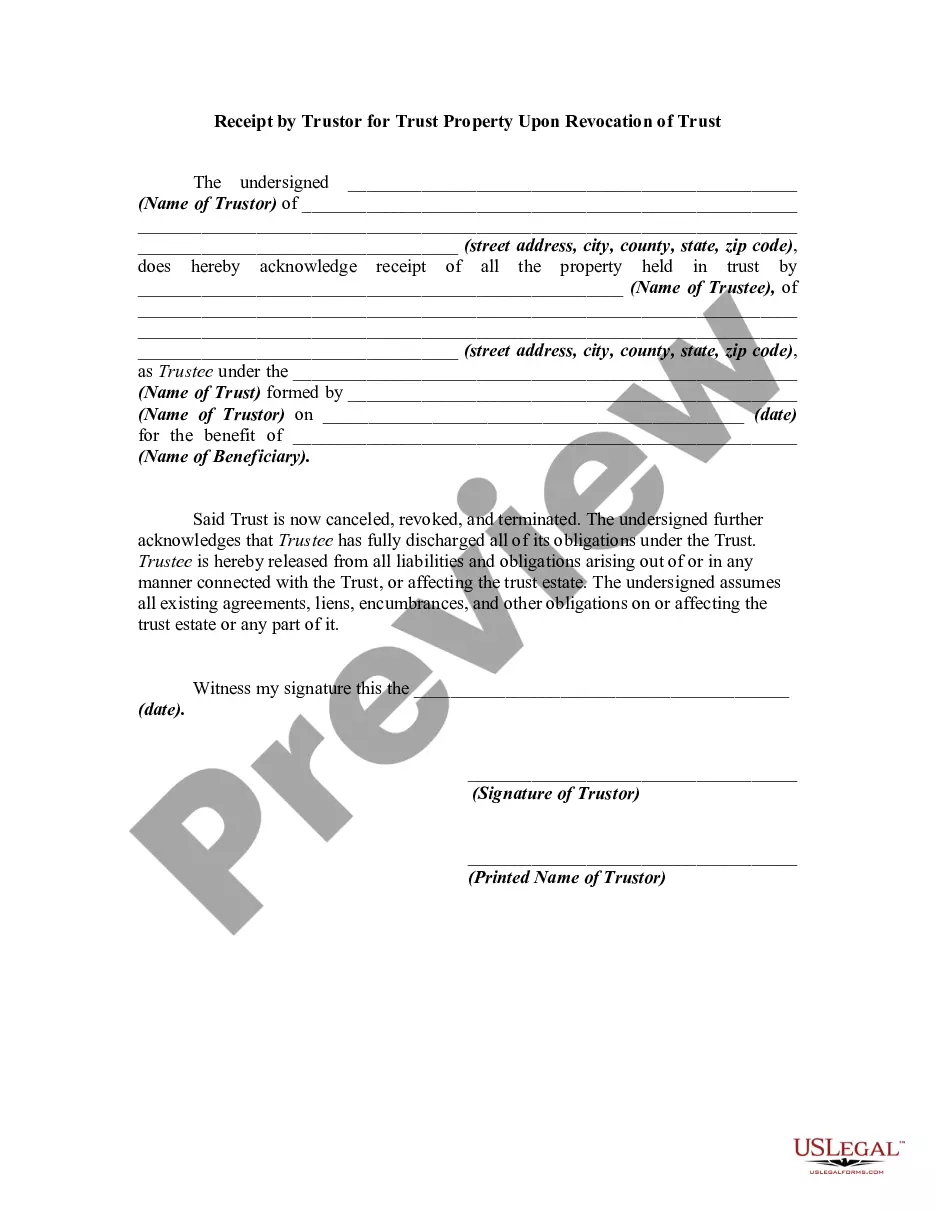
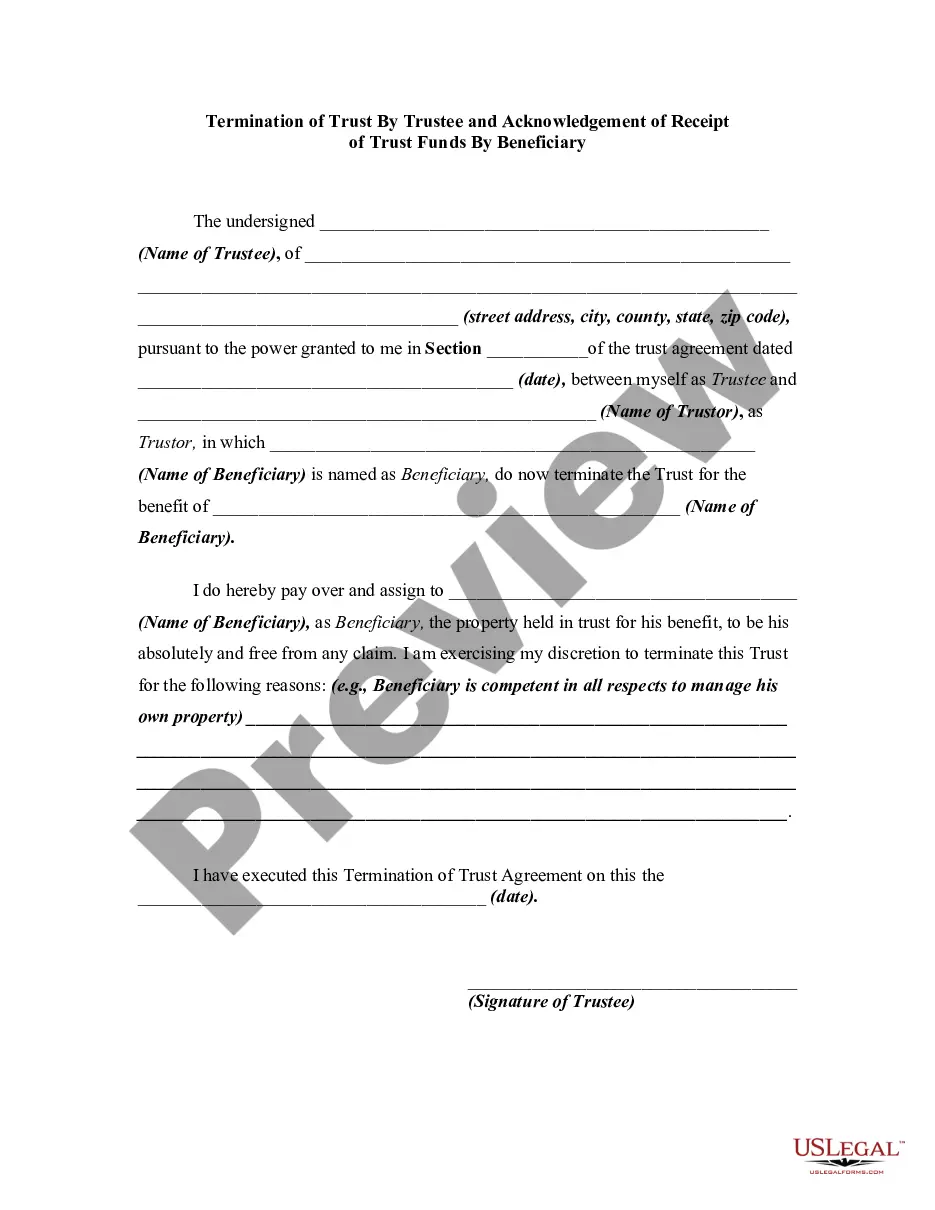
Get your form ready online
Our built-in tools help you complete, sign, share, and store your documents in one place.
Make edits, fill in missing information, and update formatting in US Legal Forms—just like you would in MS Word.
Download a copy, print it, send it by email, or mail it via USPS—whatever works best for your next step.
Sign and collect signatures with our SignNow integration. Send to multiple recipients, set reminders, and more. Go Premium to unlock E-Sign.
If this form requires notarization, complete it online through a secure video call—no need to meet a notary in person or wait for an appointment.
We protect your documents and personal data by following strict security and privacy standards.

Make edits, fill in missing information, and update formatting in US Legal Forms—just like you would in MS Word.

Download a copy, print it, send it by email, or mail it via USPS—whatever works best for your next step.

Sign and collect signatures with our SignNow integration. Send to multiple recipients, set reminders, and more. Go Premium to unlock E-Sign.

If this form requires notarization, complete it online through a secure video call—no need to meet a notary in person or wait for an appointment.

We protect your documents and personal data by following strict security and privacy standards.
Looking for another form?








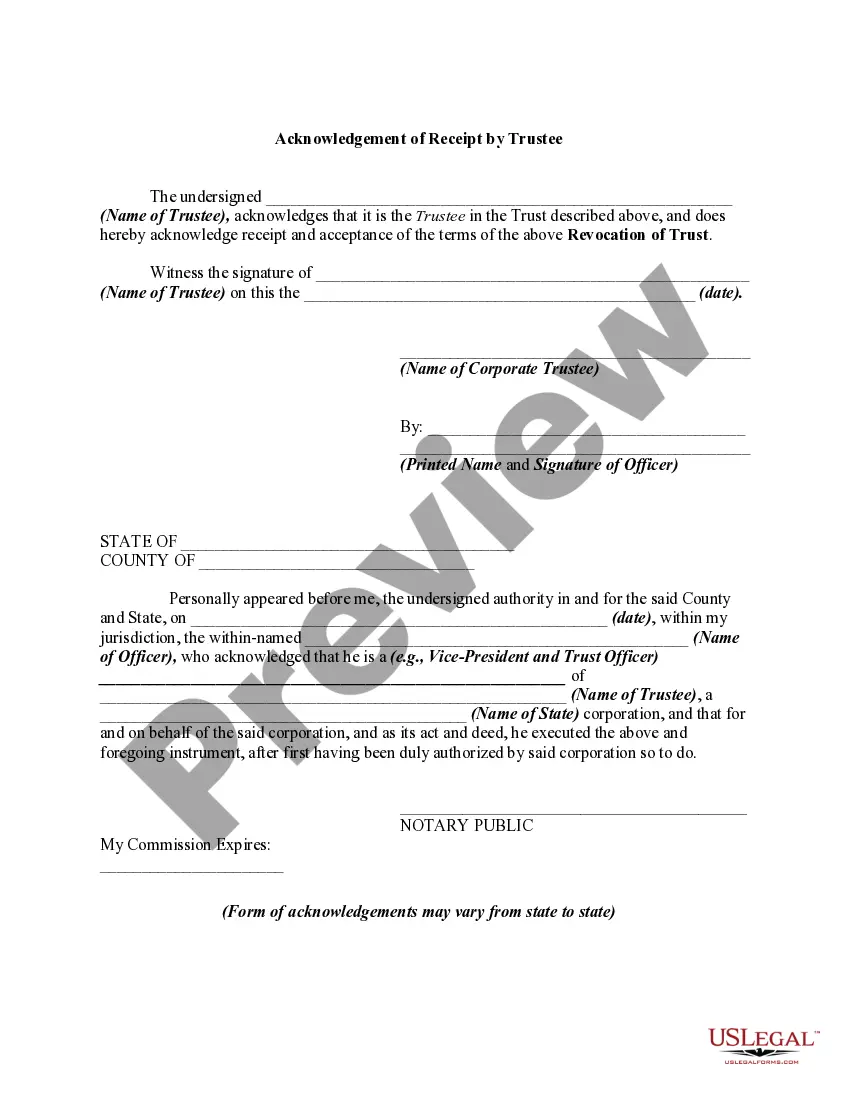
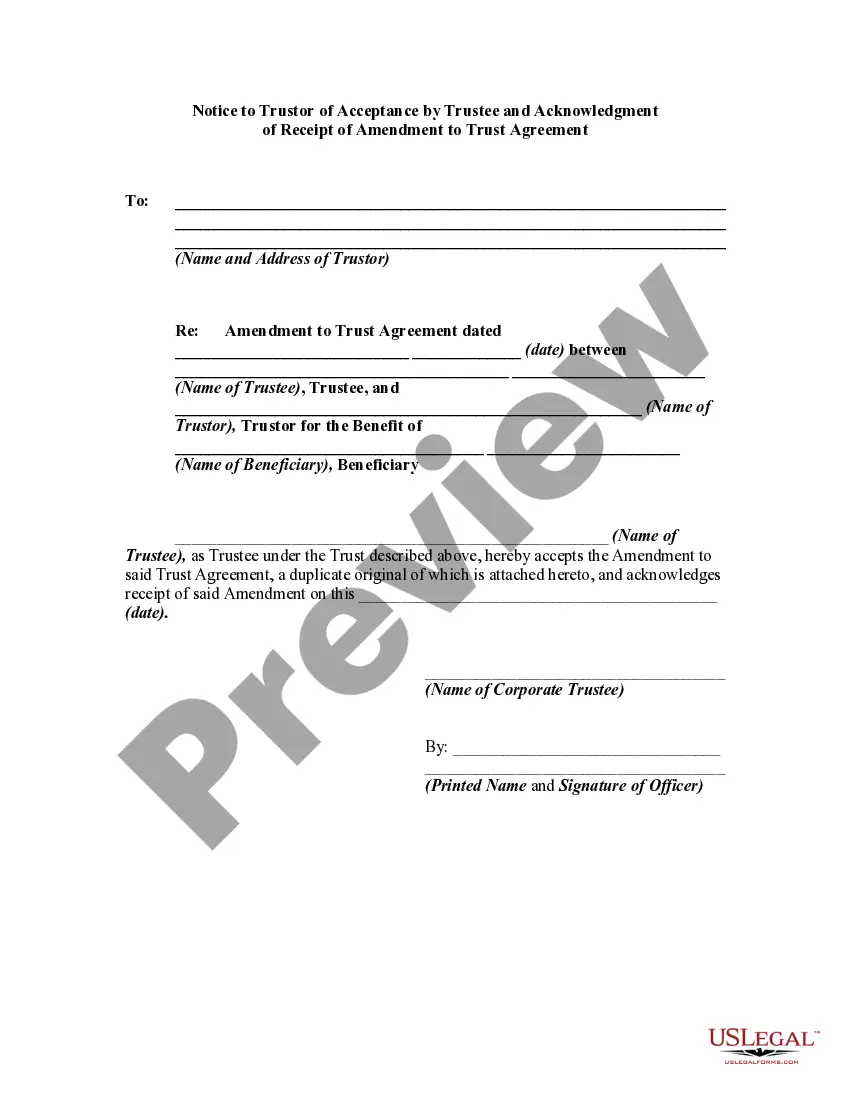
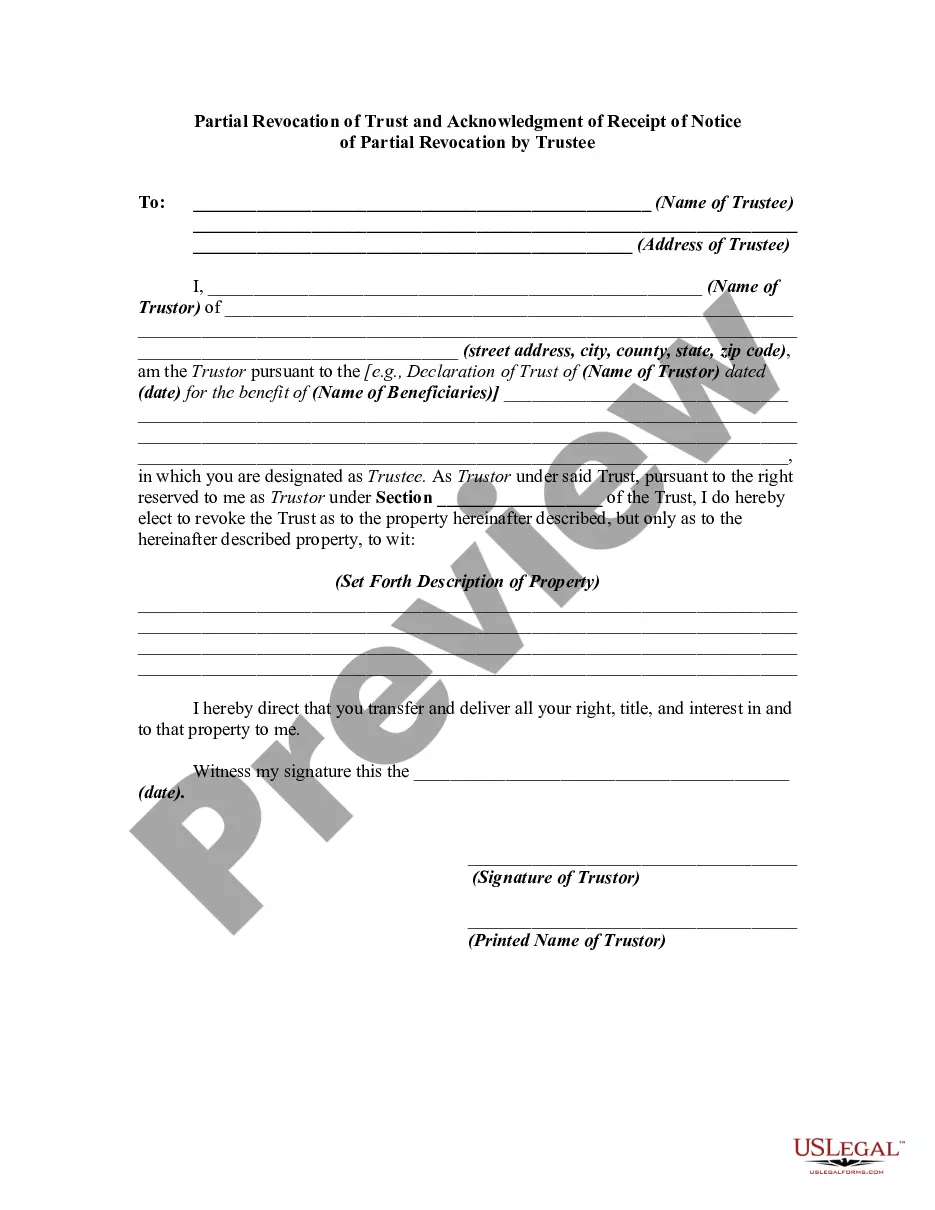
How to fill out Revocation Of Trust And Acknowledgment Of Receipt Of Notice Of Revocation By Trustee?
Managing legal documentation can be perplexing, even for the most informed experts.
If you are in search of a Revoking Trust Notice Without and lack the time to dedicate to finding the right and current version, the processes can be arduous.
Gain entry to a resource pool of articles, guides, and manuals pertinent to your situation and needs.
Save time and effort searching for the documents you require, and use US Legal Forms’ enhanced search and Preview feature to obtain the Revoking Trust Notice Without.
Confirm that the template is accepted in your state or county.
- If you have a subscription, Log In to your US Legal Forms account, look for the form, and retrieve it.
- Check your My documents section to review the documents you've previously saved and organize your folders as necessary.
- If it's your first encounter with US Legal Forms, register an account for unlimited access to all the benefits of the library.
- Here are the steps to follow after locating the desired form.
- Ensure it is the correct form by previewing and reviewing its details.
- Access state- or county-specific legal and organizational documents.
- US Legal Forms addresses any requirements you may have, ranging from individual to corporate paperwork, all in one location.
- Utilize cutting-edge tools to complete and manage your Revoking Trust Notice Without.
Form popularity
FAQ
Key Takeaways On How To Write A Waiver Choose a waiver template. Determine the type of activity or service. State the purpose of the waiver. Identify the risks. Include a title. Include customer information. Include waiver terms. Include a statement of understanding.
10 Things to Include in a Liability Waiver Business Information. Detailed Description of the Activity. Inherent Risks of the Activity. Acknowledgement and Voluntary Assumption of Risk. Choice of Law Provision Section. Release Clause. Indemnification Clause. Forum Selection or Venue Clause.
A liability waiver is a legal document that a person who participates in an activity may sign to acknowledge the risks involved in their participation. By doing so, the company attempts to remove legal liability from the business or person responsible for the activity.
A release of liability, also known as a liability waiver or a hold harmless agreement, is a contract in which one party agrees not to hold another party liable for damages or injury.
A release of liability or waiver is a legal document that a person signs to acknowledge the risks involved in a particular activity and to not hold the organization or individual for any harm that might arise.
A release form, also known as a waiver, is a legal document that grants permission for a person or organization to use someone else's image, likeness, or property in a specific context. They are commonly used in various settings, including photography, video production, and events.
The main difference between releases and waivers is the transferring of ownership. When rights are released, they are transferred to another party. When rights are waived, they are gone altogether.
As far as adult injuries are concerned, waiver/releases can be very effective and may result in lawsuit dismissals in most states as long as the three above-listed conditions are satisfied. There are a few states where the courts are not likely to uphold a waiver/release even if those three conditions are met.