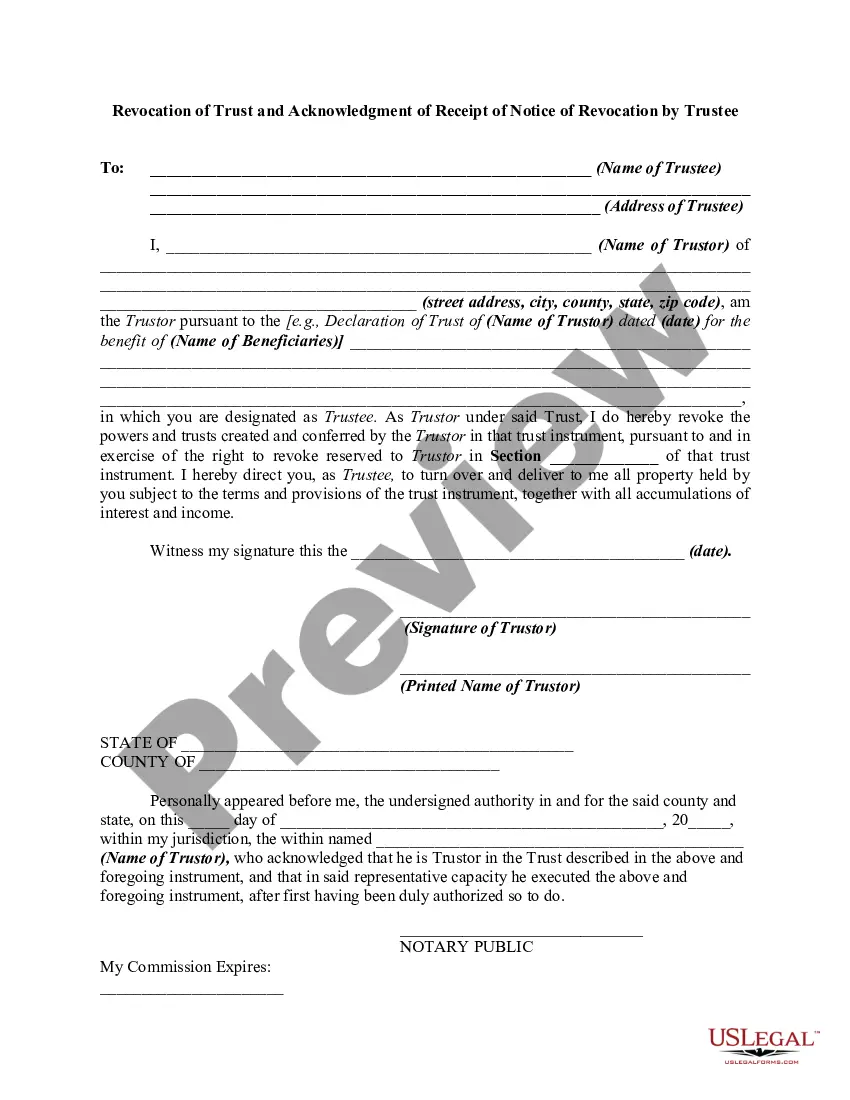
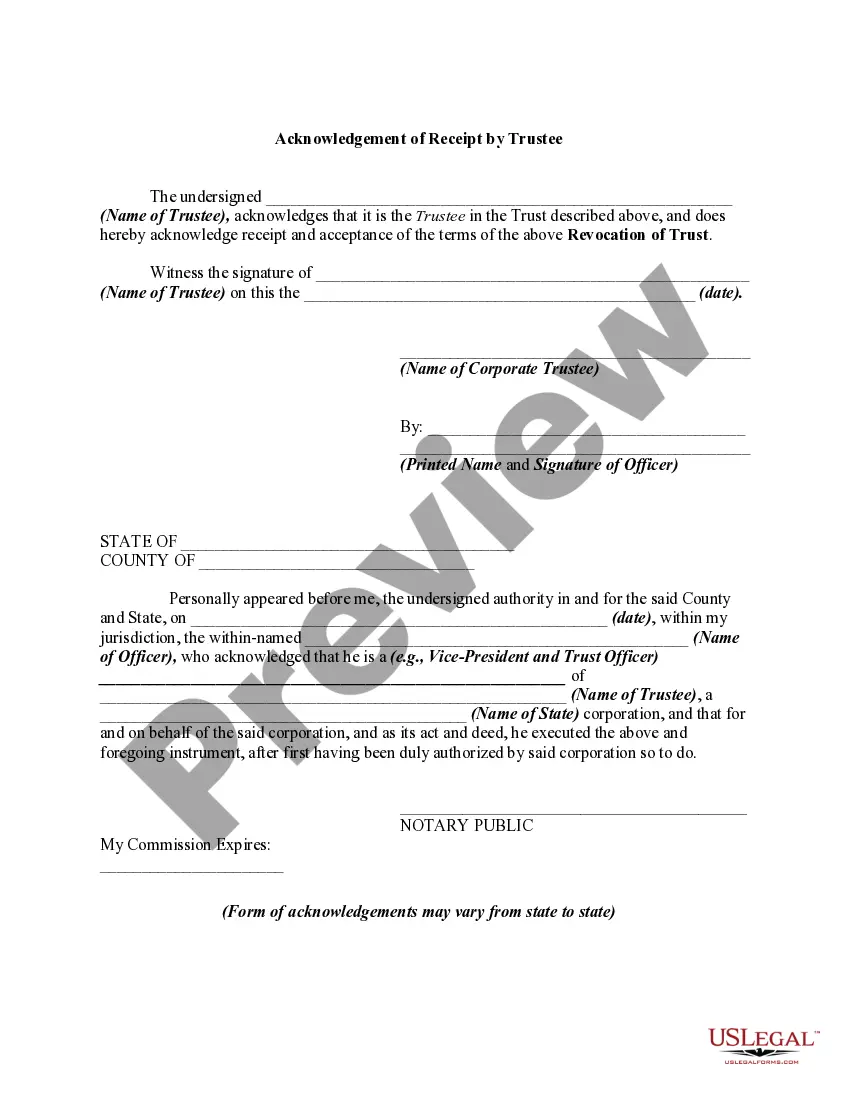
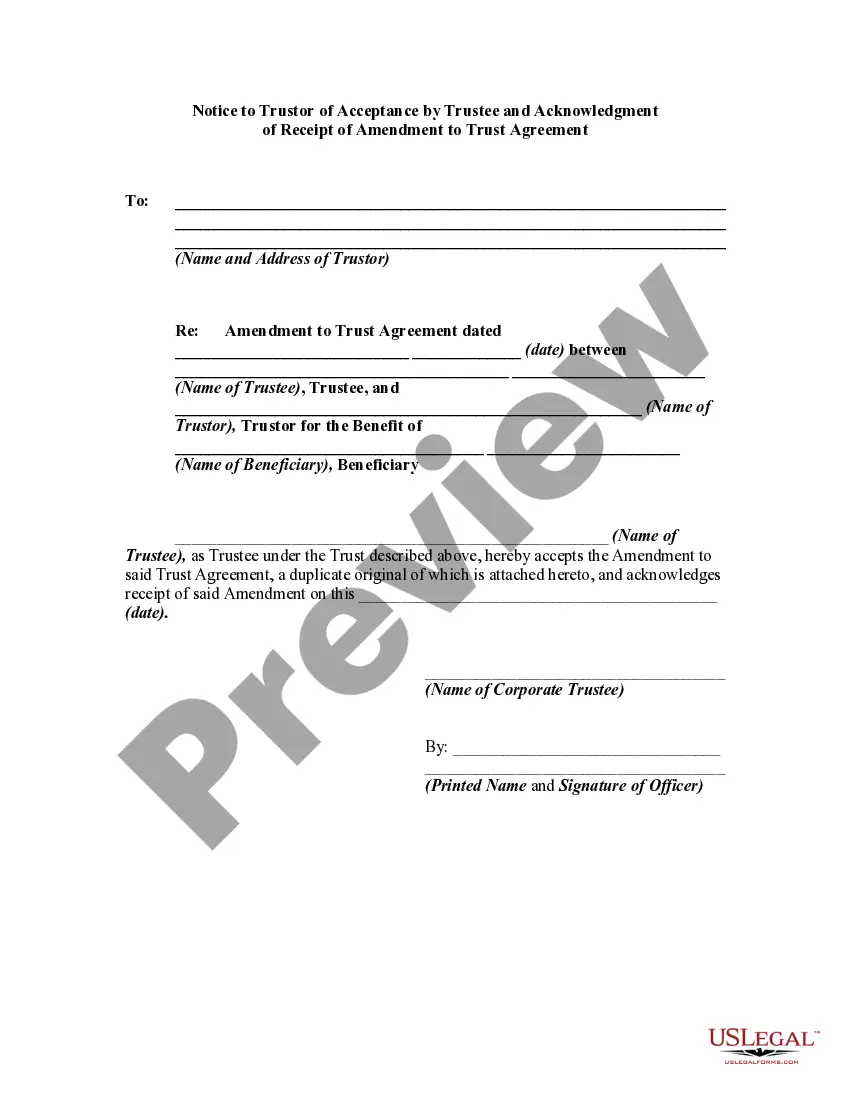
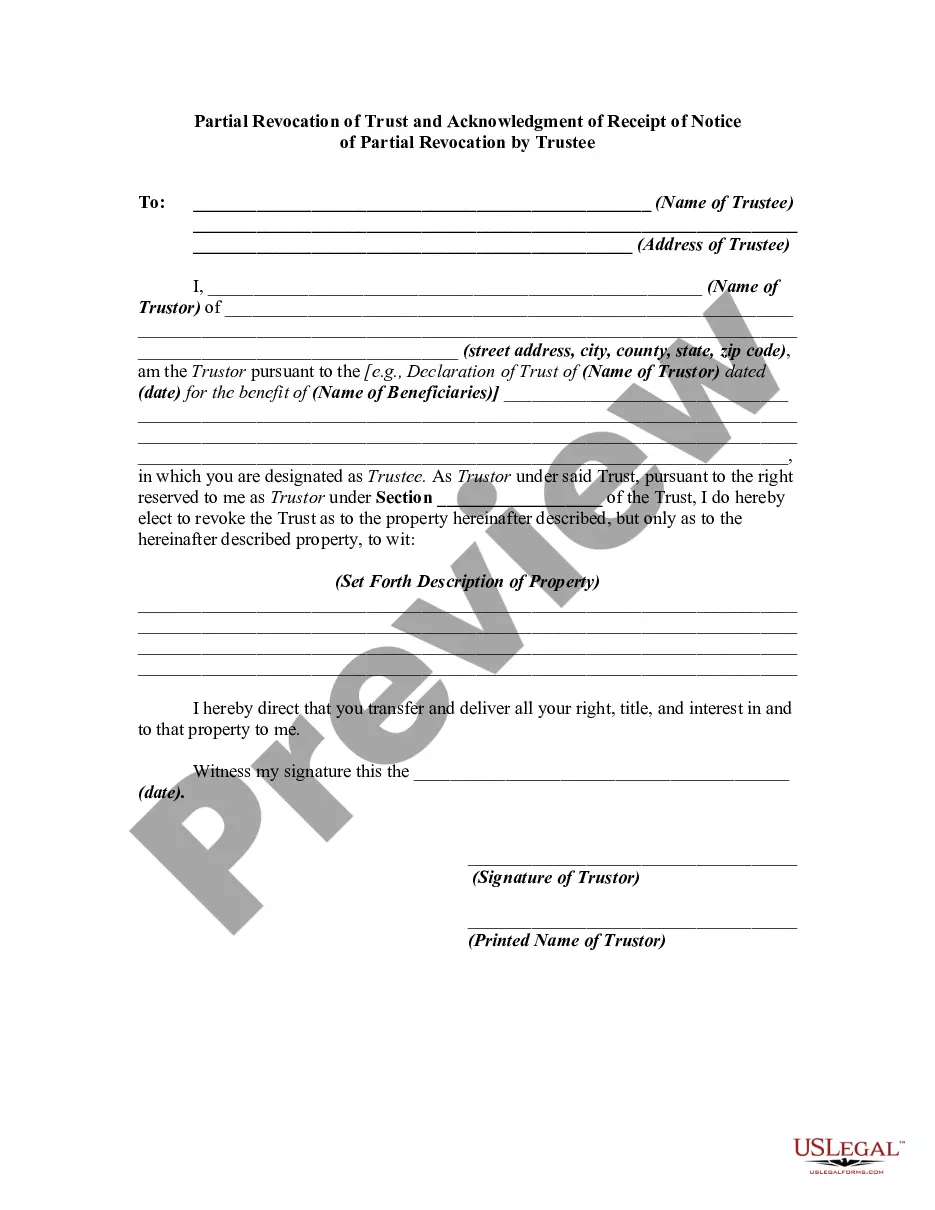
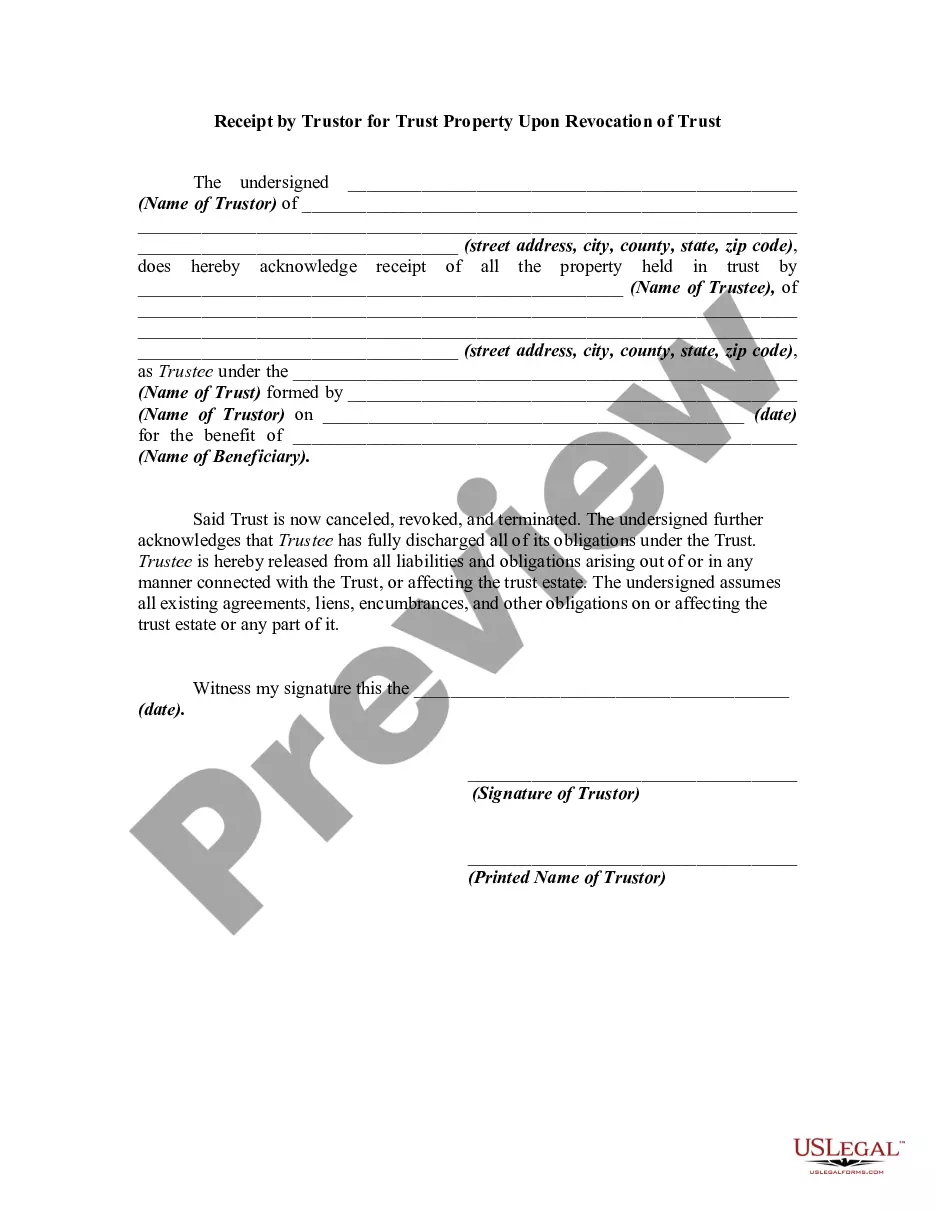
Revocation Trust Trustee For Unit
Description
Get your form ready online
Our built-in tools help you complete, sign, share, and store your documents in one place.
Make edits, fill in missing information, and update formatting in US Legal Forms—just like you would in MS Word.
Download a copy, print it, send it by email, or mail it via USPS—whatever works best for your next step.
Sign and collect signatures with our SignNow integration. Send to multiple recipients, set reminders, and more. Go Premium to unlock E-Sign.
If this form requires notarization, complete it online through a secure video call—no need to meet a notary in person or wait for an appointment.
We protect your documents and personal data by following strict security and privacy standards.

Make edits, fill in missing information, and update formatting in US Legal Forms—just like you would in MS Word.

Download a copy, print it, send it by email, or mail it via USPS—whatever works best for your next step.

Sign and collect signatures with our SignNow integration. Send to multiple recipients, set reminders, and more. Go Premium to unlock E-Sign.

If this form requires notarization, complete it online through a secure video call—no need to meet a notary in person or wait for an appointment.

We protect your documents and personal data by following strict security and privacy standards.
Looking for another form?




How to fill out Revocation Of Trust And Acknowledgment Of Receipt Of Notice Of Revocation By Trustee?
Acquiring legal templates that adhere to federal and state regulations is essential, and the internet provides numerous choices to select from.
However, what’s the use of spending time looking for the suitable Revocation Trust Trustee For Unit sample online when the US Legal Forms digital library has already gathered such templates in one location.
US Legal Forms is the largest online legal repository featuring over 85,000 editable templates created by attorneys for various professional and personal scenarios.
Review the template using the Preview feature or through the text outline to confirm it satisfies your requirements. If necessary, find another sample using the search tool at the top of the page. Click Buy Now when you’ve found the right form and choose a subscription plan. Create an account or Log In and complete a payment via PayPal or a credit card. Select the format for your Revocation Trust Trustee For Unit and download it. All documents you discover through US Legal Forms are reusable. To re-download and complete previously purchased forms, access the My documents tab in your account. Enjoy the most comprehensive and user-friendly legal document service!
- They are easy to navigate with all documents organized by state and intended use.
- Our experts stay current with legislative changes, ensuring your documents are always updated and compliant when acquiring a Revocation Trust Trustee For Unit from our site.
- Obtaining a Revocation Trust Trustee For Unit is quick and straightforward for both existing and new users.
- If you already possess an account with an active subscription, Log In and download the document sample you require in the appropriate format.
- If you are a newcomer to our website, follow the steps below.
Form popularity
FAQ
The revocation of trust refers to the act of terminating a revocable trust. This can be done for various reasons, such as changes in personal circumstances, financial situations, or estate planning goals. Proper legal procedures and a revocation declaration document are crucial when revoking a trust.
A beneficiary can renounce their interest from the trust and, upon the consent of other beneficiaries, be allowed to exit. A trustee cannot remove a beneficiary from an irrevocable trust. A grantor can remove a beneficiary from a revocable trust by going back to the trust deed codes that allow for the same.
Irrevocable trusts cannot be modified, amended, or terminated without permission from the grantor's beneficiaries or by court order. The grantor transfers all ownership of assets into the trust and legally removes all of their ownership rights to the assets and the trust.
The revocation clause revokes all of the wills and codicils that you (the testator) have made in the past. The purpose of the revocation clause is to prevent any of your earlier wills and codicils from having any legal effect after your new simple will is executed.
Examples are ?John and Jane Smith Revocable Trust dated 1/1/20?; or ?Smith Family Trust dated 1/1/20?; or ?John W. Smith and Jane A. Smith Revocable Family Trust dated 1/1/20?. Also, the name of the trust and the names of the trustees will appear on trust checks and bank statements and real es-tate deeds.