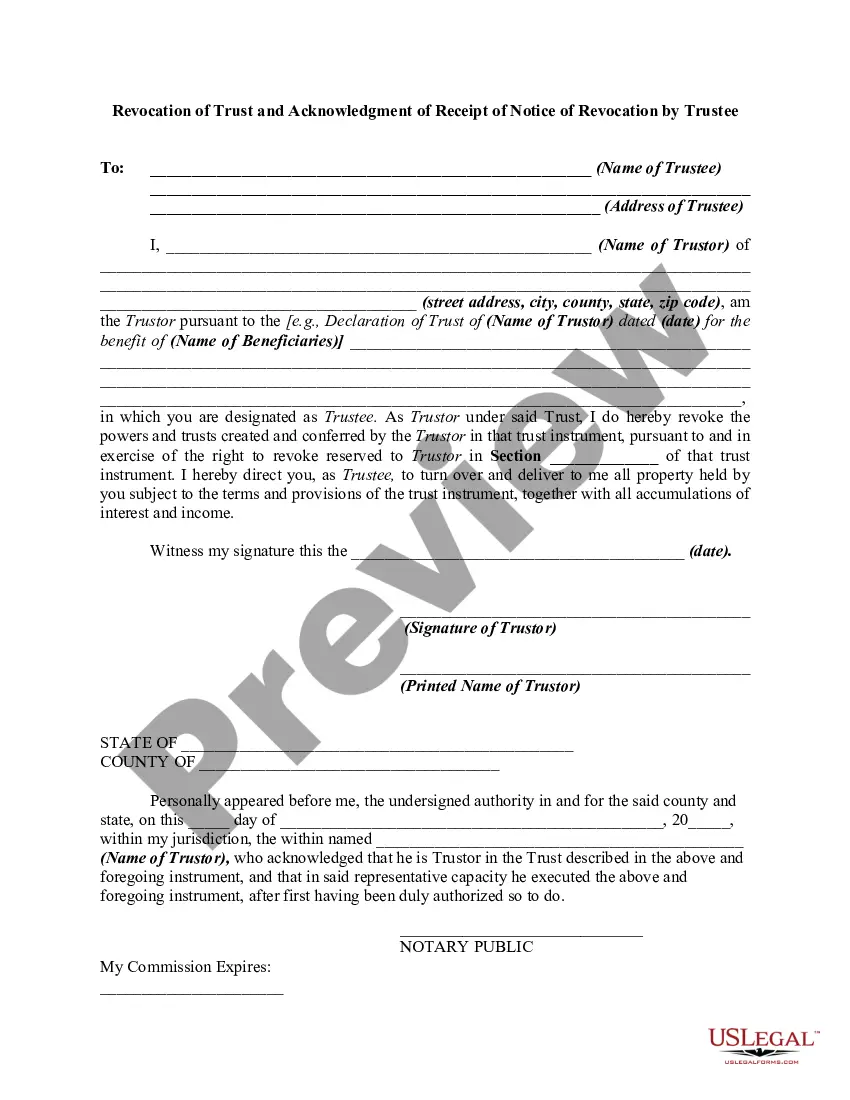
Revocation Trust Deed
Description
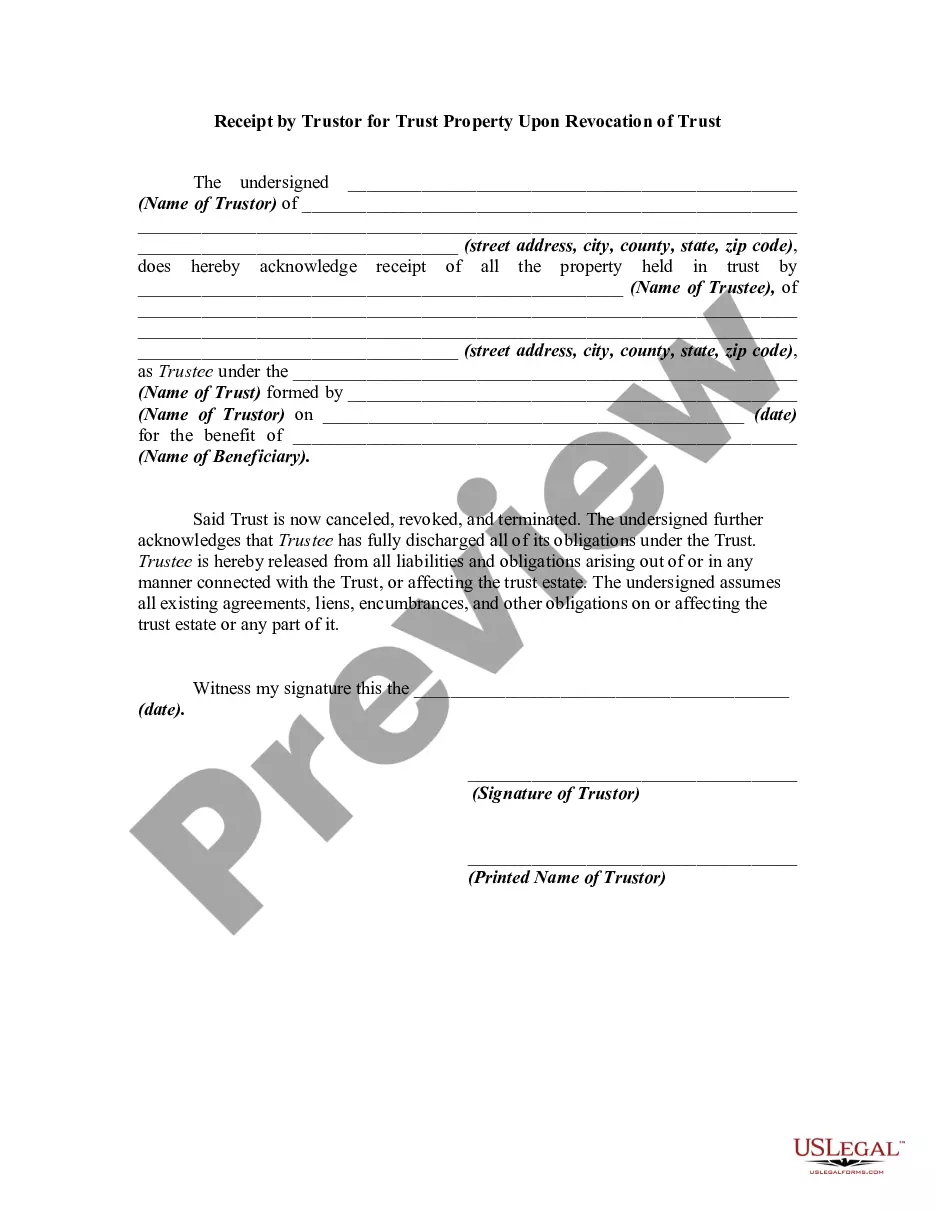
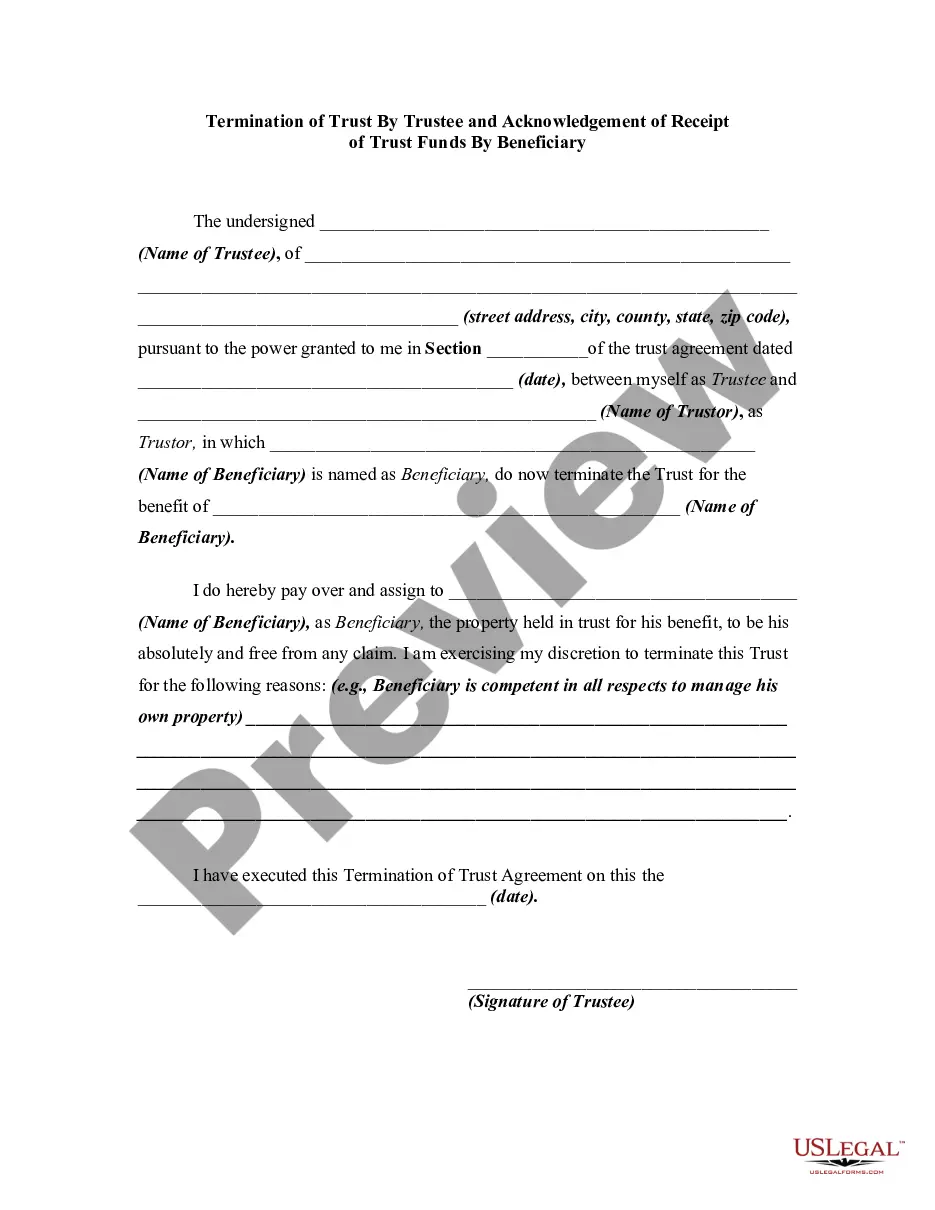
Get your form ready online
Our built-in tools help you complete, sign, share, and store your documents in one place.
Make edits, fill in missing information, and update formatting in US Legal Forms—just like you would in MS Word.
Download a copy, print it, send it by email, or mail it via USPS—whatever works best for your next step.
Sign and collect signatures with our SignNow integration. Send to multiple recipients, set reminders, and more. Go Premium to unlock E-Sign.
If this form requires notarization, complete it online through a secure video call—no need to meet a notary in person or wait for an appointment.
We protect your documents and personal data by following strict security and privacy standards.

Make edits, fill in missing information, and update formatting in US Legal Forms—just like you would in MS Word.

Download a copy, print it, send it by email, or mail it via USPS—whatever works best for your next step.

Sign and collect signatures with our SignNow integration. Send to multiple recipients, set reminders, and more. Go Premium to unlock E-Sign.

If this form requires notarization, complete it online through a secure video call—no need to meet a notary in person or wait for an appointment.

We protect your documents and personal data by following strict security and privacy standards.
Looking for another form?




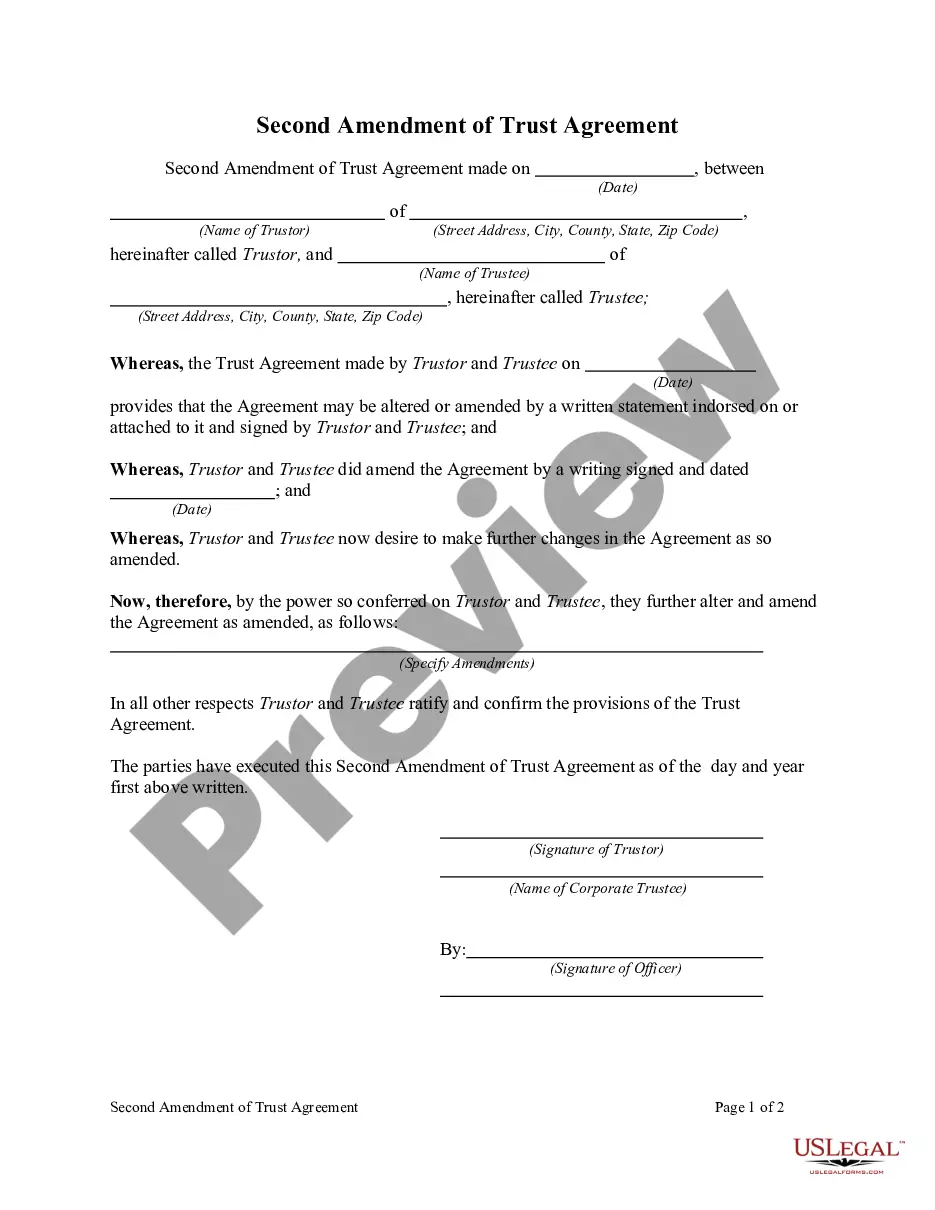

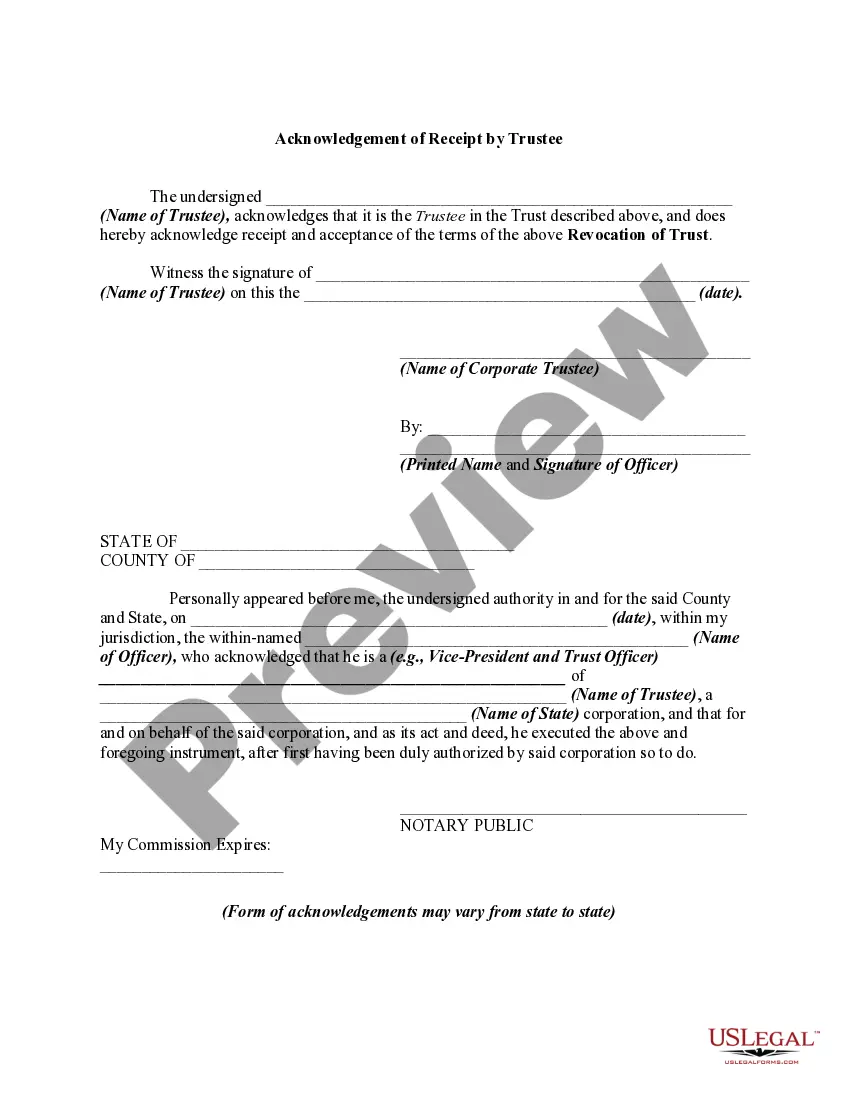
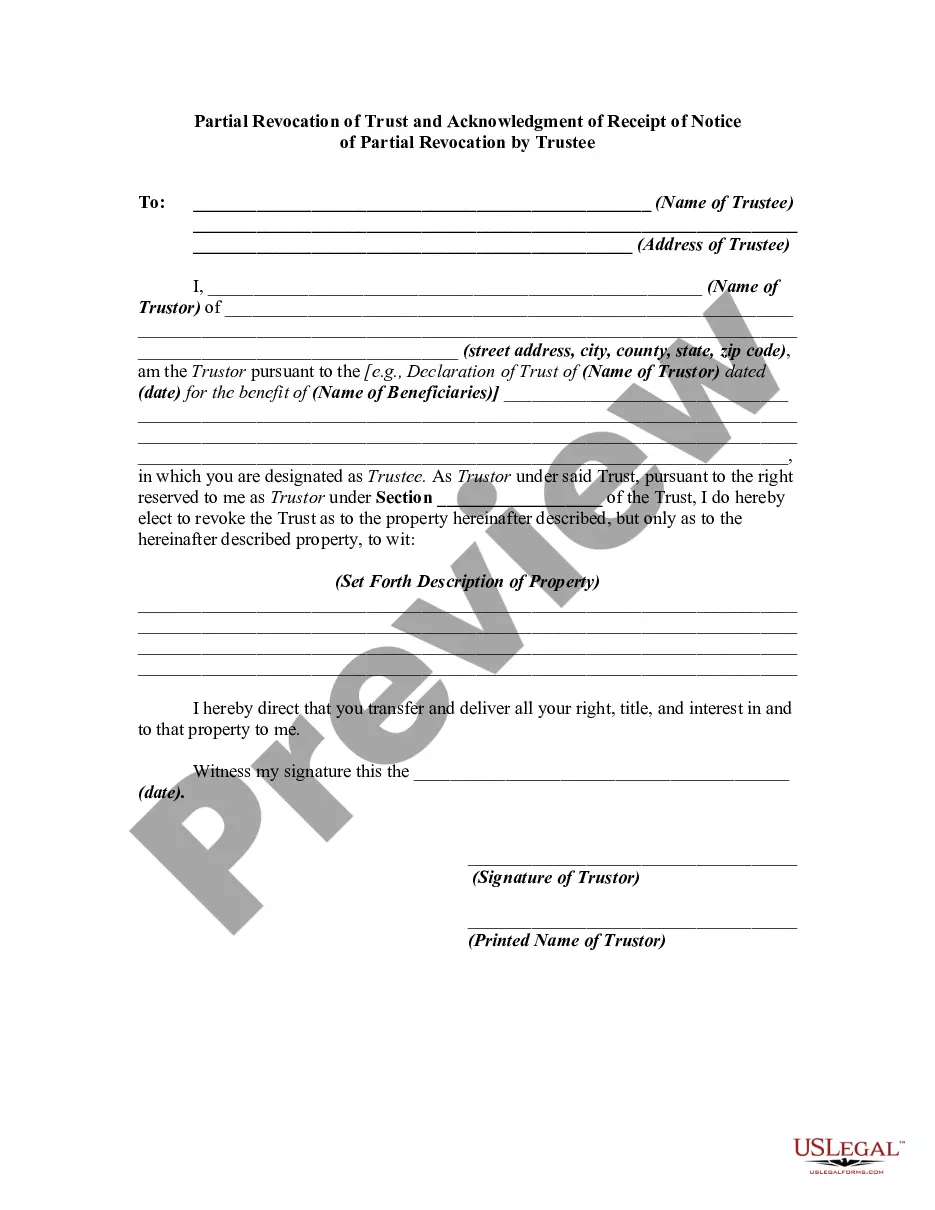
How to fill out Revocation Of Trust And Acknowledgment Of Receipt Of Notice Of Revocation By Trustee?
- If you're an existing user, log in to your account and download your trust deed template by clicking the Download button, ensuring your subscription is active. If required, renew your plan.
- If you're new to US Legal Forms, start by browsing the available templates. Use the Preview mode to verify that the revocation trust deed meets your specific requirements and complies with local laws.
- Should you need another template, utilize the Search tab to find the appropriate form that suits your needs precisely.
- Once you locate the correct form, click on the Buy Now button and select your preferred subscription plan. You will need to create an account to access all features of the site.
- Complete your purchase by entering your credit card information or using your PayPal account to pay for your subscription.
- After purchasing, download your revocation trust deed template to your device, allowing you easy access to it anytime through the My Forms section of your profile.
By following these steps, you can efficiently secure a revocation trust deed that aligns with your estate planning needs. US Legal Forms offers a robust collection of legal forms, ensuring you have access to the resources you need for effective legal document preparation.
For assistance or questions, don't hesitate to reach out to their premium experts, who can provide guidance in completing your forms accurately. Start your journey today!
Form popularity
FAQ
Ending a trust deed involves formally revoking or terminating it according to the terms outlined in the document. You will likely need to prepare a written statement declaring the trust deed's end and affirming the distribution of any remaining assets. This process should align with the conditions stipulated in the revocation trust deed. For an easier approach, US Legal Forms can provide the necessary documentation and guidance.
Yes, you can change your revocable trust without a lawyer, but understanding the process is important. You need to document any changes in writing and ensure that these modifications comply with the original revocation trust deed. If you want to avoid potential pitfalls, consider using US Legal Forms, which offers templates and guidance to support you through the amendments.
A revocable trust can be terminated by following the terms outlined in the revocation trust deed. Generally, you will need to create a written document that explicitly states your intention to terminate the trust and sign it. Additionally, transfer any remaining assets back to yourself or to your new trust. Services like US Legal Forms can provide guidance and resources to facilitate this process.
Revoking a revocable trust is generally straightforward. You simply need to draw up a document that states that you are revoking the trust and distribute any assets accordingly. It's crucial to ensure that you are following any specific guidelines laid out in the original revocation trust deed. Platforms like US Legal Forms provide templates that make this process seamless.
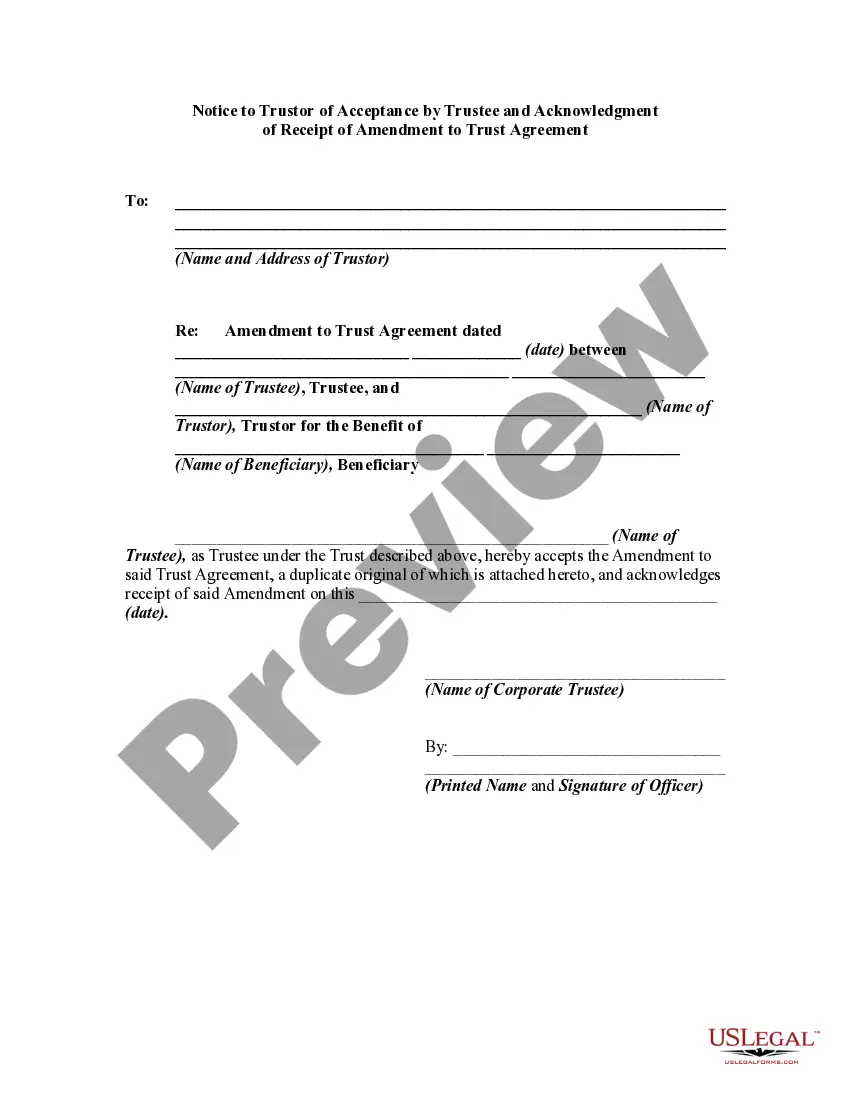
To make an amendment to a revocable trust, start by drafting an amendment document that specifies the changes you wish to make. Be sure to reference the original revocation trust deed and include your signature along with a witness if required. After completing this, keep the amended document with your original trust documents. Online platforms like US Legal Forms offer resources to simplify this process.
Yes, you can amend a revocable trust without an attorney, but it's important to do it correctly. Simply creating a document that outlines the changes will suffice. However, reviewing the revocation trust deed to ensure it complies with state laws is crucial. If you're uncertain, using a service like US Legal Forms can guide you through the process.
Individuals choose a revocation trust deed for several reasons, including estate planning flexibility and asset management. A revocable trust allows you to adjust the trust’s terms as life circumstances change, providing peace of mind. Additionally, it simplifies the transfer of assets to beneficiaries, reducing the burdens associated with probate.
The main purpose of a revocation trust deed is to provide a flexible and efficient way to manage assets during your lifetime and facilitate a smooth transfer upon your passing. This type of trust allows you to maintain control over your assets while providing for easy administration. It can help avoid probate, saving time and costs for your heirs.
Certain assets are not ideal for inclusion in a revocation trust deed, including retirement accounts and life insurance policies with designated beneficiaries. Additionally, assets that require a specific transfer process or cannot be owned in a trust might complicate matters. It's essential to consult with professionals to make informed decisions.
Upon the death of the grantor, a revocation trust deed generally becomes irrevocable. This means that the terms of the trust will remain fixed, and the assets will be distributed according to the established instructions. This transition can simplify the estate settlement process, making it easier for beneficiaries.